Our readers keep the lights on and my smoothie glass nicely filled. As an Amazon Associate, I earn from qualifying purchases.
The shallow ceramic dish you see in magazines is almost never the right first pot for a developing tree. Bonsai pots exist on a spectrum between deep training containers designed for root growth and shallow display dishes that restrict it—picking the wrong one stalls your tree’s progress for an entire season.
I’m Mohammad Maruf — the founder and writer behind WellFizz. I’ve spent years analyzing how pot geometry, glazing chemistry, and drainage engineering directly affect root health, soil moisture, and branch development in miniature trees.
This guide breaks down the construction, sizing logic, and material trade-offs of the top contenders so you can match your tree’s stage to the right container. Finding the best bonsai pots means knowing when to prioritize root room over visual flair.
How To Choose The Best Bonsai Pots
The wrong bonsai pot does not just look out of proportion—it physically restricts root growth, leads to anaerobic soil conditions, and forces you to water multiple times daily. Here is how to match container specs to your tree’s biological needs.
Match Pot Depth to Root Development Phase
Training trees in the pre-bonsai stage require deeper pots (3 inches or more) to let taproots and lateral roots thicken. Display-stage trees need shallower pots (1.5 to 2.5 inches) that keep the root ball flat and wide. A deep pot on a refined tree encourages downward root growth instead of nebari spread.
Evaluate Glazing for Moisture Control and Winter Safety
Glazed ceramic pots retain moisture longer, which suits moisture-loving species like Japanese maples but risks root rot for succulents or pines. Unglazed or matte-finish plastic pots breathe through the sidewalls, drying evenly between waterings. Outdoor winter storage demands frost-proof high-fire ceramic or flexible polypropylene that expands with freezing water.
Count Drainage and Wiring Holes
One central drainage hole is insufficient—look for at least two screened holes plus four anchor holes around the perimeter. Screens built into the pot prevent soil from washing out while allowing water to pass freely. Wiring holes let you secure the tree via the root ball, preventing shifting during transport or wind exposure.
Quick Comparison
On smaller screens, swipe sideways to see the full table.
| Model | Category | Best For | Key Spec | Amazon |
|---|---|---|---|---|
| Brussel’s 10″ Rectangle Glazed Ceramic | Premium Ceramic | Display-stage trees | 10″ x 7.5″ x 3.5″, 3 lbs glazed ceramic | Amazon |
| MUZHI 3-Pack Large Rectangular Plastic | Mid-Range Plastic | Pre-bonsai training | 11.2″ outline, 4 drainage + 16 wiring holes | Amazon |
| EPFamily 8″ Ceramic Glazed Round | Mid-Range Ceramic | Indoor succulents and bonsai | 8″ round x 3.14″ deep, bamboo saucer | Amazon |
| Yesland 6-Pack Deep Humidity Trays | Budget Plastic | Starter growing kits | 9″ x 6.5″ x 3″, built-in mesh screens | Amazon |
| MUZHI 8-Pack Retro Square Mini | Budget Plastic | Seedling propagation | 4.7″ square x 2.3″ deep, 8 pots + trays | Amazon |
In‑Depth Reviews
1. Brussel’s 10″ Rectangle Bonsai Glazed Ceramic Pot (Large, New Cream)
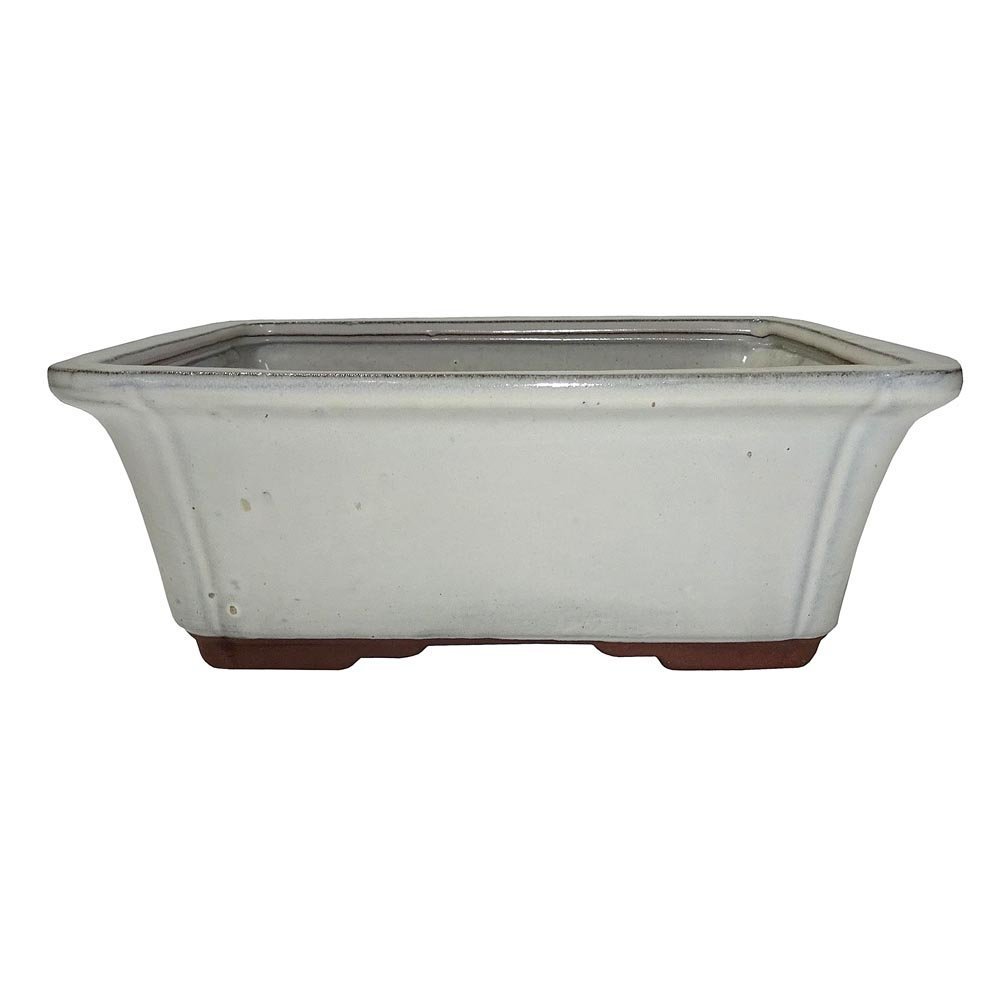
Brussel’s delivers a dense, high-fire ceramic body that resists chipping and freeze-thaw cycling—critical for outdoor overwintering. The 10-by-7.5-inch oval footprint provides enough surface area for a trunk caliper up to about two inches without looking cramped. Unlike thin-wall imports, this pot weighs three pounds, which adds stability against wind tipping.
The glazed interior and smooth lip finish allow the tree to slide out cleanly during repotting without tearing surface roots. The included stainless-steel wire and precut drain screen eliminate the common frustration of sourcing separate parts. Users consistently report the cream glaze maintains its color after months of sun exposure with no fading or crazing.
One caveat: color consistency between batches has been noted, with some units arriving in pale green despite ordering cream. The secure foam packaging, however, ensures zero transit damage—a rare guarantee for ceramic garden goods in this price tier. Pair this pot with a refined juniper or dwarf crepe myrtle for an immediate showpiece aesthetic.
Why it’s great
- High-fire ceramic survives outdoor freeze cycles without cracking
- Includes both mounting wire and drain screen so you can plant immediately
- Generous 10-inch width accommodates larger root spreads
Good to know
- Color may shift between cream and pale green across different production runs
- Heavier than plastic alternatives, making pot relocation more cumbersome
2. MUZHI 3PCS Large Rectangular Bonsai Tree Pots Planters with Tray 11″
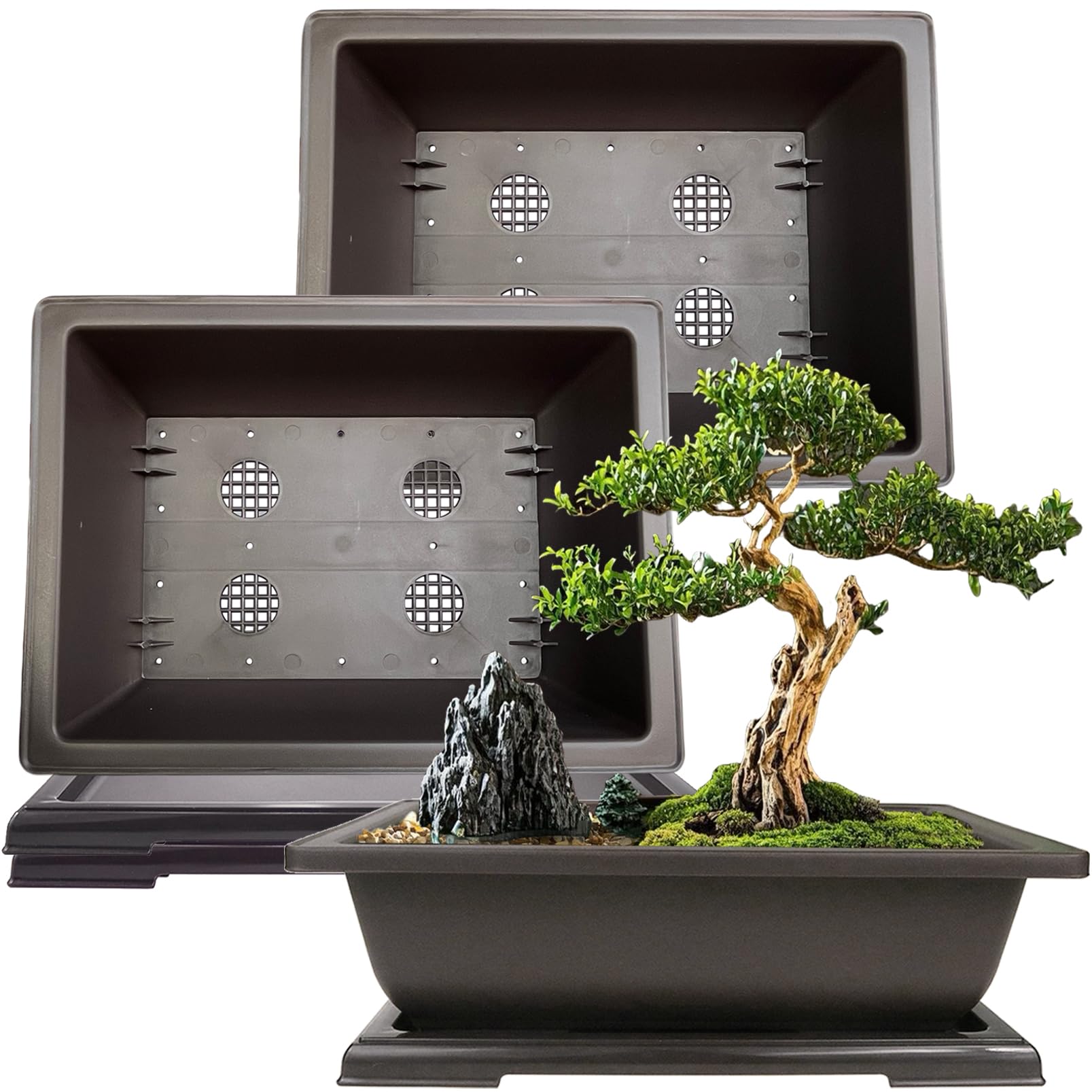
MUZHI’s rectangular set solves the single biggest pain in training-stage bonsai: insufficient anchor points for root binding. Each pot incorporates 16 wiring holes around the perimeter—more than any other option in this lineup—allowing you to tie down the root ball in multiple vectors without crowding anchor wires into the same hole.
The matte-finish polypropylene material mimics the moisture-wicking behavior of unglazed clay but at a fraction of the weight. At roughly one pound per pot, these are ideal for growers who rotate trees frequently or shuffle stock between greenhouse benches. The four screened drainage holes feature integrated mesh that prevents fine akadama and pumice particles from escaping during watering.
The mocha color blends into a natural bonsai display without the high-gloss reflection that distracts during photo documentation or show prep. The accompanying trays are deeper than typical humidity trays, holding enough water for a full day’s evaporation in dry indoor environments. For anyone building a pre-bonsai collection, this three-pack delivers the most engineering per dollar.
Why it’s great
- 16 wiring holes provide unmatched anchor versatility for root ball security
- Screened drainage keeps soil substrate from washing out
- Weather-resistant plastic handles full sun exposure without warping
Good to know
- Plastic construction lacks the tactile and visual weight of ceramic for display
- Mesh holes still allow small soil fines to pass during heavy watering
3. EPFamily 8 Inch Ceramic Bonsai Planter Pot, Glazed Shallow Succulent Planter with Bamboo Saucer

EPFamily’s round ceramic planter hits a sweet spot for indoor growers who want display-grade looks without paying Brussel’s prices. The glazed green finish is consistent and glossy, and the 8-inch diameter gives jade, ficus, and dwarf schefflera enough lateral spread to develop a respectable canopy silhouette over one growing season.
The included bamboo saucer is a thoughtful addition for tabletops—its natural fiber absorbs condensation without rusting or staining oak surfaces like plastic trays often do. The saucer sits flush under the pot, so overflow from the single drainage hole is contained rather than wicking outward. That single hole, however, is the planter’s only drainage point, which limits substrate options for species that demand rapid water evacuation.
The pot measures 3.14 inches deep internally—shallower than the training pots above but perfect for a finished juniper or a formal upright display where root depth should be restricted. The handmade nature means slight glaze variations between units, which many buyers consider a plus for uniqueness. If your tree sits on a desk or shelves, this planter elevates the presentation considerably.
Why it’s great
- Bamboo saucer protects furniture from water rings and rust marks
- Glazed finish makes cleaning algae and mineral deposits simple
- Handmade character gives each pot a unique glaze pattern
Good to know
- Single drainage hole may drain too slowly for heavy-rain outdoor use
- Bamboo tray can deform if standing water is left for days
4. Yesland 6 Pack Bonsai Training Pots – 9 Inches Classic Deep Humidity Trays

Yesland’s six-pack is the volume play for growers propagating multiple seedlings or running succulent production lines. The 9-inch length provides enough real estate for medium-size nursery stock, and the 3-inch depth is sufficient for initial root training before the tree moves into a shallower show pot.
The built-in mesh screens at the bottom are a time-saver—they are molded directly into the plastic, so you do not need to cut and place separate fiberglass screens. The mesh spacing is tight enough to hold in coarse bark and akadama but still lets water flow freely. The four supporting feet elevate the pot off the tray, creating an air gap that reduces capillary water wicking back into the root zone.
The rolled edges are gentle on tender foliage when you move or rotate pots, and the brown matte color does not clash with foliage greens. Some users note that the plastic feels slightly flexible when filled with wet soil, but for the price point, the trade-off between rigidity and weight is reasonable. These are purely training vessels—do not expect them to win design awards on your shelf.
Why it’s great
- Built-in drainage mesh eliminates separate screen purchases
- Four feet per pot create an air gap for passive humidity control
- Six-pack bundle suits high-volume propagation and succulent arrangements
Good to know
- Thinner plastic walls feel flimsy when carrying fully saturated soil
- Design is strictly functional with limited aesthetic appeal for display
5. MUZHI 8PCS/Pack Retro Style Square Small Bonsai Training Pots with Tray, Mini Plastic Mocha Garden Flower Pot 4.7″

MUZHI’s eight-pack targets the earliest stage of the bonsai lifecycle: seed germination and cutting propagation. At 4.7 inches square by 2.3 inches deep, these mini pots are ideal for rooting juniper cuttings or sprouting maple seeds before any root training begins. The small volume prevents overwatering—a leading cause of seedling damping-off.
The matte polypropylene plastic has a warm mocha tone that looks more natural than glossy black nursery inserts. The grid-bottom drainage design uses a full lattice pattern rather than discrete holes, which provides uniform water evacuation across the entire root base. No soil migrates through the grid because the slots are sized to retain fine particles while passing water.
Each pot comes with a matching tray that has a raised lip tall enough to catch seepage from the grid bottom without contacting the pot base directly. The pots do not snap into the tray, which makes carrying multiple pots at once slightly awkward, but the trade-off is easy individual removal for inspection. For anyone starting a bonsai collection from seed, this bundle removes the cost barrier of buying individual training containers.
Why it’s great
- Grid-bottom drainage provides even water evacuation across the entire root zone
- Eight identical pots make batch planting and germination monitoring consistent
- Compact 4.7-inch size prevents soil moisture pooling in small seedling setups
Good to know
- Pots do not clip into trays, making multi-pot carrying cumbersome
- 2.3-inch depth is too shallow for saplings that develop taproots quickly
FAQ
Can I use a regular ceramic flower pot for bonsai?
How do I know if a pot needs drainage screens?
Is glazed or unglazed better for outdoor bonsai in freezing climates?
Final Thoughts: The Verdict
For most users, the best bonsai pots winner is the Brussel’s 10″ Rectangle Glazed Ceramic Pot because it bridges the gap between functional training features and display-grade craftsmanship—complete with wire and screen. If you want maximum wiring flexibility for pre-bonsai development, grab the MUZHI 3-Pack Large Rectangular Pots. And for high-volume seedling propagation, nothing beats the MUZHI 8-Pack Square Mini Pots.

Mo Maruf
I created WellFizz to bridge the gap between vague wellness advice and actionable solutions. My mission is simple: to decode the research and give you practical tools you can actually use.
Beyond the data, I am a passionate traveler. I believe that stepping away from the screen to explore new environments is essential for mental clarity and physical vitality.