Our readers keep the lights on and my smoothie glass nicely filled. As an Amazon Associate, I earn from qualifying purchases.
A boning knife that flexes too much or too little turns a simple trim into an afternoon wrestling match. The right blade guides along curves without gouging meat, separates joints cleanly, and holds a reliable edge through a whole brisket or a dozen chicken thighs. This guide focuses on the steel, grind, handle ergonomics, and flexibility profile that separate a capable boning knife from a frustrating one.
I’m Mohammad Maruf — the founder and writer behind WellFizz. I’ve spent over a decade analyzing kitchen cutlery metallurgy, blade geometry, and real-world durability data to help home cooks and professionals make informed purchases.
Whether you’re breaking down whole poultry, trimming silver skin from pork loin, or filleting the evening’s catch, finding the best boning knife comes down to matching blade flexibility and steel quality to your specific cutting tasks.
How To Choose The Best Boning Knife
Selecting the right boning knife means understanding the interplay between blade stiffness, steel composition, and handle design. The wrong combination leads to wasted meat, hand fatigue, or broken tips.
Blade Flexibility: Stiff, Semi-Flexible, or Flexible
Stiff blades — typically found on 5.5-inch forged knives — excel at heavy beef and pork butchery where you need to lever joints apart. Semi-flexible blades handle most poultry and fish work, bending just enough to follow rib bones without snapping. Fully flexible blades, often marketed as fillet knives, suit delicate fish and thin poultry cuts. Choosing the wrong flex grade is the most common mistake: too stiff and you tear flesh; too flexible and you lose leverage against thick connective tissue.
Steel Composition and Hardness
High-carbon German stainless steel (X50CrMoV15) balances toughness with edge retention, typically at 56–58 HRC — easy to sharpen and resistant to chipping. Japanese super steels like VG-10 hit 58–60 HRC with cobalt additives that hold a razor edge significantly longer, but require more care during sharpening and are more brittle in thin grinds. Budget-oriented blades use stamped 420-grade steel which sharpens easily but dulls fast under heavy use.
Handle, Bolster, and Balance
Full-tang construction with a molded thermoplastic or G10 handle provides the best grip-wet stability and reduces hand fatigue during extended trimming sessions. Handles with a pronounced bolster protect fingers but limit the sharpening lifespan of the blade. Sleek, bolsterless designs allow sharpening the entire edge, though they demand more careful handling. The knife’s balance point should sit at or just ahead of the handle-to-blade transition — head-heavy blades cause wrist strain; handle-heavy blades reduce control for fine work.
Quick Comparison
On smaller screens, swipe sideways to see the full table.
| Model | Category | Best For | Key Spec | Amazon |
|---|---|---|---|---|
| Victorinox Swiss Classic 6″ | Stamped / Entry-Level | Daily poultry & fish trimming | 0.22 lb weight; flexible narrow blade | Amazon |
| KYOKU Shogun Series 7″ | Forged / Premium Steel | Heavy butchery & game processing | VG-10 core at 58–60 HRC | Amazon |
| Victorinox Fibrox 6″ | Stamped / Professional | Versatile kitchen deboning | 3.04 oz; NSF-approved handle | Amazon |
| HENCKELS Forged Premio 5.5″ | Forged / German Steel | Beef & pork butchery | 5.5-inch forged bolster | Amazon |
| Mercer Genesis 6″ | Forged / Mid-Range | All-purpose home kitchen use | X50 Cr Mo V15 steel | Amazon |
| Shun Classic 6″ | Forged / Japanese Premium | Precision fish & poultry fillet | 16° edge; VG-MAX core | Amazon |
| ZWILLING Professional “S” 5.5″ | Forged / German Premium | Heavy-duty professional butchery | Sigmaforge one-piece steel | Amazon |
In‑Depth Reviews
1. Victorinox Swiss Classic 6-Inch Boning Knife

Victorinox’s Swiss Classic boning knife weighs a mere 0.22 pounds, making it one of the lightest options available without sacrificing cutting ability. The thin, flexible stamped blade follows tight curves around poultry ribs and fish spines with minimal resistance, and the S-shaped edge design helps separate meat cleanly rather than tearing it. Multiple owners report using it for brisket trimming, deer processing, and filleting — a versatility range that confirms the flexibility grade is a genuine all-rounder rather than a one-task specialist.
The Fibro Pro handle is NSF-approved, which means the thermoplastic rubber compound resists bacterial absorption and maintains grip even when wet or greasy. A lifetime warranty against material defects backs the Swiss-made construction, though the stamped steel will require more frequent honing than forged alternatives. The blade ships with item number 6.8413.15, which is identical in dimensions and steel to the US-market 6.6413.15US1.
Several verified buyers note the blade arrives arm-hair-shaving sharp out of the box and holds that edge for several whole-brisket sessions before needing a touch-up. The combination of low weight, high flexibility, and sub-30-dollar entry price makes this a legitimate “Best Boning Knife” contender for home cooks who want professional-grade performance without committing to a forged steel investment.
Why it’s great
- Extremely light and nimble for repetitive trimming
- Flexible enough for fish fillet work yet stiff enough for poultry
- NSF-approved handle provides excellent wet grip
Good to know
- Stamped blade dulls faster than forged competition
- No bolster means fingers slide close to the edge
2. KYOKU Boning Knife 7″ Shogun Series
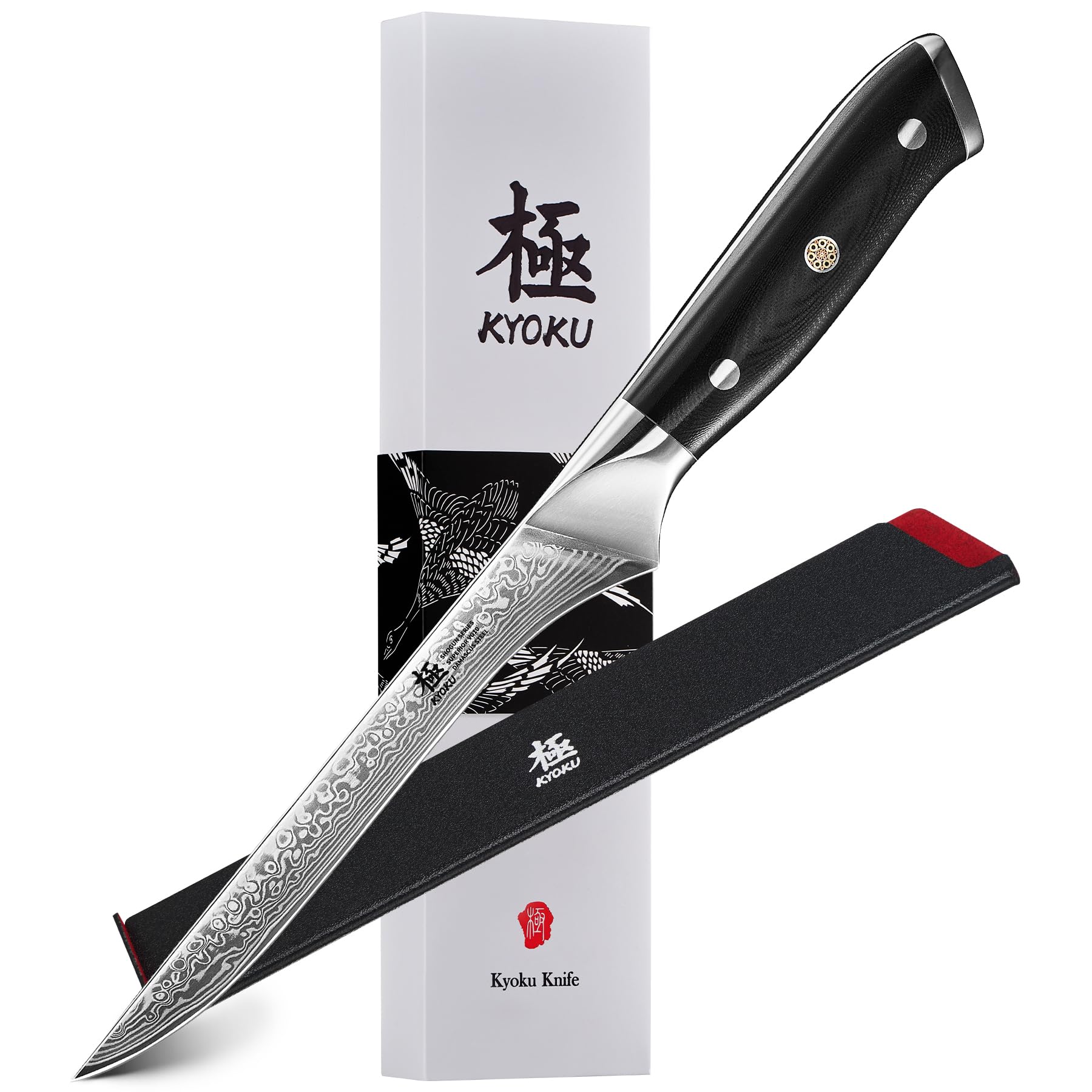
KYOKU’s Shogun series houses a VG-10 Japanese super steel core clad in 67 layers of Damascus, hardened to 58–60 HRC for extended edge retention that far outpaces standard German stainless. The 7-inch blade length exceeds the typical 5.5–6 inch boning convention, providing extra reach for breaking down large primals and whole game animals. One verified user reported processing two 300-pound hogs with only a single mid-day sharpening — a durability testament that few knives in this price tier match.
The G10 handle is a military-grade thermoset laminate that withstands moisture, temperature swings, and impact without swelling or cracking. It creates a balanced full-tang feel at 16.6 ounces, which some users find slightly heavy for delicate work but reassuring for joint separation. The 8–12° Honbazuke edge grind produces a scalpel-like bite that requires careful handling — the distal end of the handle has a sharp transition point noted by several reviewers as a safety concern.
A protective sheath and storage case are included. The knife is nitrogen-cooled during manufacturing for optimal corrosion resistance. The “Made in China” sticker has disappointed a few buyers expecting Japanese origin, but the VG-10 metallurgy and Damascus cladding deliver cutting performance that justifies the mid-range price point.
Why it’s great
- VG-10 core holds edge significantly longer than standard stainless
- 7-inch length offers extra leverage for heavy butchery
- G10 handle is impervious to moisture and heat
Good to know
- Heavier than typical boning knives at 16.6 ounces
- Handle tail has a sharp edge that may need smoothing
3. Victorinox Fibrox 6 Inch Flexible Boning Knife
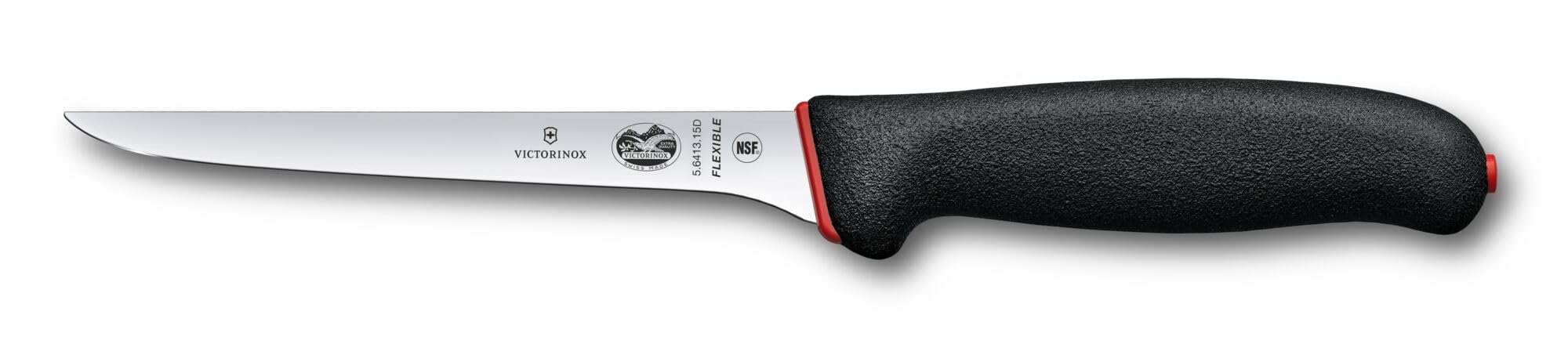
The Victorinox Fibrox line has been a professional kitchen staple for decades, and this 6-inch flexible boning knife continues that reputation with a straight edge and narrow profile designed for precise deboning. The stamped stainless steel blade is thinner than the Swiss Classic variant, giving it noticeably more flex for following bird carcasses and fish frames. Professional chefs in verified reviews describe it as a “go-to knife” that replaces half a block’s worth of less versatile blades.
At just 3.04 ounces, the Fibrox handle is the lightest of all seven knives in this comparison. The textured thermoplastic rubber provides reliable grip even with oil-slicked hands, and the NSF approval means it meets commercial sanitation standards. Edge retention is decent for a stamped blade — several deer processors mention it outlasts their Dexter knives between sharpenings — but it will require more frequent steeling than forged alternatives.
One reviewer admitted buying this knife to process older chickens but never followed through, yet still praised its sharpness for general bone-in meat preparation. That story illustrates the Fibrox’s real strength: it performs well enough for specialized butchery while remaining affordable enough to be a daily-use utility blade that won’t cause anguish if it needs sharpening or replacement.
Why it’s great
- Extremely lightweight reduces hand fatigue
- Excellent wet grip from textured Fibrox handle
- Razor sharp out of box with good edge holding for stamped steel
Good to know
- Stamped blade won’t match forged edge longevity
- Flexibility may feel too limber for heavy beef work
4. HENCKELS Forged Premio 5.5-inch Boning Knife

HENCKELS’ Forged Premio brings a traditional German-style forged construction to a 5.5-inch boning knife, complete with a full bolster that provides finger protection and adds heft for joint work. The high-carbon German stainless steel blade arrives hair-shaving sharp — one reviewer demonstrated by shaving arm hair straight from the packaging. The shorter blade length offers better control for maneuverability around tight joints compared to longer boning knives.
The triple-rivet handle design curves to fill the palm comfortably, and several users with larger hands specifically note how naturally the handle fits. At 6.4 ounces with a forged bolster, the weight feels substantial without being tiring during extended trimming sessions. The satin-finished blade resists sticking better than highly polished alternatives, a useful feature when working through fatty cuts.
Water is safe for dishwasher cleaning, though hand washing is recommended to preserve edge longevity. The knife is manufactured in China under German quality specifications — a common point in this price tier. For home cooks seeking their first forged boning knife without stepping up to premium pricing, the Premio delivers the weight and balance that distinguishes forged blades from stamped counterparts.
Why it’s great
- Forged bolster provides safety and balanced weight
- Triple-rivet handle fits larger hands comfortably
- Razor sharp out of package with good initial edge retention
Good to know
- 5.5-inch length is shorter than most boning knives
- Bolster shortens effective sharpening lifespan of the blade
5. Mercer Culinary Genesis 6-Inch Flexible Boning Knife

Mercer Culinary positions the Genesis series as a professional-grade forged line at a mid-range price, and the 6-inch flexible boning knife delivers exactly that proposition. The precision-forged X50 Cr Mo V15 high-carbon German steel — the same alloy used by many premium German manufacturers — provides excellent edge stability and resharpening ease. Verified users describe cutting through deer hindquarters “like butter” and praise the blade’s flex for tasks like butterflying pork loin.
The Santoprene handle is ergonomically contoured with a non-slip texture that performs reliably under wet conditions, a feature particularly valued by users with arthritic hands who struggle with slick metal or wood handles. The taper-ground edge geometry increases cutting efficiency by reducing drag through dense meat. At a 6-inch length with full-tang forged construction, the weight distribution feels balanced — substantial enough for beef work but not fatiguing for fish fillet duty.
Mercer explicitly advises hand washing only; the dishwasher will degrade both edge and handle bonding. Several long-term owners report the knife has become their favorite kitchen tool, often chosen over more expensive alternatives. For the home cook who wants forged performance without paying premium brand markup, the Genesis is a compelling value proposition that competes directly with knives costing significantly more.
Why it’s great
- Forged X50 Cr Mo V15 steel provides excellent edge longevity
- Ergonomic Santoprene handle reduces fatigue for arthritic hands
- Well-balanced weight suits both light and heavy cutting tasks
Good to know
- Not dishwasher safe; hand wash required
- Santoprene handle collects kitchen dust and debris over time
6. Shun Classic 6″ Boning & Fillet Knife

Shun’s Classic boning knife represents the apex of Japanese cutlery design for this category, featuring a VG-MAX steel core wrapped in 68 layers of Damascus stainless cladding. The 16-degree double-bevel edge is laser-honed to a sharpness that visibly parts meat fibers rather than crushing them, making it the most aggressive cutter in this lineup. The 6-inch curved blade is optimized for smooth draw cuts along fish frames and poultry bones, where the thin geometry excels at following natural contours.
The D-shaped Pakkawood handle is a heat-treated birch laminate that offers a warm, stable grip that improves with moisture absorption. Shun’s traditional Japanese craftsmanship is evident in the distal taper and mirror-polished cladding lines. The knife weighs just 0.2 kilograms (roughly 7 ounces), keeping it nimble for extended filleting sessions. Verified owners report maintaining the factory sharpness for roughly two years with plastic cutting board use and careful hand washing before needing any sharpening attention.
Construction is entirely in Japan, and the price reflects both material quality and artisan labor. This is not a knife for heavy beef butchery or prying joints — the thin blade is brittle at the edge and can chip under lateral stress. For its intended use — poultry, fish, and precise silverskin removal — the Shun Classic delivers a cutting experience that stamped and lower-cost forged knives cannot replicate.
Why it’s great
- VG-MAX core with 68-layer Damascus cladding for extreme sharpness
- 16-degree edge glides through flesh with minimal resistance
- Pakkawood handle provides warm, secure grip that ages beautifully
Good to know
- Thin blade is fragile and can chip if used for prying or bone contact
- Requires hand washing and careful storage to protect edge and handle
7. ZWILLING Professional “S” 5.5-inch Flexible Boning Knife

ZWILLING’s Professional “S” series has earned recognition from America’s Test Kitchen as a top pick for boning, and the 5.5-inch flexible version demonstrates why. The Sigmaforge process forges the entire knife from a single piece of high-carbon NO STAIN steel, then ice-hardens it through the proprietary FRIODUR treatment for superior edge retention and corrosion resistance. The result is a blade that slices through brisket fat and chicken cartilage with minimal resistance and maintains its bite through multiple heavy-use sessions.
The composite handle is ergonomically shaped with a full bolster that transitions seamlessly into the blade — no sharp edges or gaps for food to collect. At 8 ounces, the weight sits perfectly at the bolster joint, giving the knife a planted feel during precise trimming work. Multiple long-term owners report this knife replacing other favorites in their kit, with one user retiring a 1985-era Zwilling in favor of this updated version. Regular steeling maintains the edge without frequent sharpening sessions.
German engineering and manufacturing quality are evident in the fit and finish. The knife is dishwasher safe — unusual for a premium forged blade — though hand washing will extend the edge life. This is the one knife in the list that works equally well for home cooks and professional butchers, combining the durability of a German workhorse with the precision of a specialty boning tool.
Why it’s great
- Sigmaforge one-piece construction provides exceptional durability
- FRIODUR ice-hardening extends edge retention significantly
- America’s Test Kitchen pick with proven real-world performance
Good to know
- 5.5-inch blade is shorter than most boning knives on the market
- Premium price point may exceed casual home cook budgets
FAQ
What blade flexibility should I choose for chicken butchery?
How often should I sharpen a boning knife compared to a chef’s knife?
Can I use a boning knife for regular chopping or slicing vegetables?
What is the practical difference between a forged and a stamped boning knife?
Final Thoughts: The Verdict
For most users, the best boning knife winner is the ZWILLING Professional “S” 5.5-inch Flexible Boning Knife because the Sigmaforge construction, FRIODUR edge, and proven America’s Test Kitchen recommendation create a genuinely versatile tool that handles poultry, beef, pork, and fish with equal authority. If you want premium Japanese edge performance for delicate fish and poultry work, grab the Shun Classic 6″ Boning & Fillet Knife. And for budget-conscious home cooks who need a reliable daily trimmer, nothing beats the Victorinox Swiss Classic 6-Inch Boning Knife for weight, flexibility, and value.

Mo Maruf
I created WellFizz to bridge the gap between vague wellness advice and actionable solutions. My mission is simple: to decode the research and give you practical tools you can actually use.
Beyond the data, I am a passionate traveler. I believe that stepping away from the screen to explore new environments is essential for mental clarity and physical vitality.