Our readers keep the lights on and my smoothie glass nicely filled. As an Amazon Associate, I earn from qualifying purchases.
Standard hearing aids block your ear canal, creating a plugged-up feeling and isolating you from the world. Bone conduction technology bypasses the eardrum entirely, sending sound vibrations directly through your skull to the inner ear, keeping your ears open and your situational awareness intact. This fundamental design difference makes these devices a powerful alternative for anyone who finds traditional aids uncomfortable or ineffective.
I’m Mohammad Maruf — the founder and writer behind WellFizz. I analyze medical-grade audio hardware, focusing specifically on bone conduction driver efficiency, amplification gain profiles, and real-world durability for users with hearing challenges.
After evaluating nine distinct models across comfort, battery endurance, and amplification clarity, this guide breaks down exactly which best bone conduction hearing aids actually deliver on their promise for daily conversation and active living.
How To Choose The Best Bone Conduction Hearing Aids
Choosing a bone conduction hearing aid isn’t the same as picking a pair of headphones. You are selecting a device that compensates for a specific hearing deficit, and its performance hinges on driver generation, fit geometry, and how it handles environmental noise. Here are the critical factors to evaluate.
Driver Generation and Sound Quality
Not all bone conduction drivers are equal. Early generations produce a buzzy, ticklish sensation at higher volumes because the transducer vibrates the bone with less precision. Newer drivers (7th generation and above from proven brands like SHOKZ) use refined mass-spring systems that deliver cleaner treble and actual bass response without excessive vibration. For hearing amplification, clarity of speech frequencies (500 Hz to 4000 Hz) matters far more than bass depth — prioritize models with dedicated noise reduction for the hearing mic if you need crisp conversation.
Fit, Weight, and Contact Pressure
Bone conduction devices rely on consistent contact pressure against your temporal bone, just in front of your ear. A frame that is too loose will lose amplification efficiency; one that is too tight will cause headaches after an hour. Lightweight frames (under 30 grams) with titanium memory wire or flexible silicone arms tend to distribute pressure evenly. If you wear glasses, look for a design with a low-profile temple arm that doesn’t conflict with your eyewear.
Hearing Amplifier vs. Bluetooth Headset
Understand the primary use case. Dedicated hearing amplifiers (like the Aurimi or Blue Deer) are standalone — they amplify ambient sound with no phone required. Other models prioritize Bluetooth audio for calls and music, with ambient amplification as a secondary mode. For daily conversation around the house, a dedicated amplifier with simple on-device controls is often easier for seniors. For active users who also want music and calls, a dual-mode device that auto-switches between hearing and Bluetooth modes offers more versatility.
Quick Comparison
On smaller screens, swipe sideways to see the full table.
| Model | Category | Best For | Key Spec | Amazon |
|---|---|---|---|---|
| SHOKZ OpenRun Pro 2 Mini | Premium Sport | Active users who want dual audio | 12-hour battery, IP55, dual drivers | Amazon |
| SHOKZ OpenComm2 | Communication | Crystal-clear work calls | 16-hour talk time, noise-canceling mic | Amazon |
| Aurimi Z18 | Amplifier | Discreet daily amplification | 25g, 10-hour battery, no Bluetooth | Amazon |
| Blue Deer BD-NEWF2H | Amplifier | Seniors needing simple controls | 5-level volume, indoor/outdoor/vocal modes | Amazon |
| BenexBesdi Dual-Mode | Amplifier/Bluetooth | Dual-mode hearing & Bluetooth | 15-hour battery, 29g, auto-switch modes | Amazon |
| BenexBesdi Hearing Headset | Amplifier | Budget-friendly hearing assist | 10-hour listening mode, Bluetooth 5.3 | Amazon |
| SHOKZ OpenRun Pro | Sport | Outdoor workouts and safety | 10-hour battery, 5-min quick charge | Amazon |
| QuietlyBold CORE | Amplifier | Entry-level conversation help | 90dB sensitivity, one-button control | Amazon |
| FANSAISI TV Hearing Headset | TV/Conversation | TV listening with separate transmitter | 7-hour battery, independent L/R volume | Amazon |
In‑Depth Reviews
1. SHOKZ OpenRun Pro 2 Mini

The OpenRun Pro 2 Mini is the most advanced bone conduction device here, pairing a 9th-generation bone conduction driver with an additional air conduction driver for genuine bass response — a rarity in this category. The Mini size fits smaller head circumferences comfortably, and the Ni-Ti alloy memory wire ensures the frame stays locked in place without excessive clamping force. The dual wind-resistant microphones with AI noise reduction filter out background noise exceptionally well, making calls clear even in breezy conditions.
Battery endurance is a standout at 12 hours of continuous playback, and the USB-C charging port eliminates the frustration of proprietary magnetic cables. The Shokz App provides dedicated EQ modes including a Classic Mode that isolates pure bone conduction sound, which is useful when you want maximum amplification without the air conduction driver muddying the speech frequencies. Users report accurate battery life that exceeds 14 hours at moderate volume.
For anyone who needs bone conduction hearing support during active outdoor routines — running, cycling, hiking — this is the most refined option available. The reflective strip is a thoughtful safety addition for low-light visibility. Downsides are minimal: the device is weather-resistant (IP55) rather than fully waterproof, and the fit is critical — ensure you pick the correct Mini or standard size for your head.
Why it’s great
- Dual-driver design delivers real bass without skull buzz
- 12-hour battery with accurate meter
- Excellent call quality with wind noise cancellation
- USB-C charging, no proprietary cable
Good to know
- Size selection is crucial for comfort
- Not fully submersible (IP55 only)
2. SHOKZ OpenComm2

The OpenComm2 is built specifically for voice communication, not music. Its 7th-generation bone conduction driver is paired with a noise-canceling boom microphone that uses DSP technology to suppress background noise effectively — users report it cancels car washes and wind noise without issue. The 35-gram frame is lightweight and the IP55-rated silicone finish withstands daily movement. Battery life is class-leading for talk time: 16 hours of continuous calls, though music listening tops out at 8 hours.
Multipoint pairing allows seamless switching between a laptop and phone, and the Shokz App provides basic EQ control. The physical mute button is a welcome addition for work meetings. Several users with hearing impairments specifically note that bone conduction clarity helps them hear conversations without the occlusion of in-ear buds. The USB-C charging is standard, not proprietary, which simplifies travel charging.
The primary criticism is fit: the frame is larger and may cause pressure headaches for users with smaller head sizes after 1-2 hours of wear. Sound quality for music is acceptable but not as rich as the OpenRun Pro 2 due to the single driver and communication-focused tuning. If your priority is crystal-clear phone calls and conference calls while staying aware of your environment, this is the top pick.
Why it’s great
- Best-in-class noise-canceling mic for calls
- 16-hour talk time battery
- USB-C charging
- Multipoint Bluetooth pairing
Good to know
- Frame may be large for smaller heads
- Music audio is secondary to call clarity
3. Aurimi Z18 Bone Conduction Amplifier
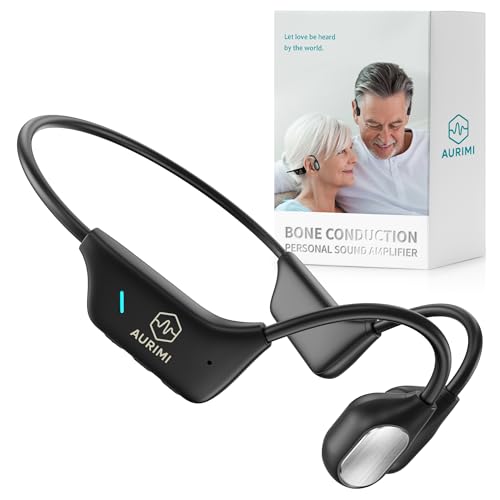
The Aurimi Z18 is a pure personal sound amplifier — no Bluetooth, no music streaming, just straightforward ambient sound amplification. Weighing only 25 grams, it is the lightest device in this guide and designed for all-day wear with zero ear canal obstruction. The open-ear form factor means you can wear it from morning to night without the pressure, moisture, or feedback squeal common to in-ear amplifiers. The IPX5 rating provides protection against sweat and rain for daily activities.
Battery life is rated at 10 hours on a single charge, which comfortably covers a full waking day. The controls are simple: a single button to raise or lower amplification gain, no phone pairing required. Users with sensitive ear canals or those who find traditional hearing aids painful will appreciate the relief this design offers. The device is discreet enough that it blends in behind the ear without obvious branding.
The limitation is clear: it is strictly an amplifier, not a communication headset. You cannot take phone calls or stream music. The sound quality is purely for conversation enhancement and environmental awareness, not high-fidelity audio. If you need a dedicated hearing aid replacement without smartphone dependency, this is a solid, focused choice. The lack of Bluetooth also means no firmware updates or app customization.
Why it’s great
- Ultra-lightweight 25g for effortless all-day wear
- No Bluetooth complexity, instant amplification
- IPX5 water-resistant for active use
- Discreet behind-ear design
Good to know
- No Bluetooth streaming or phone calls
- Not customizable to hearing loss profile
4. Blue Deer BD-NEWF2H
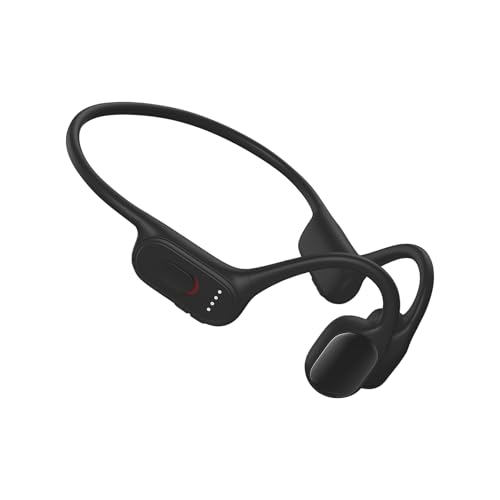
The Blue Deer BD-NEWF2H hits a sweet spot between simplicity and versatility, offering dedicated Hearing Amplifier and Bluetooth modes that switch with a double-click of the M button. Its 5-level memory volume setting remembers your preferred gain, so you don’t have to re-adjust every time you power on. The three listening modes (indoor, outdoor, vocal) allow basic environmental adaptation without complex app programming — important for seniors who prefer physical controls. The frame weighs just 35 grams with an IPX5 rating.
Battery life is rated at 8 hours in amplifier mode and 6 hours in Bluetooth mode, with a 1-hour quick charge. Users report that the separate left and right volume controls are genuinely useful for asymmetric hearing loss — a feature rare at this tier. The headset auto-connects to your phone in under 5 seconds with clear English voice prompts for battery and mode status. The design looks like a modern pair of headphones, reducing the stigma some associate with hearing aids.
Some users report intermittent feedback or a faint squelch on the right ear that cycles on and off, which may indicate quality control variation. The fit can feel bulky behind the head for those with smaller heads, and the amplification can be overwhelming in noisy environments since there is no active background noise cancellation on the mic. It is a capable dual-purpose device but best suited for mild to moderate hearing loss in relatively quiet settings.
Why it’s great
- Dual hearing amplifier and Bluetooth modes
- 5-level memory volume and separate L/R control
- Three listening environments (indoor/outdoor/vocal)
- Quick charge and auto phone connection
Good to know
- Occasional feedback squelch reported
- Can feel large for smaller heads
5. BenexBesdi Dual-Mode Headset (B0F9KS5CSY)
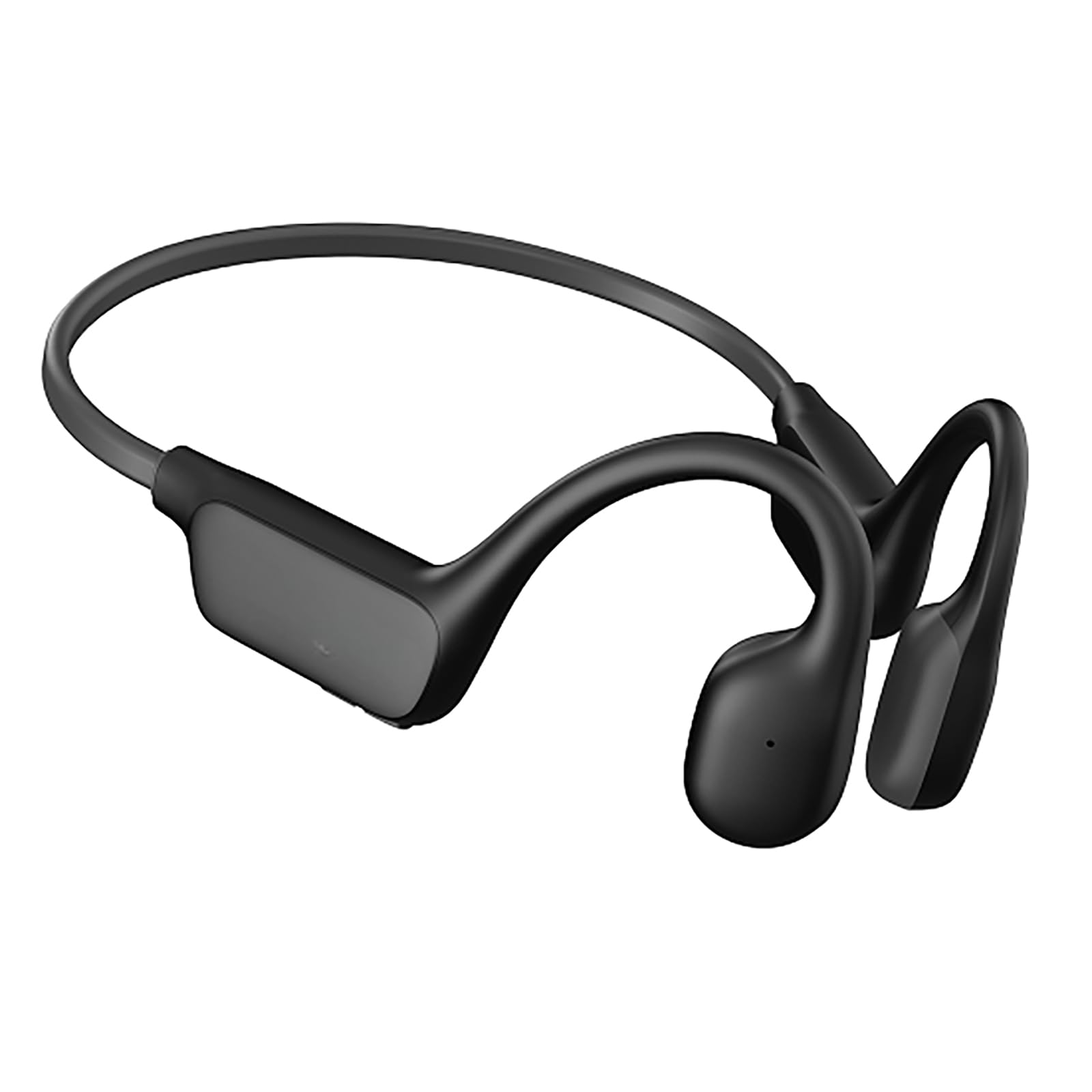
This BenexBesdi model offers a unique auto-switch feature that transitions between hearing mode and Bluetooth mode when it detects audio from your phone — a genuinely useful convenience for users who take calls and then return to conversation amplification. At 29 grams, it is lightweight and the IPX5 rating makes it rain-resistant. The 15-hour battery life in listening mode is the longest of any device in this guide, easily covering a full day of heavy use. The noise reduction switch (strong/weak) provides basic control over environmental sound management.
Users with small ears or cookie-bite hearing loss report that the temple-arm fit is excellent and the open-ear design keeps the ear canal free. The hearing amplification works independently of a phone — you turn it on and it starts amplifying ambient sound immediately. The Bluetooth mode handles music and calls with stable Bluetooth 5.3 connectivity. The separate strong and weak noise reduction settings are useful for adapting between quiet indoors and louder public spaces.
There are notable drawbacks. The headband protrudes enough that you cannot lie on a pillow while wearing it. The auto-switch can be slow when a notification triggers a transition from hearing mode back to amplification. Several users report that the device stopped working within the first week or had inconsistent hearing clarity. The initial language prompt may default to Chinese, requiring a button combination to switch to English, which is poorly documented.
Why it’s great
- Auto-switch between hearing and Bluetooth modes
- 15-hour battery life in listening mode
- Lightweight 29g with IPX5
- Noise reduction switch for environment adaptation
Good to know
- Headband design prevents lying down
- Some units have reliability issues
- English language setting requires manual switch
6. BenexBesdi Hearing Headset (B0DS21PG8J)

This is the entry-level dual-mode option that works as both a hearing amplifier and a Bluetooth headset. It weighs just 27 grams and features Bluetooth 5.3 for stable wireless pairing. The default mode is hearing amplification — it picks up surrounding sounds via the built-in HD microphone and transmits through bone vibration. A short press of the MFB button switches to Bluetooth mode for music and calls. The IPX5 rating handles sweat and light rain. Battery life is 6 hours for Bluetooth and up to 10 hours for the hearing mode.
Users specifically note that as a hearing aid, it works well — the absence of the constant air sound (the hissing of traditional hearing aids) is a major benefit. For users with moderate to severe hearing loss in one ear, this serves as a cost-effective alternative to CROS hearing aids. The lightweight frame is comfortable enough for extended wear, and the magnetic charging cable is easy to connect without fumbling.
The hearing microphone picks up a constant crackling noise in quiet environments, which makes it unusable for some users. As Bluetooth headphones, the audio quality is described as average — not competitive with dedicated music headsets. The amplification works best in quiet settings and struggles in noisy environments. It is a reasonable budget entry point to test bone conduction hearing before committing to a more expensive model.
Why it’s great
- Very lightweight at 27 grams
- Effective hearing amplification without air hiss
- Dual-mode with Bluetooth 5.3
- Cost-effective CROS alternative
Good to know
- Crackling noise in hearing mode for some units
- Bluetooth audio quality is average
7. SHOKZ OpenRun Pro

The original OpenRun Pro remains a reliable workhorse for outdoor sports and situational awareness. The 9th-generation bone conduction technology delivers clear sound with TurboPitch for enhanced bass, though it still relies on a single driver. The wraparound titanium frame is lightweight and stable — it stays in place during running, cycling, and intense workouts without slipping. The 10-hour battery life is solid, and the 5-minute quick charge provides 1.5 hours of playback, a genuinely useful feature for forgetful users. IP55 sweat resistance protects against moisture.
User feedback consistently praises the comfort when worn with helmets and glasses, and the open-ear design allows full environmental awareness — critical for road cyclists and runners who need to hear traffic. The sound quality is good for podcasts, audiobooks, and calls, with clear mids and treble. The multipoint pairing works reliably for switching between phone and laptop. The included sport headband adds stability for high-impact movement.
The proprietary magnetic charging cable is a persistent annoyance — it is easy to misplace and not as convenient as USB-C. At higher volumes, the bone conduction driver produces noticeable vibration that some users find ticklish or distracting. Battery life is on the shorter side for all-day use, and the sound leakage at high volumes means people nearby can hear your audio. It is not a hearing aid replacement; it is a sports headphone that happens to use bone conduction.
Why it’s great
- Excellent for sports with helmet compatibility
- 5-minute quick charge for 1.5 hours play
- Secure titanium frame, stable during movement
- Clear call quality with multipoint pairing
Good to know
- Proprietary magnetic charging cable
- Vibration at high volume
- Not a hearing aid replacement
8. QuietlyBold CORE
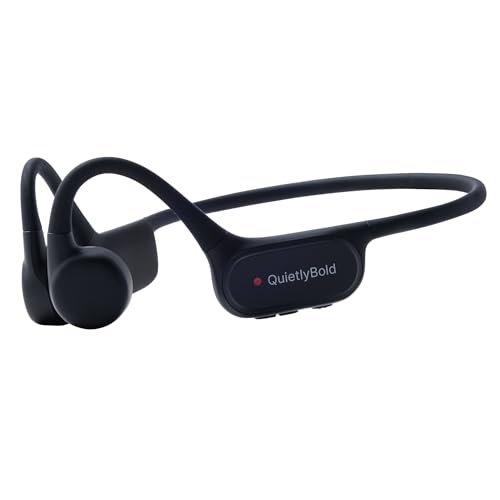
The QuietlyBold CORE is the simplest device on this list — no apps, no Bluetooth, no modes. You turn it on, adjust the volume with a single button, and it amplifies ambient sound. It is designed specifically for mild hearing difficulty, not clinical hearing loss. The behind-ear form factor is lightweight and discreet enough that users report spouses not noticing they are wearing it. The 90dB sensitivity rating indicates moderate amplification suitable for one-on-one conversations in quiet settings. The unit includes a charging cable and user guide only.
User reviews are sharply divided. Some 81-year-old and 92-year-old users report dramatic improvements in daily conversation, reducing the need for repetition and improving relationships. The initial charge lasts about 8 hours, and a 15-minute top-up can extend the day. The open-ear design prevents the plugged-up feeling and feedback whine common to traditional amplifiers. For users with mild age-related hearing decline, it offers a low-barrier entry point.
The negative reviews are consistent: some units produce an unbearable echoing or high-pitched ringing that is audible across the room, likely a quality control issue with the transducer assembly. The amplification lacks clarity — speech can sound fuzzy or metallic. There is no noise filtering, so background sounds are amplified equally with conversation. This is strictly a budget-friendly trial device; if it works for your specific physiology and hearing loss profile, it can be a revelation, but there is no guarantee.
Why it’s great
- Simple one-button operation, no smartphone needed
- Discreet behind-ear fit
- Low-barrier entry for mild hearing difficulty
- Decent battery life with quick top-up
Good to know
- Quality control issues with echo/ringing
- No noise filtering, amplifies all sounds
- Speech clarity can be fuzzy
9. FANSAISI TV Hearing Headset

The FANSAISI headset is uniquely designed for TV listening with a dedicated microphone transmitter that connects directly to your television via a 3.5mm audio jack. This allows you to adjust your volume independently from your family, making it ideal for shared TV watching. The microphone transmitter has a range of 5 meters and can be placed near the sound source for clearer pickup. The bone conduction design transmits sound through your cheekbone, keeping your ears open so you can still hear family conversations around you. The frame is lightweight at 36 grams.
Battery life is rated at 6-8 hours on a full 1.5-hour charge. The independent left and right volume controls are genuinely useful for users with asymmetric hearing loss — you can balance the sound between ears. Users who have tried multiple devices, including expensive prescription hearing aids, report that this is the most effective communication device they have found, particularly for one-on-one conversation or TV dialogue. One user reports it restored hearing for a family member with total hearing loss in one ear, calling it life-changing.
The device is not suitable for substantial hearing loss — several users report that even with the volume at maximum, the output is insufficient. The microphone transmitter design is bulky and requires cables, making it less convenient for portable use. The Bluetooth version is 5.0, which is older than most current devices, and the audio latency is 55 milliseconds, which may cause slight lip-sync issues on TV. It is purpose-built but limited in scope.
Why it’s great
- Dedicated TV transmitter for independent volume
- Separate left/right volume control for asymmetric loss
- Open-ear design keeps you aware of surroundings
- Effective for many users where other devices failed
Good to know
- Bulky microphone transmitter requires cables
- Insufficient volume for severe hearing loss
- Older Bluetooth 5.0 with 55ms latency
FAQ
Can bone conduction hearing aids help with single-sided deafness?
Why does my bone conduction device buzz or tickle at high volume?
Are bone conduction hearing aids waterproof enough for running in the rain?
Final Thoughts: The Verdict
For most users, the best bone conduction hearing aids winner is the SHOKZ OpenRun Pro 2 Mini because it combines the most advanced dual-driver technology with 12-hour battery life and excellent call quality in a package that fits smaller heads comfortably. If you need a dedicated communication headset for work calls, grab the SHOKZ OpenComm2. And for a simple, no-fuss hearing amplification device without Bluetooth complexity, nothing beats the Aurimi Z18.

Mo Maruf
I created WellFizz to bridge the gap between vague wellness advice and actionable solutions. My mission is simple: to decode the research and give you practical tools you can actually use.
Beyond the data, I am a passionate traveler. I believe that stepping away from the screen to explore new environments is essential for mental clarity and physical vitality.