Our readers keep the lights on and my smoothie glass nicely filled. As an Amazon Associate, I earn from qualifying purchases.
Painting latex over a glossy oil-based finish without the right prep is a recipe for peeling, cracking, and frustration. A dedicated bonding primer for latex over oil bridges that chemical gap, creating a mechanical grip that standard primers simply cannot deliver.
I’m Mohammad Maruf — the founder and writer behind WellFizz. I’ve spent years analyzing paint chemistry, adhesion mechanisms, and surface-prep products to help DIYers and pros skip the guesswork.
Whether you’re refinishing cabinets, trim, or furniture, picking the wrong primer means starting over. This guide cuts through the confusion to deliver the best bonding primer for latex over oil.
How To Choose The Best Bonding Primer For Latex Over Oil
Painting latex over oil requires a primer that can chemically and mechanically lock onto the slick, non-porous surface. The wrong choice results in immediate fish-eye, poor flow, and peeling within weeks. Here’s what to check before buying.
Resin Type: Acrylic vs. Shellac vs. Oil-Based
Acrylic bonding primers like XIM UMA provide excellent adhesion to glossy surfaces with low odor and water cleanup. Shellac-based primers like Zinsser BIN block stains aggressively but require solvent cleanup and have strong fumes. Oil-based primers like Zinsser Odorless offer a traditional bite on old oil paint but extend dry time. For latex over oil, acrylic bonders are the most user-friendly choice for DIYers.
Solids Content and Coverage
High-solids formulas create a thicker film that bridges surface imperfections and provides a stronger anchor for the topcoat. Coverage is measured in square feet per quart or gallon — most bonding primers cover between 100 and 400 sq. ft. per gallon. Products with higher solids also reduce the number of coats needed.
Dry Time and Recoat Window
When working with latex over oil, the primer must dry fully before the topcoat goes on. Fast-dry formulas (30 minutes to touch) keep projects moving. Oil-based primers often require 8 to 24 hours before recoating, while water-based and shellac options dry faster. Read the label for the full cure time before heavy use.
Stain Blocking and Odor Sealing
If your oil-painted surface has water stains, smoke damage, or wood knots, choose a primer with stain-blocking capability. Shellac-based primers outperform all others at sealing tannins and odors, but acrylic bonding primers also offer good stain holdout for most interior jobs.
Quick Comparison
On smaller screens, swipe sideways to see the full table.
| Model | Category | Best For | Key Spec | Amazon |
|---|---|---|---|---|
| XIM UMA Acrylic Bonder | Acrylic Bonding | Glossy laminate & oil paint | 1 quart, low-VOC, water cleanup | Amazon |
| Zinsser BIN Shellac Primer (Spray) | Shellac Primer | Stain blocking & odor sealing | 13 oz spray, dries in 45 min | Amazon |
| Zinsser Peel Stop Clear Sealer | Binding Sealer | Peeling or chalky oil paint | 1 gallon, water-based, 150 sq ft | Amazon |
| Zinsser Odorless Oil Primer | Oil Primer | Low-odor stain blocking | 1 quart, covers 100 sq ft | Amazon |
| 3M 4298UV Adhesion Promoter | Tape Primer | Automotive tape & trim adhesion | 4 oz bottle, dries in 30 sec | Amazon |
In‑Depth Reviews
1. XIM UMA Acrylic Bonder and Primer/Sealer

The XIM UMA is widely considered the gold standard for bonding latex to glossy oil-based surfaces. Its acrylic resin formulation creates a tenacious mechanical grip that passes the fingernail scratch test even on slick laminate and formica — surfaces where standard primers slide right off. Multiple reviewers report successful adhesion on old oil paint, cultured marble, and bare MDF after using two to three light coats.
This quart covers a generous area for smaller projects like cabinets or trim, and its low-odor profile means you can work indoors without overwhelming fumes. The matte finish accepts any topcoat — latex, alkyd, or epoxy — without fish-eye or crawling. Users note that thin, even coats work best; heavy application can lead to blotchiness on non-porous surfaces.
For DIYers tackling a single room of trim or a laminate countertop refinish, the XIM UMA delivers professional-grade bonding without requiring a respirator. It is the most reliable pick for anyone who wants a single-step bonding primer that actually sticks.
Why it’s great
- Exceptional adhesion on glossy and non-porous substrates
- Low odor and water cleanup simplify indoor use
- Compatible with all topcoat paints including epoxy
Good to know
- Thin consistency requires careful application to avoid runs
- Quart size may not be enough for large wall sections
2. Zinsser BIN Shellac Base Primer-Sealer Spray

Zinsser BIN is the stain-blocking champion for tough spots. When oil-based paint hides water stains, smoke damage, or wood knots, BIN’s shellac formula seals them permanently so nothing bleeds through the latex topcoat. The 13-ounce aerosol can is ideal for spot-priming small areas like nail heads, knots, or corrosion spots before repainting.
Drying to touch in about 45 minutes, this primer allows same-day recoat for fast project turnaround. Users have successfully paired it with enzyme cleaners to eliminate pet urine odors before painting. However, the shellac smell is strong — ventilation and a respirator are essential for indoor use. The spray pattern gives good control but wastes some product on overspray.
For anyone painting latex over oil-stained surfaces, BIN’s sealing power is unmatched. It is not a bulk primer for large walls, but for targeted stain-blocking on trim, cabinets, or ceilings, it earns its reputation as the go-to fix.
Why it’s great
- Excellent stain and odor blocking even under latex
- Quick dry time allows same-day top coating
- Spray can format reaches tight spots easily
Good to know
- Strong solvent odor requires good ventilation
- Small can size not cost-effective for large areas
3. Zinsser Peel Stop Clear Binding Sealer & Primer
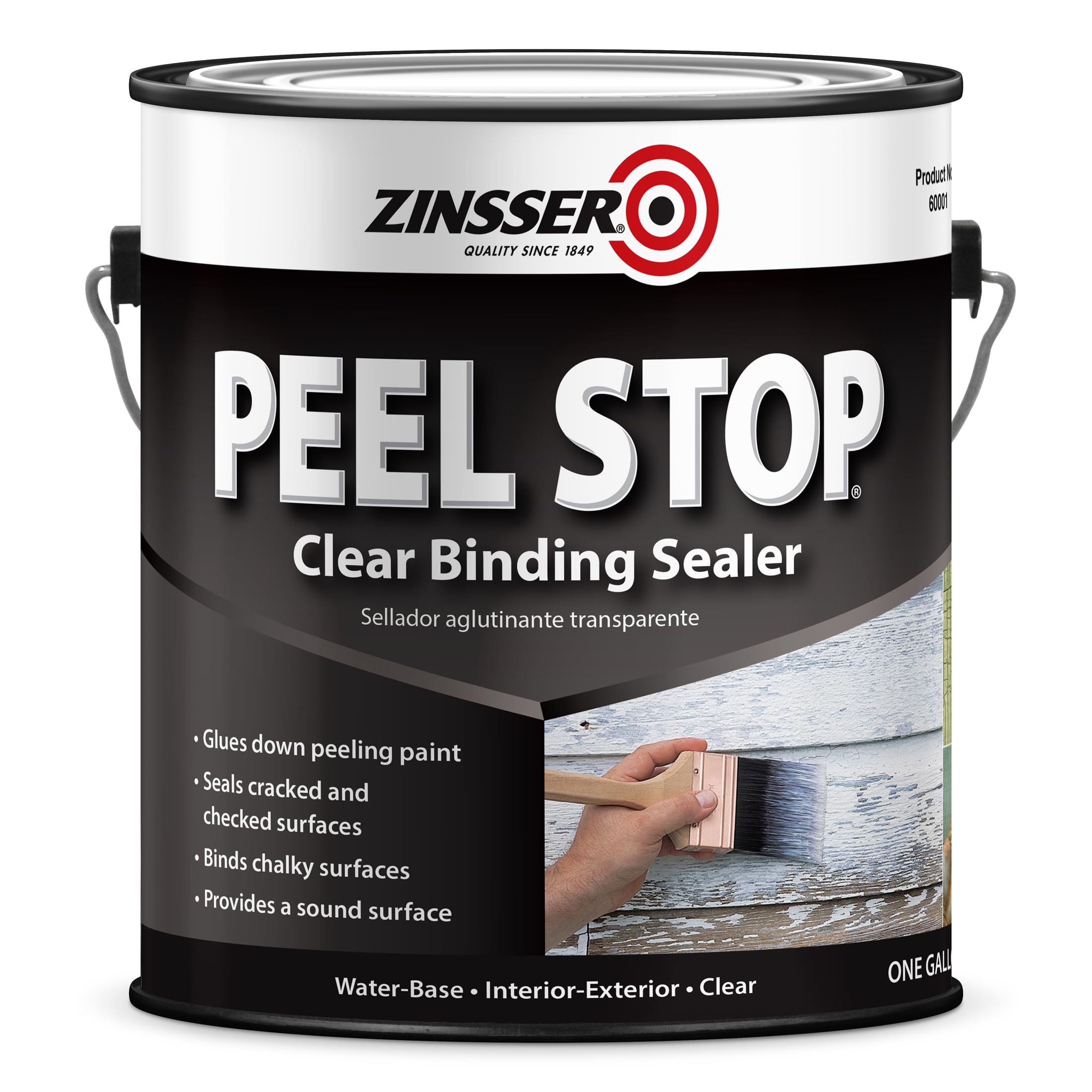
When old oil paint is already peeling or chalky, Peel Stop acts as both a binder and a primer. Its thin, watery consistency seeps under loose paint edges, gluing them back to the substrate while creating a uniform, flat-finish base for latex topcoats. Users report it works well on old solid wood doors with multiple peeling layers, eliminating the need for extensive scraping or sanding.
This water-based acrylic formula covers 150 square feet per gallon and dries to touch in 30 minutes — fast enough to keep moving. It is compatible with both alkyd and latex paints, making it a versatile choice for mixed-material projects. One reviewer noted it held up for months on a concrete deck and on a beadboard ceiling after painting with flat primer and ceiling paint.
For anyone facing flaking or chalky oil paint, Peel Stop saves hours of labor. It will not hide heavy texture or deep cracks, but for light to moderate peeling, it is the most efficient solution on the market.
Why it’s great
- Bonds loose paint edges without sanding or stripping
- Water-based with low odor and fast dry time
- Gallon size offers good value for larger projects
Good to know
- Thin consistency makes rolling tricky on vertical surfaces
- Dries glossy and milky, not clear as label suggests
4. Zinsser Odorless Oil-Base Stain Blocker Primer

Zinsser’s Odorless Oil Primer is the low-VOC alternative for those who want oil-based bite without the headache. This high-solids formula covers up to 100 square feet per quart and dries to touch in 30 minutes, making it one of the faster oil-based options. It seals water stains, fire damage, and smoke odors effectively, providing a bright white flat finish that won’t yellow over time.
Users have applied it successfully on metal poles in occupied commercial spaces, noting the reduced odor compared to traditional oil primers. It also works well on peeled drywall paper and concrete after mold remediation. However, some customers still detect a mild solvent smell, so ventilation remains wise despite the “odorless” claim.
For budget-conscious projects needing stain-blocking and a traditional oil-primer bond, this quart is a solid entry-level choice. Just be prepared for longer recoat times compared to water-based or shellac alternatives.
Why it’s great
- Low VOC with reduced odor for indoor use
- High solids coverage blocks stains effectively
- Bright white finish does not yellow over time
Good to know
- Mild odor still present in enclosed spaces
- Oil-based so solvent required for cleanup
5. 3M 4298UV Adhesion Promoter

This 3M product is not a paint primer. It is a liquid adhesion promoter designed specifically for double-sided acrylic automotive tape. If you need to attach trim, emblems, or louvers to oil-based automotive paint, this clear liquid creates an aggressive bond that turns two-sided tape into a near-permanent attachment. Reviewers report holding power at 145 mph on car louvers.
The 4-ounce bottle includes a UV-detectable marker to verify coverage, and each bottle replaces about 47 single-use sponge applicators. It dries in roughly 30 seconds, so you must work quickly. While it is an excellent product for its intended use, it will not help you paint walls or furniture — it is strictly for tape adhesion on automotive and plastic surfaces.
Buy this only if your “latex over oil” project involves taping accessories onto an oil-painted car panel. For all other painting projects, choose one of the dedicated paint primers above.
Why it’s great
- Creates extremely strong tape bond on glossy automotive paint
- UV detection confirms coverage visually
- Bottle format is more economical than single-use packets
Good to know
- Not for paint — only for double-sided tape adhesion
- Very fast drying leaves little working time
FAQ
Can I paint latex directly over oil without a bonding primer?
Do I need to sand the oil paint before applying a bonding primer?
How long should I let the bonding primer dry before painting latex over it?
Final Thoughts: The Verdict
For most users, the best bonding primer for latex over oil is the XIM UMA Acrylic Bonder because it provides the strongest grip on glossy surfaces with low odor and water cleanup. If you need aggressive stain blocking on top of adhesion, grab the Zinsser BIN Shellac Primer Spray. And for peeling or chalky old oil paint, nothing beats the labor-saving power of the Zinsser Peel Stop Clear Sealer.

Mo Maruf
I created WellFizz to bridge the gap between vague wellness advice and actionable solutions. My mission is simple: to decode the research and give you practical tools you can actually use.
Beyond the data, I am a passionate traveler. I believe that stepping away from the screen to explore new environments is essential for mental clarity and physical vitality.