Our readers keep the lights on and my smoothie glass nicely filled. As an Amazon Associate, I earn from qualifying purchases.
Mystery board games have evolved far beyond rolling dice and reading a suspect card. The best titles now demand real deductive reasoning, immersive narrative analysis, and sometimes even digital integration to crack a case. Whether you want a cooperative puzzle or a competitive race to the truth, the right game can turn a quiet evening into an intense investigation.
I’m Mohammad Maruf — the founder and writer behind WellFizz. I’ve spent years dissecting board game mechanics, analyzing consumer trends, and scanning thousands of playtest reviews to separate the genuinely clever from the gimmicky.
After cross-referencing case complexity, replay value, and component quality across dozens of releases, I’ve built a focused list of the best board games mystery fans can buy right now.
How To Choose The Best Board Games Mystery
Not every mystery game delivers the same experience. Some are light, party-friendly diversions, while others require intense note-taking and hours of focus. Here is what separates a good case file from a great one.
Case Count vs. Replay Value
A game with 200 cases, like the Deluxe 221B Baker Street, offers enormous replay potential but often relies on simpler word puzzles to fill that volume. In contrast, a premium game with only 5 or 16 hyper-detailed cases may provide fewer sessions but far deeper immersion per session. Know your tolerance for repeat plays before choosing.
Cooperative vs. Competitive Deduction
Most modern mystery games lean cooperative — everyone solves the mystery together. But titles like Clue remain competitive, where one player wins by deducing the correct answer first. Cooperative games such as Detective or Paranormal Detectives encourage shared discovery and discussion, which is ideal for date nights or family game sessions. Competitive games suit groups who enjoy a little rivalry.
Digital Integration and Clue Delivery
Several top-tier mystery games now require internet access to access answer keys, databases, or fake websites. Games like Unsolved Case Files and Portal Games Detective integrate online components to verify progress and extend the narrative. This can feel immersive, but it also means you cannot play if the Wi-Fi is down. Pure analog games like MicroMacro: Crime City or Clue avoid this entirely.
Quick Comparison
On smaller screens, swipe sideways to see the full table.
| Model | Category | Best For | Key Spec | Amazon |
|---|---|---|---|---|
| 221B Baker Street Deluxe | Case-Based Deduction | Large group replay | 200 Case Cards | Amazon |
| Unsolved Case Files: Sandra Ivey | Cold Case Immersion | Solo or couple deep-dive | 3-Step Online Verification | Amazon |
| Detective | Realistic Investigation | Dedicated group sessions | 2-Hour Playing Time | Amazon |
| theory11 Box ONE | Solo Puzzle Adventure | Single-player challenge | 1 Player Only | Amazon |
| MicroMacro: Crime City 2 | Visual Observation | Family observation fun | 75x110cm City Map | Amazon |
| Paranormal Detectives | Party Investigation | Larger social groups | 35 Interaction Cards | Amazon |
| Clue Vintage Bookshelf | Classic Whodunit | Family competition | 3-6 Players | Amazon |
In‑Depth Reviews
1. Deluxe 221B Baker Street Board Game – 200 Intriguing Adventures 2-6 Players
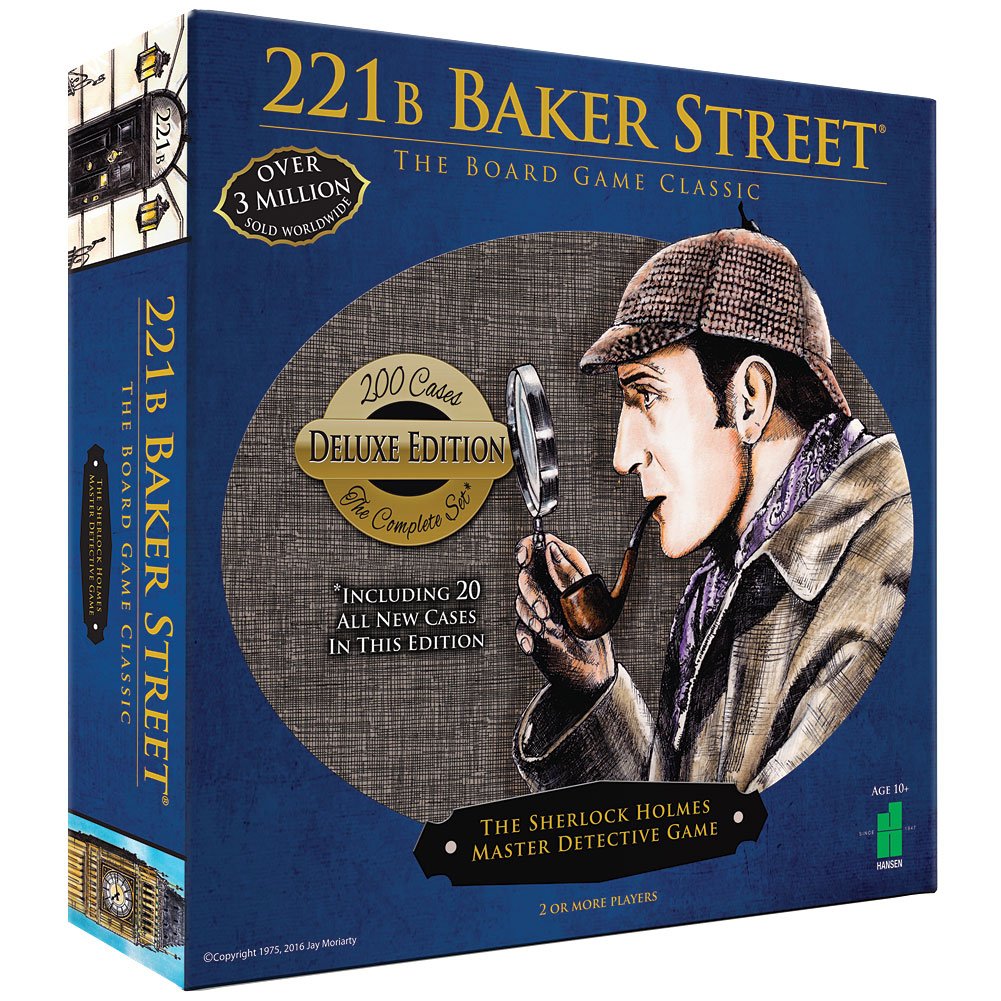
This deluxe edition of 221B Baker Street gives you 200 individual case cards, each requiring you to roll dice, move around a illustrated London board, and collect clues from specific locations. The game is strictly cooperative or competitive depending on your group’s preference, and each case takes about 30 minutes to solve. The physical components include a large game board, six metal tokens, Scotland Yard cards, and a solution checklist pad — everything you need for repeat sessions.
The cases themselves range from murders to robberies to missing items, and many puzzles involve word ciphers and riddles rather than pure luck. Red herrings are intentionally placed to reward careful deductive reasoning. Some reviewers note that the level of difficulty can be inconsistent — a few puzzles feel too easy, while others require decoding older British slang that may send younger players searching the web. Still, the sheer volume of content is unmatched at this tier.
For families or groups who want a reliable, battery-free mystery game they can play dozens of times without repeating scenarios, this is the strongest foundation. The cooperative option allows everyone to work together, keeping younger players engaged without the sting of losing. The dice-based movement adds a minor luck element, but the puzzle-solving remains the star.
Why it’s great
- Massive 200-case library ensures years of replayability
- Classic deduction gameplay that appeals to adults and teens
- Cooperative mode makes it ideal for family game nights
Good to know
- Some cases rely on dated British slang that may need explaining
- Dice rolls can create frustrating random location selection
- Word puzzles can feel too simple for experienced sleuths
2. Unsolved Case Files | Ivey, Sandra – Cold Case Murder Mystery Game

Unsolved Case Files drops you into a fictional sabotage and murder aboard the world’s first commercial space station. You are given a packet of evidence photos, crew interrogations, newspaper articles, and suspect sheets — all presented as realistic case files. The game is structured in three distinct steps: first prove the sabotage, then prove the murder, and finally identify the killer. Each step requires passing an online answer check before advancing, which prevents accidental spoilers.
Players report that a focused session takes between two and five hours depending on group size. The digital component is minimal but clever — you visit a fake website and watch a fake news report to extract a key clue. The evidence quality is high, with printed documents that feel authentic. The game is designed for solo players, couples, or groups of up to six, and the cooperative nature means everyone shares the satisfaction of cracking the final answer.
If you want a single-case premium experience that feels like being a real detective, this is the most immersive option available. The space station setting keeps it fresh, and the multi-step verification ensures you aren’t accidentally flipping to the answer page. The main trade-off is that once you solve it, the game is complete — there is no built-in replay value beyond the one case.
Why it’s great
- Authentic crime scene documents and photo evidence
- Three-phase puzzle structure with online verification
- Ideal for a focused 2-5 hour session with friends
Good to know
- Single case only — zero replay value after solving
- Requires internet access for key clues and answer checks
- Heavy reading load may overwhelm casual players
3. Portal Games Detective
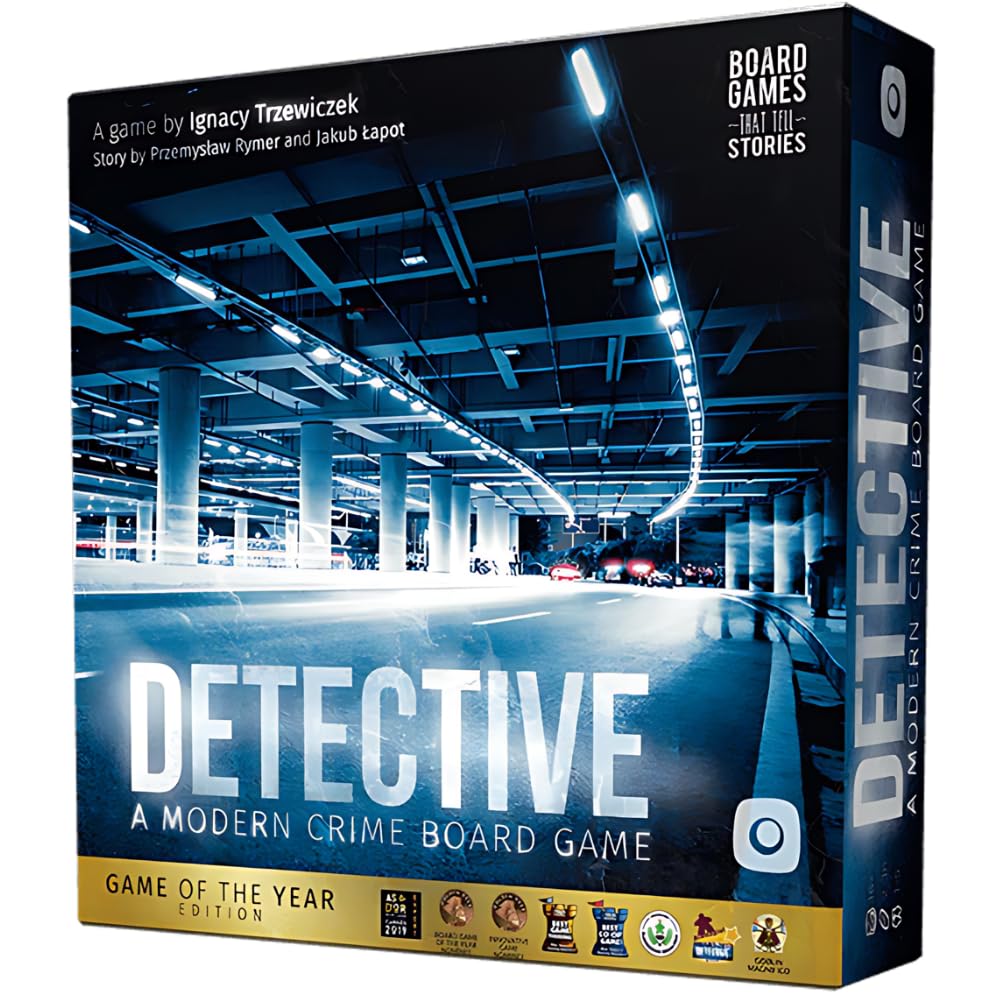
Detective from Portal Games is a fully cooperative investigation experience that uses a fictional online database called the Antares Database to deliver clues, suspect bios, and case evidence. The game includes five crime cases that form a single overarching narrative, each requiring about two hours of dedicated play. Players must take detailed notes, track leads, and use real-world research skills alongside the provided game materials.
The game mechanics include fingerprint matching, database queries, and time-limited decisions that force your team to choose between following a promising lead and rushing toward the deadline. Reviewers consistently praise the immersive writing and the realistic pressure of the time limit. The game is best played with two to four focused players who are willing to commit to the full campaign. A big rulebook means a twenty-minute YouTube tutorial is highly recommended before your first session.
For groups who love narrative depth and want a serialized mystery experience that rewards careful observation and note-taking, Detective is the clear winner. The five-case structure means you get multiple sessions of content, and the interconnected plot provides a satisfying payoff. The downside is that the Antares Database runs on your laptop, which can drain battery during long sessions and requires internet access.
Why it’s great
- Deep narrative with five interlocking cases
- Realistic time-pressure mechanics force smart decisions
- Digital database integration feels like real detective work
Good to know
- Steep learning curve — rulebook is complex
- Requires internet and a laptop or tablet for database access
- Final report questions can feel mismatched to the case content
4. theory11 Box ONE Board Game Presented by Neil Patrick Harris

Box ONE is a one-of-a-kind single-player puzzle adventure designed by Neil Patrick Harris. Unlike traditional board games, this is an evolving puzzle box that you interact with through a combination of physical components and an online interface. You solve trivia, riddles, and physical puzzles from inside the box — opening compartments, decoding messages, and moving through an interactive story that only reveals itself as you progress.
The production value is exceptionally high. The box itself, the cards, and the hidden compartments are all crafted to feel like a premium artifact. Players report that the puzzles are clever but accessible — experienced puzzle solvers often finish in under three hours, while new players may stretch it to five or six. The game requires internet access to progress through the narrative, and you need a device to enter answers and unlock the next stages.
If you enjoy escape rooms or puzzle hunts and want a solitary or two-person challenge, Box ONE delivers a tightly woven experience that feels like a puzzle adventure in a box. The big caveat is that it is a one-time playthrough — once solved, the physical surprises are revealed. The short runtime relative to the price point makes it an experience purchase rather than a replayable game night staple.
Why it’s great
- Exceptional production quality and hidden compartment design
- Clever puzzle progression that escalates in complexity
- Works great as a solo or two-player activity
Good to know
- Single playthrough only — no replay value after solving
- Relatively short playtime for dedicated puzzle solvers
- Internet access is mandatory throughout the experience
5. MicroMacro: Crime City 2 – Full House

MicroMacro: Crime City 2 is a visual observation game that replaces text-heavy clues with a gigantic, detailed black-and-white city map measuring 75×110 cm. You receive a deck of 120 cards that reveal 16 crime cases, and your job is to scan the map to find the illustrated events, follow the trail of visual clues, and reconstruct what happened. The game is purely cooperative and works for one to four players, with each case taking 15 to 45 minutes.
The map is densely packed with tiny illustrations — characters fighting, fleeing, hiding, or arguing. You follow them across the city using a magnifying glass to spot critical details. The cases are marked with difficulty symbols, letting parents choose age-appropriate mysteries for younger detectives. The game is easy to learn within minutes, and the cases are standalone, so you can play as many or as few as you want in a session.
For families or groups who prefer a visual puzzle over a reading-intensive investigation, MicroMacro is a refreshing change of pace. The huge poster-style map makes the game feel expansive, and the lack of text barriers means even reluctant readers can participate fully. The main limitation is that once you know the map and the events, replaying a specific case loses its challenge — but with 16 cases, you get plenty of first-time discoveries.
Why it’s great
- Unique visual observation mechanic — no reading required
- Massive, detailed city map encourages repeated scanning
- Quick setup and easy-to-understand rules for all ages
Good to know
- Replay value is limited once you know the map
- Map is large — you may want to laminate or hang it on a wall
- Not a deep narrative game; purely observation-based
6. Paranormal Detectives Party Game

Paranormal Detectives asks one player to take the role of a ghost who can only communicate with yes or no answers, while the other players act as detectives who must ask the right questions using one-time-use interaction cards. These cards include actions like pantomime, word puzzle, tarot reading, string shapes, and paranormal meter readings. The ghost picks cards blindly, creating funny and unpredictable clue sessions.
The game includes 28 story scenarios, each with a unique crime to solve. Rounds last 30 to 45 minutes, making it easy to play multiple times in a single sitting. The artwork and thematic design are strong, and the communication restrictions force creative thinking rather than pure deduction. Players compare it favorably to games like Mysterium or Clue, noting that the yes/no limitation prevents any single player from dominating the conversation.
For social groups who want a mystery game that prioritizes laughter and creativity over serious investigation, Paranormal Detectives is a standout. The 28 scenarios provide solid replay value, and the ability to create your own cases extends the life further. The box and board feel a bit flimsy compared to premium titles, but the gameplay itself is polished and consistently entertaining.
Why it’s great
- Unique ghost communication mechanic drives creative gameplay
- Quick 30-45 minute rounds suit party settings
- 28 scenarios plus easy custom case creation
Good to know
- Box and board quality feel below premium standards
- Best with three or more players — awkward as a duo
- Ambiguous clues can sometimes frustrate deductive types
7. WS Game Company Clue Vintage Bookshelf Edition
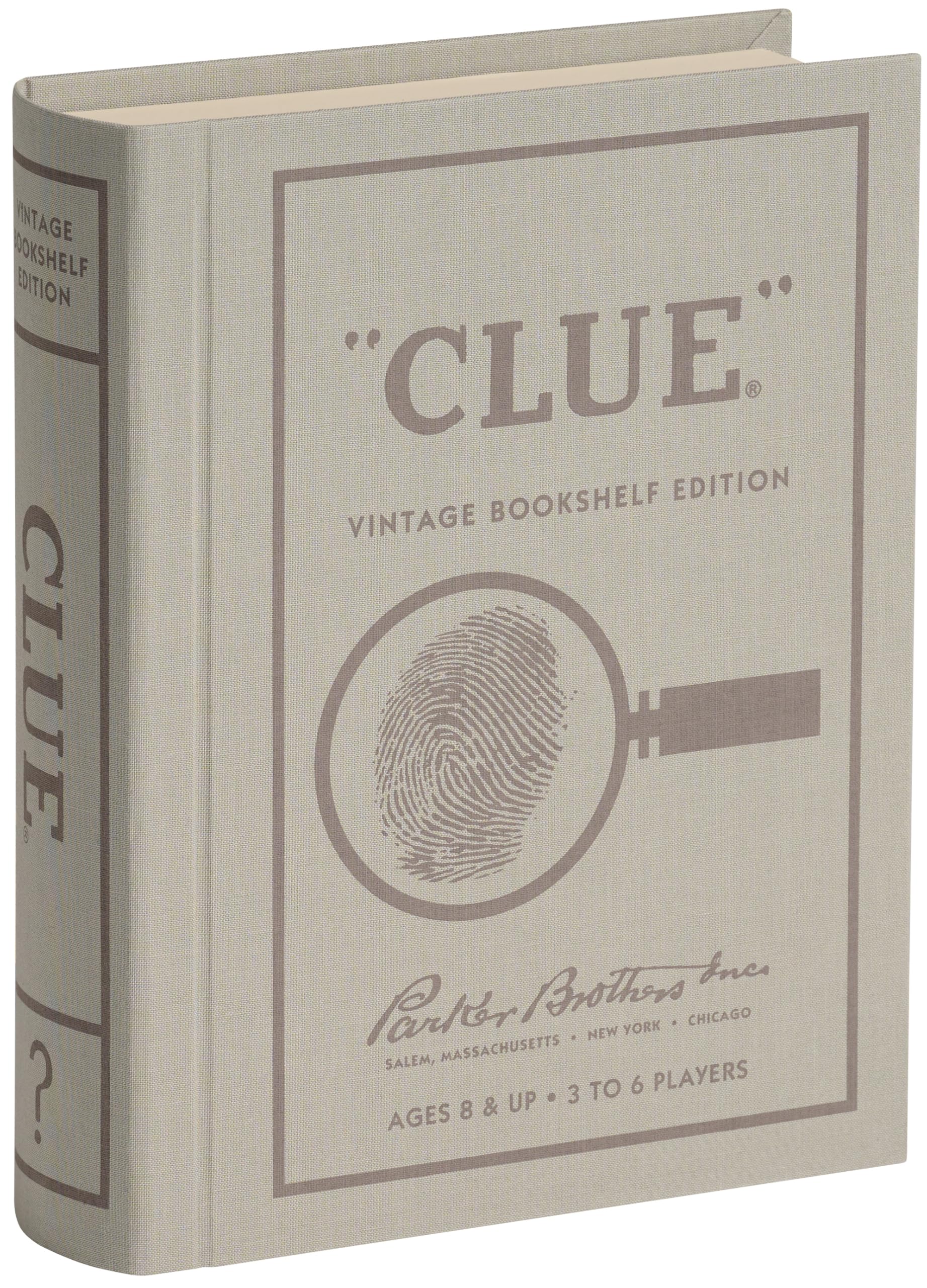
This edition of Clue is a premium reproduction of the classic 1949 design, housed in an elegant linen-wrapped book case that blends into any bookshelf. The game includes wood movers with die-cast bases, detailed die-cast weapons, and vintage-inspired cards. A notepad and six pencils are included for tracking clues, maintaining the classic whodunit experience that has defined the genre for decades.
The game mechanics are identical to the original Clue — players move through rooms, make suggestions, and narrow down the suspect, weapon, and room combination. The key upgrade here is the physical presentation. The bookshelf case measures 10.6 x 8.4 x 2.6 inches, a compact footprint that stores easily. The game board folds out to 18.5 x 18.25 inches, providing a spacious playing surface. For three to six players ages eight and up, this is the most approachable mystery game on the list.
If you want a classic competitive mystery experience with high aesthetic value, the Vintage Bookshelf Edition is the way to go. It works for all skill levels and age groups, and the bookshelf design makes it a conversation piece rather than an eyesore. The trade-off is that the gameplay is intentionally simple by modern standards — there are no deep puzzles, no cooperative elements, and no digital integration. It is a pure, elegant iteration of a proven formula.
Why it’s great
- Beautiful linen-wrapped bookshelf packaging
- Premium components including die-cast weapons and wood movers
- Classic, accessible gameplay for all ages and skill levels
Good to know
- No cooperative mode — purely competitive deduction
- Gameplay is simple and familiar to most players
- Small book-case design means compact storage limits board size
FAQ
Can mystery board games be played solo?
How long does a typical mystery board game session last?
Do all mystery board games require internet access?
Final Thoughts: The Verdict
For most users, the best board games mystery winner is the Deluxe 221B Baker Street because its 200-case library offers unmatched replay value for families and groups of all ages. If you want a single immersive case that feels like a real detective investigation, grab the Unsolved Case Files: Sandra Ivey. And for a visual, no-reading-required experience that the whole family can enjoy, nothing beats the MicroMacro: Crime City 2 – Full House.

Mo Maruf
I created WellFizz to bridge the gap between vague wellness advice and actionable solutions. My mission is simple: to decode the research and give you practical tools you can actually use.
Beyond the data, I am a passionate traveler. I believe that stepping away from the screen to explore new environments is essential for mental clarity and physical vitality.