Our readers keep the lights on and my smoothie glass nicely filled. As an Amazon Associate, I earn from qualifying purchases.
The solo board game world has grown far beyond simple puzzle books. Today’s single-player tabletop experiences offer deep narrative campaigns, tight resource-management puzzles, and escalating tension that rivals anything you’d find on a screen. Whether you’re fighting an alien armada, surviving a slasher film, or cracking a puzzle box made by Neil Patrick Harris, the category now rewards strategy, adaptability, and a willingness to lose before you win.
I’m Mohammad Maruf — the founder and writer behind WellFizz. I’ve spent the last several years analyzing board game mechanics, component quality, and replay systems, specifically for solo and small-player-count games where the burden of fun falls entirely on one brain.
After weighing setup time, rule clarity, replay value, and physical component quality across five top-rated titles, I’ve identified the best board games for single player that deliver genuine challenge without needing a group.
How To Choose The Best Board Games For Single Player
The biggest mistake solo buyers make is treating a single-player board game like a standard multiplayer title with fewer seats. Solo games are fundamentally different — they require an automated opponent system, variable setup, or escalating failure states that create tension without human bluffing. Before you buy, evaluate these three pillars.
Mechanic Type: Dice Allocation vs. Bag-Building vs. Puzzle
Dice allocation games, like Under Falling Skies, let you place dice on action slots then reroll leftovers to force tough tradeoffs. Bag-building, as seen in Warp’s Edge, uses card draws from a shifting pool so every pull feels distinct. Pure puzzle games, like Box ONE, demand lateral thinking with a linear structure. Your preference determines whether you lean toward strategy replay or one-time discovery.
Replay Value Systems
Not all replay systems are equal. Look for variable enemy AI, modular map tiles, difficulty sliders, or campaign logs that unlock new content. Games with procedurally shuffled components (motherships, killers, or city tiles) keep the puzzle fresh past ten plays. Single-narrative puzzle boxes, while rewarding, typically exhaust their mystery in one sitting — weigh that against your desire for a one-weekend experience versus a shelf-stable title.
Component & Physical Footprint
Solo games often spend more time on a desk or coffee table than packed away. Check box dimensions and whether the game requires a full table or fits on a laptop tray. Also assess token thickness, cardstock quality, and rulebook clarity — these matter more when you’re teaching yourself without a group to clarify rules.
Quick Comparison
On smaller screens, swipe sideways to see the full table.
| Model | Category | Best For | Key Spec | Amazon |
|---|---|---|---|---|
| Under Falling Skies | Mid-Range | Dice allocation with campaign depth | 35 min playtime, campaign mode included | Amazon |
| Warp’s Edge | Mid-Range | Bag-building roguelike in space | Bag-building mechanic, 4 starfighters | Amazon |
| Box ONE | Mid-Range | Solo puzzle adventure, internet required | Trivia & puzzle hybrid, 10.5″ box | Amazon |
| Final Girl Starter Set | Premium | Horror-themed strategic survival | 20-60 min, modular killer & location combos | Amazon |
| Unbroken | Premium | Dark fantasy card game with resource management | 20-30 min, 144+ age cap | Amazon |
In‑Depth Reviews
1. Czech Games Under Falling Skies
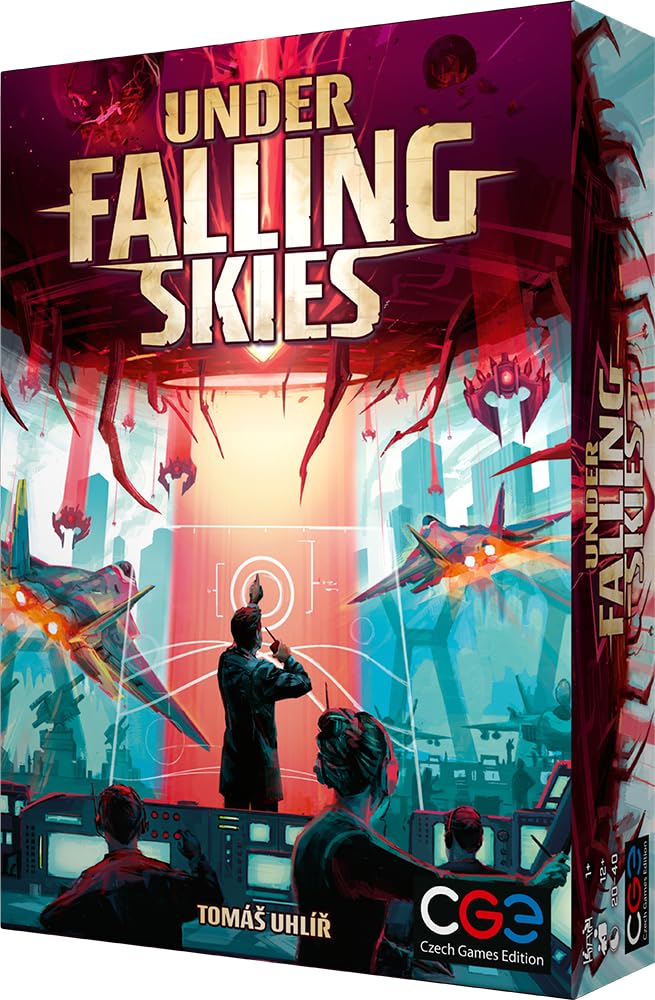
Under Falling Skies began as a print-and-play contest winner, and that lean DNA shows in how efficiently it wrings tension from a handful of dice and a city map. You roll dice, place them on your base’s action spaces to research tech or shoot down alien ships, then one die is rerolled to match the alien progression track — a single reroll that forces brutally sharp tradeoffs every turn.
The base game comes with a full campaign mode that unlocks new city tiles, alien mothership sections, and special characters, dramatically increasing replay value beyond the simple one-off scenario. Players consistently rate the escalating pressure and clever scaling difficulty as top-tier for the price tier. The compact box (roughly 7 inches across) fits comfortably on a desk or coffee table without dominating the space.
Component quality is functional rather than luxurious — the box is soft cardboard that dented during shipping for some buyers, and the punchboard can warp if the box is stored vertically under weight. But for the depth packed into the footprint, Under Falling Skies remains the most balanced marriage of challenge, campaign content, and play time in the solo category.
Why it’s great
- Excellent campaign mode with unlockable content adds huge variety
- Dice allocation mechanic creates tough strategic decisions each round
- Compact box and minimal table footprint ideal for solo play
Good to know
- Box material is soft and prone to damage during shipping
- Not ideal for play on small airplane trays despite compactness
2. Renegade Game Studios Warp’s Edge

Warp’s Edge solves one of solo gaming’s hardest problems — making each session feel distinct — by building its core loop around a bag-building mechanic. You start with a small pool of skill cards, and between each time-loop jump you pull cards, upgrade your draw pool, and swap out weaker options for more powerful combat abilities. The randomness of bag draws is more predictable than dice, which players report creates a fairer sense of progression.
The box includes four distinct starfighters with unique weapon loadouts and five alien motherships, creating 20 baseline combinations. A companion storybook lets you make narrative choices that affect game setup, adding a choose-your-path layer that rewards multiple playthroughs. Play sessions run 30 to 45 minutes, making it easy to fit a loop or two into an evening without table commitment.
The cartoonish art style contrasts with the weighty gameplay — some buyers expecting grim sci-fi were surprised by the lighter visual tone. The token and card quality is excellent, and the rulebook is clear enough to learn without YouTube, though the storybook is best read during the first few plays to lock in the fantasy. For solo players who love gradual power growth and replayable asymmetric setups, this is a standout.
Why it’s great
- Bag-building mechanic offers satisfying progression loop across warps
- Four starfighters and five motherships create high combination replayability
- Storybook narrative choices meaningfully affect game setup
Good to know
- Cartoonish art may not appeal to players wanting a grim space aesthetic
- Some players report the puzzle becomes formulaic after several wins
3. theory11 Box ONE

Box ONE is a one-and-done puzzle experience designed by Neil Patrick Harris that offers a completely different solo value proposition — a linear, narrative adventure where the box itself is a prop. You solve clues, crack codes, and interact with physical items in a sequence that demands internet access and lateral thinking. The production quality is stunning: a large 10.5-inch box with premium print, hidden compartments, and tactile reveals.
The puzzle difficulty is calibrated for experienced riddle solvers — most adult players report solving the entire experience in about three hours without external hints. That makes Box ONE more of an immersive three-hour movie than a reusable game. The replayability is near zero until the memory fades, but the sheer cleverness of the reveals and the physical production value earns its place as a premier one-time solo event.
Some buyers find the internet requirement inconvenient — certain puzzles involve time-based components that require adjusting your device clock, which can feel fiddly. For couples or families sharing a session, Box ONE works surprisingly well as a collaborative activity despite the single-player branding. If you want a memorable evening of deduction rather than a shelf-stable strategy game, this is the pick.
Why it’s great
- Stunning production quality with physical reveals and hidden compartments
- Clever, layered puzzle progression that rewards lateral thinking
- Works well as a collaborative solo adventure for couples
Good to know
- Near-zero replayability — a one-time experience
- Requires internet access and may need device clock adjustments
4. Van Ryder Games Final Girl Starter Set

Final Girl is the solo board gaming equivalent of a horror movie where you control the survivor. The Starter Set includes the Core Box and the Happy Trails Horror film, which gives you a map of the campground location, Hans the Butcher as the killer, and two unique final girls with distinct abilities. The killer has a deck of terror cards that escalate the threat each round, forcing you to balance movement, item searching, and direct combat.
The modular expansion system is the star here — each additional Feature Film Box adds a new killer, a new location, and new terror cards that dramatically shift the game’s feel. A slasher at a summer camp plays completely differently from a poltergeist in a haunted house. This expandability gives Final Girl near-infinite replay value if you enjoy collecting expansions, but the base set alone already offers meaningful variety through two final girls and scenario variability.
The rulebook is dense — several buyers report needing YouTube tutorials to fully internalize the flow, especially the killer AI movement and event sequencing. Play time ranges from 20 minutes on a careless run to two hours for thoughtful, methodical decisions. The components are solid and the theme is thick, but the learning curve is steeper than the other games on this list.
Why it’s great
- Highly expandable system with modular killers and locations
- Two unique final girls with different abilities in the starter set
- Escalating terror deck creates genuine tension and variety
Good to know
- Rulebook is confusing; most players need video tutorials to learn
- Playtime varies dramatically from 20 minutes to 2 hours
5. Golden Bell Studios Unbroken

Unbroken earned its reputation as the most-backed solo operative card game on Kickstarter, and the retail version includes all stretch goal content. You control a lone survivor navigating a dark fantasy world, drawing cards to build an engine for resource management, combat, and progression. The game is fast — 20 to 30 minutes per session — making it one of the quickest solo card games to set up and tear down.
The mechanical elegance is widely praised: easy to learn but deep strategy emerges from balancing health, resources, and your growing card pool. The flavor text on cards adds narrative immersion, but some players complain the text is too small to read comfortably. The retail box comes with dozens of blank cards for custom content, which extends the life for creative players who enjoy designing their own scenarios.
The biggest asterisk is the publisher controversy — Kickstarter backers reported missing components, delayed fulfillment, and communication issues that soured perception. The actual gameplay, however, is independently praised across reviews, and the designer is recognized as talented despite the publisher’s reputation. Component quality is mixed: sturdy box but thin cardstock that feels economical for the -tier price. If you can look past the drama, the core loop is genuinely rewarding.
Why it’s great
- Fast 20-30 minute play sessions with quick setup
- Deep resource management strategy despite simple rules
- Includes Kickstarter stretch goals and blank custom cards
Good to know
- Publisher had a controversial Kickstarter history with missing components
- Cardstock feels thin for the price; flavor text is very small
FAQ
What is the difference between bag-building and deck-building in solo games?
Can a solo board game be replayed after I finish the campaign?
Do solo board games require internet access to play?
Final Thoughts: The Verdict
For most users, the best board games for single player winner is the Czech Games Under Falling Skies because it delivers excellent campaign replay value, tough dice-allocation decisions, and a compact footprint without breaking your budget. If you want a roguelike space combat experience that feels different every run, grab the Renegade Game Studios Warp’s Edge. And for a single intense horror-themed survival session, nothing beats the Van Ryder Games Final Girl Starter Set.

Mo Maruf
I created WellFizz to bridge the gap between vague wellness advice and actionable solutions. My mission is simple: to decode the research and give you practical tools you can actually use.
Beyond the data, I am a passionate traveler. I believe that stepping away from the screen to explore new environments is essential for mental clarity and physical vitality.