Choosing your first board game shouldn’t feel like solving a complex puzzle. The wrong pick can lead to confusion, frustration, and a game that gathers dust. My deep-dive research into entry-level games shows that the sweet spot lies in simple rules, quick setup, and the potential for genuine strategy.
I’m Mohammad Maruf — the founder and writer behind WellFizz. Over years of analyzing market trends and consumer data, I’ve developed a system for evaluating games based on their core mechanisms, accessibility, and long-term replay value, not just flashy box art.
This guide cuts through the noise to spotlight titles that build confidence and create laughter, not headaches, ensuring your first foray into tabletop gaming is a resounding success with the absolute best board games for beginners.
How To Choose The Best Board Games For Beginners
Selecting the right starter game is about managing expectations. You want something that teaches easily, plays in a reasonable time, and leaves everyone wanting another round. Focus on these elements to guarantee a hit.
Rule Complexity & Setup Time
Look for games where you can explain the core idea in under five minutes. A short setup time—ideally under three minutes—keeps energy high and prevents immediate boredom. Games with intuitive turns, like placing a tile or playing a card, are far more welcoming than those requiring a lengthy rulebook study session.
Player Count & Playtime Flexibility
Consider your typical group size. Some games shine with two players, while others need four or more to be engaging. A “sweet spot” range (e.g., 2-4 players) offers the most versatility. Similarly, a playtime of 20-45 minutes is ideal; it’s long enough to feel substantial but short enough to allow for multiple rounds or different games in one sitting.
The Luck vs. Strategy Balance
Pure strategy games can feel overwhelming and punishing for newcomers. The best beginner games incorporate an element of luck—through dice, card draws, or tile pulls—to level the playing field. This balance ensures new players can win, which is crucial for building confidence and enjoyment, while still offering meaningful choices.
Quick Comparison
On smaller screens, swipe sideways to see the full table.
| Model | Type | Best For | Key Feature | Amazon |
|---|---|---|---|---|
| CATAN (6th Ed.) | Strategy | First modern board game | Modular board, trading | Amazon |
| Azul | Abstract | Visual & tactile learners | Beautiful tile drafting | Amazon |
| Carcassonne | Tile-Laying | Cooperative competition | Build a shared map | Amazon |
| 7 Wonders Architects | Civilization | Large groups (2-7 players) | Fast card drafting | Amazon |
| Magnetic Chess/Checkers | Classic | Travel & portability | 2-in-1, folding board | Amazon |
| Zingo Bingo | Word/Picture | Pre-readers & families | Fast-paced tile matching | Amazon |
| Perfection Pop Up | Dexterity | Young kids & solo play | Timed shape sorting | Amazon |
| Double 12 Dominoes | Classic | Math & matching skills | Color-coded dots | Amazon |
| Operation | Dexterity | Nervous laughter | Iconic buzzer mechanic | Amazon |
| Yahtzee Words | Word/Dice | Word game enthusiasts | Yahtzee with letters | Amazon |
| SEQUENCE | Strategy/Card | Large teams & parties | Connect 5 in a row | Amazon |
In‑Depth Reviews
1. CATAN Board Game (6th Edition)

CATAN is the quintessential “gateway” game that has introduced millions to modern board gaming. The 6th Edition refines this classic with clearer rules, vibrant art, and built-in organizers, making it more accessible than ever. You collect resources like brick, wood, and sheep to build roads and settlements on a uniquely arranged island every game.
The core joy comes from trading and negotiation with other players, creating a social, interactive experience that’s easy to grasp but rich in strategic depth. Because the hexagonal board is built randomly at the start, no two games play the same, offering incredible replay value right out of the box.
It’s designed for 3 to 4 players and typically wraps up in about an hour, which is the perfect length to feel substantial without overstaying its welcome. This edition is the definitive starting point for anyone ready to move beyond classic mass-market games and explore what tabletop gaming has to offer.
Why it’s great
- Brilliantly balances luck (dice rolls) with meaningful strategic choices.
- Encourages player interaction through trading and light negotiation.
- The modular board ensures every game is a fresh, unique challenge.
- Updated 6th Edition components and rulebook are beginner-friendly.
Good to know
- Optimal with 3 or 4 players; the 2-player variant requires separate rules.
- Early-game luck with resource dice can sometimes feel swingy.
- While easy to learn, mastering resource management takes a few plays.
2. Azul Board Game

Azul is a stunning abstract strategy game where players draft beautifully crafted, jewel-like tiles to create a mosaic on their personal board. Inspired by Portuguese azulejos, the game is a tactile and visual delight that immediately draws people in. The rules are elegantly simple: pick all tiles of one color from a factory display and place the rest in the center.
Strategic depth emerges from planning your pattern rows, trying to complete columns and sets for big points while avoiding wasted tiles that incur penalties. It’s a game of quiet calculation and occasional spite, as you can see what colors your opponents need and potentially take them first. Each round is quick, making the overall 30-45 minute playtime fly by.
This is a perfect choice for beginners who appreciate beautiful components and a game that feels sophisticated without complex rules. It works wonderfully with two players but scales seamlessly up to four, making it a versatile staple for any game collection.
Why it’s great
- Exceptionally high-quality, satisfyingly chunky resin tiles.
- Rules can be taught in two minutes, but strategic choices are deep.
- Beautiful table presence that appeals to gamers and non-gamers alike.
- Almost zero setup time and consistent, engaging gameplay.
Good to know
- Can feel “mean” or directly competitive as players block each other’s plans.
- The strategy is abstract, which might not appeal to those who prefer a strong theme.
- Requires a moderate amount of table space for the central displays and player boards.
3. Asmodee Carcassonne Board Game
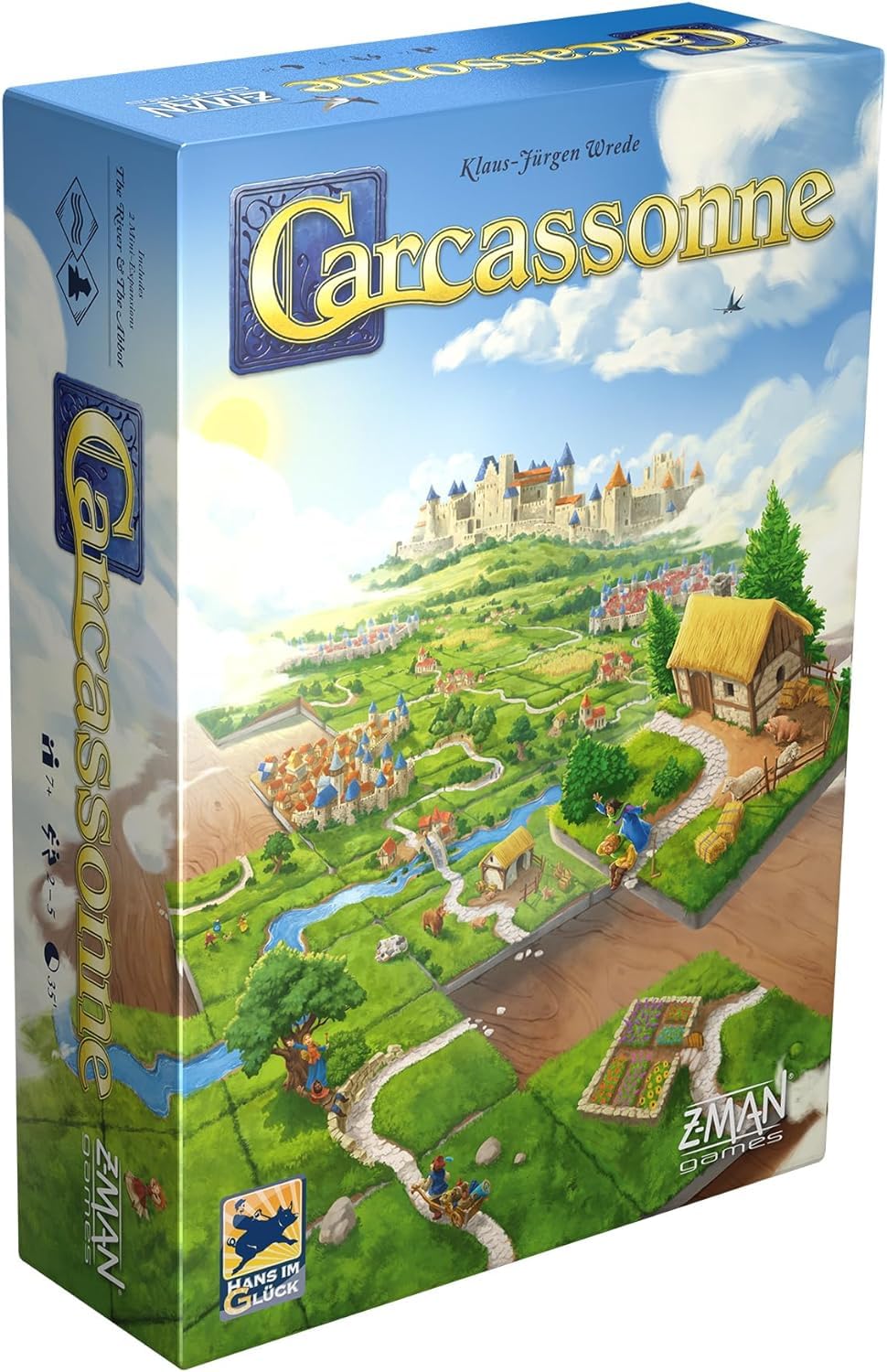
Carcassonne is a masterpiece of simple, elegant design. On your turn, you draw a land tile and place it to expand the medieval landscape of cities, roads, fields, and monasteries. You can then choose to place one of your wooden “meeples” on that tile to claim a feature, scoring points when it’s completed. The rules are incredibly intuitive, leading to a game that’s easy to learn but offers surprising strategic nuance.
The game creates a shared, collaborative feeling as you all build the map together, yet it remains competitive as you jockey for control of the largest cities and longest roads. The included “The River” and “The Abbot” mini-expansions in this edition add nice variety without complicating the core loop. A typical game wraps up in about 35 minutes, making it perfect for a quick, satisfying session.
Its accessibility and gentle learning curve make it one of the most recommended gateway games. It’s equally engaging for two players playing a tactical duel or for a full group of five enjoying a more communal experience.
Why it’s great
- Extremely simple turn structure (place a tile, optionally place a meeple).
- Creates a beautiful, ever-changing map on the table that tells a story.
- High replayability due to random tile draws and variable board layout.
- Excellent with two players but scales well up to five.
Good to know
- The “farmer” scoring rule can be slightly confusing for first-time players.
- Luck of the tile draw can occasionally hinder a specific strategy.
- The base game is fantastic, but the numerous expansions can be tempting.
4. Asmodee 7 Wonders Architects
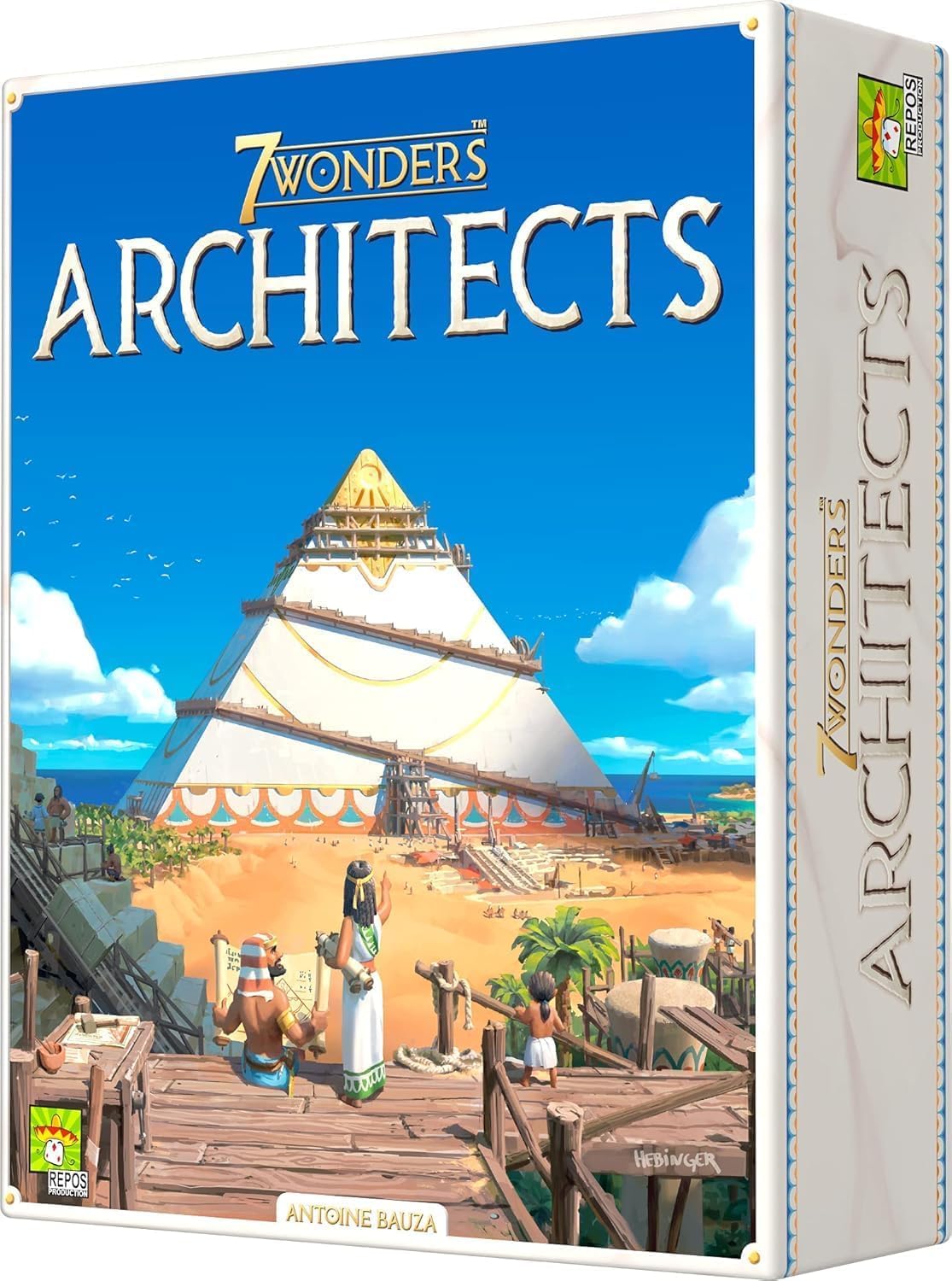
7 Wonders Architects is a streamlined, accessible version of the famous 7 Wonders civilization game, specifically designed for beginners and families. Your goal is to build your wonder by gathering resources, advancing science, and maintaining a military, all through a simple card-drafting system. Instead of a complex hand of cards, you simply choose from one of two face-up decks shared with your neighbors.
This open information makes decisions straightforward and reduces the anxiety of traditional drafting games. The game plays remarkably fast—about 25 minutes—regardless of whether you have 2 or the full 7 players, thanks to simultaneous turns. The components are large, colorful, and satisfying, with a well-organized box that makes setup a breeze.
It captures the epic feel of building a civilization without the daunting rulebook, making it a brilliant entry point for players aged 8 and up who want a taste of deeper gaming mechanics.
Why it’s great
- Unusually flexible player count (2-7) without slowing the game down.
- Very easy to teach; the “drafting” mechanic is intuitive and stress-free.
- High-quality components with clear iconography and built-in box organizers.
- Quick playtime encourages immediate replays to try different strategies.
Good to know
- While strategic, it is lighter and less complex than the original 7 Wonders.
- The military (conflict) and science (progress) mechanics are simplified.
- Best played on a table with enough space for each player’s wonder board.
5. 2 in 1 Magnetic Chess Set & Checkers Board Game

This wooden folding set solves the classic problem of teaching chess or checkers on the go. The strong magnets in the chess pieces and board keep everything securely in place during travel, in a car, or on an uneven surface, making it ideal for beginners who might accidentally bump the table. The checkers pieces are not magnetic, but they store neatly in the same compact slots.
The craftsmanship is solid for a mid-range set, with smooth, sanded wood and a classic look. The folding design is clever, creating a self-contained storage box that protects all the pieces. It includes two extra queens, which is helpful for pawn promotion. For those wanting to learn these timeless strategy games, the portability and “no-fuss” nature of this set lower the barrier to playing regularly.
It’s a fantastic physical object that encourages offline play and strategic thinking, serving as a durable and attractive introduction to the world of abstract strategy games.
Why it’s great
- Excellent portability for learning and playing anywhere; perfect for travel.
- Strong magnets prevent pieces from sliding, reducing frustration for new players.
- Quality wooden construction with a felted base for quiet, smooth play.
- Combines two classic games in one compact, organized package.
Good to know
- Checkers pieces are not magnetic, unlike the chess pieces.
- The board size is compact, which is great for portability but can feel crowded.
- As a pure abstract strategy game, chess has a steep long-term learning curve.
6. ThinkFun Zingo Bingo Award Winning Preschool Game

Zingo is essentially Bingo with a brilliant, engaging twist. A “Zinger” device slides out two tiles at a time, and players race to grab the tile that matches a picture or word on their card. It’s fast, exciting, and requires no reading for the picture-based side of the cards, making it perfect for preschoolers. The game naturally builds vocabulary, recognition, and fine motor skills.
The components are durable, with thick cardboard cards and solid plastic tiles designed to withstand enthusiastic play. Because rounds are quick and the rules are instantly understood, it holds the attention of young children remarkably well and can be played multiple times in a short session. It also includes a more challenging side to the cards with words, allowing the game to grow with the child.
For families with young kids, this is a top-tier entry-level game that feels like pure fun while delivering genuine educational value.
Why it’s great
- Builds language and matching skills in a wildly fun, fast-paced format.
- The unique “Zinger” tile dispenser is a huge hit with kids.
- High-quality, child-proof components that will last for years.
- Scales in difficulty, making it engaging for a range of ages (4-8).
Good to know
- The plastic Zinger device can be stiff to slide at first.
- Very much aimed at younger children; adults are facilitators.
- Tiles can scatter if the Zinger is handled too vigorously.
7. Hasbro Gaming Perfection Pop Up Game for Kids

Perfection is a timeless, nerve-wracking game of speed and shape matching. Players race against a ticking timer to fit all 25 geometric shapes into their corresponding holes on the grid before the tray pops up, scattering the pieces. The simple, high-stakes premise creates genuine excitement and laughter. This updated version adds fantastic replayability with adjustable tray panels, creating over 250 different board configurations.
It’s an excellent tool for developing fine motor skills, hand-eye coordination, and shape recognition under pressure. The game can be played competitively with friends or as a solo challenge, allowing a child to improve their own time. The satisfying (and slightly startling) “POP!” at the end of the timer is a classic moment of shared fun.
As a beginner game, it requires zero literacy and its rules are understood in seconds, making it a perfect, active choice for young children and family gatherings.
Why it’s great
- Teaches shapes, dexterity, and composure under time pressure.
- Adjustable grid panels prevent memorization and boost replay value.
- Iconic, thrilling gameplay that transcends generations.
- On-board storage keeps all pieces neatly contained.
Good to know
- The popping mechanism can be loud and may startle very sensitive children.
- Small pieces are a choking hazard for children under 3.
- The timer’s spring action is the core mechanic, which can wear over many years.
8. Spin Master Games, Cardinal Classics Double 12 Dominoes Set

This is a premium-feeling entry-level set for the classic game of Dominoes. The Double-12 set (with 91 dominoes) allows for more players and more complex scoring games like “Mexican Train.” The key beginner-friendly feature is the color-coded dots; each number is a different color, making it much easier for kids and those new to the game to quickly spot matches.
The dominoes themselves have a good weight and a smooth finish, and they come in a sturdy, attractive storage tin that will keep them organized for years. Dominoes teach fundamental skills like matching, basic math, and simple strategy in a social, relaxed setting. The included instructions cover several popular game variations, providing great value and longevity.
For a budget-friendly price, you get a beautifully practical set that serves as a lifelong game for the whole family and is an excellent introduction to tile-based gameplay.
Why it’s great
- Color-coded dots are a huge help for beginners and younger players.
- Durable storage tin protects the pieces and looks great on a shelf.
- Double-12 set supports more players and advanced game variants.
- Teaches number recognition, matching, and turn-based play seamlessly.
Good to know
- The colors on the dots may not be as vibrant as shown in some photos.
- Does not include playing racks; those must be purchased separately.
- The classic game of Dominoes lacks a strong narrative or “theme.”
9. Hasbro Gaming Operation Electronic Board Game

Operation is a cultural touchstone and a brilliant introduction to dexterity games. The goal is simple: use the tweezers to remove silly plastic “ailments” from Cavity Sam without touching the metal edges. If you slip, the buzzer sounds and Sam’s noselights up red.
This game is perfect for beginners because it creates immediate, visceral fun with zero explanation needed. The tension of trying to be steady, followed by the collective jump and laugh when the buzzer goes off, is universally enjoyable. It can be played solo or competitively, and it brilliantly develops fine motor skills and steady-handedness in a low-pressure, hilarious way.
Why it’s great
- Instant, recognizable fun that requires no rule explanation.
- Great for developing hand-eye coordination and a steady hand.
- Creates shared, laugh-out-loud moments for players of all ages.
- Iconic gameplay that has stood the test of time.
Good to know
- The electronic buzzer may be quieter than in older versions.
- Very luck-based and focused purely on a physical skill.
- Small pieces (ailments) could be a choking hazard for very young children.
10. Winning Moves Yahtzee Words Games USA

Yahtzee Words cleverly merges the classic dice-rolling fun of Yahtzee with word-building mechanics. Instead of numbers, you roll seven letter dice, trying to spell words and achieve specific combinations listed on the familiar scoresheet. It’s a fantastic concept that feels both nostalgic and fresh, appealing to fans of both word games and dice games.
The rules are easy to pick up if you know Yahtzee, and the scoring categories encourage creative thinking beyond just finding the longest word (e.g., “All Consonants,” “Multiple Words”). This makes it accessible for younger players or those with a smaller vocabulary, as they can still score points with strategic combinations. The social, turn-based nature keeps everyone engaged between rolls.
It’s a brilliant entry-level game for word-loving families or partners, offering a satisfying blend of luck and lexical skill in a compact, travel-friendly box.
Why it’s great
- Innovative twist on two beloved classics (Yahtzee and word games).
- Multiple scoring paths accommodate different vocabulary skill levels.
- Fast-paced, turn-based play with minimal downtime.
- Compact and portable with simple components.
Good to know
- Relies heavily on the luck of the dice roll for available letters.
- The scorepad has limited sheets; you may need to photocopy or use a notepad.
- Can be challenging for absolute non-word-game enthusiasts.
11. SEQUENCE- Original SEQUENCE Game

Sequence is a standout hybrid game that combines cards and chips on a board. Players use cards from their hand to place a chip on a corresponding space, aiming to get five chips in a row. It’s simple enough for a 7-year-old to play but involves genuine strategy, especially when played in teams where you cannot verbally coordinate with your partner.
The game scales remarkably well, working perfectly as a tense two-player duel and exploding into a fun, chaotic party game with three teams of four. The use of Jacks as wild cards (to place anywhere) or removal cards (to take an opponent’s chip) adds delightful moments of surprise and tactical depth. It plays in about 30 minutes, making it an ideal filler or main event for large groups.
For beginners looking for a game that truly accommodates a crowd, encourages strategic thinking, and has almost no learning curve, Sequence is a perennial and reliable choice.
Why it’s great
- Unusually flexible player count, perfect for large family gatherings.
- Simple rules (play a card, place a chip) mask deeper team-based strategy.
- Combines luck of the draw with spatial board strategy.
- Durable, classic components with a large, clear board.
Good to know
- Some sets have reported issues with missing chips (particularly red ones).
- With larger teams, individual turns can feel less impactful.
- The board is quite large and requires a significant table.
Understanding the Specs
Player Count & “Sweet Spot”
This isn’t just a maximum number. The “best with” range is crucial. A game “for 2-4 players” might be chaotic with two and perfect with four. For beginners, look for games that work well at your most common group size, often 2-4 for couples or small families, or 4+ for larger gatherings. The flexibility of a game like 7 Wonders Architects (2-7 players) is a major advantage.
Playtime & Complexity Weight
Playtime is usually an average, but your first game will take longer. A “30-minute” game is ideal for beginners—long enough to feel substantive, short enough to prevent fatigue. Complexity “weight” is a community rating (1-5) for how hard a game is to learn and play. Beginner games typically sit between 1.0 (very light, like Zingo) and 2.0 (light-medium, like CATAN).
FAQ
What makes a board game good for beginners?
Can adults enjoy beginner board games?
How do I teach a board game to new players?
Are classic games like Chess or Monolith good for beginners?
Final Thoughts: The Verdict
For most people, the best board games for beginners winner is the CATAN (6th Edition) because it perfectly embodies what a modern gateway game should be: interactive, strategically engaging, and infinitely replayable. If you want beautiful, tactile strategy, grab the Azul. And for large, flexible groups where you want everyone involved, nothing beats the 7 Wonders Architects.

Mo Maruf
I created WellFizz to bridge the gap between vague wellness advice and actionable solutions. My mission is simple: to decode the research and give you practical tools you can actually use.
Beyond the data, I am a passionate traveler. I believe that stepping away from the screen to explore new environments is essential for mental clarity and physical vitality.