Choosing the right board game for an 8-10 year old isn’t just about entertainment; it’s about finding the perfect tool to engage their growing minds, foster social skills, and create lasting family memories away from screens.
I’m Mohammad Maruf — the founder and writer behind WellFizz. My approach involves deep market research, analyzing thousands of data points and specifications to identify games that truly deliver on educational value and lasting engagement.
We’ve sifted through countless options, focusing on games that promote critical thinking, cooperation, and pure fun. After analyzing dozens of specs and reviews, our curated list helps you find the best board games for 8-10 year olds that balance fun and cognitive growth.
How To Choose The Best Board Games For 8-10 Year Olds
Selecting a board game for this age group requires a balance between challenge and accessibility. Look for games that respect their intelligence while providing a smooth learning curve, ensuring they feel accomplished rather than frustrated.
Age Appropriateness and Skill Development
Games labeled for ages 8+ should introduce more complex rules than preschool toys, focusing on logical reasoning, planning, and problem-solving. Ensure the game matches your child’s attention span and cognitive abilities to keep them engaged without overwhelming them.
Game Mechanics: Strategy vs. Luck
Consider the blend of strategy and luck. Strategy-heavy games like tile-placement or code-breaking boost critical thinking, while luck-based elements can level the playing field for mixed-age groups, reducing frustration and encouraging participation.
Player Count and Playtime
Check how many players the game supports and the average playtime. For family nights, opt for games that accommodate 2-5 players with 30-60 minute sessions, which are long enough to be satisfying but short enough to hold attention.
Component Quality and Durability
High-quality components—such as thick cardboard, durable plastic, or resin tiles—withstand repeated play and rough handling. Look for games with clear instructions and storage solutions to keep pieces organized and extend the game’s lifespan.
Quick Comparison
On smaller screens, swipe sideways to see the full table.
| Model | Type | Best For | Key Feature | Amazon |
|---|---|---|---|---|
| Ticket to Ride | Strategy | Family strategy nights | Cross-country train route building | Amazon |
| Azul | Tile-Placement | Artistic strategy | Beautiful mosaic tile art | Amazon |
| ThinkFun Gravity Maze | Logic Puzzle | STEM learning | Marble run challenges | Amazon |
| Laser Maze | STEM Optics | Spatial reasoning | Laser beam puzzles | Amazon |
| Trekking Through History | Educational Strategy | History learning | Historical event cards | Amazon |
| Electronic Battleship Reloaded | Naval Strategy | Head-to-head combat | Electronic sounds and lights | Amazon |
| The Game of Life | Family Classic | Life simulation | Career and vacation choices | Amazon |
| Mastermind | Code-Breaking | Deductive reasoning | Codemaker vs. codebreaker | Amazon |
| QUOKKA Space Board Game | Trivia Race | Space education | Giant floor board with questions | Amazon |
| Magnet Chess Game | Magnetic Strategy | Magnetic chess fun | Magnet avoidance gameplay | Amazon |
| Toyvimo Magnetic Blocks | Building Toys | Creative construction | 200 magnetic cubes with themes | Amazon |
In‑Depth Reviews
1. Ticket to Ride Board Game

Ticket to Ride is a standout for its perfect blend of accessibility and strategic depth, making it ideal for family game nights with 8-10 year olds. Players collect train cards to claim railway routes across a map of North America, encouraging geographical awareness and planning skills without complex rules.
The game’s 30-60 minute playtime is just right for this age group, keeping engagement high without dragging on. Its simple turn structure—draw cards, claim routes, or get new tickets—allows kids to grasp the mechanics quickly while adults enjoy the tactical competition of blocking opponents and optimizing paths.
With high-quality components like colorful plastic trains and a sturdy board, Ticket to Ride offers immense replayability. Each game feels fresh due to the variable card draws and route choices, fostering a love for board games that can grow with your child.
Why it’s great
- Easy to learn yet strategically satisfying
- Promotes geographical learning and planning
- Perfect length for family attention spans
- High replay value with consistent engagement
Good to know
- Cards are quite small, which can be tricky for little hands
- Can become competitive with route-blocking strategies
2. Azul Board Game

Azul captivates with its stunning, tactile resin tiles and elegant mosaic-building premise, offering a deeply strategic experience that is surprisingly easy to teach. Players draft and place colorful tiles to complete patterns on their personal board, scoring points for completed rows and sets.
The game teaches valuable lessons in resource management, forward planning, and adaptation, as opponents can snatch the tiles you need. For 8-10 year olds, it strengthens pattern recognition and fine motor skills while the beautiful components make the abstract strategy feel tangible and rewarding.
With a 30-45 minute playtime, Azul is perfect for after-dinner family play. Its rules are simple to explain, but the strategic depth ensures it never feels childish, making it a game that children and adults will genuinely enjoy playing together for years.
Why it’s great
- Gorgeous, high-quality components that are satisfying to handle
- Simple rules mask deep, engaging strategic choices
- Encourages spatial reasoning and tactical planning
- Consistently ranked as a top family strategy game
Good to know
- The “broken tile” penalty can be harsh for new players
- Primarily an abstract game with less thematic narrative
3. ThinkFun Gravity Maze

Gravity Maze is a brilliant solo or collaborative STEM toy that transforms engineering concepts into a hands-on, engaging puzzle. Players use towers of different heights and functions to build a path for a marble to roll from a start point to a target.
The 60 challenge cards progress from beginner to expert, allowing kids to build confidence as they develop critical spatial reasoning and problem-solving skills. It’s a screen-free activity that promotes a growth mindset, where even a failed run is a learning opportunity to redesign the path.
This game is perfect for children who enjoy building and logical challenges. It’s often described as triggering a “one more level” mentality, keeping kids engaged in deep concentration as they work through increasingly complex spatial problems.
Why it’s great
- Excellent progression system builds logical thinking skills
- High-quality, durable plastic components
- Perfect for independent, focused play
- Teaches basic engineering and physics concepts intuitively
Good to know
- Purely a puzzle game, not a traditional competitive board game
- May not appeal to children who prefer narrative or luck-based games
4. Laser Maze Logic Game
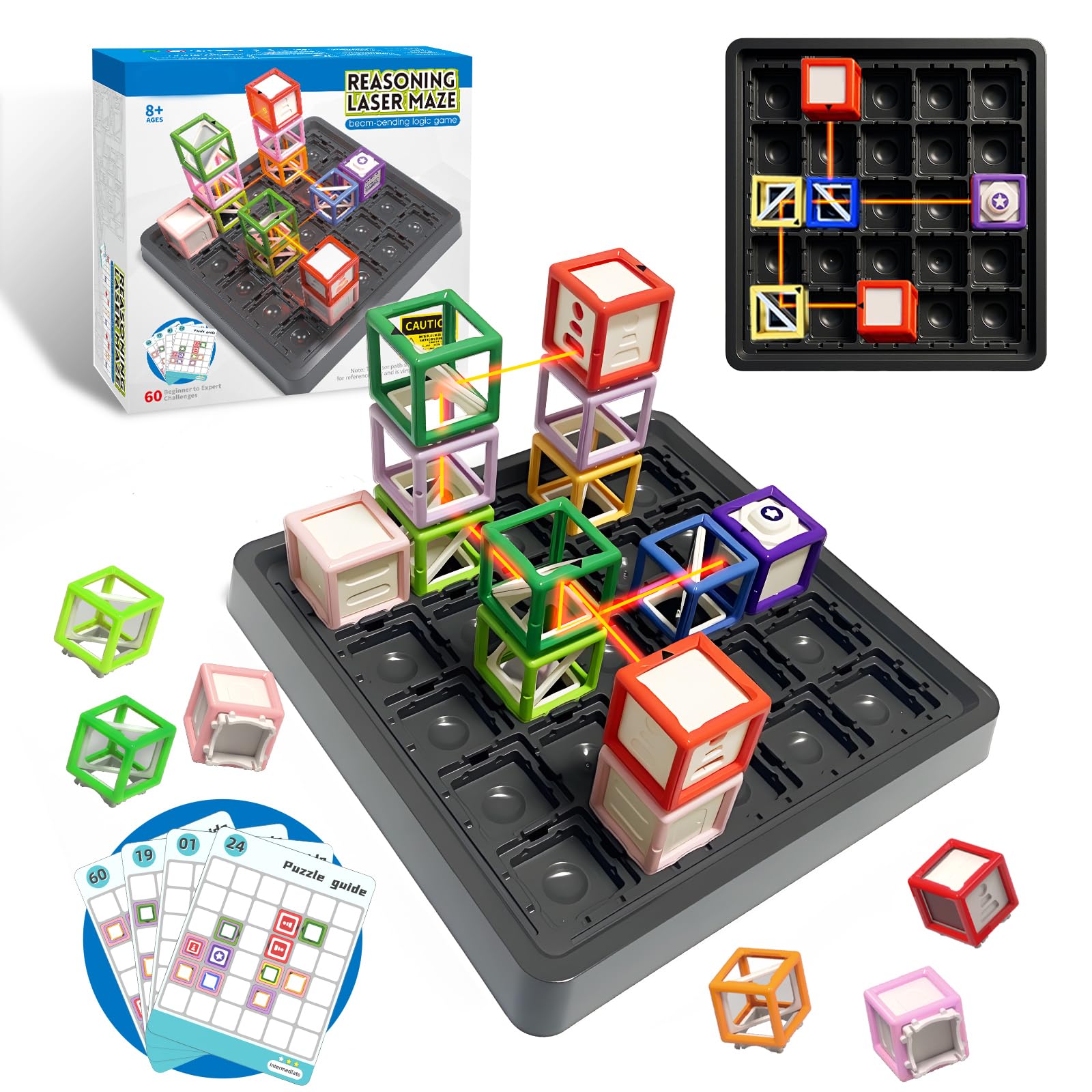
This Laser Maze game takes STEM learning to a thrilling new level by incorporating safe, child-friendly lasers into a logic puzzle. Players use mirrors, beam-splitters, and other optical components to direct a laser beam to hit specific targets on the grid.
The game includes over 60 challenges that smoothly increase in difficulty, teaching principles of reflection and refraction through hands-on experimentation. It’s designed to foster analytical thinking, concentration, and resilience as kids test their hypotheses and adjust their setups.
Built with safety as a priority (it’s a Class 1 laser device), it comes ready to play with batteries included. It’s an exceptional choice for curious minds that enjoy physics puzzles and offers a fantastic “wow” factor that makes learning feel like magic.
Why it’s great
- Unique and captivating gameplay with real laser effects
- Excellent for developing strategic planning and STEM skills
- Self-contained with a clear progression of challenges
- Encourages independent problem-solving and focus
Good to know
- Requires careful reading of safety warnings
- The laser, while safe, is a focused element that requires responsible use
5. Trekking Through History

Trekking Through History is a premium strategy game that makes learning about historical events an exciting, time-traveling adventure. Players move through a circular timeline, collecting oversized cards depicting remarkable people and events, from ancient history to the modern era.
The game cleverly integrates its educational content into a tight, tactical gameplay loop. Kids learn to manage resources (time crystals) and plan an efficient path to score points, all while being exposed to fascinating historical snippets written by experts. No prior history knowledge is needed to play or enjoy it.
With top-tier production quality, including a neoprene play mat and a well-organized storage insert, this game feels special. It’s a fantastic choice for families looking for a medium-weight game that is both intellectually stimulating and richly thematic.
Why it’s great
- Seamlessly blends education with engaging strategy
- Luxurious components and stunning artwork
- Easy to learn with meaningful decisions each turn
- Created with historians for authentic, interesting content
Good to know
- A more premium option in terms of cost
- Best for kids at the upper end of the 8-10 range due to some strategic depth
6. Electronic Battleship Reloaded

This modern take on the classic Battleship game injects new life with electronic sounds, lights, and voice commands, creating an immersive head-to-head naval combat experience. The electronic unit manages hits, misses, and even special “salvo” attacks, reducing setup time compared to older peg-based versions.
It’s an excellent tool for reinforcing grid coordinates and logical deduction in a thrilling format. The suspense of waiting for the electronic response after calling out a strike coordinate is highly engaging for kids, making the learning process feel like an exciting mission.
With both Classic and Advanced modes, the game can grow with your child’s skills. The folding game unit is sturdy and designed for easy storage, making it a great choice for dedicated one-on-one gameplay sessions.
Why it’s great
- Elevates a classic with immersive electronic feedback
- Teaches coordinate plotting and strategic guesswork
- Sturdy, self-contained design with easy storage
- Advanced mode adds extra tactical layers for replayability
Good to know
- Setup requires inputting ship layouts via buttons, which can be slow
- Strictly a two-player (or solo) experience, not for larger groups
7. The Game of Life

The Game of Life remains a beloved entry-level board game that introduces kids to light decision-making within a fun, narrative framework. This Amazon Exclusive edition features updated careers and vacations, allowing players to experience a whimsical journey from college to retirement.
It’s fantastic for teaching basic concepts of choice and consequence in a low-stakes environment. The colorful spinner, plastic cars, and easy-to-follow path make it highly accessible for 8-year-olds, while the element of luck ensures everyone has a chance to win.
As a family game night staple, it sparks conversation and laughter. The quick setup and approximately 30-minute playtime make it an easy choice when you want a engaging, social game that doesn’t require deep strategy or a long rulebook explanation.
Why it’s great
- Iconic, easy-to-understand gameplay for multi-generational play
- Encourages imaginative storytelling about life choices
- Updated with fun, modern career options
- Reliable, mid-range family entertainment
Good to know
- Heavily reliant on luck with minimal strategic control
- Some fans of the original may notice rule changes
8. The Original Mastermind

Mastermind is a timeless two-player logic game that pits a Codemaker against a Codebreaker. With over 2,000 possible color combinations, it provides a pure, screen-free exercise in deductive reasoning and pattern recognition that is perfectly suited for developing minds.
The game is quick to learn but challenging to master. The Codebreaker has a limited number of turns to decipher the hidden code, using feedback pegs (white for correct color, black for correct color and position) to logically eliminate possibilities. This process sharpens systematic thinking and hypothesis testing.
Its compact size and straightforward rules make it an excellent travel game or a quick brain-teaser during downtime. It’s a classic for a reason, offering endless replay value and a satisfying “aha!” moment with each solved puzzle.
Why it’s great
- Brilliantly teaches logical deduction and process-of-elimination
- Compact, durable, and perfect for focused one-on-one play
- No reading required, just pure logic
- An affordable, evergreen classic with immense educational value
Good to know
- Very small pegs can be easy to lose
- The color scheme on the black board can sometimes be hard to distinguish in low light
9. QUOKKA Space Board Game
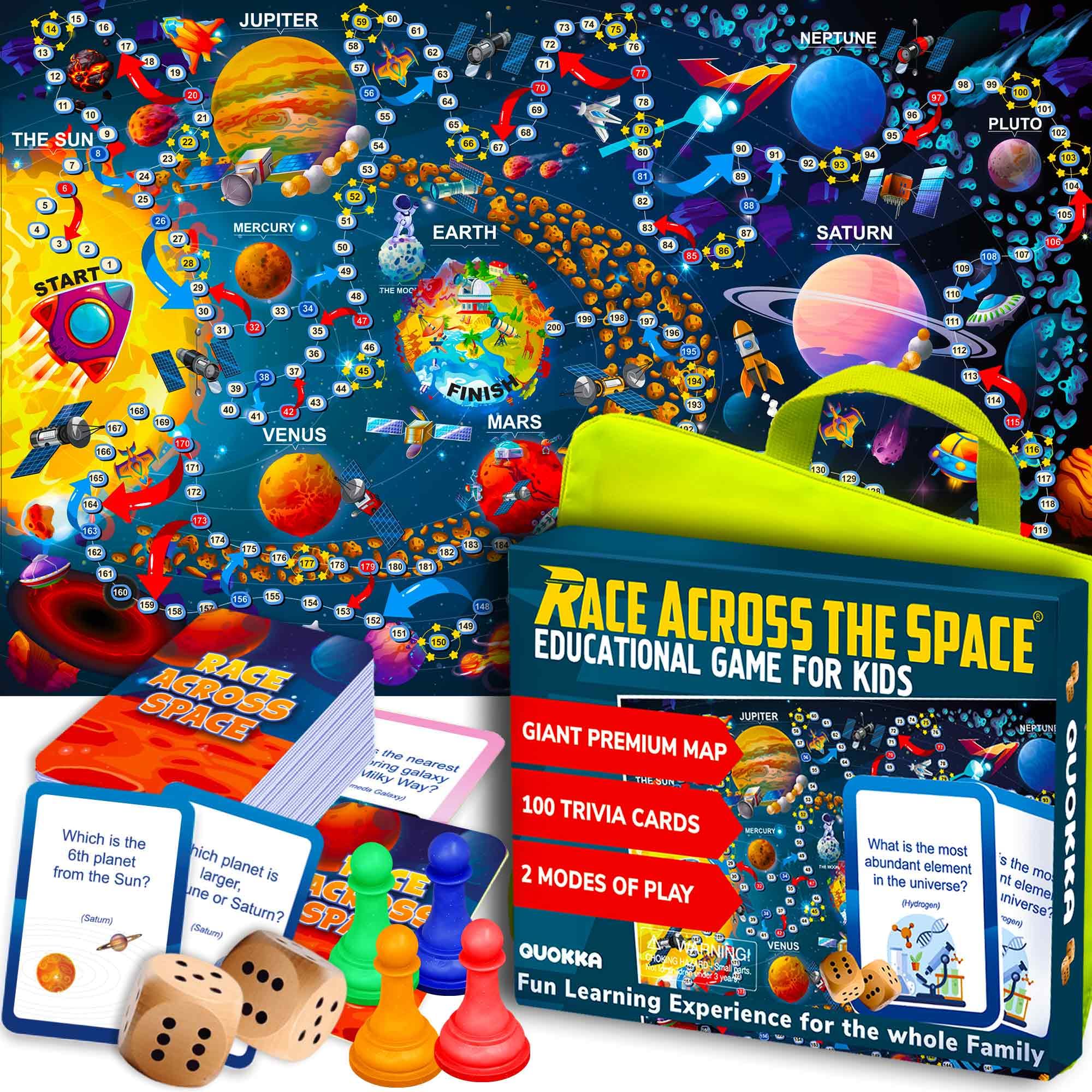
This isn’t your typical tabletop game; it’s a massive, 47″x28″ floor board that turns learning about the solar system into an active, playful race. Players move their pawns by answering space-themed trivia questions from a deck of 130 cards, making it a dynamic educational tool.
The game is highly versatile. You can play a simple race using just the board or incorporate the cards for a more knowledge-based challenge. Its large size and durable, weather-resistant material mean it can be used indoors or outdoors, perfect for parties or classroom settings.
It encourages teamwork, strategic movement, and, most importantly, sparks curiosity about space. The questions are designed to challenge both kids and adults, making it a truly inclusive family activity.
Why it’s great
- Unique, active format that gets kids moving
- Durable and large enough for group play
- Combines trivia learning with board game strategy
- Flexible rules allow for simpler or more complex gameplay
Good to know
- Some cards may contain factual errors, requiring parental oversight
- Storage requires a fair amount of space due to the large board size
10. Magnet Chess Game
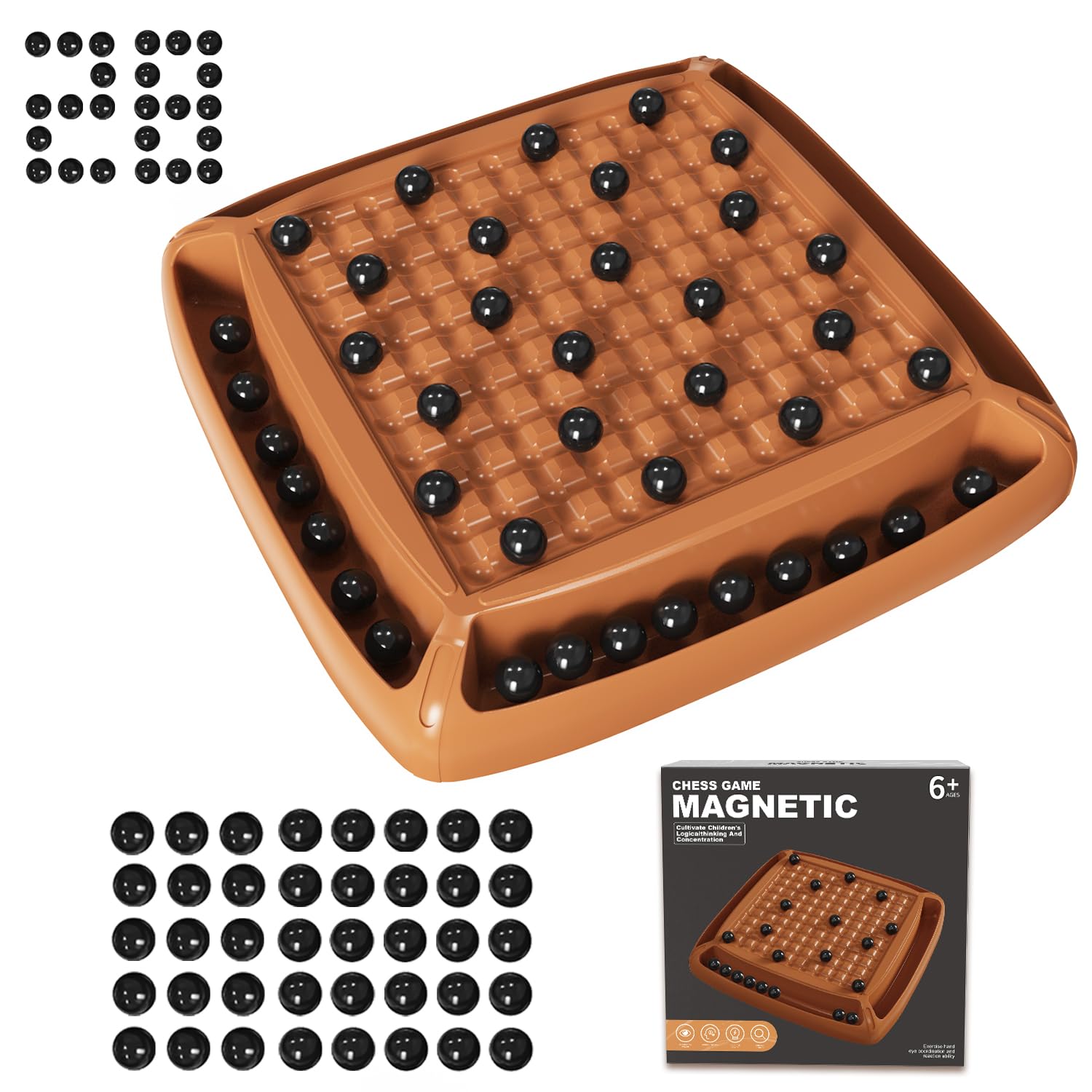
This intriguing magnetic game offers a unique twist on strategy, where the goal is to place your magnets on the board without attracting your opponents’ pieces. It’s a fantastic introduction to basic magnetic principles and strategic spatial planning in a compact, portable format.
Included in a convenient storage bag, it’s perfect for travel, camping, or waiting rooms. The gameplay is easy to grasp but offers surprising depth as players must anticipate both their own moves and the magnetic fields they create, enhancing logical thinking and foresight.
It’s a budget-friendly option that delivers giggles and “aha” moments as kids see the physical effects of their strategic choices. The components are sturdy, and the magnetic interaction provides a satisfying tactile element that digital games can’t match.
Why it’s great
- Unique gameplay based on magnetic attraction/repulsion
- Highly portable with included storage bag
- Teaches basic physics concepts through play
- Easy to learn and quick to play
Good to know
- Instructions can be somewhat vague, requiring experimentation
- The magnetic mechanics can sometimes lead to unexpected outcomes for new players
11. Toyvimo Magnetic Blocks (200 PCs)
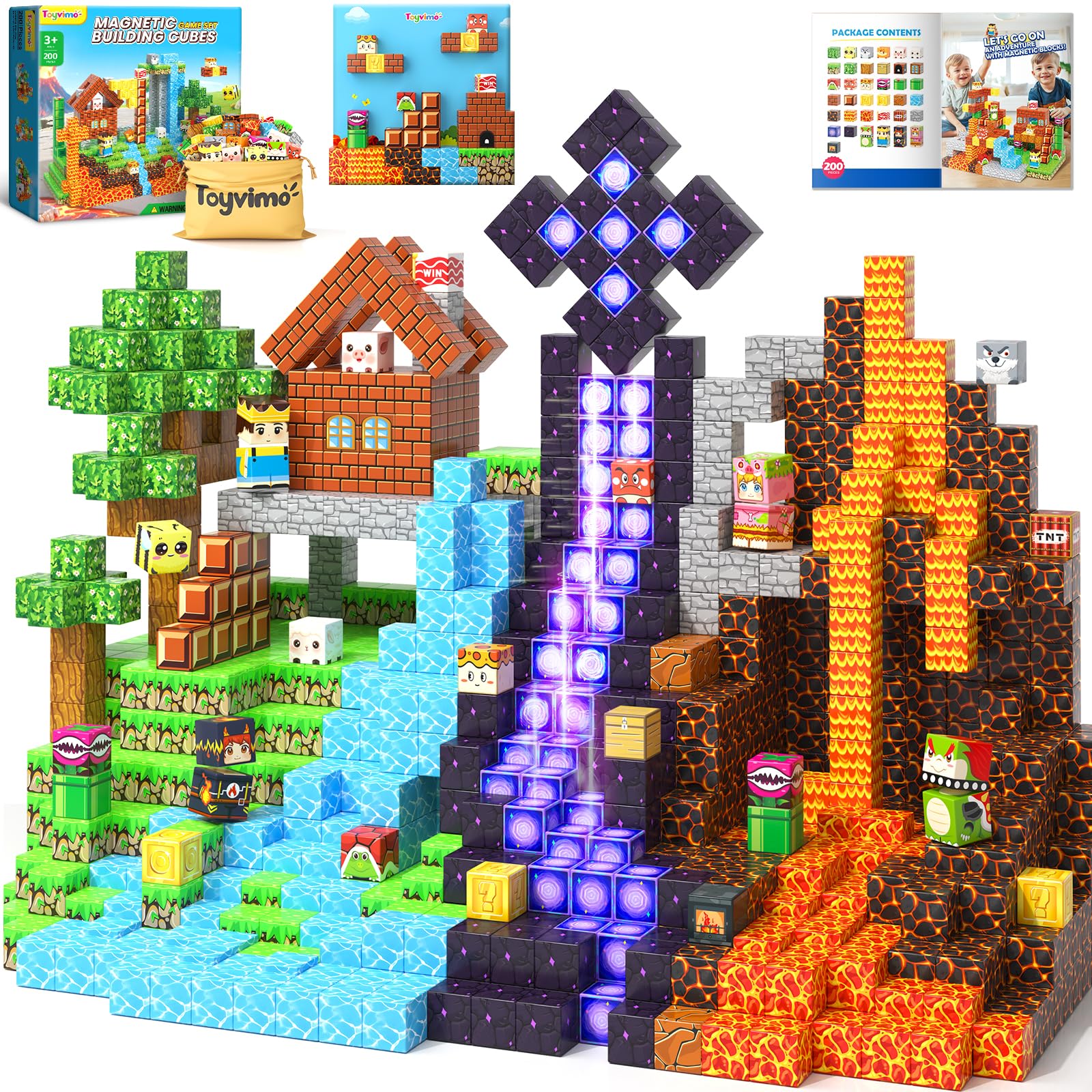
While not a traditional board game, this extensive 200-piece magnetic block set is a powerhouse for creative, open-ended play that develops STEM skills. With themed blocks (forest, lava, portal) and a double-sided magnetic board, it encourages storytelling and complex structural engineering.
The strong, safely sealed magnets allow for impressive and stable creations, boosting spatial reasoning, fine motor skills, and problem-solving as children bring their imaginative worlds to life. It’s fully compatible with other standard magnetic block brands, allowing for expansion.
This set is ideal for children who love to build and create narratives around their constructions. It serves as a fantastic screen-free activity that can occupy a single child for hours or become a collaborative project for siblings and friends.
Why it’s great
- Massive set encourages limitless creativity and storytelling
- High-quality, durable blocks with strong magnets
- Includes a portable magnetic building board
- Excellent for developing spatial awareness and engineering thinking
Good to know
- This is a building toy, not a game with rules or objectives
- Contains many small pieces that require organization
Understanding the Specs
Player Count
This indicates how many people can play at once. “2-4 Players” is ideal for most families. “1” indicates a solo puzzle game, great for independent play. “2-8” suggests a party-style game that can accommodate larger groups, but may have longer wait times between turns.
Playtime
The estimated duration of a single game. For 8-10 year olds, 30-60 minutes is the sweet spot. Shorter games (15-30 mins) are good for quick sessions, while longer games (60+ mins) require stronger attention spans and are better for experienced young gamers.
Game Type / Genre
This defines the core gameplay. Strategy games emphasize planning and decision-making. Family games balance luck and simple rules for all ages. STEM/Logic games focus on puzzle-solving and educational concepts. Party games prioritize social interaction and fun over complex rules.
Minimum Age Recommendation
This is a guideline based on cognitive complexity and safety. An “8+” rating generally means the game involves reading, logical steps, and longer attention spans. Always consider your child’s individual maturity and interests alongside this number.
FAQ
What makes a board game good for an 8-year-old versus a 10-year-old?
How important are STEM-focused board games?
My child gets frustrated easily. Which game type should I avoid?
Can these games truly help reduce screen time?
Final Thoughts: The Verdict
For most people, the best board games for 8-10 year olds winner is the Ticket to Ride because it masterfully combines easy-to-learn rules with genuine strategic depth, making it endlessly engaging for both kids and adults. If you want a beautiful, think-ahead challenge that feels like creating art, grab the Azul. And for immersive STEM learning that feels like a thrilling puzzle, nothing beats the ThinkFun Gravity Maze.

Mo Maruf
I created WellFizz to bridge the gap between vague wellness advice and actionable solutions. My mission is simple: to decode the research and give you practical tools you can actually use.
Beyond the data, I am a passionate traveler. I believe that stepping away from the screen to explore new environments is essential for mental clarity and physical vitality.