Our readers keep the lights on and my smoothie glass nicely filled. As an Amazon Associate, I earn from qualifying purchases.
Finding a board game for a seven-year-old means walking a tightrope: the game needs enough complexity to engage a developing mind, yet remains simple enough to avoid frustration or a fifteen-minute attention span. Many games aimed at this age focus only on luck, offering no real challenge, while others demand reading or math skills well beyond the average first-grader. The sweet spot is a game that teaches strategic thinking, cooperation, or creative problem-solving through its core mechanics.
I’m Mohammad Maruf — the founder and writer behind WellFizz. I’ve spent thousands of hours analyzing the play mechanics, component durability, and educational value of family games to separate the genuine skill-builders from the forgettable filler.
Whether your child thrives on cooperative adventures or head-to-head competition, the right board games for 7 year olds can transform a rainy afternoon into a meaningful learning experience.
How To Choose The Best Board Games For 7 Year Olds
Seven-year-olds are at a unique developmental stage: they can grasp multi-step instructions but still benefit from concrete, visual feedback. The best games for this age range balance luck with meaningful choice, keeping the playtime under 45 minutes, and using components that survive sticky fingers.
Cooperative vs. Competitive Play
Cooperative games—where everyone wins or loses together—remove the sting of defeat and encourage communication. For a seven-year-old, this format builds teamwork without the emotional rollercoaster of head-to-head play. Competitive games, on the other hand, teach resilience and turn-taking. The right choice depends on your child’s temperament.
Component Quality and Setup Time
At this age, a game that takes twenty minutes to set up will lose its audience before the first turn. Look for a simple board layout, chunky pieces that are easy to handle, and cards that are thick enough to survive repeated shuffling. A ten-minute setup is the absolute upper limit.
Skill Focus: Strategy, Reading, or Spatial Reasoning
Some games emphasize reading and vocabulary, others focus on pattern recognition and engineering. Choose a game that aligns with your child’s natural strengths, or deliberately targets an area they need to practice. The best games disguise learning so well that kids beg to play again.
Quick Comparison
On smaller screens, swipe sideways to see the full table.
| Model | Category | Best For | Key Spec | Amazon |
|---|---|---|---|---|
| Peaceable Kingdom Space Escape | Cooperative Strategy | Teamwork & communication | Cooperative play for ages 7+ | Amazon |
| ThinkFun Gravity Maze | STEM Logic Puzzle | Spatial reasoning & engineering | 60 challenge cards from beginner to expert | Amazon |
| Exploding Kittens Board Game | Party Strategy | Flippable board & quick rounds | 2-6 players, ages 7+ | Amazon |
| Wordplay for Kids | Word Game | Vocabulary & spelling practice | 60-second timer per round | Amazon |
| Spin Master Tetris Board Game | Strategy Puzzle | Classic puzzle in real life | 128 Tetriminos for 2-4 players | Amazon |
In‑Depth Reviews
1. Peaceable Kingdom Space Escape

Designed by the inventor of Pandemic, Space Escape pits players as mole rats trying to reach an escape pod before snakes overrun their space station. The cooperative format means every decision is a group choice: move a mole rat forward, or reposition a snake to block its path? This constant negotiation builds communication skills without the pressure of a single loser.
The game board is sturdy, the plastic mole rat movers are chunky enough for small hands, and the 51 cards offer enough variety to keep the puzzle fresh across multiple plays. No reading is required—all actions are pictorial, making it accessible for kids who are still building their literacy.
One reviewer noted that their family won only once in four attempts, which speaks to the game’s rewarding difficulty. The included challenge cards unlock after three wins, extending the shelf life for experienced players. This is a standout pick for families who want a screen-free activity that teaches shared decision-making.
Why it’s great
- No reading required—perfect for emerging readers
- High replay value with unlockable challenge cards
- Durable components that hold up to repeated play
Good to know
- Luck plays a role, which can frustrate some strategic kids
- Box dimensions are slightly larger than average for shelf storage
2. ThinkFun Gravity Maze

Gravity Maze is part marble run, part logic puzzle, and entirely addictive. Players place towers on a grid to guide a marble from the start to the target piece, using spatial reasoning and planning. The 60 challenge cards progress from beginner to expert, meaning the game grows with the child’s ability.
The physical feedback is immediate: place a tower incorrectly and the marble drops into the wrong path. This instant cause-and-effect teaches persistence and trial-and-error in a way that abstract puzzles can’t match. The towers are brightly colored and snap securely into the grid, so there’s no frustration from wobbly pieces.
One parent reported that their eight-year-old plays this game daily, mixing it with building activities. The challenges that stump adults are a real confidence boost for kids who solve them independently. This is the ideal choice for a child who loves building, tinkering, or engineering—think LEGO meets chess.
Why it’s great
- Progressive difficulty keeps the challenge alive for years
- High-quality, durable pieces that withstand daily use
- Encourages independent, screen-free problem solving
Good to know
- Best suited for one child at a time unless playing collaboratively
- May feel repetitive for advanced players after mastering all 60 challenges
3. Exploding Kittens Board Game
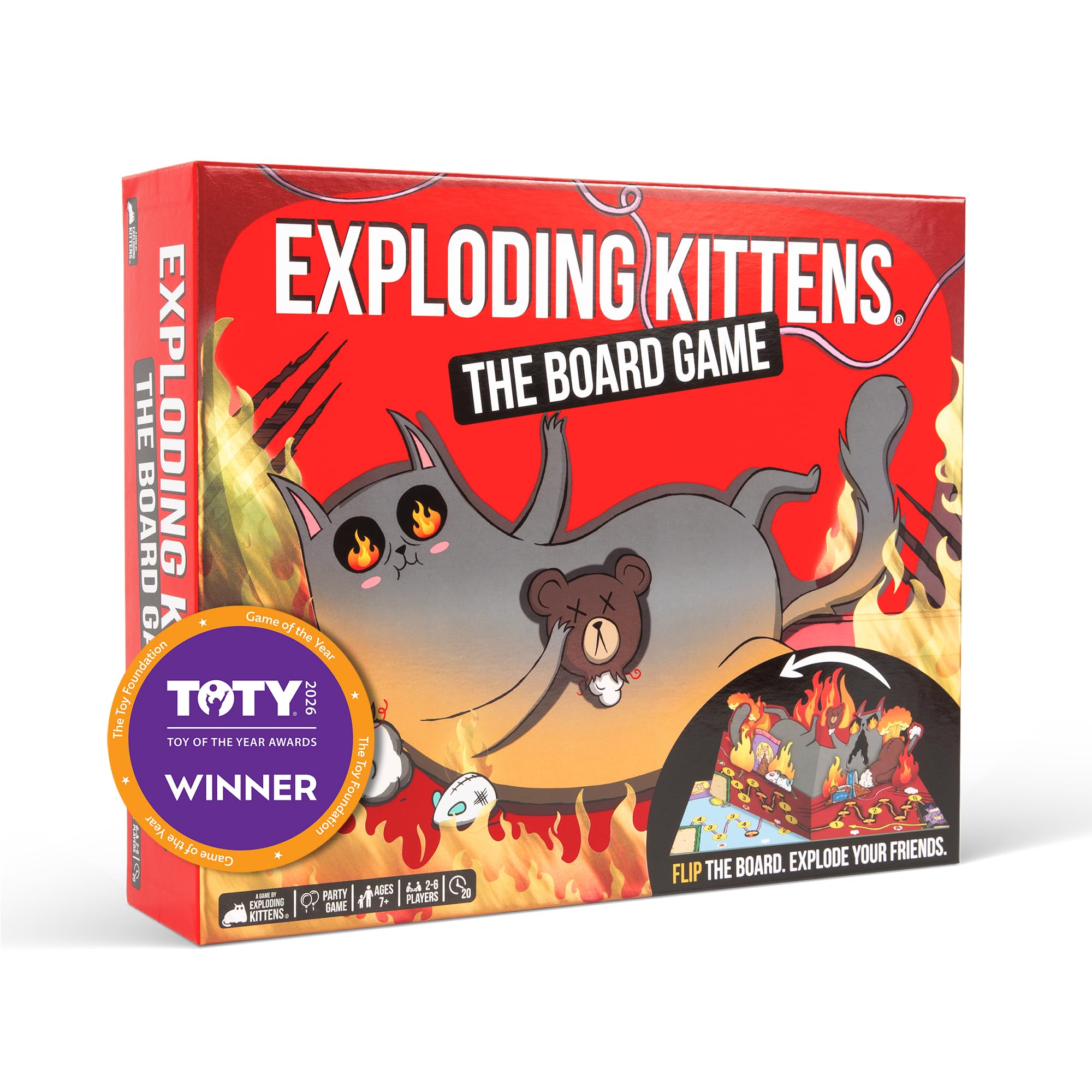
From the creators of the smash-hit card game comes a full board game that adds a physical dimension to the chaos. The board flips halfway through, revealing a new path that keeps everyone on edge. Players move character standees like TacoCat or GnomeCat while using action cards to sabotage opponents, creating a party atmosphere that’s pure fun.
The components are top-notch: the pop-up board is clever, the 65 action cards and 26 move cards are thick and durable, and the artwork is as absurd and charming as fans expect. Gameplay is simple enough that a seven-year-old can explain it after one round, but the flippable board mechanic introduces a surprise that keeps adults engaged too.
One reviewer noted the game is “a hit at a New Year’s party” with players of all ages. Because the game involves some reading on the action cards, it works well for kids who are confident readers or for families where an adult can read aloud. This is the right pick for a family that wants loud laughter and unpredictable twists.
Why it’s great
- Flippable board creates genuine surprise each game
- High-quality, durable cardboard and card components
- Quick to learn and teach to new players
Good to know
- Reading required on some action cards
- Game length varies; can run over an hour with six players
4. Wordplay for Kids

Wordplay for Kids puts a fast-paced twist on vocabulary building. Players spin the wheel for two letters, roll the dice for a category (Food or Drink, Living Creature, Boy’s or Girl’s Name), then race the 60-second timer to come up with a word. The longer the word, the further you move on the board—a brilliant way to reward both creativity and vocabulary range.
The components are simple: a game board with spinner, a timer, pawns, and game pads. The full-sized edition is roomy enough for several kids to gather around, and the absence of small choking hazards makes it safer for homes with younger siblings nearby. It’s also one of the few games that actively encourages spelling practice without feeling like homework.
One grandmother reported that her six-year-old granddaughter, who disliked language arts, now plays daily and has improved her reading and spelling noticeably. The game works for a wide age range because the categories are broad enough to challenge older kids while remaining accessible to younger ones. It’s a solid choice for a family with multiple ages.
Why it’s great
- Builds vocabulary and spelling through engaging gameplay
- 60-second timer keeps rounds short and energetic
- Works for a wide age range, including younger siblings
Good to know
- Primarily useful for kids who already know letter sounds
- Some categories may be challenging for emerging readers
5. Spin Master Games Tetris Board Game
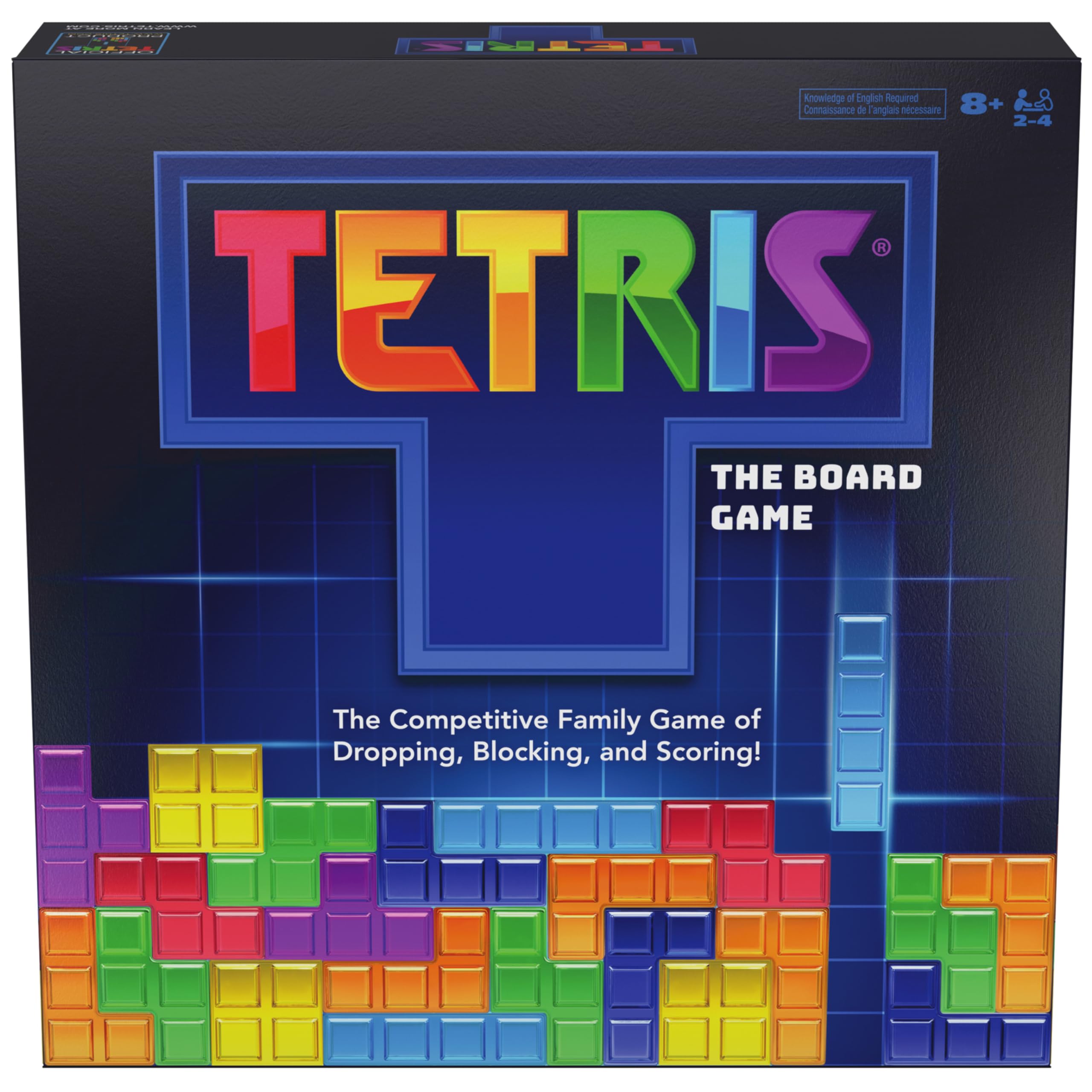
Translating a video game icon into a physical board game is a tall order, but Spin Master pulls it off. Players receive a grid and a set of semi-translucent Tetriminos, racing to complete lines and blocking opponents by dropping garbage pieces onto their grids. The tactile feel of placing the chunky plastic pieces is satisfying, and the blocking mechanic adds a layer of social strategy absent from the original.
The components are generous: 128 Tetriminos across four colors, four grids, a central game board, and 24 Tetrimino cards that dictate which pieces are available each round. The estimated 20-minute playtime is perfect for a weeknight game, and setup is minimal—just hand out the grids and shuffle the cards.
One reviewer noted that a few puzzle pieces arrived slightly bent, but overall found the game “fun and challenging” for the family. Because the official age rating is 8 and up, it may be slightly easier for kids on the older end of that range. For a seven-year-old who loves spatial puzzles or is familiar with the classic video game, this is an affordable, engaging option.
Why it’s great
- Faithful adaptation of a beloved video game to tabletop
- Chunky plastic pieces are easy for small hands to manipulate
- Short 20-minute playtime prevents attention drift
Good to know
- Rated for ages 8 and up, so some seven-year-olds may need help
- Some pieces may arrive slightly bent from packaging
FAQ
Can a 7 year old play a game rated for ages 8 and up?
How do cooperative games benefit a 7 year old?
Final Thoughts: The Verdict
For most users, the board games for 7 year olds winner is the Peaceable Kingdom Space Escape because it combines cooperative play with genuine strategy in a format that requires no reading. If you want a game that builds engineering and spatial reasoning, grab the ThinkFun Gravity Maze. And for a loud, laugh-filled party game that surprises every time, nothing beats the Exploding Kittens Board Game.

Mo Maruf
I created WellFizz to bridge the gap between vague wellness advice and actionable solutions. My mission is simple: to decode the research and give you practical tools you can actually use.
Beyond the data, I am a passionate traveler. I believe that stepping away from the screen to explore new environments is essential for mental clarity and physical vitality.