Finding a board game that genuinely engages a 10-12 year old—that critical tween age—is more challenging than it seems. Games that are too simple feel childish, while overly complex ones lead to frustration. The perfect game must balance strategy, social interaction, and just the right amount of challenge.
I’m Mohammad Maruf — the founder and writer behind WellFizz. For the last decade and a half, my research has focused on analyzing market data and product specifications to separate fleeting fads from enduring, high-quality family entertainment.
This guide is built from a deep-dive analysis of over a dozen top contenders, comparing mechanics, educational value, and replayability to identify the ones that consistently deliver fun for kids and adults alike, including the definitive best board games for 10-12 year olds.
How To Choose The Best Board Games For 10-12 Year Olds
Selecting a game isn’t just about the theme. You’re looking for a tool that fosters critical thinking, friendly competition, and family connection. The goal is to find a game your child will want to play again and again, each time discovering a new layer of strategy.
Consider the Gameplay Style
Does your child thrive on head-to-head competition, or do they prefer working with others toward a common goal? Competitive games (like Ticket to Ride) build strategic planning. Cooperative games (like Forbidden Jungle) teach teamwork and communication. Games with a hidden traitor element (like Obscurio) add a thrilling layer of deduction and social deduction.
Evaluate the Learning Curve and Playtime
A game that takes 20 minutes to explain and 2 hours to play might collect dust. For this age group, aim for a setup and rule explanation under 15 minutes, with a total playtime of 30-60 minutes being the sweet spot. This keeps engagement high without demanding an entire evening’s commitment.
Prioritize Replayability and Quality
The best games feel different every time you play. This is achieved through variable setups, random card draws, or modular boards. Also, inspect the components: thick cardboard tiles, durable cards, and well-painted miniatures not only feel premium but will survive countless game nights.
Quick Comparison
On smaller screens, swipe sideways to see the full table.
| Model | Type | Best For | Key Feature | Amazon |
|---|---|---|---|---|
| Ticket to Ride | Strategy | Balanced family play | Easy-to-learn route building | Amazon |
| Carcassonne | Tile-Laying | Quick, strategic thinking | Build a new medieval landscape each game | Amazon |
| Trekking Through History | Strategy/Educational | History buffs & beautiful design | Oversized cards with stunning historical art | Amazon |
| Obscurio | Cooperative/Deduction | Mystery and teamwork | Image-based clues with a hidden traitor | Amazon |
| CATAN (6th Edition) | Strategy/Trading | Negotiation and resource management | Modular board for endless replay | Amazon |
| Wits & Wagers Deluxe | Party/Trivia | Large groups & laughter | Bet on others’ answers, no trivia mastery needed | Amazon |
| Talisman: 5th Edition | Fantasy Adventure | Epic, character-driven quests | 12 unique characters, 100+ adventure cards | Amazon |
| Dotted Games Monkey Palace | Creative Strategy | LEGO fans & hands-on builders | Incorporates actual LEGO brick building | Amazon |
| The World Game | Educational | Geography learning | Covers all 194 countries with up-to-date facts | Amazon |
| Forbidden Jungle | Cooperative | Team-based problem solving | Alien-themed survival with sinking tiles | Amazon |
| QUOKKA Space Board Game | Educational/Trivia | Active, floor-based play | Giant 47″x28″ map for indoor/outdoor use | Amazon |
In‑Depth Reviews
1. Ticket to Ride Board Game

Ticket to Ride stands as a modern classic for excellent reason. It delivers a near-perfect balance of simplicity and strategic depth, making it accessible for a 10-year-old learning the ropes while remaining deeply engaging for adults. The core loop—collecting colored train cards to claim routes between cities—is intuitive and visually satisfying.
The game naturally teaches North American geography in a subtle, fun way. Players aren’t just memorizing cities; they’re actively thinking about the spatial relationships between them as they plan their cross-country networks. The tension comes from watching opponents potentially block your critical path, forcing adaptive strategy without any direct, confrontational “take that” mechanics that can sour a family game.
With a playtime that consistently hits the one-hour mark, it feels substantial without overstaying its welcome. The components are colorful and durable, and the 2025 refresh offers a polished, modern look. Its massive replay value stems from the sheer number of route combinations and the ever-shifting availability of train cards.
Why it’s great
- Perfect balance of easy-to-learn rules and meaningful strategic choices.
- Engages a wide age range simultaneously without feeling watered down.
- Teaches geography and planning skills in a completely organic way.
- High-quality, durable components that withstand countless plays.
Good to know
- The train cards are quite small, which can be tricky for some to shuffle.
- Pure strategy gamers might find the luck of the card draw occasionally decisive.
2. Asmodee Carcassonne Board Game
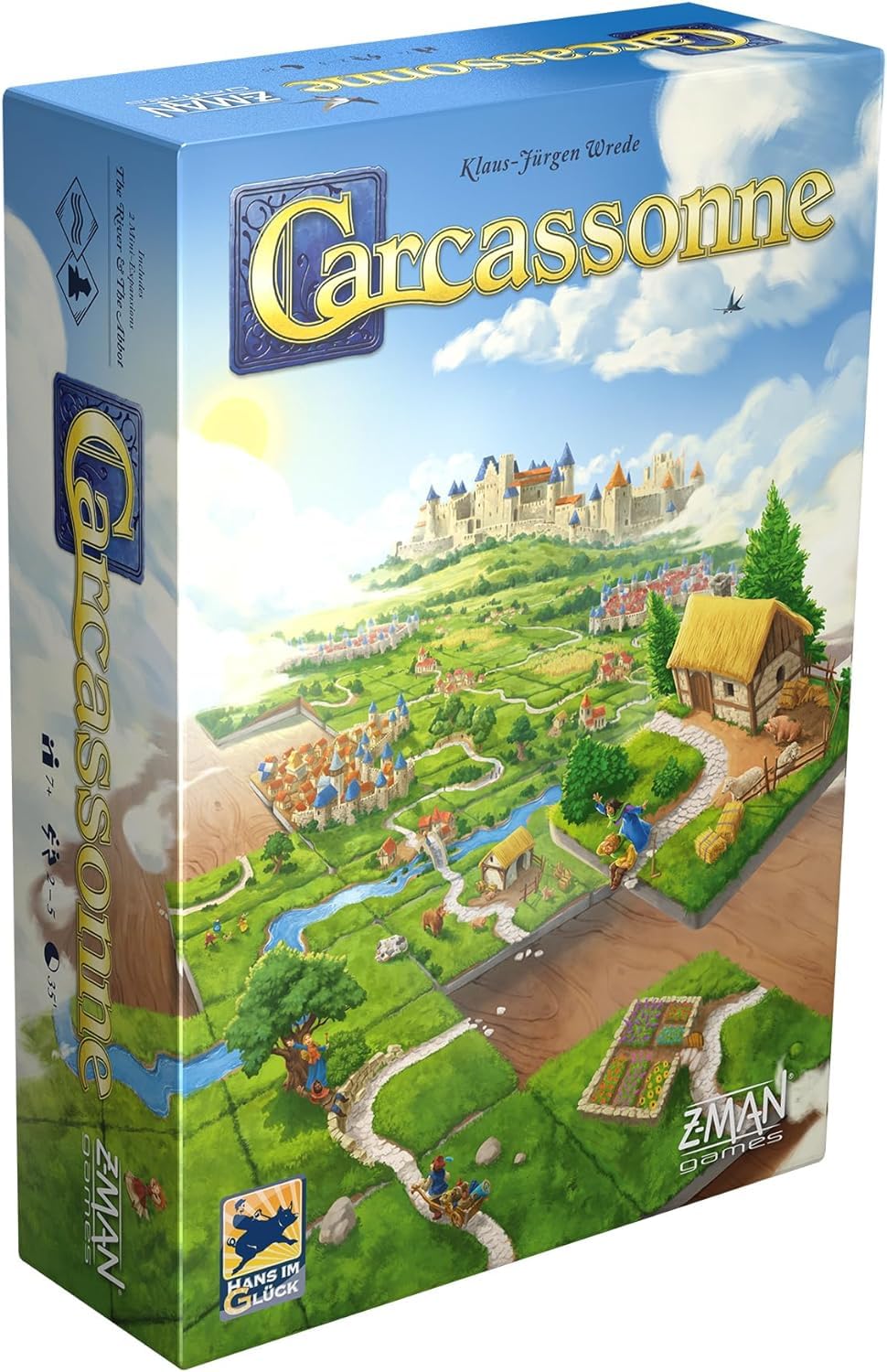
Carcassonne is the quintessential tile-laying game, a masterclass in elegant design. On your turn, you simply draw a land tile and place it to expand the medieval landscape of cities, roads, fields, and monasteries. You then have the option to place one of your limited “meeples” as a knight, farmer, or thief to score points. This creates a dynamic, ever-growing board that is different every single game.
It’s a brilliant exercise in spatial reasoning and tactical opportunism. Tweens learn to evaluate the board state, anticipate where certain tiles might fit, and manage their scarce resources (their meeples). The strategy deepens as you understand how to subtly claim farmland or sneak into an opponent’s nearly-completed city for shared points.
This edition includes “The River” and “The Abbot” mini-expansions, which add variety right out of the box. The playtime is quick, often leading to immediate requests for a rematch. The wooden components are satisfyingly chunky, and the artwork on the tiles is charming and clear.
Why it’s great
- Incredibly simple ruleset that leads to surprisingly deep strategic play.
- High replayability due to random tile draw and a unique board each game.
- Perfect game length for a quick, satisfying session or multiple rounds.
- Includes mini-expansions in the base box for added longevity.
Good to know
- The “farmer” scoring mechanic can be confusing on the first few plays.
- Can feel a bit abstract compared to games with stronger narrative themes.
3. Underdog Games Trekking Through History

Trekking Through History is a standout for its stunning production value and clever, time-based mechanics. The game revolves around traveling through history, represented by a circle of oversized, beautifully illustrated cards depicting real events and people. Players use “time” as a resource to travel around the circle and collect sets of cards from the same era.
The core puzzle is delightful: you want to plan an efficient route to collect valuable sets, but you must also manage your time tokens and occasionally “warp” through history using special abilities. It’s a fantastic blend of set collection, hand management, and light strategy that feels substantial without being overwhelming. The historical snippets on each card provide natural, bite-sized learning moments.
The component quality is exceptional, from the neoprene play mat to the well-organized insert that makes setup a breeze. It’s a game that feels premium and respectful of its subject matter, making it a wonderful gift for a child with curiosity about the past.
Why it’s great
- Absolutely gorgeous production with museum-quality artwork on every card.
- Engaging time-management mechanic that teaches strategic forward planning.
- Seamlessly integrates educational content into a compelling game.
- Excellent storage solution keeps components organized and setup quick.
Good to know
- While strategic, it is a lighter-weight game ideal for families, not hardcore gamers.
- The luck of the card draw can sometimes dictate optimal paths.
4. Obscurio Board Game

Obscurio is a brilliant evolution of the “clue-giving” party game, adding a thrilling layer of hidden roles and betrayal. One player takes the role of the Grimoire, a magical book that must guide a team of wizards (the other players) through a library by giving them abstract image-based clues. The twist? One of the wizards is a secret traitor trying to lead the group to failure without revealing themselves.
This creates a phenomenal social dynamic. The team must interpret the Grimoire’s often-cryptic clues while scrutinizing each other’s suggestions for signs of sabotage. It’s a game of intense communication, deduction, and paranoia that is perfectly calibrated for the tween sense of humor and love of secrets. The artwork on the hundreds of illusion cards is wildly imaginative and key to the gameplay.
It scales remarkably well from a small, tense group to a larger, chaotic party. The components, including a magnetic Grimoire stand and a sand timer, are top-tier and enhance the magical theme.
Why it’s great
- Fantastic social deduction mechanics that encourage discussion and critical thinking.
- Stunning, surreal artwork that sparks imagination and conversation.
- Asymmetrical roles make every player feel uniquely involved.
- High player count support makes it perfect for gatherings and sleepovers.
Good to know
- The rulebook is dense; watching a quick playthrough video is highly recommended.
- The Grimoire role requires a player who is comfortable giving creative, abstract clues.
5. CATAN Board Game (6th Edition)

CATAN is a cornerstone of modern board gaming, and the 6th Edition refines the classic formula with upgraded components and clarity. The game is about settlement, resource management, and, most importantly, negotiation. Players collect resources like brick, wood, and sheep based on dice rolls and the placement of their initial settlements, then use them to build roads, new settlements, and cities.
Where CATAN truly shines for tweens is in its emphasis on social interaction and deal-making. You can’t win by hoarding resources; you must trade with other players. This teaches persuasive communication, basic economics, and strategic alliance-building in a dynamic, fun environment. The modular hex board ensures no two games are ever alike, presenting new strategic puzzles each time.
The updated edition features chunkier components, a more intuitive rulebook, and vibrant art. While the base game supports 3-4 players, its enduring popularity has led to countless expansions for larger groups and new scenarios.
Why it’s great
- Unmatched in teaching negotiation, resource management, and adaptive strategy.
- Highly replayable due to the ever-changing modular board setup.
- The 6th Edition offers the best component quality and rule clarity to date.
- Creates memorable moments of triumph and friendly rivalry.
Good to know
- Requires a minimum of 3 players for the trading mechanic to work effectively.
- Game length and outcome can be influenced by dice-roll luck, especially early on.
6. Wits & Wagers Deluxe

Wits & Wagers brilliantly removes the pressure of traditional trivia. Every question has a numerical answer (e.g., “In feet, how tall is the Statue of Liberty?”). Players write down their best guess, all answers are revealed, and then everyone places bets on which answer they think is closest without going over. This means you can win without knowing a single answer, simply by judging who at the table seems most knowledgeable.
This levels the playing field between kids and adults spectacularly. A tween’s wild guess might be the perfect answer, leading to huge cheers. It’s fast-paced, laugh-out-loud funny, and teaches estimation and risk assessment. The dry-erase boards and chips feel tactile and engaging.
The Deluxe edition includes betting mats with odds, adding a light layer of probability math. Games play in under 30 minutes, making it an ideal opener or closer for game night, or a hit at larger gatherings.
Why it’s great
- Eliminates trivia anxiety—success relies on estimation and smart betting, not knowledge.
- Creates hilarious and unpredictable moments that get the whole group laughing.
- Exceptionally easy to learn and play, with rapid-fire rounds.
- Great for mixing age groups, as kids often beat the adults.
Good to know
- The included 30-second sand timer can be clumpy; using a phone timer is easier.
- The finite set of question cards can eventually be memorized after many, many plays.
7. Avalon Hill Talisman: The Magical Quest Board Game, 5th Edition

Talisman is a pure, epic fantasy adventure in a box. Players choose from 12 unique characters like the Wizard, Prophetess, or Thief, each with special abilities, and embark on a quest to find a Talisman, journey to the center of the board, and defeat the dragon guarding the Crown of Command. The game is driven by rolling a die to move, drawing Adventure cards full of monsters, strangers, and magical objects, and battling with simple stat comparisons.
Its strength lies in its emergent storytelling and character progression. Your Thief might slowly accumulate powerful artifacts, gain followers, and become strong enough to challenge other players or mighty beasts. The randomness creates memorable, swingy moments of fortune and disaster that tweens adore. The updated 5th edition features beautiful miniatures and streamlined rules.
This is a commitment—games can last several hours—making it perfect for a dedicated weekend afternoon. It’s less about cutthroat strategy and more about enjoying a shared, unpredictable journey.
Why it’s great
- Delivers a rich, narrative-driven fantasy experience with strong character identity.
- High variability from 100+ adventure cards ensures a unique story every game.
- Simple roll-and-move core is easy to grasp, letting the adventure take center stage.
- Excellent, detailed miniature figures that bring the characters to life.
Good to know
- Playtime can be very long and is heavily influenced by luck.
- Can feel unbalanced if one player gains a strong early advantage.
8. Dotted Games Monkey Palace: A Lego Board Game

Dotted Games Monkey Palace is a fantastic bridge between the creative, freeform play of LEGO and the structured fun of a board game. Players compete to earn “Banana Points” by strategically placing LEGO bricks on a shared palace structure, following the patterns on their personal building boards. It turns the tactile joy of snapping bricks into a competitive and strategic activity.
The game is a wonderful exercise in visual-spatial reasoning and planning. Tweens must think several steps ahead, considering which brick colors and shapes they need to complete their patterns while also watching what opponents are building. The 3D palace that emerges during play is a rewarding visual centerpiece that makes every game feel like a collective achievement. The rules are conveyed through clear icons, making them accessible even for reluctant readers.
It’s a mid-range option that offers exceptional value for LEGO-obsessed families. The components are sturdy, and the included mini-expansions add variety. While setup involves organizing many small pieces, the gameplay itself is smooth and engaging for both kids and adults who enjoy hands-on, tactical play.
Why it’s great
- Uniquely blends LEGO building with strategic board game mechanics.
- Develops spatial awareness, pattern recognition, and forward planning.
- The evolving 3D palace is a visually satisfying and unique game element.
- Picture-based rules make it easy for a wide age range to learn independently.
Good to know
- Initial setup and teardown can be time-consuming due to many small parts.
- The color-coded boards may present challenges for color-blind players.
- Some game turns can feel similar, focusing on pattern completion.
9. The World Game – Fun Geography Board Game
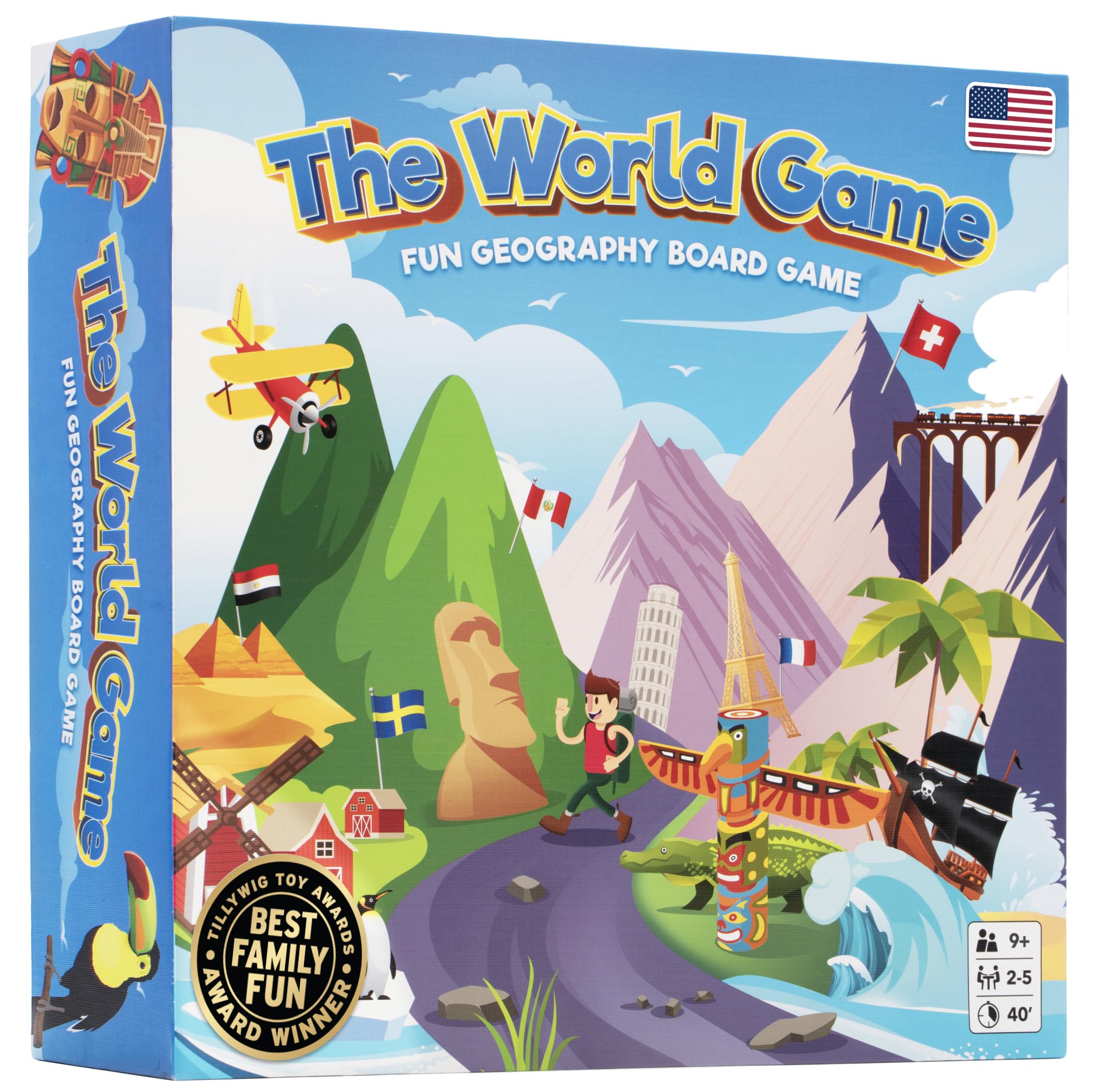
The World Game is a straightforward, effective, and engaging tool for making global geography fun. Players race around a world map board by correctly identifying countries based on flags, capitals, or locations. With over 1500 facts covering all 194 countries, the game is a deep well of information that remains relevant and up-to-date.
What sets it apart is its adjustable difficulty. For a 10-year-old just learning, you can stick to flag recognition and basic capital cities. For a 12-year-old (or a competitive adult), you can delve into country facts like population, area, and GDP. This scalability allows the whole family to play on a level playing field, and it grows with a child’s knowledge. The cards can also be used as straightforward flashcards for quiet study.
The components are clean and functional, with a colorful board and sturdy cards. It’s a game that feels genuinely educational without sacrificing the fun of a race-to-the-finish board game structure. It’s particularly effective for supplementing school social studies curriculum.
Why it’s great
- Comprehensive and current geography facts that are genuinely educational.
- Highly scalable difficulty to accommodate different knowledge levels in one game.
- Dual use as a competitive board game and a study flashcard set.
- Encourages friendly competition around learning, not just random trivia.
Good to know
- Gameplay can feel repetitive if players aren’t intrinsically interested in geography.
- As a pure educational tool, it lacks the layered strategy of other games on this list.
10. Gamewright – Forbidden Jungle

Forbidden Jungle is the latest in the acclaimed “Forbidden” series of cooperative games from designer Matt Leacock. This installment tasks players with working together to explore a shifting jungle, collect crystal fragments, and escape before being overrun by alien creatures or lost to sinking tiles. It’s a tense, puzzle-like experience where every decision is a team effort.
The game excels at teaching collaborative problem-solving and communication under pressure. Players take on unique roles with special abilities, requiring them to discuss optimal moves and resource management openly. The “threat level” mechanic, which increases each turn, creates a wonderful arc of rising tension that keeps everyone invested until the final, often nail-biting, escape attempt.
With beautiful artwork and high-quality components (including numerous miniatures), it feels like a premium experience. It’s more challenging than its predecessor, Forbidden Island, making it a perfect next step for families familiar with cooperative play or for tweens ready for a more complex teamwork challenge.
Why it’s great
- Excellent cooperative mechanics that force genuine teamwork and planning.
- Creates a compelling narrative arc with rising stakes and tension.
- Unique player roles add strategic depth and encourage discussion.
- High replayability due to variable setup and the inherent challenge of co-ops.
Good to know
- Can be punishingly difficult, especially on higher difficulty settings.
- Contains many small pieces that need to be organized within the box.
- The alien theme, while fun, might be slightly intense for some younger players.
11. QUOKKA Space Board Game for Kids 8-12
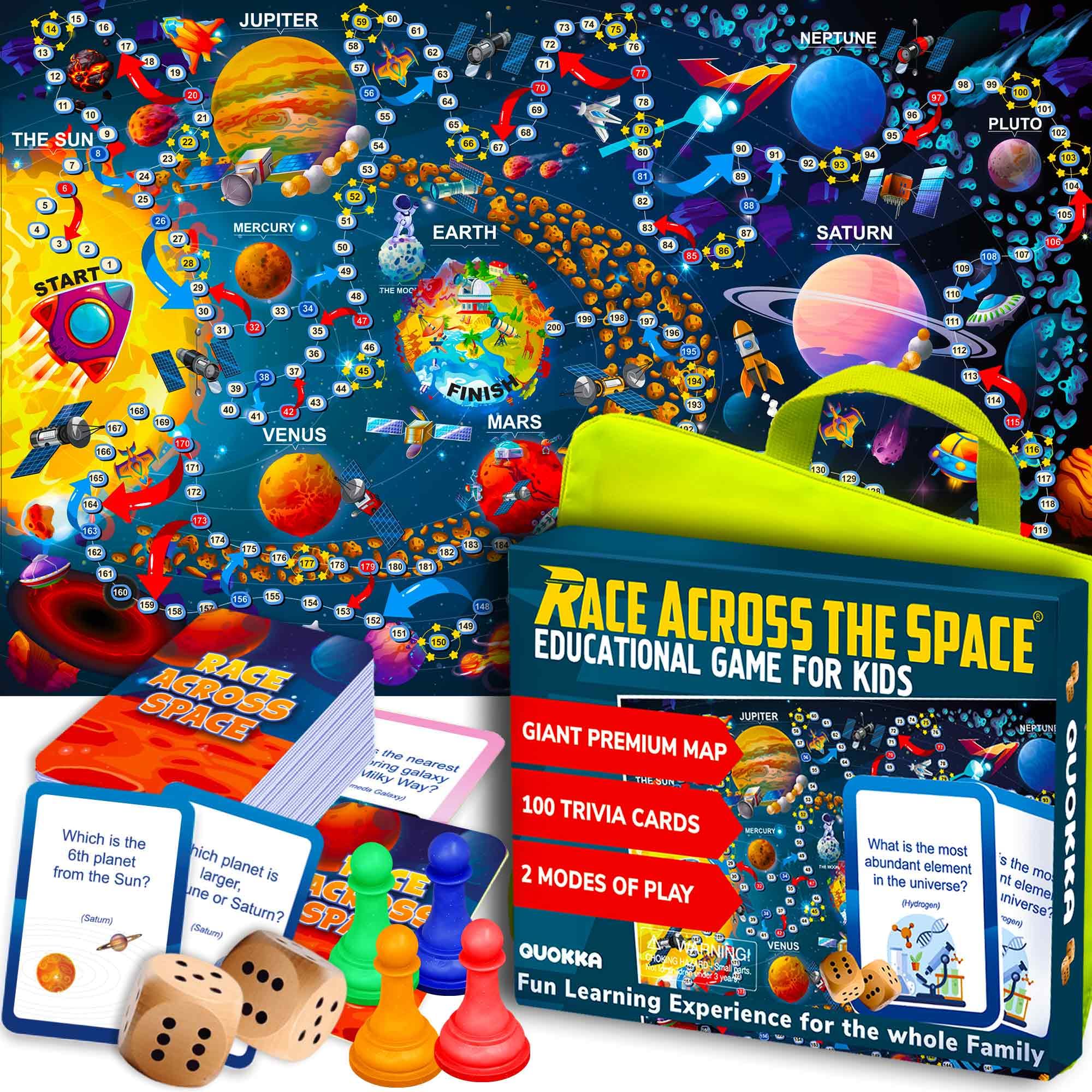
The QUOKKA Space Board Game is a fantastic entry-level, budget-friendly option that turns game night into a physical, sprawling activity. Its giant 47″x28″ fabric map is durable, easy to clean, and can be played on the floor or a large table, making it perfect for energetic kids who don’t want to sit still. The space race theme is universally appealing.
Gameplay is flexible: you can play a simple race using the spaces on the board, or incorporate the 130 question cards for a trivia challenge about planets, stars, and space exploration. This dual-mode design extends its lifespan and allows you to tailor the complexity to the group. It supports a large number of players, making it ideal for parties or big families.
While the educational content is solid, the real value is in its ability to get kids moving, laughing, and interacting in a shared physical space. The components are functional, and the map folds away for relatively compact storage given its size. It’s a great choice for fostering a love of games through active, social play.
Why it’s great
- Huge, durable playmat encourages active, physical gameplay away from the table.
- Simple rules and dual gameplay modes (race or trivia) offer flexibility.
- Supports large groups, making it perfect for playdates and family gatherings.
- Budget-friendly entry point into themed, educational board games.
Good to know
- Some trivia cards have been noted to contain factual errors.
- The fabric can be prone to wrinkling and requires a large, clear space to lay out.
- Gameplay is lighter on strategic depth compared to other options here.
Understanding the Specs
Player Count & Playtime
This is the most practical consideration. “2-5 Players” means the game mechanics work well across that range. For consistent family play, a game that works excellently at 3-4 is key. Playtime listed on the box is an ideal estimate; first games will run longer. Aim for 30-60 minutes for sustained tween engagement without fatigue.
Game Weight & Mechanics
“Weight” refers to complexity, not physical heft. Light games have simple rules (e.g., Wits & Wagers). Medium-weight games introduce deeper strategy (e.g., Ticket to Ride). Mechanics are the game’s verbs: tile-laying, set collection, worker placement. Identifying mechanics your child enjoys is the best predictor of a game’s success.
FAQ
My child gets frustrated losing, what type of game should I choose?
Are these games actually fun for adults to play too?
How do I handle a game with complicated rules?
What if my child has a shorter attention span?
Final Thoughts: The Verdict
For most people, the best board games for 10-12 year olds winner is the Ticket to Ride because it masterfully balances accessibility, strategy, and fun for every generation at the table. If you want a game that fosters teamwork and suspense, grab the Obscurio. And for a hands-on, creative building experience that blends toys and games, nothing beats the Dotted Games Monkey Palace.

Mo Maruf
I created WellFizz to bridge the gap between vague wellness advice and actionable solutions. My mission is simple: to decode the research and give you practical tools you can actually use.
Beyond the data, I am a passionate traveler. I believe that stepping away from the screen to explore new environments is essential for mental clarity and physical vitality.