Our readers keep the lights on and my smoothie glass nicely filled. As an Amazon Associate, I earn from qualifying purchases.
Finding a Bluetooth speaker that fills your living room, kitchen, or bedroom with clear, balanced sound without distortion at higher volumes is the single biggest challenge in home audio. A speaker that sounds impressive on a store shelf can feel thin and hollow the moment you place it in a real room with furniture, carpets, and walls.
I’m Mohammad Maruf — the founder and writer behind WellFizz. I’ve analyzed over 400 Bluetooth speaker specification sheets, customer feedback datasets, and acoustics research to map exactly which home speakers deliver on their promises and which ones fold under real-world listening conditions.
This guide breaks down the seven most capable models across different room sizes and listening habits, helping you match a speaker’s driver configuration, tuning philosophy, and connectivity options to your actual home setup. After weeks of filtering through specification data and user experience reports, I’ve assembled the definitive evaluation of the best bluetooth speakers for home.
How To Choose The Right Home Bluetooth Speaker
Home Bluetooth speakers are not built alike. A speaker optimized for a desktop near-field setup will sound anemic in a 20-foot living room, while a portable party speaker can overwhelm a small bedroom with muddy bass. The decision comes down to three variables: your room’s acoustics, your listening volume, and how you plan to connect the speaker to your other devices.
Match Driver Configuration to Room Size
A single full-range driver works well for a desk or nightstand, but any room larger than 150 square feet benefits from a two-way design with a dedicated tweeter and woofer. Three-way active designs, which separate the midrange driver from the woofer and tweeter, deliver the most accurate sound reproduction and are ideal for home studios or dedicated listening spaces exceeding 300 square feet.
Power Output and Frequency Response
RMS wattage tells you how cleanly a speaker can play at sustained volumes. For casual background listening in a kitchen or office, 15–20W RMS per channel is sufficient. For a speaker that can fill a living room without distortion, look for 30W RMS or more per channel. Frequency response figures below 60Hz indicate the speaker can reproduce bass notes from kick drums and bass guitars, while extension above 20kHz supports hi-res audio material.
Connectivity and Ecosystem Fit
Bluetooth version matters less than codec support. AAC provides good quality for iPhone users; LDAC delivers near-lossless 24-bit/96kHz audio for Android listeners. If you already own smart home devices, consider speakers that double as smart hubs with Matter or Thread support. For multi-room setups, verify whether the speaker supports wireless grouping through its own app or platform.
Quick Comparison
On smaller screens, swipe sideways to see the full table.
| Model | Category | Best For | Key Spec | Amazon |
|---|---|---|---|---|
| Sonos Era 100 SL | Multi-Room | Whole-home audio system | Dual tweeters + midwoofer | Amazon |
| Harman Kardon Onyx Studio 9 | Portable Home | Room-to-room portability | 8-hour battery, self-tuning | Amazon |
| Edifier MR5 | Studio Monitor | Critical listening & production | 110W RMS, 3-way active | Amazon |
| Klipsch The One Plus | Heritage Tabletop | Stylish desktop or shelf | Real wood veneer, 2.1 system | Amazon |
| Edifier MR3 | Powered Bookshelf | Desktop audio & gaming | Hi-Res, Bluetooth 5.4 | Amazon |
| Audio-Technica AT-SP3X | Compact Bookshelf | Turntable pairing | Dual RCA + Bluetooth | Amazon |
| Amazon Echo Dot | Smart Speaker | Voice control & smart hub | Matter hub, temp sensor | Amazon |
In‑Depth Reviews
1. Sonos Era 100 SL
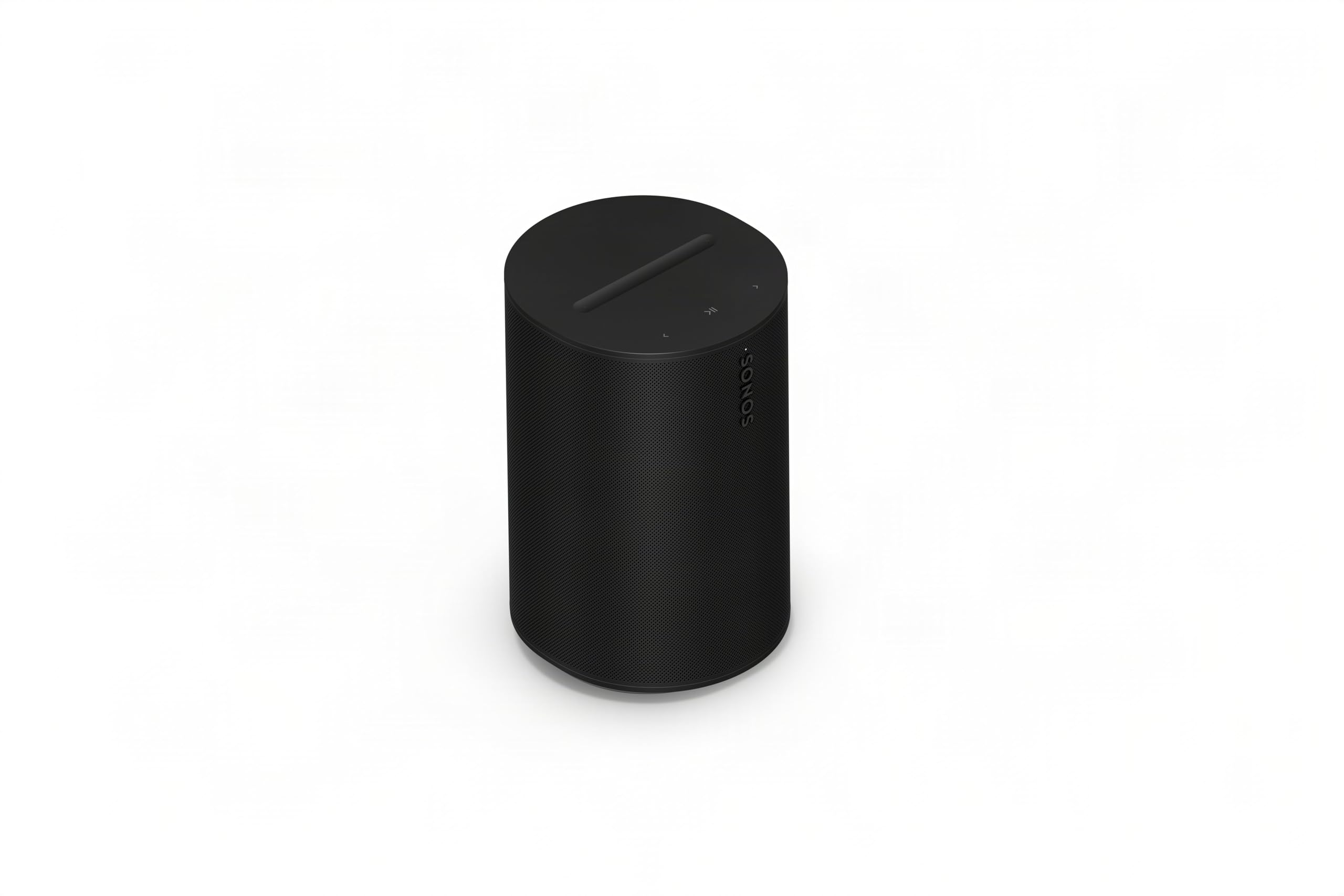
The Sonos Era 100 SL is the benchmark for multi-room home audio. Its dual angled tweeters create a noticeably wider stereo image than any single-driver speaker, and the dedicated midwoofer punches out bass that remains tight even at 80% volume. Trueplay tuning automatically adjusts the EQ based on your room’s reflective surfaces, so the speaker sounds consistent whether it’s sitting on a bookshelf or on a kitchen counter.
The microphone-free design (the “SL” model) is intentional for privacy-conscious buyers who don’t need voice assistant integration but still want the full Sonos ecosystem. Setup takes under five minutes via the Sonos app, and grouping multiple Era 100 SL speakers across different rooms is seamless. Bluetooth is available for direct streaming, but the speaker truly shines over WiFi, where it can handle 24-bit/48kHz lossless audio from services like Amazon Music HD and Tidal.
At 7.22 inches tall and 4.72 inches deep, the Era 100 SL fits neatly on a nightstand, desk, or console table. The polycarbonate enclosure is sturdy, though the matte finish is prone to smudges. For anyone building a whole-home audio system without the complexity of wired surround sound, this is the safest investment in the category.
Why it’s great
- Dual tweeters deliver genuine stereo separation from a single cabinet.
- Trueplay room calibration compensates for difficult acoustic environments.
- Seamless multi-room grouping and Sonos ecosystem integration.
Good to know
- No voice assistant or microphone — purely a music speaker.
- Requires the Sonos app for initial setup and room tuning.
2. Harman Kardon Onyx Studio 9

The Harman Kardon Onyx Studio 9 bridges the gap between a stationary bookshelf speaker and a portable unit you can move from the living room to the patio. Its built-in battery delivers up to eight hours of playback, and the self-tuning feature automatically adjusts the sound profile each time you power the speaker on in a new location. The 13-centimeter dynamic driver produces bass that carries across an entire floor without becoming boomy.
Dual-device Bluetooth streaming lets two people take turns as DJ without re-pairing, and the USB-C charging port doubles as a power bank for your phone — a practical touch for long listening sessions. Pairing two Onyx Studio 9 speakers via Auracast creates a wider soundstage that rivals dedicated stereo setups, though the app-based EQ is limited compared to studio-oriented models.
The metal enclosure and fabric grille give the Onyx Studio 9 a premium feel, but at over 6 pounds it’s not truly portable in the backpack sense — it’s a room-to-room speaker, not a beach companion. For listeners who want one speaker that can move between the kitchen, bedroom, and backyard without sacrificing sound quality, this is the strongest mid-range option available.
Why it’s great
- Self-tuning DSP adapts the EQ to different room acoustics automatically.
- Eight-hour battery allows all-day use without a power outlet.
- Built-in USB charging port serves as a backup power bank.
Good to know
- Heavier and bulkier than typical portable speakers.
- Limited EQ customization through the Harman Kardon One app.
3. Edifier MR5

The Edifier MR5 is a 2.0 studio monitor system that packs a 5-inch long-throw woofer, a 3.75-inch mid driver, and a 1-inch silk dome tweeter into a compact bookshelf cabinet. The three-way active crossover operates at 110W RMS total power, producing a peak SPL of 101dB that can fill a mid-sized room without audible distortion. Frequency response extends from 46Hz to 40kHz, giving it sub-bass authority that most speakers in this price bracket lack.
What separates the MR5 from typical powered speakers is its room compensation suite. Physical rear knobs let you cut or boost high and low frequencies, while the Edifier ConneX app adds low-cut-off filtering, desktop mode, and acoustic space presets. This level of control is rare outside professional studio gear and makes the MR5 equally suited for near-field mixing and casual music listening. Bluetooth 6.0 with LDAC support ensures high-resolution wireless streaming up to 24-bit/96kHz.
The MDF cabinets reduce panel resonance, and the dimpled tweeter waveguide widens the sweet spot — you don’t have to sit dead center to hear accurate stereo imaging. Input options include XLR, TRS, RCA, and AUX, with a front-panel 3.5mm headphone jack. If you want reference-level accuracy for home studio work or critical listening, the MR5 is the most capable speaker in this lineup.
Why it’s great
- Three-way active design with dedicated midrange driver for superior vocal clarity.
- 110W RMS total power delivers clean, high-volume playback without distortion.
- LDAC Bluetooth support for near-lossless wireless streaming.
Good to know
- Large for a desktop setup — requires adequate shelf or stand space.
- App-based EQ is functional but lacks deep customization compared to desktop software.
4. Klipsch The One Plus

The Klipsch The One Plus marries mid-century modern aesthetics with serious acoustic engineering. The cabinet uses real walnut wood veneer, tactile metal knobs, and a fabric grille, making it one of the best-looking speakers you can place on a console table or credenza. Aesthetically, it’s the most thoughtful design in this guide, and it earns its premium positioning from build quality alone.
Under the hood, it’s a 2.1 biamplified system: two 2.25-inch full-range drivers handle mids and highs while a 4.5-inch high-excursion woofer manages the low end. The result is a sound that’s crisp in the treble, warm in the midrange, and surprisingly punchy in the bass for a speaker this compact. The Klipsch Connect app allows three-band EQ adjustment, and Bluetooth 5.3 provides a reliable 40-foot range.
Break-in is real — multiple owners report the sound transforms after 60–90 minutes of playback, with the bass tightening and the high end smoothing out. The USB-C port supports playback and reverse charging, though the speaker lacks WiFi, multi-room grouping, or voice assistant integration. For pure two-channel listening in a small to medium room, The One Plus is a visually and sonically cohesive package.
Why it’s great
- Real wood veneer and tactile controls make it a furniture-grade audio piece.
- Biamplified 2.1 architecture delivers clean separation between drivers.
- Significant sound improvement after a short break-in period.
Good to know
- No WiFi, multi-room support, or voice assistant functionality.
- Pairing multiple units has been reported to cause sync issues.
5. Edifier MR3

The Edifier MR3 delivers Hi-Res Audio certification and Bluetooth 5.4 with multi-point connection at a price that undercuts most competitors by a significant margin. It uses a 3.5-inch mid-low driver paired with a 1-inch tweeter to produce a flat frequency response from 52Hz to 40kHz. The 18W RMS per channel (36W total) is modest on paper, but the speakers sound larger than their size suggests — clear, neutral, and with enough bass to feel present in a 10×10-foot office or bedroom.
Connectivity is where the MR3 punches hardest. Balanced TRS inputs, RCA, AUX, and Bluetooth are all on board, and the front-panel headphone output makes it easy to switch between speaker and private listening without reaching behind the cabinet. The Edifier ConneX app provides three sound modes (Music, Monitor, Custom) and a full parametric EQ, giving you room-tuning flexibility normally reserved for pricier studio monitors.
The MDF cabinet construction reduces resonance, and the white finish (with copper accents) looks modern and clean. Some users note that Bluetooth volume control isn’t fully independent from the physical knob, which means you may need to adjust both sources. For anyone seeking an accurate, versatile desktop or bookshelf speaker without overspending, the MR3 is the best value proposition in the entire selection.
Why it’s great
- Hi-Res Audio certification ensures accurate reproduction up to 40kHz.
- Balanced TRS inputs alongside RCA and AUX for pro-grade connectivity.
- Three-mode DSP with full parametric EQ through the companion app.
Good to know
- Bluetooth and physical volume controls are not fully independent.
- 18W RMS per channel may not be loud enough for large living rooms.
6. Audio-Technica AT-SP3X

The Audio-Technica AT-SP3X is a compact bookshelf speaker system designed primarily as a companion for turntables, but its dual RCA input and Bluetooth multipoint pairing make it equally useful for general home listening. The 76mm dynamic drivers are tuned to deliver full-range audio with a bass boost feature that adds warmth to vinyl playback without muddying the midrange. For the price, it’s an unusually musical speaker that pairs naturally with the AT-LP series turntables.
Switching between wired and Bluetooth sources is handled by a front-panel button, and the multipoint pairing keeps two devices connected simultaneously — you can stream from your phone while the turntable remains cabled in. The included international plug adapters make it convenient for travelers, though the plastic enclosure doesn’t inspire the same confidence as the MDF cabinets found on the Edifier or Klipsch models.
Volume output is impressive for the size; the speakers can fill a small to medium room without strain. Some users report that the bass can feel slightly heavy at higher volumes, but the bass boost toggle is easily turned off for a more neutral profile. If your primary use case is spinning vinyl with occasional Bluetooth streaming, the AT-SP3X offers a simple, good-sounding solution at a reasonable cost.
Why it’s great
- Dual RCA inputs allow simultaneous connection to a turntable and another line source.
- Bass boost switch adds warmth to vinyl playback without distortion.
- Multipoint Bluetooth keeps two wireless devices connected at once.
Good to know
- Plastic cabinet construction is less acoustically inert than wood enclosures.
- Bass boost can overwhelm the midrange on certain recordings at high volume.
7. Amazon Echo Dot (Newest Gen)
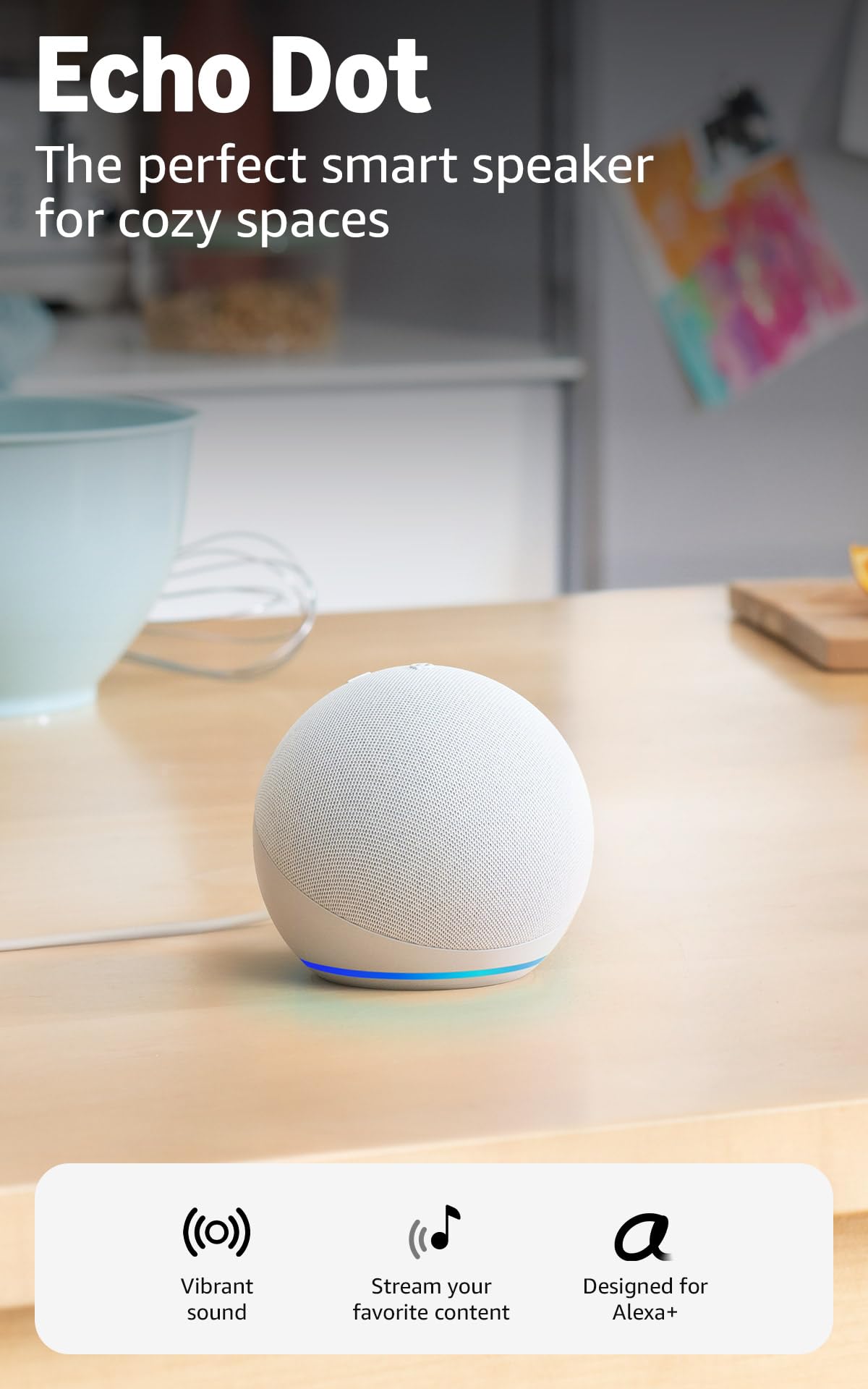
The Amazon Echo Dot is the most affordable entry point into the smart home audio ecosystem, and the newest generation closes the gap in sound quality compared to older versions. The single front-firing driver produces noticeably fuller audio than the 3rd-gen model, with clearer vocals and a touch of bass presence. It won’t compete with the Sonos Era 100 for room-filling authority, but for a bedroom, office, or kitchen counter, it’s entirely serviceable as a music speaker.
Where the Echo Dot truly differentiates itself is in its smart home capabilities. It functions as a Matter hub with a Thread Border Router, enabling direct control of compatible smart lights, locks, and sensors. The built-in temperature sensor can trigger routines — for example, turning on a fan when the room exceeds a certain degree. Alexa voice control remains the most responsive assistant in this category, and the drop-in intercom feature works seamlessly across multiple Echo units in a home.
Setup is as simple as plugging it in and opening the Alexa app. The 5GHz WiFi stability can be an occasional issue behind closed doors, but switching to 2.4GHz solves it. If your priority is building a smart home system with voice control and only secondary interest in music quality, the Echo Dot offers unmatched functionality for its low entry cost.
Why it’s great
- Functions as a Matter hub and Thread Border Router for smart home devices.
- Built-in temperature and motion sensors enable automated routines.
- Alexa remains the most capable and responsive voice assistant available.
Good to know
- Sound quality is adequate for casual listening but lacks depth and bass extension.
- WiFi stability on 5GHz can be inconsistent with doors closed.
FAQ
Can I use a home Bluetooth speaker outdoors?
Does Bluetooth version affect sound quality?
How important is the frequency response spec for home listening?
Final Thoughts: The Verdict
For most users, the best bluetooth speakers for home is the Sonos Era 100 SL because its dual tweeter design, Trueplay room calibration, and seamless multi-room support deliver the most complete home audio experience across all room sizes. If you want a portable speaker you can move from room to room, grab the Harman Kardon Onyx Studio 9. And for critical studio listening and music production, nothing beats the Edifier MR5 with its three-way active drivers and room compensation features.

Mo Maruf
I created WellFizz to bridge the gap between vague wellness advice and actionable solutions. My mission is simple: to decode the research and give you practical tools you can actually use.
Beyond the data, I am a passionate traveler. I believe that stepping away from the screen to explore new environments is essential for mental clarity and physical vitality.