Our readers keep the lights on and my smoothie glass nicely filled. As an Amazon Associate, I earn from qualifying purchases.
You set up the shot, hit record, and walk across the room — only to realize later the audio sounds distant, muffled, or buried under a layer of HVAC hum. The wireless lavalier solves this by putting a broadcast-quality capsule directly on your collar, transmitting clean dialogue to your phone while you move freely, gesticulate, or interview a second person. But the market is flooded with unstable connections, muddy noise reduction, and batteries that die mid-take.
I’m Mohammad Maruf — the founder and writer behind WellFizz. After sifting through the technical sheets and user reports for dozens of units, this guide isolates the models that actually deliver on latency, noise floor, and battery endurance.
From a button-sized clip that runs for 16 hours to a four-channel system for panel discussions, these picks represent the top contenders in the best bluetooth lavalier microphone space for creators who cannot afford distorted dialogue or dropouts.
How To Choose The Best Bluetooth Lavalier Microphone
A wireless lavalier is a small investment with an outsized impact on production value. The wrong one introduces noise, drift, or dropouts that ruin a take. Here is what separates the reliable systems from the disposable ones.
Audio Resolution and Bit Depth
The spec that matters most is the combination of sample rate and bit depth — look for 48kHz/24-bit as the baseline. This captures the full frequency range of the human voice with enough dynamic headroom to recover quiet passages or tame loud peaks in editing. Lower bit depths introduce quantization noise that sounds brittle and unforgiving.
Noise Cancellation Architecture
DSP-based cancellation is common, but AI-driven adaptive noise cancellation is the new standard. The best units let you toggle between a light mode that preserves ambient texture and a strong mode that kills everything but the voice. Check whether the cancellation introduces artifacts or muffling — a good system removes the hum without hollowing out your vocal tone.
Battery Endurance and Charging Case
Individual transmitter runtime should exceed a full shooting day — 8 hours minimum. The charging case matters even more: a case that recharges the mics twice gives you 24 hours of total recording without needing a wall outlet. Units that let you charge the phone while recording via a passthrough on the receiver solve the last battery worry.
Transmission Range and Stability
Manufacturers advertise ranges from 65 to 650 feet, but real-world performance with your body between the transmitter and receiver drops that significantly. Look for frequency-hopping spread spectrum (2.4GHz) that maintains a link even when you turn your back to the camera. A 100-foot line-of-sight claim usually translates to reliable audio at 50 feet indoors through walls.
Quick Comparison
On smaller screens, swipe sideways to see the full table.
| Model | Category | Best For | Key Spec | Amazon |
|---|---|---|---|---|
| MAONO Wave T5 | Premium | Pro vloggers & outdoor reporters | 48kHz/24-bit, 300m range | Amazon |
| RØDE Wireless Micro | Premium | Smartphone creators who want reliability | GainAssist, 18h case | Amazon |
| BOYA BY-V4U | Premium | Multi-speaker panels & interviews | 4-channel mono, 650 ft range | Amazon |
| BOYA mini 2 | Mid-Range | Travel vloggers wanting a tiny footprint | 5g weight, 30h battery case | Amazon |
| NPTCL Wireless Lav | Mid-Range | Dual-person recording on a budget | 24h charging case, 70 ft range | Amazon |
| RIBIU Dual Mic | Mid-Range | All-day shooters needing long runtimes | 16h total, 100 ft range | Amazon |
| EZColoris M6-2 | Budget | Entry-level creators testing wireless | 16-bit/48kHz, 65 ft range | Amazon |
In‑Depth Reviews
1. MAONO Wave T5

The Wave T5 is built for creators who cannot afford background rumble. Its dedicated ENC chip with 3 modes and 14 levels of adjustable noise cancellation separates voice from machinery or street noise without the hollow artifacts that plague cheaper DSP implementations. The 48kHz/24-bit capture delivers a 120dB SPL ceiling, so sudden laughs or loud pops never clip the waveform.
Transmission range is class-leading at 300 meters in open areas, and the frequency-hopping algorithm maintains a solid lock even when the transmitter is in a back pocket facing away from the receiver. Each transmitter runs 9 hours, and the case adds two full charges for 30 hours of total runtime. The receiver also includes a USB-C passthrough for charging the phone during extended shoots.
Four voice presets — Vocal Enhancer, Brightness, Warmth, and Magnetic Radio — let you shape the tone before recording, reducing post-production EQ work. The magnetic clip and necklace accessory make mounting fast and discreet. Pairing requires a specific sequence: hold the noise cancellation button until the blue light flashes rapidly on both units.
Why it’s great
- Industry-leading 300m range with frequency-hopping stability
- Adjustable noise cancellation (14 levels) via Maono Link app
- 4 broadcast-grade voice presets eliminate post-EQ
- Receiver passthrough charges phone while recording
Good to know
- Pairing sequence requires specific button-hold timing
- Higher price point than dual-mic competitors
2. RØDE Wireless Micro
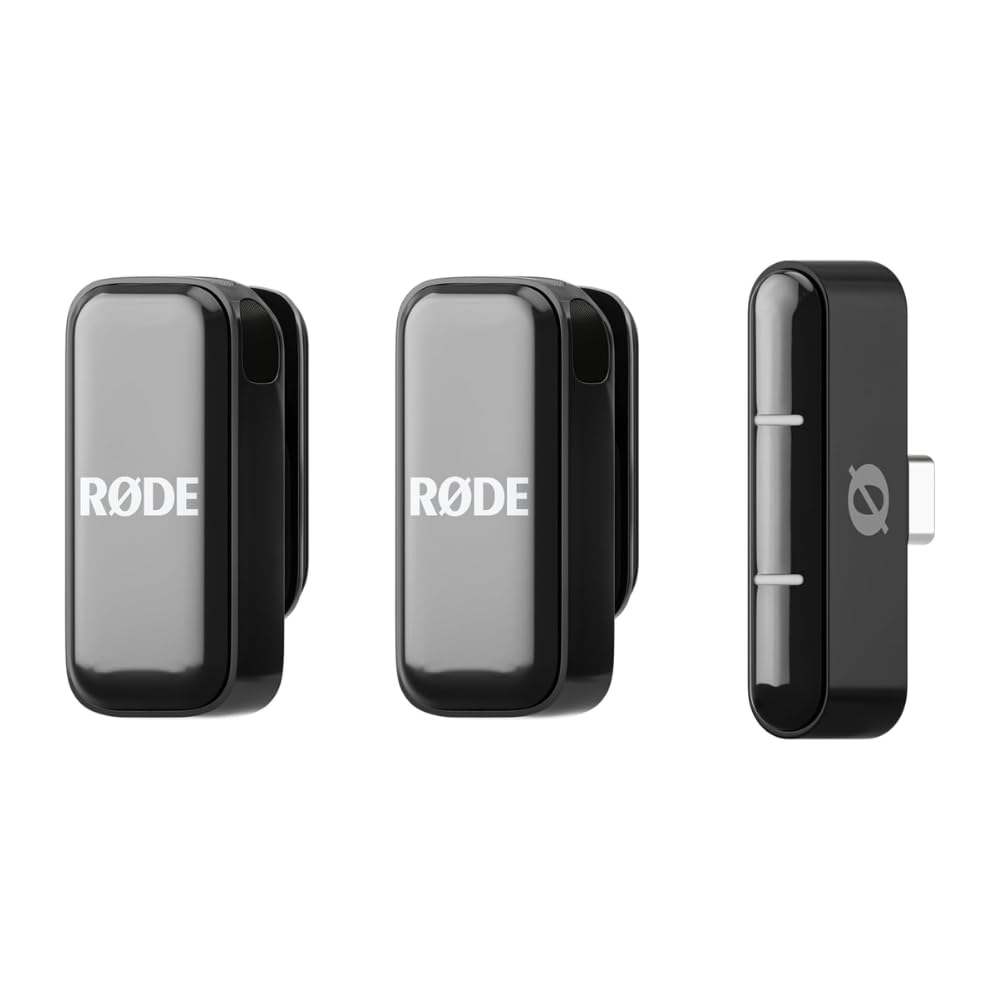
RØDE’s Wireless Micro prioritizes simplicity without sacrificing audio integrity. The receiver plugs directly into a USB-C smartphone with no cable needed — a major advantage when you are shooting handheld or mounting on a gimbal. Intelligent GainAssist automatically rides the input levels, preventing clipped peaks during loud moments and boosting quiet dialogue without introducing noise floor artifacts.
The dual-transmitter set includes magnetic attachments and furry windscreens that kill wind rumble without muffling the voice. Battery architecture gives 6 hours per charge, and the case holds two additional full charges for 18 hours of total recording. Users consistently report cleaner audio than competitors in the same price tier, with a low noise floor that preserves subtle vocal texture.
The one catch: the included USB-C dongle is short, so a thick phone case may require an extender cable. The app adds useful monitoring and processing adjustments, though the mics work perfectly out of the box without opening the software. For creators who value turnkey reliability and have an iPhone 15/16 or Android USB-C device, this is the most polished grab-and-go solution available.
Why it’s great
- True cable-free receiver connection to USB-C phones
- GainAssist automatically prevents clipping and low levels
- Compact case and magnetic mounts for discreet wear
- Low noise floor beats most competitors in this range
Good to know
- Short USB-C dongle may require extender with thick cases
- App download recommended for full feature access
3. BOYA BY-V4U

The BY-V4U is the only system in this guide that supports four simultaneous transmitters, making it the solution for panel discussions, group interviews, or multi-speaker podcasts recorded into a single device. Each transmitter broadcasts on its own 2.4GHz channel in mono, and the receiver blends them into a single clean feed for the phone or computer. The 650-foot line-of-sight range is more than enough for large conference rooms or outdoor stages.
One-click noise cancellation on each transmitter effectively suppresses wind and background chatter. The 360° rotatable clip allows flexible mounting on collars, lapels, or bags. Battery life hits 6 hours per mic, and the charging case recharges the entire set two times — enough for 18 hours of total operation. Playback works without unplugging the receiver, a small but important convenience when checking takes on set.
Compatibility is limited to USB-C devices; Lightning phones require a separate receiver. Some early units showed audio aberrations with noise cancellation engaged, though replacement units resolved the issue. For solo creators this is overkill — for anyone recording three or four people into one phone, nothing else here matches its channel count.
Why it’s great
- Only unit here supporting 4 simultaneous transmitters
- 650 ft range for large spaces and outdoor stages
- Playback works without removing the receiver
- One-click noise cancellation on each mic
Good to know
- Only compatible with USB-C devices natively
- Occasional sync or audio artifact issues reported on early batches
4. BOYA mini 2
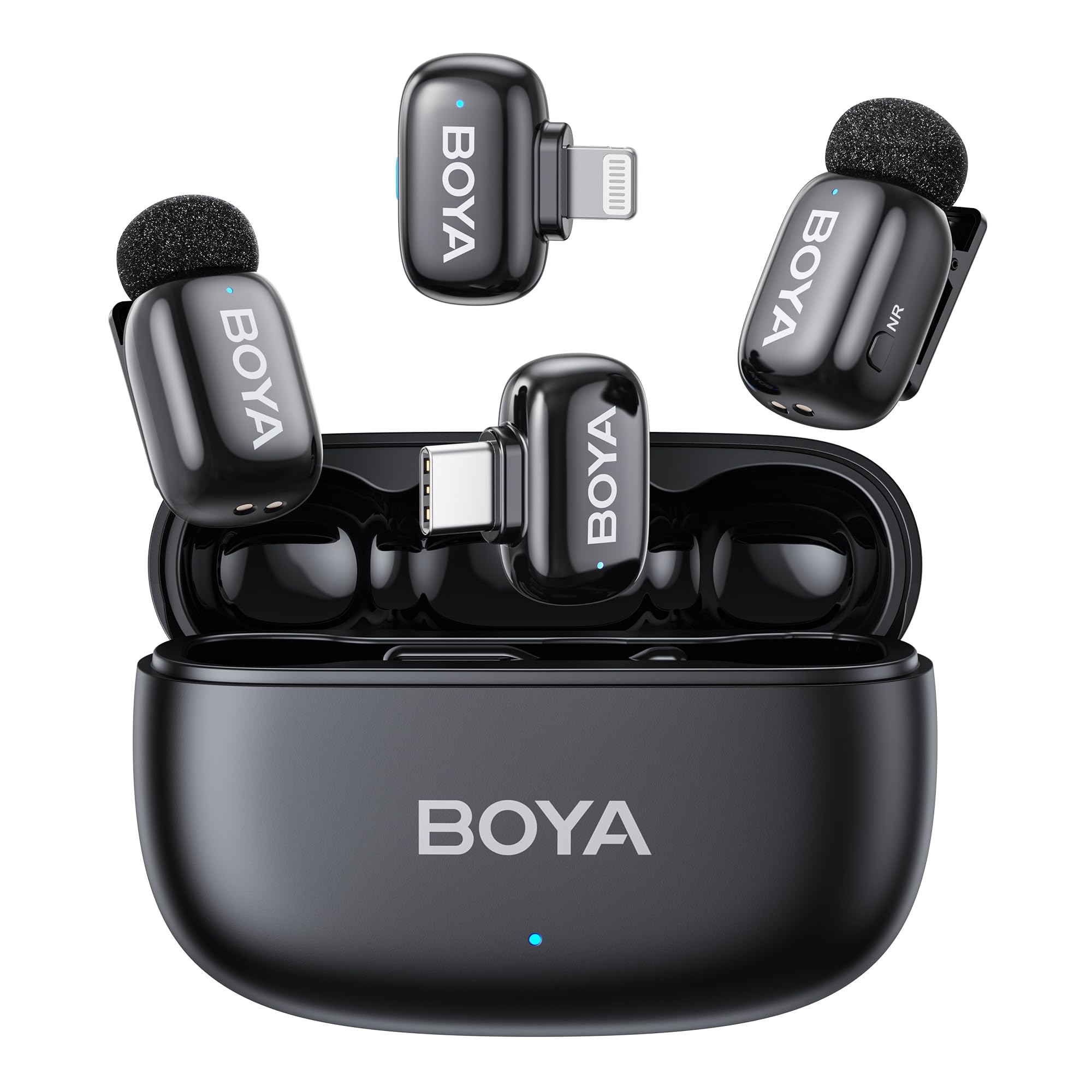
At 5 grams, the BOYA mini 2 is the lightest mic reviewed here — you forget it is clipped on. Despite the tiny footprint, it records at 48kHz/24-bit with an 80dB signal-to-noise ratio, capturing voice with enough clarity for professional vlogging or online teaching. The 120dB SPL threshold means loud presentations or singing never clip the capsule.
Adaptive AI noise cancellation offers two modes: Light (-15 dB) preserves a natural ambiance, while Strong (-40 dB) obliterates everything from keyboard clatter to crowd noise. The free BOYA Central app lets you adjust volume, noise cancellation level, and EQ from your phone, a feature usually reserved for pricier units. The charging case extends total runtime to 30 hours, the longest in this lineup.
The magnetic mounting system and included windscreens make outdoor recording wind-resistant. The limiter and -12 dB safety track guard against clipping automatically. The only drawback is a tendency for slight distortion when the mic is clipped too close to the mouth — mounting it at chest level solves this. For travel vloggers who want maximum recording time in the smallest package, the mini 2 is the clear pick.
Why it’s great
- Ultra-light 5g design for all-day comfort
- 30-hour total runtime with charging case
- Adaptive AI cancellation with Light and Strong modes
- App-based control for EQ and noise cancellation
Good to know
- Slight distortion if clipped too close to mouth
- Not compatible with GoPro, Insta360, or OnePlus devices
5. NPTCL Wireless Lavalier Microphone
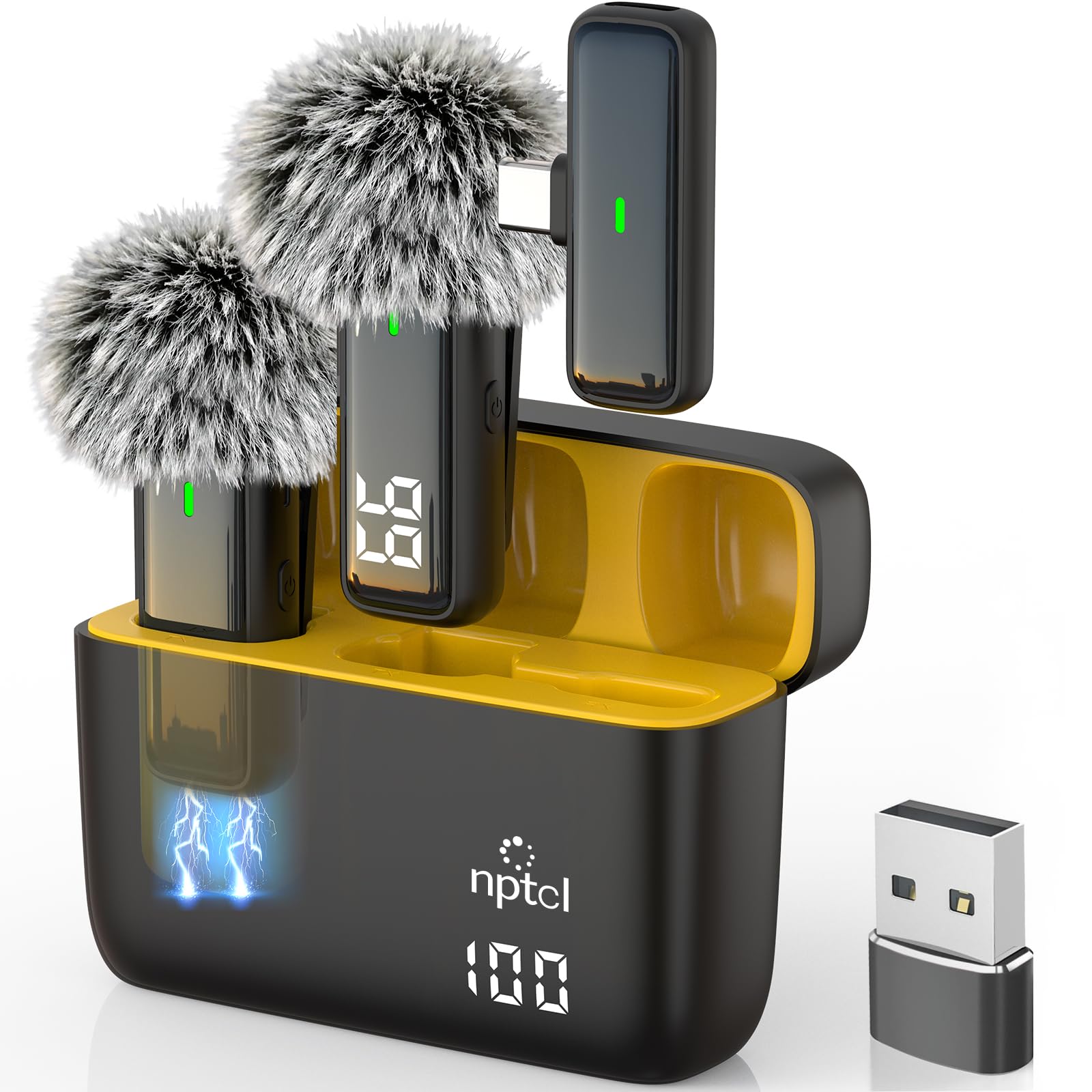
NPTCL delivers a dual-mic system specifically designed for two-person pickup, with each transmitter automatically pairing to the receiver and recording onto separate channels. The DSP chip reduces background noise effectively, and the included windscreen covers cut plosives during outdoor recording. Audio clarity consistently outperforms the built-in phone microphone, making it a solid step-up for interviewers and co-host podcasts.
The charging case provides a total of 24 hours of operation, with each mic lasting 6 hours per charge. Numeric battery indicators on the mics and the case show remaining charge, so there is no guesswork mid-shoot. The 70-foot range in open areas works well for most indoor setups and small outdoor venues. The system supports USB-A, USB-C, and Lightning devices via the included adapter, broadening device compatibility significantly.
Setup is completely plug-and-play with no app or Bluetooth pairing required. The compact case fits in a pocket, and the auto-sync connection re-establishes instantly when the mics are removed from the case. The only limitation is the plastic build, which feels lighter than premium competitors. For creators who need dual-person audio with a generous charging case at a reasonable entry point, this is a strong value.
Why it’s great
- Dedicated dual transmitter for simultaneous two-person recording
- 24-hour total battery with numeric charge indicators
- USB-A, USB-C, and Lightning adapter compatibility
- True plug-and-play with no app or Bluetooth required
Good to know
- Plastic enclosure feels less substantial than aluminum alternatives
- Audio quality good but not at the level of 48kHz/24-bit units
6. RIBIU Wireless Lavalier Microphone
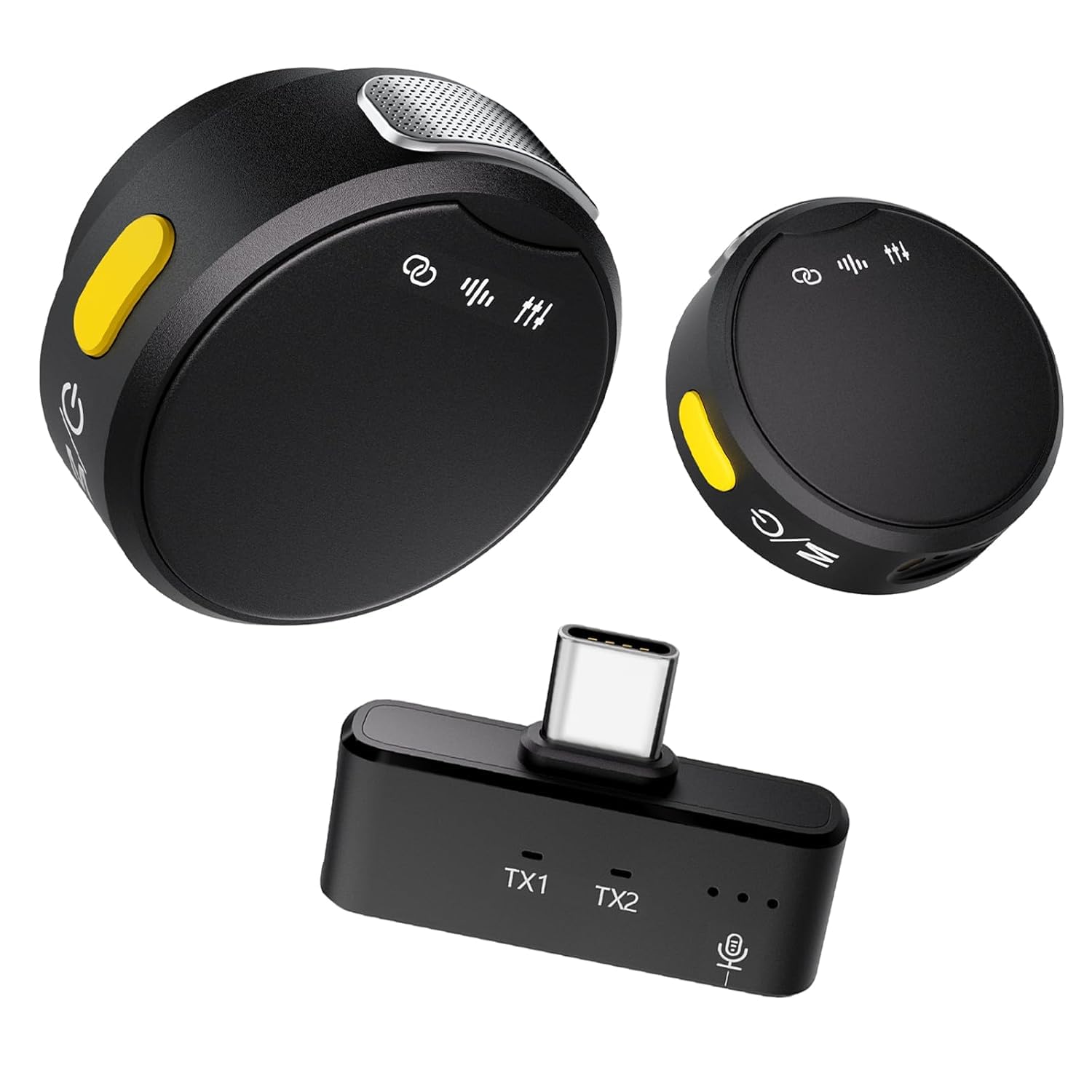
RIBIU focuses on endurance: each transmitter runs 8 hours, giving a combined 16 hours of dual recording without needing the charging case. For all-day conference coverage, wedding ceremony audio, or multi-segment interviews, this runtime eliminates the anxiety of dying mics. The DSP chip paired with a premium windscreen keeps audio clear in breezy outdoor conditions.
The button-sized transmitters are discreet and weigh almost nothing, which matters when the talent is on camera for hours. A 100-foot transmission range using 2.4GHz technology provides stable connectivity with ultra-low latency, preventing lip-sync drift in post-production. Reverb and mute functions add creative flexibility — the reverb mode provides 3D sound for musical performances or dramatic content.
The kit includes both Type-C and Lightning receivers, covering the widest range of smartphones out of the box. Three volume settings and an adjustable mic input level give fine control over gain staging. The hard carrying case keeps everything organized. The one trade-off is the plastic build, which feels less robust than metal options, but the audio reliability and battery endurance make this a workhorse for marathon recording sessions.
Why it’s great
- 8-hour per-mic runtime for all-day recording
- Both Type-C and Lightning receivers included
- Reverb mode adds 3D sound for creative projects
- Three adjustable volume levels and mic gain
Good to know
- Plastic enclosure less premium than metal competitors
- No dedicated charging case — relies on the hard case for storage
7. EZColoris M6-2
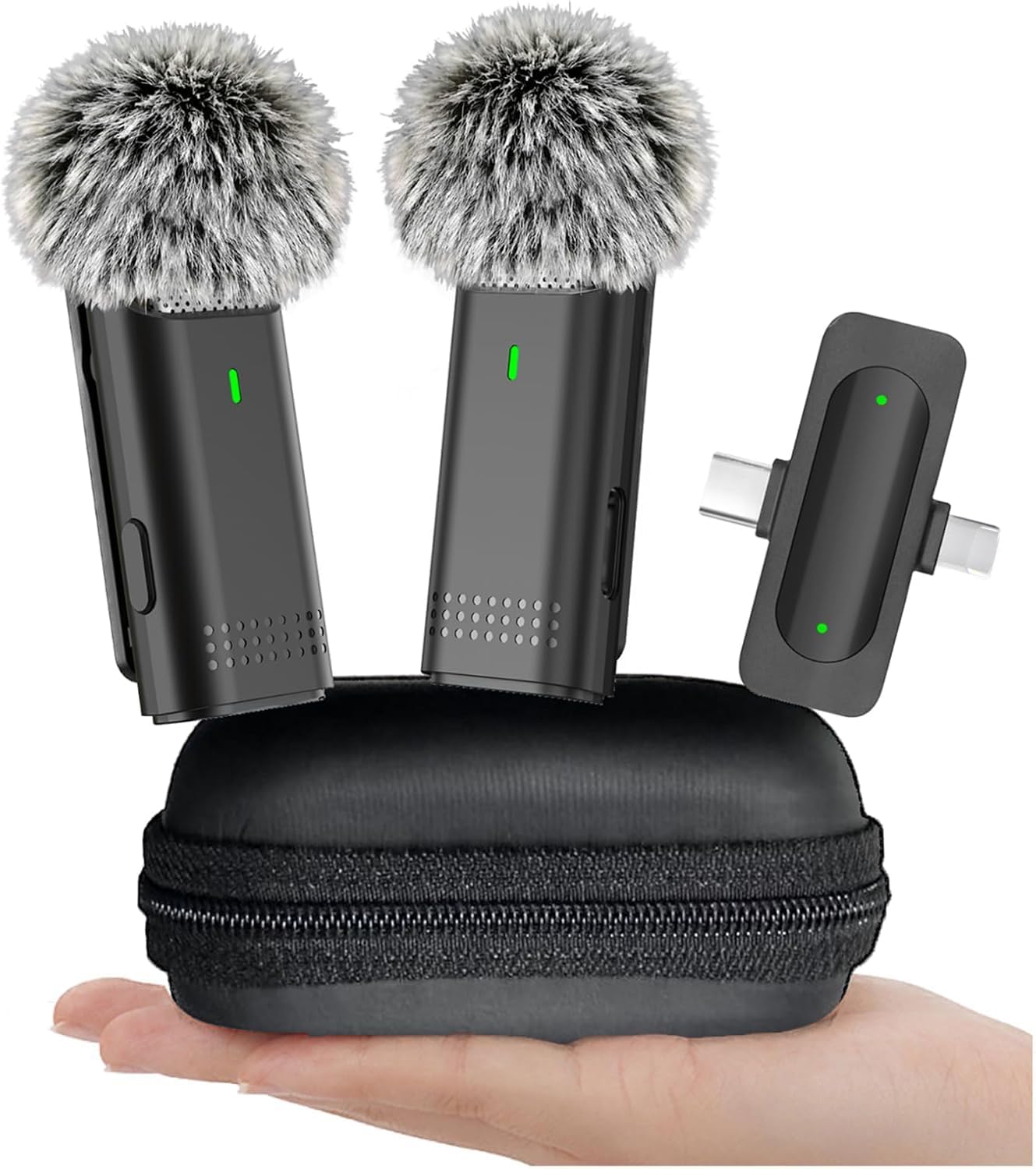
The EZColoris M6-2 proves that entry-level pricing does not have to mean useless audio. It records at 16-bit/48kHz with an omnidirectional condenser capsule that captures clear dialogue suitable for TikTok, YouTube shorts, and online meetings. The one-tap noise cancellation button reduces ambient hum effectively enough for indoor use, though it does not perform as aggressively as the AI-driven systems at higher price points.
The dual-transmitter system includes one receiver and two mics, allowing two-person interviews or solo recording with a backup. The 65-foot range in open areas covers typical vlogging distances. Setup is genuinely instant: plug the receiver into the phone, press the mic button until the green light glows, and recording begins — no app, no Bluetooth pairing, no menus. The included furry windscreen outperforms foam screens in reducing wind blast outdoors.
Battery life is adequate but not class-leading. The transmitters do not include a charging case, so each must be charged individually via USB-C. The alloy steel enclosure feels more durable than plastic rivals, and the mute LED indicator provides a clear visual confirmation. For someone stepping into wireless audio for the first time and unsure if the investment is worth it, the M6-2 delivers the core experience at the lowest barrier.
Why it’s great
- Lowest entry price for a functional dual-mic system
- True plug-and-play with no app or Bluetooth pairing
- Alloy steel enclosure feels durable for the price
- Furry windscreen beats foam for outdoor wind reduction
Good to know
- No carrying case for charging — each unit charges separately
- Noise cancellation less effective than higher-priced competitors
FAQ
Do I need a 48kHz/24-bit lavalier or is 16-bit enough for vocal recording?
Will a 2.4GHz wireless lavalier interfere with Wi-Fi or Bluetooth in my recording space?
Can I use a Bluetooth lavalier microphone with a laptop for Zoom calls?
Why does my lavalier microphone sound distorted when I clip it near my collar?
Final Thoughts: The Verdict
For most users, the best bluetooth lavalier microphone winner is the MAONO Wave T5 because it combines pro-grade 48kHz/24-bit audio with adjustable AI noise cancellation, a 300-meter range, and 30 hours of runtime in a package that still fits in a pocket. If you need a no-fuss system that delivers perfectly leveled audio straight from the box, grab the RØDE Wireless Micro. And for recording panels or interviews with up to four people on one phone, the BOYA BY-V4U is unmatched.

Mo Maruf
I created WellFizz to bridge the gap between vague wellness advice and actionable solutions. My mission is simple: to decode the research and give you practical tools you can actually use.
Beyond the data, I am a passionate traveler. I believe that stepping away from the screen to explore new environments is essential for mental clarity and physical vitality.