Our readers keep the lights on and my smoothie glass nicely filled. As an Amazon Associate, I earn from qualifying purchases.
A bluebird house that attracts the right tenants and deters predators isn’t a simple wooden box—it’s a carefully engineered nesting cavity. The difference between a house that fledges three broods per season and one that sits empty often comes down to two things: the exact entrance diameter and how easily you can clean out old nests.
I’m Mohammad Maruf — the founder and writer behind WellFizz. I’ve analyzed dozens of bluebird house designs against the North American Bluebird Society’s best practices, comparing wood thickness, ventilation patterns, and predator guard effectiveness to separate functional housing from yard decoration.
Whether you’re starting a backyard nest box trail or replacing a house that never got used, choosing the best bluebird houses means looking past paint colors and focusing on entry hole size, cleanout access, and materials that resist weather without chemical treatments.
How To Choose The Best Bluebird Houses
Bluebirds are cavity nesters that rely on human-provided boxes because natural cavities are scarce. But not every birdhouse works for bluebirds specifically. The entrance hole size alone determines whether you invite bluebirds, wrens, chickadees, or invasive house sparrows and European starlings.
Entrance hole diameter: the single most important spec
A 1.5-inch hole is the gold standard for Eastern and Western bluebirds. It allows bluebirds, tree swallows, and chickadees to enter while excluding European starlings, which need at least 1.75 inches. Anything larger invites competition and nest destruction. Most premium and mid-range models use a metal ring around this hole—this prevents predators from chewing the wood wider over time.
Cleanout access and ventilation
Bluebirds do not reuse old nests, so you must remove nesting material after each brood fledges. A house with a hinged front, side door, or lift-off roof makes seasonal cleaning quick without damaging the box. Ventilation gaps between the roof and side walls prevent overheating—a real risk for nestlings during July and August. Drainage holes in the floor keep the nest dry during rain.
Material durability: cedar vs. recycled plastic vs. painted pine
Untreated natural cedar resists rot and insects without chemical preservatives and breathes to reduce condensation. Recycled plastic models like the Kingsyard premium option never rot, never need repainting, and withstand decades of sun and rain, but they cost more upfront and lack the natural insulation of wood. Painted pine houses look charming but often warp, crack, or shed paint after two seasons—avoid anything with a glossy finish that could trap moisture.
Quick Comparison
On smaller screens, swipe sideways to see the full table.
| Model | Category | Best For | Key Spec | Amazon |
|---|---|---|---|---|
| Dreyoo Cedar Bluebird House | Mid-Range | Dedicated bluebird trails | 1.5″ hole with metal predator guard | Amazon |
| Kingsyard Recycled Plastic | Premium | Long-term durability | Recycled plastic, never rots | Amazon |
| Woodlink NABB Audubon Cedar | Premium | Audubon-approved design | Audubon specs, natural cedar | Amazon |
| Kingsyard Wooden Wren House | Entry-Level | Wren-friendly small gardens | 1″ hole, metal predator guard | Amazon |
| Glitzhome Patriotic House | Decorative | Yard decoration with function | Distressed wood, rear cleanout | Amazon |
In-Depth Reviews
1. Dreyoo Cedar Bluebird Houses for Outside

The Dreyoo hits every functional spec a bluebird trail operator needs. The 1.5-inch entrance hole fitted with a metal predator guard is the most important feature—it keeps starlings and squirrels from enlarging the opening while letting bluebirds and tree swallows pass freely. Interior fledging grooves act as a ladder so nestlings can climb to the exit when they’re ready to fledge, which significantly improves survival rates.
The front door swings open from the bottom for seasonal cleaning, and the floor includes a small screen that elevates the nest material above any moisture. At 12.2 inches deep, the interior cavity gives bluebirds enough vertical space to build a proper cup nest. The high-temperature carbonized wood surface resists weather without paint or chemical stain, which is safer for birds than treated lumber.
A few users noted the house is on the smaller side compared to traditional box dimensions, and there is no external landing ledge—bluebirds don’t need one, but some owners prefer the look. Pre-drilled mounting holes and included screws make installation straightforward on a post or tree. For the price, this is the most spec-complete bluebird house in this lineup.
Why it’s great
- Correct 1.5-inch entrance with metal guard blocks starlings
- Fledging grooves inside help babies exit safely
- Front cleanout door makes seasonal maintenance easy
- Carbonized cedar resists rot without chemical treatment
Good to know
- Interior is snugger than some larger Audubon-style boxes
- No landing ledge (bluebirds don’t need one, but it’s worth noting)
2. Kingsyard Recycled Plastic Bird House

If you want a bluebird house that will outlast your fence posts, the Kingsyard recycled plastic model is the answer. It’s made from high-density recycled plastic that won’t rot, crack, warp, or fade—even after years of direct sun and rain. The material is thicker than most wooden boxes and provides good insulation against temperature swings, though it doesn’t breathe like natural wood.
The standout feature is the transparent viewing panel on the side door. You can lift the cleanout door and peek at the nest through the clear window without opening the box fully, which means you can monitor eggs and nestlings without causing the adults to abandon. The entrance hole is correctly sized and includes a predator guard extension that prevents animals from reaching inside.
Birds definitely use this house—reviewers consistently report bluebirds, chickadees, and nuthatches moving in quickly. One reviewer noted that for hot climates, drilling a few extra ventilation holes helps during August heat waves, since the plastic doesn’t have natural wood gaps. The house is easy to mount and clean, with a side door that opens wide for scooping out old nests.
Why it’s great
- Recycled plastic never rots, cracks, or fades in weather
- Clear viewing panel lets you watch nest activity without disturbance
- Predator guard extension around entrance adds extra protection
- Easy side cleanout door and interior floor grate
Good to know
- Lacks natural wood ventilation—may need extra holes in hot climates
- Heavier than wooden boxes when mounted
3. Woodlink NABB Audubon Cedar Bluebird House
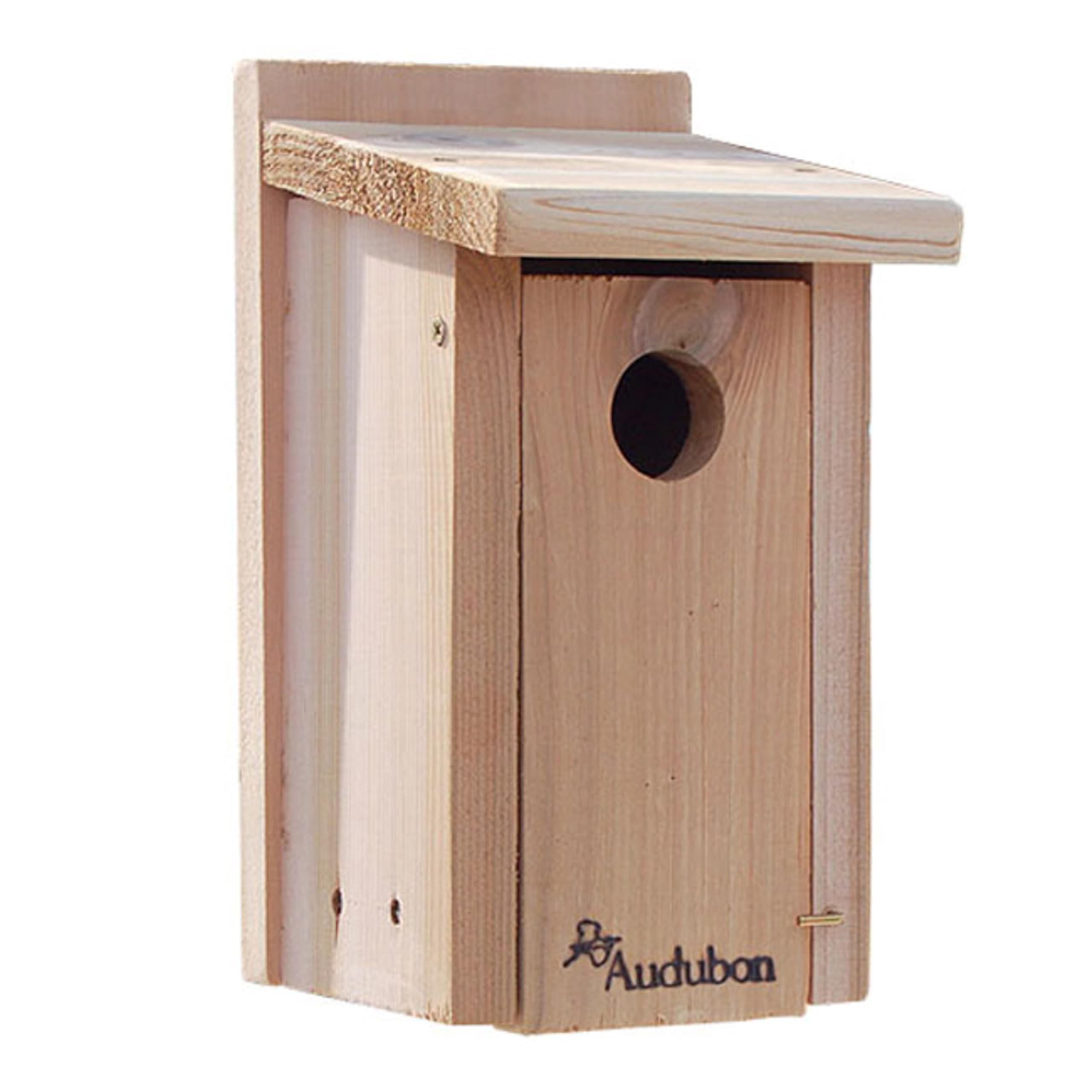
The Woodlink NABB is built to the exact specifications of the National Audubon Society’s bluebird recovery program. It’s made from natural, un-treated cedar with a 1.5-inch entrance hole, an overhanging roof for shade, and a simple but effective predator guard. The interior dimensions follow the standardized North American Bluebird Association (NABB) design that has been proven over decades of bluebird trail monitoring.
The front door swings open for cleaning, and the cedar construction naturally resists moisture and insects. Pre-drilled holes on the back make mounting simple. The house is roomier than the Dreyoo, with a 5.25-inch width and 13.75-inch height that gives bluebirds ample space for nest building. The wood is rougher on the interior, which helps nestlings climb out when fledging.
Quality control can be inconsistent—some units arrive with misaligned doors or gaps at the bottom joint. A few reviewers recommend adding a clear weatherproof sealant to the roof seam to extend the house’s lifespan beyond five years. Despite these minor gripes, the design is scientifically sound, and bluebirds reliably use these boxes across North America.
Why it’s great
- Audubon-approved dimensions optimized for bluebird nesting success
- Natural cedar construction breathes and resists rot
- Spacious interior cavity compared to smaller budget boxes
- Simple cleanout with front-opening door
Good to know
- Inconsistent fit and finish on some units
- Large “Audubon” branding printed on front
4. Kingsyard Wooden Wren House with Predator Guard

This Kingsyard model is marketed as a wren house, and its 1-inch entrance hole is perfectly sized for house wrens, Carolina wrens, and chickadees—but it’s too small for bluebirds. If your goal is specifically attracting bluebirds, skip this one. If you want a well-made box for smaller cavity nesters while you learn the basics of birdhouse management, this is a solid entry point.
The construction is genuinely impressive for the price point. The New Zealand pine is thick and solid, not the flimsy plywood you see on bargain shelf houses. The metal predator guard around the entrance prevents squirrels from gnawing the hole wider, and the lift-off roof design makes cleaning remarkably easy—no tools required, just lift the roof and scoop out the nest. Air vents on the sides and floor prevent moisture buildup.
Multiple buyers report birds moving in within days of installation, which speaks to the hole sizing and interior dimensions being correct for wrens and chickadees. The royal blue color adds visual interest without being toxic to birds, since the paint is on the exterior only. If you already have bluebird boxes and want a complementary house for smaller species, this pairs nicely.
Why it’s great
- Thick solid wood construction with metal predator guard
- Lift-off roof for effortless tool-free cleaning
- Ventilation openings prevent heat and moisture buildup
- Birds occupy it quickly—proven design for wrens and chickadees
Good to know
- 1-inch entrance is too small for bluebirds
- Paint may fade or peel over time depending on sun exposure
5. Glitzhome Patriotic Distressed Wood Birdhouse
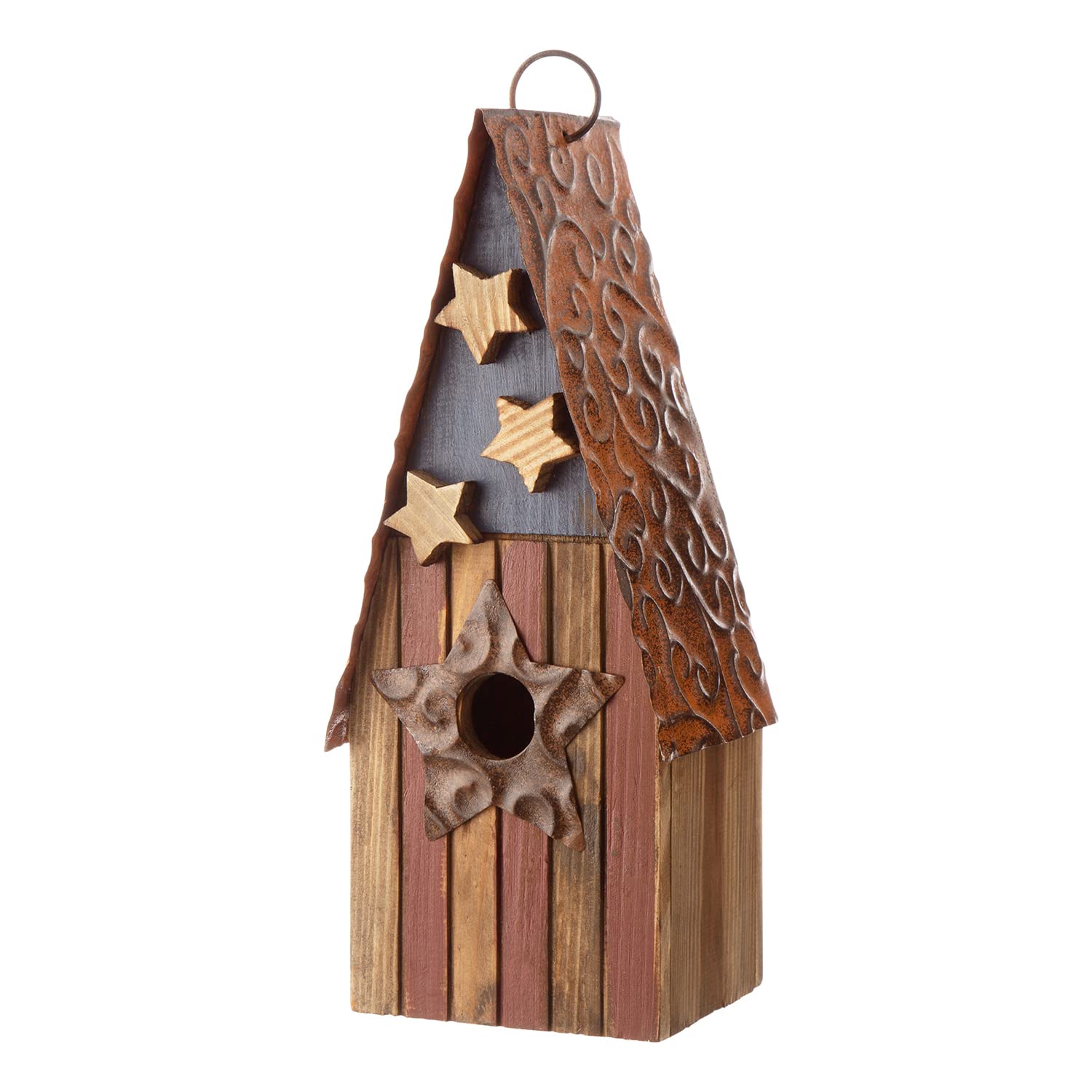
The Glitzhome house leans heavily into aesthetics over ornithology. The distressed red, white, and blue finish with hand-painted stars makes it a striking garden decoration, and the copper metal roof adds durability against rain and wind. The rear concealed door provides functional cleanout access, and the entrance hole is protected by a metal star that helps discourage squirrels from pushing their way in.
Functionally, this house works best as a decorative box that may attract birds—not a primary bluebird nesting box. The entrance hole dimensions aren’t clearly specified, and the interior lacks fledging grooves or ventilation gaps. Bluebirds may use it, but the design priorities are clearly visual. Reviewers who installed it purely for decoration were delighted, while those expecting high nesting success were mixed.
The wood is natural and hand-chipped for a rustic look, but it’s not weather-sealed. Several owners recommend applying waterproof acrylic spray to prevent the paint from peeling after rain exposure. The hanging ring makes it easy to place on a porch hook or tree branch. For the buyer who wants a charming Americana accent that might also host a bird family, this fits that niche perfectly.
Why it’s great
- Beautiful hand-painted patriotic design with copper roof
- Concealed rear cleanout door is functional and discreet
- Metal star guard helps deter squirrels
- No assembly required, ready to hang immediately
Good to know
- Not optimized for bluebird nesting success
- Paint can peel in rain without additional waterproofing
FAQ
Should I paint or stain my bluebird house?
How high should I mount a bluebird house?
How often should I clean out a bluebird house?
Final Thoughts: The Verdict
For most users, the best bluebird houses winner is the Dreyoo Cedar Bluebird House because it nails every functional requirement—1.5-inch predator-guarded entrance, fledging grooves, front cleanout, and weather-resistant carbonized wood—at a mid-range price that doesn’t compromise on specs. If you want a house that will literally outlast you, grab the Kingsyard Recycled Plastic model for its lifetime durability and unique viewing window. And for a simple, Audubon-backed design, the Woodlink NABB Cedar House has proven itself on bluebird trails for decades.

Mo Maruf
I created WellFizz to bridge the gap between vague wellness advice and actionable solutions. My mission is simple: to decode the research and give you practical tools you can actually use.
Beyond the data, I am a passionate traveler. I believe that stepping away from the screen to explore new environments is essential for mental clarity and physical vitality.