Our readers keep the lights on and my smoothie glass nicely filled. As an Amazon Associate, I earn from qualifying purchases.
Specs are compiled from manufacturer listings and verified buyer reviews and can change over time — please confirm the key details on the product page before buying.
If you’ve watched a bully starling or a squirrel drain a tray of mealworms in minutes, you already know the real question isn’t which feeder hangs prettiest — it’s which one actually gets the food to the bluebirds. This guide cuts through the mesh sizes, the dome tricks, and the caged designs to land on the nine best bluebird feeder options that solve that one problem first, then look good doing it.
I’m Mohammad Maruf — the founder and writer behind WellFizz. This guide is built by comparing the manufacturers’ published specifications and the patterns across verified customer reviews, so you get each pick’s real strengths and trade-offs instead of marketing spin.
The right feeder keeps the protein where it belongs, outlasts a season of rain and sun, and makes refilling a thirty-second job — here is everything you need to pick your best bluebird feeder with confidence.
Our Picks at a Glance

How To Choose The Best Bluebird Feeder
Bluebirds eat insects and fruit — they are not seed birds. That means mealworms (live or dried) and the occasional jelly or suet pellet are the main draw. Picking a feeder is really about controlling who else gets to the mealworms before the bluebirds do.
Mesh Size & Exclusion
The most common battle is keeping starlings, grackles, jays, and squirrels off the food. A caged feeder with openings around 1.5 x 1.5 inches lets bluebirds, chickadees, and nuthatches hop through while blocking larger visitors. If squirrels are your main headache, make sure the cage is metal — they chew through plastic in hours.
Material Matters
All-metal or recycled poly lumber (the kind made from milk jugs) resists cracking, fading, and warping far longer than thin acrylic or untreated wood. A feeder that sits in full sun and rain needs UV-resistant construction and rust-proof hardware — stainless steel hanging cables and powder-coated metal are the markers of a feeder that will still look good next season.
Ease of Daily Cleaning
Mold grows fast in a damp feeder, especially one holding moist foods like jelly or live mealworms. Look for a removable roof, a dishwasher-safe bowl, or a design you can hit with a hose in under a minute. The easier it is to clean, the more likely you will actually do it — and healthy feeders attract more birds.
Quick Comparison
| Model | Best For | Capacity | Material | Exclusion Feature | Amazon |
|---|---|---|---|---|---|
| Mosaic Birds Hummble Glass Feeder★ Best Overall | Jelly & mealworms, small yards | 3.4 oz | Recycled glass & metal | None (open bowl) | Amazon |
| Kingsyard Mesh Tube FeederTop Performer | Clinging birds, mixed seed | 2.5 lbs | All metal | None (open mesh) | Amazon |
| Gbekery Caged FeederSmart Cage | Squirrel defense, small birds | Glass bowl | All metal | 1.5 x 1.5 in cage | Amazon |
| Kingsyard Squirrel Proof Platform | Caged platform, small birds | 5 lbs | Recycled plastic & metal | 1.5 x 1.5 in cage | Amazon |
| Woodlink Audubon Dome Feeder | Weather protection, mealworms | Large tray | Polycarbonate & alloy steel | Adjustable dome | Amazon |
| Kettle Moraine Recycled Feeder | Durability, bluebird-only access | Viewing window design | Recycled milk jugs | Entrance holes | Amazon |
| Amish-Made Poly Lumber Feeder | Craftsmanship, easy cleaning | Removable sides | Recycled milk jugs | Entrance holes | Amazon |
| Erva Starling-Proof Barrier Feeder | Starling & squirrel proof, USA made | Glass cup | Vinyl-coated wire mesh | Barrier guard | Amazon |
In‑Depth Reviews
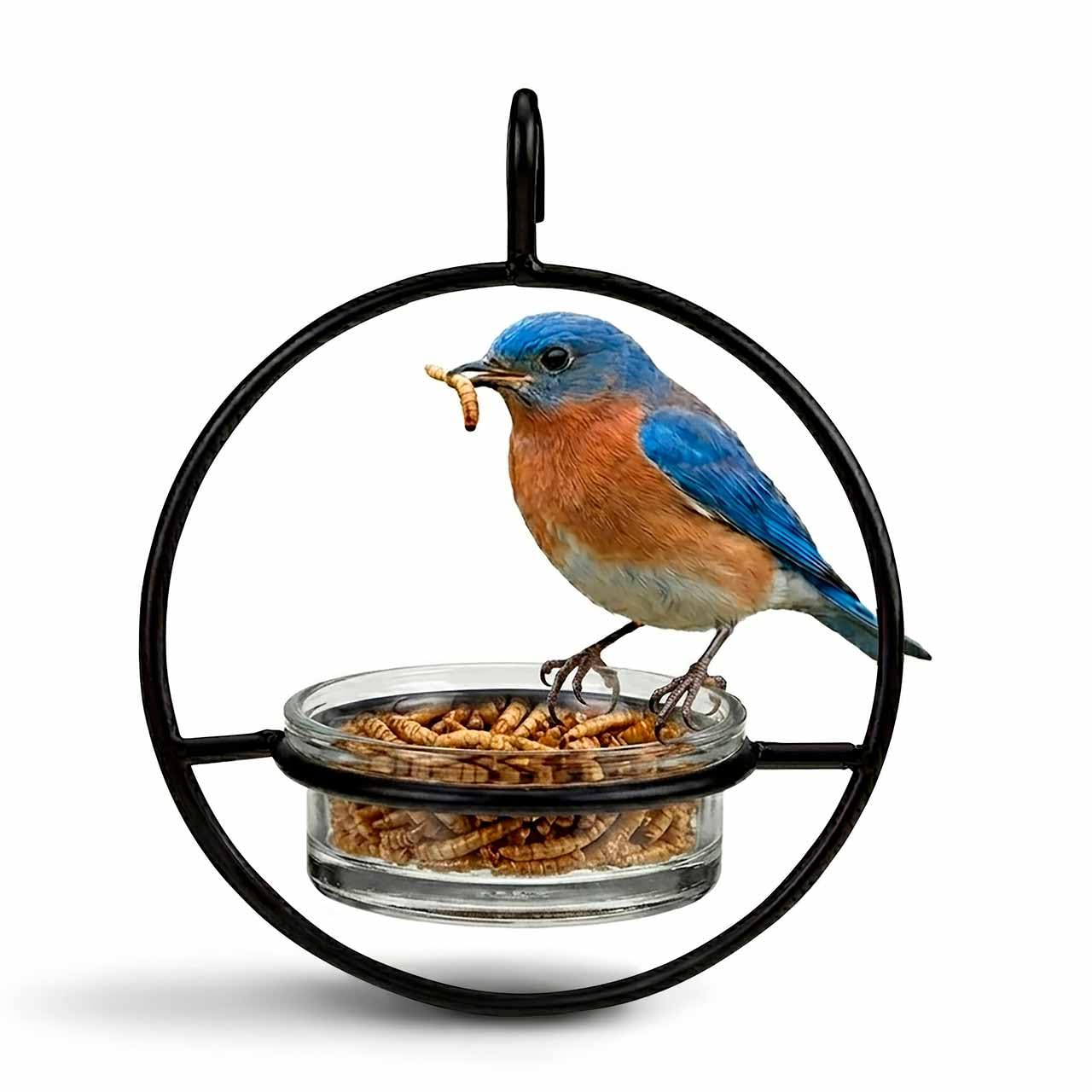
1. Mosaic Birds Hummble Hanging Glass Bluebird Mealworm Feeder
Our pick — over 4.5★ from 200+ verified ratings; the strongest balance of quality and price.
A recycled-glass dish that orioles and finches drain of grape jelly by the pound.
The thing that wins people over is the simplicity: a wide 3-inch opening in a solid 3.4-ounce glass bowl, hung from a powder-coated metal hanger. No plastic parts, no drainage holes — which means you can fill it with jelly, water, or live mealworms without anything leaking out. Buyers report it doubles as a jelly feeder for Bullock’s orioles and house finches, with one noting it “holds up to 2 lbs of grape jelly daily.”
Cleaning is remarkably easy — the glass dish is heavy enough to stay stable in wind, and the shallow bowl makes daily rinsing quick. It is also small. Only two birds can feed at a time, and larger birds need a nearby perch. The lack of any exclusion cage means squirrels and starlings can land on it. This is a feeder for the person who wants an attractive, easy-clean station for bluebirds and other small species, not a fortress against bullies.
It holds the highest rating in the lineup — a crowd favorite that proves simple design done well still wins the most fans.
Why it earns the top spot
- Recycled glass and powder-coated metal — zero plastic, no chemical worries
- Wide 3-inch opening lets multiple birds reach the food easily
- No drainage holes means you can serve jelly, water, or live mealworms without mess
- Easy daily cleaning; buyers call it truly simple to maintain
Who should look elsewhere
- No squirrel or starling protection — open bowl invites everyone
- 3.4-ounce capacity runs out fast if multiple birds visit regularly
- Only two birds can feed at the same time
Best for: Anyone who wants an attractive, easy-clean glass feeder for bluebirds, orioles, and finches and doesn’t have a serious squirrel problem.
Think twice if: You need to keep larger birds and squirrels off the food — this feeder has no barrier.
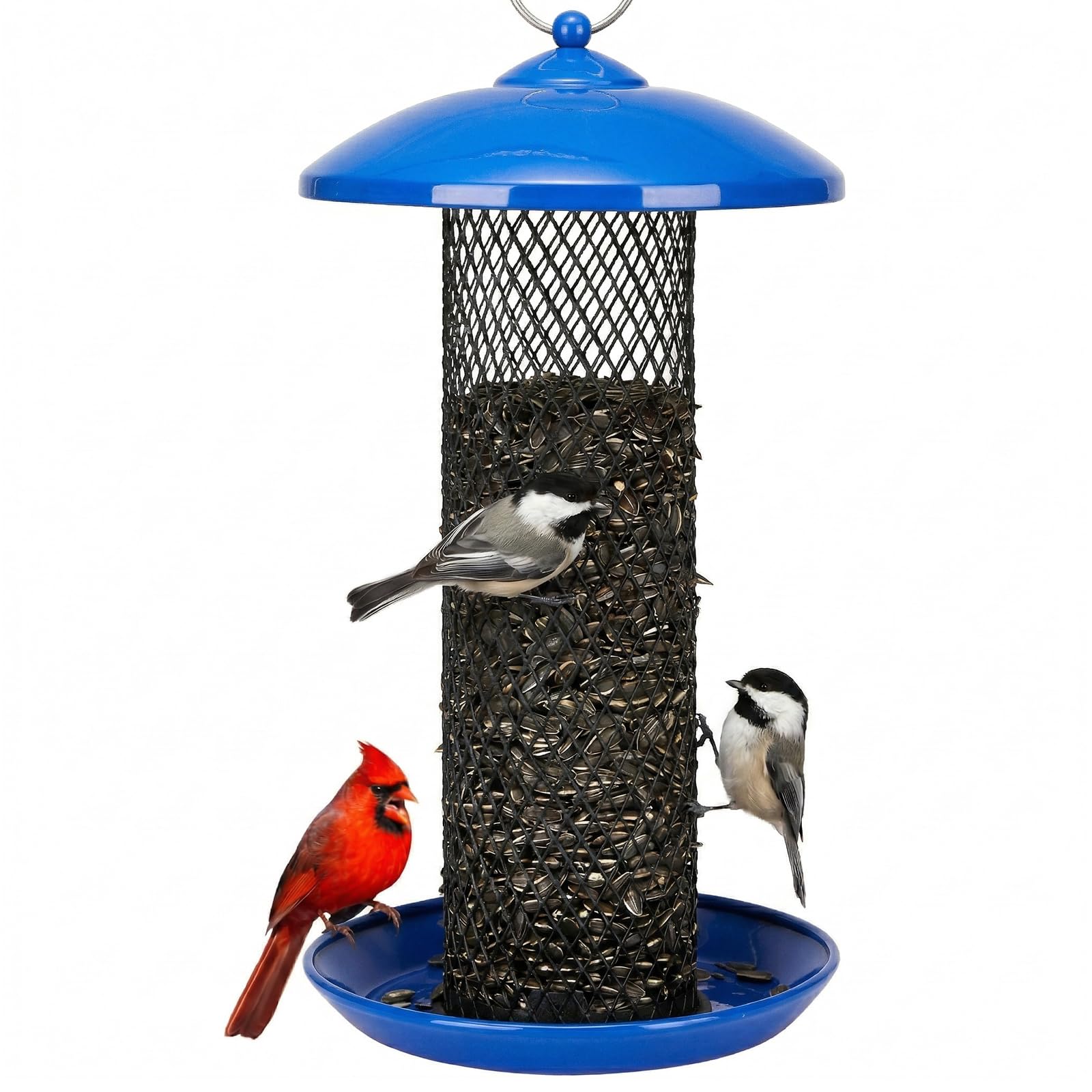
2. Kingsyard Mesh Tube Bird Feeder
An all-metal tube that woodpeckers and finches cannot get enough of.
The real draw here is the mesh surface — birds cling right to it, making this ideal for species like woodpeckers, chickadees, and nuthatches that naturally feed on bark. The 360-degree seed tray underneath gives perching birds a place to land, and the drainage holes keep seeds from getting soggy. It holds 2.5 pounds of sunflower seeds or mealworms, which owners mention is “holds days’ worth of birdseed.”
It measures 6 x 6 x 13 inches and holds 2.5 pounds of seed. The all-metal build resists squirrel chewing, and the twist-off top refills without tools. A recurring observation is that the mesh is fairly tight — not every seed passes through easily. This feeder is best with sunflower chips or dried mealworms, not tiny seeds like nyjer. The blue color is a favorite, though some noted the price has shifted since launch.
What stands out
- Solid metal construction with powder-coated finish resists rust and squirrels
- Mesh surface is perfect for clinging birds like woodpeckers and nuthatches
- Twist-off top and removable tray make refilling and cleaning tool-free
- Weatherproof design with drainage holes keeps food dry
The honest limitations
- Tight mesh can block smaller seeds — best for sunflower chips and mealworms
- No built-in squirrel or starling barrier beyond the metal itself
- Some units arrived damaged in transit, though replacements were sent quickly
Reach for this if: You want a durable, all-metal feeder that clinging birds love and you prefer to refill with sunflower hearts or mealworms.
Consider another if: You need to exclude starlings or larger birds — the open mesh is accessible to all sizes.
3. Gbekery Caged Bluebird Feeder for Mealworms
A blue cage that lets small birds hop in while locking starlings and squirrels out.
The whole concept here is a 1.5 x 1.5-inch mesh cage. That gap is small enough to block adult squirrels and large birds, but roomy enough for bluebirds, finches, and chickadees to fly through. Inside sits a removable glass bowl that can hold mealworms, jelly, seed, or even water. The roof lifts off for refilling, and the all-metal body with anti-rust coating handles rain and snow without issue.
The bright royal blue color attracts bluebirds visually, and the design is straightforward. Reviewers point out that the cage solves the “bully bird” problem — one owner noted “the food is not gone in just a few hours like it was in the other feeder.” A small but persistent observation, however, is that the 1.5-inch mesh does not completely stop squirrels. Determined squirrels can reach through with their heads. A few units also arrived with scratches on the roof from poor packaging. The concept is solid; just be aware that “squirrel proof” in the listing name is aspirational rather than absolute.
Works best for: Small-bird feeding where larger birds are the main problem. For serious squirrel pressure, consider a tighter mesh or a different design.
Reach for this if: Starlings and grackles are emptying your feeder and you want a simple cage solution that lets bluebirds through.
Think twice if: Squirrels are your primary nemesis — this cage does not fully exclude them.
4. Kingsyard Squirrel Proof Platform Bird Feeder
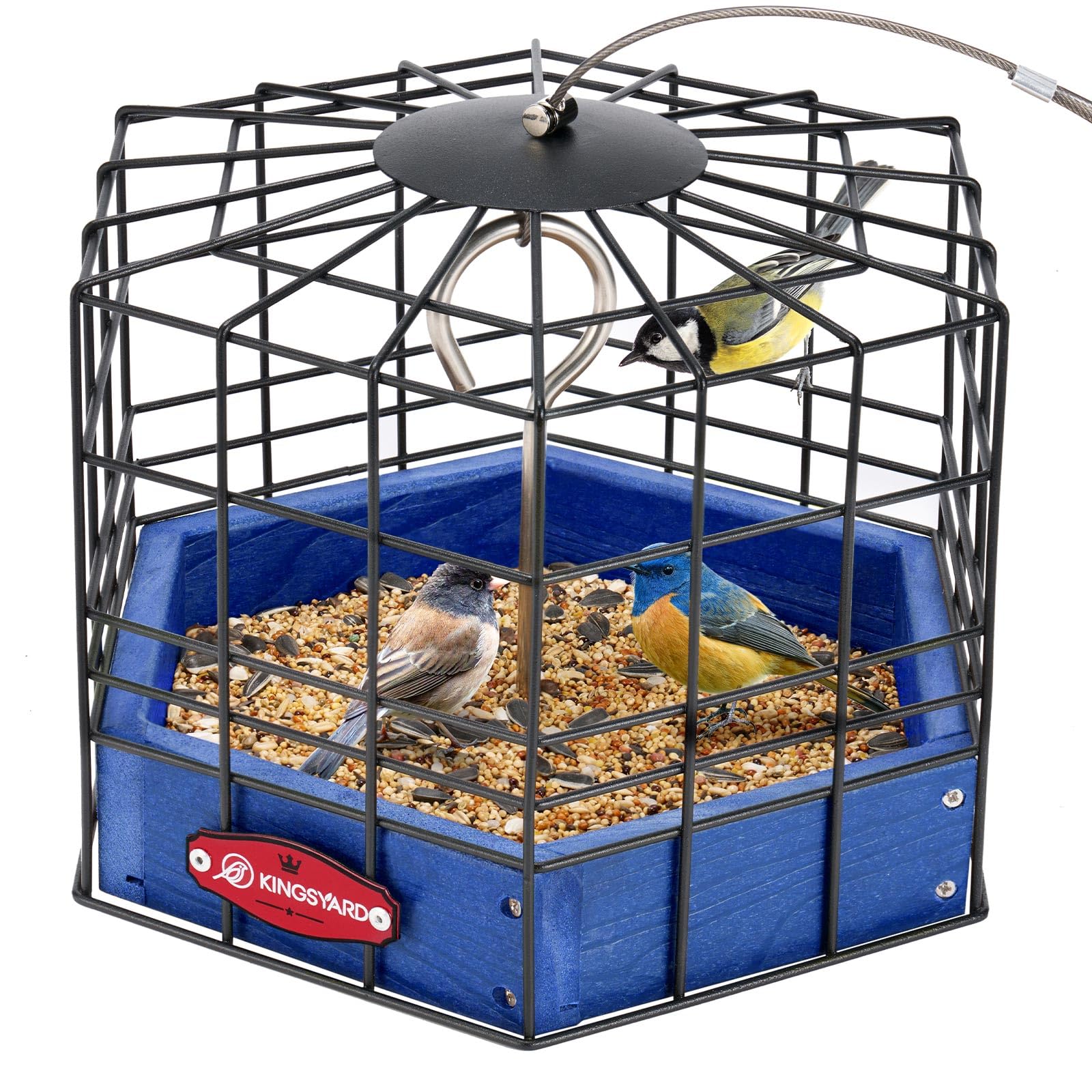
A caged platform that combines 5 pounds of seed capacity with small-bird-only access.
This one blends the generous 5-pound capacity of a platform feeder with an exclusion cage — 1.5 x 1.5-inch openings that let bluebirds, chickadees, and nuthatches reach the food while keeping doves, grackles, and most squirrels out. The base is a metal mesh tray that provides ventilation to keep seeds dry, and the recycled plastic body resists denting and fading. Buyers praise the build quality most of all — the thing is genuinely sturdy, with some noting it “withstood two hurricanes.”
The common trade-off that comes up most often is the cage size. Cardinals cannot fit through the 1.5-inch openings, so you will lose those bigger visitors. Some owners cut larger openings themselves to accommodate cardinals while still excluding doves. The fly-through design with all-around openings makes it easy for small birds to enter and exit, but the cage’s accessibility is a mixed point — starlings and chipmunks may squeeze through depending on the local wildlife size. This is a well-built feeder for the buyer whose priority is feeding small birds exclusively.
What owners love
- 5-pound capacity in a caged design — rare combination of volume and exclusion
- Recycled plastic and metal mesh resist weather, mold, and squirrels
- Fly-through openings let birds feed from all sides without feeling trapped
- Excellent build quality; owners call it sturdy and long-lasting
The honest fit notes
- Cardinals cannot fit through the 1.5-inch cage openings
- Squirrels may still reach food through the mesh depending on size
- Adding a rain guard on top makes filling slightly more difficult
Perfect for: Birders who want a five-pound platform feeder that keeps out large bully birds and only lets small species through.
Consider another if: You want cardinals and larger birds to visit too — the cage blocks them.
5. Woodlink NABBFDR Audubon Dome Top Seed and Bluebird Feeder
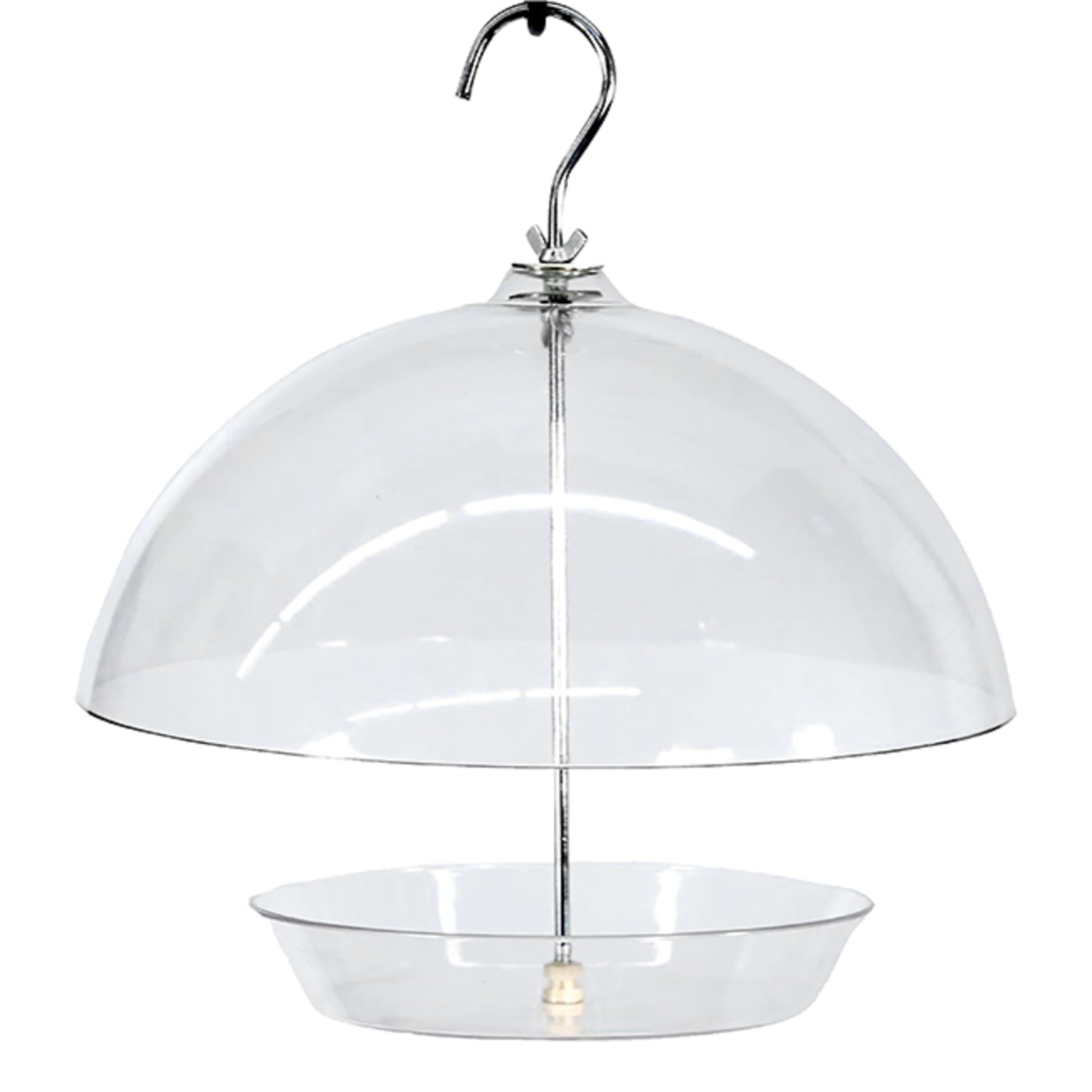
An adjustable dome that shrinks the gap to keep doves out while letting cardinals in.
This is the most adjustable feeder on the list. The clear polycarbonate dome slides up and down the center post, and the gap between the dome and the tray determines which birds can reach the food. Drop it low, and doves and pigeons are blocked — but cardinals can still squeeze in. Raise it higher, and larger species have access. This kind of fine-tuning is hard to find in most feeders, and it makes the Woodlink a favorite for birders who want to dial in exactly which species visit.
The heavy-duty construction uses UV-resistant polycarbonate and an alloy steel frame. The large tray holds seed, mealworms, fruit, or suet, and the dome keeps rain and snow off the food effectively. Buyers consistently praise it as “my birds’ favorite feeder.” The catch is that the plastic is less thick than older versions, and some owners found assembly more difficult than the previous model. A few also noted that determined grackles can still hang from the tray edge. But for a dome-style feeder, this is the most versatile option available.
Why it stands out
- Adjustable dome height lets you exclude larger birds selectively while still feeding cardinals
- Large tray holds multiple food types — seed, mealworms, fruit, or suet
- UV-resistant polycarbonate and alloy steel handle full sun and weather well
- Excellent weather protection; dome keeps rain and snow off the feeding tray
What to keep in mind
- Plastic components are thinner than older models, according to repeat buyers
- Assembly and height adjustment are less convenient than previous designs
- Grackles can still hang from the tray and reach food
Reach for this if: You want to fine-tune which birds visit by simply sliding the dome up or down — it is the most adjustable feeder here.
Consider a cage if: You need to exclude grackles and starlings completely; the dome is effective but not absolute.
6. Kettle Moraine Recycled Bluebird Mealworm Feeder
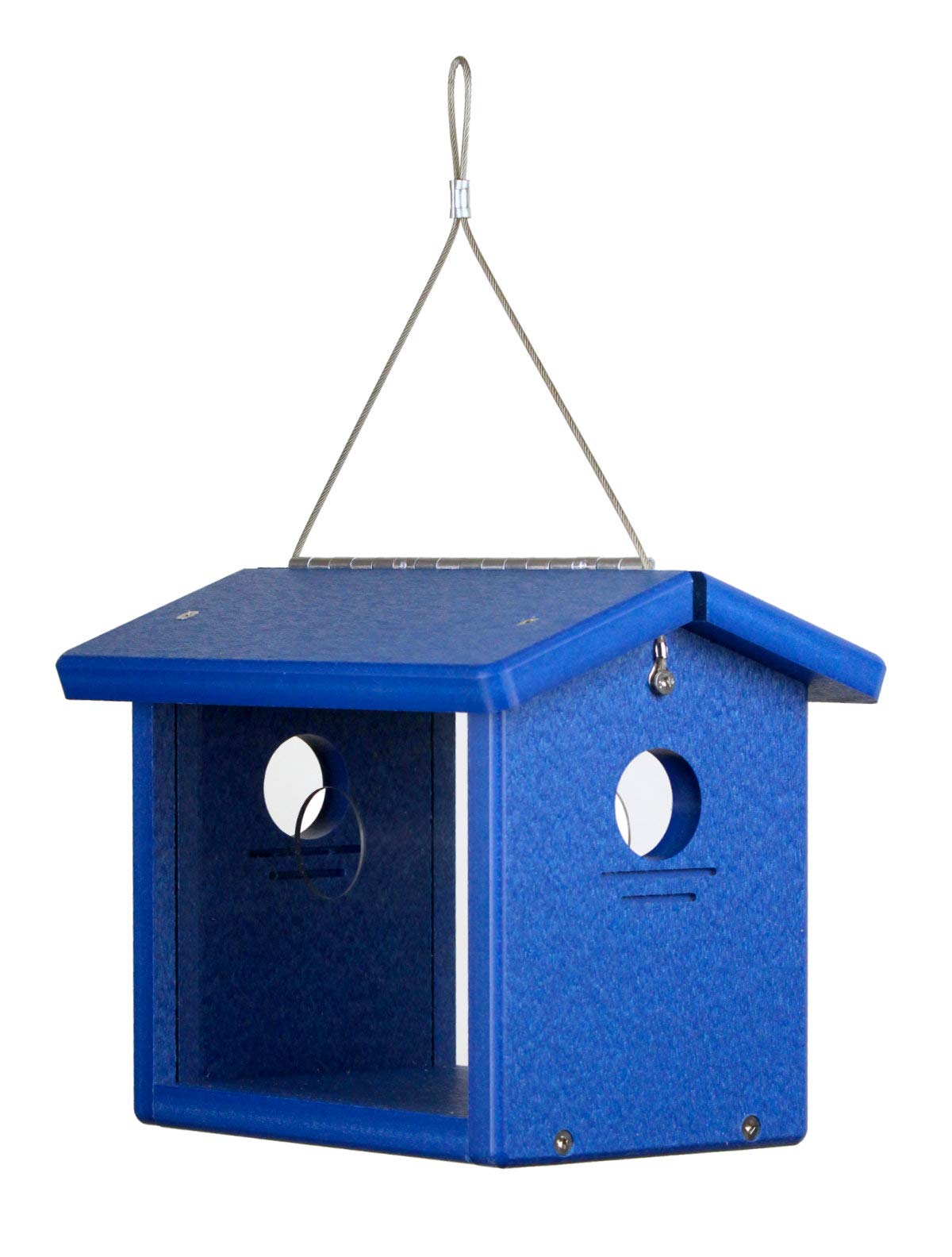
A recycled-feeder built from milk jugs that bluebirds figure out in one day.
The construction story here is impressive: made in the USA from recycled milk jugs with stainless steel screws and a hanging cable. The manufacturer guarantees it will resists cracking, splitting, peeling, and fading — and the 3.6-pound weight gives it a solid, permanent feel on the hook. Heavy acrylic viewing windows let you see when the mealworms are running low without opening the feeder.
The four entrance holes are sized specifically for bluebirds. Buyers consistently report that starlings and blackbirds are effectively excluded, and bluebirds “learned to use it in one day.” The refill schedule stretches to every two weeks in cold months because the food is protected from rain and large thieves. The most-discussed negative is that the acrylic side panels can feel flimsy compared to the rest of the build, and a few owners reported cracks. For a feeder that is practically indestructible on the recycled-plastic front, the acrylic windows are the weak link — but the overall quality rating is sky-high among owners.
About that guarantee: “Never crack, split, peel, or fade” is a strong claim, and the 111 positive mentions for quality suggest it holds up. The acrylic windows are the one place to be careful.
Perfect for: Anyone who wants a heavy-duty, USA-made feeder that bluebirds use immediately and that keeps starlings out.
Mind the windows: The recycled plastic body is tough, but the acrylic side panels are less durable — handle them gently during cleaning.
7. Bluebird Feeder – Poly Lumber – Hanging Blue Bird Feeder for Mealworms
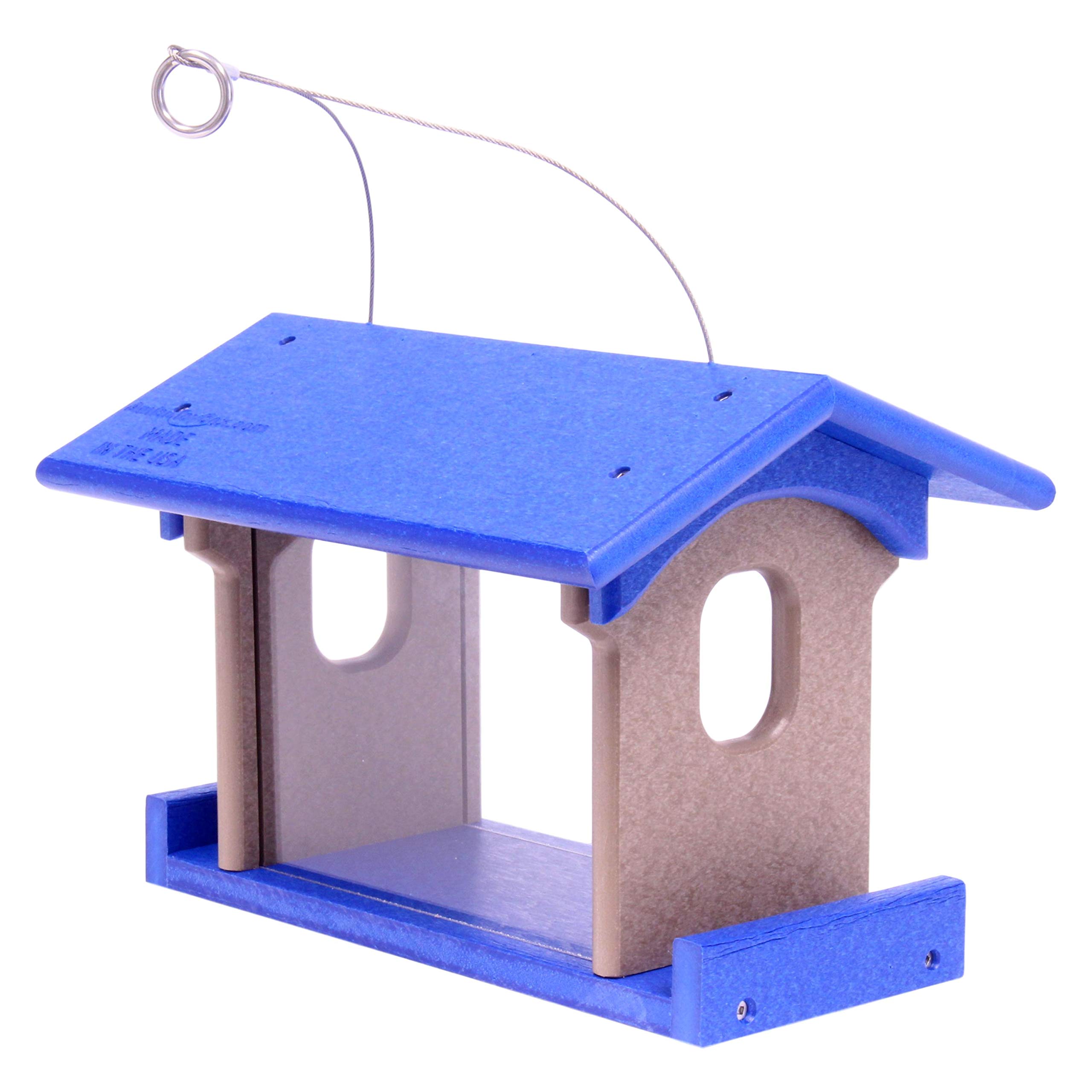
An Amish-crafted poly lumber feeder with removable sides for the easiest clean-up possible.
This feeder is made by Amish craftsmen in Shipshewana, Indiana, from recycled milk jugs (poly lumber). The defining feature is the fully removable sides and top — you can take the entire feeder apart for cleaning, which makes it much easier than feeders with fixed openings. The 12 x 8 x 8-inch box is sized for mealworms and designed specifically for bluebirds, with oval entrance holes.
The eco-friendly construction is UV- and weather-resistant, and it comes in three color combinations — blue and weathered wood is the most popular. Bluebirds do use it, but some shoppers say that it took a while for their local flock to acclimate to the oval openings. A more serious concern that comes up in reviews is that the smooth interior walls can make it difficult for birds — especially fledglings — to exit. One reviewer noted a bluebird got trapped inside. The manufacturer may have addressed this, but it is worth checking if the entrance/exit design has been updated on your unit. The feeder is beautiful and well-built, but the safety question is real.
Craftsmanship is high: The recycled poly lumber is thick, the colors are attractive, and the disassembly for cleaning is genuinely convenient. Just verify the exit design before hanging.
Reach for this if: You value Amish craftsmanship and want a feeder you can fully disassemble for thorough cleaning.
Check carefully: The smooth interior walls have caused exit issues for some birds — verify the design before committing.
8. Erva Starling-Proof Barrier Guard Bluebird Feeder

The starling-proof wire cage that finally makes expensive mealworms last longer than breakfast.
This is the most specialized exclusion feeder on the list. The entire body is a vinyl-coated wire mesh barrier that starlings physically cannot breach — they cannot get their heads or bodies through the grid, while bluebirds, chickadees, titmice, and warblers pass through easily. Inside sits a blue glass mealworm cup that is dishwasher-safe for easy cleaning. The 14 x 14 x 9-inch feeder can hang from a branch or mount on a pole, and the blue powder-coated finish is built to last for years.
Buyers are emphatic: “the best bluebird feeder they have used,” “effectively starling-proof.” One owner summed up the experience by saying starlings cannot get in “.” The catch is that bluebirds often need a perch to land on before entering the cage. Many owners add a few small bamboo dowels or zip-ties as perches, and once those are in place, the birds figure it out within a day. The included glass cup is also quite small — some upgrade it to a larger container. These are minor modifications that turn an already excellent design into a perfect one. Made in the USA, and the build quality speaks for itself.
What makes it special
- Truly starling-proof vinyl-coated wire mesh — the best in this category
- Dishwasher-safe blue glass mealworm cup for easy daily cleaning
- Made in the USA with a durable blue powder-coated finish
- Effective against jays, crows, grackles, and squirrels too
Small adjustments needed
- Bluebirds often need added perches (dowels zip-tied) to land before entering
- The included mealworm cup is small; some owners prefer a larger container
- Premium price that pays off in saved mealworms, but still an investment
Perfect for: Anyone battling starlings who wants a true barrier that saves money on mealworms long-term — it works exactly as described.
Plan on a small mod: Adding a couple of perches makes the feeder accessible to bluebirds on day one. Worth the five-minute project.
Understanding the Specs
Mesh & Cage Size
This is the spec that decides who eats. A 1.5 x 1.5-inch mesh opening lets bluebirds, chickadees, and nuthatches through while blocking starlings, grackles, and most squirrels. A tighter mesh (smaller than 1.5 inches) may exclude bluebirds too. A wider mesh (open platform) welcomes every bird in the neighborhood. Choose your mesh size based on which birds you want to see and which you want to send elsewhere.
Capacity & Food Type
Bluebirds eat protein — mealworms (live or dried), suet pellets, and fruit like grape jelly. A feeder that holds 2.5 pounds of food will need refilling every few days in peak season, while a 5-pound platform can stretch a week or more. If you serve jelly or live mealworms, look for a feeder without drainage holes (so liquids do not leak) and a glass or ceramic bowl that is easy to rinse daily.
FAQ
What is the best food to put in a bluebird feeder?
Will a bluebird feeder work if I only use sunflower seeds?
How do I keep starlings away from my bluebird feeder?
Can a squirrel really get through a 1.5-inch cage?
How often should I clean a bluebird feeder?
Is it better to hang a bluebird feeder or mount it on a pole?
Will bluebirds use a feeder right away, or does it take time?
What does “poly lumber” mean on a bird feeder?
Final Thoughts: The Verdict
Across the board, the best bluebird feeder overall is the Mosaic Birds Hummble Glass Feeder because it combines easy daily cleaning, recycled materials, and a simple design that bluebirds and orioles flock to — all at a price that makes it an easy first pick. If your main battle is starlings eating every mealworm before the bluebirds get a look, the Erva Starling-Proof Barrier Feeder is the single most effective solution on this list. And for a tough, USA-made feeder that bluebirds figure out in one day, the Kettle Moraine Recycled Feeder is built to outlast everything else in your yard.
How We Picked
We do not accept paid placement. Every pick is matched to a real buyer and a real use-case; we do not hands-on test units.
Sources & Methodology
Specifications: manufacturer listings and product documentation. Review insights: verified customer reviews, as of July 2026. Pricing: not shown on this page (it changes often); check the current price via the retailer link.
As an Amazon Associate, WellFizz earns from qualifying purchases. This does not affect which products we feature.
Related Guides

Mo Maruf
I created WellFizz to bridge the gap between vague wellness advice and actionable solutions. My mission is simple: to decode the research and give you practical tools you can actually use.
Beyond the data, I am a passionate traveler. I believe that stepping away from the screen to explore new environments is essential for mental clarity and physical vitality.