Our readers keep the lights on and my smoothie glass nicely filled. As an Amazon Associate, I earn from qualifying purchases.
Blueberry bushes demand a distinctly acidic soil environment, typically a pH between 4.5 and 5.5, to unlock the nutrients they need for vigorous growth and abundant fruit. Using standard garden soil or neutral potting mixes often leads to yellowing leaves, stunted plants, and disappointingly small harvests. Finding a mix that delivers the correct acidity, drainage, and organic matter specific to blueberries is the difference between a struggling bush and a thriving one.
I’m Mohammad Maruf — the founder and writer behind WellFizz. I’ve researched dozens of potting mixes, soil amendments, and acid-specific fertilizers to understand how pH, aeration, and nutrient profiles actually affect blueberry root health and berry production.
Whether you are planting your first bush or refreshing your berry patch, this guide breaks down the top performers to help you select the ideal best blueberry soil for your container or in-ground garden.
How To Choose The Best Blueberry Soil
Selecting the right medium for your blueberries goes beyond grabbing a bag labeled “potting soil.” The plant’s unique need for high acidity, excellent drainage, and consistent organic feeding means you must evaluate the specific composition and nutrient ratios.
Acidity Level: The Non-Negotiable Factor
Blueberries are calcifuges, meaning they cannot tolerate high calcium levels or alkaline soil. A proper blueberry soil must have a pH below 5.5. Some soil mixes come pre-acidified using peat moss and sulfur, while fertilizers like Holly-tone lower pH over time through their sulfur content. Check the bag for pH specifications or ingredients that create acidic conditions.
Drainage and Aeration for Shallow Roots
Blueberry roots are fibrous and shallow, making them susceptible to root rot in waterlogged conditions. Look for mixes containing perlite, bark, or coconut coir to create air pockets that allow excess water to escape quickly. A heavy, clay-like mix will suffocate the roots regardless of how acidic it is.
Organic Matter and Nutrient Profile
Organic material such as compost, humus, and sphagnum peat moss provides a steady release of nutrients and improves moisture retention without soggy conditions. A fertilizer analysis around 4-3-4 (Nitrogen-Phosphorus-Potassium) is common for acid-loving plants. Avoid mixes high in phosphorus unless a soil test indicates a deficiency.
Quick Comparison
On smaller screens, swipe sideways to see the full table.
| Model | Category | Best For | Key Spec | Amazon |
|---|---|---|---|---|
| Coast of Maine Acid-Loving Planting Soil | Pre-Mixed Soil | Ready-to-use container or bed planting | 20 Qt bag; low pH peat & compost blend | Amazon |
| FoxFarm Happy Frog Acid Loving Fertilizer | Granular Fertilizer | Feeding established blueberry bushes | 4 lb; contains mycorrhizal fungi | Amazon |
| Omitgoter Blueberry Soil Mix | Pre-Mixed Soil | Small containers and beginner gardeners | 4 Qt; peat, coir, perlite, bark blend | Amazon |
| Espoma Holly-tone 4-3-4 (Pack of 2) | Granular Fertilizer | Broad acid-loving plant maintenance | 4 lb per bag; Bio-tone microbes | Amazon |
| Espoma Berry-tone 4-3-4 | Granular Fertilizer | Maximizing berry yield | 4 lb; sulfur for acidification | Amazon |
In‑Depth Reviews
1. Coast of Maine Acid-Loving Planting Soil

This pre-mixed soil from Coast of Maine arrives ready to use straight from the bag, formulated specifically for acid-loving plants like blueberries. The blend combines composted manure, sphagnum peat moss, and aged bark to create a lightweight texture that drains freely while holding enough moisture for shallow blueberry roots. Gardeners report immediate results, with plants perking up within days of transplanting.
The low pH is built directly into the mix, removing the guesswork of separately acidifying standard potting soil. The 20-quart size offers generous coverage for several medium-sized containers or a modest raised bed. Users consistently praise the absence of strong odors and the visibly healthy growth it supports in strawberries, blueberries, and ornamental acid lovers.
Because it functions as a complete soil rather than a fertilizer additive, it is ideal for new plantings or refreshing tired beds. Seasonal feeding with an acidic fertilizer can extend the mix’s potency, but the base composition provides excellent initial nutrient support.
Why it’s great
- Pre-acidified with peat and compost for immediate pH balance
- OMRI listed for certified organic gardening
- Balanced moisture retention and drainage prevents root rot
Good to know
- Heavier bag may require two hands to manage
- Some users wish a larger bulk size was available
2. FoxFarm Happy Frog Acid Loving Fertilizer

FoxFarm’s Happy Frog line is a long-trusted name in specialty plant nutrition, and this acid-loving formula lives up to its reputation. Packaged as a 4-pound granular powder, it delivers a gentle yet effective feeding schedule designed for azaleas, rhododendrons, and blueberries. The inclusion of beneficial soil microbes and mycorrhizal fungi sets it apart by enhancing nutrient uptake at the root level.
The mixing ratio of 1/16 cup per gallon makes it easy to apply to both soil surfaces and incorporated into potting mixes. Long-time users report consistent results over a decade of use, particularly noting improved vigor in container raspberries and blueberries. The slow-release nature prevents the nutrient burn that can occur with stronger synthetic feeds.
This product works best as a top-dress for established plants in already acidic soil. If your starting medium is neutral or alkaline, pair it with a sulfur amendment or a pre-acidified base mix to create the ideal environment.
Why it’s great
- Mycorrhizal fungi improve root efficiency and water absorption
- Gentle, slow-release formula minimizes risk of overfeeding
- Trusted brand with decades of positive customer history
Good to know
- Requires mixing before application
- Not a standalone soil replacement
3. Espoma Berry-tone 4-3-4
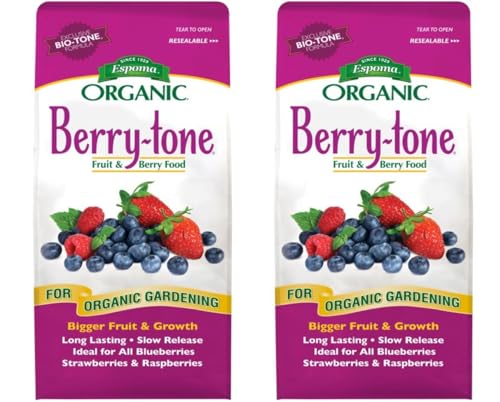
Espoma’s Berry-tone is a targeted granular fertilizer designed specifically for fruiting plants like blueberries, strawberries, raspberries, and blackberries. Packaged in a pack of two 4-pound bags, it offers excellent coverage for a full berry patch. The 4-3-4 analysis includes 5% sulfur to actively lower soil pH around the root zone, helping maintain the acidic conditions blueberries crave.
Users report dramatic increases in yield when switching to this formula, with one grower noting a stark difference in blackberry production between treated and untreated plants. The granules are ready to use straight from the bag, applied around the drip line and watered in. The Bio-tone microbial enhancer further supports root health and nutrient cycling.
For small container gardens, the pack of two may feel like more than needed, but the shelf-stable granules store well for subsequent seasons. It is best applied in early and late spring to support both flowering and fruit set.
Why it’s great
- Sulfur actively acidifies soil as it feeds
- Proven yield increase for multiple berry types
- Easy no-mix application reduces effort
Good to know
- Two 4-lb bags may be excessive for small plantings
- Effectiveness depends on starting soil pH
4. Espoma Holly-tone 4-3-4 (Pack of 2)
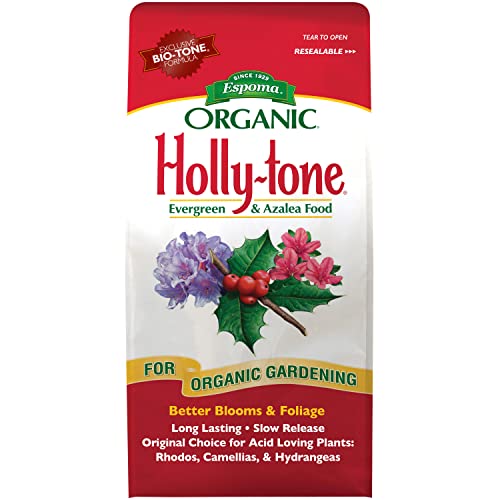
Espoma’s Holly-tone is the original organic fertilizer for acid-loving plants, a formulation that has been trusted by gardeners since 1929. This pack delivers two 4-pound bags of fine granules with a 4-3-4 analysis and 5% sulfur content. While the name suggests use on hollies and evergreens, the formula is equally effective on blueberries, azaleas, rhododendrons, and hydrangeas.
The Bio-tone formula includes beneficial microbes that break down organic matter in the soil, making nutrients more available over time. Users report that regular application helps revive struggling shrubs and maintains deep green foliage. The ready-to-use granules require no mixing, making it simple to apply in spring and fall as recommended.
Because it is a fertilizer rather than a soil, you will need to apply it on top of a suitable acidic growing medium. For gardeners already using a peat-based soil, this provides a reliable maintenance feed that keeps pH low through the growing season.
Why it’s great
- Proven track record with over 90 years of formulation refinement
- Bio-tone microbes enhance soil biology
- Versatile enough for all acid-loving ornamentals and edibles
Good to know
- Not a standalone soil; requires existing acidic base
- Spring and fall schedule may be easy to forget
5. Omitgoter Blueberry Soil Mix
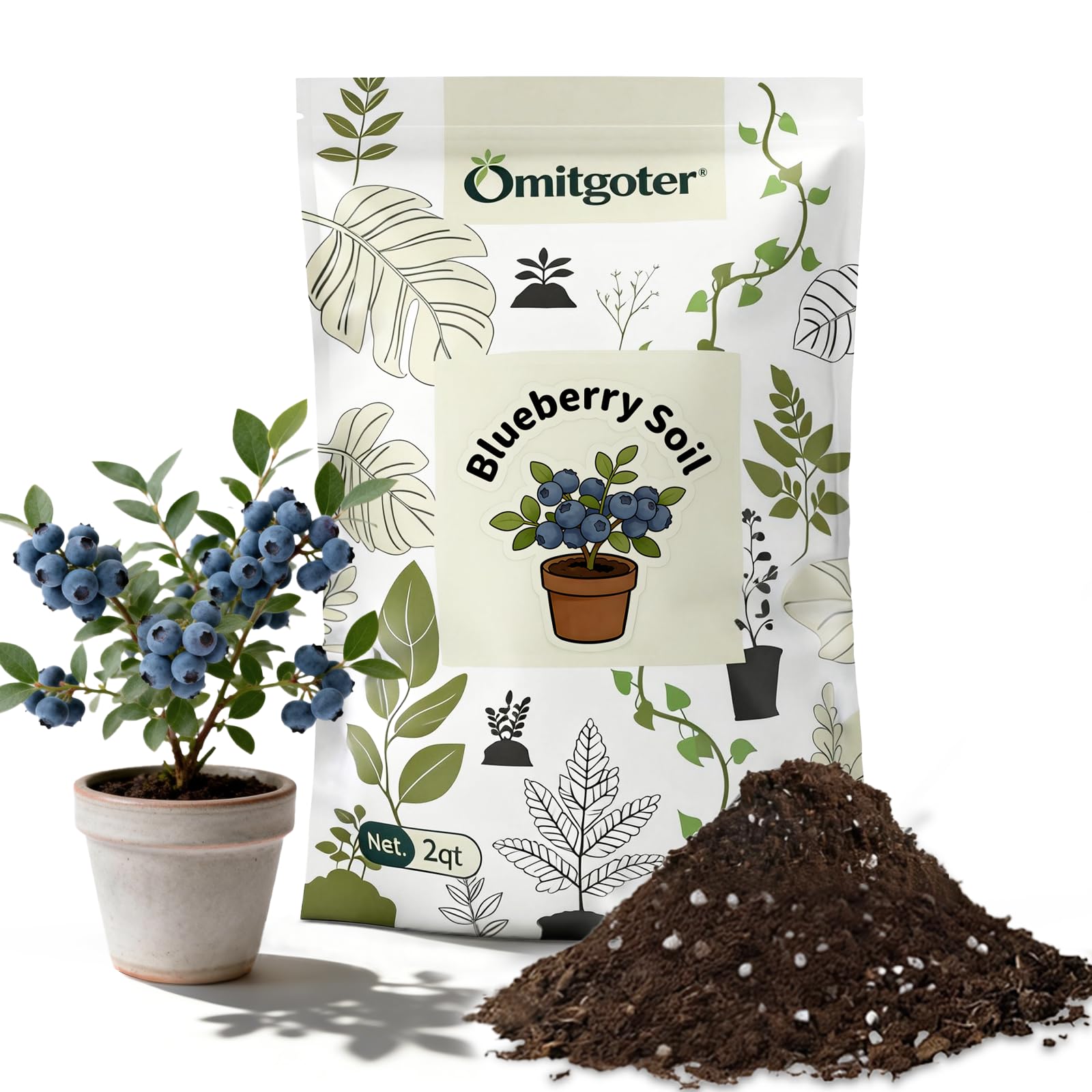
The Omitgoter Blueberry Soil Mix is a compact, 4-quart bag designed for small-scale use, perfect for repotting a single blueberry bush or starting seedlings. The blend combines pure peat moss, coconut coir, perlite, bark, and humus to create a light, airy texture that drains well while retaining enough moisture for container growth. It is advertised as 100% natural with no synthetic additives.
Customer feedback highlights its effectiveness beyond blueberries, with bonsai enthusiasts and rose growers reporting strong results. The ready-to-use format eliminates any mixing or measuring, making it an excellent entry point for novice gardeners who want a hassle-free start. The small bag size is convenient for tight spaces or test plantings.
Seasoned blueberry growers with multiple large bushes may find the 4-quart volume limiting, requiring several bags for a full bed. However, for a starter kit or a single patio container, the low commitment and solid ingredient list make it a practical choice.
Why it’s great
- Zero synthetic additives appeals to organic-focused growers
- Excellent drainage and aeration for small containers
- Beginner-friendly, straight-from-bag use
Good to know
- Small bag size requires multiple units for larger projects
- Long-term pH stability not as robust as larger blends
FAQ
Can I use regular potting soil for blueberries?
How often should I apply an acidifying fertilizer?
Should I choose a pre-mixed soil or a granular fertilizer?
Final Thoughts: The Verdict
For most users, the best blueberry soil winner is the Coast of Maine Acid-Loving Planting Soil because it combines a pre-acidified, OMRI-listed blend with excellent drainage in a generous bag size. If you want targeted feeding for an existing patch, grab the Espoma Berry-tone. And for a compact, beginner-friendly start, nothing beats the Omitgoter Blueberry Soil Mix.

Mo Maruf
I created WellFizz to bridge the gap between vague wellness advice and actionable solutions. My mission is simple: to decode the research and give you practical tools you can actually use.
Beyond the data, I am a passionate traveler. I believe that stepping away from the screen to explore new environments is essential for mental clarity and physical vitality.