Our readers keep the lights on and my smoothie glass nicely filled. As an Amazon Associate, I earn from qualifying purchases.
The difference between a handful of mediocre berries and a summer of abundance often comes down to one factor: choosing the right cultivar for your specific climate. Zone 7’s mild winters and hot summers create a sweet spot for blueberries, but only if you pick varieties that match the chill hours and soil acidity your land provides.
I’m Mohammad Maruf — the founder and writer behind WellFizz. I analyze nursery stock, pollination requirements, and root system quality so you can make a confident purchase that will produce for years.
After evaluating hundreds of customer reports and technical specs, I’ve narrowed the field to five options for the best blueberry plants for zone 7 that balance vigor, flavor, and survival rates.
How To Choose The Best Blueberry Plants For Zone 7
Zone 7 spans from the Mid-Atlantic down through parts of the Pacific Northwest, with winter lows between 0°F and 10°F. That range is wide enough to accept both low-chill Southern Highbush and higher-chill Rabbiteye varieties, but you must match the cultivar to your specific local microclimate. A bush that needs 800 chill hours won’t fruit reliably if your winters only deliver 400.
Chill Hours And Variety Selection
Chill hours refer to the cumulative time temperatures stay between 32°F and 45°F during winter dormancy. Zone 7 typically delivers 400 to 800 chill hours depending on your exact elevation and proximity to the coast. Southern Highbush varieties like Emerald need 200–400 hours, making them safe for warmer pockets. Rabbiteyes like Tifblue and Powder Blue require 450–700 hours, which suits the cooler inland parts of the zone. Buyers who ignore this spec often end up with vigorous green growth but zero fruit.
Soil Acidity And Drainage
Blueberries demand a soil pH between 4.5 and 5.5. Native Zone 7 soil tends to lean neutral or alkaline, so you must acidify the planting bed with peat moss, pine bark, or elemental sulfur before setting the roots. Poor drainage kills blueberry roots faster than any pest — raised beds or large containers with acidic potting mix are the simplest fix for heavy clay.
Quick Comparison
On smaller screens, swipe sideways to see the full table.
| Model | Category | Best For | Key Spec | Amazon |
|---|---|---|---|---|
| Tifblue 1 Gallon | Rabbiteye | High yield in cooler inland zones | Mature height up to 15 ft | Amazon |
| Powder Blue 1 Gallon | Rabbiteye | Large sweet berries for baking | Mature height 6–15 ft | Amazon |
| Bushel and Berry Pink Icing | Southern Highbush | Compact ornamental with year-round color | Mature height 3–4 ft | Amazon |
| Hello Organics Emerald (4-pack) | Southern Highbush | Low chill hours, high-density planting | Starter height 3–5 inches | Amazon |
| Hello Organics Sweetcrisp (4-pack) | Southern Highbush | Budget-friendly multi-plant start | Starter height 2–4 inches | Amazon |
In‑Depth Reviews
1. Tifblue 1 Gallon

The Tifblue from Perfect Plants arrives in a one-gallon container with a well-established root system and, based on buyer reports, often shows berries already set. That head start means you skip the two-year wait many starter plugs require. Customers consistently describe these as “tall and healthy” with leaves and fruit intact after shipping.
As a Rabbiteye variety, Tifblue needs 500–700 chill hours, making it ideal for the cooler end of Zone 7 where winter temperatures stay reliably cold. The bush can reach 15 feet at maturity, so give it room or keep it pruned. Reviewers note that even when initial foliage looked stressed from transit humidity, the company replaced plants quickly and included fertilizer.
The trade-off is size: a full-grown Rabbiteye demands more horizontal space than a patio container can offer. But for an in-ground planting in inland Zone 7, this cultivar delivers the highest yield per plant of anything on this list.
Why it’s great
- Large established root system with berries already forming
- Excellent customer service with replacement guarantee
- High chill hour tolerance suits cooler Zone 7 areas
Good to know
- Requires full sun and acidic soil preparation
- Mature size may be too large for small gardens
2. Powder Blue 1 Gallon

Powder Blue stands out for its outward-spreading growth habit and large, sweet berries that are specifically billed as pie-and-muffin grade. The one-gallon bush from Perfect Plants ships with a granular blueberry fertilizer included, and buyers report that the foliage is dense, green, and often loaded with developing fruit on arrival.
This Rabbiteye ripens in June through July and pairs best with Climax or Premier pollinators for maximum fruit set. At 6 to 15 feet tall with a 6-to-10-foot spread, it’s slightly more manageable than Tifblue but still requires room to sprawl. Multiple reviews praise the size of the berries and the overall health of the plant despite shipping stress.
The downside: a few customers have reported latent fungal issues on the leaves after the first week. Prompt replanting into well-draining acidic soil and avoiding overhead watering usually contains the problem. For a Zone 7 grower after large dessert-quality fruit, this is the top producer.
Why it’s great
- Produces unusually large, sweet berries ideal for baking
- Includes easy-to-use blueberry food with purchase
- Attractive autumn foliage color transition
Good to know
- Requires a compatible pollinator for fruit set
- Some plants may arrive with minor leaf spotting
3. Bushel and Berry Pink Icing

The Pink Icing from Bushel and Berry is a Southern Highbush that tops out at just four feet, making it the only true container-sized option here. Its pink spring foliage transitions to blue-green in winter, offering ornamental value that standard green bushes don’t. Buyers consistently describe it as “beautiful and big” with multiple white flowers already showing at delivery.
This plant ships in a #2 (2-gallon) container, which is significantly larger than the starter plugs from other vendors. That translates to faster establishment and a higher chance of fruit in the first growing season. It tolerates partial shade, so it can live on a patio or near a wall where full sun is limited.
The catch: it needs slightly acidic soil out of the box. Several customers noted that their local soil pH was too alkaline and required amendment to prevent leaf yellowing. For Zone 7 gardeners who want a dual-purpose edible ornamental, this is the most compact and visually interesting choice.
Why it’s great
- Compact 3–4 ft size perfect for patios and containers
- Ornamental pink-to-blue-green foliage year-round
- Arrives in a large #2 container for faster establishment
Good to know
- Requires soil pH amendment in alkaline zones
- Partial shade tolerance but prefers full sun for best fruit
4. Hello Organics Emerald (4-pack)
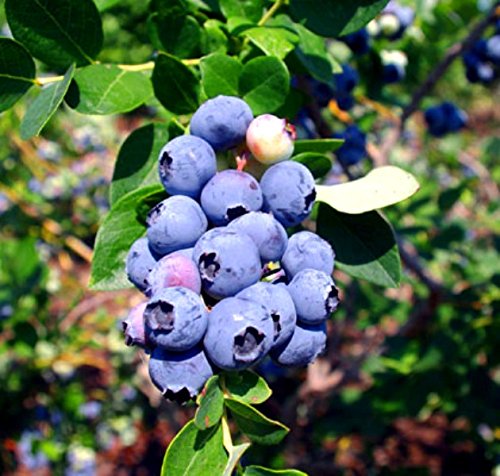
Emerald is the most planted Southern Highbush in Florida, but its low chill requirement (200–400 hours) makes it equally viable for the warmest pockets of Zone 7. This pack from Hello Organics includes four 2.25-inch potted plants with at least a two-inch root system, and customers report that the roots are well-developed and the foliage arrives healthy.
These starter plugs are small — 3 to 5 inches tall — so they need a season in a four-inch pot or a protected nursery bed before going into the ground. The payoff is a dense, compact bush that produces medium-to-large berries earlier in the season than Rabbiteyes. Multiple buyers have noted that their plants survived transplanting into grow bags and looked vigorous two months later.
The risk: about one in five customer reports mention that the plants never flowered or died within a year. Success depends heavily on soil acidity — these plugs won’t tolerate neutral pH. For the price, the four-pack is a low-barrier entry if you can provide consistent care during establishment.
Why it’s great
- Four plants per pack for high-density planting
- Low chill hours suit warm microclimates in Zone 7
- Compact growth habit with good root systems reported
Good to know
- Starter plugs are small and need careful first-season care
- Inconsistent survival rates require good soil prep
5. Hello Organics Sweetcrisp (4-pack)

Sweetcrisp is a newer Southern Highbush release bred for exceptionally firm, sweet berries that hold their texture after harvest. The Hello Organics pack includes four plugs at 2 to 4 inches tall, which is noticeably smaller than the Emerald pack. Customers confirm they are “very young,” with some growing to only 8 inches after a full season.
The survival rate on this one is the most variable of the five. About half the buyers report that all four plants survived and overwintered well, while several others lost two or three within the first weeks. The coir pots are a common complaint — roots sometimes fail to penetrate the biodegradable material, leading to death. Carefully tearing the pot at transplant time solves this.
For an entry-level price, you get four genetically distinct sweet-crisp bushes that, if they establish, will produce later in the season than Emerald. But expect to coddle them through the first summer with consistent moisture and acidic amendments. This is a project, not a plug-and-play plant.
Why it’s great
- Exceptional berry firmness and sweetness genetics
- Four plants give you a full patch for minimal investment
- Includes Hello Organics plant tags for easy identification
Good to know
- Very small starter size requires patient growing
- Mixed survival rates; coir pots may hinder root growth
FAQ
How many blueberry plants do I need for good pollination in Zone 7?
What soil pH is best for blueberry plants in Zone 7?
Can Rabbiteye blueberries survive Zone 7 winters?
Final Thoughts: The Verdict
For most Zone 7 growers, the best blueberry plants for zone 7 is the Tifblue 1 Gallon because it arrives large enough to fruit immediately, offers reliable vigor, and is backed by responsive customer support. If you want a massive berry for pies and preserves, grab the Powder Blue 1 Gallon. And for a compact ornamental that fits a patio pot without sacrificing yield, nothing beats the Bushel and Berry Pink Icing.

Mo Maruf
I created WellFizz to bridge the gap between vague wellness advice and actionable solutions. My mission is simple: to decode the research and give you practical tools you can actually use.
Beyond the data, I am a passionate traveler. I believe that stepping away from the screen to explore new environments is essential for mental clarity and physical vitality.