Our readers keep the lights on and my smoothie glass nicely filled. As an Amazon Associate, I earn from qualifying purchases.
Getting plump, sweet blueberries from your home patch starts in the soil, but the secret weapon is the specific granular or liquid mix you choose to feed those acid-loving roots. The wrong fertilizer can lock out nutrients and stunt your harvest before it starts, making the selection process critical for anyone serious about berry production.
I’m Mohammad Maruf — the founder and writer behind WellFizz. I’ve spent years analyzing soil amendment data, comparing NPK ratios, and reading through thousands of verified buyer reports to understand exactly which formulations deliver the highest yields for acid-loving fruit crops.
This guide breaks down the top options, from slow-release organics to fast-acting water-soluble feeds, so you can match the perfect product to your growing style and soil conditions. I’ve combed through the specs and real-world results to bring you the definitive best blueberry plant food recommendations available right now.
How To Choose The Best Blueberry Plant Food
Blueberries are finicky feeders that demand a soil pH between 4.5 and 5.5. Selecting a fertilizer formulated specifically for acid-loving plants is the difference between a bowl of tart marbles and a bucket of sweet, juicy berries. Here is what to look for before you buy.
NPK Ratio and Nitrogen Source
Blueberries require a low-nitrogen, acidifying blend. A ratio around 4-3-4 (like the Espoma formulas) works well because it provides steady nourishment without pushing excessive foliage growth that invites disease. Avoid high-nitrogen fertilizers with a first number above 15 unless they are specifically water-soluble feeds designed for immediate uptake. The nitrogen source should be ammonium-based, not nitrate-based, as ammonium helps lower soil pH.
Organic vs. Synthetic Release
Organic granular fertilizers such as those from Espoma and Dr. Earth break down slowly via soil microbes, feeding the plant over several weeks. They improve long-term soil structure but require soil temperatures above 50°F for biological activity. Synthetic water-soluble options like Miracle-Gro provide instant nutrient availability, which is ideal for a quick green-up or correcting a deficiency mid-season, but they demand more frequent application every 7 to 14 days.
Sulfur Content for Soil Acidification
Look for a guaranteed sulfur percentage on the fertilizer label, often listed around 5% to 6%. Elemental sulfur is the key driver for maintaining that low soil pH. Without adequate sulfur, your blueberry bushes will struggle to uptake iron and manganese, leading to yellowing leaves and poor fruit set. Products like Holly-Tone and Berry-Tone explicitly list sulfur content for this exact reason.
Quick Comparison
On smaller screens, swipe sideways to see the full table.
| Model | Category | Best For | Key Spec | Amazon |
|---|---|---|---|---|
| Espoma Berry Tone | Granular Organic | Berry patch maintanence | 4-3-4, 5% Sulfur | Amazon |
| Espoma Holly Tone | Granular Organic | Multi-species acid lovers | 4-3-4, 5% Sulfur | Amazon |
| Dr. Earth Acid Lovers | Granular Organic | Non-GMO organic purity | 0.3-0.4-3, Non-GMO Verified | Amazon |
| ENVY Acid-Loving Special | Water Soluble | Quick green-up & budget | 21-7-7, Resealable Pouch | Amazon |
| Miracle-Gro ACR | Water Soluble | Fast results container plants | Water Soluble, 1:144 Indoor | Amazon |
In‑Depth Reviews
1. Espoma Berry Tone Plant Food
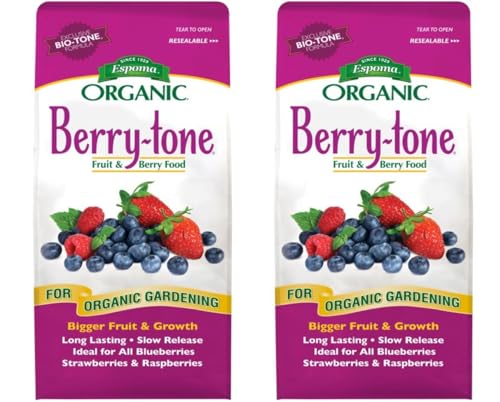
Formulated specifically for the entire berry family—blueberries, strawberries, raspberries, and blackberries—the Espoma Berry Tone delivers a targeted 4-3-4 NPK analysis paired with 5 percent sulfur. This granular, no-mix formula relies on the company’s proprietary Bio-tone microbes to break down naturally, feeding the root zone over a sustained period without the risk of burning sensitive bushes. Gardeners who applied this to established blueberry patches report a dramatic increase in both flower set and fruit size within a single growing season.
The real strength of Berry Tone lies in its two-application schedule: once in early spring as buds swell and again in late spring after the first wave of fruiting. This rhythm aligns with the natural growth cycle of blueberries, ensuring the plant receives phosphorus and potassium when it needs them most for energy transfer and fruit ripening. Because it is registered as an organic input material, you maintain organic certification without the labor of mixing liquids or worrying about synthetic runoff.
Users who switched to Berry Tone after using general-purpose fertilizers noted that leaf yellowing stopped almost entirely by the second feeding. The composted ingredients also improve soil tilth over seasons, making the root zone more porous and better at draining excess moisture. While it may cost a bit more per pound than standard garden fertilizers, the targeted formulation means you use less product for better results, making it the most cost-effective choice for dedicated berry growers.
Why it’s great
- Tailored specifically for blueberries and cane berries with a proven 4-3-4 ratio
- No mixing required; dry granules feed microbes on contact for long-lasting nourishment
- Organic Input Material registration supports certified organic growing practices
Good to know
- Two 4-pound bags may be excessive for small container gardens with only a few plants
- Soil must be above 50°F for microbial activity to break down the granules effectively
2. Espoma Organic Holly-Tone
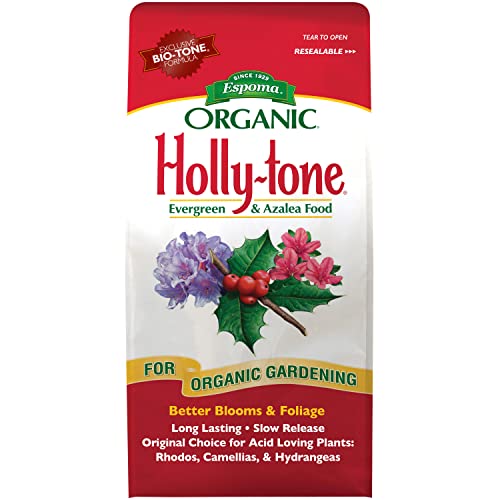
Holly-Tone has been the backbone of acid-loving plant nutrition in American gardens for nearly a century. This 4-lb bag delivers the same 4-3-4 NPK with 5 percent sulfur as Berry Tone, but it is designed for a broader spectrum of acid-dependent species—azaleas, rhododendrons, hydrangeas, camellias, and of course, blueberries. The granular organic formula is enhanced with the same Bio-tone microbes that activate when you water it into the soil around the drip line of your plants.
What makes Holly-Tone a solid pick for blueberry growers is its proven track record for greening up chlorotic foliage fast. One bag covers approximately 20 feet of shrub row, making it ideal for home gardeners with a modest blueberry patch. The slow-release nature means one spring application holds the plant until the fall feeding window, reducing the chance of nutrient overload that can lead to soft, perishable berries. The 4-pound bag is also easy to store and transport compared to bulky 20-pound sacks.
Experienced users report that Holly-Tone works synergistically with other acidifying soil amendments like peat moss or coffee grounds. If you already have a healthy soil pH but just need a maintenance boost, Holly-Tone provides reliable, consistent results. The main knock from shoppers is that the per-pound price at third-party retailers often undercuts local home improvement store pricing, but the product itself delivers identical, high-quality results whether bought online or in-store.
Why it’s great
- Versatile enough for entire acid-loving garden, not just blueberries
- Long reservoir of nutrients thanks to Bio-tone microbial enhancers
- Approved for organic gardening with no sludges or toxic ingredients
Good to know
- Some buyers find it cheaper at brick-and-mortar hardware stores for larger bags
- Not specific to fruit crops like Berry Tone; includes 5% sulfur for broad acid-loving use
3. Dr. Earth Acid Lovers Fertilizer

Dr. Earth Acid Lovers stands apart as the only Non-GMO Project Verified fertilizer in the United States. This certification matters for growers who want total transparency about inputs, as the product contains zero synthetic chemicals, GMO-infested chicken manure, or toxic ingredients. The formula is handcrafted from human and feed-grade ingredients and enriched with multi-minerals, proteins, carbohydrates, humic acids, and trace elements that create the healthiest soil possible for blueberry bushes.
While the NPK ratio reads 0.3-0.4-3, which appears low in nitrogen, the formulation relies on the microbial food web to unlock existing soil nutrients rather than dumping high-salt synthetics. This approach is gentler on delicate blueberry roots and virtually eliminates the risk of fertilizer burn, even if you accidentally over-apply. The 4-lb bag is lightweight but the real volume is in the live biology—each granule is a carrier for beneficial bacteria and mycorrhizae that colonize the root zone.
Users consistently report that Dr. Earth Acid Lovers revives struggling plants faster than conventional organics. One verified purchase noted that a gardenia that had not bloomed in two years was covered in huge pink flowers after a single application. For blueberries, the humic acid content helps chelate micronutrients, making iron and zinc more available at low pH levels where they normally lock up. This product is the top choice for purists who want the highest purity certification available.
Why it’s great
- Class-leading purity with Non-GMO Project Verified and OMRI certification
- Humic acids and trace minerals improve micronutrient availability in acidic soils
- Extremely low risk of burning even sensitive blueberry root systems
Good to know
- The low NPK numbers mean you may need to supplement with additional sulfur for very alkaline soils
- Higher price per pound compared to standard organic blends like Espoma
4. Miracle-Gro Water Soluble ACR Plant Food

When your blueberries need an immediate boost—perhaps you spot yellowing interveinal chlorosis or want to push one more flush of flowers before the season ends—Miracle-Gro’s Water Soluble Azalea, Camellia, Rhododendron Plant Food delivers nutrients within minutes. This powder mixes into clear water at a ratio of 1 tablespoon per gallon of water (for outdoor feeding) and delivers a fast-acting dose of nitrogen, phosphorus, and potassium formulated specifically for acid-loving plants.
The 5-pound bag goes a long way: at the outdoor feeding rate you get roughly 80 gallons of liquid feed, enough to dose a medium-sized blueberry patch every 7 to 14 days for a whole season. Gardeners who use this product with a Miracle-Gro Garden Feeder hose attachment find it even easier to treat large areas. The formula is designed to not burn foliage when used as directed, which is critical because blueberry leaves are sensitive to salt accumulation from synthetic fertilizers.
While the immediate greening effect is impressive—users report visible improvement in rhododendron and camellia health within a week—this water-soluble format is best used as a supplement to a longer-term organic program. Because it feeds the plant directly rather than building soil biology, you will need to apply it consistently to maintain results. The main frustration with the packaging is that the bag’s resealable closure is unreliable, so plan to transfer the powder to a separate airtight container after opening.
Why it’s great
- Works quickly to correct nutrient deficiencies, often showing results within 7 days
- Compatible with hose-end feeders for easy application over large blueberry patches
- Large 5-pound bag provides up to 80 gallons of ready-to-use fertilizer solution
Good to know
- Requires mixing and frequent application every 7-14 days for consistent results
- Bag closure does not seal properly; must transfer to a ziplock bag for storage
5. ENVY Acid-Loving Special Fertilizer
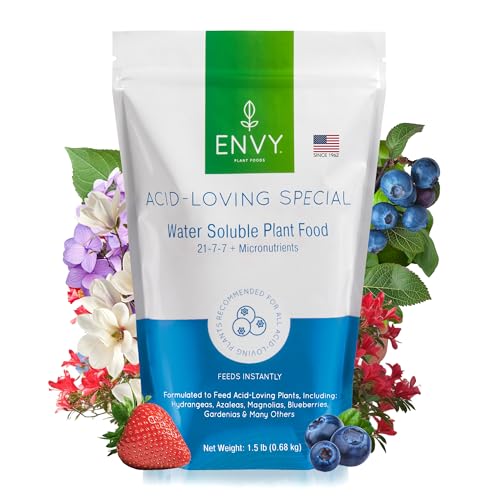
ENVY Plant Foods takes a different approach with its Acid-Loving Special by offering a 100 percent water-soluble powder with an eye-catching 21-7-7 NPK analysis. This high-nitrogen formula is designed for instant absorption, making it ideal for giving blueberry plants a targeted nitrogen boost during the early vegetative stage or after a heavy harvest when the plant needs to rebuild leaf canopy quickly. The 1.5-pound resealable pouch includes a measuring scoop, eliminating guesswork when mixing.
While a 21-7-7 ratio seems high for blueberries, which typically perform better on low-nitrogen feeds, the water-soluble format means the nutrients are plant-available within hours and will not linger in the soil to cause long-term pH imbalances. This makes it useful as a mid-season tonic rather than a primary feeding program. Gardeners in Florida and other high-sun regions report that this product kept hydrangeas thriving in intense heat, and blueberry growers have noted improved berry size when used as a foliar or root drench during fruit swell.
The biggest advantage of the ENVY formula is convenience: you do not need to handle heavy granular bags, and the resealable pouch keeps the powder fresh and dry. However, because the nitrogen content is so high, you must be precise with the measuring scoop. Over-application can push soft, leafy growth at the expense of fruit production, or worse, cause salt burn on sensitive roots. Use this product sparingly and always follow the label rates for acid-loving fruit crops.
Why it’s great
- Dissolves completely in water with no sediment, perfect for foliar feeding or root drench
- Resealable pouch with measuring scoop eliminates waste and keeps powder dry
- Fast-acting nitrogen corrects yellow leaves on blueberries within days
Good to know
- High 21-7-7 ratio can push excessive foliage if over-applied, reducing berry yield
- Not suitable as a slow-release base; must be reapplied every 7-14 days
FAQ
Can I use a general-purpose fertilizer on my blueberry bushes?
How often should I feed my blueberry plants each season?
Final Thoughts: The Verdict
For most users, the best blueberry plant food winner is the Espoma Berry Tone because its berry-specific 4-3-4 formula and 5% sulfur content deliver sustained organic nutrition without the risk of burning. If you want a fast-acting solution to correct yellowing leaves immediately, grab the Miracle-Gro Water Soluble ACR. And for growers who prioritize organic certification purity, nothing beats the Dr. Earth Acid Lovers with its Non-GMO Project Verified credentials.

Mo Maruf
I created WellFizz to bridge the gap between vague wellness advice and actionable solutions. My mission is simple: to decode the research and give you practical tools you can actually use.
Beyond the data, I am a passionate traveler. I believe that stepping away from the screen to explore new environments is essential for mental clarity and physical vitality.