Our readers keep the lights on and my smoothie glass nicely filled. As an Amazon Associate, I earn from qualifying purchases.
A blueberry bush that looks healthy but produces pale, tiny berries is the classic symptom of a pH mismatch. These finicky plants demand acidic soil with a pH between 4.5 and 5.5, and if your fertilizer isn’t actively lowering or maintaining that acidity, the nitrogen, phosphorus, and potassium you apply will be locked out. That wasted effort shows up as weak foliage, poor flowering, and a bowl of sour, undersized fruit at harvest time. The wrong nitrogen source—high-nitrate formulas designed for lawns, for example—can actually raise soil pH and make the problem worse. Getting the right ratio of ammonium nitrogen, sulfur, and organic matter is the difference between a frustration and a bumper crop.
I’m Mohammad Maruf — the founder and writer behind WellFizz. My deep market research focuses on matching specific plant nutrition profiles to real-world growing conditions, analyzing ingredient sourcing, NPK ratios, and application economics for backyard and small-orchard growers.
The top performers in this analysis balance immediate nutrient availability with sustained soil acidification, so you get vigorous growth without chemical burn. This guide breaks down the absolute best blueberry fertilizers based on ingredient quality, ease of use, and measurable fruit production results.
How To Choose The Best Blueberry Fertilizers
Blueberries are not heavy feeders in the same way tomatoes or corn are, but they are ruthlessly specific about the form of nutrients they can absorb. A fertilizer designed for general garden use will often contain nitrate nitrogen, which alkaline-loving plants process fine but blueberries cannot use efficiently below a pH of 5.0. You need a formula that delivers ammonium nitrogen, elemental sulfur, and a low-salt carrier to avoid root desiccation.
Ammonium Nitrogen vs. Nitrate Nitrogen
Read the ingredient label for ammonium sulfate, urea, or soybean meal. These release nitrogen in the ammonium form, which blueberry roots can take up readily. Nitrate-based sources such as potassium nitrate or calcium nitrate will be absorbed poorly and may push soil pH upward over time. Acid-loving crops like blueberries depend on ammonium as their primary nitrogen source.
NPK Ratio and Sulfur Content
Blueberry fertilizers typically run a low-center ratio such as 4-3-4, 6-2-4, or 7-3-3. The phosphorus number should never exceed the nitrogen number, as too much phosphorus can interfere with micronutrient uptake. Sulfur content expressed as S or SO4 should be at least 4 percent for a granular product to help buffer the root zone pH between applications.
Release Mechanism and Timing
Granular organic fertilizers break down slowly and feed the soil microbiome, making them ideal for early spring and late fall applications. Liquid fertilizers deliver immediately available nutrients for a quick green-up during the active growing season, but they require more frequent reapplication. A solid plan uses a granular base dressing twice a year with a liquid supplement during fruit set.
Quick Comparison
On smaller screens, swipe sideways to see the full table.
| Model | Category | Best For | Key Spec | Amazon |
|---|---|---|---|---|
| Espoma Organic Berry-tone 4-3-4 | Organic Granules | Established berry patches | 4-3-4 NPK with 5% Sulfur | Amazon |
| Miracle-Gro Water Soluble Azalea Food | Synthetic Powder | Quick green-up & container bushes | Dissolves at 1:144 ratio | Amazon |
| Espoma Organic Holly-tone 4-3-4 | Organic Granules | Large acid-loving plant collections | 36 lb bag, 5% Sulfur | Amazon |
| Down To Earth Fruit Tree 6-2-4 | Organic Powder | Blueberries planted near fruit trees | 6-2-4 with added Calcium | Amazon |
| TPS Nutrients Blueberry Liquid 32 oz | Liquid Concentrate | Container-grown & immediate feeding | 32 oz, few tbsp per gallon | Amazon |
In‑Depth Reviews
1. Espoma Organic Berry-tone 4-3-4
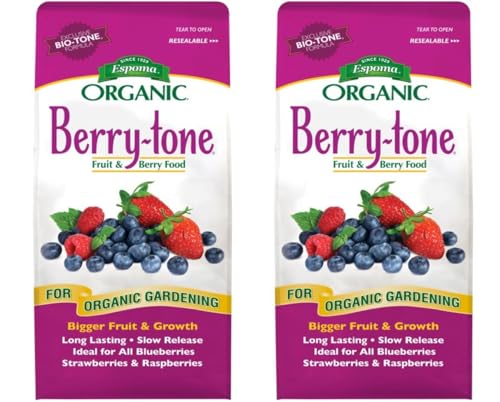
The 4-3-4 analysis paired with 5 percent sulfur makes this the most targeted granular option for established blueberry bushes. The Bio-tone microbial inoculant accelerates breakdown of organic matter in the root zone, which directly supports the low-pH environment blueberries need. Customers report heavy fruit set on bushes that had previously struggled through two or three seasons with generic acid-loving plant foods.
Application is straightforward: spread the granules around the drip line in early spring and again in late spring, then water in. No mixing required, and the slow-release profile means you get steady nutrient delivery over roughly eight weeks. The 4-pound bag covers about four medium bushes for a full season.
Because the sulfur content is built into the granule rather than relying on a separate soil acidifier, you avoid the common mistake of over-applying elemental sulfur and burning feeder roots. The organic certification also reassures gardeners who want to avoid synthetic salt buildup in their berry patch year after year.
Why it’s great
- Designed specifically for all berry types including blueberries
- 5% sulfur actively maintains soil acidity
- Ready-to-use granules need no mixing
Good to know
- Not ideal for potted plants where liquid is easier to control
- Slow release means no instant leaf greening
2. Miracle-Gro Water Soluble Azalea, Camellia, Rhododendron Plant Food

This water-soluble powder is the fastest way to correct nitrogen deficiency in blueberry foliage. Mixed at a ratio of 1 tablespoon per gallon for outdoor feeding, the ammonium nitrogen is immediately available to the roots. Customers report seeing greener leaves within a week, and the formula is safe on adjacent non-acid-loving plants when used as directed.
The 5-pound box yields a substantial volume of liquid feed—roughly 60 gallons at the outdoor mixing rate. That makes it economical for gardeners with a dozen or more bushes or those who also grow azaleas, camellias, and hydrangeas in the same acid-soil bed. It works equally well in a watering can or a hose-end sprayer.
The bag closure is notoriously poor, so plan to transfer the powder into an airtight container immediately after opening. The synthetic salts also mean you should avoid over-application; stick to the every-7-to-14-day schedule to prevent salt buildup in the root zone.
Why it’s great
- Instant green-up seen within 7 days
- Dissolves completely with no sediment
- Safe for use on indoor and outdoor acid lovers
Good to know
- No long-term pH maintenance benefit
- Bag reseal is ineffective; transfer to a jar
3. Espoma Organic Holly-tone 4-3-4

The 36-pound bag of Holly-tone is the most cost-efficient option for gardeners managing a large acid-loving landscape. Although it is marketed for hollies and evergreens, the 4-3-4 analysis with 5 percent sulfur is identical to the Berry-tone formula, making it fully suitable for blueberries. One application in early spring and another in late spring will feed a substantial blueberry patch through the entire growing season.
The organic granular carrier includes Bio-tone microbes, which improve soil structure over repeated applications. Because it breaks down slowly, there is zero risk of burning roots, even if you are generous with the spreader. Customers with thirty or more bushes consistently buy this bag size to save on per-pound cost and reduce packaging waste.
The main consideration is storage: a 36-pound bag is heavy and requires a dry, pest-proof container once opened. The strong organic smell also attracts dogs, so keep the bag sealed and sweep up any spilled granules from the ground to avoid accidental ingestion.
Why it’s great
- Exceptional per-pound cost for large gardens
- Organic Bio-tone improves long-term soil health
- Works on all acid-loving plants, not just berries
Good to know
- Strong smell attracts dogs; secure storage required
- Same formula as Berry-tone but less targeted marketing
4. Down To Earth All Natural Organic Fruit Tree 6-2-4

The higher nitrogen ratio of 6-2-4 makes this a solid choice for blueberry bushes planted near or intercropped with fruit trees. The nitrogen comes from feather meal and fish bone meal, both of which release slowly over several months. The added calcium from calcium carbonate helps prevent blossom-end rot in nearby apple or pear trees while still keeping the blueberry root zone in the right pH range.
The five-pound box is a compact size that stores easily, and the powder form mixes into the top inch of soil around the drip line without clumping. The OMRI organic listing ensures no synthetic additives or sewage sludge, which matters for gardeners who plan to eat the fruit directly from the bush.
Because the sulfur content is lower than dedicated blueberry blends, you may need to supplement with a separate acidifier like elemental sulfur if your starting soil pH is above 6.0. This fertilizer maintains acidity but does not aggressively lower it.
Why it’s great
- Balanced NPK for blueberries near fruit trees
- Slow-release organic ingredients feed all season
- OMRI listed for organic production
Good to know
- Lower sulfur content requires pH monitoring
- Not formulated exclusively for blueberries
5. TPS Nutrients Blueberry Liquid Plant Food 32 oz
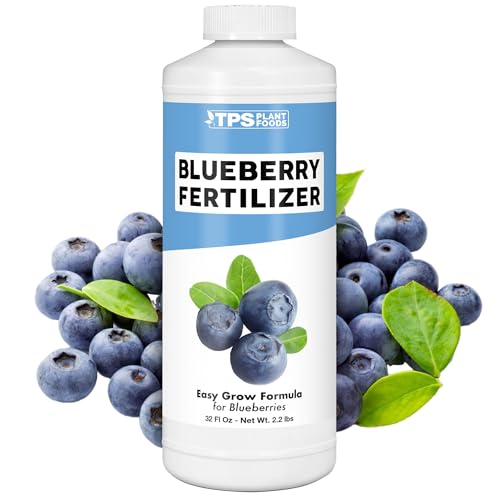
This liquid concentrate is the only product in the lineup formulated exclusively for blueberries. A few tablespoons per gallon of water deliver a low-salt, fully chelated nutrient package that container-grown blueberry bushes absorb immediately. Customers growing Pink Lemonade or Sunshine Blue varieties in pots report seeing flower clusters form within weeks of the first feeding.
The 32-ounce bottle goes a long way for a small collection of potted bushes. At the recommended dilution rate, you get over 20 gallons of feed—enough for about four to five containers through the entire fruiting season. The liquid form also allows you to combine feeding with a routine watering, which simplifies care for busy gardeners.
The product does not contain a meaningful amount of sulfur to lower soil pH on its own. If your potting mix is not already acidic, you will need to supplement with acidifying agents or start with a peat-based blueberry mix. Customer feedback also notes that the labeling does not list an exact NPK breakdown, which makes precise nutrient tracking difficult.
Why it’s great
- Exclusive blueberry formulation for targeted feeding
- Easy to apply with a watering can
- Great for container-grown and new bushes
Good to know
- Does not lower soil pH on its own
- Exact NPK ratio not clearly stated on label
FAQ
Can I use a general-purpose fertilizer like 10-10-10 on my blueberry bushes?
How often should I apply granular blueberry fertilizer per growing season?
Is liquid or granular fertilizer better for blueberries in containers?
Final Thoughts: The Verdict
For most users, the best blueberry fertilizers winner is the Espoma Organic Berry-tone 4-3-4 because it delivers the ideal NPK-sulfur balance for sustained soil acidity in a ready-to-use organic granule. If you want immediate leaf greening for a container bush that looks pale, grab the Miracle-Gro Water Soluble Azalea Food. And for a large acid-loving garden where value matters most, nothing beats the per-pound cost of the Espoma Organic Holly-tone 36 lb bag.

Mo Maruf
I created WellFizz to bridge the gap between vague wellness advice and actionable solutions. My mission is simple: to decode the research and give you practical tools you can actually use.
Beyond the data, I am a passionate traveler. I believe that stepping away from the screen to explore new environments is essential for mental clarity and physical vitality.