Our readers keep the lights on and my smoothie glass nicely filled. As an Amazon Associate, I earn from qualifying purchases.
Finding a blue that doesn’t read as a nursery pastel or an icy hospital corridor is the central frustration of decorating a living room. Most off-the-shelf blues are either too timid to anchor a wall or so aggressive they shrink the space into a cavern. The right blue wall demands a precise balance of pigment load, light reflectance, and undertone—a ratio that transforms a room from flat to dimensional.
I’m Mohammad Maruf — the founder and writer behind WellFizz. I spend my time analyzing pigment concentration, VOC content, and coverage spread rates across hundreds of commercial paint formulas so homeowners don’t have to guess which gallon delivers on its promise.
Whether you’re chasing a moody teal for a media room or a breezy dusty blue for a sunlit den, choosing the right shade means parsing through sheen levels, primer integration, and hide capacity. This guide breaks down the blue paint for living room options that actually perform on real drywall.
How To Choose The Best Blue Paint For Living Room
Blue is the most requested living-room color for a reason—it signals calm without being passive. But the wrong blue makes the room feel cold, small, or unfinished. Focus on three variables: sheen, LRV, and undertone direction. Eggshell finishes hide drywall imperfections while offering moderate scrubbability, ideal for low-traffic living spaces. Satin steps up in washability and is your pick for hallways or kid-adjacent zones. Semi-gloss reflects more light and shows every wall flaw, so reserve it for trim or accent walls only.
Light Reflectance Value (LRV)
LRV tells you how much light bounces off the painted surface. Dark navy blues hover around 5–15 LRV—they absorb light and make a room feel intimate or cave-like depending on the window count. Mid-blues at 25–45 LRV are the sweet spot for most living rooms: they hold color presence without swallowing the light. Pale blues above 60 LRV approach a neutral white and are best for small rooms where you want a whisper of color, not a statement. Check the LRV number before you commit to a gallon.
Primer Integration and Hide
Paint-and-primer-in-one formulas are convenient, but blue pigments—especially deep teals and navy tones—often require two coats regardless. A separate high-hide primer can save you a coat on porous drywall or over a previous dark color. Look for coverage claims of at least 350–400 sq. ft. per gallon; lower numbers mean the paint is thinner and will demand more material to reach uniform opacity.
Quick Comparison
On smaller screens, swipe sideways to see the full table.
| Model | Category | Best For | Key Spec | Amazon |
|---|---|---|---|---|
| PRESTIGE Satin Come Sail Away | Satin | Light-filled living rooms needing a classic sky blue | LRV: N/A, Coverage: 325 sq. ft. | Amazon |
| PRESTIGE Semi-Gloss Vintage Teal | Semi-Gloss | Accent walls and trim requiring high durability | LRV: N/A, Coverage: 325 sq. ft. | Amazon |
| Magnolia Home Trailhead | Semi-Gloss | Dark green-blue accent walls | LRV: 11.69, Coverage: 250-400 sq. ft. | Amazon |
| Glidden Blue Fjord | Eggshell | Budget-friendly whole-room refresh | LRV: N/A, Coverage: Up to 400 sq. ft. | Amazon |
| RECOLOR Storm | Eggshell | Eco-conscious buyers on a mid-range budget | LRV: N/A, Coverage: 450 sq. ft. | Amazon |
In‑Depth Reviews
1. PRESTIGE Paints Satin Come Sail Away
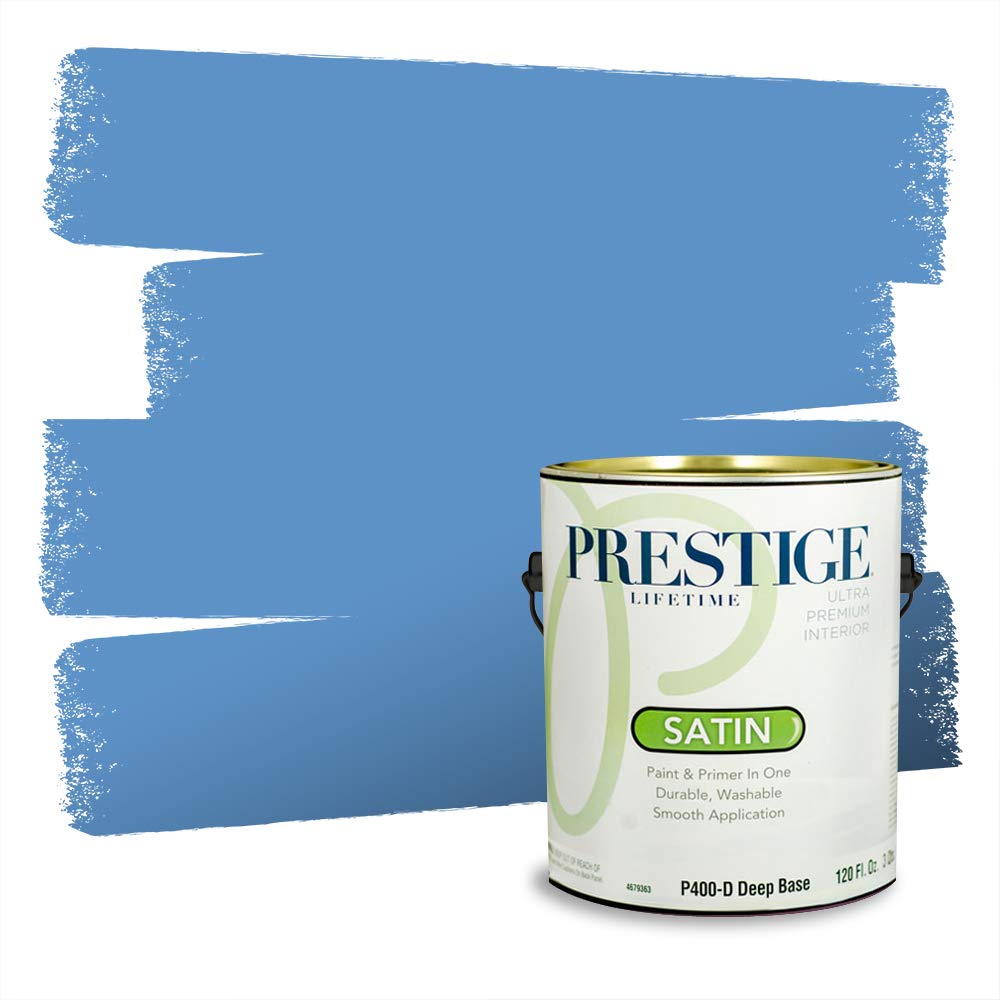
This satin formulation from PRESTIGE hits the sweet spot between sheen and forgiveness. The finish carries a subtle luster that energizes a blue wall without amplifying every drywall seam—a common complaint against semi-gloss in living rooms. The 100% acrylic latex base means cleanup is straightforward with soap and water, and the low VOC count keeps the room breathable during application. In warm climates reviewers note recoat times as fast as one to two hours, letting you finish a room in a single day.
At a coverage of 325 square feet per gallon, plan for two coats especially if you’re going over a darker prior color. The shade “Come Sail Away” reads as a true sky blue with minimal gray undertone, making it a natural fit for south-facing rooms where you want the blue to feel airy rather than heavy.
The paint is a comparable match to Behr’s color of the same name—not an official Behr product, but the pigment match is tight enough that most homeowners won’t spot the difference. The can arrives well-packaged with a lid key and stir stick, a small convenience that reduces the frustration of prying open a sealed gallon.
Why it’s great
- Fast dry time allows for same-day second coat
- Satin sheen balances durability with a soft glow
- Low VOC keeps interior air quality high during painting
Good to know
- Needs two coats for uniform coverage over dark bases
- Color may read slightly lighter or more lavender on screen than in person
2. PRESTIGE Paints Semi-Gloss Vintage Teal

Where the satin version softens, this semi-gloss amplifies. The higher sheen makes “Vintage Teal” pop with depth—ideal for a focal wall behind a sofa or a fireplace surround where you want the color to catch and play with light. The 100% acrylic latex formulation spreads smoothly with a roller and levels well, leaving fewer stippling marks than many budget semi-gloss paints. Coverage checks in at 325 square feet per gallon, and reviewers consistently report that one coat covers dark previous colors surprisingly well, though two coats are recommended for a flawless finish.
The color itself sits at the intersection of teal and deep blue with a green undertone that keeps it from feeling cold. It’s a comparable match to Behr’s “Vintage Teal,” and the color code #66969A gives you a reference to bring to a physical swatch deck if you need to verify in person. The low VOC of under 5 g/L before tinting ensures the room remains habitable during the project.
One minor catch: semi-gloss shows every wall imperfection. If your drywall has patchwork or texture inconsistencies, consider a quick skim coat or an eggshell finish instead. The included lid key and stir stick are appreciated, and the paint cleans off brushes and rollers with ease.
Why it’s great
- Deep teal-blue color with strong hide in one coat
- Durable finish wipes clean without sheen loss
- Excellent flow and leveling for a semi-gloss
Good to know
- Semi-gloss reveals drywall flaws—surface prep is mandatory
- Color may develop its full depth over 4 days of curing
3. Magnolia Home by Joanna Gaines Trailhead

Trailhead is technically a dark green with a grounded, muted feel, but its blue undertone is strong enough to read as a deep navy-green hybrid in most living room lighting. With an LRV of 11.69, this is a light-absorbing color—use it only in rooms with generous natural or artificial light. The semi-gloss sheen amplifies color richness but also demands a smooth wall surface. The paint-and-primer formula delivers smooth, reliable coverage; reviewers routinely note that a single coat hits near-complete opacity over light colors, though a second coat delivers the evenness expected from a premium line.
Manufactured by KILZ, this paint carries the Magnolia Home branding and the thoughtful color curation Joanna Gaines is known for. The RGB values (R 98 G 96 B 86) confirm the warm, earthy base that differentiates Trailhead from a pure cold blue. It covers 250–400 square feet per gallon, and the dry time of about two hours keeps projects moving without extended pauses.
The biggest variable here is lighting—Trailhead shifts dramatically between north-facing and south-facing walls. Test a sample patch before committing to the full gallon because the LRV is low enough that a wrong lighting condition can make the room feel cramped. The price point slots into the premium range, but the color accuracy and hide performance justify the spend for homeowners who want a specific designer hue.
Why it’s great
- Rich, complex color with strong designer pedigree
- Excellent one-coat hide on lighter surfaces
- Fast dry time at 2 hours allows rapid recoating
Good to know
- Very dark LRV means it absorbs light—not for dim rooms
- Semi-gloss sheen reveals wall texture and imperfect patches
4. Glidden Total Interior Blue Fjord
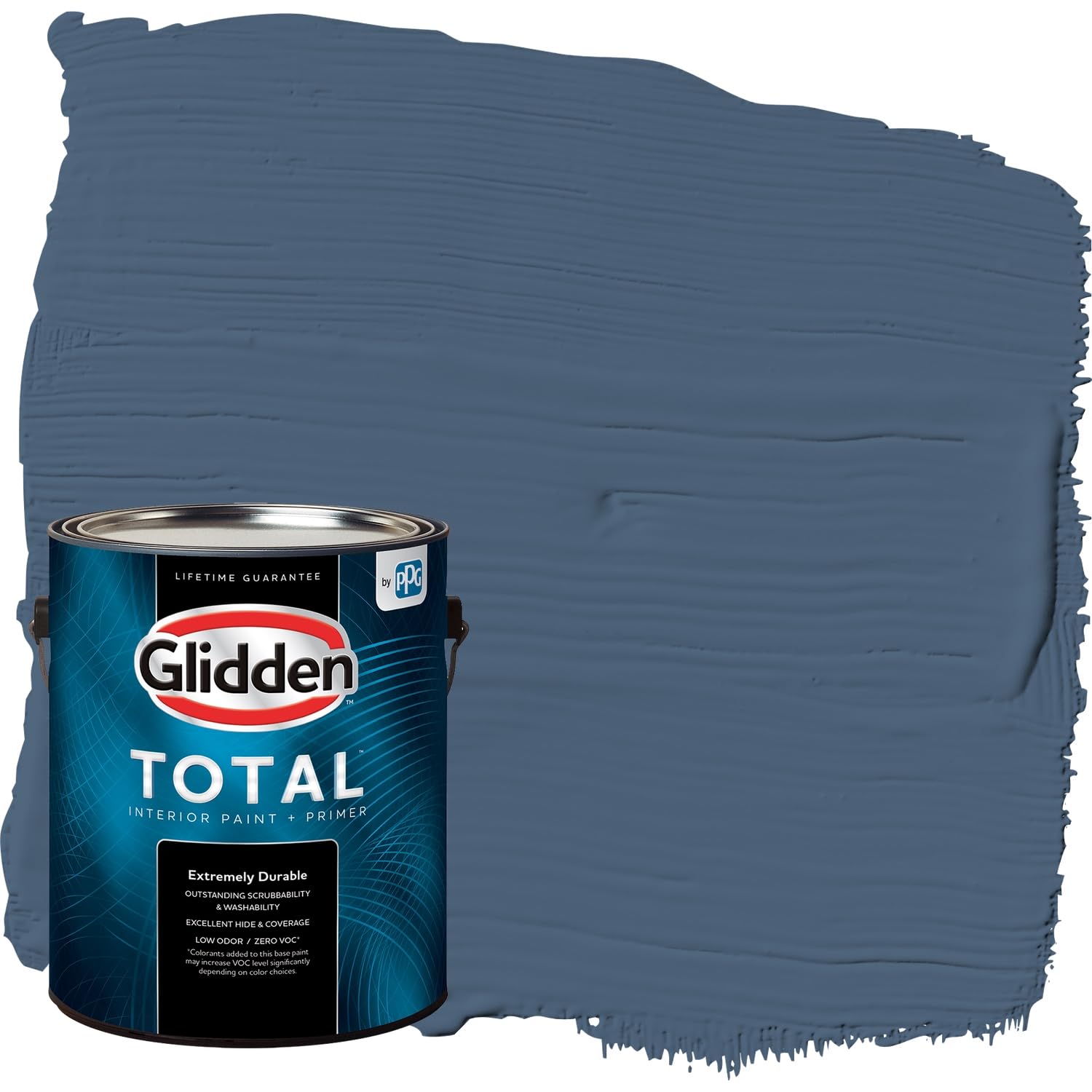
The Glidden Total line punches above its price point with an eggshell finish that offers outstanding scrubbability—a feature typically reserved for pricier mid-range paints. Blue Fjord (PPG1163-6) is a medium-toned blue with a slight gray cast, making it forgiving on walls that get afternoon sun or have uneven texture. Coverage is rated at up to 400 square feet per gallon, and reviewers confirm strong hide even over previously painted darker surfaces. The paint-and-primer all-in-one system reduces prep time, though you should still patch and sand obvious imperfections.
The VOC content is zero before tinting, though adding colorants can raise the level depending on the depth of the hue. Blue Fjord is a relatively clean shade, so the VOC bump is minimal. Dry time clocks in at two hours with full cure at four, allowing a determined DIYer to finish a medium living room in an afternoon. The eggshell sheen provides a soft, velvety look that doesn’t amplify wall flaws the way a glossier finish would.
A small percentage of buyers report batch variability where the color comes out significantly lighter or different from the label—this is a known risk with budget-tier paints. Always stir thoroughly and test a patch before committing to the entire room.
Why it’s great
- Excellent scrubbability for an eggshell at this price point
- High coverage at 400 sq. ft. per gallon
- Low odor and fast dry time
Good to know
- Occasional batch color mismatch reported
- Eggshell sheen is less durable than satin over time
5. RECOLOR Eco-Friendly Interior Latex Storm

The “Storm” shade is a medium gray-blue with a matte flat-to-eggshell finish, ideal for living rooms where you want color without gloss. The recycled nature means color can vary slightly between batches, so buying all your gallons at once is strongly advised. The latex base cleans up with soap and water, and the VOC content is naturally low since the paint has already off-gassed during its first life cycle.
Application behavior is thicker than virgin paint, which is typical for recycled formulas. Reviewers note that it takes well to a roller with minimal splatter, and it dries quickly—two to six hours depending on humidity. Some users report that the paint can feel “chunky” on initial stir; thorough mixing breaks up sediment that settles during storage. Over white or light primer, one coat may suffice for a “Storm” finish, but dark surfaces will need two or three.
The value argument is strong: you get a gallon for significantly less than comparable virgin paints while diverting waste from landfills. The trade-off is that the color palette is limited to the shades available from the recycling stream, and batch consistency is not as tight as a fresh-production line.
Why it’s great
- Environmentally responsible—recycled content without performance sacrifice
- High coverage at 450 sq. ft. per gallon
- Low splatter during application
Good to know
- Batch color variation requires buying all cans at once
- Thicker consistency—requires thorough stirring to break up sediment
FAQ
What sheen is best for a living room blue paint?
How do I prevent my blue paint from looking purple?
Can I use a dark blue on all four walls in a small living room?
Final Thoughts: The Verdict
For most homeowners, the blue paint for living room winner is the PRESTIGE Satin Come Sail Away because it delivers a clean sky-blue tone with a satin finish that is durable enough for daily life yet forgiving enough to hide minor wall texture. If you want a rich, moody accent wall, grab the PRESTIGE Semi-Gloss Vintage Teal for its deep teal-blue pigmentation and one-coat capability. And for a budget-friendly whole-room refresh that still scrubs clean, the Glidden Blue Fjord in eggshell is the smartest dollar-per-square-foot choice on the market.

Mo Maruf
I created WellFizz to bridge the gap between vague wellness advice and actionable solutions. My mission is simple: to decode the research and give you practical tools you can actually use.
Beyond the data, I am a passionate traveler. I believe that stepping away from the screen to explore new environments is essential for mental clarity and physical vitality.