Our readers keep the lights on and my smoothie glass nicely filled. As an Amazon Associate, I earn from qualifying purchases.
Exposure to blue light after sunset tricks your brain into thinking it is still daytime, delaying the release of melatonin and making it harder to fall asleep naturally. The right bulb eliminates this disruption entirely by filtering out the wavelengths that suppress your circadian rhythm — and finding one that actually works requires understanding the specific nanometer cutoff and color temperature that matter.
I’m Mohammad Maruf — the founder and writer behind WellFizz. I’ve spent years analyzing the intersection of sleep science and home lighting, evaluating spectral output charts and real-world user feedback to separate effective products from marketing gimmicks.
This guide covers the essential specs, real performance data, and smart buying criteria to help you select the right best blue light blocking light bulbs for your home without overpaying for features you don’t need.
How To Choose The Blue Light Blocking Light Bulbs
Not every warm-toned bulb actually blocks blue light. Many simply use a yellow filter that reduces overall brightness but still emits significant blue wavelengths in the 400-500nm range. To make an informed choice, you need to focus on three specific factors: the exact nanometer cutoff, the color temperature in Kelvin, and the bulb’s practical luminance for your space.
Wavelength and Color Temperature
The most effective bulbs use a specific LED chip that emits only at 625nm (deep amber/red) or higher, which naturally excludes blue and green light. Color temperatures below 2000K are ideal — anything above 2200K starts to reintroduce blue spectrum light. Look for bulbs that explicitly state 625nm, 1800K, or “99%+ blue light free” in their technical specs rather than marketing copy.
Brightness and Application
A 1.5W to 3W bulb is sufficient for a bedside lamp or nightlight, while 9W to 13W equivalents work better in living rooms or reading areas. Dimming capability adds flexibility because you can drop the brightness even further before bed. However, dimmable bulbs require compatible LED dimmers — standard incandescent dimmers may cause flickering or humming.
Base Size and Bulb Shape
E26 (standard medium) bases fit most household lamps and ceiling fixtures. E12 (candelabra) bases are smaller and common in chandeliers, decorative sconces, and holiday string lights. Bulb shapes like A19 and A15 are typical for table lamps, while G45 and candle shapes suit smaller or vintage fixtures. Verify your fixture’s base before buying — the wrong base is the most common return reason.
Quick Comparison
On smaller screens, swipe sideways to see the full table.
| Model | Category | Best For | Key Spec | Amazon |
|---|---|---|---|---|
| Eastiya A19 9W | Red 625nm | Deep sleep and nursery | 625nm, 100% blue light free | Amazon |
| Neporal Amber 9W | Amber 1800K | Reading and winding down | UL Listed, 99.94% blue free | Amazon |
| Eastiya Amber 13W | Amber 2000K | Living room ambient light | 1200 lumens, CRI 85+ | Amazon |
| Elmoyle E12 Red | Red 625nm | Candelabra fixtures and decor | E12 base, 300 lumens | Amazon |
| Ajuns Amber Dimmable | Dimmable Amber | Custom brightness control | 1800K, 1.5W, dimmable | Amazon |
In‑Depth Reviews
1. Eastiya A19 9W Red Sleep Light Bulb
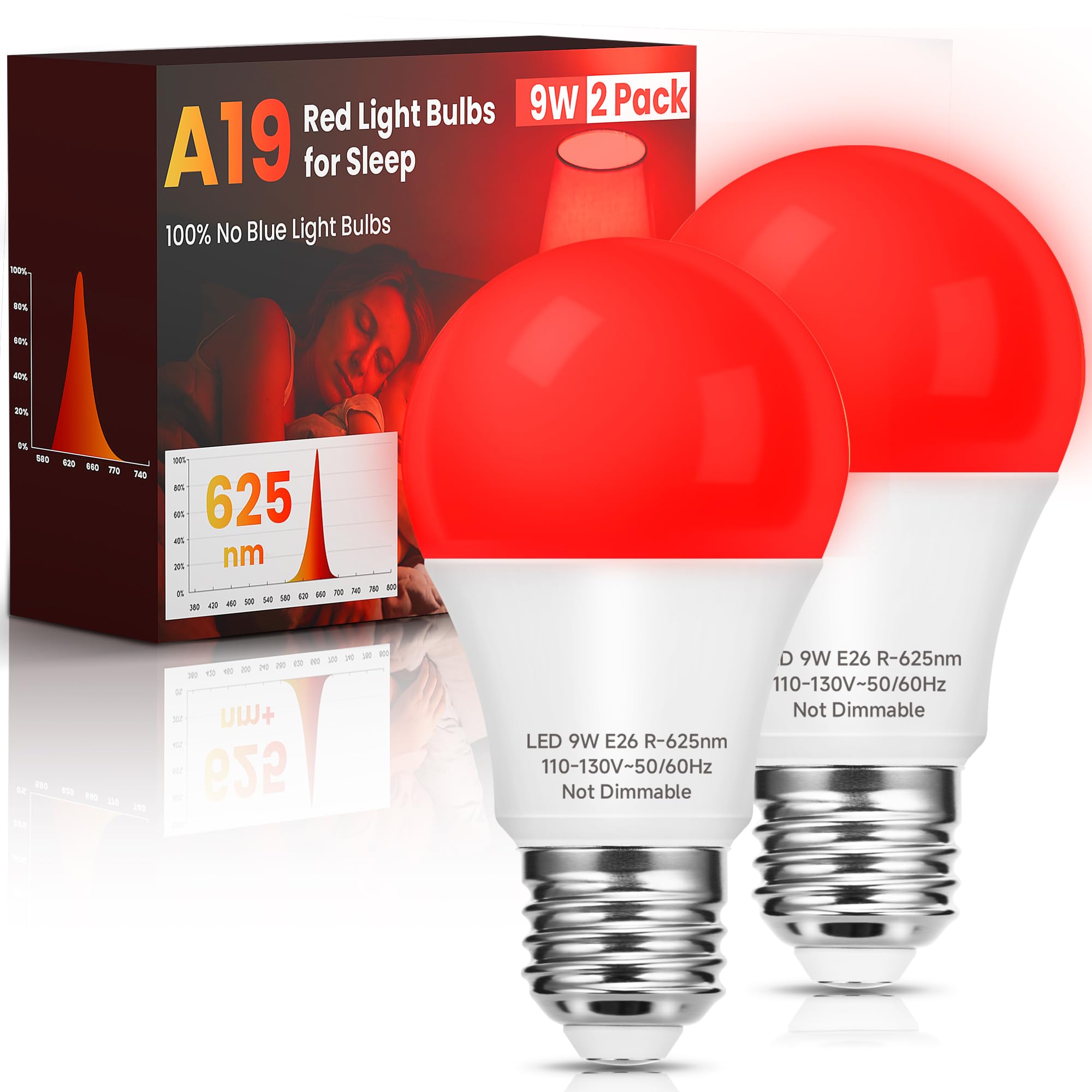
The Eastiya 9W uses dedicated 625nm red LED chips that completely block both blue and green wavelengths — a rare spec that few bulbs in this category achieve. At 800 lumens and a 60W equivalent output, it provides enough light for reading without blasting your circadian system with disruptive frequencies. The A19 shape fits standard E26 sockets, making it a drop-in replacement for bedroom lamps and ceiling fixtures.
Flicker-free operation and even diffusion eliminate the harsh glares common in cheaper colored LEDs. Real-world reviews consistently note how the red-orange glow mimics a natural sunset indoors, helping users fall asleep faster and stay asleep longer. The 9W power draw means it costs pennies per year to run even with nightly use.
This is the go-to pick if you want maximum blue light removal without sacrificing usable brightness. The 100% blue light blocking claim is backed by its 625nm chip design — not just a warm filter that dims but still leaks blue.
Why it’s great
- True 625nm red LED — no blue spectrum leak
- Flicker-free and evenly diffused light
- 800 lumens are bright enough for low-light reading
Good to know
- Not dimmable
- Red-orange tint may be too deep for some living room preferences
2. Neporal Amber Sleep Light Bulb 9W
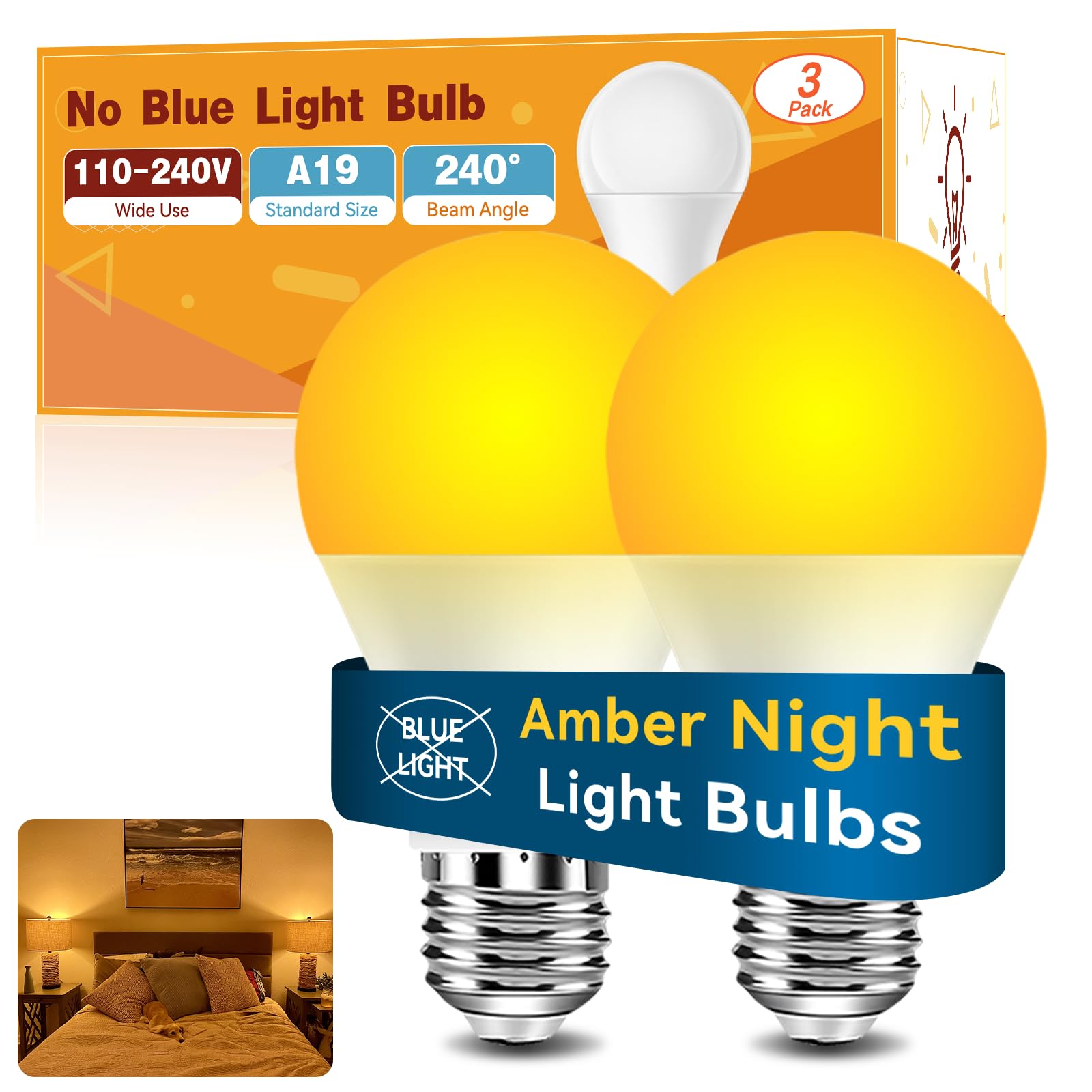
The Neporal 9W is UL Listed — a safety certification that many budget amber bulbs skip entirely. It blocks 99.94% of blue spectrum light at a warm 1800K color temperature, producing a soft amber glow ideal for evening reading and winding down. The A19 shape and standard E26 base make installation effortless in any household fixture.
At 9W, it operates at roughly the same brightness as a 60W incandescent but uses 90% less energy. Reviews highlight its soothing, non-flickering light that doesn’t cause eye strain even after hours of use. The amber tone is slightly warmer than a typical “soft white” bulb but not as deep red as 625nm options — a good middle ground for those who want blue light protection without a theatrical red room.
The 2-year manufacturer warranty adds peace of mind that budget picks usually lack. If you want a certified, safely engineered bulb for a master bedroom or kid’s room, this is the smartest choice.
Why it’s great
- UL Listed for electrical safety
- 99.94% blue light free at 1800K
- 2-year warranty included
Good to know
- Not dimmable
- Amber light may feel too warm for daytime tasks
3. Eastiya Amber Light Bulb 13W
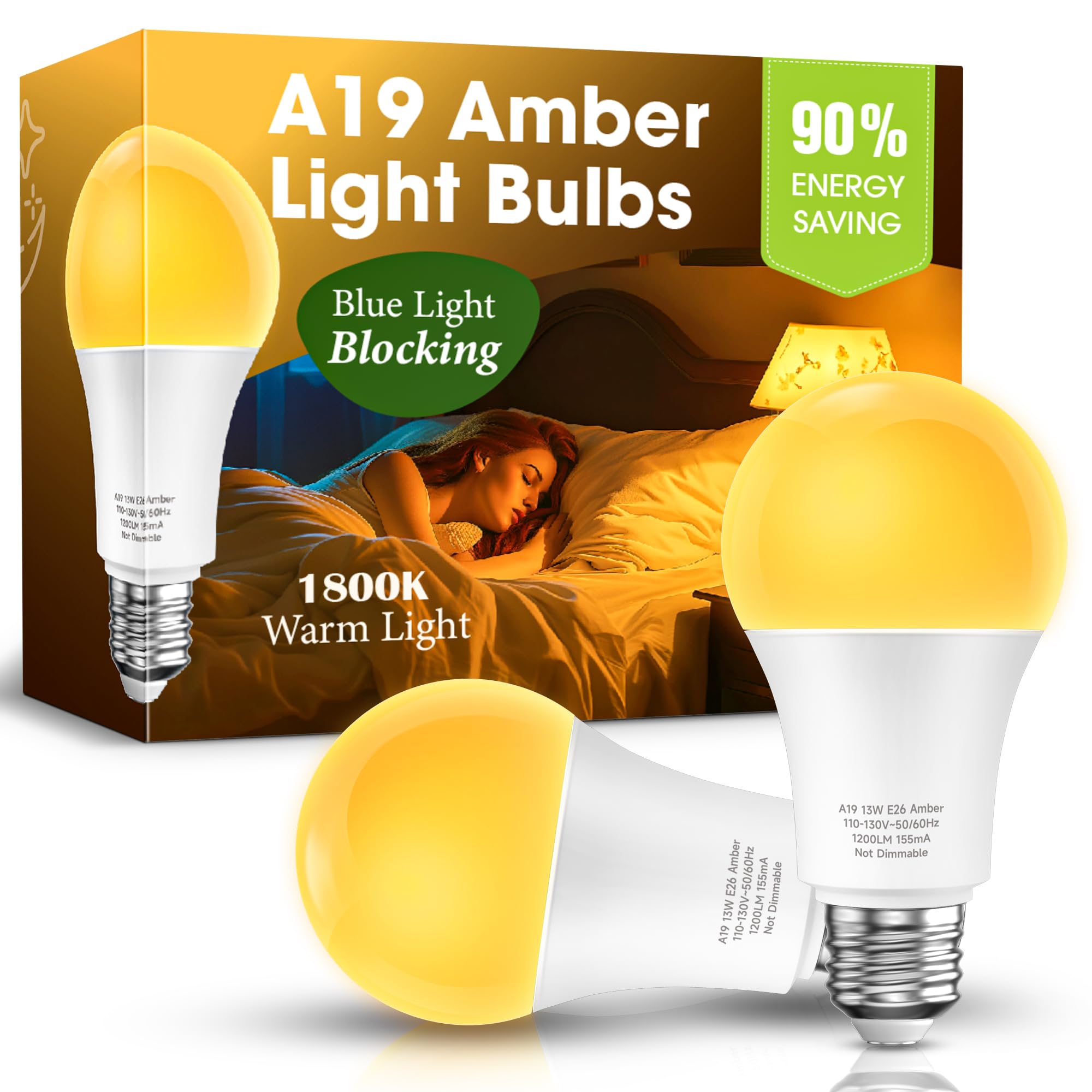
The Eastiya 13W is the brightest entry in this roundup, delivering 1200 lumens at 2000K — equivalent to a 100W incandescent but with 90% less energy consumption. The slightly higher color temperature (2000K vs 1800K) means a marginally warmer yellow rather than deep amber, which works better in living rooms or open spaces where you need more functional light.
With a CRI of 85+, colors appear more natural compared to lower-CRI amber bulbs. Users report it creates a cozy, inviting environment without the harsh blue spectrum that disrupts sleep. The E12 base is worth double-checking — this variant uses a candelabra base rather than standard E26, so it is best suited for chandeliers, sconces, and smaller decorative fixtures.
If your space requires higher brightness for ambient evening lighting while still cutting blue wavelengths, this is the most practical option. It balances visibility with circadian support better than dimmer specialty bulbs.
Why it’s great
- 1200 lumens — brightest in this list
- CRI 85+ for natural color rendering
- 2000K warm tone suitable for living areas
Good to know
- E12 candelabra base — check fixture compatibility
- Not dimmable
4. Elmoyle E12 Candelabra Red Light Bulb
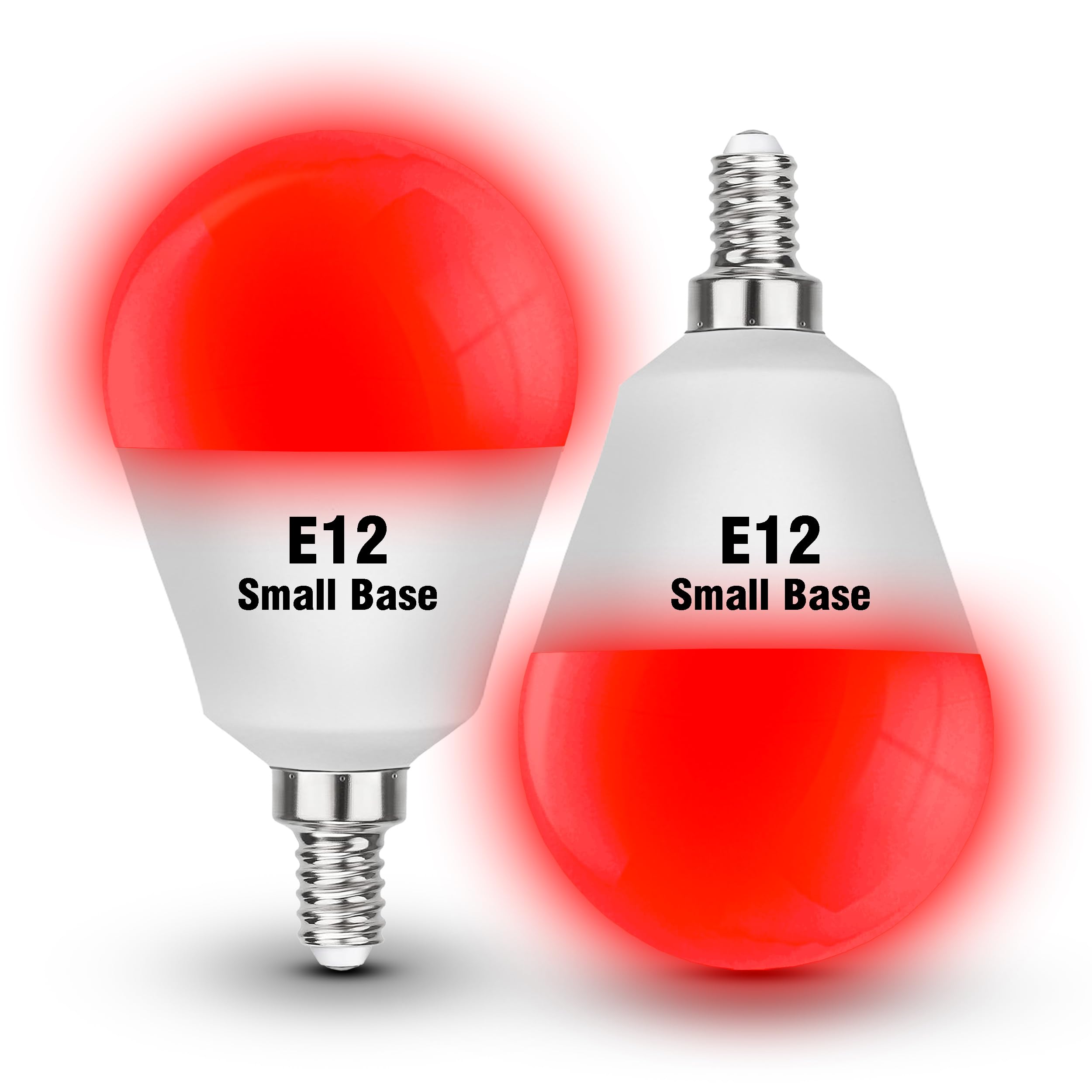
The Elmoyle E12 uses pure 625nm red LED chips that contain zero blue light components, making it one of the most effective options for melatonin protection in small fixtures. The G45 bulb shape measures just 1.77 inches wide by 3.34 inches tall, fitting candelabra sockets in chandeliers, porch lights, and Christmas decorations. At 300 lumens (25-40W equivalent), it provides gentle illumination that won’t overpower a dim space.
Users consistently praise its warm, cozy amber glow that works well in hallways, bedrooms, and nurseries. The low 3W power draw means it generates minimal heat — a safety plus for enclosed fixtures. It is rated for outdoor use when paired with a waterproof housing, adding versatility for entryway or patio lighting.
The white shell turns red only when lit, so the bulb appears neutral when off — a subtle advantage if aesthetics matter during the day. For anyone with E12 fixtures who needs serious blue light filtration, this is the most targeted solution available.
Why it’s great
- Pure 625nm red LED — no blue spectrum
- Fits E12 candelabra fixtures
- Very low 3W power consumption
Good to know
- Not dimmable
- 300 lumens may be too dim for reading
5. Ajuns Amber Sleep Light Bulb Dimmable 1.5W
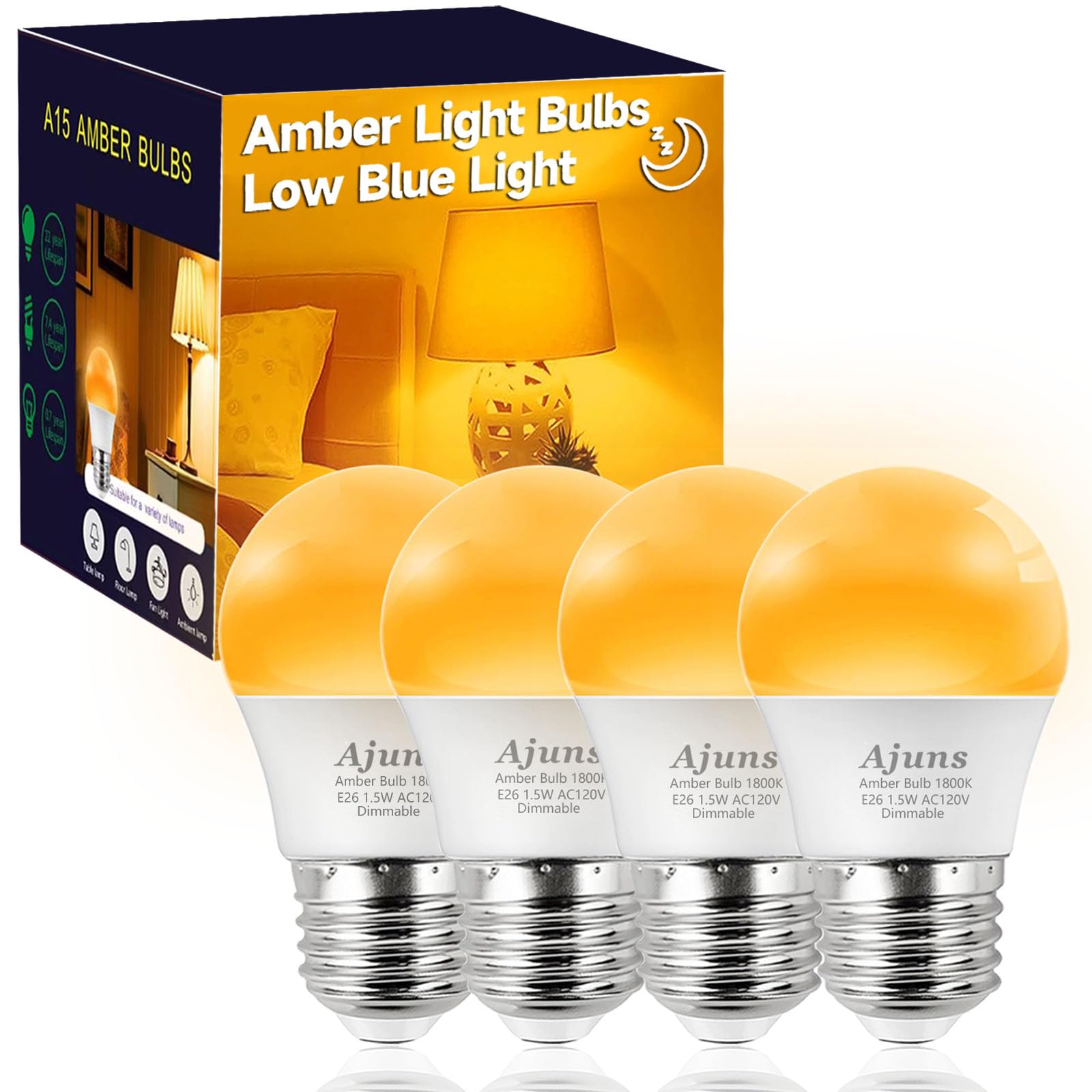
The Ajuns 1.5W is the only dimmable option in this lineup, giving you full brightness control from 100% down to 0% without flicker or glare. At 1800K and 99.9% blue light free, it provides a soft amber glow ideal for nurseries, bedside lamps, and low-light reading. The A15 shape and E26 base fit most standard lamps, though the 15W equivalent output means it is strictly a nightlight-level source — not for illuminating an entire room.
Reviews from users with migraines and light sensitivity specifically note how this bulb reduces headache frequency compared to standard LEDs. The dimming works with most LED-compatible dimmers, and the plastic construction keeps weight low (0.11 kg) for stable installation in swing-arm lamps. Multiple buyers remark that the amber glow flatters skin tones and makes any room feel cozier.
If you need a bulb that lets you fine-tune brightness from dim to very dim as bedtime approaches, this is the only one here that delivers that flexibility. Just confirm your dimmer is rated for LED loads before purchasing.
Why it’s great
- Dimmable from 100% to 0% with no flicker
- 1800K amber, 99.9% blue light free
- Lightweight and compact A15 shape
Good to know
- Only 1.5W — very low brightness, not for full room illumination
- Requires LED-compatible dimmer
FAQ
What is the difference between amber and red blue light blocking bulbs?
Can I use these bulbs in any lamp or fixture?
Are 1.5W amber bulbs bright enough for reading?
Do blue light blocking bulbs work for people with migraines?
Final Thoughts: The Verdict
For most users, the best blue light blocking light bulbs winner is the Eastiya A19 9W Red Sleep Bulb because it delivers true 625nm red light with 800 lumens of usable brightness at a budget-friendly price. If you want UL certification and a warm amber tone for reading, grab the Neporal Amber 9W. And for those needing E12 candelabra compatibility in decorative fixtures, nothing beats the Elmoyle E12 Red Bulb.

Mo Maruf
I created WellFizz to bridge the gap between vague wellness advice and actionable solutions. My mission is simple: to decode the research and give you practical tools you can actually use.
Beyond the data, I am a passionate traveler. I believe that stepping away from the screen to explore new environments is essential for mental clarity and physical vitality.