Our readers keep the lights on and my smoothie glass nicely filled. As an Amazon Associate, I earn from qualifying purchases.
A wrist blood pressure monitor is the only practical path to daily tracking if you have large arms that don’t fit standard cuffs, find inflation painful, or need a device that slips into a travel bag without bulk. The challenge is filtering out models that deliver inconsistent diastolic readings from those validated against clinical standards.
I’m Mohammad Maruf — the founder and writer behind WellFizz. I’ve spent three years analyzing blood pressure monitor market data and cross-referencing consumer feedback against validation protocols to separate reliable wrist monitors from the rest.
This guide breaks down seven options built on sensor quality, memory capacity, and positioning features that matter for home health tracking. Whether you need a budget-friendly model for occasional travel checks or a premium Bluetooth-enabled unit for sharing long-term trends with your doctor, you’ll find the best blood pressure wrist monitor for your specific routine right here.
How To Choose The Best Blood Pressure Wrist Monitor
Selecting a wrist monitor is not about picking the cheapest or the most expensive. The critical factors all revolve around how the machine handles placement sensitivity, stores historical data, and detects irregular rhythms. Focus on these three areas to find a monitor that delivers actionable data rather than frustrating noise.
Accuracy and Validation Standards
Not all wrist monitors are built to the same accuracy standard. Look for devices that explicitly state they meet AAMI/ESH/ISO protocols or are FDA-cleared for clinical accuracy. Many low-end models display numbers that drift 10 points or more from an arm-cuff reading, especially for diastolic pressure. Clinically validated models like those from Omron and Withings are tested against a mercury sphygmomanometer, the gold standard in medical settings. If a product page does not mention validation, assume the readings are for reference only, not for medical decisions.
Memory Capacity and Dual-User Support
A wrist monitor that stores at least 60 readings per user is essential for spotting trends. Without adequate memory, you lose the ability to show your doctor how your numbers fluctuate across mornings, evenings, and medication cycles. Dual-user support with separate memory banks prevents data from mixing. Advanced models offer 120 to 240 total readings and allow you to toggle between two users. Some even categorize readings by time of day (morning vs. evening) or medication schedule, giving you a more actionable trend report.
Positioning Sensors and Irregular Heartbeat Detection
Wrist monitors are more susceptible to body movement and placement angle. A good model includes a wrist positioning sensor that guides you to the correct heart-level height, which prevents artificially high or low readings. Irregular heartbeat detection is a safety feature that flags arrhythmias during routine measurement. Entry-level units skip this entirely. Premium versions flag the event and mark the reading for review. For anyone with known cardiovascular concerns, this feature adds a layer of early warning that a basic pulse display cannot provide.
Quick Comparison
On smaller screens, swipe sideways to see the full table.
| Model | Category | Best For | Key Spec | Amazon |
|---|---|---|---|---|
| Omron Gold Wireless | Premium | Trend tracking & doctor sharing | 200 readings per user | Amazon |
| HoMedics Premium | Mid-Range | App syncing & AM/PM averaging | 240 total memory readings | Amazon |
| Beurer BC57 | Mid-Range | Resting indicator guidance | 120 memory spaces | Amazon |
| A&D Medical UB-525 | Mid-Range | Elderly users with small wrists | 60 reading memory storage | Amazon |
| Wrist Monitor 2026 Upgrade | Budget-Friendly | Shared household monitoring | Dual-user 99×2 memory slots | Amazon |
| IIF Voice Broadcast | Budget-Friendly | Seniors with vision challenges | 240 memory total (120×2) | Amazon |
| Withings BPM Connect | Premium | Seamless WiFi sync & long battery | Rechargeable (6-month charge) | Amazon |
In‑Depth Reviews
1. Omron Gold Wireless Wrist Blood Pressure Monitor
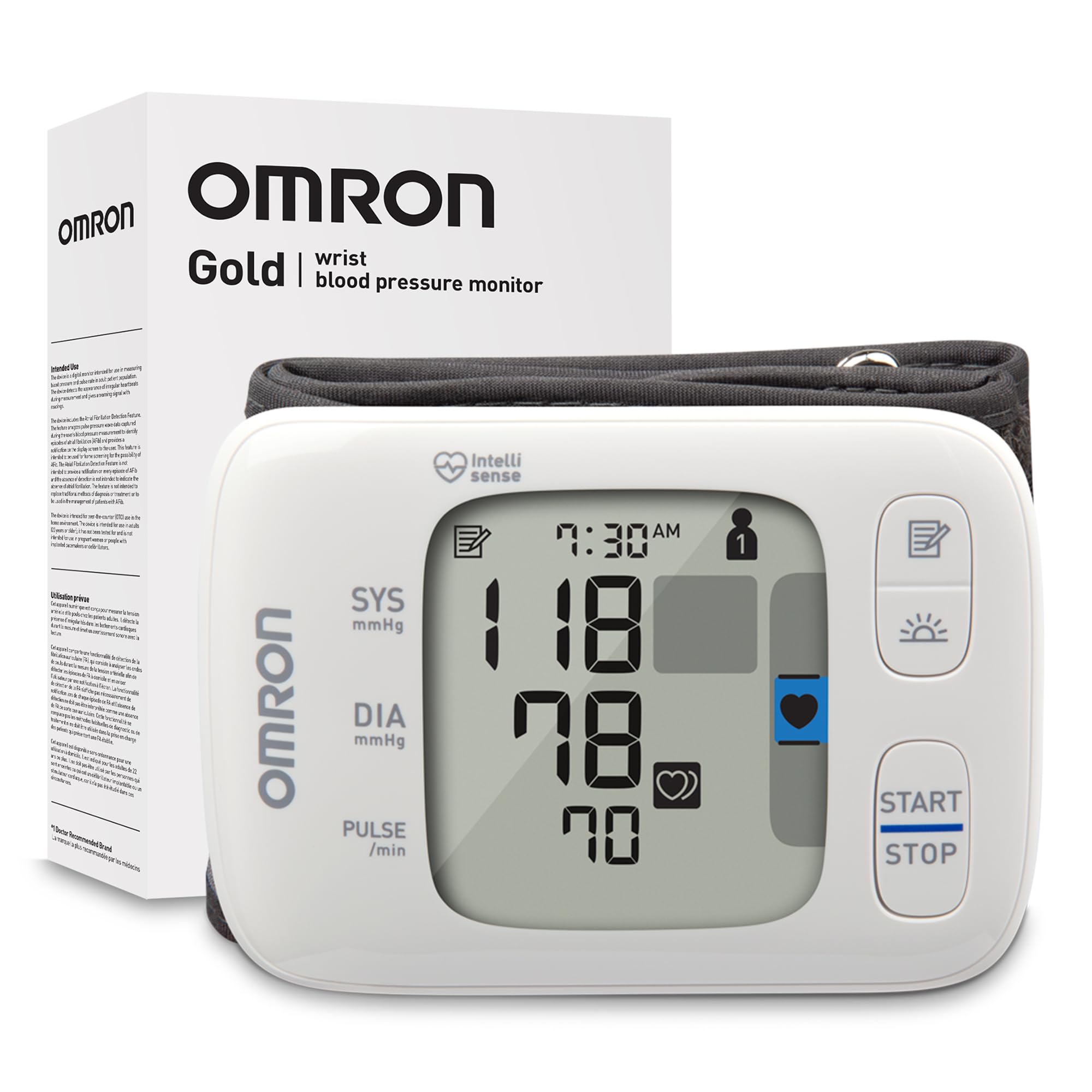
The Omron Gold Wireless is the most widely recommended wrist monitor in clinical environments. It stores 200 readings per user for two separate users, and the High Morning Average Indicator flags spike patterns that correlate with elevated cardiovascular risk. The Bluetooth sync to the Omron Connect app works with both Apple Health and Google Fit, making it the strongest choice for anyone who needs to share data directly with a healthcare provider.
The wrist cuff fits circumferences from 5.3 to 8.5 inches and measures using an advanced inflation algorithm that stops inflating as soon as a pulse is detected, reducing discomfort. Users report consistent systolic readings within 1-2 points of clinical arm monitors, though some note the diastolic reads slightly low. The side-mounted user switch is small and placed under the strap, so elderly users with dexterity issues may find toggling between users awkward.
A small number of units have reported an E4 error code, which typically resolves by replacing batteries or ensuring the wrist is held at heart level with no movement. But the reliability track record of the #1 doctor-recommended brand outweighs these outliers for most buyers.
Why it’s great
- 200 readings per user for deep trend analysis
- High Morning Average Indicator detects hypertension risk
- Clinically validated with strong diastolic accuracy
- Bluetooth sync with Apple Health and Google Fit
Good to know
- Side user switch is small and hard to reach
- Occasional E4 error if placement is not perfect
- Inflation feels slow compared to faster chipset models
- Runs on AAA batteries — no built-in rechargeable
2. HoMedics Premium Wrist Blood Pressure Monitor

The HoMedics Premium delivers Bluetooth tracking and AM/PM averaging at a price that undercuts most premium brands. The wrist positioning sensor is a standout for accuracy — it lights up when you have the device aligned with heart level, a feature that dramatically reduces the common error of holding the monitor too high or low. The 240 total memory slots split 120 per user are generous for this tier.
The backlit LCD display is large and easy to read, and the one-touch operation minimizes button fumbling. The Risk Category Index color-codes your reading into green, yellow, or red segments, which makes interpretation immediate for seniors. Users appreciate the app integration for emailing PDF reports, though the app interface feels slightly slower than Omron’s.
Durability is a mixed bag — some units fail within four weeks and are not returnable after that window, and the lack of a rechargeable battery means you will buy AAA replacements regularly. The attached cuff is fixed at 5.3 to 7.7 inches, which works for most but might be snug for larger wrists.
Why it’s great
- Wrist positioning sensor improves accuracy
- AM/PM averaging tracks daily blood pressure rhythm
- Large backlit display with color-coded risk index
- Bluetooth sync with emailable PDF reports
Good to know
- Some units fail within weeks — durability varies
- No rechargeable battery; uses AAA batteries
- App interface is slower than top competitors
- Cuff fixed at 7.7-inch max circumference
3. Withings BPM Connect

The Withings BPM Connect is the only wrist monitor on this list with a rechargeable battery that lasts six months, making it the most maintenance-free option for daily use. The cuff measures systolic pressure within 2 points of professional-grade clinical monitors, though diastolic can drift by 4-5 points in some readings. The WiFi sync means readings upload automatically without keeping Bluetooth open — open the Health Mate app anytime and the data is already there.
The design is compact and weighs 0.8 pounds, fitting in a small bag. The LCD display shows color-coded feedback directly on the device, so you do not need the app to interpret the result. Multiple user profiles support up to three people, and you can email reports to your provider straight from the app. The cuff fits an arm circumference of 22-42 cm, though some larger users report slightly elevated readings.
The setup process can be frustrating — initial pairing sometimes fails on the first attempt, and the LED display is dim on lighter colored models. The lack of a return window for accuracy complaints is a notable risk. For users who prioritize automatic logging and rechargeable convenience over absolute diastolic precision, this is the best choice.
Why it’s great
- Rechargeable battery lasts 6 months per charge
- WiFi sync uploads readings automatically
- Up to 3 user profiles with email PDF reports
- Compact design with high-quality build materials
Good to know
- Diastolic readings can drift up to 5 points from clinical
- Initial Bluetooth pairing can be frustrating
- Dim LED display on lighter colored models
- No return window for accuracy-related complaints
4. Beurer BC57 Wrist Blood Pressure Monitor

The Beurer BC57 stands out for its resting indicator — an on-screen icon that tells you when your body is in a sufficiently relaxed state to take an accurate reading. This is a rare feature at this price tier and directly addresses the common mistake of measuring when the user is still slightly active. The Bluetooth sync works with the HealthCoach app, storing 60 readings per user for two users (120 total).
The cuff range of 5.3 to 7.7 inches is standard, and the automatic inflation is quiet. The color-coded risk indicator on the large screen uses green, yellow, orange, and red zones to classify readings instantly. Users report consistent systolic accuracy when the wrist is positioned correctly, though the Bluetooth connection can be unreliable — several reviews mention pairing failures and an outdated date setting (defaults to 2015 on first use).
The storage case is well-designed but requires precise folding to close. The app is not as polished as Omron’s or Withings’, and the instructions are dense. For users who want a resting-aware device and Bluetooth logging without paying flagship prices, the BC57 is a solid mid-range pick.
Why it’s great
- Resting indicator improves measurement reliability
- Color-coded risk zones for instant interpretation
- Bluetooth sync with HealthCoach app
- Quiet automatic inflation operation
Good to know
- Bluetooth pairing can be unreliable
- Default date resets to 2015 on first power up
- App interface is less polished than competitors
- Storage case requires precise folding to close
5. A&D Medical UB-525 Wrist Blood Pressure Monitor
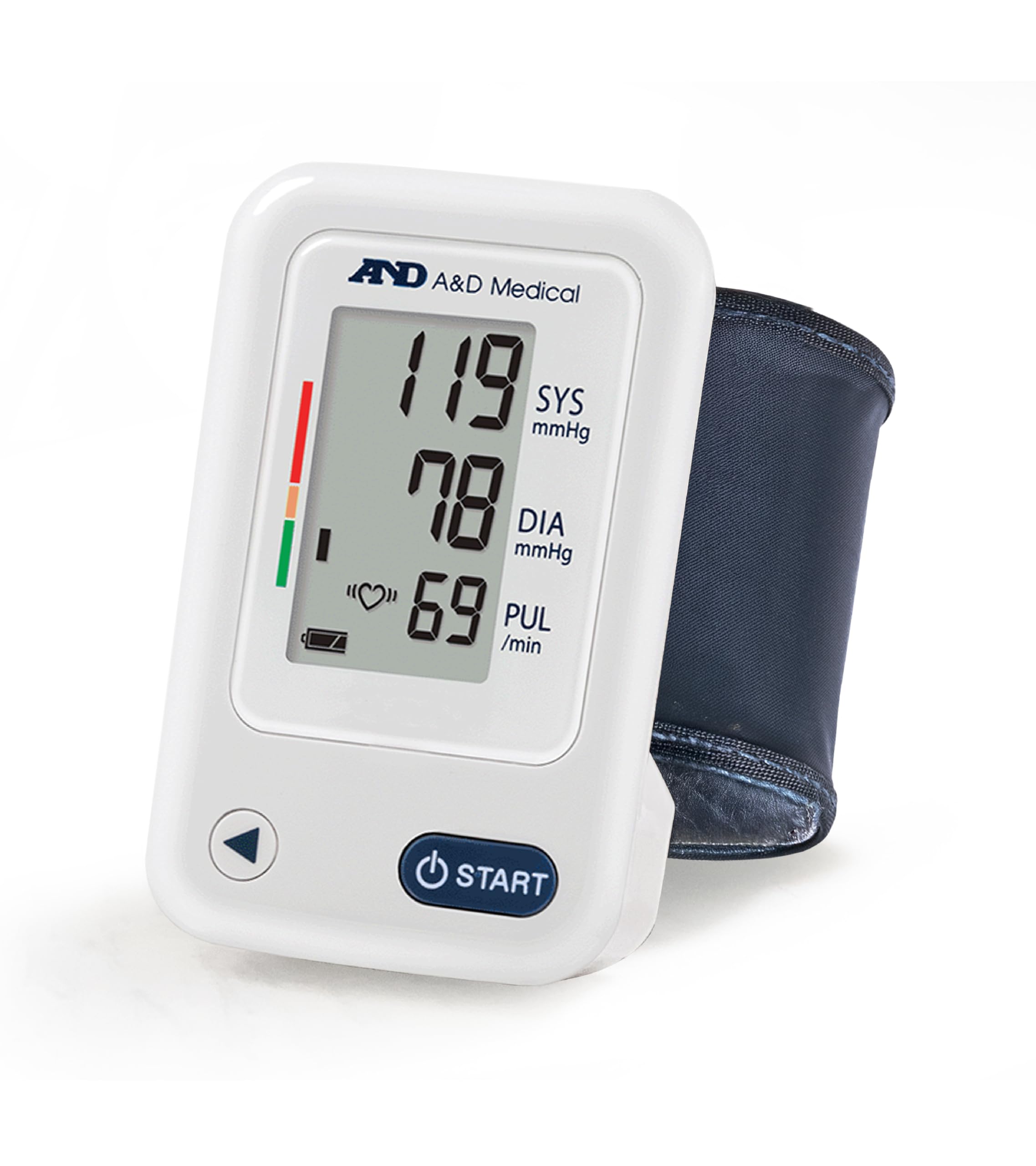
The A&D Medical UB-525 is the top choice for users with small wrist circumferences who find standard arm cuffs too painful or bulky. The cuff fits wrists from 5.3 to 8.5 inches, but its slim design means it conforms comfortably to narrower wrists without bunching. The one-button operation and large LCD with oversized digits make it one of the most accessible options for elderly users with limited dexterity or vision.
The gentle inflation mechanism reduces discomfort during measurement — a significant advantage for users who feel anxious around squeezing pressure. The device stores 60 readings in a single user memory bank, which is enough for monthly trend reporting to a doctor. The free A&D Heart Track app allows manual logging of unlimited readings, though it does not sync automatically via Bluetooth (data is entered by hand). Several reviews confirm the unit matches clinical readings within 1-2 points when positioned correctly.
The battery compartment is a known pain point — the placement makes inserting and removing AAA batteries extremely difficult, and the cover does not always snap back securely. This flaw has driven some returns. If you are willing to deal with battery loading once every few months, the reading accuracy and comfort more than compensate.
Why it’s great
- Excellent fit for small wrists with less bulk
- One-button operation with oversized display
- Gentle inflation reduces discomfort
- Clinical accuracy confirmed by user reviews
Good to know
- Battery compartment is very difficult to access
- 60-reading single-user memory only
- No Bluetooth automatic sync — manual logging only
- Battery cover may not secure properly after use
6. Wrist Blood Pressure Monitor (2026 Upgrade) — Dual-User
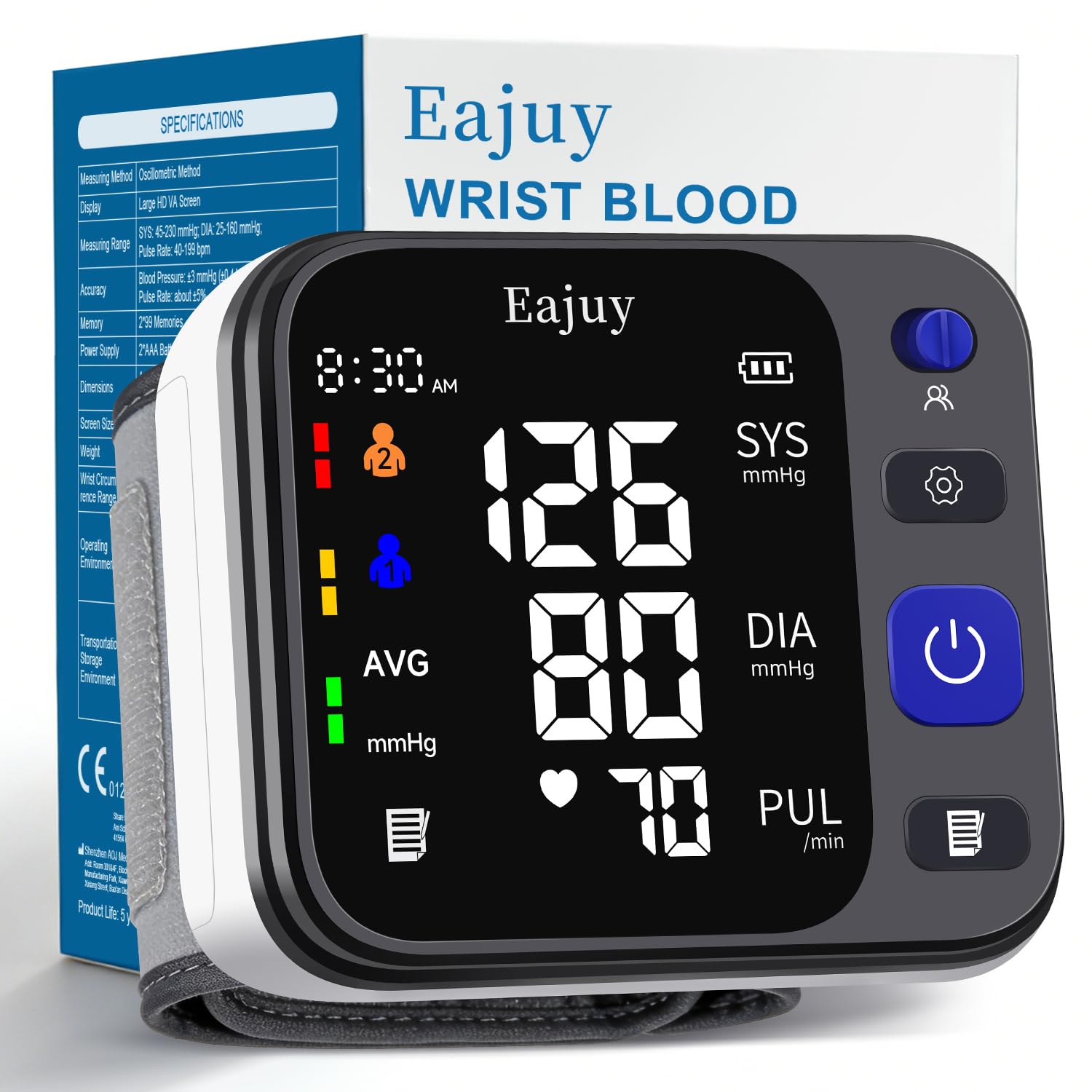
This 2026-upgrade model delivers surprising value for its price point, especially for shared households. The dual-user mode stores 99 sets of readings per user (198 total), which beats many mid-range options. The large HD LED screen with smart backlight adjusts to ambient lighting, and the three-color indicator (green/yellow/red) simplifies reading classification. The inclusion of both AAA battery support and Type-C power is rare at this price and adds flexibility for users who want to plug in rather than buy batteries.
The high-performance chip processes measurements quickly with a single button press, making it one of the fastest units on this list from start to result. The adjustable band fits wrists from 5.3 to 7.7 inches, and the raised physical buttons reduce accidental presses — a thoughtful design detail. Users report satisfying accuracy when compared to arm monitors at a doctor’s office, though some note the diastolic can be less consistent on the first reading of the day.
The most significant reliability concern is battery drain — fresh AAA batteries can die in as little as a few days if the unit is left powered on or if the backlight is triggered frequently. Using the Type-C power mode bypasses this issue entirely. For users who keep it plugged in during home use and only use battery backup for travel, this is a smart and affordable pick.
Why it’s great
- 198 total memory slots — excellent for shared homes
- Type-C power mode eliminates battery drain issue
- Fast one-button measurement with large backlit screen
- Adjustable cuff with anti-accidental button design
Good to know
- AAA batteries drain extremely fast in battery-only mode
- Diastolic consistency varies on first morning reading
- Left-handed use is awkward due to Velcro strap placement
- Screen orientation is not adjustable
7. IIF Voice Broadcast Wrist Blood Pressure Monitor
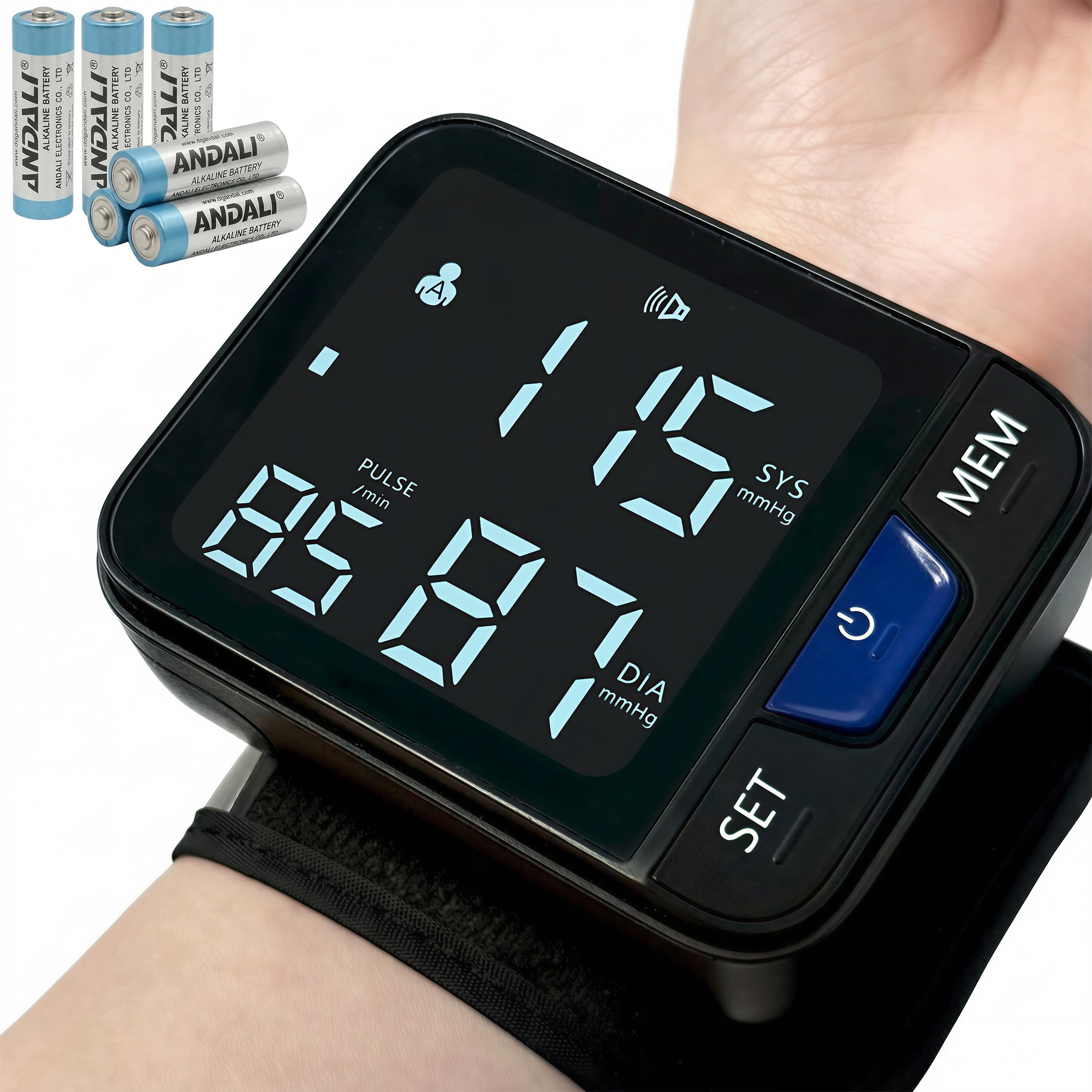
The IIF Voice Broadcast wrist monitor is designed specifically for seniors or anyone with compromised vision. The voice guidance speaks systolic, diastolic, and pulse readings in clear English after each measurement, removing the need to squint at a screen. The ultra-high contrast VA display with large digits is also backlit for low-light bathroom use. The 25-second measurement time is among the fastest here, thanks to intelligent inflation that avoids over-pressurizing the cuff.
The dual-user tracking stores 120 readings per user (240 total), and the arrhythmia detection algorithm filters movement interference before flagging irregularities. The aviation-grade cuff material is breathable and skin-friendly, and the unit weighs only 3.6 ounces, making it barely noticeable during travel. Some users confirm readings match clinic equipment within a few points when the wrist is properly supported at heart level.
The accuracy is highly dependent on placement — if the cuff is not wrapped snugly or the wrist is not held at chest height, readings can vary widely. A few reviews report the unit failing to display numbers at all, which suggests quality control inconsistency. The voice volume is fixed and cannot be turned down, which can be disruptive in shared bedrooms. For elderly users who prioritize hearing the result over silent operation, it is a strong entry-level option.
Why it’s great
- Loud voice broadcast eliminates screen reading
- Fast 25-second measurement with intelligent inflation
- 240 total memory slots (120 per user)
- Ultra-portable at 3.6 ounces with breathable cuff
Good to know
- Accuracy depends heavily on precise cuff placement
- Fixed voice volume cannot be lowered or turned off
- Some units have display or boot failure issues
- Diastolic consistency is lower than arm-cuff alternatives
FAQ
Why are my wrist monitor readings different from my arm monitor?
How do I know if my wrist monitor is clinically accurate?
Can I use a wrist monitor if I have arrhythmia or atrial fibrillation?
Final Thoughts: The Verdict
For most users, the best blood pressure wrist monitor winner is the Omron Gold Wireless because it combines clinical validation, 200 readings per user, and a morning average indicator that directly addresses hypertension risk. If you want automatic WiFi logging and a rechargeable battery that lasts months, grab the Withings BPM Connect. And for shared household monitoring on a budget, nothing beats the 2026 Upgrade Dual-User model with its Type-C power and 198 reading slots.

Mo Maruf
I created WellFizz to bridge the gap between vague wellness advice and actionable solutions. My mission is simple: to decode the research and give you practical tools you can actually use.
Beyond the data, I am a passionate traveler. I believe that stepping away from the screen to explore new environments is essential for mental clarity and physical vitality.