Our readers keep the lights on and my smoothie glass nicely filled. As an Amazon Associate, I earn from qualifying purchases.
For millions managing hypertension, the daily ritual of wrapping a bulky upper-arm cuff and sitting perfectly still feels like a chore that disrupts routines. A wrist-based monitor changes that equation by slipping on like a watch, delivering a reading in seconds without stripping to the shoulder. The challenge becomes sorting the medically sound devices from the gadget-style trackers that prioritize features over measurement fidelity.
I’m Mohammad Maruf — the founder and writer behind WellFizz. I’ve spent years analyzing the oscillometric sensors, inflation algorithms, and clinical validation data that separate reliable home health tools from mere novelties in the blood pressure monitoring space.
After combing through technical specs, user feedback, and real-world accuracy comparisons, the following analysis presents the best blood pressure monitor watch options for anyone seeking convenience without sacrificing the trustworthiness of their daily readings.
How To Choose The Best Blood Pressure Monitor Watch
A wrist-based BP monitor is a fundamentally different tool than a fitness tracker that estimates blood pressure. You need to evaluate inflation method, cuff fit, memory capacity, and whether the device has undergone independent accuracy testing. Here are the key factors that separate a reliable health aid from a data grapher.
Inflation System: Air Pump vs. Sensor-Only
Dedicated medical-grade wrist monitors use a small air pump to inflate a physical cuff around your wrist, applying external pressure to measure oscillations in the artery. This is the same oscillometric principle used by clinical-grade upper-arm cuffs. Fitness watches that claim to measure blood pressure typically rely solely on optical sensors and pulse transit time estimation — a less reliable method that requires frequent calibration against a validated cuff. If your priority is clinical accuracy, choose a unit with an active air pump and a real cuff.
Cuff Sizing and Fit
The standard wrist cuff fits wrists between roughly 5.3 and 8.3 inches in circumference. A poor fit — either too loose or too tight — will produce inaccurate readings. Look for a hook-and-loop strap that allows fine adjustment. Some premium models include angled or contoured cuffs that reduce the need for exact placement over the radial artery. If you share the device with a partner, verify that the monitor supports multiple user profiles and that the cuff accommodates both wrist sizes comfortably.
Heart Level Positioning Guidance
A wrist monitor must be held at heart level during measurement. Devices that include a position sensor or a visual indicator (such as an arrow or colored LED) that confirms your wrist is at the correct height dramatically reduce user error. Without this feature, you are relying on guesswork, which can introduce systematic errors of up to 10-15 mmHg. This is one of the most important differentiators between budget-friendly and premium models.
Memory, Storage and Data Sharing
For long-term trend analysis, onboard memory (typically 60 to 200 readings per user) lets you track changes without always needing your phone. Bluetooth connectivity enables syncing to companion apps like OMRON connect or HealthCoach for deeper analysis, charting, and PDF reports to share with your doctor. Multi-user support (dual-user mode with separate storage banks) is a must for households where two people monitor regularly. Some advanced watches also allow family sharing and remote alerts for abnormal readings.
Quick Comparison
On smaller screens, swipe sideways to see the full table.
| Model | Category | Best For | Key Spec | Amazon |
|---|---|---|---|---|
| OMRON Gold Wireless | Premium Medical | Clinical-grade accuracy with app tracking | 200 readings per user, dual user | Amazon |
| BP Doctor Air Pump Smart Watch | Premium Hybrid | Inflatable cuff smartwatch with alerts | 1.95″ AMOLED, 50+ sport modes | Amazon |
| Beurer BC57 | Mid-Range Medical | Bluetooth sync and color-coded risk display | 120 memory spaces, dual user | Amazon |
| Vive Precision Smart Wrist | Value Medical | One-touch use with bright LCD display | Adjustable cuff 4.9″–8.3″, app sync | Amazon |
| 2026 Upgrade Wrist Monitor | Value Medical | Type-C power, dual-user 99×2 memory | 5.3–7.7″ cuff, backlit LED | Amazon |
| Bestinn Smart Watch | Mid-Range Hybrid | Smartwatch with 24/7 BP and SpO2 tracking | 1.58″ display, 120 sport modes | Amazon |
| MorePro Health Tracker | Value Hybrid | Budget smartwatch with 24/7 health sensors | 1.57″ HD touch, IP68, 2 bands | Amazon |
In‑Depth Reviews
1. OMRON Gold Wireless Wrist Blood Pressure Monitor
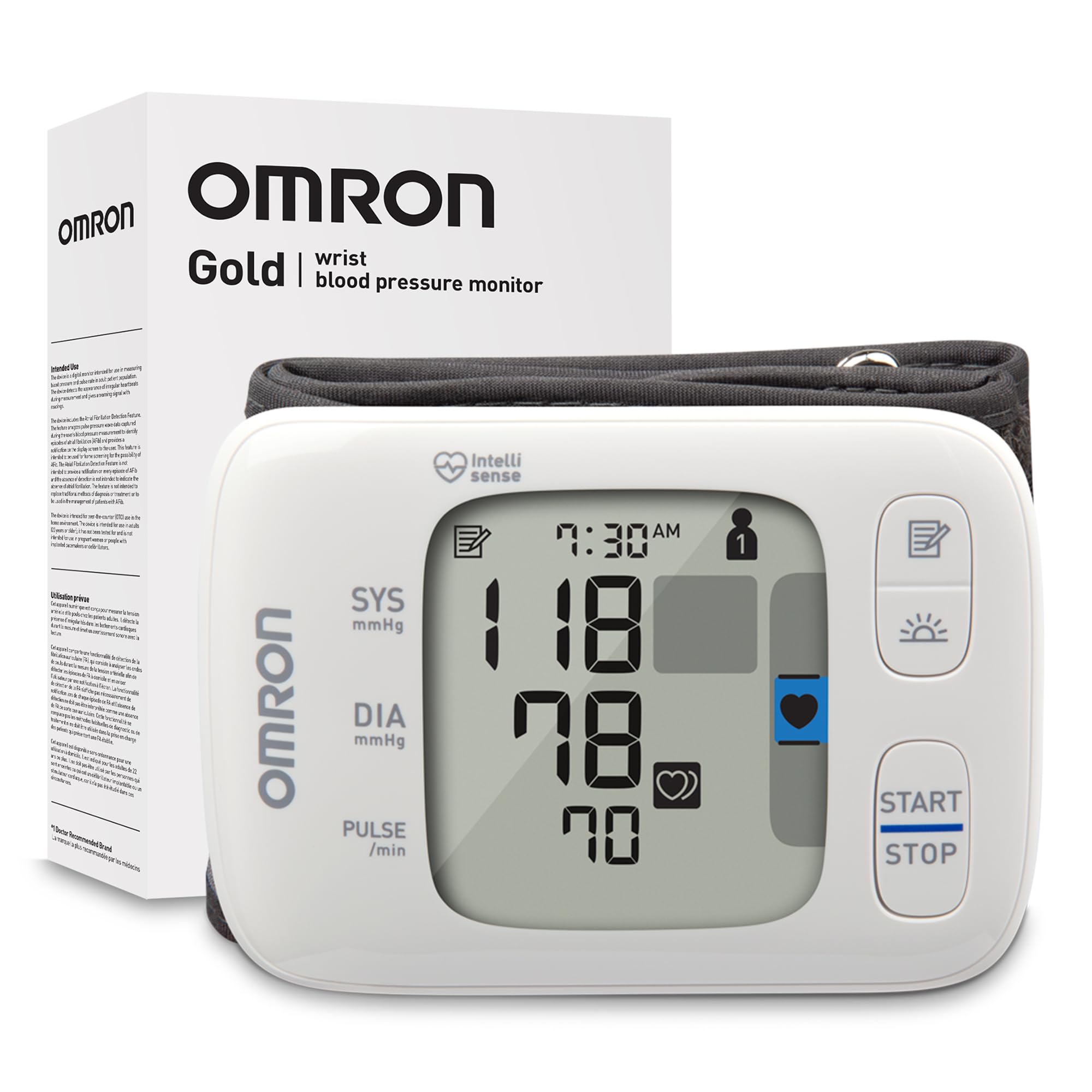
OMRON holds a unique position in the home blood pressure market — the brand is recommended by more doctors and pharmacists than any other. The Gold Wireless (BP4350) applies the same oscillometric reliability found in OMRON’s upper-arm units to a compact wrist form factor. The attached cuff fits wrists from 5.3 to 8.5 inches, giving it the widest size range among the dedicated medical monitors on this list. At just 3.2 ounces with the cuff, it disappears into a travel bag or gym locker.
Clinically validated for accuracy, the Gold Wireless includes two features few wrist monitors offer: a High Morning Average Indicator that flags early-morning BP spikes tied to cardiovascular risk, and irregular heartbeat detection during routine measurements. The 200-reading memory per user (dual-user support) means two people can track trends independently without manual logging. Bluetooth pairing to the OMRON connect app transfers data wirelessly to Apple Health and Google Fit for seamless record sharing with providers.
The inflation pump is noticeably quieter than lower-tier alternatives, and the large display is backlit for low-light readings. Some users note that the user-switch slider sits under the cuff strap, making it slightly awkward to toggle between profiles. However, for anyone who prioritizes clinical-grade trustworthiness and multi-user tracking in a portable package, the OMRON Gold Wireless sets the reference standard for the category.
Why it’s great
- #1 doctor and pharmacist recommended brand with clinical validation
- High Morning Average and irregular heartbeat detection alerts
- Generous 200-reading memory per user in dual-user mode
- Lightweight (3.2 oz) with compact carrying case
Good to know
- User selection slide-switch is small and partially hidden under the strap
- Requires rigid sitting posture and wrist at heart level for accuracy
- Inflation speed is slower than some competing wrist models
2. BP Doctor Blood Pressure Smart Watch

The BP Doctor stands apart from the dozens of smartwatches that claim to estimate blood pressure via optical sensors alone. It integrates a genuine inflatable airbag strap that works via oscillometric measurement — the same method used by clinical cuff monitors. When you start a reading, the air pump inflates the wristband, senses arterial pressure changes through a high-precision PPG sensor and a dedicated chipset, then deflates. This is a fundamentally more reliable approach than sensor-only estimation.
The 1.95-inch AMOLED display is the largest and sharpest among the devices reviewed here, with adjustable brightness for outdoor visibility. It also functions as a full-featured smartwatch: 50+ sport modes, sleep staging via accelerometer, and app-based family data sharing that sends remote alerts when abnormal readings appear. Battery life reaches roughly seven days under normal use, with a standby of about 15 days. The charging time is short at one hour.
The trade-off comes in build quality — some user reports mention the band can tear if overtightened, and the overall materials feel less premium than the OMRON. Additionally, the watch requires moisture protection; water ingress can interfere with the measurement function. Still, for users who want a single wearable that delivers air-cuff-level BP readings alongside sports tracking and smartphone notifications, the BP Doctor provides a rare hybrid solution.
Why it’s great
- True oscillometric air-pump cuff for reliable blood pressure measurement
- Large 1.95-inch AMOLED screen with customizable watch faces
- Alerts and data sharing with family members via the companion app
- Over 50 sport modes and 7-day battery life
Good to know
- Band durability is a concern if frequently cinched tightly
- Requires careful moisture management to preserve sensor function
- Some users report software instability and reboot issues
3. Beurer BC57 Wrist Blood Pressure Monitor

The Beurer BC57 brings a thoughtful design detail that is especially useful for older users: a color-coded risk indicator on the large display that immediately shows whether a reading falls within the green, yellow, or red zone. No chart consulting required. The cuff fits wrists from 5.3 to 7.7 inches — a standard range — and the plastic storage case keeps the unit protected when not in use.
Beurer includes a resting indicator icon that lights up when the device detects you are sufficiently calm and stationary for a valid reading. This feature subtly reinforces the correct measurement protocol without requiring users to memorize instructions. The Bluetooth sync works with the HealthCoach app for charting and export, and the internal memory stores 60 readings per user across two profiles (120 total). Irregular heartbeat detection triggers an audible alarm during measurement.
Accuracy reviews are generally positive, though a few users have reported connectivity issues with the app and difficulty setting the date and time. The measurement protocol requires holding the wrist at heart level and remaining still — the resting indicator helps but does not eliminate the need for user discipline. For someone who values visual simplicity and doesn’t need multi-app ecosystem integration, the BC57 is a strong mid-range pick.
Why it’s great
- Color-coded risk indicator simplifies reading interpretation at a glance
- Resting indicator encourages consistent measurement conditions
- Dual-user mode with 120 total memory slots
- Irregular heartbeat alarm for added safety awareness
Good to know
- Bluetooth pairing and companion app reliability can be inconsistent
- Date and time setup is unintuitive for some users
- Requires strict heart-level positioning to maintain accuracy
4. Bestinn P900 Smart Watch Fitness Tracker
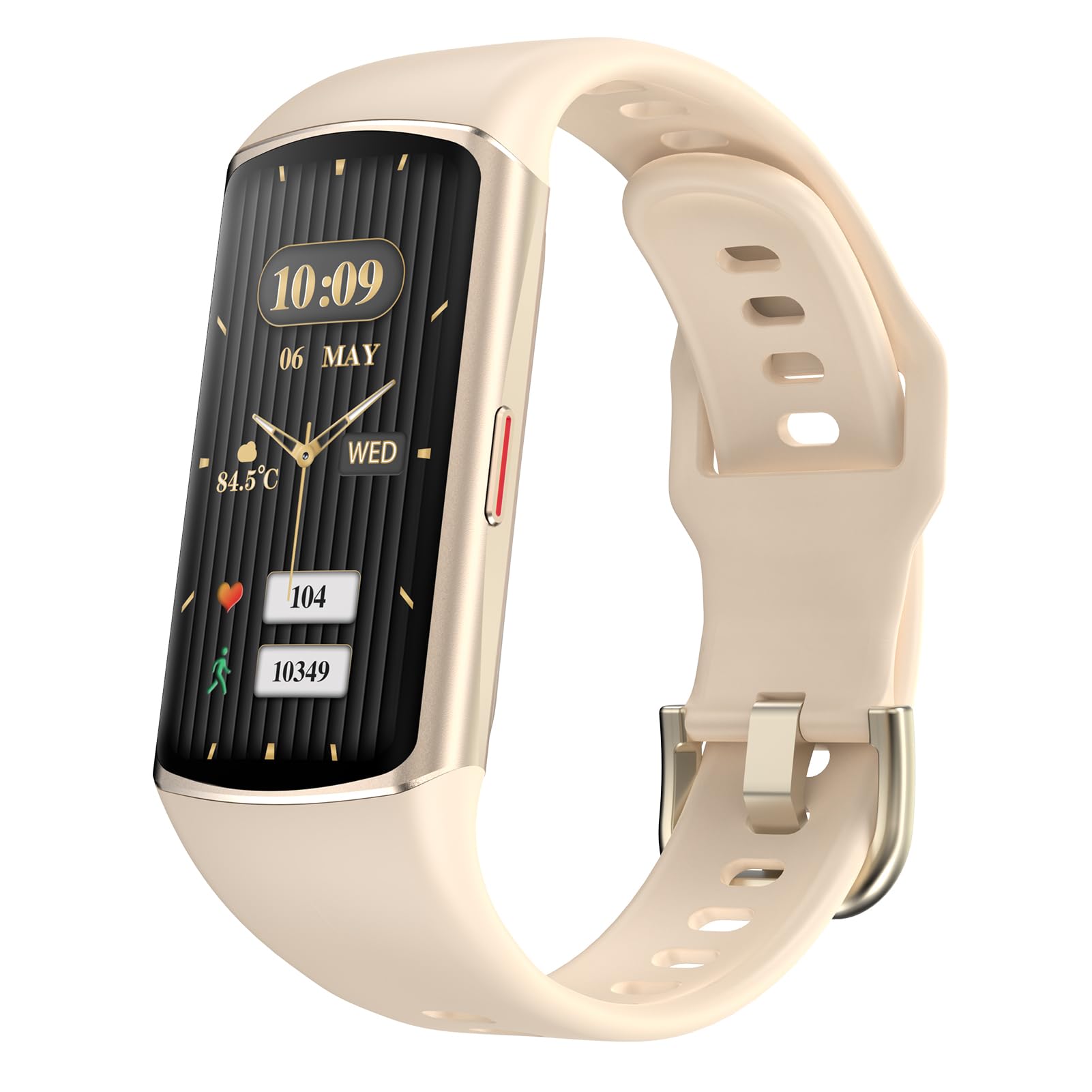
The Bestinn P900 is a mid-range smartwatch that packs a high-resolution 1.58-inch display, 120 exercise modes, and 24/7 health sensors including heart rate, blood oxygen, and blood pressure. It uses optical sensor-based estimation for BP readings — not an inflatable cuff — meaning its blood pressure function is best used for tracking trends rather than diagnosing clinical hypertension. The Da Fit app integrates with Apple Health and stores historical data for sleep, steps, and vitals.
What elevates the P900 beyond typical budget wearables is its build quality: metal and silicone materials with a unique band closure that tucks under (no loops). The magnetic charger reaches full battery in under 1.5 hours and lasts approximately one week. The always-on display option keeps the time visible without waking the screen. It also includes practical extras such as sedentary reminders, menstrual cycle tracking, and remote camera control.
Blood pressure readings from optical sensors are inherently less accurate than air-cuff measurements, and users should calibrate against a validated device. The step counter occasionally loses about 100 steps at the daily reset, though this is minor. Overall, the P900 is a well-rounded smartwatch for fitness and general wellness tracking, with BP trend data as a supplementary feature rather than a primary diagnostic tool.
Why it’s great
- Large 1.58-inch vibrant touchscreen with always-on option
- Magnetic fast charging — full charge under 1.5 hours
- 120 sport modes and IP68 water resistance
- Apple Health integration for consolidated health data
Good to know
- Blood pressure readings are optical estimates, not oscillometric
- Step counter may lose approximately 100 steps at daily reset
- Display may feel slightly small for users with larger hands
5. Vive Precision Smart Wrist Blood Pressure Monitor
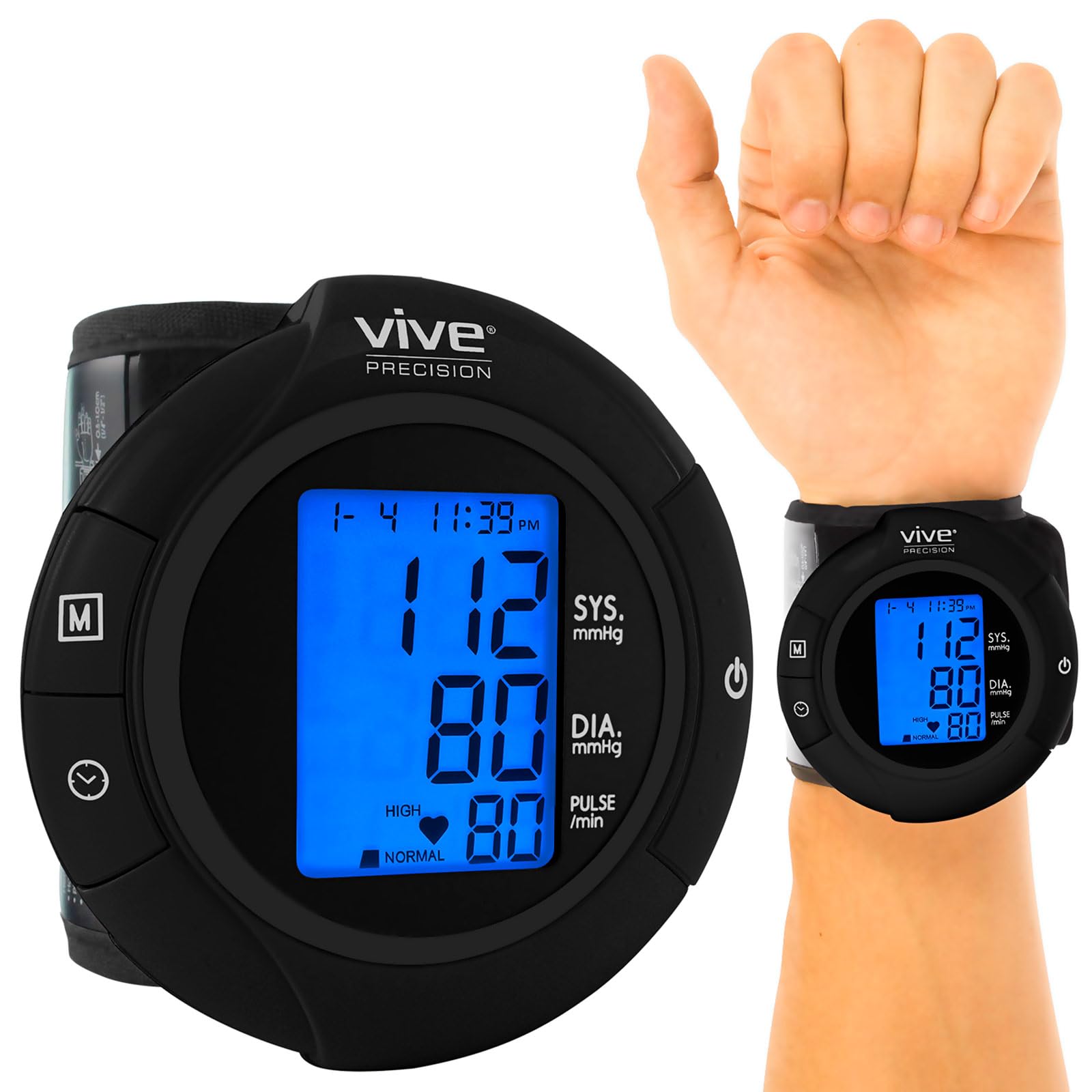
The Vive Precision Smart Wrist is a straightforward medical-grade monitor designed for one-touch use. Press the power button, and the air-pump cuff inflates to take a reading in roughly 30 seconds, displaying results on a bright LCD screen with large numbers. The adjustable cuff accommodates wrist sizes from 4.9 to 8.3 inches — the widest range among the dedicated monitors here — making it a strong option for users with smaller or larger wrists.
The monitor connects to iOS and Android devices for data storage and trend tracking, with date and time stamps on each reading. Vive individually tests and calibrates each unit for accuracy before shipping, a quality control step that not all manufacturers publicize. The device includes an irregular heartbeat detection feature, and the carrying case keeps everything organized for travel.
Customer feedback is split. Many users report accurate, consistent readings and appreciate the lightweight, non-bulky design. However, a significant minority describe readings that are lower than validated arm-cuff monitors, app display issues, and battery drain after replacement. The consistency seems sensitive to positioning and movement. For the user who needs a wide cuff fit and one-button simplicity, the Vive offers a capable entry point but may not satisfy those requiring clinical-grade repeatability in every session.
Why it’s great
- Widest cuff adjustment range: 4.9 to 8.3 inches
- Individually tested and calibrated for accuracy
- Large, bright LCD display simplifies reading
- Carrying case included for portability
Good to know
- Accuracy can vary significantly between users and positioning
- Some units experience battery drain after replacement
- App interface has occasional display issues
6. 2026 New Upgrade Wrist Blood Pressure Monitor
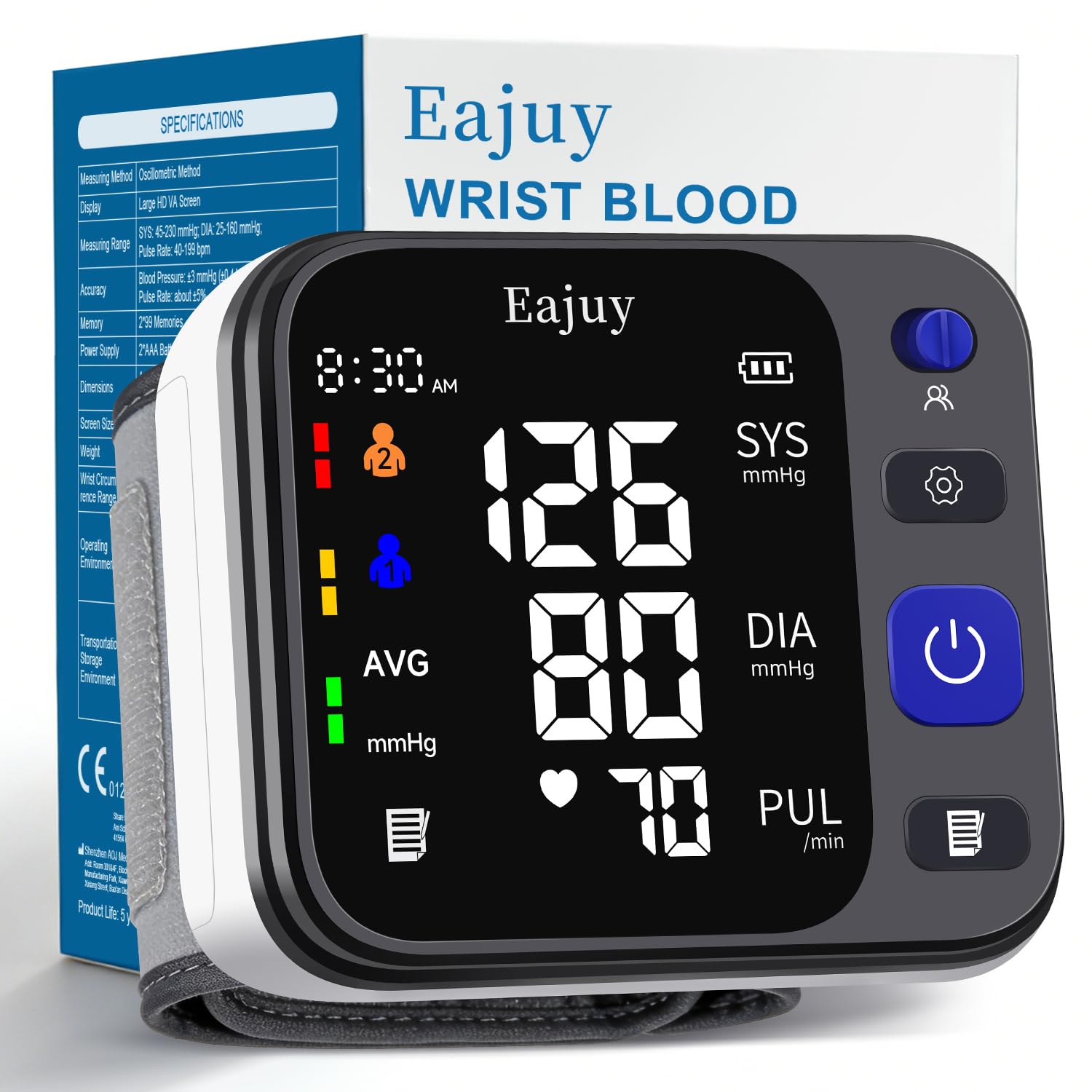
This third-generation wrist monitor from Shenzhen AOJ Medical introduces a practical feature missing from most competitors: dual-power operation. You can run it on two AAA batteries or via a USB-C cable, giving flexibility for home use or travel when batteries are unavailable. The large backlit LED screen uses a three-color indicator to classify blood pressure levels at a glance, and the adjustable wristband fits circumferences from 5.3 to 7.7 inches.
The dual-user mode stores 99 readings per user (198 total), and the device includes customizable monitoring scenarios such as “morning and evening” or “before and after medication” comparisons. The newly upgraded chipset promises faster processing and improved oscillometric accuracy. A soft storage pouch, Type-C cable, and batteries are all included in the box.
User feedback is mixed: some praise the ease of use and report doctor-verified accuracy, while others note that the batteries drain extremely fast — in some cases within days — making the Type-C power option almost necessary for frequent users. The Velcro strap placement and button layout also present some ergonomic awkwardness for left-handed users. Despite these issues, the combination of dual power and large dual-user memory makes it a versatile budget-friendly option for couples monitoring together.
Why it’s great
- Dual power source: AAA batteries or USB-C connection
- Spacious dual-user memory: 99 readings per user
- Three-color indicator simplifies BP level interpretation
- Customizable morning/evening and medication comparison modes
Good to know
- Battery drain is fast — USB-C power may be required for regular use
- Strap and button placement can feel awkward for left-handed users
- Screen orientation is not adjustable
7. MorePro Health Fitness Tracker
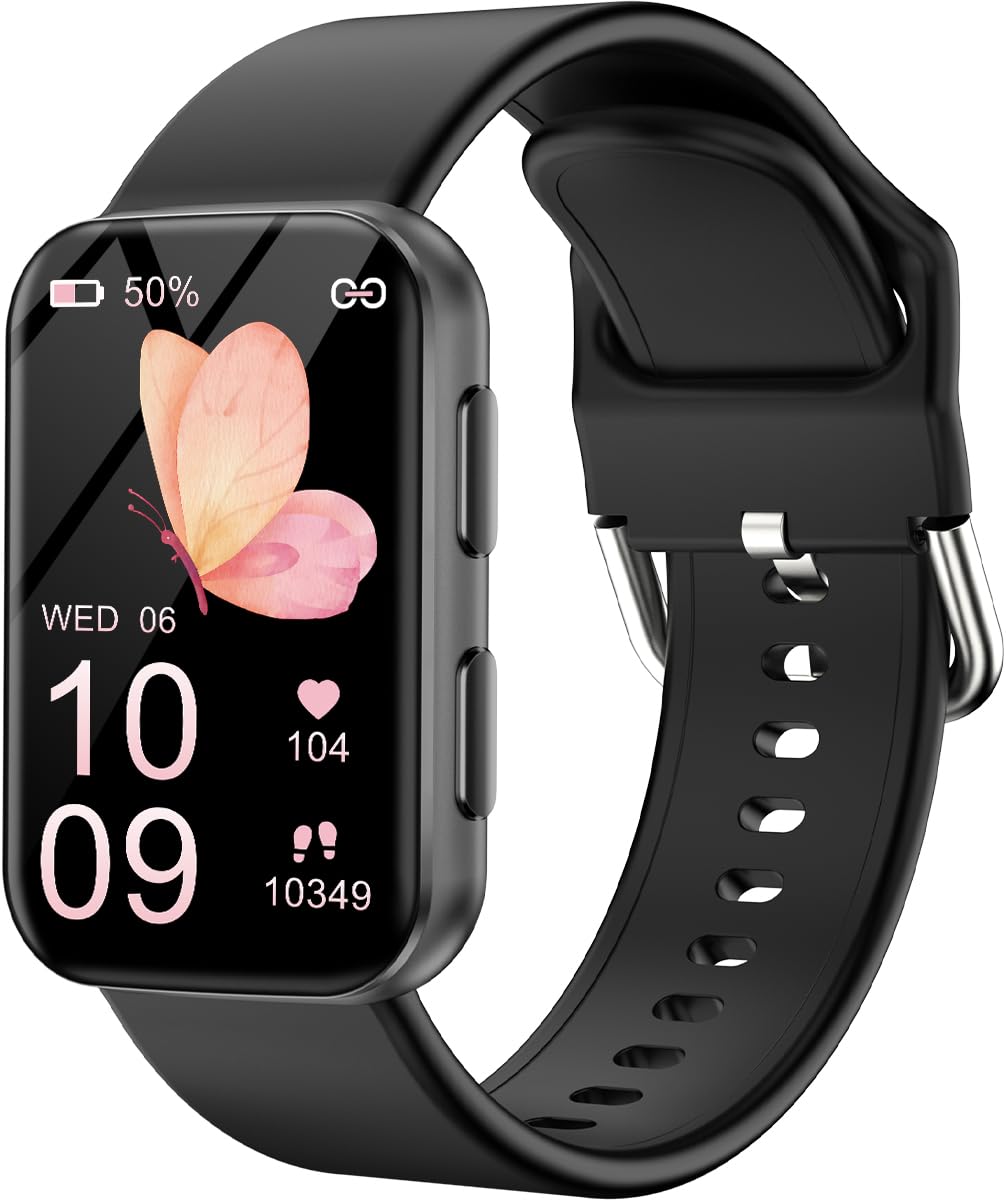
The MorePro AIR2 is a budget-friendly fitness tracker that covers the core wellness bases: 24/7 heart rate, blood pressure, and SpO2 monitoring, plus sleep stage tracking (awake, light, deep). Its 1.57-inch HD touchscreen is bright and responsive, and the package includes both a silicone band for workouts and a nylon band for a more comfortable lounge fit. The IP68 water resistance rating means it can survive showers and swimming without worry.
Blood pressure monitoring here uses optical sensor estimation, not an inflatable cuff. The readings are best used for observing relative changes and trends rather than for diagnostic decisions. The sleep tracking algorithm starts recording at midnight, which may miss early-evening naps, and the step counter occasionally loses a small number of steps at the daily reset. Battery life reaches approximately 7 days, which is solid for a device with continuous health monitoring.
For anyone new to wearable health tracking who wants a comfortable, low-commitment entry point, the MorePro delivers strong value. The dual-band inclusion, the lightweight design, and the easy connection to Android and iOS devices make it a reliable companion for daily step, sleep, and heart rate tracking — with BP trend data available as a helpful extra layer of context.
Why it’s great
- Includes both silicone and nylon bands for different daily uses
- IP68 water resistance for worry-free wear in water
- 24/7 heart rate, SpO2, and BP tracking with sleep staging
- Comfortable and lightweight for all-day wear
Good to know
- Sleep tracking only starts recording at midnight
- Step counter may drop roughly 100 steps at daily reset
- BP readings are optical estimations, not oscillometric
FAQ
Is a wrist blood pressure monitor as accurate as an upper-arm cuff?
Why does my wrist monitor give different readings each time I use it?
Can I use a blood pressure monitor watch while sleeping or lying down?
Final Thoughts: The Verdict
For most users, the best blood pressure monitor watch winner is the OMRON Gold Wireless because it combines clinical validation, dual-user memory, and the brand trust weight of the #1 doctor-recommended name in an ultra-portable form. If you want an inflatable cuff in a full smartwatch design, grab the BP Doctor. And for a budget-friendly dual-power monitor with generous memory for couples, the 2026 Upgrade Wrist Monitor delivers the best value-to-feature ratio at a comfortable entry price.

Mo Maruf
I created WellFizz to bridge the gap between vague wellness advice and actionable solutions. My mission is simple: to decode the research and give you practical tools you can actually use.
Beyond the data, I am a passionate traveler. I believe that stepping away from the screen to explore new environments is essential for mental clarity and physical vitality.