Our readers keep the lights on and my smoothie glass nicely filled. As an Amazon Associate, I earn from qualifying purchases.
If your home blood pressure monitor delivers a reading that sends you into a panic—only to have your doctor’s office machine tell a completely different story—you already know the problem isn’t your health, it’s your hardware. An ill-fitting cuff, a cheap sensor, or motion interference during measurement can inflate systolic numbers by 10 mmHg or more, creating unnecessary stress and expensive follow-up visits. The right device eliminates that uncertainty with validated accuracy and a cuff that actually matches your arm circumference.
I’m Mohammad Maruf — the founder and writer behind WellFizz. I’ve analyzed the mechanical and electronic specifications of dozens of home blood pressure monitors, comparing cuff sizes, sensor precision, memory capacity, and clinical validation data so you don’t have to guess which unit will give you readings you can trust.
Whether you’re monitoring a recent diagnosis or just keeping an eye on your numbers as you age, choosing the right monitor starts here. This guide breaks down the seven most capable models on the market so you can confidently select the best blood pressure machine for your home, your arm size, and your budget.
How To Choose The Best Blood Pressure Machine
A home blood pressure monitor is a precision instrument, not a novelty gadget. Three factors—cuff fit, clinical validation, and memory capacity—will separate a trustworthy device from one that causes more worry than relief.
Cuff Size Is Not Optional
The single most common source of inaccurate home readings is a cuff that is too small or too large for the user’s arm circumference. A standard adult cuff (roughly 9 to 17 inches) fits most people, but if your upper arm measures over 16 inches, you need an extra-large cuff that extends to 21 inches or more. Buying a monitor that includes both sizes—or at least offers an XL option—eliminates the guesswork.
Clinical Validation Standards
Look for devices that have been tested against a mercury sphygmomanometer and earned a rating from an independent body such as the British and Irish Hypertension Society (BIHS) or the Association for the Advancement of Medical Instrumentation (AAMI). An “AA” or “A” rating means the device’s readings fall within 5 mmHg of the reference standard 85 percent of the time. Without that validation, you are trusting a printed specification with no third-party backup.
Memory, Multi-User Support, and Connectivity
A monitor that stores at least 90 readings per user allows you and your doctor to spot trends rather than reacting to single spikes. If two people in the household need regular checks, look for a dual-user mode with separate memory banks. Bluetooth sync is convenient for generating reports, but avoid models where the app is required for basic functionality—standalone operation should always be primary.
Quick Comparison
On smaller screens, swipe sideways to see the full table.
| Model | Category | Best For | Key Spec | Amazon |
|---|---|---|---|---|
| OMRON Gold BP5360 | Premium | AFib detection & trend tracking | AFib detection, 9-17in cuff, Bluetooth | Amazon |
| SDUNW U80B | Mid-Range | Large arms & dual-size kit | Dual cuffs (9-17in & 13-21in), 180 mem | Amazon |
| iHealth Track 550BT | Mid-Range | Smartphone integration | Bluetooth, 8.7-16.5in cuff, color display | Amazon |
| Microlife BPM2 | Mid-Range | Clinically proven accuracy | BIHS AA rating, 8.7-16.5in cuff, 60 mem | Amazon |
| Acenis AOJ-30F | Mid-Range | Senior-friendly display | Large color screen, XL cuff, 40-sec read | Amazon |
| COCACIS U80BH | Budget | Extra-large cuffs included | Dual cuffs (9-17in & 13-21in), 199 mem | Amazon |
| Medline MDS4001 | Budget | Simple, trusted brand | 8.5-12in cuff, 90-reading memory | Amazon |
In‑Depth Reviews
1. OMRON Gold Blood Pressure Monitor (BP5360)
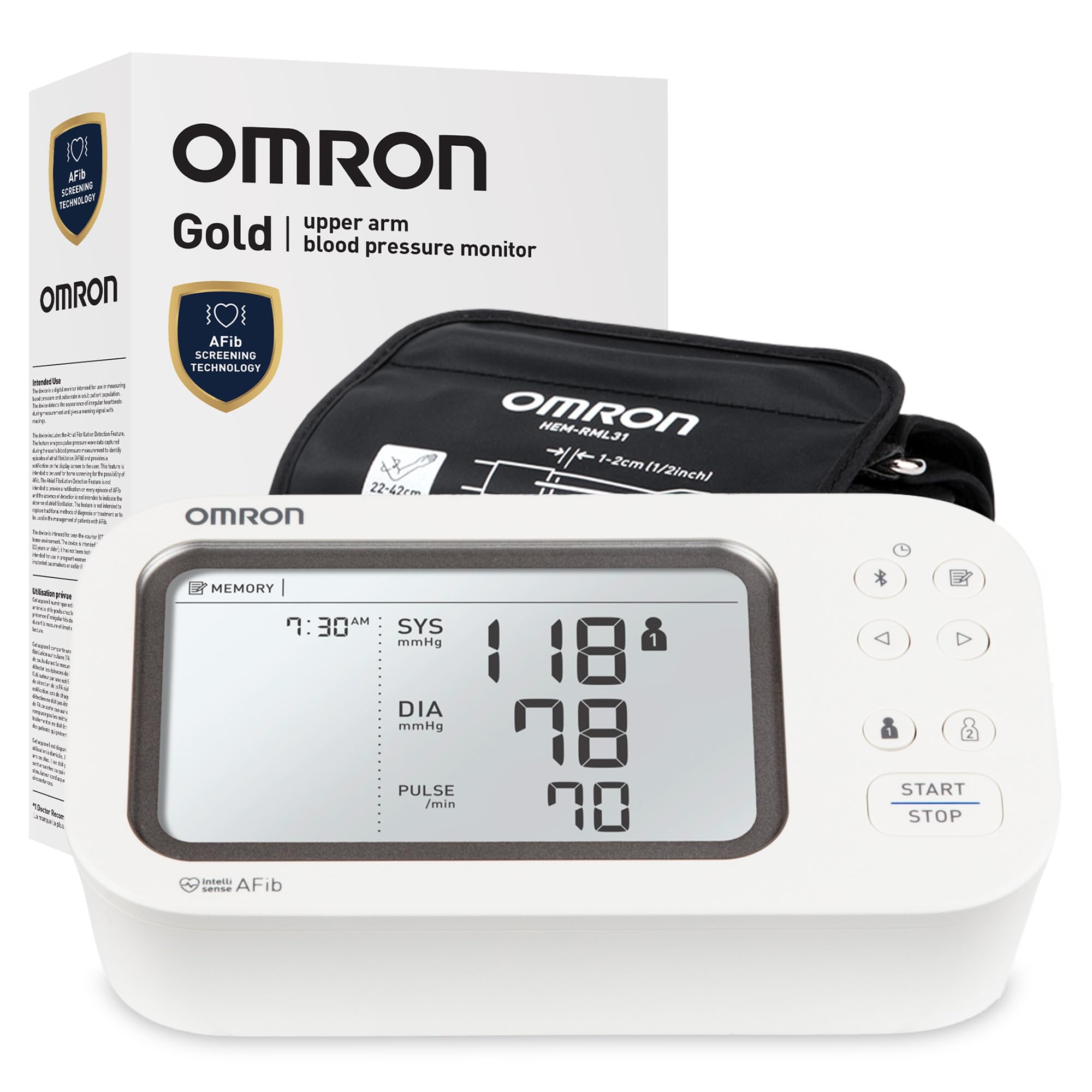
The OMRON Gold BP5360 is the only monitor in this lineup that actively screens for Atrial Fibrillation during every measurement, flagging irregular heart rhythms that could otherwise go unnoticed until a serious event occurs. It also includes a High Morning Average Indicator, which alerts you when your readings spike in the early hours—a period linked to elevated cardiovascular risk. The wide-range D-ring cuff fits arms 9 to 17 inches, and the free OMRON connect app stores unlimited readings with trend charts you can share with your doctor.
Setup is genuinely out-of-box: four AA batteries are included, the display is crisp, and the Bluetooth pairing process takes about 90 seconds. Dual-user mode with separate memory banks means two people can track their numbers independently without mixing data. The unit’s clinical validation as the #1 doctor-recommended brand carries real weight—this is the same engineering used in many physician offices.
One important caveat: users with diagnosed atrial fibrillation may find the device refuses to give a reading, as the AFib detection algorithm flags the irregular rhythm and pauses measurement. This is a safety feature, not a flaw, but it means the BP5360 is best suited for users screening for AFib rather than those already managing it. Also, sharing PDF reports requires a subscription after the initial free period.
Why it’s great
- AFib detection and morning spike alert provide clinical-grade screening at home
- Bluetooth sync with free app stores unlimited readings and generates trend reports
- Dual-user mode with separate memory banks for two individuals
Good to know
- May not display a reading for users with confirmed atrial fibrillation
- PDF sharing requires a subscription after the initial free period
2. SDUNW U80B Automatic Upper Arm Blood Pressure Monitor
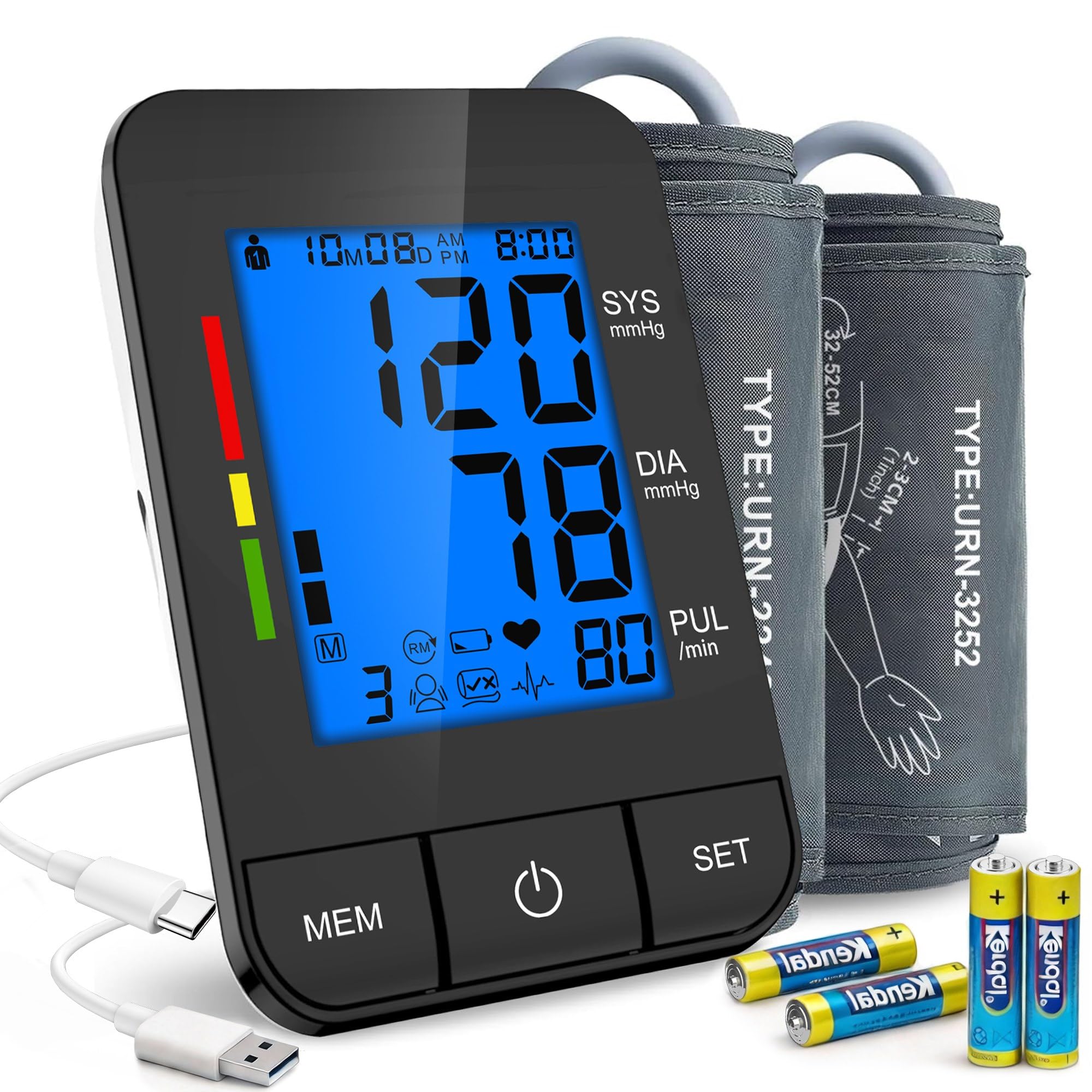
The SDUNW U80B solves the single biggest accuracy problem in home blood pressure monitoring: it ships with two cuffs. One covers standard arms (9 to 17 inches), and the second extends to 21 inches for bariatric or heavily muscled upper arms. This dual-cuff approach means no user has to compromise with a cuff that is too snug or too loose—both conditions that inflate readings by 5 to 10 mmHg. The monitor also uses a 2.95mm thick air tube, 80 percent thicker than the industry average, to prevent mid-measurement air leaks that cause errant results.
Smart alerts cover five common failure modes: incorrect cuff wear, movement during measurement, irregular heartbeat detection, low battery, and a reminder to retest. The color-coded WHO scale on the display gives an immediate visual of where your reading falls. Memory storage holds 90 readings per user across two users, with time stamps for each entry.
Powered by four AAA batteries (good for about 499 readings) or a Type-C cable, the U80B can travel or live on a nightstand. The quiet inflation motor completes a reading in roughly 30 seconds. A few users have noted that the initial setup involves navigating multiple prompts, but once configured, the one-touch operation is straightforward even for older family members.
Why it’s great
- Includes both standard and extra-large cuffs for accurate readings on any arm size
- Thick-wall air tube prevents pressure leaks that ruin measurement accuracy
- Five automatic smart alerts catch common user errors before they affect results
Good to know
- Initial date and time setup requires navigating several prompts
- AC adapter not included; relies on batteries or Type-C cable
3. iHealth Track Smart Upper Arm Blood Pressure Monitor (550BT)
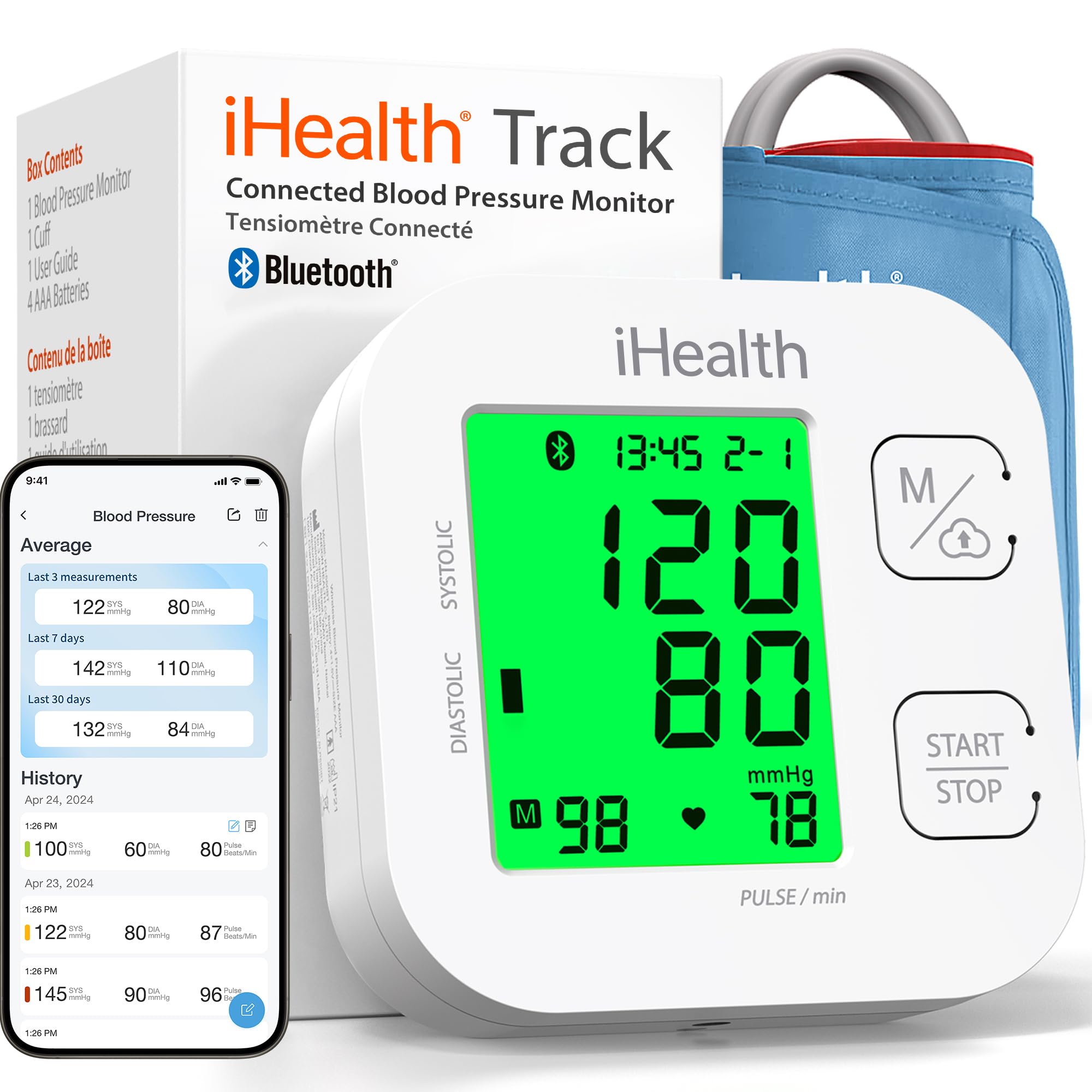
The iHealth Track 550BT brings smartphone convenience to home monitoring without sacrificing clinical accuracy. It connects via Bluetooth to the free iHealth app (iOS 12.0 / Android 9.0 or later, requires Bluetooth 4.0), where you can store unlimited readings, view trend graphs, and export reports for your doctor. The device itself stores 99 readings on board, so you are never dependent on the phone. A wide-range cuff fits arms 8.7 to 16.5 inches, covering most standard and large adult arms in one piece.
The large multi-color backlit display uses green, yellow, and red indicators based on the WHO blood pressure classification, giving you an instant visual without having to interpret the numbers. The device automatically detects irregular heart rhythms and flashes a warning symbol if present. Setup is simple: install the four included AAA batteries, press the power button, and the monitor is ready for its first reading.
A recurring note in user feedback: the iHealth app contains ads, and some users find the pop-ups intrusive enough that they prefer to skip the app entirely and log readings manually. The Bluetooth feature works well for trend tracking but is not required for operation. Long-term reliability reviews are mixed—some units lasted over three years, while others stopped communicating with the phone after a shorter period.
Why it’s great
- Bluetooth connectivity enables easy trend charting and data sharing with doctors
- Large multi-color backlit display makes WHO classification instantly visible
- Irregular heartbeat detection alerts you to potential rhythm disturbances
Good to know
- Free app includes ads that some users find disruptive
- Bluetooth reliability can vary over time; some units lose phone connection
4. Microlife BPM2 Automatic Digital Upper Arm Blood Pressure Monitor
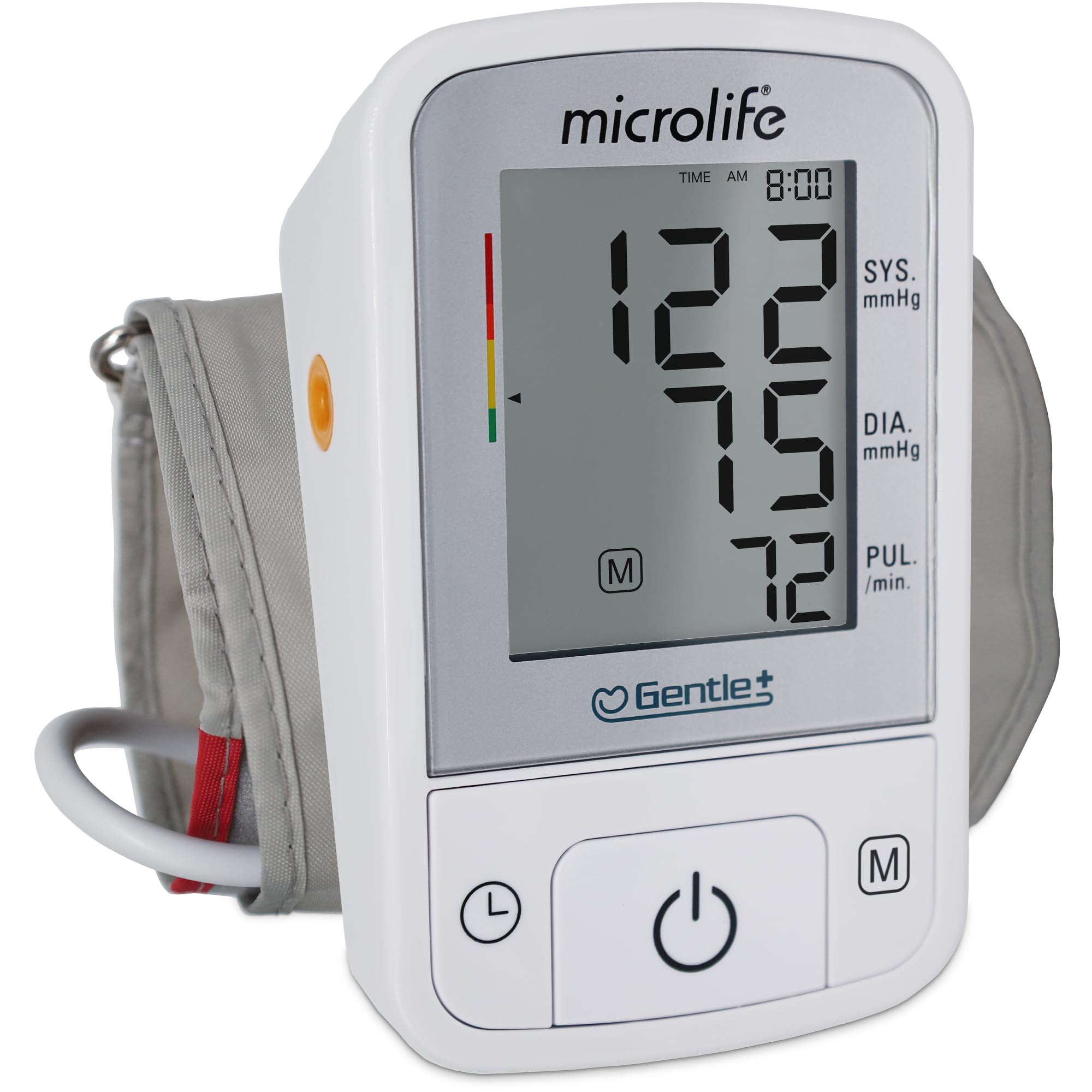
The Microlife BPM2 holds the highest accuracy rating awarded by the British and Irish Hypertension Society (BIHS Class AA), meaning its readings match a mercury sphygmomanometer within 5 mmHg more than 85 percent of the time. For anyone who needs to trust their home numbers enough to make medication decisions, this validation is the gold standard. The monitor uses Gentle+ inflation technology, which reduces cuff pressure before taking the measurement—less squeezing, faster results, and less discomfort for sensitive arms.
The wide-range contoured cuff fits medium to large arms (8.7 to 16.5 inches) and is easier to wrap compared to flat cuffs because the pre-formed curve matches the natural shape of the upper arm. Memory stores 60 results and displays the average of all stored readings, which helps smooth out daily fluctuations. A hypertension risk indicator and irregular heartbeat detector are built into every measurement cycle.
This is a no-frills medical device—no Bluetooth, no app, no color screen. The display is simple monochrome with large digits. The buttons are oversized and labeled clearly, making it accessible for users with limited dexterity or vision. Multiple long-term users report the unit lasting over a decade with normal battery changes, which speaks to the build quality.
Why it’s great
- BIHS Class AA accuracy rating is the highest independent validation available
- Gentle+ inflation technology is more comfortable than standard cuff inflation
- Contoured wide-range cuff is easier to position correctly on the arm
Good to know
- No Bluetooth or app connectivity for trend tracking
- Cuff maxes out at 16.5 inches; users with larger arms need the XL cuff sold separately
5. Acenis AOJ-30F Blood Pressure Monitor
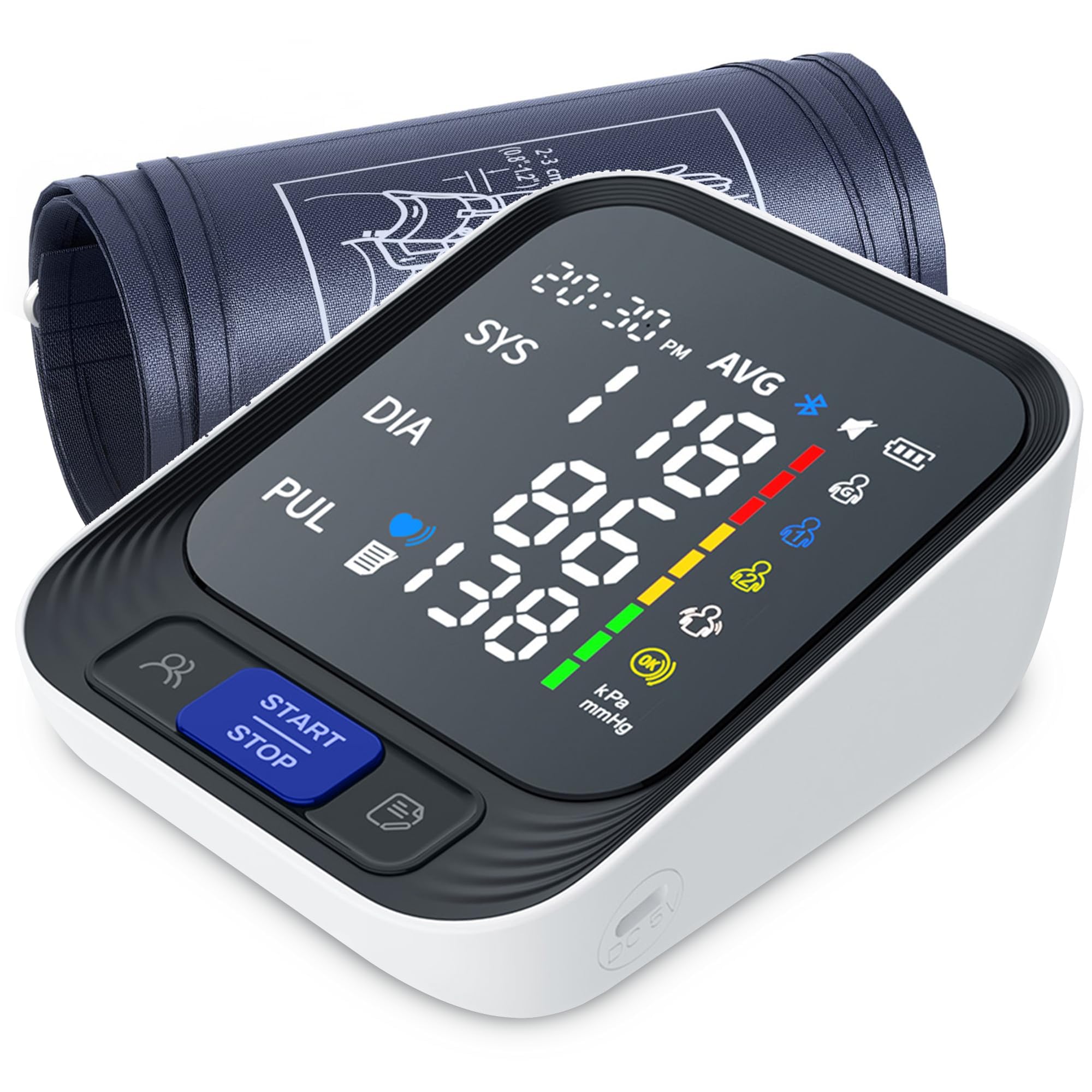
The Acenis AOJ-30F prioritizes readability and comfort above all else. Its large color screen displays systolic, diastolic, and pulse in oversized digits that are legible from across the room—ideal for seniors or anyone with reduced eyesight. The adjustable XL cuff accommodates a wider range of arm sizes without the pinching or uneven pressure that can skew results. One-touch operation means a single press starts a reading that completes in about 40 seconds.
The device stores readings for up to two users with separate memory banks, though some users have noted that the date and time setup process is slightly less intuitive than competing models. The interface uses simple icons and a straightforward menu that most users can master after one or two sessions. The unit is powered by four AAA batteries (included) and also comes with a Type-C charging cable for dual power options.
Accuracy comparisons against prior monitors and manual readings have been consistently positive in user reports. The device does not include Bluetooth or app connectivity, which keeps the cost lower and the operation simpler—a deliberate trade-off that works well for users who prefer to write down their numbers or who do not want another app on their phone.
Why it’s great
- Large color screen with oversized digits is extremely easy to read
- Includes an XL cuff that fits a wide range of arm circumferences
- One-touch operation completes a reading in roughly 40 seconds
Good to know
- Date and time setup is more involved than simpler competitors
- No Bluetooth or smartphone app connectivity
6. COCACIS U80BH Blood Pressure Monitor
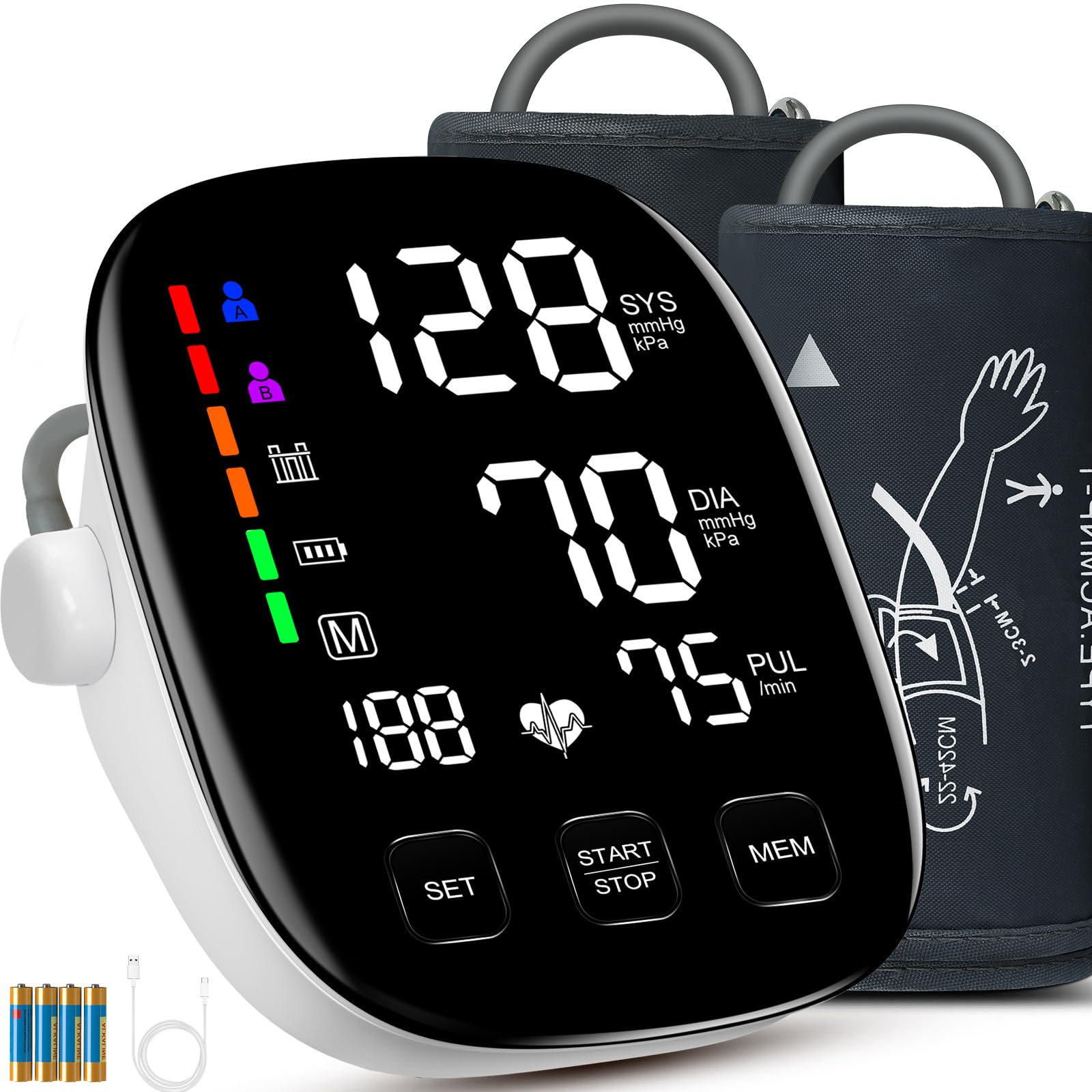
The COCACIS U80BH offers the same dual-cuff strategy as the SDUNW model at a slightly lower entry point, including both a standard cuff (9 to 17 inches) and an extra-large cuff (13 to 21 inches) in the box. This is the most economical way to get accurate readings for multiple family members with different arm sizes without buying separate accessories. The monitor also features a 6-inch HD backlit color screen with large fonts and oversized buttons, making it accessible for users who struggle with tiny interfaces.
Memory capacity is generous: 199 readings per user across two user modes, giving you months of trend data without needing to erase old entries. The three-color WHO indicator (green for normal, orange for mild hypotension, red for high) is displayed prominently in the upper right corner of the screen. The device runs on four AAA batteries or a Type-C cable, and the included nylon carry bag makes travel storage simple.
Accuracy has been validated in user comparisons against manual readings, but a small number of early reviews reported error messages that were later resolved by correcting cuff placement. The updated air socket valve design provides a tighter connection during inflation, which reduces the chance of the intermittent errors seen in earlier firmware versions. Battery life is adequate but not exceptional—expect to replace them every few months with regular daily use.
Why it’s great
- Includes both standard and extra-large cuffs for accurate multi-user reading
- 6-inch backlit color screen with oversized buttons is senior-friendly
- 199-reading memory per user offers extensive trend tracking without deletion
Good to know
- Some early units required firmware updates to eliminate error messages
- Battery life is moderate; expect replacement every few months with daily use
7. Medline MDS4001 Digital Blood Pressure Monitor

Medline is a name synonymous with medical-grade equipment in hospitals and clinics, and the MDS4001 brings that reliability to a home-friendly form factor at an accessible price. It uses automatic customized inflation—the device determines the right pressure level for your arm rather than applying a one-size-fits-all blast—and includes error detection that flags movement or improper cuff placement before displaying a result. The adult-sized cuff fits arms 8.5 to 12 inches in circumference, which covers most average adult frames.
The digital LCD display shows systolic, diastolic, and pulse in large characters, and a single push-button control simplifies operation to the point where no manual is really needed. Memory stores up to 90 readings, allowing you to track changes over several months. The unit comes with four AA batteries already in the box, so it is ready to use immediately. Build quality is consistent with Medline’s reputation—multiple users report the device lasting years without accuracy drift.
There are two important limitations to note. The 12-inch maximum cuff circumference excludes users with larger or muscular arms; if your arm measures over 12 inches, you will need to look at a model with a larger cuff. The display is monochrome and unlit, which can be hard to read in dim rooms. This is a stripped-down, dependable tool—no Bluetooth, no color coding, no frills—but for the user it fits, it delivers readings you can trust.
Why it’s great
- Medline is a trusted medical brand with consistent build quality and long device life
- Customized inflation and error detection reduce faulty readings from poor technique
- Single-button operation is as simple as home monitoring gets
Good to know
- Cuff maxes out at 12 inches; not suitable for larger or muscular upper arms
- Unlit monochrome display can be hard to read in low light conditions
FAQ
How do I know which cuff size I need?
Can I use a blood pressure machine if I have atrial fibrillation?
Why do my home readings differ from the doctor’s office readings?
Do I need Bluetooth connectivity on my blood pressure monitor?
Final Thoughts: The Verdict
For most users, the best blood pressure machine winner is the OMRON Gold BP5360 because it combines clinical-grade AFib detection, unlimited app-based trend tracking, and the backing of the #1 doctor-recommended brand in a package that works reliably out of the box. If you need a monitor that accommodates a large arm circumference without compromising on accuracy, grab the SDUNW U80B with its dual-cuff kit and thick-wall air tube design. And for budget-conscious buyers who still want a trusted brand with hospital-grade reliability, nothing beats the Medline MDS4001—as long as your arm fits within its 12-inch cuff limit.

Mo Maruf
I created WellFizz to bridge the gap between vague wellness advice and actionable solutions. My mission is simple: to decode the research and give you practical tools you can actually use.
Beyond the data, I am a passionate traveler. I believe that stepping away from the screen to explore new environments is essential for mental clarity and physical vitality.