Our readers keep the lights on and my smoothie glass nicely filled. As an Amazon Associate, I earn from qualifying purchases.
As a nurse, taking a blood pressure reading is one of the most routine tasks of your shift, but the reliability of that single number can dictate a patient’s entire care plan for the next hour. A cheap, inconsistent cuff forces you to chase false highs and miss dangerous trends, wasting precious time and eroding trust in your vitals. Finding a cuff that delivers clinic-grade accuracy on every arm, shift after shift, is not a luxury—it is a non-negotiable tool for professional nursing.
I’m Mohammad Maruf — the founder and writer behind WellFizz. I have spent over a decade scrutinizing medical device specifications, evaluating membrane durability, valve precision, and digital sensor consistency across hundreds of models to separate the clinical-grade tools from the pharmacy shelf impulse buys.
Below, I have broken down five of the most reliable options available today to help you grab a cuff that actually keeps up with your workflow. This is your complete guide to finding the best blood pressure cuff for nurses.
How To Choose The Best Blood Pressure Cuff For Nurses
Selecting a blood pressure cuff for the floor is different from buying one for home use. Nurses need speed, durability, and unambiguous accuracy. Here are the three criteria that matter most on a busy ward.
Manual vs. Automatic: Which Workflow Wins?
Digital automatic cuffs are great for patients who can sit still and for trend tracking over weeks. But on a fast-paced unit, a manual aneroid sphygmomanometer gives you a reading in seconds without waiting for a pump to cycle and deflate. The aneroid gauge also never runs out of batteries. Many seasoned nurses keep a manual pocket cuff in their scrub pocket because it simply works every time, no charging required.
Cuff Fit and the “Miscuffing” Problem
A cuff that is too small or too large directly skews the reading—often by 10 mmHg or more. Look for cuffs with a “Size Guide” marking system or an artery alignment marker. The cuff range printed on the label (e.g., 8.7”–16.5”) must match your patient population. A wide-range cuff that fits both a slim adult and a larger arm is ideal for a nurse who moves between different patients all shift.
Valve Quality and Calibration Warranty
The air release valve is the most failure-prone part of any manual sphygmomanometer. A chrome-plated brass valve that is individually leak-tested will hold pressure steadily, giving you a clean drop to read. A long calibration warranty—15 or 20 years—is a reliable sign that the manufacturer stands behind the gauge’s long-term accuracy. Cheap valves drift after a few months of daily use.
Quick Comparison
On smaller screens, swipe sideways to see the full table.
| Model | Category | Best For | Key Spec | Amazon |
|---|---|---|---|---|
| ADC Prosphyg 768 Aneroid | Manual Aneroid | Daily clinical use & nursing school | 20-year calibration warranty | Amazon |
| Microlife BPM2 Automatic | Digital Automatic | Accurate automatic readings with Gentle+ technology | BIHS rated AA accuracy | Amazon |
| iHealth Track Smart | Bluetooth Digital | Data tracking and smartphone integration | Bluetooth 4.0 with app sync | Amazon |
| Konquest KBP-2704A | Digital Automatic | Value priced home monitoring backup | WHO blood pressure indicator | Amazon |
| Greater Goods Upper Arm | Digital Automatic | Wirecutter-recommended home accuracy | Two-user 120 reading memory | Amazon |
In‑Depth Reviews
1. ADC Prosphyg 768 Pocket Aneroid with Adcuff

This is the gold standard for nurses who want a pocket-sized, zero-electricity device that delivers the same accuracy as a wall-mounted unit. The 300 mmHg manometer is precision-crafted and exceeds ANSI/AAMI/ISO 81060-1 standards, backed by a 20-year calibration warranty that tells you this is built for professional life, not occasional home use. The air release valve is chrome-plated brass and individually leak-tested, so you get a smooth, predictable drop during auscultation.
The adult Adcuff fits arms from 9 inches to 15.7 inches and includes ADC’s Size Guide marking system, which prevents the miscuffing that causes falsely elevated readings. This is huge on a busy floor where you rotate between patients with very different arm circumferences. The nylon cuff material holds up to repeated cleaning and daily folding into the dual-pocket carrying case.
Nursing students and floor nurses alike confirm that this cuff outlasts the cheap models issued by schools. The gauge secures to the cuff via a clip, and while a few users note that the clip placement makes the gauge slightly hard to read when the cuff is fully inflated, the trade-off for this level of build quality and calibration security is well worth it. This is the cuff you will still be using five years from now.
Why it’s great
- 20-year calibration warranty confirms long-term gauge accuracy
- Chrome-plated brass valve provides smooth, controlled deflation
- Size Guide marking system eliminates miscuffing errors
- Pocket-sized design fits easily in a scrub pocket
Good to know
- Gauge clip placement can make the dial slightly awkward to read during inflation
- Valve precision is good for the price but not butter-smooth like premium lab models
2. Microlife BPM2 Automatic Digital Upper Arm Monitor
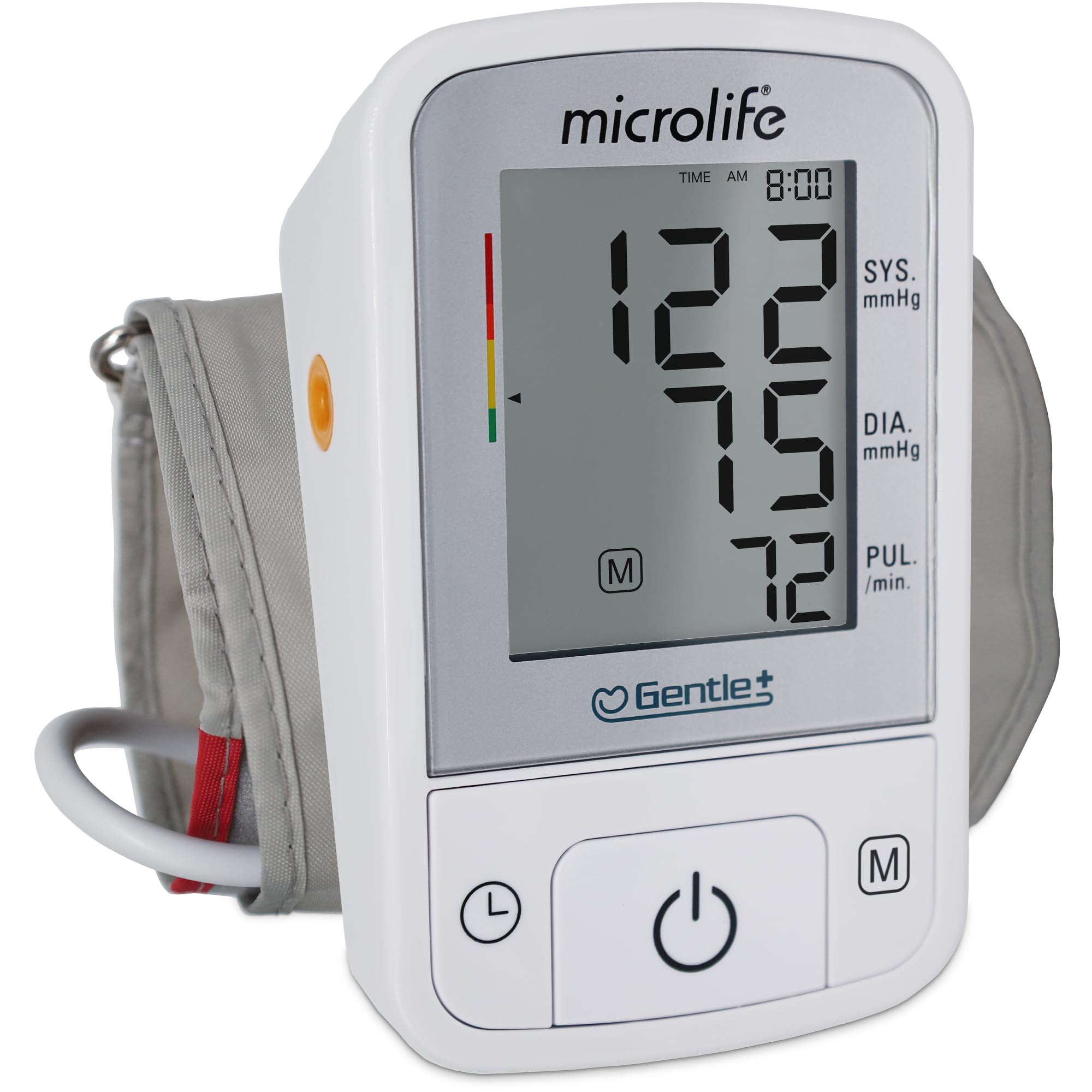
When you need a digital automatic that you can trust for patient education or quick screening, the Microlife BPM2 stands above the competition. It earned the highest accuracy rating (AA) from the British Hypertension Society, and multiple users report that its readings consistently match their doctor’s manual sphygmomanometer within a few points. The Gentle+ inflation technology uses less pressure in less time—a real comfort gain for anxious patients or those with sensitive arms.
The wide-range contoured cuff fits arms from 8.7 to 16.5 inches and is easier to position correctly than flat cuff designs. The large one-touch buttons and oversized display make operation and reading effortless, even in dimly lit exam rooms. It stores the last 60 readings and displays an average, which is useful for tracking changes between visits.
Several long-term users report that their previous Microlife unit lasted over 10 years, which is an exceptional lifespan for a digital monitor. The only downside is the lack of Bluetooth connectivity—if you need app-based tracking, you will have to log manually. But for pure, verified, clinical accuracy in an automatic package, this is the unit to beat.
Why it’s great
- BIHS AA accuracy rating confirms clinical-grade reliability
- Gentle+ technology reduces inflation discomfort for patients
- Durable build with reports of 10+ year lifespans
- Contoured cuff simplifies correct positioning
Good to know
- No Bluetooth or smartphone integration for data tracking
- AC adapter sold separately; unit runs on four AA batteries
3. iHealth Track Smart Upper Arm Monitor
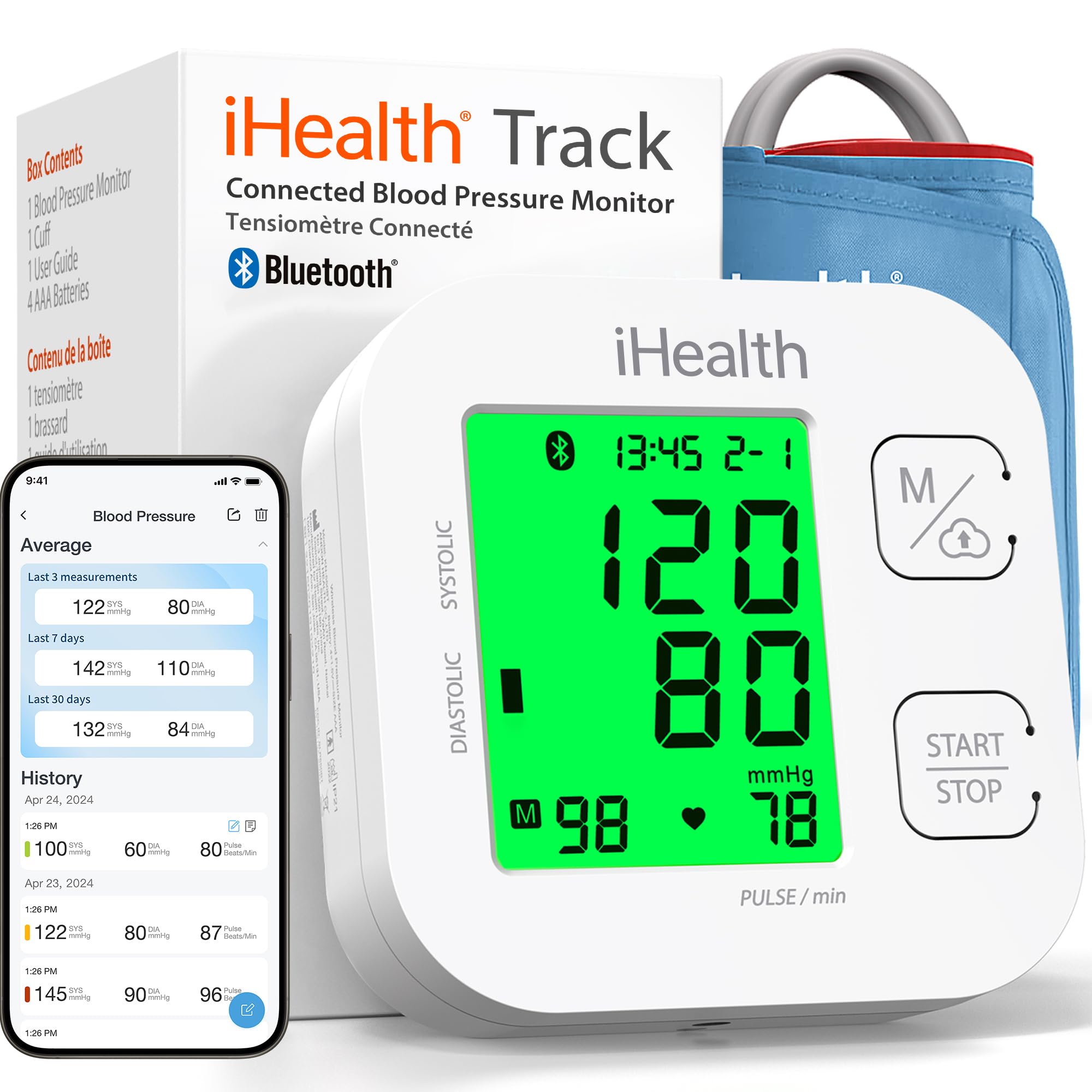
The iHealth Track is the go-to choice for nurses who want to wirelessly sync patient readings or track their own BP trends over time. It connects via Bluetooth to both iOS and Android devices, and it works seamlessly with the Apple Health app, which many professionals already use. The large multi-color backlit display uses green, yellow, and red coding based on established guidelines, so you can interpret the reading at a glance without having to mentally calculate ranges.
The wide-range cuff fits arms from 8.7 to 16.5 inches, and the unit automatically detects irregular heart rhythms—a useful screening indicator. The memory stores up to 99 readings locally, plus unlimited on the paired smartphone. Setup is genuinely two-button easy, and the unit ships with four AAA batteries, so you can start using it immediately.
A few users have noted that the official iHealth mobile app includes intrusive ads, which can be annoying when trying to review data quickly. However, the hardware itself is clinically accurate and reliable. For nurses who prefer manual logging over dealing with app ads, the device works perfectly as a standalone monitor. The one-year warranty and California-based customer service add peace of mind.
Why it’s great
- Bluetooth syncs with Apple Health and iHealth app for unlimited tracking
- Color-coded backlit display for instant reading interpretation
- Detects irregular heart rhythm automatically
- Two-button operation makes setup dead simple
Good to know
- Official smartphone app contains intrusive advertisements
- Relies on Bluetooth 4.0—range can be limited if phone is not nearby
4. Konquest KBP-2704A Automatic Upper Arm Monitor

For an entry-level digital monitor that still delivers consistent readings, the Konquest KBP-2704A punches well above its class. The large backlit LCD shows systolic, diastolic, pulse, date, and time all on one screen, with a built-in World Health Organization indicator that color-codes your reading. It stores data for up to four users, which is useful for a household or for tracking multiple patients in a low-volume clinic setting.
The adjustable cuff fits arms from 8.5 to 16.5 inches, and multiple users with small upper arms report that it fits without pinching or slipping. The irregular heartbeat detector adds an extra layer of screening. One thorough review noted that after four years of daily use, the pump began to weaken—but that is an impressive lifespan for a monitor at this level. The unit uses four AA batteries or an optional 6V adapter.
The main trade-off is that the display can feel slightly cluttered with numbers, and the inflation cycle is marginally slower than more expensive units. But if you need a no-nonsense automatic monitor for a home backup or a school bag, this model delivers excellent reliability at a friendly price point.
Why it’s great
- WHO blood pressure indicator provides instant visual context
- 4-user memory bank is generous for multi-person households
- Adjustable cuff fits a very wide arm range, including smaller arms
- Backlit display is easy to read in low light
Good to know
- Pump may show signs of wear after several years of daily use
- No Bluetooth connectivity for data export
5. Greater Goods Upper Arm Blood Pressure Monitor
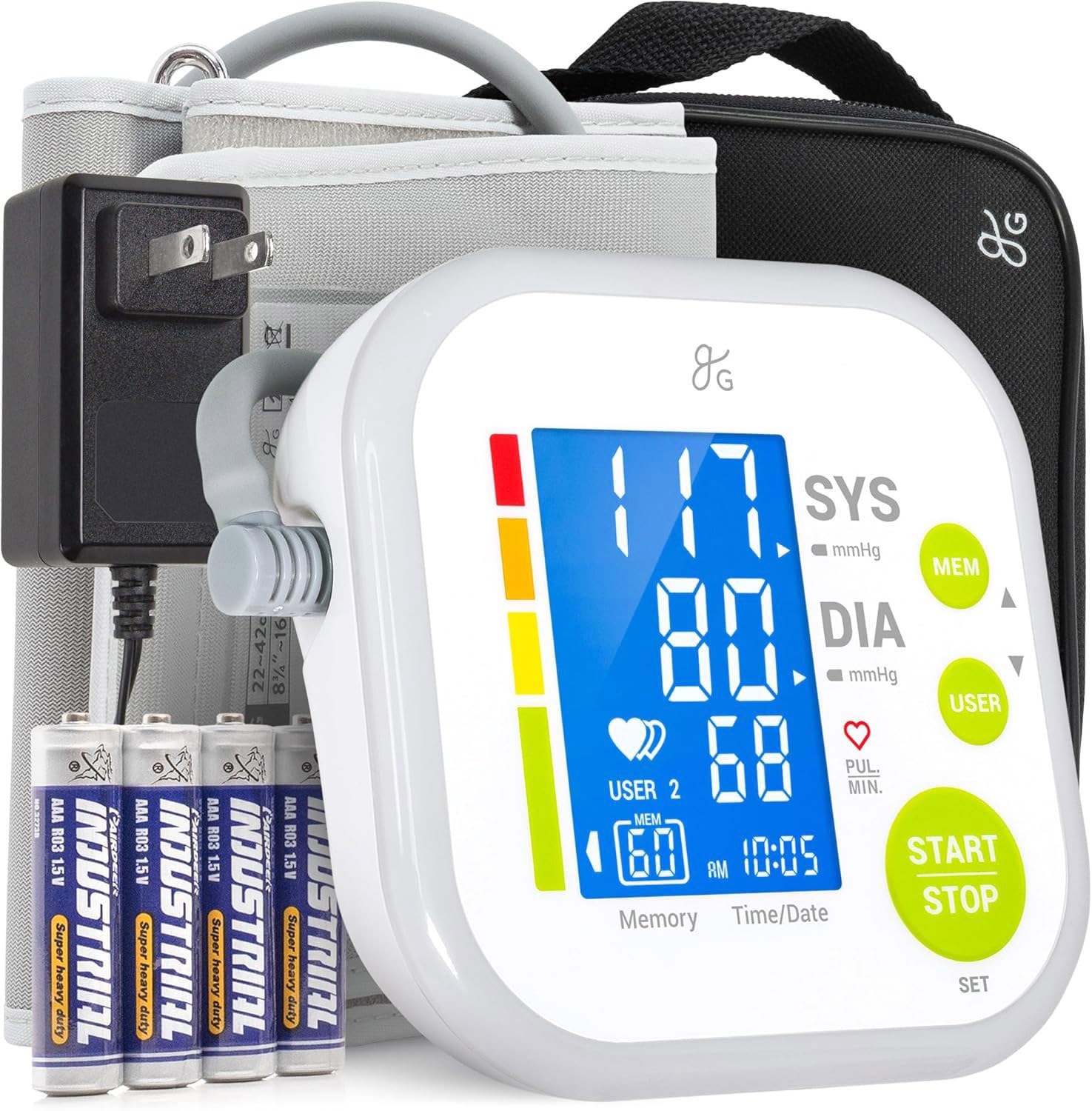
Greater Goods has earned its reputation as a five-time Wirecutter selection, and this monitor demonstrates why. The one-button operation is genuinely intuitive—select User 1 or User 2, press start, and the cuff inflates and deflates automatically. The bright backlit display with extra-large digits makes the reading impossible to misread, and the color-coded range indicator shows exactly where the result falls within standard guidelines.
The wide-range cuff fits arms from 8.75 to 16.5 inches and includes a printed artery alignment marker to guide placement. For nurses who need a secondary monitor at home or for clinical rotations that do not require a manual aneroid, this is the most user-friendly automatic on the list. It stores 60 readings per user (120 total), and the included travel case keeps everything organized. The company is based in St. Louis and will ship a different cuff size free of charge if the included one does not fit properly.
A few users have noted that the cuff runs large for smaller arms, requiring careful velcro tightening each time. Also, the memory only scrolls upward, which can be slightly inconvenient when reviewing past readings. But overall, the Greater Goods monitor is the most complete consumer-ready package if you prefer a battery-powered automatic for quick, scannable results.
Why it’s great
- Wirecutter recommended five times for accuracy and ease of use
- Artery alignment marker helps eliminate placement errors
- Free cuff size exchange from U.S.-based support team
- Includes travel case, wall adapter, and batteries for immediate use
Good to know
- Cuff is noticeably large for smaller arms; may require extra wrapping effort
- Memory scrolls only one direction, making review slightly slower
FAQ
Why do many nurses prefer an aneroid (manual) cuff over a digital one?
How often should a blood pressure cuff be calibrated?
Final Thoughts: The Verdict
For most nurses, the best blood pressure cuff for nurses winner is the ADC Prosphyg 768 Pocket Aneroid because its 20-year calibration warranty, chrome-plated brass valve, and pocket-sized portability make it the only cuff that truly keeps up with a clinical shift. If you want automatic readings and the best trackable accuracy, grab the Microlife BPM2. And for data tracking through a smartphone, nothing beats the iHealth Track Smart.

Mo Maruf
I created WellFizz to bridge the gap between vague wellness advice and actionable solutions. My mission is simple: to decode the research and give you practical tools you can actually use.
Beyond the data, I am a passionate traveler. I believe that stepping away from the screen to explore new environments is essential for mental clarity and physical vitality.