Our readers keep the lights on and my smoothie glass nicely filled. As an Amazon Associate, I earn from qualifying purchases.
A deep cut in the woods, a kitchen accident, or a fall while on blood thinners — serious bleeding demands a response that standard gauze simply cannot deliver. Unlike simple adhesive bandages, a blood clotting bandage is engineered to actively accelerate your body’s natural hemostatic process, using advanced materials to form a stable seal on contact with blood.
I’m Mohammad Maruf — the founder and writer behind WellFizz. I’ve spent hundreds of hours analyzing the biomechanics of hemorrhage control products, comparing kaolin-infused gauze against chitosan-based dressings and pressure bandages to separate genuine medical-grade performance from marketing claims.
Whether you are a first responder, a hunter, a caregiver for a patient on anticoagulants, or a hiker building an IFAK, choosing the right dressing can mean the difference between a manageable wound and a critical emergency. This review evaluates the five top-performing options available today to help you identify the best blood clotting bandage for your specific needs.
How To Choose The Best Blood Clotting Bandage
Not all bleeding control products work the same way. The right choice depends on the wound type, the environment, and the user’s medical history. Here are the factors that separate a premium dressing from a basic gauze roll.
Hemostatic Agent: Kaolin vs. Chitosan
Kaolin clay, found in Quick Clot style gauzes, activates the intrinsic clotting pathway by concentrating clotting factors at the wound site. It does not generate heat. Chitosan, derived from shellfish shells, carries a positive charge that attracts red blood cells to form a physical plug without chemical reactions. Users with shellfish allergies should exercise caution with chitosan products, though processing typically removes the allergenic proteins.
Bandage Type: Wound-Packing Gauze vs. Pressure Bandage
Hemostatic gauze is designed to be packed directly into a wound cavity — ideal for deep punctures or lacerations where direct pressure alone cannot reach the source of bleeding. Compression trauma bandages like the Israeli bandage combine an integrated pressure bar with a sterile non-adherent pad, making them better suited for large surface wounds or for self-application when a second rescuer is unavailable.
Packaging Integrity and Shelf Life
A sterile dressing that has lost its seal is useless in an emergency. Look for individual vacuum-sealed packaging that protects against water, air, and punctures. Premium bandages offer up to 8 years of sterile shelf life, while budget options may expire in as few as 3 years. Always check the expiration date before adding a product to your kit.
Quick Comparison
On smaller screens, swipe sideways to see the full table.
| Model | Category | Best For | Key Spec | Amazon |
|---|---|---|---|---|
| Persys Medical 6″ Israeli 2 Pack | Trauma Bandage | Self-application and high-pressure wound coverage | 30-40+ lbs pressure bar | Amazon |
| AllaQuix Chitosan Gauze 3 Pack | Hemostatic Pad | Patients on blood thinners and nosebleeds | 2″x2″ Chitosan dressing | Amazon |
| Israeli Bandage 6″ 2 Pack by Cozii | Pressure Bandage | Budget-friendly trauma kit filler | 6″x47″ integrated design | Amazon |
| Resin Quick Clot Combat Gauze | Hemostatic Gauze | Wound packing and deep penetration wounds | 3″x12.5′ Kaolin Z-fold | Amazon |
| HALO Chest Seal 2 Count | Occlusive Dressing | Sucking chest wounds and torso trauma | 6.5″x5.5″ Hydrogel seal | Amazon |
In‑Depth Reviews
1. Persys Medical 6″ Israeli Emergency Bandage 2 Pack

This is the genuine article — the same non-pneumatic trauma bandage used by military and tactical professionals for decades. The integrated pressure bar delivers 30 to 40-plus pounds of direct focal pressure onto the wound without requiring a windlass or tourniquet. The 6-inch non-adherent pad prevents the dressing from sticking to the wound during removal, reducing the risk of re-opening the injury.
The closure bar is a standout design feature: no pins, clips, tape, or hook-and-loop fasteners are needed. The user wraps the bandage, secures the closure bar, and the dressing locks in place even with one hand. The vacuum-sealed packaging is waterproof and lightweight, making it easy to stash in any IFAK pouch, hunting pack, or vehicle kit.
With an industry-leading 8-year sterile shelf life confirmed by the manufacturer, this is a long-term investment in bleeding control. While a small percentage of units may arrive with a compromised outer seal (the inner sterile package remains intact), the overwhelming consensus from verified buyers confirms these are genuine PerSys Medical products built to military specifications.
Why it’s great
- Integrated pressure bar applies direct focal compression
- Non-adherent pad prevents wound re-opening on removal
- 8-year sterile shelf life — set it and forget it
- Genuine PerSys Medical quality with military adoption
Good to know
- Outer packaging can arrive punctured in rare cases
- Premium-tier investment for the confidence it provides
2. AllaQuix High Performance Stop Bleeding Gauze 3 Pack
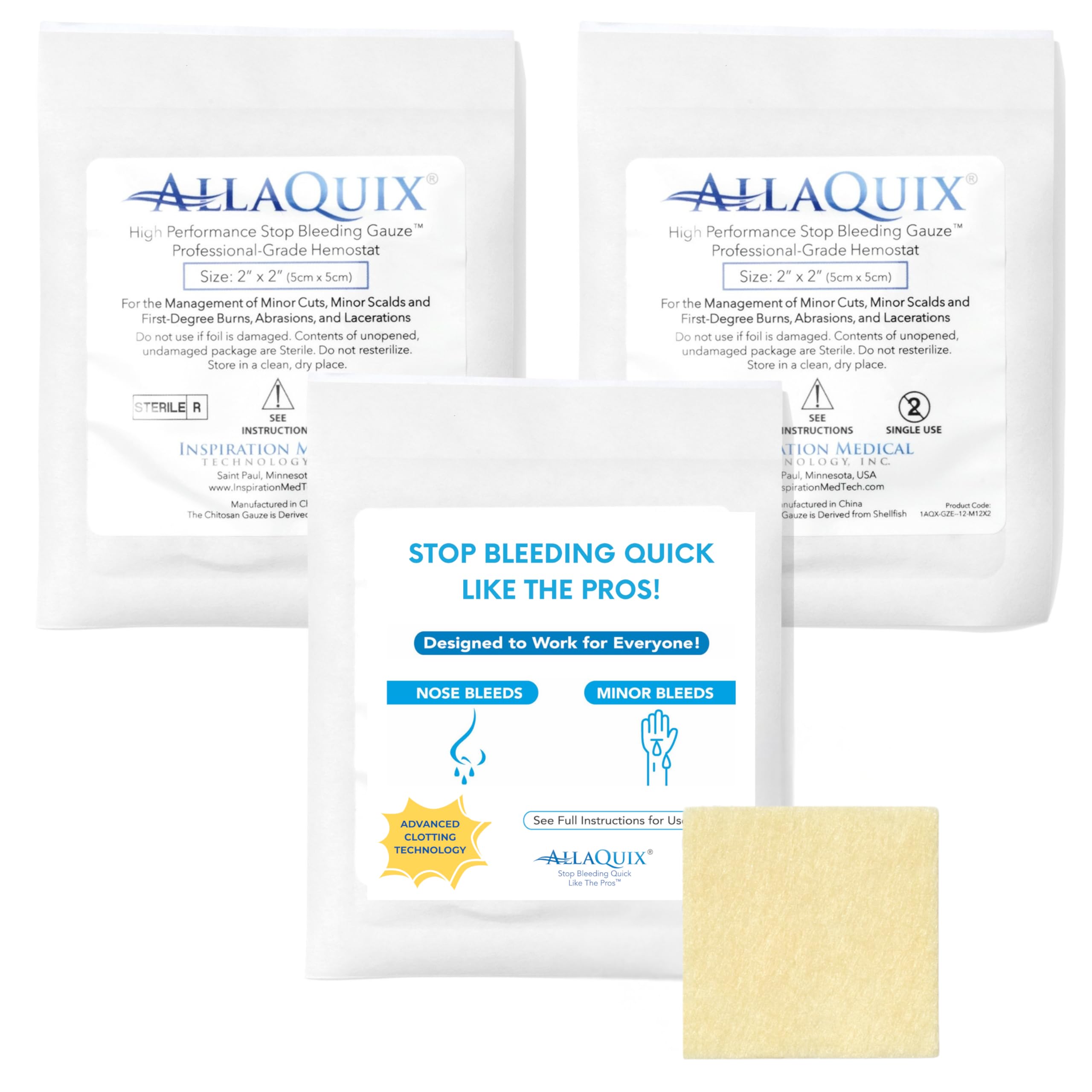
AllaQuix uses military-grade chitosan technology that works independently of the body’s clotting cascade. This makes it uniquely effective for patients taking warfarin, Coumadin, aspirin, or other anticoagulants — medications that can render standard gauze nearly useless. The positively charged chitosan fibers attract negatively charged red blood cells like a magnet, creating a physical seal without generating heat or stinging.
Each pack contains three individually sterile 2×2 inch pads, which are soft and flexible enough to conform to facial contours for nosebleeds or to fit inside a small wound bed. Dermatologists and athletic trainers frequently stock these pads for shave biopsies and turf burns, and the drug-free composition means they are suitable for use on children and elderly patients alike.
The pads are notably smaller than a full combat gauze roll, so they are best suited for light-to-medium bleeding rather than major arterial hemorrhage. Some users report that the 2×2 size feels undersized for larger lacerations, but for everyday carry in a medicine cabinet or sideline kit, the predictable performance and FDA clearance make these a strong choice.
Why it’s great
- Works on patients taking blood-thinning medication
- Drug-free, no heat or stinging on application
- FDA cleared and used by dermatologists and EMTs
- Individually sealed sterile pads for easy distribution
Good to know
- 2×2 inch size is too small for major arterial wounds
- Derived from shellfish — allergy caution warranted
3. Resin Advanced Quick Clot Combat Gauze
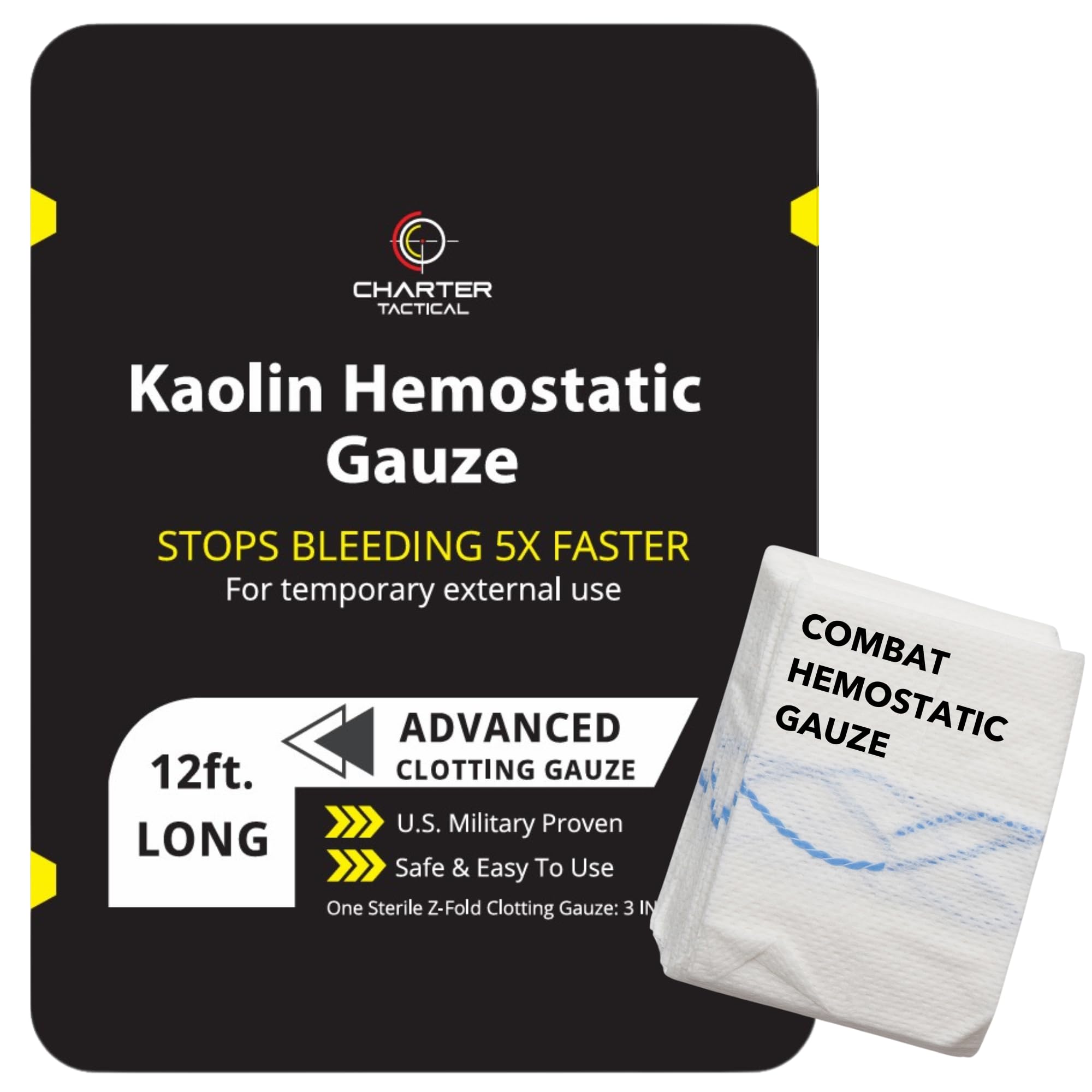
This kaolin-infused hemostatic gauze is designed specifically for wound packing — the technique used to control bleeding from deep puncture wounds and narrow wound tracks where direct pressure cannot reach the source. The Z-fold configuration allows the 12.5-foot length of 3-inch wide gauze to be deployed quickly and packed in layers directly into the wound cavity.
Kaolin works by activating Factor XII in the intrinsic clotting pathway, concentrating the body’s natural clotting factors at the injury site. The gauze is non-allergenic and does not generate the exothermic heat reaction associated with older zeolite-based clotting agents, making it safer for use on sensitive tissue. It is compact enough to fit in any IFAK pouch or EDC kit.
Multiple verified buyers confirm this gauze stops fingertip and moderate lacerations within minutes. The value proposition is strong compared to brands charging two to three times more for identical kaolin material. One caveat: the manufacturer imprint indicates a shelf life of approximately 3 years, which is shorter than premium pressure bandages. Check the expiration before stowing it in a long-term survival bag.
Why it’s great
- Long 12.5 ft Z-fold gauze for deep wound packing
- Non-allergenic kaolin with no heat generation
- Compact tear-open packs fit any IFAK or EDC pouch
- Strong value compared to premium kaolin competitors
Good to know
- 3-year shelf life is shorter than trauma bandages
- Requires training for proper wound-packing technique
4. Israeli Emergency Bandage 6″ 2 Pack by Cozii
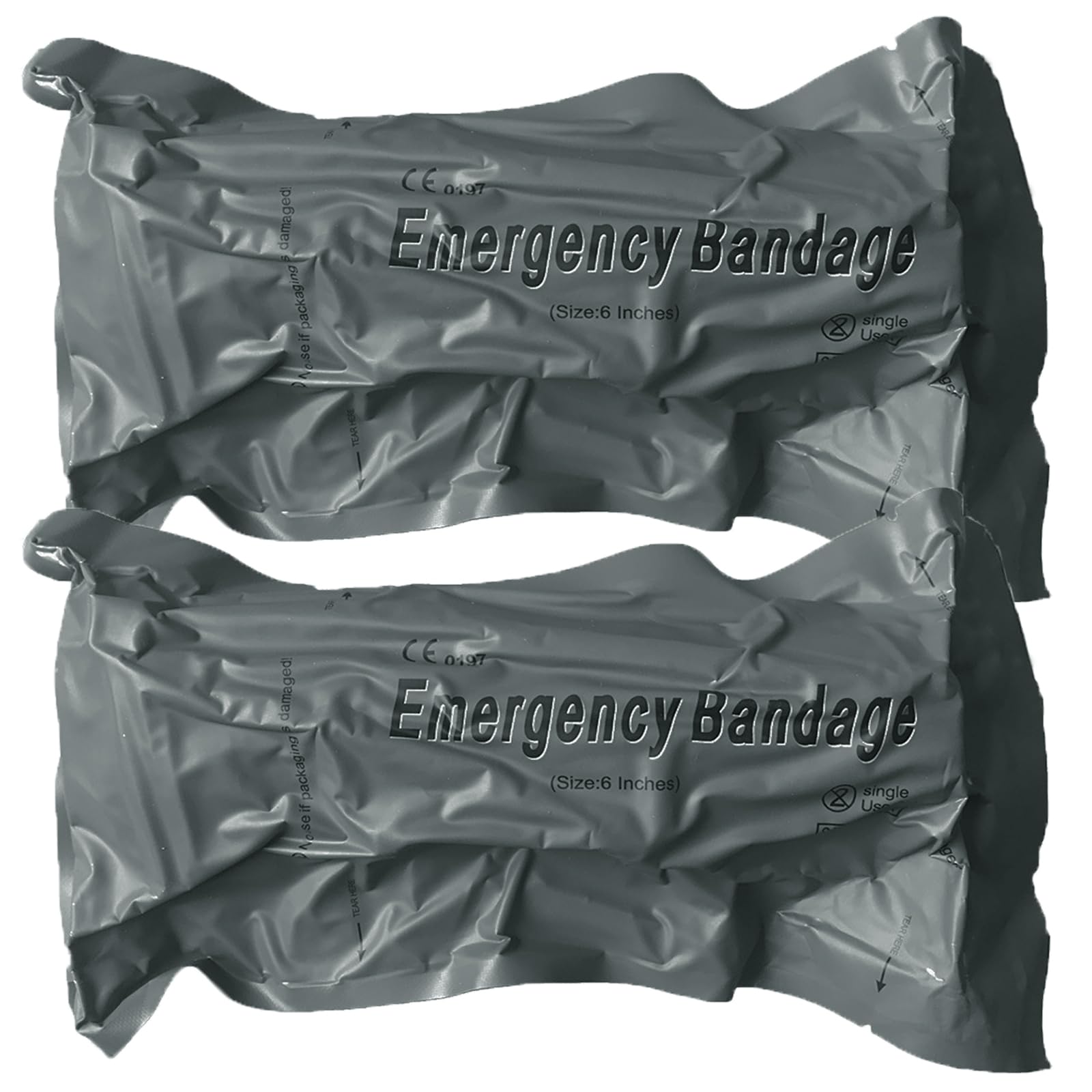
This multi-function compression bandage integrates a primary dressing, pressure applicator, gauze bandage roll, and secondary closure apparatus into a single vacuum-sealed unit. The 6-inch by 47-inch dimensions offer ample coverage for large wounds on limbs or torso, and the design is intended to be simple enough for a person to self-apply with one hand — a critical feature when no rescuer is immediately available.
The non-adherent pad is sterile and designed to apply pressure directly to the wound site without sticking, minimizing tissue damage during dressing changes. Buyers report using these bandages for everything from construction site lacerations to post-cardiac procedure groin bleeding, with one user noting that the Israeli dressing successfully stopped recurring hemorrhaging that the hospital could not control.
While the construction is functionally sound, this is a value-tier option compared to the genuine PerSys Medical Israeli bandage. The pressure bar is less rigid, and the overall build quality feels lighter. It remains an excellent choice for filling multiple trauma kits on a budget, but for a dedicated primary trauma bandage, the premium model is recommended.
Why it’s great
- All-in-one design with integrated pressure applicator
- Vacuum-sealed sterile packaging protects from elements
- Can be self-applied with one hand in emergency
- Budget-friendly option for multi-kit filling
Good to know
- Pressure bar less rigid than premium Israeli models
- Overall build feels lighter than military-grade alternatives
5. Halo Chest Seal High Performance Occlusive Dressing 2 Count

This is not a conventional clotting bandage — it is an occlusive dressing specifically designed for sucking chest wounds and torso trauma where air enters the pleural cavity. Each sterile 6.5 x 5.5 inch seal features a medical-grade hydrogel that adheres aggressively in wet, bloody, sandy, or harsh environments, with an operating temperature range of -30°F to 140°F.
The large pull tab enables effective placement and allows the rescuer to “burp” the seal to release trapped air, preventing tension pneumothorax. The oval shape provides greater surface area coverage around body contours compared to square dressings, and the outer tape edge is designed to remain functional even when handled with gloved or bare hands in freezing conditions.
Combat veterans and ER professionals consistently name Halo as their only trusted brand for chest seals. Multiple verified users report successfully keeping shooting victims alive en route to the hospital using this product. It is not a general-purpose clotting bandage, but for anyone building a comprehensive trauma kit — especially one intended for GSW or penetrating injury scenarios — this is an irreplaceable component.
Why it’s great
- Hydrogel adhesive sticks in wet, bloody, and sandy conditions
- Wide temperature tolerance from -30°F to 140°F
- Oval shape covers larger unpredictable wound patterns
- Trusted by military and ER professionals worldwide
Good to know
- Niche application — not for general bleeding control
- Packaging is large and can be hard to open under stress
FAQ
Can a blood clotting bandage be used on someone taking blood thinners?
What is the difference between a chest seal and a clotting bandage?
How long does a hemostatic gauze remain sterile after opening?
Final Thoughts: The Verdict
For most users, the best blood clotting bandage winner is the Persys Medical 6″ Israeli Emergency Bandage 2 Pack because it combines military-grade pressure bar technology with an 8-year shelf life and proven combat pedigree. If you need a specialized solution for patients on blood thinners, grab the AllaQuix Chitosan Gauze 3 Pack. And for deep wound packing or multi-kit filling at a practical price, nothing beats the Resin Quick Clot Combat Gauze.

Mo Maruf
I created WellFizz to bridge the gap between vague wellness advice and actionable solutions. My mission is simple: to decode the research and give you practical tools you can actually use.
Beyond the data, I am a passionate traveler. I believe that stepping away from the screen to explore new environments is essential for mental clarity and physical vitality.