Our readers keep the lights on and my smoothie glass nicely filled. As an Amazon Associate, I earn from qualifying purchases.
Retaining walls do more than hold back soil — they define the structure and flow of your entire landscape. The right block system eliminates erosion, mounding, and that messy lawn-to-garden transition, turning a functional necessity into a clean, intentional outdoor feature. The challenge is matching the block design to your specific soil load, grade, and aesthetic.
I’m Mohammad Maruf — the founder and writer behind WellFizz. I’ve spent years analyzing landscape material specs, comparing polymer densities, interlock strengths, and frost-heave resistance across dozens of retaining wall systems to help homeowners and contractors make informed buying decisions.
Whether you need a gravity wall for a gentle slope or a segmental block system for a tiered terrace, finding the best blocks for retaining wall projects requires understanding how face geometry, anchor systems, and material composition interact with your specific installation site.
How To Choose The Best Blocks For Retaining Wall
Selecting the right block involves three core factors: material density, anchor system, and face design. Plastic blocks should be UV-stabilized and impact-resistant; concrete-based or poly-resin blocks offer higher weight for shear resistance on taller walls. Anchor spikes must reach past frost line depth in your region, and the interlock should prevent lateral shifting under saturated soil pressure. Face texture matters for both aesthetics and the way root systems interact with the block surface.
Material Type and Structural Rating
Polyethylene (PE) and polypropylene (PP) blocks are lightweight and corrosion-proof, ideal for low walls under 24 inches or decorative edging. For structural retaining walls over 24 inches, look for blocks with a concrete core or heavy-gauge steel-reinforced polymer sections that carry a manufacturer-stated load rating. Always check the wall height limit per product — exceeding it risks bulging or collapse during freeze-thaw cycles.
Interlock Mechanism and Anchor Depth
Snap-lock systems with lateral tabs prevent horizontal sliding, while pin-and-key or stake-through designs resist uplift. The best blocks use anchor spikes at least 7 inches long for everyday garden walls, and 12 inches or more for load-bearing applications. Pre-drilled alignment holes save installation time and ensure consistent spacing across the wall run.
Face Design and Drainage Compatibility
Faux-stone textures with random face patterns look more natural than uniform grid designs. Hollow-core blocks allow drainage gravel fill, reducing hydrostatic pressure — a critical factor in wet climates. For curved walls, choose sections with angled mating ends or flexible connector tabs; straight-edge blocks require corner spacer pieces for turns.
Quick Comparison
On smaller screens, swipe sideways to see the full table.
| Model | Category | Best For | Key Spec | Amazon |
|---|---|---|---|---|
| Beuta Faux Stone Block | Premium Resin | Straight-edge flower beds & walkways | 6.5″H x 48″W per section | Amazon |
| VEVOR Faux Stone Kit | PE Modular | Curved low walls & tree rings | 2.24″H x 46.46″W, 24 bricks | Amazon |
| Vinci Corrugated Metal | Steel Strip | Straight borders & erosion control | 12″H x 20′L, 0.1″ thick | Amazon |
| KBJALQ Plastic Edging | PP Panel | Budget garden dividing | 3.94″H x 9.65″W per panel | Amazon |
| Focefec Faux Stone Panel | PVC Panel | Lightweight side yard edging | 4″H x 9.6″W per panel | Amazon |
In‑Depth Reviews
1. Beuta Faux Stone Landscape Edging
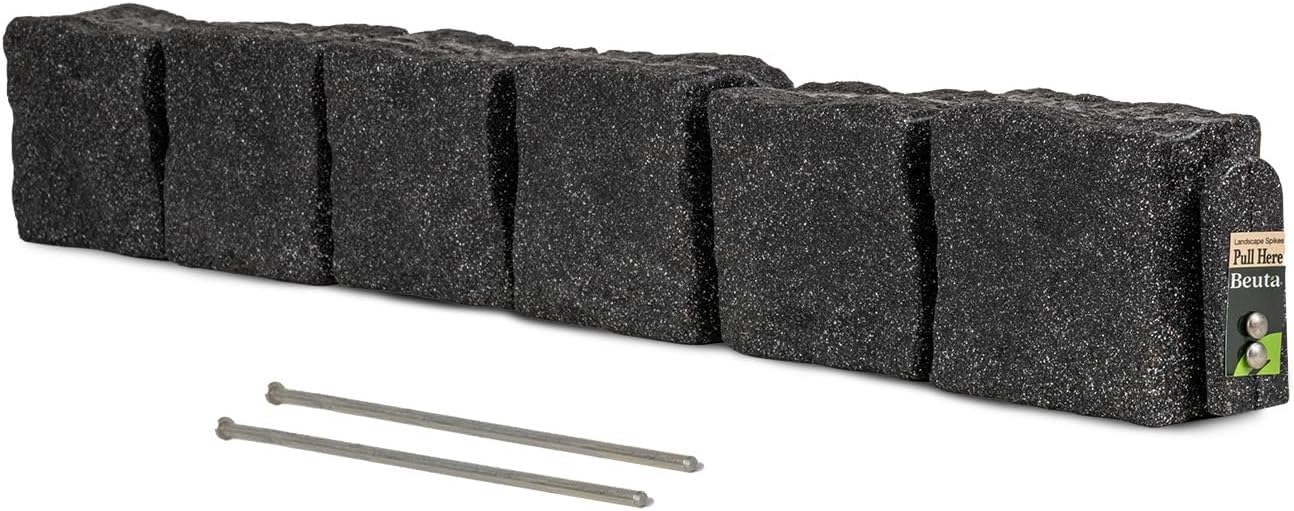
This premium resin block system delivers a stone-like appearance with a 6.5-inch rise — tall enough to create a visible retaining barrier without the weight of cast concrete. The patent-pending connection mechanism uses two included spikes per section, locking each 48-inch panel securely into the soil with no trenching required. Charcoal color and authentic brick texture give it a clean, masonry look that complements both modern and traditional landscapes.
Unlike hollow edging strips, the Beuta blocks feature individual brick divisions on each section, so the finished wall reads as separate stacked stone rather than one continuous plastic piece. The material resists UV fading and corrosion, and the 10.7-pound per section weight provides enough mass to hold back light mulch and topsoil on gentle grades up to 15 degrees.
Owners consistently note the easy straight-line installation and realistic finish. The main trade-off is the lack of curved capability — this system is designed for straight runs, and buyers needing corners must purchase separate starter and finishing blocks or improvise with cable ties for 90-degree turns.
Why it’s great
- True stone texture at 6.5″ height creates visible wall presence
- Snap-lock design with deep anchor spikes secures in sandy or clay soil
- Weather-resistant resin won’t rust, rot, or flake after freeze-thaw cycles
Good to know
- Not designed for curves — straight-line runs only
- Start and finish blocks sold separately from main section pack
- Tree roots or rocky ground may require pre-drilling pilot holes for spikes
2. VEVOR Faux Stone Landscape Edging Kit
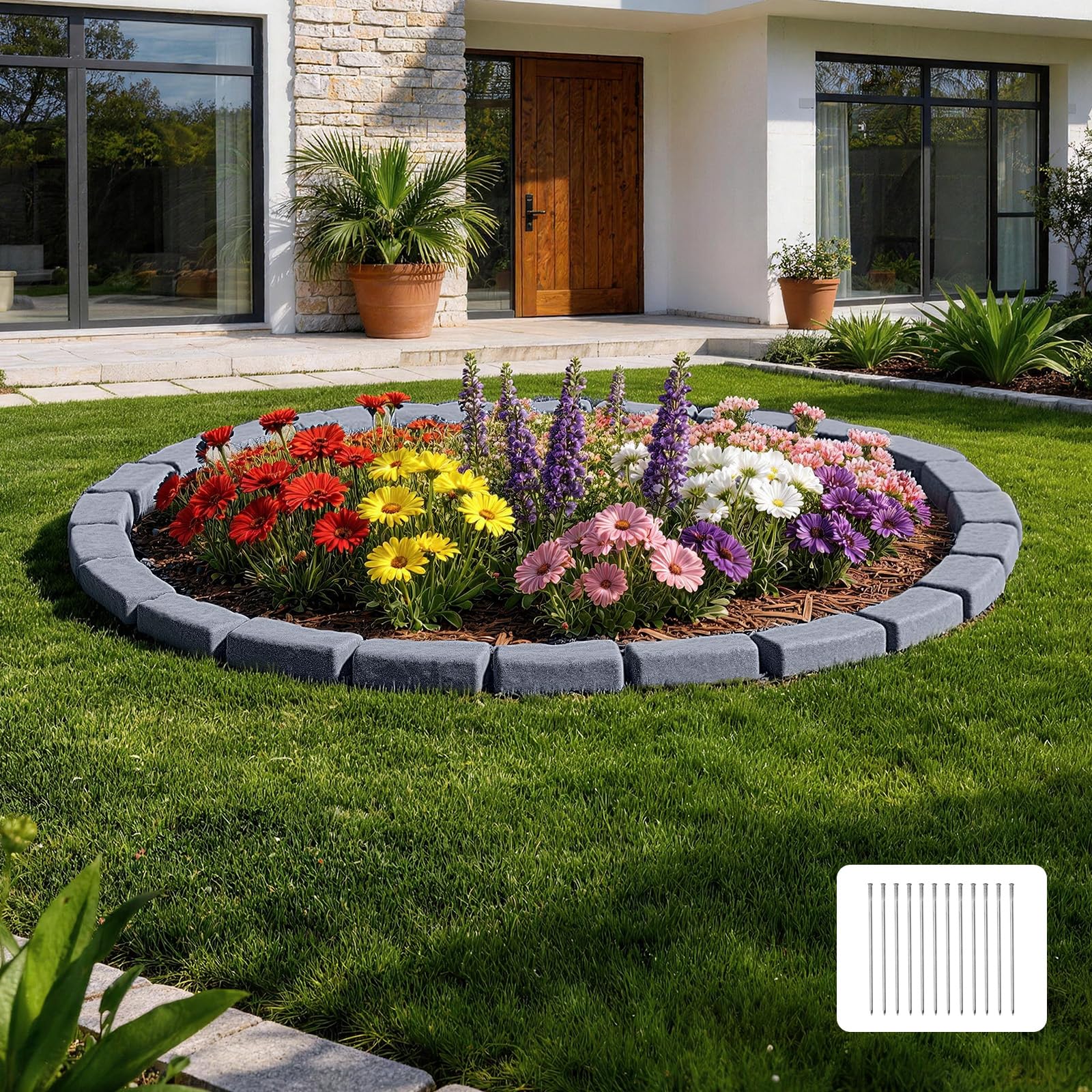
The VEVOR kit packs four sections, each containing six individual bricks, for a total 15.5-foot run at just 2.24 inches of height per layer. That low profile makes it ideal for border applications around tree rings, pool edges, or flower beds where you want a defined barrier without a towering wall. The sandstone gray color and raised faux-stone grain mimic aged natural block convincingly from a few feet away.
Manufactured from rotational-molded polyethylene, these bricks are hollow underneath to reduce weight but the double-wall construction still resists cracking when walked on or struck by a weed whacker. The snap-lock tabs click together easily, and the kit includes 12 ground spikes and an end cap for a finished terminus. The 12.1-pound total weight per section keeps shipping cost low while the material density is sufficient for light-duty grade separation.
Users praise the easy installation and stable hold after one year of exposure with no fading. The limitation is the lack of a true curved interlock; while the bricks are slightly flexible, achieving hard-radius turns requires trimming individual pieces. For straight borders and gradual arcs, this system delivers impressive value.
Why it’s great
- Modular 6-brick sections allow partial replacements if damaged
- Rotomolded PE resists impact and UV degradation better than thin PVC
- Included end cap gives the wall a finished professional look
Good to know
- Low 2.24″ height works for edging, not soil retention over 6″ depth
- Cannot make tight 90-degree corners without trimming sections
- Hollow underside means bricks feel lighter than they appear
3. Vinci Corrugated Metal Garden Edging
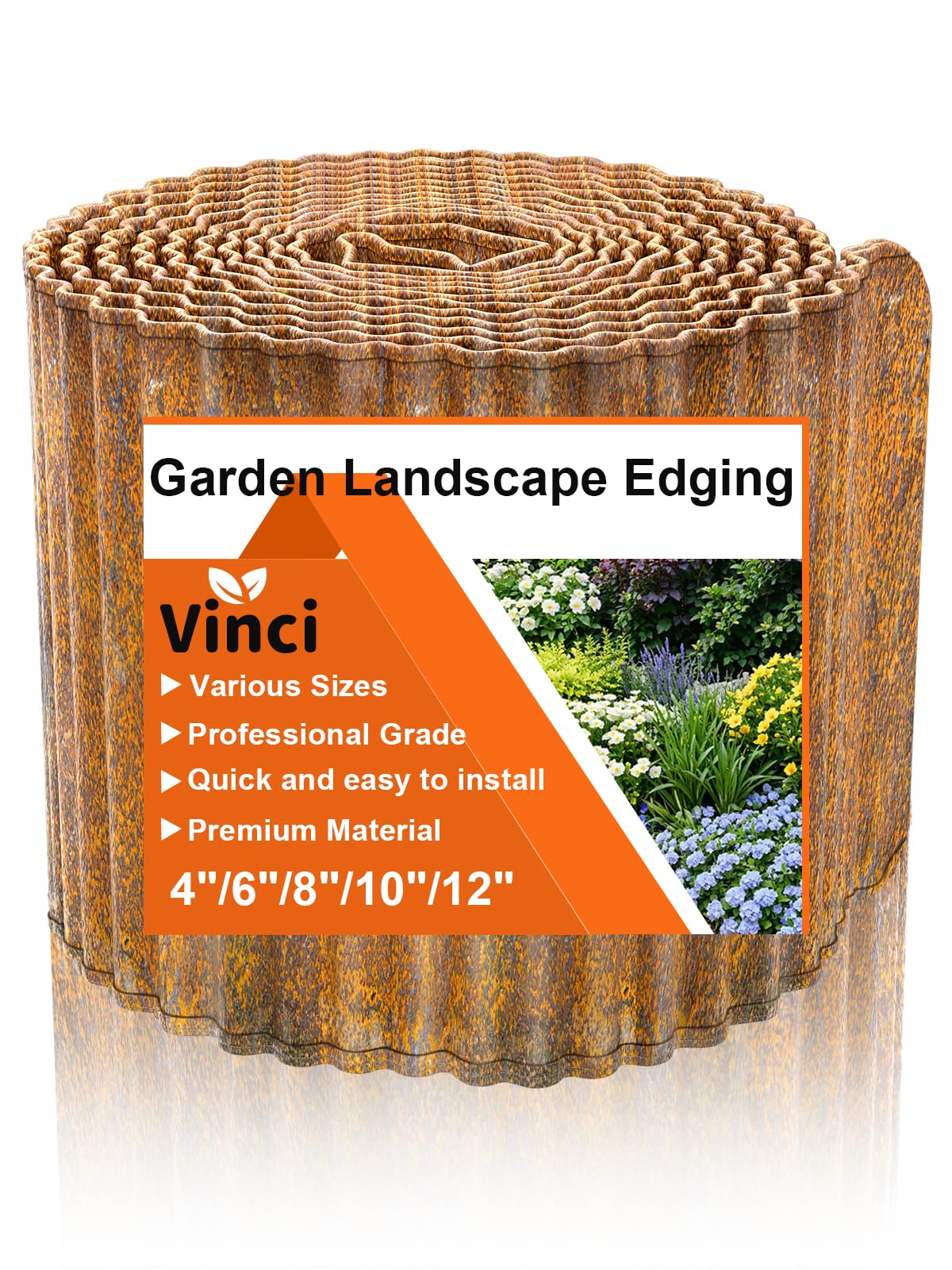
This is not a block in the traditional sense — it’s a 12-inch tall, 20-foot long continuous steel strip that acts as a vertical soil barrier. The corrugated cold-rolled steel construction provides exceptional rigidity in the vertical plane while allowing the strip to bend smoothly into curves or straight lines. The rusted finish accelerates natural patina formation, blending into garden environments within weeks.
At 0.1 inches thick with rolled top and bottom edges, this edging is safe to handle and resists bending under soil pressure. Unlike modular blocks, the continuous barrier eliminates gaps where mulch or soil can escape beneath the wall. Installation requires digging a narrow trench, but once set, the 9.7-pound strip creates a clean, almost invisible division between lawn and garden bed — ideal for modern, minimalist landscapes.
Customers highlight how easy it is to shape and how solid it feels once tamped into place. The steel will eventually rust through in wet climates — typically 5-7 years depending on drainage — and the raw edge requires careful cutting with an angle grinder if you need to shorten the length. It’s a different approach to retaining, but for long straight or gently curving runs, nothing beats the seamless look.
Why it’s great
Corrugated steel offers superior lateral stiffness compared to flat strip edging — the wavy profile resists bowing outward from soil pressure. Rolled edges eliminate sharp contact points, and the continuous 20-foot run minimizes joints that could shift over time. The material is 100% recyclable at end of life.
Good to know
- Requires trench digging — not a surface-install product
- Rusted finish may stain light-colored pavers or concrete during rain
- Cutting to custom length requires metal-cutting tools and gloves
4. KBJALQ Plastic Landscape Edging Border
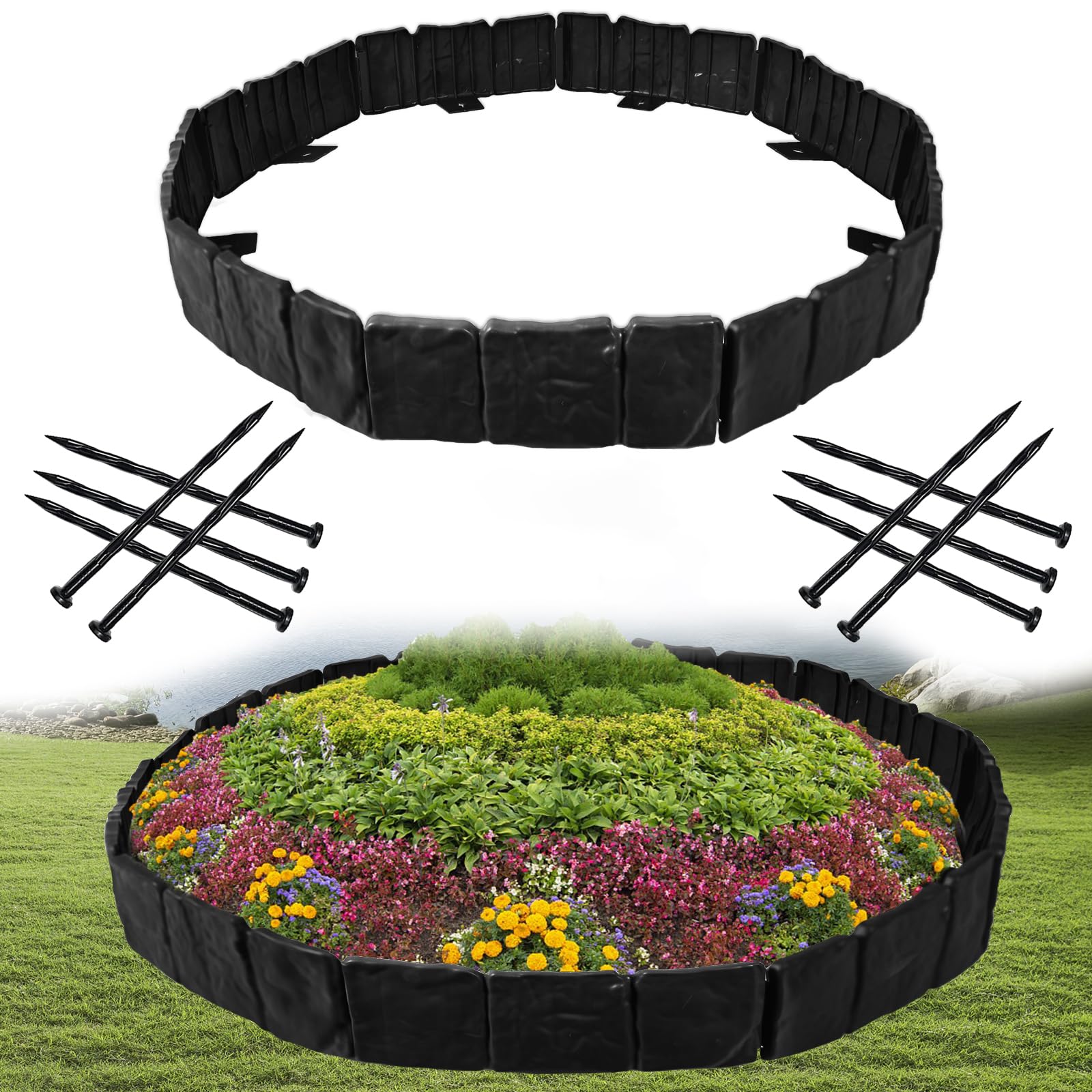
This entry-level panel system uses 20 interlocking polypropylene sections to create a 16-foot retaining edge at a 3.94-inch height. Each panel measures 9.65 inches wide with a textured imitation-stone face that breaks up the flat plastic surface. The included 7.67-inch anchoring spikes drive through pre-formed tabs, securing the border without digging — a true surface-install solution for light-duty garden separation.
The PP material is lightweight (under 2.2 kg per set) and resists blistering and corrosion, but it lacks the impact resistance of PE or resin. Reviews note that weed whackers can crack individual panels, and the plastic feels thinner compared to mid-range options. For dividing a mulch bed from lawn or creating a tidy border around a tree ring, it works well — just don’t expect it to hold back saturated clay soil.
Installation speed is the biggest selling point here: place the panels, tap the spikes, and you’re done. The black color blends into soil and shadows fairly well, though the glossy surface catches light differently than real stone. Ideal for renters or temporary landscape layouts where budget matters more than structural rigidity.
Why it’s great
- Zero-dig installation — hammer spikes directly into existing lawn
- Light enough to reposition or remove without damaging the yard
- Panels can form smooth circles for tree rings and island beds
Good to know
- Thin PP plastic may crack under weed whacker contact or heavy impact
- Glossy finish looks less realistic than matte resin alternatives
- Only 3.94″ height limits retaining capacity to light surface soil
5. Focefec Faux Stone Edging Border
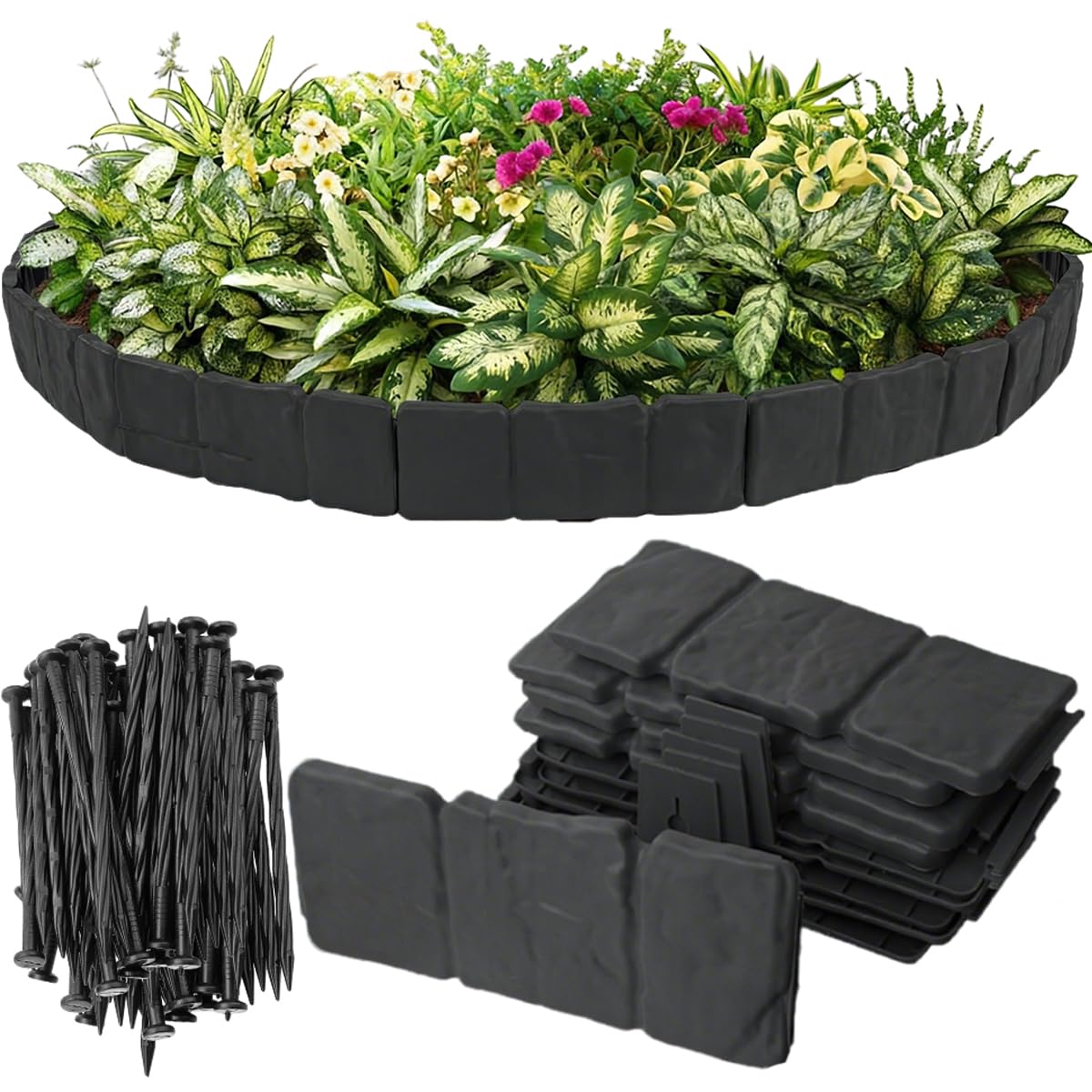
Another budget-tier option, the Focefec set delivers 20 PVC panels at a 4-inch height with a gray faux-brick texture intended to mimic stone. Each 9.6-inch panel snaps together using side tabs, and the 7.8-inch anchoring spikes provide deeper soil penetration than the KBJALQ system. The traditional brick pattern is consistent across all panels, giving a uniform grid look when installed.
Several reviewers note the panels look thin and somewhat artificial up close, but from a few feet away the stone effect is convincing enough for side yards and less visible areas. The PVC material is rigid and splinter-prone if cut; best to snap sections at molded break points rather than sawing. The main advantage here is the included spike count — 20 pieces ensure every panel gets an anchor, reducing wind uplift on exposed runs.
For DIYers with dry, compacted soil, pre-wetting the ground before driving spikes is recommended — the long nails can bend if forced through hard clay. The low cost means you can buy multiple sets for large projects, and the uniform brick repeat pattern works well when you need a consistent visual rhythm along a long straight edge.
Why it’s great
- 20 anchoring spikes per set ensures every panel is firmly staked
- Uniform brick repeat pattern looks tidy in formal garden layouts
- Very affordable per foot — good for budget-conscious large areas
Good to know
- Thin PVC looks artificial up close — better for distant viewing
- Straight-line only; side tabs don’t allow angled or curved runs
- Spikes bend in dry or rocky soil — water the ground first
FAQ
How deep do anchor spikes need to be for a retaining wall block system?
Can faux stone retaining wall blocks withstand freeze-thaw cycles?
Do I need to dig a trench for plastic retaining wall blocks?
Final Thoughts: The Verdict
For most users, the best blocks for retaining wall winner is the Beuta Faux Stone Block because its 6.5-inch height and heavy resin construction provide a convincing stone look with real retaining capacity for garden beds and light slopes. If you want a cost-effective modular system for large curved borders, grab the VEVOR Faux Stone Kit. And for a seamless, minimalist steel barrier that handles longer straight runs, nothing beats the Vinci Corrugated Metal Edging.

Mo Maruf
I created WellFizz to bridge the gap between vague wellness advice and actionable solutions. My mission is simple: to decode the research and give you practical tools you can actually use.
Beyond the data, I am a passionate traveler. I believe that stepping away from the screen to explore new environments is essential for mental clarity and physical vitality.