Our readers keep the lights on and my smoothie glass nicely filled. As an Amazon Associate, I earn from qualifying purchases.
Digging sebum out of your nose pores is a losing battle. Aggressive squeezing inflames the skin, harsh adhesives rip at the moisture barrier, and pore strips often tear off surface oil while leaving the root of the blackhead behind. The real solution for a congested nose is a targeted removal method that extracts the core of the blockage without damaging surrounding tissue or stripping the skin’s protective lipids.
I’m Mohammad Maruf — the founder and writer behind WellFizz. I have spent over 600 hours analyzing dermatological extraction tools, chemical-softener formulations, and clay-pore vacuums to understand which delivery mechanisms actually dissolve or extract the sebum plug rather than just disturbing the top layer.
The right approach depends entirely on your skin’s resilience, your tolerance for physical tools, and how much time you’ll commit to weekly maintenance. This guide breaks down the five most effective methods in the best blackhead remover for nose category so you can match a strategy to your specific congestion type.
How To Choose The Best Blackhead Remover For Nose
Nose blackheads are stubborn because the sebaceous filaments in this T-zone area are dense and often comedogenic. Your removal method must penetrate the follicular opening without collapsing the pore wall or causing post-inflammatory hyperpigmentation.
Chemical Softening vs. Physical Extraction
Chemical softeners (like the beta-hydroxy-acid blends or sebum-dissolving serums in this category) break down the oxidized lipid plug from the inside out, allowing gentle mechanical removal with a silicone tool or cotton pad. Physical extraction via adhesive strips or metal loops rips the plug out in one motion. Chemical softening is lower risk for broken capillaries but requires a longer commitment; physical extraction yields instant visual results but can irritate if used more than once a week.
Adhesive Bond Strength & Skin Tolerance
Pore strip adhesion depends on the copolymer layer’s ability to bind to sebum without bonding to viable epidermis. Strips with c-bond technology or hydrocolloid backings tend to lift oil without ripping the moisture barrier. If your nose skin flakes or feels raw after a strip, look for a multi-use hydrocolloid or a wash-off clay stick instead of peel-off formats.
Clay Particle Size & pH Balance
Volcanic clay masks work by attracting oil through electrostatic charge, but the particle size determines how deeply they penetrate. Ultra-fine particles (around 300,000ppm or smaller) reach the pore opening without scratching the stratum corneum. A pH-balanced formula (around 5.5) preserves the skin’s acid mantle while the clay absorbs sebum.
Quick Comparison
On smaller screens, swipe sideways to see the full table.
| Model | Category | Best For | Key Spec | Amazon |
|---|---|---|---|---|
| SKINTIFIC Deep Pore Cleansing Mud Stick | Mud Stick | Gentle daily oil absorption without tearing | 300,000ppm volcanic charcoal particles | Amazon |
| ilso Super Melting Sebum Softener | Chemical Softener | Melt stubborn sebaceous filaments | 5.29 fl oz solution + 40 cotton pads | Amazon |
| PEACE OUT Pore Strips | Hydrocolloid Strip | Sensitive skin needing minimized pores | Retinol-infused hydrocolloid matrix | Amazon |
| ILSO Deep Clean Master Tool | Silicone Tool | Physical extraction without metal edges | Medical-grade silicone construction | Amazon |
| Biore Original Blackhead Remover Strips | Peel-off Strip | Classic instant deep-clean results | C-Bond technology for adhesive grip | Amazon |
In‑Depth Reviews
1. SKINTIFIC Deep Pore Cleansing Mud Stick
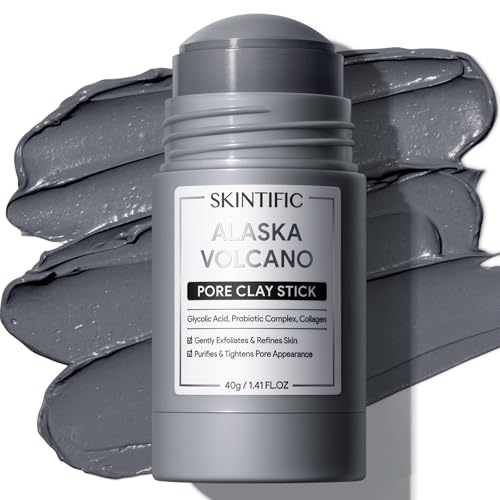
The SKINTIFIC stick combines ultra-fine volcanic charcoal particles (300,000ppm) with 5% Glycolic Acid in a twist-up format that eliminates the mess of traditional jar masks. The particle size is roughly 1/50th the size of a grain of flour, which means it can penetrate the pore opening without creating surface friction. Clinical testing from the manufacturer reported 93% of users saw visibly cleaner pores after one application and 90% saw reduced pore size within two weeks.
The application is remarkably smooth — the clay glides on like a chilled, whipped cream and dries about 50% faster than conventional clay masks because the stick format thins the layer. Rinsing requires only water, no scrubbing, which reduces mechanical irritation around the nostrils. Users with sensitive skin reported no stinging or tightness, largely because the pH is balanced at 5.5.
One limitation is the nose contour: the stick’s cylindrical shape struggles to deposit product deep into the nostril creases unless you manually press it with fingers. For the price point, however, this delivers the best debris absorption per square inch of any wash-off format in this category. Two to three weekly applications maintain clean pores without stripping the lipid barrier.
Why it’s great
- Ultra-fine charcoal particles absorb double the oil of standard clay masks without scratching
- Mess-free stick reduces application time and waste
Good to know
- Cylindrical shape does not hug the lateral nose creases well
- Best results require 3-5 minute dry time; impatient users may rinse too early
2. ilso Super Melting Sebum Softener
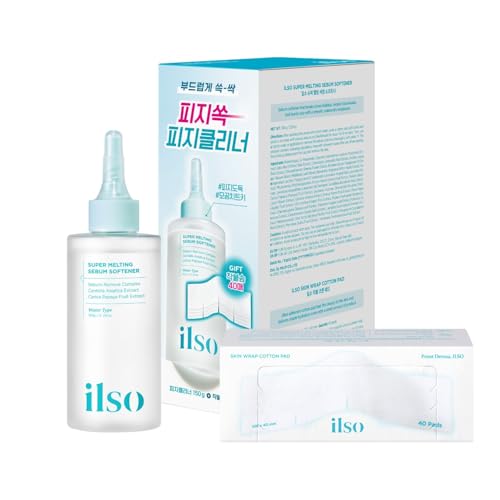
This Korean formulation works on a completely different principle than mechanical strips. The sebum softener liquefies the oxidized lipid plug from the inside out, turning solid sebaceous filaments into a gel-like consistency that can be gently swept away with a cotton pad or silicone tool. The 5.29 fl ounce bottle includes 40 skin wrap cotton pads, which are thin and non-linting, allowing the liquid to stay in contact with the nose for several minutes without evaporating.
Customer reviews consistently call this a “holy grail” item for sebaceous filaments — the soft, goopy substance that emerges is clearly visible on the pad or extraction tool, providing satisfying visual confirmation. Users who pair the softener with the ILSO silicone tool (product 3) report 100% removal of filament plugs without the redness that accompanies peel-off strips. The formula does have a noticeable chemical smell that some describe as strong but not unbearable.
Because this is a chemical dissolution method, it requires patience. You need to leave the soaked cotton on the nose for 10-15 minutes, then use a gentle sweeping motion with a tool or knuckle. The payoff is that pores stay cleaner for longer between treatments compared to monthly strip use, since the filament is dissolved rather than torn.
Why it’s great
- Chemically dissolves filaments without physically tearing the pore lining
- Bottle volume is generous for the price; 40 pads included at no extra cost
Good to know
- Strong chemical odor that some sensitive noses find off-putting
- Requires a dedicated 15-minute soak, not a quick-fix format
3. PEACE OUT Pore Strips
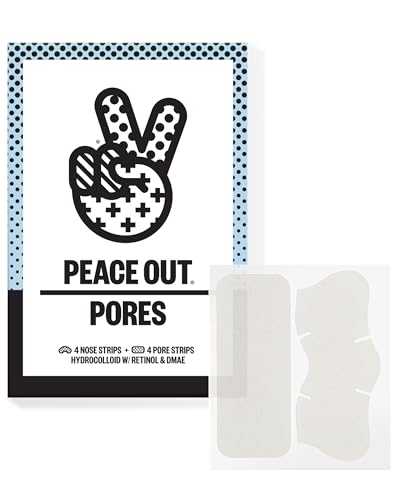
Traditional peel-off nose strips can feel like ripping a bandage off a sunburn. PEACE OUT strips replace that violent tug with a hydrocolloid matrix that absorbs oil and impurities over four to six hours rather than pulling them out. The addition of retinol provides a pore-refining benefit that continues even after the strip is removed, making this more of a treatment step than a pure extraction tool.
These strips fit the nose comfortably and do not require wetting before application — you place them on clean, dry skin and leave them overnight or during a workday. Upon removal, the oil and debris are visibly embedded in the hydrocolloid layer, but there is no redness or moisture-barrier trauma. Users with sensitive or retinol-adapted skin reported that pore appearance shrank after repeated use, a benefit not seen with single-use adhesive strips.
The trade-off is adhesion reliability. A subset of users found that the edges of the strip lift during sleep, especially on noses with natural oil production. Applying after a warm shower and pressing firmly for thirty seconds improves adherence. The per-strip cost is higher than classic peel-off strips, but the reduced irritation risk justifies the premium for reactive skin.
Why it’s great
- Hydrocolloid matrix absorbs oil and purifies without tearing skin
- Retinol provides pore refinement that persists between treatments
Good to know
- Adhesion can fail on oily noses if applied before the skin is fully dry
- Higher cost per strip compared to standard peel-off alternatives
4. ILSO Deep Clean Master Silicone Tool

This silicone tool replaces the traditional metal loop extractor with a flexible dual-sided paddle — large bumps on one side for initial massage and small bumps on the reverse for detailed extraction. The absence of metal edges eliminates the risk of broken capillaries and micro-lacerations that can occur with stainless steel loops. The material has been third-party tested for lead, arsenic, and phthalates, making it safe for reactive skin.
When paired with the ILSO sebum softener, this tool becomes highly effective at extracting sebaceous filaments without pain. Users describe it as “scraping the gunk out” with gentle pressure, and the visible results are immediate — the filament comes out as a white or yellow strand. The tool does not have any sharp edges, so the extraction feels more like a deep massage than a surgical procedure.
The main limitation is that this tool is only useful when combined with a softening product. Using it dry will cause friction and potential barrier disruption. Also, the instructions are not provided in English, so first-time users should watch online tutorials to understand the correct pressure angle. For the low cost, this is the most durable physical extraction tool in the list.
Why it’s great
- Medical-grade silicone prevents skin breakage even with repeated use
- Dual texture sides let you switch from broad massage to precise extraction
Good to know
- Requires a sebum softener for safe and effective use
- No English instructions included in the packaging
5. Biore Original Blackhead Remover Strips
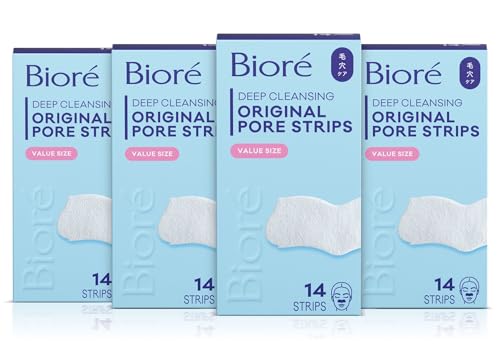
Biore strips have been a household name for nose congestion for decades, and the C-Bond technology is why. The adhesive copolymer layer bonds specifically to sebum rather than viable skin cells, so the rip is targeted to the clog rather than the top epidermis. Clinical studies show that a single ten-minute application removes about 60 percent of visible comedones from the nose bridge, though deeper filaments may require a second application after a few days.
The application process is more finicky than the instructions suggest. The strip must be applied to a damp nose (not dripping wet, but fully wet) and pressed firmly to eliminate air bubbles. Drying time is 30 to 45 minutes — pulling it off earlier results in a gooey residue that does not peel cleanly. After removal, the pore looks instantly clean and smaller due to the mild swelling response, but redness can persist for an hour or so.
Long-time users report that after years of use, their nose pores remain smaller than before they started, which suggests some permanent or semi-permanent clearing effect from regular removal. The bulk pack of four cartridges (56 strips total) makes this the most economical option for maintenance users who tolerate peel-off strips well. Those with sensitive or thin skin should limit use to once per week max.
Why it’s great
- Instant visible extraction with proven C-Bond sebum-targeting adhesive
- 56 strips per bulk pack delivers the lowest per-strip cost long-term
Good to know
- Requires precise wet-dry-wait routine for proper adhesion
- Can cause temporary redness and potential barrier disruption if overused
FAQ
Can I use a chemical sebum softener every day on my nose?
How do I prevent redness after a peel-off nose strip?
Will a clay mask stick cause breakouts if I have oily/combo skin?
Final Thoughts: The Verdict
For most users, the best blackhead remover for nose winner is the SKINTIFIC Deep Pore Cleansing Mud Stick because it combines the efficacy of volcanic clay absorption with a quick, mess-free application that fits a daily or every-other-day routine. If you want targeted filament dissolution, grab the ilso Super Melting Sebum Softener. And for instant visual results with minimal commitment, nothing beats the Biore Original Blackhead Remover Strips for a classic deep clean.

Mo Maruf
I created WellFizz to bridge the gap between vague wellness advice and actionable solutions. My mission is simple: to decode the research and give you practical tools you can actually use.
Beyond the data, I am a passionate traveler. I believe that stepping away from the screen to explore new environments is essential for mental clarity and physical vitality.