Our readers keep the lights on and my smoothie glass nicely filled. As an Amazon Associate, I earn from qualifying purchases.
Choosing a black exterior wood stain means deciding between a film-forming paint-like coating that hides grain and a penetrating oil-based formula that seeps into the cellular structure of cedar, pine, or pressure-treated lumber. The wrong pick leads to peeling within one season or a color that fades to muddy gray under direct sun exposure.
I’m Mohammad Maruf — the founder and writer behind WellFizz. I’ve spent years analyzing formulation chemistry, UV inhibitor performance, and real-world coverage rates across oil-based gels, waterborne acrylics, and bio-renewable penetrating stains to separate marketing claims from measurable durability.
Whether you’re refinishing a fence line or restoring a set of outdoor shutters, this guide breaks down the key specs and application differences to help you find the right best black exterior wood stain for your project.
How To Choose The Best Black Exterior Wood Stain
The distinction between a penetrating oil stain, a gel stain, and a solid-color acrylic coating is not just semantic — it determines whether your project needs annual maintenance or can go three to four seasons before a refresh. For black stains specifically, the pigment load and the carrier system affect how deeply the color saturates the wood grain and how well it resists UV bleaching.
Oil-Based vs. Water-Based Carriers
Oil-based stains, whether liquid or gel, carry pigment deep into the wood fibers and bond with the cellulose, creating a flexible layer that moves with the wood as temperatures fluctuate. Water-based acrylic stains form a plastic-like film on the surface, which provides excellent UV resistance — look for zinc nano-particles in the formulation — but can peel if moisture gets trapped beneath. Oil-based formulas also tend to produce a richer, more translucent black; water-based solids are more opaque and can hide the grain entirely.
Gel vs. Penetrating vs. Solid Color
Gel stains have a thick, creamy consistency that stays on the surface rather than soaking in, making them ideal for vertical surfaces like fences and furniture where drip control matters. Penetrating stains are thin and watery, designed to soak into horizontal deck boards and siding for deep protection. Solid-color stains behave like paint, delivering an opaque black film that hides imperfections and the underlying grain — best for weathered wood that needs a uniform reboot.
Coverage Rate Per Gallon
Coverage is a direct function of the stain’s viscosity and the wood’s porosity. A penetrating oil stain typically covers 150–300 square feet per gallon on softwoods, while a thick gel stain covers roughly 35–50 square feet per quart — roughly one-tenth the area. Matching the coverage rate to your project’s square footage prevents mid-project runs to the store and ensures you buy enough to apply two uniform coats.
Quick Comparison
On smaller screens, swipe sideways to see the full table.
| Model | Category | Best For | Key Spec | Amazon |
|---|---|---|---|---|
| General Finishes Exterior 450 | Water-Based | Vertical outdoor surfaces | UV absorbers, 2 hr dry time | Amazon |
| DEFY Solid Color | Water-Based | Decks & fences | Zinc nano UV, 200-300 sq ft/gal | Amazon |
| Armstrong-Clark Oil-Based | Oil-Based | High-traffic decks | Penetrating oil, 150-300 sq ft/gal | Amazon |
| General Finishes Oil Base Gel | Gel | Cabinets & furniture | Lustrous finish, 35-50 sq ft/pt | Amazon |
| Heirloom Traditions All-in-ONE Gel | Gel | Multi-surface projects | No sanding needed, 16 oz jar | Amazon |
| EVOLVE Barn & Fence Paint | Acrylic Latex | Barns & large fences | Scratch-resistant, 300-400 sq ft/gal | Amazon |
| Vermont Natural Coatings PolyWhey | Bio-Based | Garden beds & siding | Whey protein binder, low odor | Amazon |
In‑Depth Reviews
1. General Finishes Exterior 450 Water Based Wood Stain
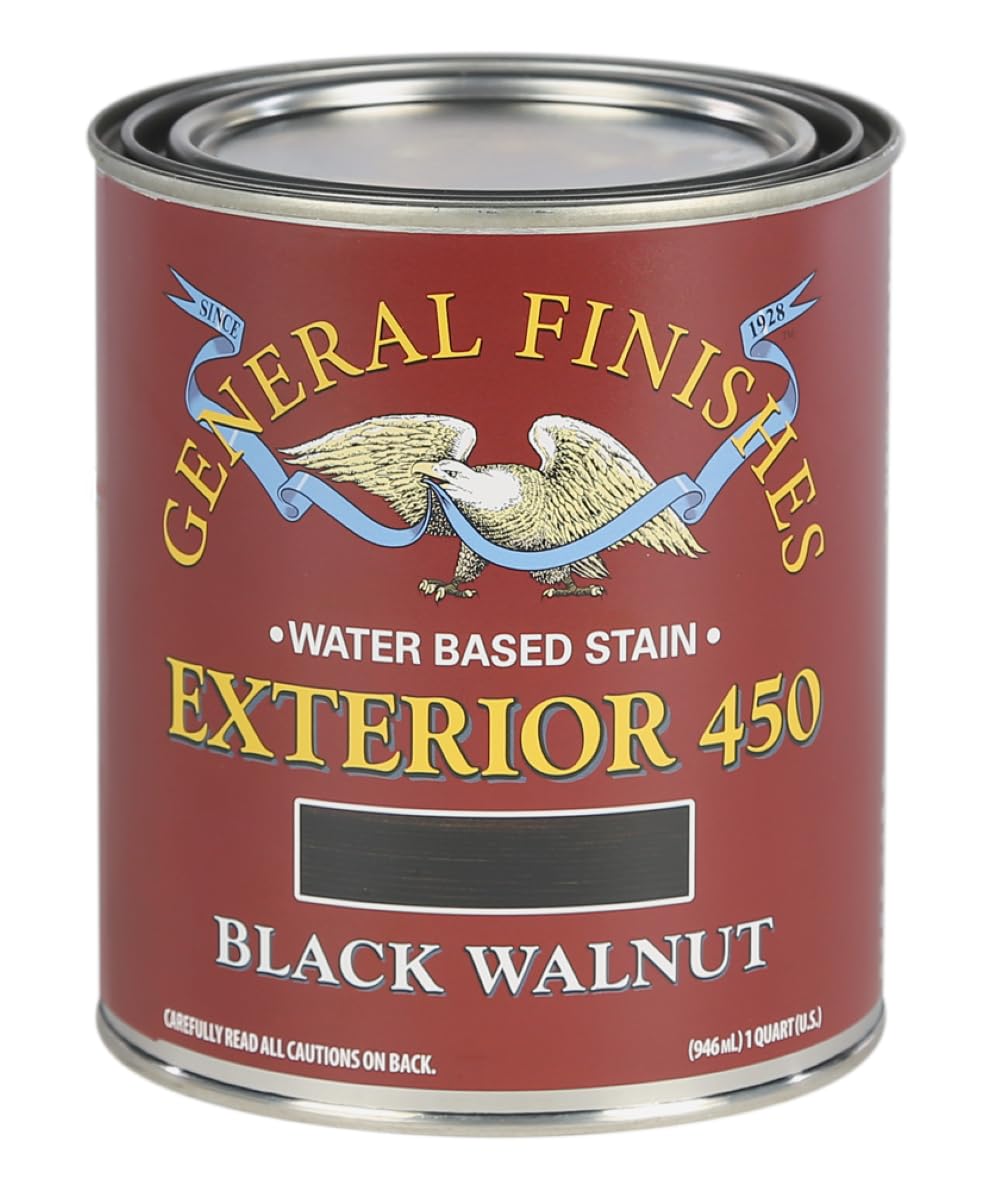
The Exterior 450 from General Finishes is a water-based stain engineered specifically for vertical outdoor surfaces — fences, garage doors, patio furniture, and entrance doors. Its waterborne acrylic resin carries UV absorbers that protect the film integrity without blocking natural wood aging, so the black walnut color stays rich while the wood underneath breathes. At roughly a quart for moderate projects, the coverage is high enough to eliminate lap marks when brushed correctly, and the two-hour dry time at 70°F lets you complete two coats in a single afternoon.
Made in the USA with plant-protein renewable resources, this stain cleans up with soap and water — no mineral spirits needed. The black walnut hue leans toward a warm, dark chocolate rather than a flat pitch black, which helps hide dust and pollen on outdoor furnishings. Multiple customer accounts confirm that three coats on weathered fir doors and shutters produce an even, opaque finish that hides brush overlaps and resists fading across a full season of direct sun.
The one limitation: General Finishes explicitly advises against using this stain on large horizontal surfaces like decks. The film-forming nature of water-based acrylic on a walking surface can lead to premature wear under foot traffic. For vertical projects where UV stability and easy soap-and-water cleanup are priorities, this is the most balanced choice in the mid-range bracket.
Why it’s great
- Fast two-hour recoat time speeds up multi-coat projects.
- UV absorbers lock in color integrity on sun-exposed surfaces.
- Soap-and-water cleanup eliminates harsh solvent handling.
Good to know
- Not recommended for horizontal deck boards or walking surfaces.
- Three coats may be needed to fully hide brush overlap on porous woods.
2. DEFY Solid Color Wood Stain DW-Solid

The DEFY Solid Color stain uses zinc nano-particles — a premium UV-blocking technology that significantly outperforms standard organic UV absorbers in long-term color retention. The dark walnut shade (which reads as a deep, slightly taupe-tinged black) delivers a flat, opaque finish that hides surface imperfections, making it ideal for older deck boards and pressure-treated fences that have weathered unevenly. Coverage lands at 200 to 300 square feet per gallon per coat, which is competitive for a water-based solid stain.
Application feedback from users highlights smooth rolling and brushing with easy soap-and-water cleanup. Multiple coats are often required when covering a previously stained surface — two coats for even coverage is the standard recommendation, and some users needed a third for hiding a non-transparent under-stain. The stain dries quickly, under one hour in high temperatures, which reduces the overall project timeline but demands careful wet-edge technique to avoid lap marks on long deck boards.
The main trade-off is the color representation: the label “Dark Walnut” on the can reads more like a warm taupe-grey than a true black walnut. Users expecting a deep espresso may find the actual hue lighter than anticipated. For those who need a tough, weather-resistant opaque coating with genuine fade resistance and don’t mind confirming the shade with a sample first, the DEFY solid stain offers strong value in the premium water-based segment.
Why it’s great
- Zinc nano UV particles provide industry-leading fade resistance.
- Quick dry time under one hour in warm conditions.
- Excellent adhesion on pressure-treated and weathered woods.
Good to know
- Color on the can may not match the actual dark walnut hue.
- Requires careful wet-edge technique on long horizontal runs.
3. Armstrong-Clark Oil-Based Wood Stain
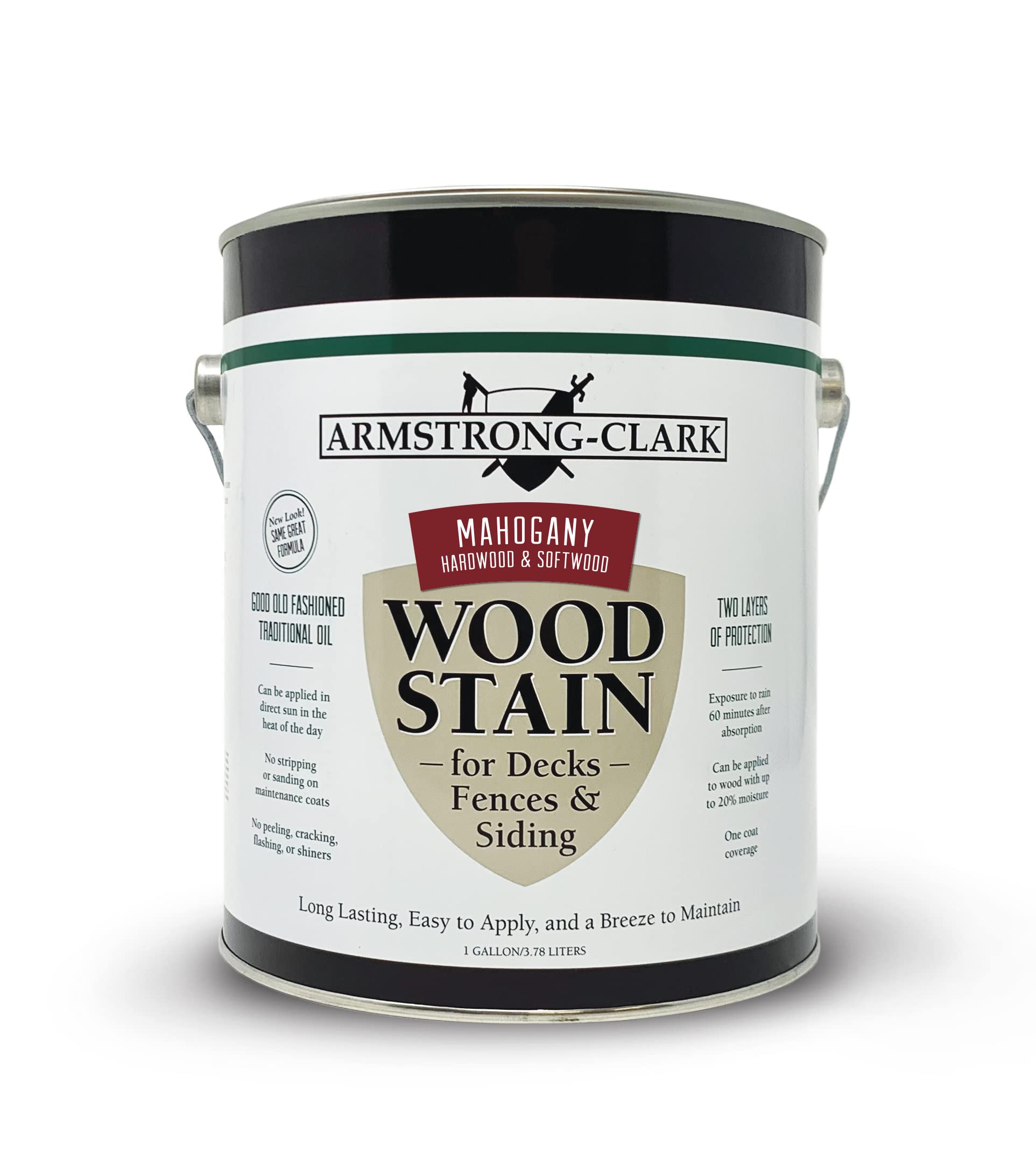
Armstrong-Clark’s oil-based formula is built around deep-penetrating conditioning oils that soak into wood fibers and lock with drying oils to create a flexible, peel-resistant bond. This is the stain that professional wood restoration crews reach for when they need a finish that withstands freeze-thaw cycles on a deck or dock without cracking. The Mahogany color — which is designed for both softwoods like cedar and pine as well as hardwoods like IPE — delivers a rich, translucent finish that enhances grain rather than covering it.
Coverage varies by wood porosity: horizontal softwoods yield 150 to 250 square feet per gallon, while hardwoods can reach 300 to 400 square feet per gallon. The stain can be applied in direct sunlight, which is a practical advantage for large deck projects where shade is scarce. Users consistently report that a single coat beads water on a freshly stained deck, and two coats on dry, porous wood extend the service life to three to five years without peeling or flaking.
The trade-off is a longer dry time compared to water-based options, and the application technique matters: the oil needs to be worked into the grain, not just brushed on. Maintenance coats require cleaning and reapplication without heavy sanding or stripping, which lowers long-term labor. For anyone prioritizing a deep-penetrating, peel-proof black finish on a horizontal deck surface, this is the professional-grade pick.
Why it’s great
- Deep penetration into wood fibers prevents peeling and cracking.
- Can be applied in direct sunlight, expanding usable work hours.
- Maintenance coats require only cleaning, not stripping.
Good to know
- Longer dry time requires scheduling between coats.
- Mahogany color may appear lighter on very porous softwoods.
4. General Finishes Oil Base Gel Stain, Black
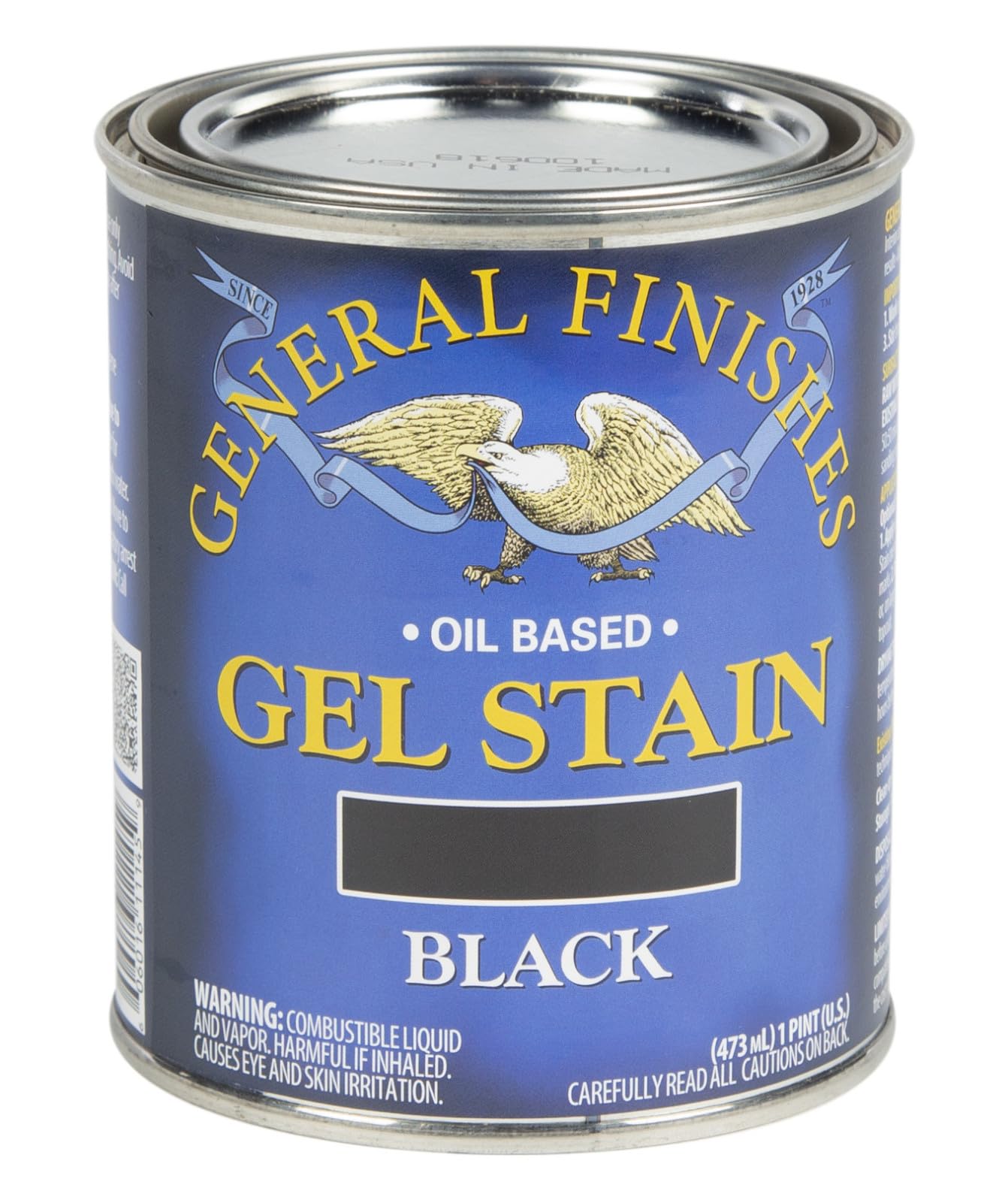
General Finishes Oil Base Gel Stain is a heavy-bodied gel that sits on the wood surface rather than soaking in, which makes it especially useful for difficult woods like aspen and pine that blotch easily with liquid stains. The black shade delivers a lustrous finish with visible grain when applied with a sock or rag in thin coats, or a more opaque, paint-like appearance when applied with a foam brush and left un-wiped. Coverage is limited to 35 to 50 square feet per pint, so this is a project stain for furniture, cabinets, and smaller vertical surfaces, not for sweeping deck applications.
Woodworkers praise the forgiving nature of the gel: it doesn’t drip or run, and the thick consistency allows precise control on detailed trim and molding. Users report that two to three coats with a 24-hour dry time between each produce a deep, even black that rivals a sprayed finish. The odor is strong — an oil-based solvent smell that lingers for 24 to 30 hours — so a respirator and excellent ventilation are mandatory. Cleanup requires mineral spirits, not soap and water.
The primary constraint is the small coverage area per pint and the extended dry time between coats. For a single outdoor chair or a set of shutters, the control and finish quality justify the slower pace. For anyone with a large fence or deck project, this gel is better suited as an accent or trim finish than a full-structure coating.
Why it’s great
- Thick gel consistency prevents drips and runs on vertical surfaces.
- Exceptional control on blotch-prone woods like pine and aspen.
- Lustrous finish that can be adjusted from translucent to opaque.
Good to know
- Strong oil-based fumes require a respirator in enclosed spaces.
- Low coverage per pint makes it impractical for large horizontal surfaces.
5. Heirloom Traditions All-in-ONE Gel Stain, Ebony
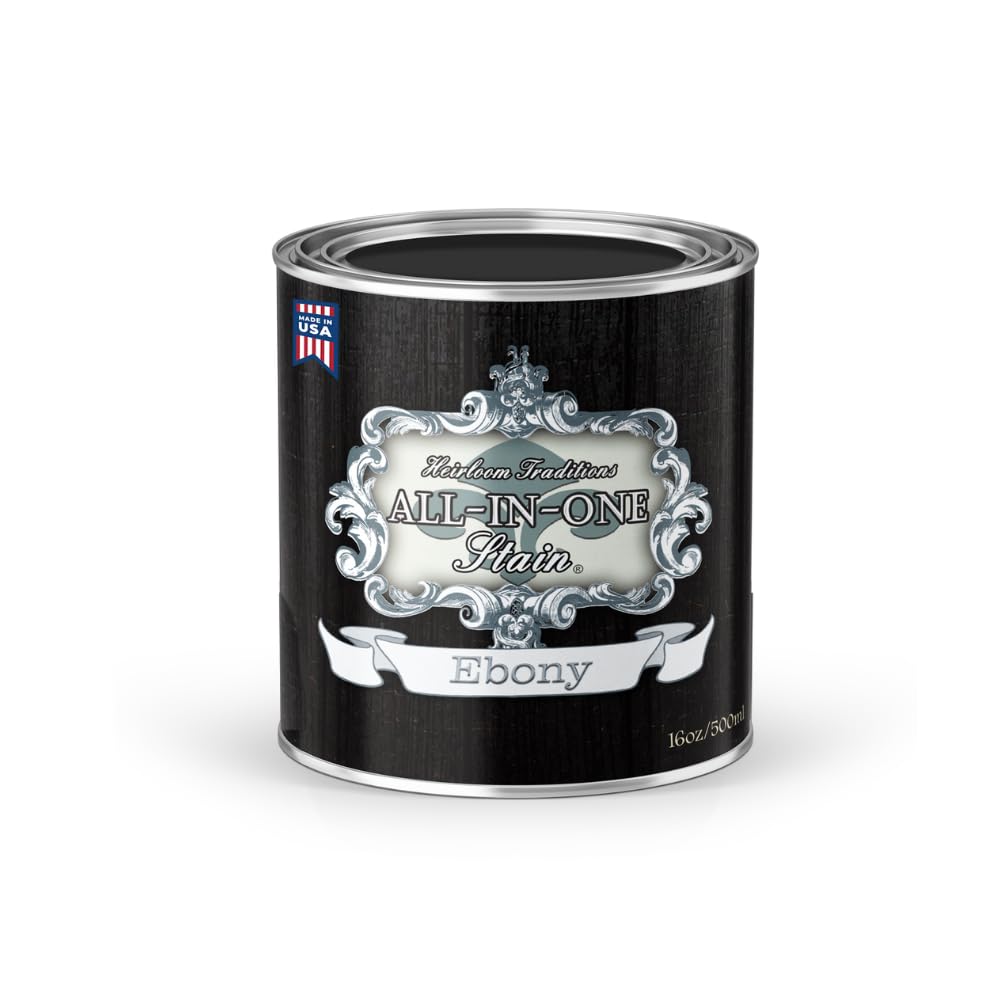
The Heirloom Traditions All-in-ONE Gel Stain in Ebony is marketed as a no-sanding, no-sealer-required solution that can be applied to raw or previously painted wood, metal, and even leather. The oil-based gel has a thick, paint-like consistency that can be used for full opaque coverage or wiped back for a more transparent effect. At 16 ounces per jar, it is a compact option suited for small furniture makeovers, porch pillar touch-ups, and accent pieces rather than large-scale exterior staining.
User experiences are polarized. Many report a rich, even color with zero drips and easy beginner-friendly application — the gel stays where you put it and doesn’t run. Others describe the dark colors as difficult to work with: the gel dries fast, requiring rapid, deliberate strokes to avoid visible overlap marks. Multiple users emphasize that the correct application tools and technique — specifically, using a foam brush and working in small sections — are critical for acceptable results on ebony and other dark shades.
The practical downside is the small container size and the need for mineral spirits cleanup. For a homeowner looking to refresh a single outdoor table or a set of garden planters without sanding, the convenience is real. For anyone planning to cover a large fence or deck section, the per-ounce cost and the difficulty of maintaining a wet edge at scale make this a poor fit.
Why it’s great
- No sanding or sealing required on raw or painted surfaces.
- Thick gel consistency prevents drips and runs during application.
- Works on wood, metal, and leather for multi-material projects.
Good to know
- Dark colors dry fast, increasing the risk of visible overlap marks.
- Very small container size — impractical for large exterior surfaces.
6. Vermont Natural Coatings PolyWhey Exterior Penetrating Stain

PolyWhey from Vermont Natural Coatings uses whey protein as a co-binder — a renewable, bio-based technology that replaces a portion of petrochemical resins while still delivering a penetrating, waterproof barrier. The Lakeside Cedar color, which reads as a deep charcoal verging on black after two coats, is designed for siding, fences, furniture, and garden beds. The stain has a thin, watery consistency that soaks into the wood readily, enhancing the grain rather than sitting on top.
Users consistently note the near-zero VOC odor as a standout feature — the stain smells faintly of dairy protein rather than harsh solvents, making it tolerable for enclosed application areas and sensitive households. The dry time between coats is 48 hours, which is slower than water-based acrylics but typical for penetrating oil blends. Soap-and-water cleanup is a real convenience, eliminating the need for mineral spirits. The thin texture can cause leakage in the shipping container if the can is jostled, and the 48-hour wait between coats demands project patience.
Garden bed users report that the charcoal shade dries to a consistent black-charc coal appearance and holds color well through a full growing season, even with repeated soil contact and watering splash. The price per quart is higher than conventional stains, but the combination of low toxicity, renewable sourcing, and effective weatherproofing justifies the premium for environmentally conscious buyers. For anyone staining raised garden beds, trellises, or cedar siding where low odor and safe soil contact are priorities, this is a category standout.
Why it’s great
- Bio-based whey protein binder significantly reduces petrochemical content.
- Near-zero VOC odor — safe for enclosed or garden-adjacent projects.
- Soap-and-water cleanup eliminates harsh solvent use.
Good to know
- Thin, watery texture may leak from the can during shipping.
- 48-hour dry time between coats extends total project duration.
7. EVOLVE Barn & Fence Paint, Black
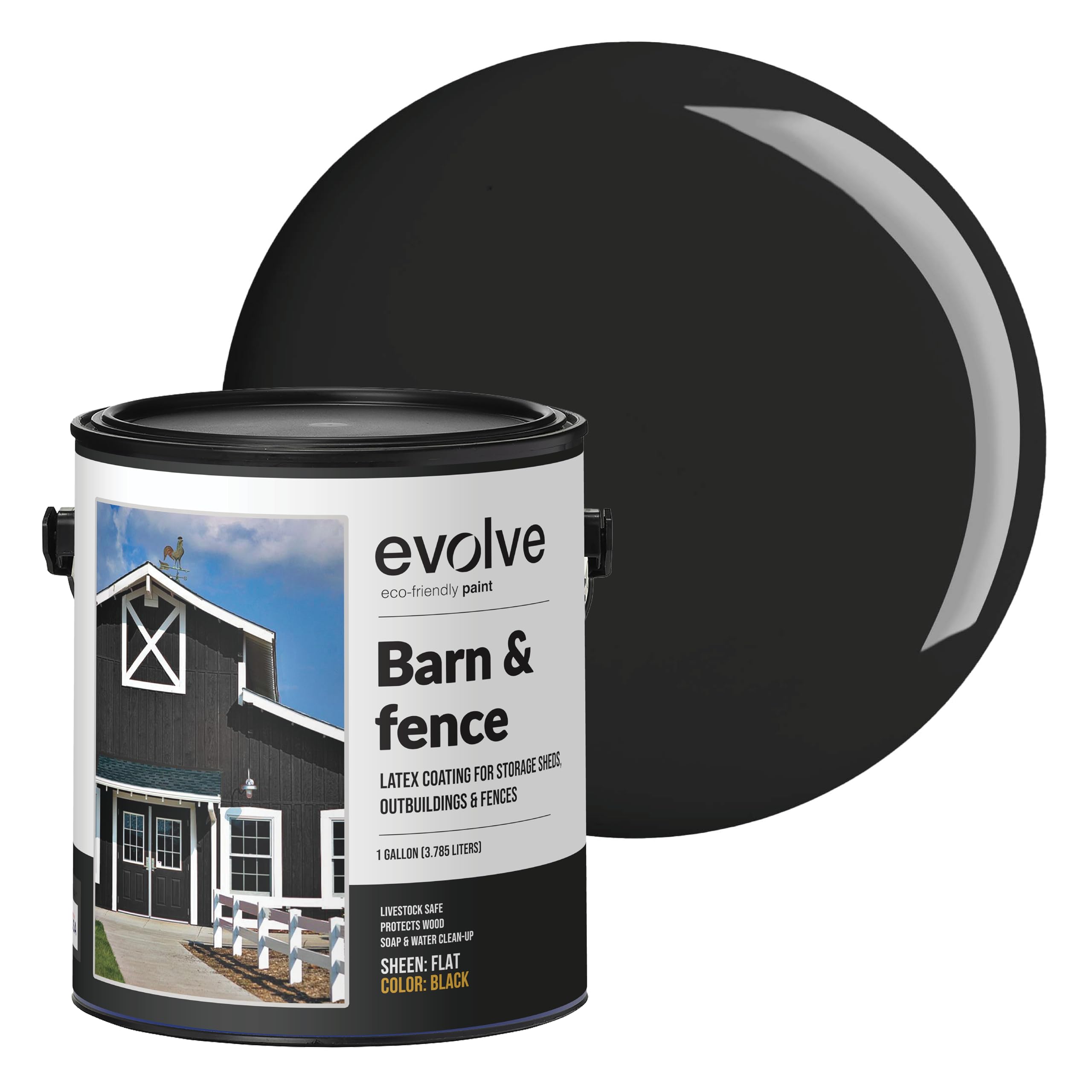
The EVOLVE Barn & Fence Paint is a flat, water-based acrylic latex coating formulated specifically for outbuildings, fences, sheds, and other large exterior vertical surfaces. With coverage rated at 300 to 400 square feet per gallon, a single gallon can handle a full fence run or a small barn wall in one coat. The black finish is opaque and uniform, hiding previous paint colors and weathered wood grain completely, which is the defining trait of a solid-color paint rather than a stain.
The quick-dry technology means that recoat time is measured in hours rather than days — users report being able to apply a second coat the same afternoon. The scratch-resistant finish holds up against brush contact from livestock and equipment, and the flat, low-reflective sheen fits the farmhouse aesthetic. Cleanup is soap and water, and the paint is manufactured in the USA with sustainable materials. Customer feedback consistently praises the ease of application and the even coverage from the first coat.
The limitation is that EVOLVE Barn & Fence Paint is a paint, not a stain. It forms a film on top of the wood rather than penetrating into the grain. This means it can peel if moisture gets trapped beneath the coating, especially on horizontal surfaces or wood with high moisture content. For vertical fence boards and barn siding where a fast, uniform black finish is the goal and film adhesion is not a concern, this offers the best coverage-per-dollar ratio in the lineup.
Why it’s great
- Highest coverage in the list at 300-400 square feet per gallon.
- Fast-dry formula allows same-day second coat application.
- Scratch-resistant film holds up in high-contact barn environments.
Good to know
- It is a paint, not a stain — may peel if moisture gets trapped beneath.
- Opaque finish completely hides wood grain, which may not suit all aesthetics.
FAQ
Can I apply a black gel stain over an existing painted surface without sanding?
How long does a black exterior wood stain typically last before needing reapplication?
What is the practical difference between a solid-color stain and a true penetrating stain?
Final Thoughts: The Verdict
For most users, the best black exterior wood stain winner is the General Finishes Exterior 450 because it balances UV protection, fast dry time, and easy soap-and-water cleanup for vertical outdoor surfaces. If you want deep oil penetration and peel resistance on a deck, grab the Armstrong-Clark Oil-Based Stain. And for an eco-friendly, low-odor option on garden beds and siding, nothing beats the Vermont Natural Coatings PolyWhey.

Mo Maruf
I created WellFizz to bridge the gap between vague wellness advice and actionable solutions. My mission is simple: to decode the research and give you practical tools you can actually use.
Beyond the data, I am a passionate traveler. I believe that stepping away from the screen to explore new environments is essential for mental clarity and physical vitality.