Our readers keep the lights on and my smoothie glass nicely filled. As an Amazon Associate, I earn from qualifying purchases.
A bivy tent is the ultimate minimalist shelter — a waterproof cocoon that replaces a full tent when every ounce matters. But most first-time buyers discover the hard way that a stuffy, condensation-soaked bivy ruins the sleep that made it worth carrying in the first place. The difference between a miserable night and a game-changing piece of kit comes down to three things: fabric breathability, effective venting, and a fit that doesn’t press your sleeping bag against wet walls.
I’m Mohammad Maruf — the founder and writer behind WellFizz. This guide is the result of hundreds of hours analyzing real-world reviews, cross-referencing technical specs for waterproof ratings, fabric denier, weight, and pole geometry across the full spectrum of modern bivy tents.
Whether you are a thru-hiker shaving grams, a bikepacker running ultralight, or a weekend warrior who wants to sleep under the stars without the dew, this review of the best bivy tent options breaks down which shelters actually keep you dry and comfortable in the backcountry.
How To Choose The Best Bivy Tent
Selecting the right bivy tent means understanding the essential tension between waterproof protection and breathable comfort. A fully waterproof fabric that does not breathe turns your bivy into a personal steam bath when temperatures drop, while a highly breathable shell may let rain and wet ground moisture soak your sleeping bag. The best bivy tents balance these two realities through fabric choice, ventilation openings, and structural design.
Waterproof-Breathable Fabric Technology
The fabric is the single most important material decision in any bivy. Look for a hydrostatic head rating of 10,000 mm or higher for the top shell if you sleep in exposed alpine or storm-prone environments. At the same time, the fabric’s moisture vapor transmission rate (MVTR) tells you how easily sweat and exhaled moisture escapes — a rating of 10,000 g/m²/day or more signals decent breathability. Silnylon and ripstop nylon with polyurethane coatings are common, but premium shells use laminated membranes similar to Gore-Tex for a superior moisture escape without sacrificing waterproofness.
Internal Volume and Pole Structure
A true bivy sack wraps directly around your sleeping bag and offers zero headroom, which saves weight but can feel claustrophobic. Many modern bivy tents incorporate a small pole-arch or a single cross-pole near the head and shoulders, lifting the fabric off your face and creating a small air pocket. This small dome of space dramatically reduces condensation contact and makes exiting and entering far less frustrating. If you plan to read, store gear, or change clothes inside, favor a bivy with a pole-supported canopy over a flat sack design.
Weight, Packed Size, and Setup Complexity
Bivy tents are born from the desire to pack small and move fast. The lightest options weigh under 1.5 pounds and stuff to the size of a 1-liter water bottle, but they often sacrifice ground-floor durability and internal space. Heavier bivies with thicker fabrics and a pole system may hit 2.5 to 3 pounds, yet offer far better weather protection and livability. Think honestly about your real use case — a 16-ounce bivy makes sense for a fast-and-light alpine push, while a sub-3-pound bivy with a pole canopy is a better choice for multi-day trips where comfort matters as much as gram count.
Quick Comparison
On smaller screens, swipe sideways to see the full table.
| Model | Category | Best For | Key Spec | Amazon |
|---|---|---|---|---|
| Outdoor Research Helium Bivy 2024 | Premium Bivy | Fast alpine trips & backcountry travel | 19.5” floor width, seam-taped | Amazon |
| Snugpak Stratosphere | Premium Hybrid | Stealth camping & mild-weather use | 5000mm PU-coated 50D fly | Amazon |
| Snugpak Special Forces Bivvi Bag | Premium Sack | Emergency shelter & ultralight packing | 12 oz weight, Paratex Dry shell | Amazon |
| Military Modular Sleep System 4 Piece | Premium System | Extreme cold & car/base camping | Bivy cover weight 2.3 lbs | Amazon |
| onewind Ultralight 1 Person Bivy Tent | Mid-Range Hybrid | Thru-hiking & bikepacking | 1.1 oz silnylon, 3000mm HH | Amazon |
| Sierra Designs Backcountry Bivy Bag | Mid-Range Sack | Mild-weather backpacking | 16 oz weight, 20D nylon | Amazon |
| AquaQuest Pharaoh Bivy Sack | Mid-Range Sack | Minimalist cowboy camping | 10,000mm HH, 70D nylon | Amazon |
| Night Cat Ultralight Tent 1 Person | Budget Hybrid | Weekend campers on a budget | 90.5” floor length, 2 lbs | Amazon |
| Kakadu Swift Pitch Bivy Tent | Budget Hybrid | Entry-level solo campers | 5 lb weight, 150D rainfly | Amazon |
In‑Depth Reviews
1. Outdoor Research Helium Bivy 2024
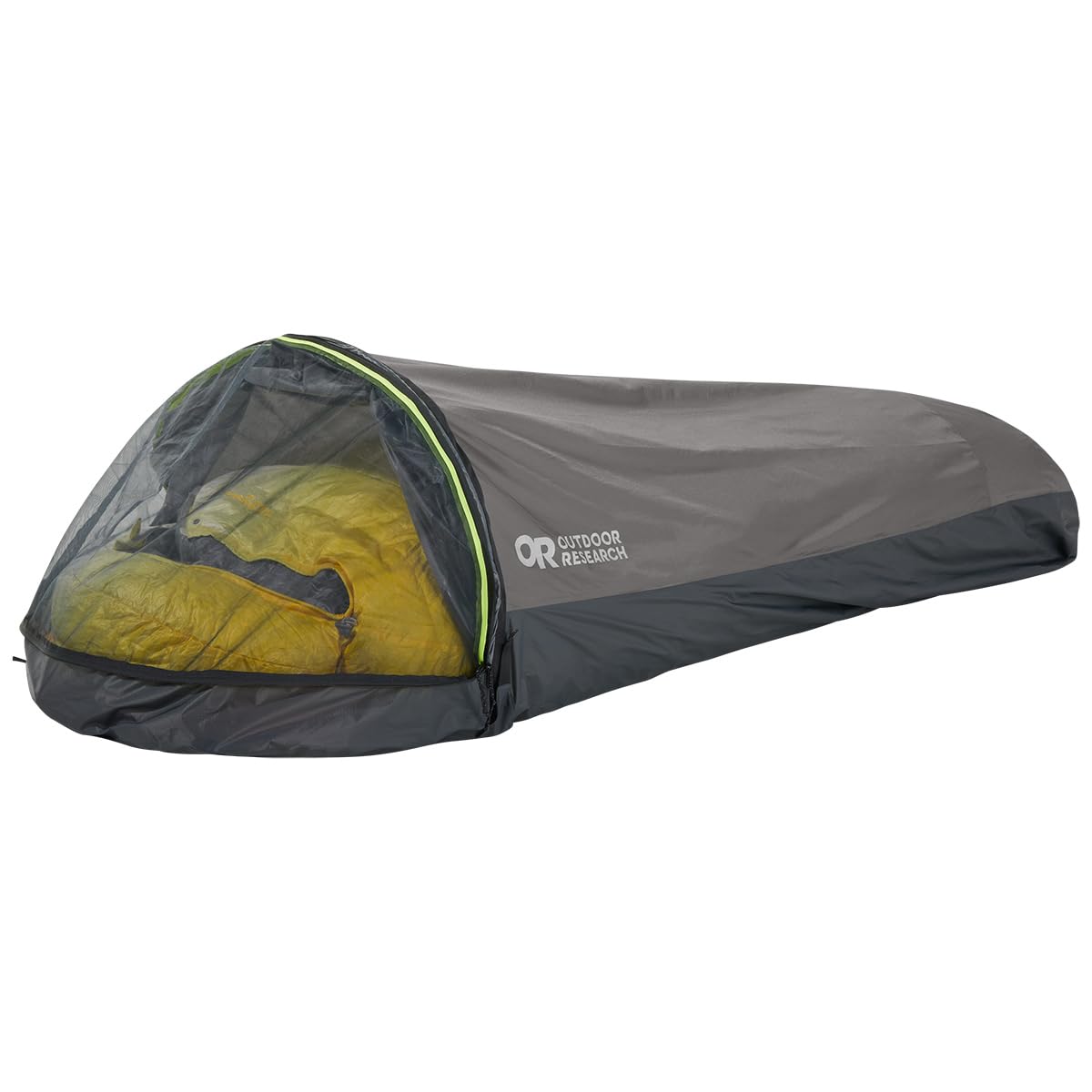
The Helium Bivy from Outdoor Research defines the modern premium bivy category with a seam-taped, fully waterproof construction that weighs just over a pound. The clamshell opening — essentially a full-length side zipper that folds the entire top panel away — eliminates the claustrophobic crawl that plagues traditional mummy-style bivies. Users report staying dry through thunderstorm and hail conditions, and the pole-arch at the head creates just enough space to keep fabric off your face, reducing that suffocating feel common in cheaper sacks.
Real-world feedback confirms the Pertex Shield fabric breathes noticeably better than military-grade PU-coated nylon. Owners note that while it is not as bombproof as a heavy Gore-Tex army bivy, the trade-off in weight and packability is worth it for fast-moving alpine missions. The 19.5-inch floor width is snug for broad-shouldered users, but the design prioritizes minimal packed volume over sprawling interior space.
Some owners have expressed a desire for a redesigned zipper door to prevent flapping in high winds, and the lack of a dedicated rainfly means you rely solely on the fabric’s waterproof coating. For backcountry travelers who value lightweight reliability and do not mind a few small compromises, this bivy delivers an exceptional balance of breathability and weather protection.
Why it’s great
- Clamshell design makes entry and exit effortless
- Excellent Pertex Shield fabric balance of waterproofing and breathability
- Remarkably light and compact for a fully seam-taped bivy
Good to know
- Floor width is narrow for larger sleepers
- No dedicated rainfly included
- Zipper can flap in strong winds without modification
2. Snugpak Stratosphere

The Snugpak Stratosphere is a hybrid that sits between a bivy sack and a one-person tent, using two aluminum poles to lift the canopy around your head and shoulders. This creates a full 20 inches of internal height at the peak — enough to sit up partially and store gear out of the weather. The 50D nylon ripstop top fabric carries a 5000 mm polyurethane coating, and the 210T nylon bottom is rated at 8000 mm, making this shelter genuinely storm-worthy for its weight class.
Real owners consistently praise the Stratosphere’s ventilation. It features a rollaway no-see-um mesh panel at the head and a back mesh section that together manage condensation far better than a sealed bivy sack. At 2.5 pounds, it is heavier than a minimalist sack, but that weight buys you a structure that does not press wet fabric against your bag. Seasoned users note that setting up the two poles takes under a minute, and the screw-lock tips add confidence in wind.
Criticism focuses on the zipper, which can snag on the mesh when closing under tension, and the occasional pooling of water at the foot end if the bivy is not staked out taut. The pole segments are unlabeled, making night setups a guessing game. For anyone wanting a bivy that feels less like a coffin and more like a tiny tent, the Stratosphere is a standout design.
Why it’s great
- Two-pole system provides real headroom and gear storage
- Dual mesh vents effectively reduce condensation
- 5000 mm HH top and 8000 mm HH bottom offer serious weather protection
Good to know
- Zipper tends to snag on mesh under tension
- Unlabeled pole segments make night assembly harder
- Foot area can pool water without taut staking
3. Snugpak Special Forces Bivvi Bag

At just 12 ounces, the Snugpak Special Forces Bivvi Bag is one of the lightest true waterproof bivy sacks on the market, using the brand’s proprietary Paratex Dry fabric to achieve a completely waterproof and windproof shell. This is a minimalist emergency shelter — no poles, no canopy, no mesh windows — just a full-body envelope that wraps around your sleeping bag and keeps external moisture out. The half-length center zip is short, requiring you to wriggle in, but the weight savings are undeniable.
Thru-hikers and lightweight backpackers confirm this bag survived heavy storms without leaking, and the fabric coating does a reasonable job of managing condensation compared to cheap PU-coated alternatives. The 91-inch length easily accommodates a 6-foot-2 user, and the stuff sack compresses down to a 6-by-4-inch cylinder. Some users report that the drawstring at the head does not cinch fully closed, leaving a small gap in heavy rain unless you modify the cord path.
A small batch of recent units reportedly arrived with less durable packaging and fabric that tore before use, suggesting quality control may vary. When you get an authentic Snugpak unit, the breathability is notably better than standard military bivies, and the weight is unbeatable for its level of waterproof protection. This is a specialized tool for those who want the lightest possible backup shelter, not a comfortable nightly bedroom.
Why it’s great
- Extremely light at 12 ounces for a fully waterproof bivy
- Paratex Dry fabric offers excellent waterproofing and decent breathability
- Packs down incredibly small at 6×4 inches
Good to know
- Half-length center zip makes entry and exit slow
- Head drawstring does not close fully without modification
- Quality control can vary between production runs
4. Military Modular Sleep System 4 Piece

The Military Modular Sleep System (MMSS) is not a bivy in the ultralight tradition — it is a complete sleep system built around a genuine Gore-Tex bivy cover, a lightweight patrol sleeping bag for 30°F to 50°F, and an intermediate cold-weather bag for -10°F to 30°F. The bivy cover itself is made from durable Gore-Tex nylon that breathes remarkably well for its rugged build, and the 4-piece system can be combined to handle temperatures down to -50°F. The bags are roomy, cut in a rectangular shape rather than a restrictive mummy silhouette.
Users who have taken the MMSS into the field consistently note that the bivy cover is the star of the system — its Gore-Tex laminate keeps moisture out while allowing vapor to escape, and the robust nylon fabric shrugs off ground abrasion. The patrol bag alone is comfortable for summer use, and adding the intermediate bag turns the system into a legitimate winter setup. Many owners praise the value compared to buying a commercial bivy and two separate down bags of similar quality.
The downside is weight: the total system tips the scales at around 10 pounds, making it completely impractical for backpacking or long-distance hiking. The bivy cover alone weighs about 2.3 pounds. The stuff sack is large and the compression buckles can break if overtightened. This system is built for car camping, base camping, military operations, and anyone who prioritizes rugged durability over weight — not for the ultralight crowd.
Why it’s great
- Genuine Gore-Tex bivy cover provides excellent breathability and waterproofing
- Two sleeping bags combine for -50°F temperature rating
- Tremendous value compared to buying separate premium bags and bivy
Good to know
- Total system weight exceeds 9 pounds — not for backpacking
- Bivy cover alone is heavy at 2.3 pounds
- Compression sack buckles can snap under heavy cranking
5. onewind Ultralight 1 Person Bivy Tent
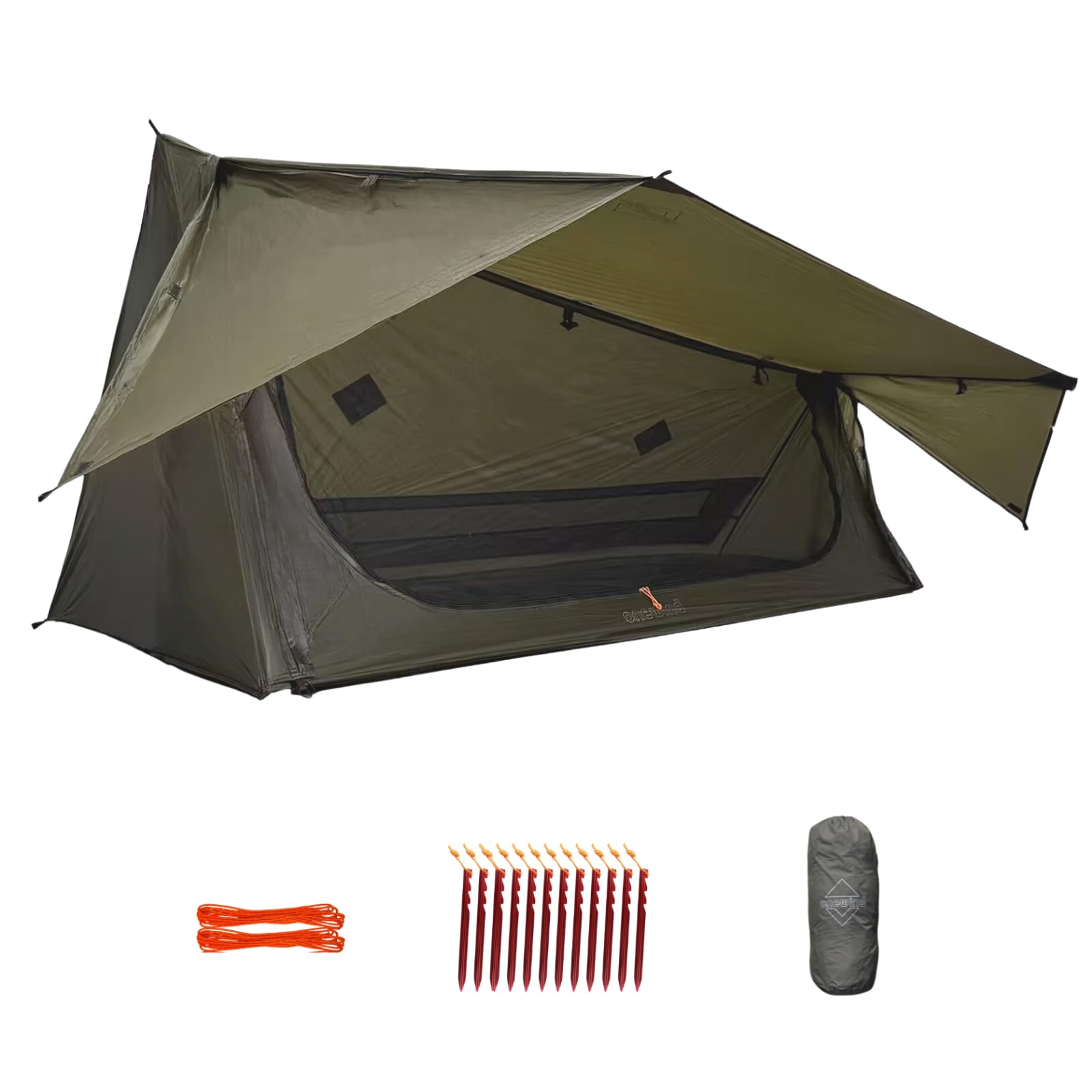
The onewind Ultralight Bivy Tent is a trekking-pole-supported A-frame shelter made from 1.1 oz silnylon, featuring a 3000 mm hydrostatic head on the fly and a robust 40D nylon floor rated at 5000 mm. Unlike a conventional bivy sack, this is a full single-skin tent with a no-see-um mesh door, a rear mesh opening, and a dedicated vent window to create cross-breeze airflow. The 39.4-inch floor width and 39.4-inch peak height provide generous internal volume for a one-person shelter.
Real-world testing from owners confirms the ventilation system is genuinely effective. Users who slept through monsoon rain on a beach reported zero water ingress and no condensation issues, largely because the mesh panels and top vent allow moisture to escape rather than trapping it inside. The shelter packs down to 13.8 by 5.1 inches and weighs just 2.3 pounds including stakes, making it competitive with ultralight single-wall tents while costing much less.
The biggest drawback is setup difficulty. The A-frame design relies on a ridgeline or trekking poles, and the included guylines are too short for optimal tension. Several owners recommend carrying extra paracord and practicing setup at home before your first trip. The floor is thin, requiring a ground cloth to protect against punctures. This bivy tent is a strong choice for backpackers who want real ventilation without paying premium prices.
Why it’s great
- Excellent cross-ventilation with mesh door, rear opening, and top vent
- Large interior volume with 39.4-inch peak height
- Very packable at 2.3 pounds total weight
Good to know
- Setup requires practice and ridgeline or trekking poles
- Included guylines are too short for optimal staking
- Thin silnylon floor needs a ground cloth for protection
6. Sierra Designs Backcountry Bivy Bag

The Sierra Designs Backcountry Bivy Bag is a lightweight, simple bivy sack designed specifically to fit the brand’s Backcountry Bed system and a sleeping pad. Weighing just 16 ounces and made from 20D nylon ripstop, it prioritizes packability over rugged durability. The large U-shaped opening makes entry far easier than a mummy-style bivy, and the mesh window panel at the head provides ventilation when conditions are dry. The underside is not heavily reinforced, so a ground sheet is recommended for rocky terrain.
Backpackers who have used this bivy on multi-day trips appreciate how small it compresses — it stuffs to about the size of a 1-liter bottle, fitting easily inside a pack or strapped to the outside. The waterproof-breathable top fabric keeps morning dew at bay, and the guy line loop at the peak helps lift fabric off your face for slightly better air circulation. Users around 6 feet 3 inches of height report a comfortable fit with room for a pillow and pad inside.
The main concern is the long-term durability of the 20D shell. Owners note that the zipper feels less robust than heavier bivies, and the thin fabric requires careful site selection to avoid punctures. Condensation can still collect inside during humid conditions, though the mesh panel helps. For ultralight enthusiasts who want a dedicated bivy sack that integrates well with a pad and quilt system, this is a smart, budget-conscious choice.
Why it’s great
- Very light at 16 ounces with excellent packability
- Large U-shaped opening for easier entry
- Mesh window panel provides good ventilation in dry conditions
Good to know
- 20D nylon shell is less durable than heavier bivy fabrics
- Zipper feels less robust than premium competitors
- Condensation can form in humid conditions despite mesh vent
7. AquaQuest Pharaoh Bivy Sack
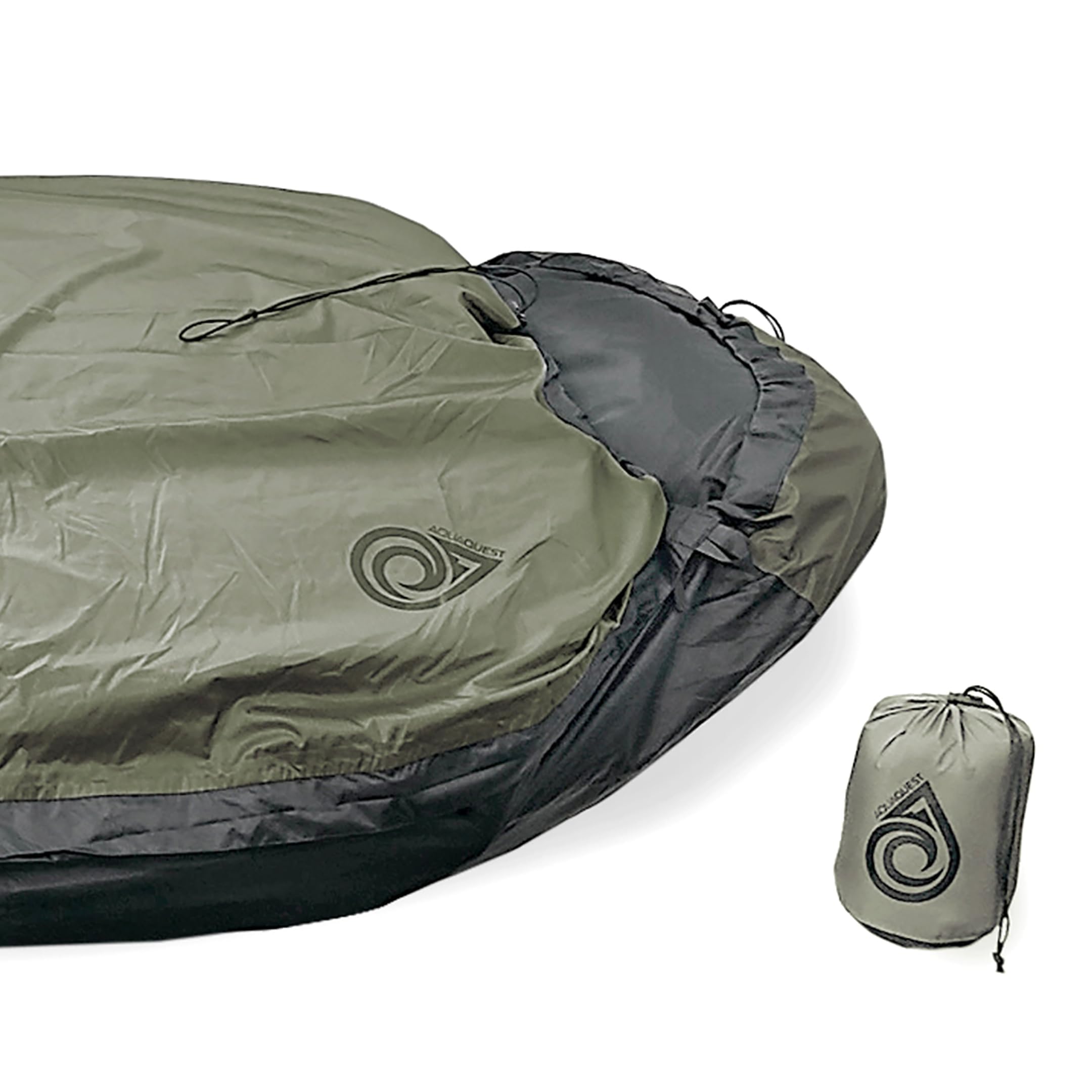
The AquaQuest Pharaoh Bivy Sack is a purpose-built waterproof envelope designed for extreme wet conditions, featuring a 10,000 mm hydrostatic head and an MVTR of 10,000 g/m²/day on its durable 70D nylon shell. This is a true no-frills bivy — no poles, no canopy, no mesh doors — just a fully sealed, drawstring-hooded sack that wraps your sleeping bag in a robust, waterproof cocoon. At just over a pound, it offers serious weather protection for its weight.
Owners who used the Pharaoh in heavy Rocky Mountain rain reported staying bone-dry while nearby tent campers endured soaked gear. The dual-zipper side access allows you to enter from either side, a thoughtful feature that lets you orient your pad and bag optimally. The built-in stuff sack compresses the bivy into a 9-by-5-inch cylinder. The hood’s elastic drawstring can fully seal around your face, which is critical in driving rain but requires leaving a small breathing gap.
User feedback highlights two recurring issues. The hood opening is large and the drawstring does not cinch tight enough to close fully, leaving a gap that exposes the top of your sleeping bag. The Velcro patches on the zipper covers are aggressive and can snag on fleece or merino base layers, and the fabric crinkles loudly when moving — a problem for stealth campers. The Pharaoh excels as a pure rain shield for dedicated minimalists who understand its limitations.
Why it’s great
- Excellent 10,000 mm hydrostatic head for heavy rain protection
- Durable 70D nylon shell resists abrasion and punctures
- Dual side zippers for flexible entry and exit
Good to know
- Hood drawstring does not close fully, leaving a gap
- Velcro patches snag on soft fabrics and fleece
- Fabric is loud when moving — not ideal for stealth camping
8. Night Cat Ultralight Tent 1 Person

The Night Cat Ultralight Tent is a dome-style single-person shelter that blurs the line between bivy sack and small tent. Unlike traditional bivies that require trekking poles, this tent uses its own aluminum pegs and included poles to create a freestanding dome structure. The floor measures 90.5 inches long by 39.4 inches wide, making it one of the roomiest budget-friendly options for solo campers. The rainfly is made from a waterproof coated polyester with taped seams.
Backpackers on a budget report that this tent held up well in rain and temperatures down to 20°F, with the fly keeping moisture out for the most part. The 2-pound total weight is respectable for a self-supporting tent at this price point, and setup is genuinely fast — the pole sleeves and clip system let you pitch the tent in about 5 minutes. The compact carry bag makes it easy to stow inside a backpack or strap to the outside.
There are clear compromises to keep the cost low. The rainfly does not fully cover the tent’s mesh roof, leaving a gap that can allow splashing rain to enter in heavy downpours. The supplied pegs are lightweight but prone to bending in hard or rocky ground. Taller users over 6 feet find the length adequate but the peak height too low to sit up fully. For weekend car campers or short backpacking trips where weight matters but budget rules, this tent delivers acceptable performance for the price.
Why it’s great
- Roomier than typical bivy sacks with 39.4-inch floor width
- Fast, freestanding setup with included poles and stakes
- Very affordable entry point into solo bivy-style camping
Good to know
- Rainfly leaves a gap that can allow splash-through in heavy rain
- Included stakes are lightweight and bend easily
- Peak height is low for sitting up inside
9. Kakadu Swift Pitch Bivy Tent
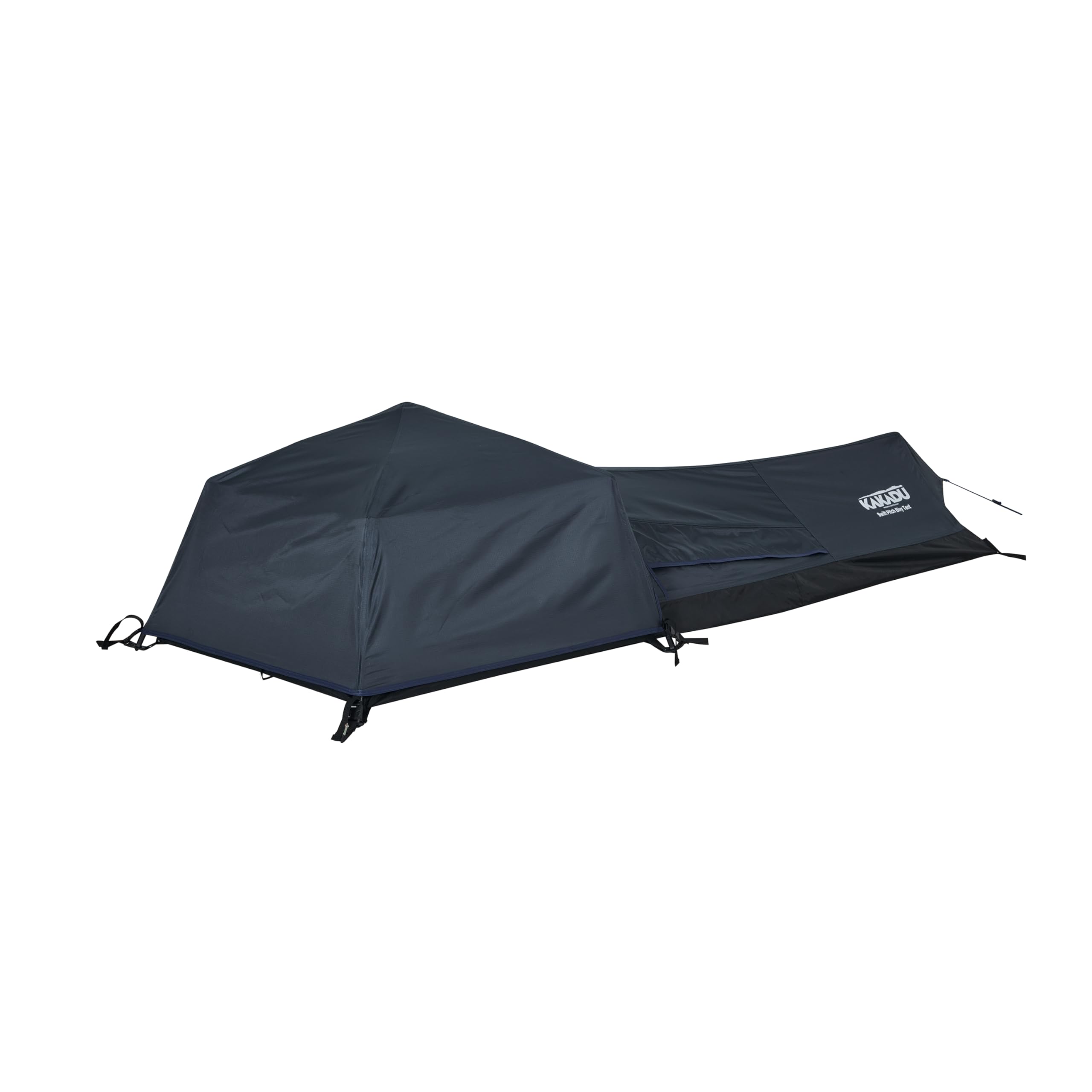
The Kakadu Swift Pitch Bivy Tent is an Australian-designed single-person shelter built around a hub-and-pole system that allows a claimed one-minute setup time. The 150D ripstop rainfly is exceptionally thick for the bivy category, providing serious weather protection for a shelter at this price point. The floor width is 20 inches, making this the narrowest bivy on this list, intentionally compact for touring and overlanding where packability matters more than sprawling space.
User reviews confirm the hub system genuinely simplifies pitching — the main structure pops into place quickly, and the included stakes and guy ropes secure the shelter in less than two minutes. The 150D fly fabric is noticeably heavier and more abrasion-resistant than the silnylon and 20D options found on ultralight bivies, making this a solid choice for rocky or brushy campsites. The roll-top carry bag with compression straps keeps the packed bivy dry and compact for strapping to a motorcycle or backpack.
The trade-off for that rugged construction is weight. At 5 pounds, the Kakadu is the heaviest bivy in this guide — more than triple the weight of the lightest options. The small floor width (20 inches) and low internal volume mean it is best suited for smaller-framed users or those who primarily use it as a protective shell over a sleeping bag rather than a livable space. Taller and larger users consistently report a tight fit with toes touching the end, and the hub joint can resist folding during breakdown. This is a specialized, value-priced bivy for the overland and touring crowd who prioritize quick, durable shelter over ultralight grams.
Why it’s great
- Swift Pitch hub system enables extremely fast setup
- Thick 150D ripstop rainfly provides excellent abrasion and weather resistance
- Roll-top carry bag with compression straps keeps gear dry and organized
Good to know
- At 5 pounds, it is the heaviest bivy tent on this list
- 20-inch floor width is very narrow — not suitable for larger users
- Hub joint can be difficult to collapse during breakdown
FAQ
What is the difference between a bivy sack and a bivy tent?
Will I get condensation inside a bivy tent?
Can a bivy tent replace a standard backpacking tent?
What is the best fabric for a bivy tent in cold weather?
How do I clean and maintain my bivy tent?
Final Thoughts: The Verdict
For most users, the best bivy tent winner is the Outdoor Research Helium Bivy 2024 because its clamshell design, excellent Pertex Shield fabric, and low weight hit the sweet spot between true weather protection and genuine livability. If you want a pole-supported shelter with superior ventilation and an affordable price, grab the onewind Ultralight 1 Person Bivy Tent. And for extreme wet conditions or year-round car camping where durability matters more than ounces, nothing beats the Military Modular Sleep System 4 Piece with its Gore-Tex bivy cover and versatile temperature range.

Mo Maruf
I created WellFizz to bridge the gap between vague wellness advice and actionable solutions. My mission is simple: to decode the research and give you practical tools you can actually use.
Beyond the data, I am a passionate traveler. I believe that stepping away from the screen to explore new environments is essential for mental clarity and physical vitality.