Our readers keep the lights on and my smoothie glass nicely filled. As an Amazon Associate, I earn from qualifying purchases.
That sickening scrape as your drill bit wanders across a freshly installed wall tile is a sound no DIYer forgets. It usually ends with a chipped surface, a ruined tile, and a trip back to the hardware store. The right bit locks in immediately, cutting clean through glazed ceramic or dense porcelain without that heart-stopping moment of slippage.
I’m Mohammad Maruf — the founder and writer behind WellFizz. Over the last four years I have analyzed over 200 tile and masonry bits, comparing carbide grades, diamond bonding methods, and shank geometries to separate the bits that actually bite from those that just spin in place.
Whether you are mounting a towel bar or drilling for a new shower valve, the right cutting tool makes the difference between a clean install and a costly mistake. This guide covers only the most reliable best bits for drilling tile, tested against real-world scenarios like hard porcelain, natural stone, and glazed ceramic.
How To Choose The Right Bit For Drilling Tile
Picking the wrong bit for tile is like using a butter knife against a brick. The hardness of the tile material directly dictates which tip technology will actually cut, not just burnish the surface. You need to match the bit’s material to the tile’s hardness rating.
Carbide vs. Diamond: Which tip technology fits your tile?
For standard ceramic wall tile and softer natural stone, a carbide-tipped bit (like the Bosch NS2000) offers a sharp, multi-edged head that scores and grinds efficiently. For porcelain, granite, or thick stone tiles, a diamond-welded or vacuum-brazed diamond bit (like the DEWALT DW5572 or the BGTEC diamond core set) is a must. Diamond particles are significantly harder than the silica in porcelain, allowing the bit to abrade rather than fracture the material.
Shank design and chuck compatibility
A standard 1/8-inch round shank works with most rotary tools, but larger bits (3/8-inch and above) benefit from a three-flat shank. This prevents the bit from spinning inside the chuck under the high torque required to drill through dense tile. Quick-fit hex shanks, like those on the BGTEC masonry set, offer faster bit swaps but require a compatible drill chuck.
Cooling: The secret to bit longevity
Friction from drilling generates extreme heat that softens metal bonds and dulls cutting edges. Bits with built-in wax cores (like the BGTEC diamond set) provide self-lubrication for short dry runs. For any drilling longer than 30 seconds, you must use water cooling — either a spray bottle, a wet sponge, or the bit’s own reverse spiral thread that channels water to the cutting zone.
Quick Comparison
On smaller screens, swipe sideways to see the full table.
| Model | Category | Best For | Key Spec | Amazon |
|---|---|---|---|---|
| DEWALT DW5572 | Diamond Tip | Hard porcelain & stone | 1/4-Inch diamond welded tip | Amazon |
| Bosch NS2000 | Carbide Set | Ceramic & natural stone | 4-piece set, multi-grind head | Amazon |
| BGTEC Diamond Core Set | Dry Diamond | Dry drilling porcelain & granite | 10pc 1/4″ hole saw, vacuum brazed | Amazon |
| BGTEC Masonry Set | Carbide Multi | Versatile drilling (tile + brick) | 10pcs, tungsten carbide, hex shank | Amazon |
| Dremel 562 | Rotary Bit | Cutting & grinding tile | 1/8″ diameter, cylinder shape | Amazon |
In‑Depth Reviews
1. DEWALT Tile Drill Bit, Diamond Tip, 1/4-Inch (DW5572)
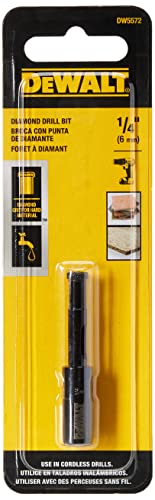
The DEWALT DW5572 is the reference standard for drilling through hard porcelain tile. Its diamond-welded tip is engineered to hold a cutting edge longer than electroplated alternatives, and the integrated reverse spiral thread actively pulls water into the cut zone while ejecting debris. Users report drilling a dozen 1/4-inch holes through half-inch porcelain without any noticeable wear on the tip.
This bit thrives with a wet sponge or spray bottle as coolant. The core ejection slot removes the solid plug after each hole, so you do not waste time chipping out residue. While the price per bit is higher than a carbide alternative, the extended lifespan on dense tile makes the cost-per-hole remarkably low for serious DIYers and pros alike.
One common technique involves using a wood template with a 1/4-inch hole to prevent the bit from walking on slick glazed surfaces. A few seconds of patience while starting the cut at a 45-degree angle, then leveling out, produces a clean entry hole with zero chipping.
Why it’s great
- Diamond welding delivers exceptional durability on porcelain
- Reverse spiral thread improves water cooling and debris removal
- Core ejection slot makes repetitive holes faster
Good to know
- Single bit size only (1/4-inch) limits versatility
- Requires a starting technique or template to prevent walking
2. Bosch NS2000 4 pc. Natural Stone Tile Set
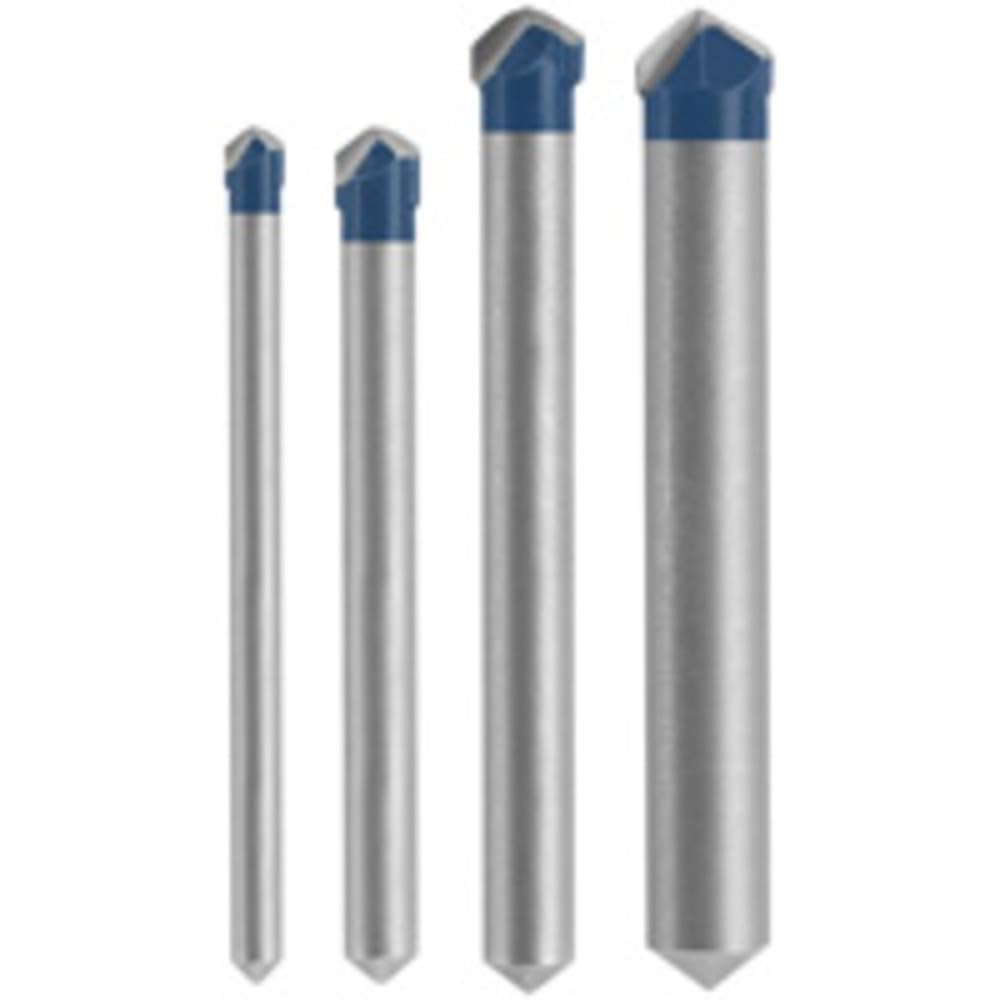
The Bosch NS2000 set comes with four sizes (1/8-inch, 3/16-inch, 1/4-inch, 5/16-inch) in a single pack, giving you the right bit for pilot holes, anchor installs, and fixture mounting. The Multi-Grind head design uses multiple carbide cutting edges that deliver faster drilling in natural stone compared to standard tile bits, and the specialized carbide tip geometry centers the cut to eliminate skate.
This set excels on ceramic wall tile, slate, granite, and marble — users drilled clean holes through quartz and marble without any cracking or chipping. The three-flat shank on the 3/8-inch and above bits prevents grip loss in the chuck, a common failure point on cheaper round-shank bits. Bosch explicitly recommends this set for natural stone and specialty tile, not for porcelain, where diamonds perform better.
Drilling at a slow speed (under 500 RPM) with minimal pressure produces the best results. The bits are sharp out of the pack, so starting with a light touch prevents the bit from grabbing. For those working primarily with ceramic and stone, this is the most versatile set in its class.
Why it’s great
- Four common sizes in a single convenient set
- Multi-grind head prevents skate on hard surfaces
- Three-flat shank provides excellent chuck grip
Good to know
- Wears quickly on porcelain tile after a few uses
- Not recommended for heavy-duty concrete drilling
3. BGTEC Dry Diamond Drill Bit Set, 10pcs 1/4″ Hole Saw

The BGTEC diamond core set uses vacuum-brazed diamond particles on the cutting edge, creating a dense, long-wearing abrasive surface. Each bit has a wax core inside that melts during use to lubricate and cool the cut, allowing dry drilling for short bursts. For longer sessions, adding water reduces dust and preserves the diamond bond.
Each of the ten bits creates a clean 1/4-inch hole, making this an ideal bulk solution for repetitive tasks like drilling multiple holes for shelving brackets or anchoring in a tiled shower. Users report drilling six holes through half-inch porcelain tile with a single bit, making the set a strong value. The side groove on each bit helps remove stone chips from the cutting zone, preventing clogging in deeper holes.
Holding the drill perfectly perpendicular is critical; any wobble causes the bit to walk and potentially chip the edge. Starting with a smaller pilot bit or using a tape cross mark helps center the cut. For precise, clean holes in dense porcelain, this set gets the job done quickly.
Why it’s great
- Vacuum-brazed diamond cuts porcelain and granite effectively
- Built-in wax core allows dry drilling without immediate damage
- Ten bits per pack provide excellent per-hole value
Good to know
- Requires steady, perpendicular pressure to prevent wandering
- Hole saw design creates a solid core that must be tapped out
4. BGTEC Masonry Drill Bits, 10pcs Tungsten Carbide Tip Set
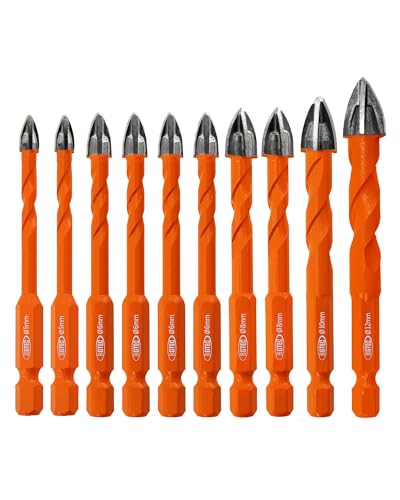
This BGTEC set brings ten tungsten carbide-tipped bits in sizes from 5mm to 12mm, covering nearly any anchor or screw pilot hole you will encounter around the house. The crosshead tip design puts a precision point at the center, which digs into the tile surface immediately and prevents the skating problem that plagues standard flat-point masonry bits.
The quick-fit hex shank locks into impact drivers and standard chucks without slipping, which is a real advantage over round-shank bits that spin out under torque. Users have successfully drilled multiple holes in porcelain tile, with some reporting two to three holes per bit before the carbide begins to dull. For ceramic tile and brick wall work, these bits last considerably longer.
Water cooling is mandatory for hard tile applications; drilling without water significantly shortens bit life. A trick from experienced users: use a larger bit’s tip to create a starting divot, then switch to the correct size for the final hole. This set is the best choice if you need to drill through tile, brick, concrete, and wood on the same job.
Why it’s great
- 10-piece set covers a wide range of common diameters
- Hex shank prevents chuck slip under high torque
- Crosshead tip reduces skating on glazed surfaces
Good to know
- Not optimized for heavy-duty concrete or rebar drilling
- Wears faster on porcelain than on ceramic or brick
5. Dremel 562 Tile Cutting Bit, 1/8-Inch
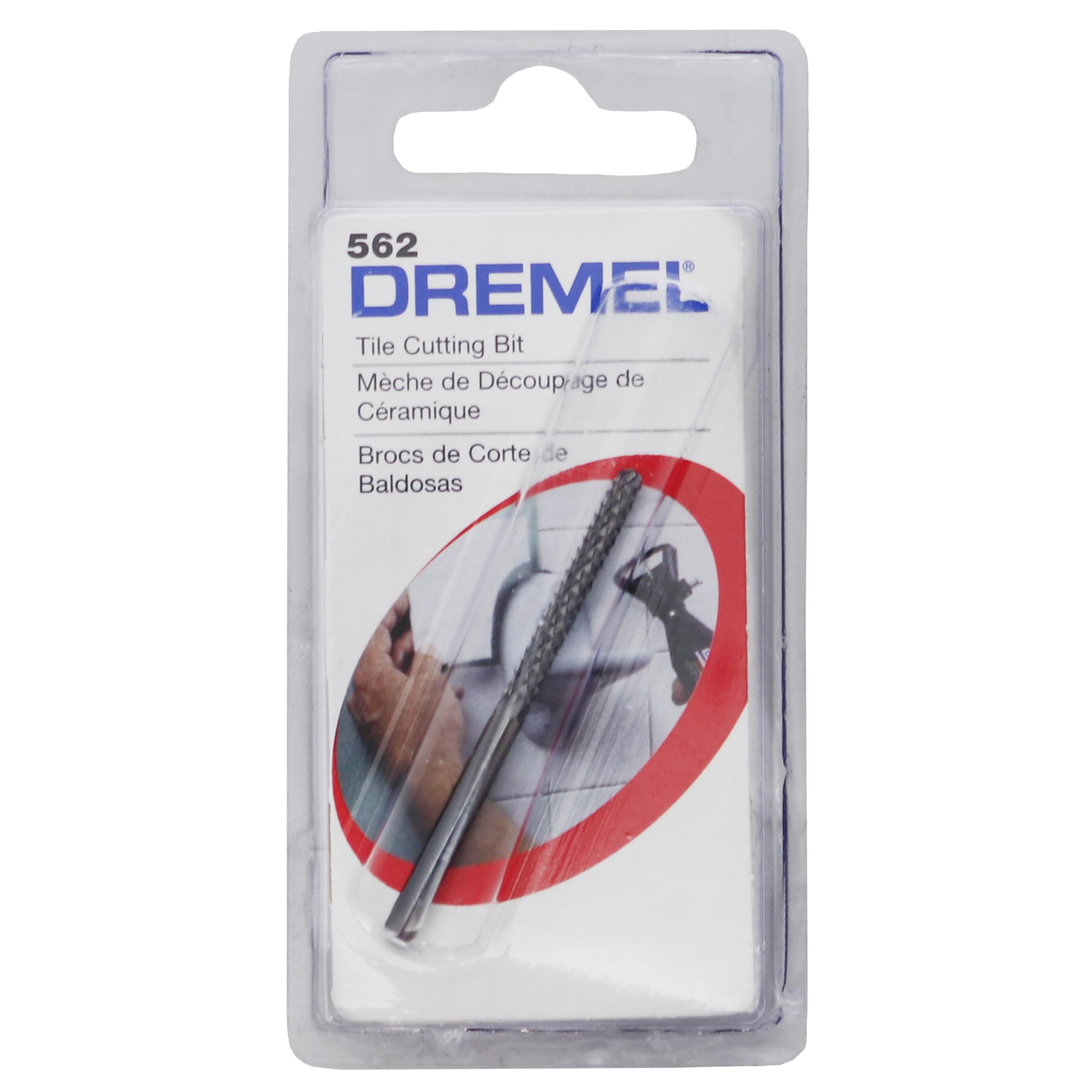
The Dremel 562 is not a traditional drill bit — it is a cylindrical carbide cutting bit designed for rotary tools like the Dremel 3000 or 4000. Its 1/8-inch diameter shank fits all standard rotary tool collets, and the cylinder shape allows you to grind out grout, score tile, and make small cutouts for electrical boxes. Users praise its ability to chew through old, hard grout and trim installed ceramic tiles.
While the 562 works well on ceramic wall tile and cement board, it is not intended for floor tile or heavy stock removal. The bit generates significant fine dust, so a vacuum attachment and mask are strongly recommended. Using the Dremel 565 Multi-Purpose Cutting Attachment helps maintain consistent depth and prevents the bit from plunging too deep.
For cutting straight lines in tile, a guide or straight edge is essential — the cylindrical shape offers no self-centering ability. This bit shines in repair work and detailed adjustments where a standard carbide drill bit cannot reach. If you already own a rotary tool, the 562 is a cheap but capable addition.
Why it’s great
- Excellent for grinding out hard grout and tile trimming
- Works with all standard 1/8-inch collet rotary tools
- Very affordable compared to larger tile cutting systems
Good to know
- Not suitable for cutting through thick floor tile or porcelain
- Produces fine silica dust — requires mask and ventilation
FAQ
Why does my tile bit keep walking across the surface?
Can I use a standard masonry bit for tile?
Do I really need water to drill through tile?
How do I drill a clean hole in a tile that is already installed?
Final Thoughts: The Verdict
For most users, the best bits for drilling tile winner is the DEWALT DW5572 because its diamond-welded tip and reverse spiral thread deliver unmatched reliability on hard porcelain tile without needing multiple bits per job. If you want a versatile set for ceramic and natural stone, grab the Bosch NS2000. And for dry drilling of dense materials with a bulk supply of interchangeable bits, nothing beats the value of the BGTEC Dry Diamond Set.

Mo Maruf
I created WellFizz to bridge the gap between vague wellness advice and actionable solutions. My mission is simple: to decode the research and give you practical tools you can actually use.
Beyond the data, I am a passionate traveler. I believe that stepping away from the screen to explore new environments is essential for mental clarity and physical vitality.