Our readers keep the lights on and my smoothie glass nicely filled. As an Amazon Associate, I earn from qualifying purchases.
That moment you step outside to pick a ripe tomato only to find it pecked hollow — the frustration is universal for anyone who tends a vegetable patch or fruit tree. Birds are clever, persistent foragers that can decimate a season’s worth of work in days, leaving gardeners searching for a solution that actually holds up against beaks, claws, and weather. The difference between a ravaged plot and a bountiful harvest often comes down to the physical barrier you choose, whether it’s a woven mesh, a spike strip, or a fine row cover.
I’m Mohammad Maruf — the founder and writer behind WellFizz. I’ve spent years parsing agricultural supply specs, reviewing tensile strength of HDPE versus nylon, and analyzing how mesh aperture size directly correlates with bird exclusion success rates.
This guide breaks down the seven most effective barriers so you can stop losing your crops to feathered thieves. Here is everything you need to know to select the right bird deterrent for garden.
How To Choose The Best Bird Deterrent For Garden
Not all bird barriers work the same way. A net that stops a blue jay might be useless against a sparrow small enough to slip through a half-inch gap. Before you buy, understand these three critical factors that separate an effective solution from a wasted install.
Mesh Aperture: The Gatekeeper Spec
The size of each opening in the net is the single most important spec. A 5/8-inch mesh blocks larger birds like pigeons and jays but may allow smaller species like finches to push through. A 1/2-inch mesh stops almost all bird species while still permitting pollinators to pass. Ultra-fine mesh (around 0.04 inches or 60 mesh per inch) also blocks insects, making it a dual-purpose barrier but reducing airflow and light penetration slightly. Always match the aperture to the smallest bird species in your region.
Material Density and UV Resistance
Netting weight is measured in ounces per square yard (oz/yd²). Budget netting often falls below 0.3 oz/yd² and tears within one season under direct sun. Mid-range options land around 0.65 oz/yd² — strong enough for two to three seasons. Premium heavy-duty nets sit at 1 oz/yd² or higher and can support over 100 pounds of tension without deforming. Material type matters just as much: HDPE (high-density polyethylene) resists UV degradation better than standard PE or nylon, while Nanometer PPT offers superior tear resistance against hail and sharp branches.
Installation Method and Included Hardware
Some nets come with landscape staples, twist ties, or plastic stakes — others arrive as bare rolls. For raised beds and ground crops, you need stakes or staples to anchor the edges against wind lift. For fruit trees and tall shrubs, you need a netting that cuts cleanly without fraying and drapes without tangling. Pre-assembled products like bird spikes skip the cutting step entirely, but they only work on ledges and flat surfaces, not over vegetation. Think about whether you are covering a surface or enclosing a volume before choosing the format.
Quick Comparison
On smaller screens, swipe sideways to see the full table.
| Model | Category | Best For | Key Spec | Amazon |
|---|---|---|---|---|
| Meanchen 25×50 Ft | Premium Netting | Large orchards and heavy pressure | 1.0 oz/yd², 1/2 inch mesh | Amazon |
| Abimars Nano PPT 10×33 Ft | Premium Mesh | Insect + bird dual protection | Ultra-fine mesh, 30% shade | Amazon |
| OFFO Bird Spikes 10 Ft | Spike Barrier | Ledges, roofs, and fence tops | 304 stainless steel, 6 needles/set | Amazon |
| Fetanten 13×40 Ft | Mid-Range Netting | Raised beds and fruit trees | 5/8 inch mesh, 0.65 oz/yd² | Amazon |
| RIFNY 13×40 Ft | Mid-Range Netting | Extreme weather climates | -58°F to 212°F range | Amazon |
| GonLei Ultra-Fine 10×50 Ft | Fine Mesh | Seedlings and vegetable starts | 60 mesh per inch, PE nylon | Amazon |
| ATICCA 7.5×100 Ft | Budget Netting | Long narrow beds or trellises | 1/2 inch mesh, 10 stakes | Amazon |
In‑Depth Reviews
1. Meanchen Bird Netting 25×50 Ft
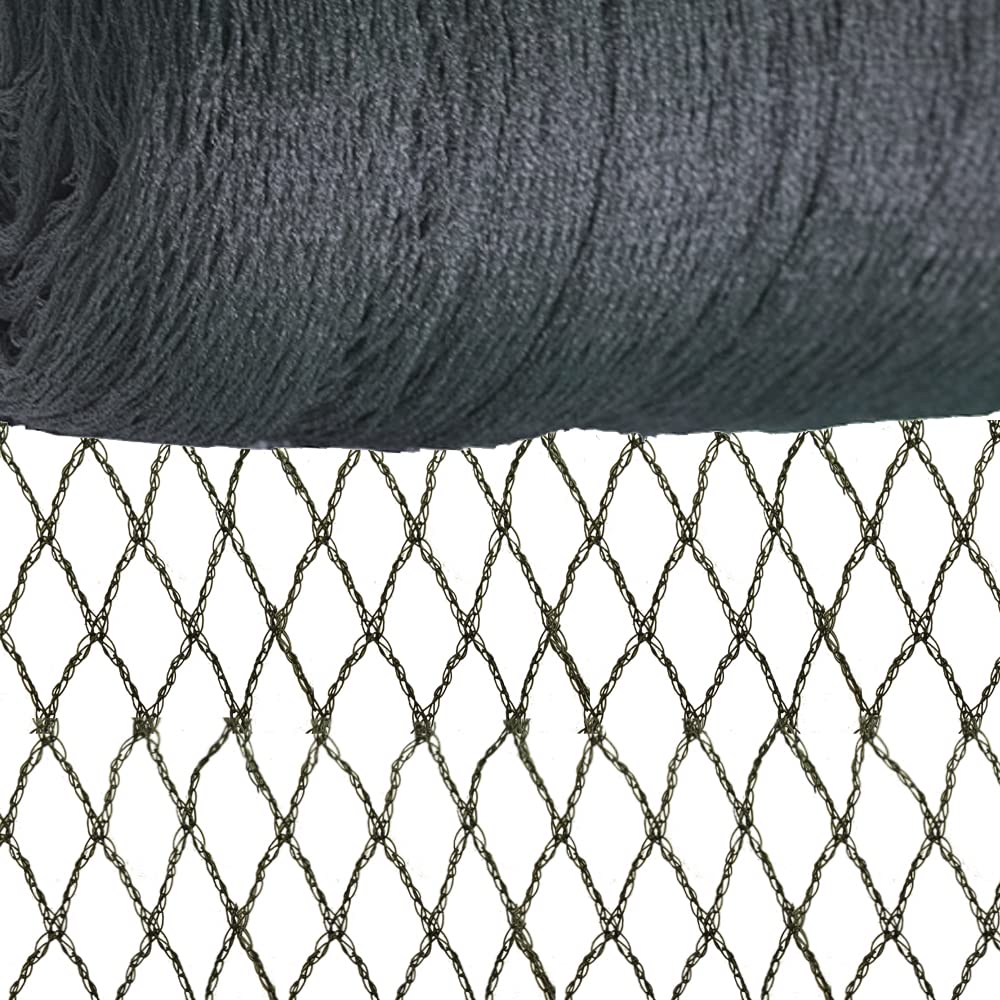
The Meanchen netting sits at the top tier for a reason: it weighs 1.0 oz/yd² — roughly three times denser than entry-level nets — and uses a diamond-shaped woven pattern that resists stretching out of shape under tension. The 1/2-inch mesh is small enough to block every common garden bird including sparrows and finches, while still permitting ample airflow and sunlight. Users drape this over cherry trees and blueberry bushes with no tearing, even after repeated windstorms.
Unlike thinner nets that require replacement after a single growing season, the Meanchen material is UV-resistant polyethylene with anti-aging additives. The green color helps the net blend into foliage rather than glaring like a black monolith in the garden. It also supports over 100 pounds of load, which means you can stretch it taught over a chicken coop run without sagging into the birds’ reach.
The 25×50-foot coverage area suits medium to large gardens — enough to drape several fruit trees or a substantial raised bed complex. The main trade-off is that the heavy material is slightly stiff right out of the package; you will need a few minutes of handling to get it to lie flat. Once installed, however, this netting consistently holds up across multiple seasons, making it the most cost-effective long-term investment for serious gardeners.
Why it’s great
- Heaviest fabric weight at 1.0 oz/yd² resists tears from squirrels and branches
- 1/2-inch mesh excludes all bird species including small finches
- UV-resistant PE stands up to full sun exposure across multiple seasons
Good to know
- Diamond weave can stretch and distort the stated dimensions slightly during installation
- Heavy material requires stakes or a support structure to keep off delicate plants
2. Abimars Thicker Garden Mesh Netting 10×33 Ft
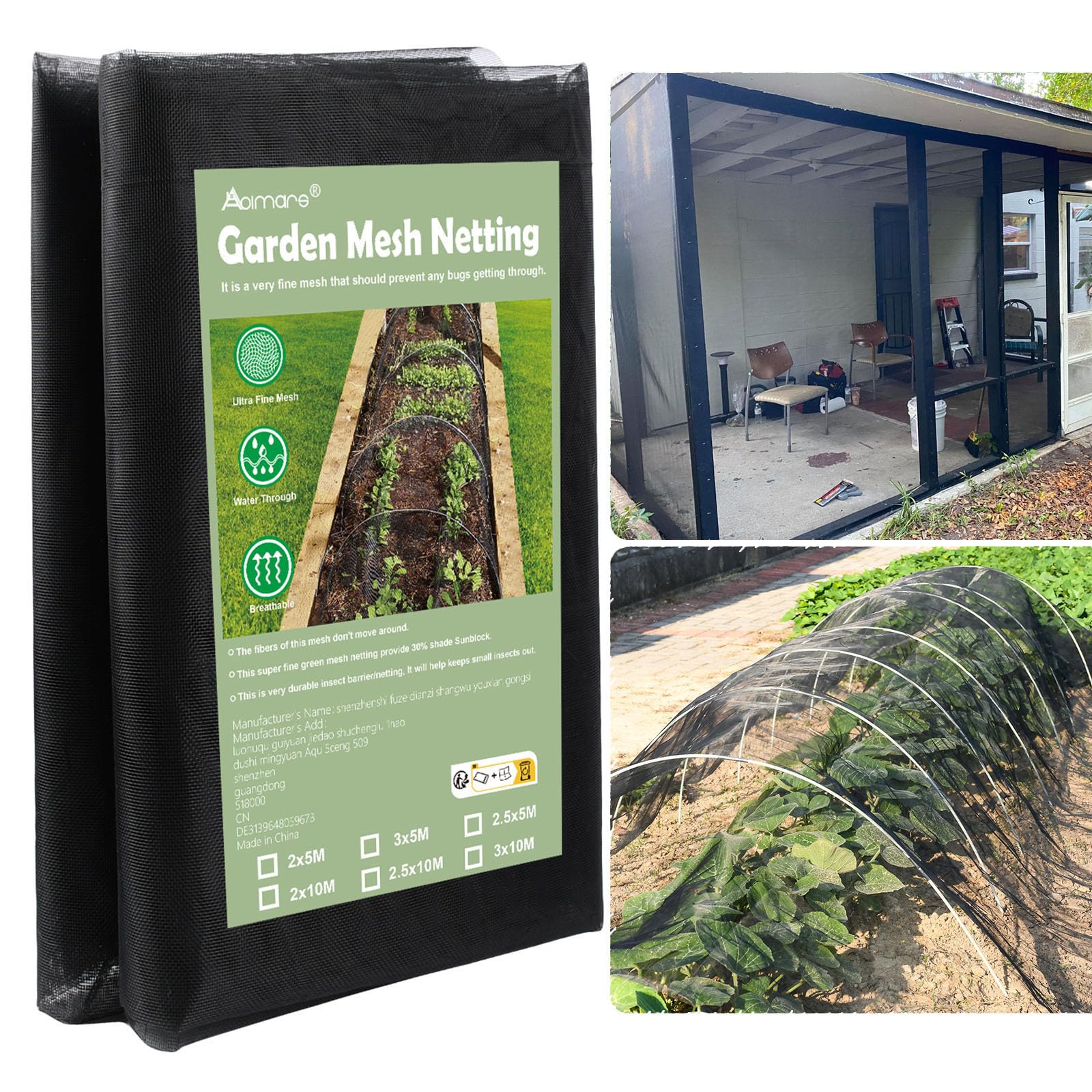
The Abimars netting uses a Nanometer PPT composite that outperforms standard polyethylene in tear resistance — customers report it surviving hail impacts that would punch holes in typical row covers. The ultra-fine mesh (60 threads per inch) creates a physical barrier that stops not only birds but also Japanese beetles, caterpillars, and even mosquitoes, which makes it a dual-purpose tool for gardeners fighting multiple pest fronts simultaneously.
One unique feature is the built-in 30% shade factor, which reduces leaf temperature on scorching summer days and slows moisture evaporation from the soil. For cool-season crops like lettuce and spinach that bolt in high heat, this netting extends the harvest window. The black color absorbs rather than reflects light, so it does not create glare or heat spots on the foliage below.
The fibers are thermally bonded rather than woven, which means the net does not fray when cut — you can scissor it to any shape and the edges stay clean without hemming. The lightweight feel (1.33 oz/yd²) makes it easy to handle, but you must use support hoops or stakes because the fabric is heavy enough to bend young stems if draped directly. The 10×33-foot size fits three to four standard raised beds.
Why it’s great
- 30% shade factor reduces heat stress and watering frequency for cool-weather crops
- Nanometer PPT material resists tearing from hail and sharp branch stubs
- Non-fray edges allow clean custom cuts for irregular garden shapes
Good to know
- Ultra-fine mesh slightly reduces light penetration compared to standard 1/2-inch netting
- Must be supported by hoops or stakes to prevent direct contact with plant foliage
3. OFFO Bird Spikes Pre-Assembled 10 Ft
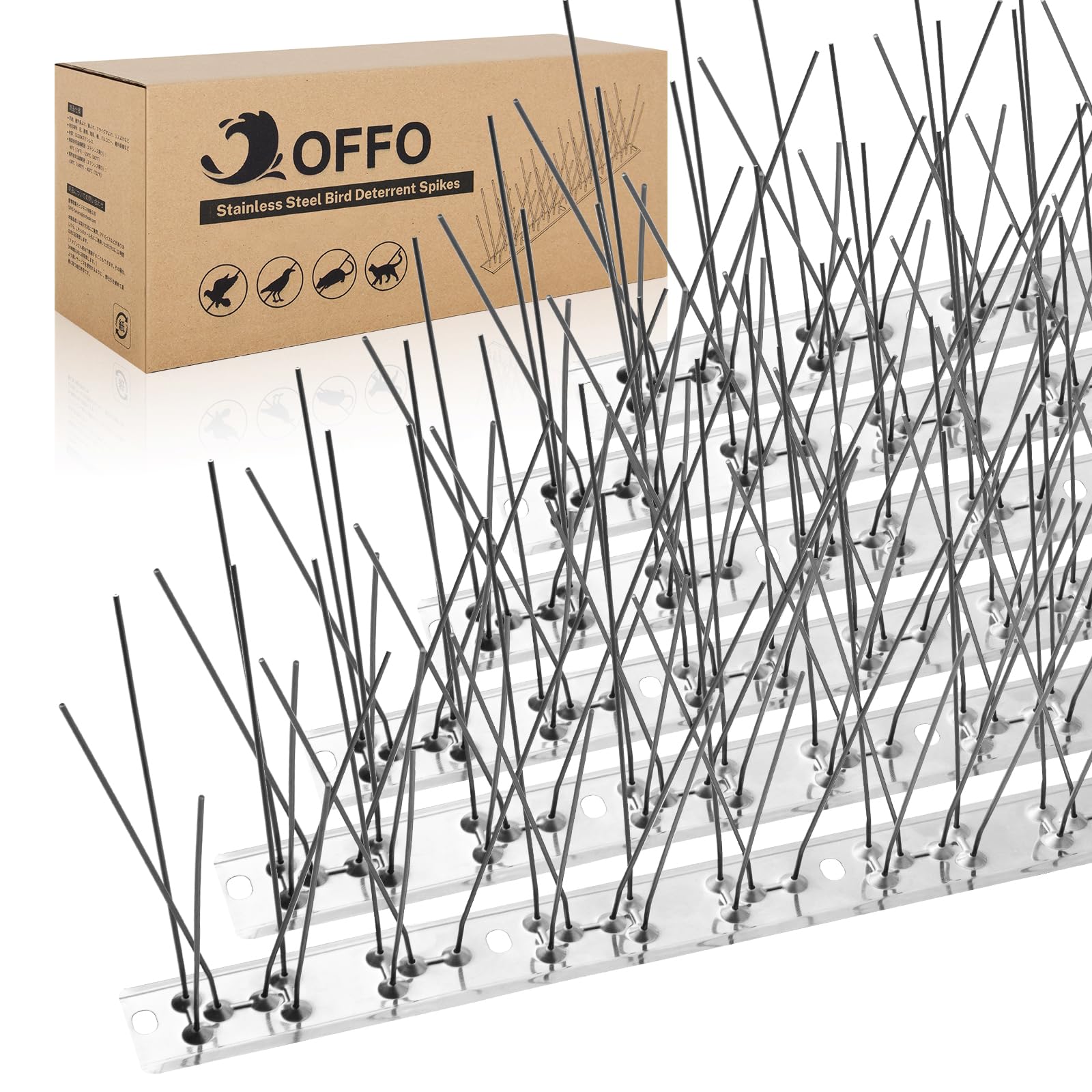
While netting protects plants in the open garden, the OFFO spikes solve a different problem: birds perching and nesting on fence tops, window sills, roof ridges, and porch railings. Each spike cluster has six 4-inch-long stainless steel needles arranged to cover 360 degrees, meaning a pigeon cannot land between the needles. The bright silver surface reflects sunlight, creating a visual flash that further discourages birds from attempting to settle.
The pre-assembled design is the standout convenience here — you open the package and install immediately without threading individual pins into plastic bases. The 304 stainless steel is corrosion-proof, rated for 15 years of outdoor use, and the base bends easily around curved surfaces like wrought iron rails or gutter edges. Customers have used these on McNeil fences, privacy fence tops, and even mailbox ridges with zip ties or screws.
These spikes work exclusively on flat or narrow horizontal surfaces. They will not protect vegetables, raised beds, or fruit trees. If bird damage in your garden comes from perching on structures above the plants, these are the solution. For direct crop protection, you still need netting. The coverage is 10 linear feet per pack, and installation takes roughly 15 minutes with screws or heavy-duty adhesive tape.
Why it’s great
- Six-needle cluster covers 360 degrees to block all landing angles
- 304 stainless steel rated for 15-year lifespan with zero maintenance
- Pre-assembled design cuts installation time to minutes
Good to know
- Only protects flat surfaces — does not cover crops, plants, or soil beds
- Each pack covers only 10 linear feet; large perimeter fences require multiple packs
4. Fetanten Bird Netting 13×40 Ft

The Fetanten netting strikes a smart middle ground between light-duty row covers and industrial-grade nets. Made from HDPE at 0.65 oz/yd², it is strong enough to survive deer bumping against it yet flexible enough to drape directly over tomato cages without additional support. The 5/8-inch woven mesh blocks pigeons, jays, squirrels, and poultry while still allowing bees and other pollinators to pass through freely.
What sets this kit apart is the included hardware: you get steel landscape staples and twist ties, which means you can start installing immediately without a trip to the hardware store. The HDPE material is UV-proof and rot-resistant, and multiple customers report reusing the same net for two consecutive growing seasons with no visible UV degradation. It also performed well in cold winter temperatures, remaining flexible rather than becoming brittle in freezing conditions.
The 13×40-foot size is generous enough to cover a large raised bed complex or a couple of medium fruit trees, yet small enough to handle solo without the net dragging on the ground and tangling. The only real limitation is the 5/8-inch aperture: very small birds like chickadees can squeeze through, so if you have a serious finch problem you may want to step down to a 1/2-inch mesh product.
Why it’s great
- Includes steel staples and twist ties so you can install immediately
- HDPE material resists UV rot and stays flexible in below-freezing temperatures
- Reportedly blocks deer despite the relatively low 0.65 oz/yd² weight
Good to know
- 5/8-inch mesh may permit very small bird species like chickadees to enter
- Thinner than premium nets so heavy branches may push through the weave
5. RIFNY Bird Netting 13×40 Ft
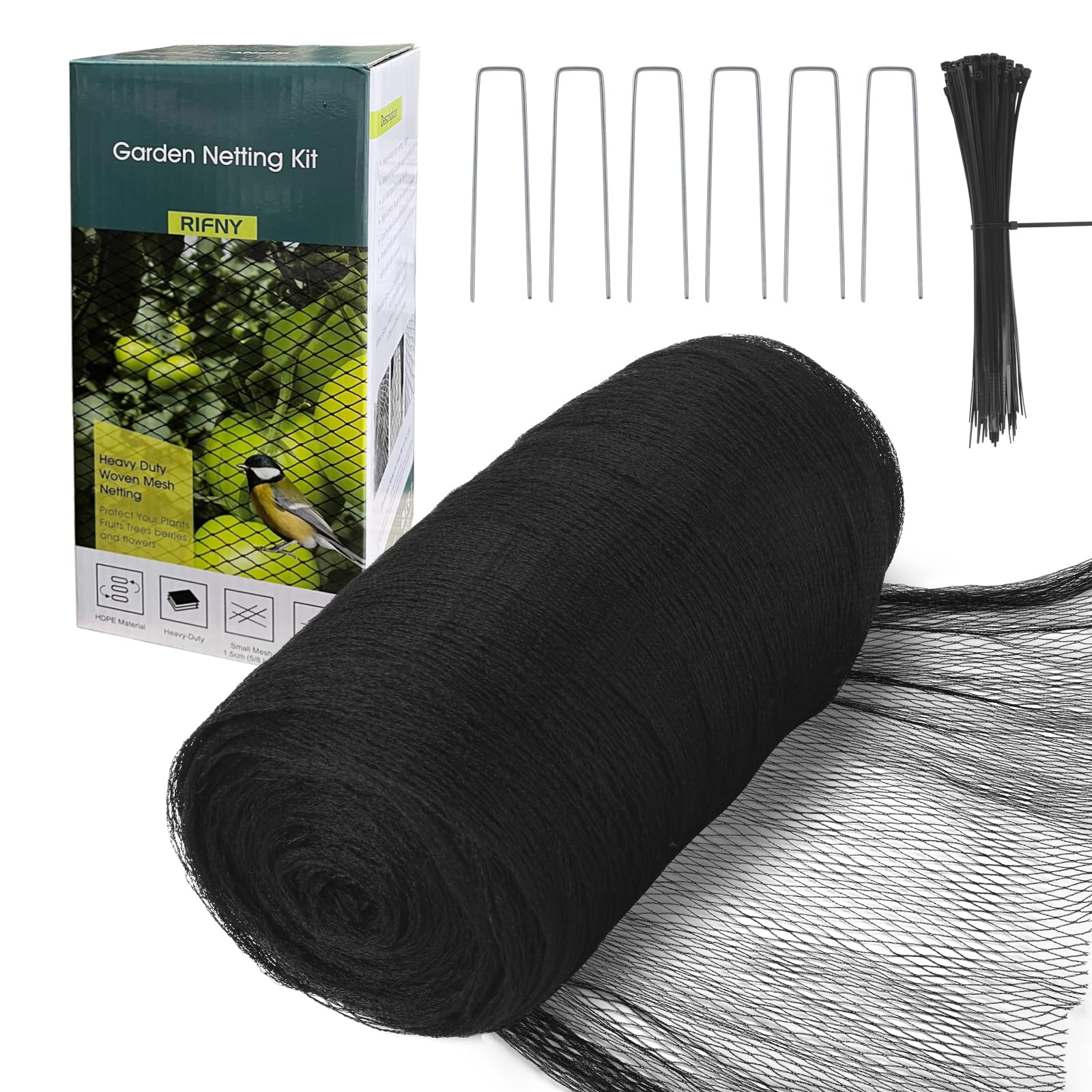
The RIFNY netting is nearly identical in dimensions and mesh size to the Fetanten option but differentiates itself with an extreme temperature tolerance from -58°F to 212°F. This makes it the go-to choice for northern climates where winter temperatures plummet and for desert gardens where summer heat can soften standard polypropylene nets until they sag. The HDPE material retains its shape and tension across this entire range.
Users consistently praise how the net unrolls without tangling — a frustrating failure point with cheaper nets that arrive as a knotted mess. The 5/8-inch aperture again blocks standard pests, and the material is flexible enough to wrap around individual tree branches without snapping branches under tension. The kit includes six 7-inch landscape staples and a pack of twist ties for ground anchoring.
At 0.65 oz/yd², the weight is competent for two to three seasons of moderate use. The main drawback against the premium Meanchen netting is the lower density — if you have aggressive squirrels or raccoons, they can bite through this material over time. The 13×40-foot coverage is identical to the Fetanten, so you are essentially choosing between the included hardware set from Fetanten versus the wider temperature range from RIFNY.
Why it’s great
- Operates from -58°F to 212°F without material degradation
- Unrolls smoothly without tangling — saves 10+ minutes of frustration
- HDPE resists UV damage better than standard polypropylene nets
Good to know
- 5/8-inch mesh allows very small birds to slip through
- Not dense enough to resist persistent chewing from squirrels or raccoons
6. GonLei Garden Netting 10×50 Ft

The GonLei mesh uses an ultra-fine 60 threads per inch weave that blocks everything from sparrow-sized birds down to caterpillars and cabbage moths. The 10×50-foot dimension is long enough to cover an extensive row garden while the narrow 10-foot width makes it manageable to handle without dragging across the soil. The white-toned mesh allows excellent light transmission, so photosynthesis remains high even with the fabric in place.
Installation is simple: drape over plants and secure the edges with soil, stones, or the included clips. You can water directly through the netting without removing it, which is a major convenience for daily irrigation. The material is stabilized PE with a nylon feel — it is see-through, lightweight, and allows air circulation that prevents fungal buildup underneath.
The trade-off for the fine mesh is durability. Customers report that the net tears if snagged on a sharp stake or branch, and the lightweight construction tends to degrade faster than HDPE nets under intense sun. Most users get one full season out of it before needing a replacement, though it is priced accordingly as a consumable rather than a multi-year investment. If you need a temporary barrier for vegetable starts or seedling protection, this is an effective low-cost solution.
Why it’s great
- 60-mesh density blocks both birds and small insect pests simultaneously
- White color maximizes light transmission for healthy plant growth
- Allows direct watering through the fabric without removal
Good to know
- Thin material tears easily on sharp edges or rough handling
- Typically lasts only one season before UV damage requires replacement
7. ATICCA Bird Netting 7.5×100 Ft
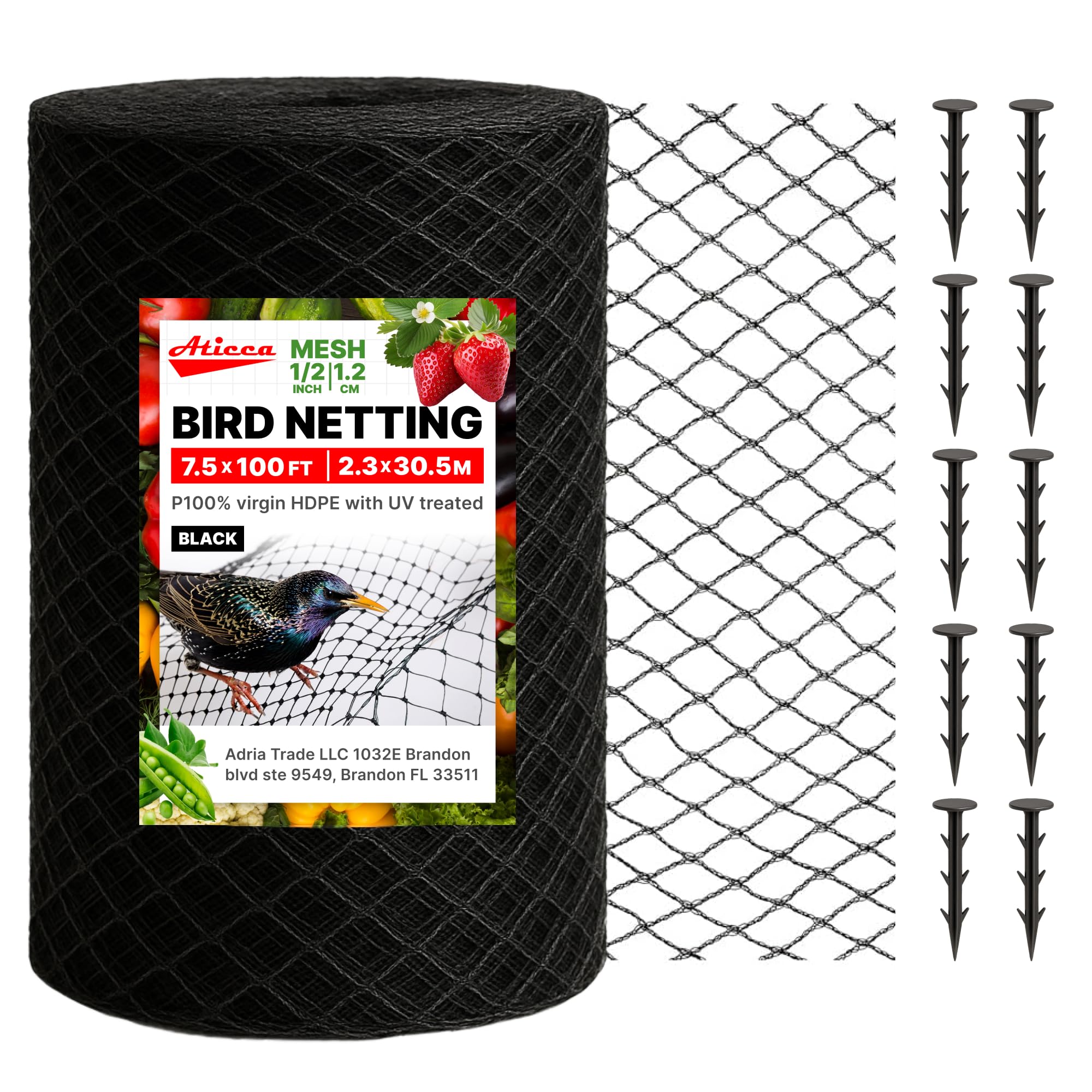
The ATICCA netting takes a different approach than the square-cut competitors: it comes as a 7.5-foot-wide by 100-foot-long roll, optimized for covering long narrow garden beds, trellis rows, or fence lines. The 1/2-inch mesh is the right size to block even the smallest birds, and the package includes 10 durable plastic stakes to anchor the net along its length, saving an extra purchase.
The nylon construction is UV-resistant and designed for multi-season use. Customers note that the netting looks clean and professional in the garden — no ragged edges or uneven weave. It works well draped over tall tomato cages and can also be cut into sections for multiple smaller applications. The 7.5-foot width is sufficient to cover a standard raised bed and drape down the sides to prevent ground-level entry.
Where the ATICCA falls short versus the Meanchen or Fetanten options is material density. The nylon is lighter and less rigid than HDPE, which means it can sag under heavy rain or snow load if not supported. For flat horizontal coverage over crops, you will need hoops or a frame. The 100-foot length is a strong value proposition for gardeners with linear layouts like strawberry rows or bean trellises.
Why it’s great
- 100-foot length ideal for long narrow beds, trellis rows, or fence-line plantings
- 1/2-inch mesh blocks all bird sizes including finches and sparrows
- Includes 10 plastic stakes for immediate ground anchoring
Good to know
- Lighter nylon material sags under heavy rain without support hoops
- Narrow 7.5-foot width limits use on wide raised beds or tree canopies
FAQ
Does bird netting block sunlight and kill my plants?
Can birds get tangled and die in garden netting?
How do I secure netting over tall fruit trees?
Will bird spikes on my fence protect my vegetable garden?
Final Thoughts: The Verdict
For most users, the bird deterrent for garden winner is the Meanchen 25×50 Ft because the half-inch mesh and 1.0 oz/yd² density deliver the best multi-year durability against both small birds and heavy wildlife pressure. If you want insect-plus-bird dual protection, grab the Abimars Nano PPT 10×33 Ft with its 30% shade factor and tear-resistant nanocomposite material. And for keeping birds off fence tops and roof ridges rather than crops, nothing beats the OFFO Bird Spikes 10 Ft with pre-assembled stainless steel construction that lasts 15 years.

Mo Maruf
I created WellFizz to bridge the gap between vague wellness advice and actionable solutions. My mission is simple: to decode the research and give you practical tools you can actually use.
Beyond the data, I am a passionate traveler. I believe that stepping away from the screen to explore new environments is essential for mental clarity and physical vitality.