Our readers keep the lights on and my smoothie glass nicely filled. As an Amazon Associate, I earn from qualifying purchases.
Finding a battery backup that keeps your BIPAP running through the night while fitting inside a carry-on bag is the central challenge of sleep therapy on the road. A single missed night of therapy can throw off your pressure settings, leave you groggy, and spike your apnea‑hypopnea index, which is why portable power matters more than any other feature in this category.
I’m Mohammad Maruf — the founder and writer behind WellFizz. I’ve spent years analyzing the hidden failure points of durable medical equipment batteries, from voltage drop under load to the real-world cycle life of lithium cells, so you can invest in a travel‑ready backup that won’t quit on a camping trip or a red‑eye flight.
After reviewing capacity, weight, compatibility with ResMed AirCurve and AirSense series machines, and real‑user runtime reports, I’ve identified the models that genuinely deliver reliable therapy away from home. This guide breaks down every spec you need to trust your bipap machine for travel.
How To Choose The Best BIPAP Machine For Travel
Most sleep apnea patients assume any CPAP battery will work with their BIPAP, but the higher pressure requirements and dual‑pressure algorithms of bilevel machines draw more current, especially during exhalation relief. You need a power source that can sustain that load without voltage sag.
Watt‑Hour Capacity and Your Pressure Settings
A 95Wh battery might deliver 8–10 hours for a standard CPAP user, but a BIPAP user running an IPAP of 25 cmH₂O with a backup rate will see significantly less runtime. Look for units that specify runtime with BIPAP or at high pressure, not just “CPAP with humidifier off.” The Zopec Explore 5700, for example, quotes 16–24 hours without humidification, but real‑world reports at therapeutic BIPAP pressures land closer to two nights.
TSA Compliance vs. Long‑Duration Camping
FAA regulations cap lithium‑ion batteries at 100Wh for carry‑on luggage. If you’re flying, your battery must be under that limit. The Medistrom Pilot 24 Lite (95Wh) and Zopec Explore Mini (99.9Wh) are legal at the gate. For road trips or RV living, the EASYLONGER ES960 Pro (297.6Wh) provides multi‑night power but must be checked — or left behind — on flights.
Voltage and Cable Compatibility
BIPAP machines from ResMed, Philips, and Löwenstein can run on 12V, 19V, or 24V DC inputs. A universal battery like the Pilot Flex that outputs both 12V and 24V gives you the flexibility to switch machines or upgrade later. Always verify that the included cables match your specific device — many returns happen because the wrong connector was assumed to be universal.
Quick Comparison
On smaller screens, swipe sideways to see the full table.
| Model | Category | Best For | Key Spec | Amazon |
|---|---|---|---|---|
| Zopec Explore 5700 | Premium | Extended off‑grid trips (3 nights) | 5700mAh, 16–24hr runtime | Amazon |
| Zopec Explore Mini | Premium | Ultralight air travel (1 lb) | 99.9Wh, 2‑night runtime | Amazon |
| Pilot Flex 98Wh | Mid‑Range | Dual‑voltage flexibility | 12V & 24V, 98Wh | Amazon |
| Medistrom Pilot 24 Lite (Bundle) | Mid‑Range | Frequent flyers with ResMed | 95Wh, 1.3 lbs | Amazon |
| Medistrom Pilot 24 Lite | Mid‑Range | Value‑minded travelers | 95Wh, 16hr max runtime | Amazon |
| EASYLONGER ES960 Pro | Mid‑Range | Multi‑night RV or camping | 297.6Wh, LiFePO4 | Amazon |
In‑Depth Reviews
1. Zopec Explore 5700 Universal Travel CPAP Battery

The Zopec Explore 5700 is the only travel battery in this roundup that consistently delivers three full nights of BIPAP therapy (up to 24 hours) without humidification, according to verified buyers. Its 5700mAh capacity and universal voltage compatibility (110–240V) mean you can take it internationally without a separate converter.
At roughly 2.5 pounds, it’s heavier than the sub‑1.5‑lb options, but the runtime payoff is substantial for anyone camping, van‑lifing, or facing multi‑day power outages. Users report that turning off the heated tube lets the 5700 power a ResMed AirCurve 10 for 6–7 hours per night over three consecutive nights.
The trade‑off is size: it measures 7.7 x 5.7 x 1 inches, which occupies significant bag real estate. It also cannot effectively charge a phone simultaneously while powering a BIPAP, so pack a separate USB bank for your other devices.
Why it’s great
- Genuine 3‑night runtime at therapeutic pressure
- Universal 110‑240V input for global travel
- FAA/TSA compliant at sub‑100Wh rating
Good to know
- Heavier than dedicated air‑travel batteries
- Can’t simultaneously charge a phone at full power
- Humidifier drains it in 3–4 hours
2. Zopec Explore Mini CPAP Battery UPS Backup

Zopec’s Explore Mini weighs just 1.1 pounds and measures 6.5 x 3 x 1 inches, making it the lightest and smallest unit here. Its 99.9Wh capacity is juuust under the 100Wh FAA limit, so it’s completely legal for carry‑on. Patented automatic multi‑voltage technology adjusts to 12V, 19V, or 24V, so you don’t need to manually select the output when switching machines.
Users report 2.75 nights of runtime on a ResMed AirMini with a full charge, and the 65W USB‑C charger refills the battery in under two hours. That’s half the recharge time of most competitors. The solid‑state cooling means no noisy fan, which matters when the battery sits next to your bedside in a hotel room.
The main complaint involves reliability: some units arrived dead on arrival or failed to charge via USB‑C, requiring a DC charging workaround. The lack of an auto‑off feature also means the battery can drain if left turned on accidentally.
Why it’s great
- At 1.1 lbs, it’s barely noticeable in a carry‑on
- Fast 1.5‑hour recharge via 120W USB‑C
- Multi‑voltage works with any BIPAP brand
Good to know
- No auto shut‑off can accidentally drain the battery
- USB‑C charging failures reported by several users
- Rated for 2 nights, not 3
3. Pilot Flex 98Wh CPAP Battery Backup
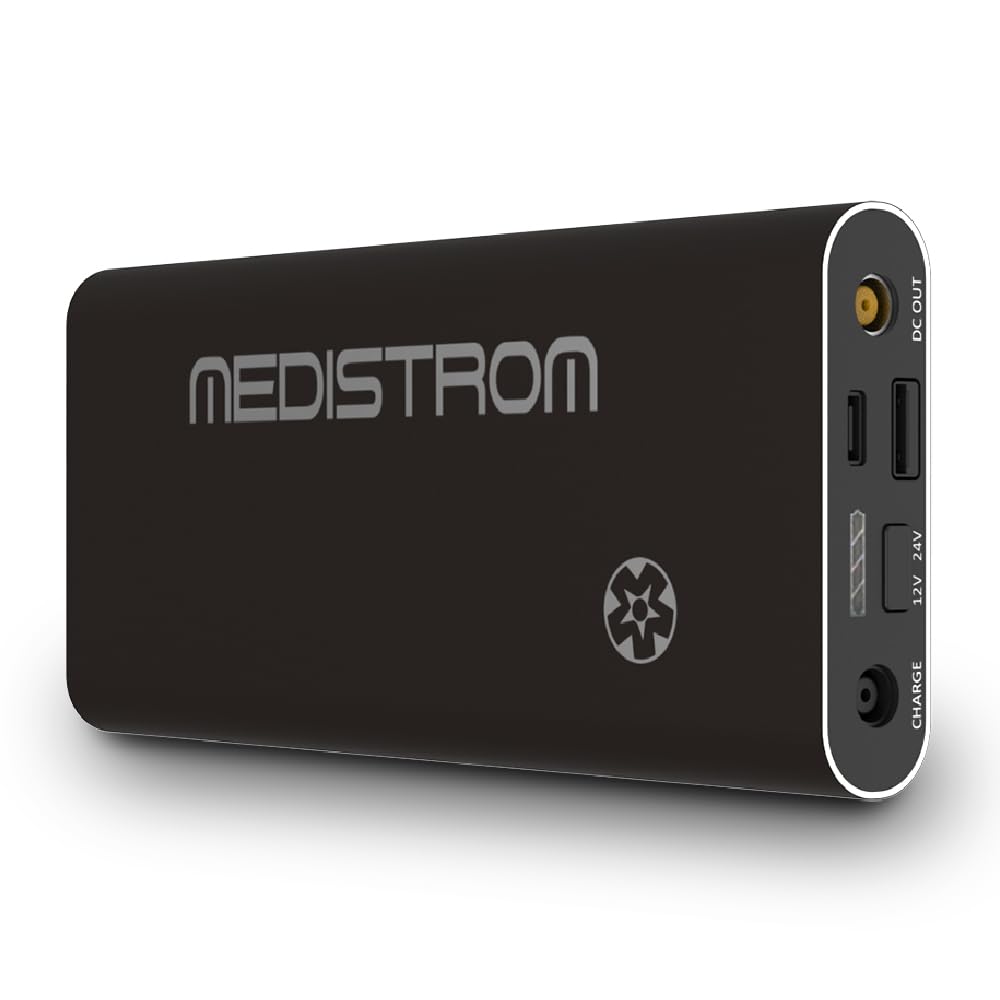
The Pilot Flex is the only true dual‑voltage battery (12V and 24V) in this list, which makes it uniquely compatible with both ResMed’s 24V machines and older 12V systems. Its 98Wh capacity qualifies for air travel, and the 1.2‑pound, 1‑inch‑thick aluminum shell feels more durable than the plastic‑cased competitors.
The flow‑through capability lets you leave the battery inline as a UPS, so a power outage doesn’t interrupt therapy.
A few users mention the cables require very firm insertion or they disconnect mid‑night, which is a critical safety concern. The 3‑hour recharge time is adequate but not class‑leading.
Why it’s great
- True 12V/24V dual voltage covers all machines
- Rugged aluminum build handles travel abuse
- Flow‑through UPS mode for seamless backups
Good to know
- Recharge takes 2–3 hours, slower than USB‑C rivals
- Cable connection can be finicky
- Runtimes fall short of advertised claims
4. Medistrom Pilot 24 Lite Bundle with 3 Pack Travel CPAP Wipes

This bundle pairs the proven Pilot 24 Lite battery with three travel CPAP wipes, making it a grab‑and‑go solution for users who want both a backup power source and cleaning supplies in one box. The 95Wh battery is TSA‑friendly and includes a built‑in LED flashlight and a USB port for charging a phone or tablet.
Long‑term owners report the battery holds its charge well over multiple years of use. One user has been using it since 2020 on a ResMed AirSense 10 and still gets a full night with humidification enabled, which is impressive for lithium‑ion aging.
The wipes are a nice bonus but shouldn’t be the deciding factor. The Pilot 24 Lite’s larger 1.3‑pound body feels slightly dated compared to newer rivals, and the 3‑hour recharge is average.
Why it’s great
- Convenient all‑in‑one travel bundle
- Built‑in flashlight is useful in power outages
- Reported long‑term capacity retention
Good to know
- Bulky compared to newer ultralight options
- Recharge takes about 3 hours
- Wipes are a minor add‑on, not a core value
5. Medistrom Pilot 24 Lite (Standalone)

The standalone Pilot 24 Lite is the same battery core as the bundle above, sold on its own for travelers who already have cleaning supplies. It uses LG industrial‑grade lithium‑ion cells and a tough aluminum case, both of which contribute to a 2‑night average runtime for most users.
TSA compliance at 95Wh and a slim 0.79‑inch profile make it easy to slide into a laptop compartment. Recharge is 2–3 hours, and the included cables cover ResMed AirMini and AirSense 10 directly.
The single most‑reported issue is cable quality: several users found the connectors unreliable unless half‑pulled out, which is a deal‑breaker for anything you’re trusting with your sleep therapy. Checking the cable seating before every use is mandatory.
Why it’s great
- TSA‑approved at 95Wh, fits carry‑on easily
- LG cells provide consistent power delivery
- Light enough for backpacking
Good to know
- Included cables can be unreliable
- Shorter warranty than premium competitors
- No USB‑C fast charging
6. EASYLONGER ES960 Pro CPAP Battery Backup 297.6Wh
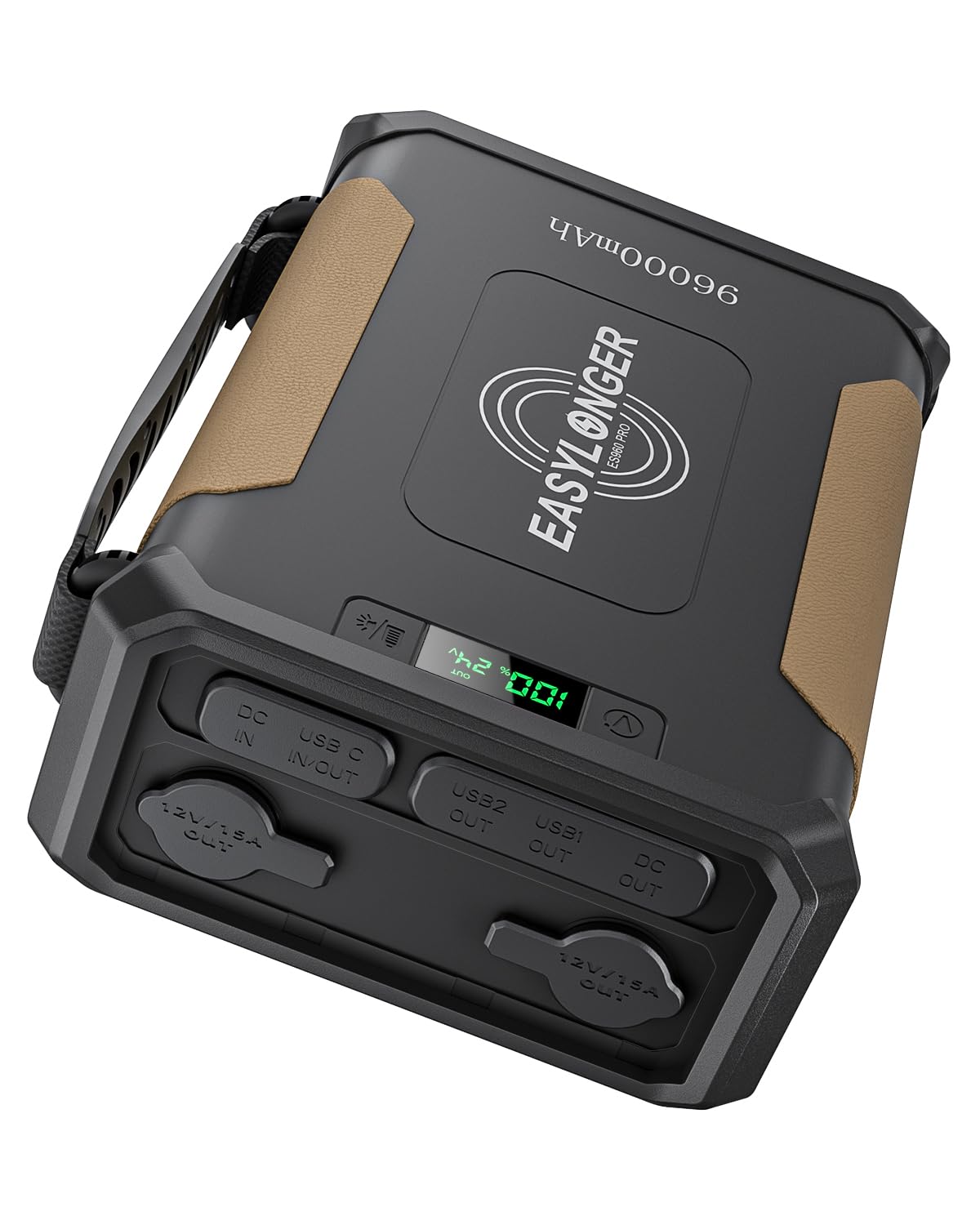
The EASYLONGER ES960 Pro is not for air travel — its 297.6Wh capacity far exceeds the 100Wh FAA limit — but for car camping, RV living, or home backup, it’s the undisputed runtime king. LiFePO4 chemistry gives it over 3,000 charge cycles, roughly 10x the lifespan of lithium‑ion, so the upfront cost pays off over years of use.
Users running a ResMed AirSense 10 without humidifier report two full nights with 25–30% battery remaining, and the pass‑through charging mode lets you keep it plugged into wall power while it charges your device. Multiple output ports including a 100W USB‑C mean you can run a laptop and phone simultaneously.
The weight is 6.6 pounds — over 5x heavier than the Zopec Mini — and it requires a 5‑hour wall recharge or 6‑hour car charge. It’s a home‑grade power station that happens to work for BIPAP, not a dedicated travel companion.
Why it’s great
- LiFePO4 lasts 3,000+ cycles vs 500 for lithium‑ion
- True multi‑night runtime with pass‑through charging
- 100W USB‑C powers laptops and other devices
Good to know
- Too heavy (6.6 lbs) for air travel
- 5‑hour recharge is slow
- Not TSA‑approved; must be carried separately
FAQ
Can I use a standard CPAP battery with my ResMed AirCurve 10 BIPAP?
How do I know if a travel battery is TSA approved for carry‑on?
Final Thoughts: The Verdict
For most users, the bipap machine for travel winner is the Zopec Explore 5700 because it offers the best balance of runtime, TSA compliance, and universal compatibility for multi‑night trips. If you want the lightest possible unit for red‑eye flights and weekend getaways, grab the Zopec Explore Mini. And for RV or camping power where weight doesn’t matter, nothing beats the cycle life and capacity of the EASYLONGER ES960 Pro.

Mo Maruf
I created WellFizz to bridge the gap between vague wellness advice and actionable solutions. My mission is simple: to decode the research and give you practical tools you can actually use.
Beyond the data, I am a passionate traveler. I believe that stepping away from the screen to explore new environments is essential for mental clarity and physical vitality.