Our readers keep the lights on and my smoothie glass nicely filled. As an Amazon Associate, I earn from qualifying purchases.
Spotting a warbler in the brush or following a raptor across an open sky demands optics that resolve fine feather detail, handle low dawn light, and track motion without blur. The wrong pair leaves you with a washed-out, shaky image—and a missed sighting.
I’m Mohammad Maruf — the founder and writer behind WellFizz. I’ve spent years analyzing optical specifications, from ED glass dispersion figures to phase-coating reflectivity, so you can match a binocular’s engineering to the realities of field birding.
After comparing lens coatings, field-of-view measurements, and waterproofing standards across dozens of models, this review of the best binoculars for birding covers everything from compact travel glasses to premium image-stabilized optics built for demanding naturalists.
How To Choose The Best Binoculars For Birding
Birding binoculars aren’t one-size-fits-all. The trade-off between magnification power, objective lens diameter, and field of view directly affects what you see in the field. Focus on these four factors before deciding.
Magnification & Objective Lens (8×42 is the Sweet Spot)
An 8×42 configuration gives you a steady image with an exit pupil of 5.25mm—large enough to keep your view bright in dawn or dusk conditions. Higher magnification (10x or 12x) narrows the field of view and amplifies hand shake, which is why most experienced birders prefer 8x for all-day glassing.
Lens Coatings & Prism Quality
Fully multi-coated optics maximize light transmission through every air-to-glass surface. Dielectric prism coatings deliver brighter, more color-accurate images than standard silver coatings. Phase correction on roof-prism binoculars eliminates the loss of contrast and resolution that untreated prisms create.
Field of View and Close Focus
A wide field of view (over 340 feet at 1000 yards) helps you track birds in flight or locate movement in dense foliage. Close-focus capability—anything under 8 feet—lets you study small passerines at short range without losing sharpness.
Weather Sealing & Build Durability
Look for O-ring sealed, nitrogen-purged bodies that are waterproof and fogproof across temperature swings. Rubber armor protects against drops and provides a non-slip grip in wet conditions. A tripod-adaptable chassis adds stability for long observation sessions.
Quick Comparison
On smaller screens, swipe sideways to see the full table.
| Model | Category | Best For | Key Spec | Amazon |
|---|---|---|---|---|
| Vortex Diamondback HD 8×42 | Mid-Range | All-Day Birding in Variable Light | 5.25mm Exit Pupil | Amazon |
| Nikon Monarch M5 8×42 | Premium | Low-Light & High-Contrast Views | ED Glass + Dielectric Coatings | Amazon |
| Celestron TrailSeeker ED 8×42 | Premium | Sharpness & Color Fidelity | 8.2 ft Close Focus | Amazon |
| Canon 12×36 IS III | Premium | Stabilized Viewing at High Mag | Image Stabilization | Amazon |
| ZEISS Conquest HD (8×32) | Premium | Ultimate Clarity & Durability | 90% Light Transmission | Amazon |
| Bushnell Prime 10×42 | Mid-Range | Long-Distance Spotting & Hunting | EXO Barrier Lens Coating | Amazon |
| Vortex Copperhead HD 10×42 | Mid-Range | Durable Field Use & Warranty | 334 ft Field of View | Amazon |
| Bushnell H2O Xtreme 10×42 | Budget | Wet & Rugged Conditions | IPX7 Waterproof Rating | Amazon |
| Nikon TRAVELITE EX 8×25 | Budget | Ultra-Portable Travel & Hiking | 11.7 oz Lightweight | Amazon |
In‑Depth Reviews
1. Vortex Diamondback HD 8×42

The Vortex Diamondback HD 8×42 hits the birding sweet spot with a 5.25mm exit pupil and dielectric-coated prisms that deliver bright, color-accurate images from dawn to dusk. The HD optical system uses select glass elements to cut chromatic aberration, giving you sharp edge-to-edge resolution even on white egrets against a bright sky.
Argon purging and O-ring seals make this pair fully waterproof and fogproof, while the rubber armor provides a secure grip in damp conditions. The center focus wheel is smooth and responsive—critical for tracking a moving bird through branches. At 8x, the image stays steady without the shake common at 10x or 12x.
Included accessories like the GlassPak harness make long days in the field more comfortable. The VIP warranty (unconditional, lifetime, and transferable) removes any hesitation about taking these into tough environments. For the balance of optical performance, build quality, and price, this is the top all-around choice for serious birding.
Why it’s great
- Dielectric coatings produce vivid, natural color
- Argon purging prevents internal fogging
- Lifetime, transferable VIP warranty
Good to know
- Not the brightest in extreme low light vs. premium ED glass models
- Some users find the focus wheel slightly stiff initially
2. Nikon Monarch M5 8×42
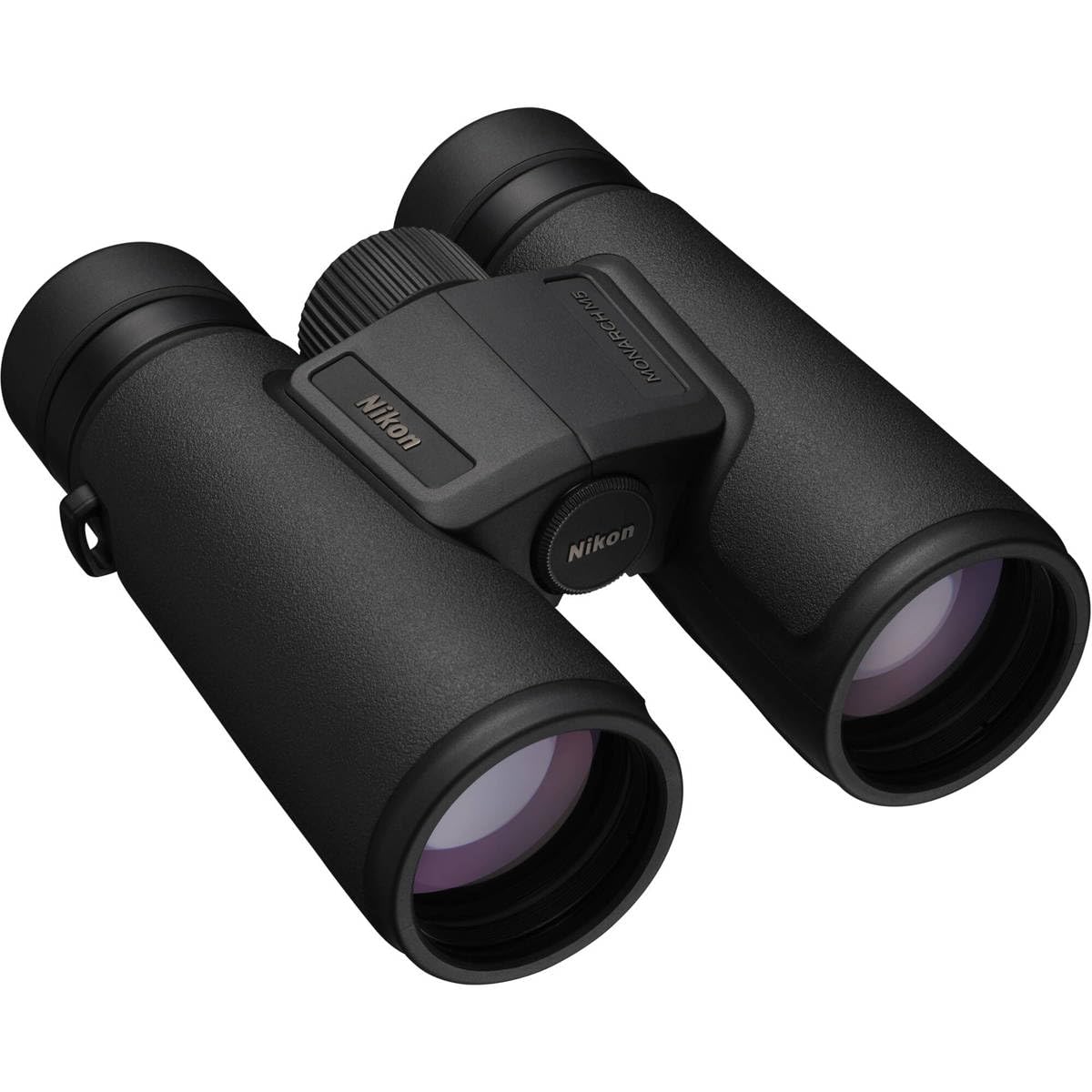
The Nikon Monarch M5 8×42 brings Extra-low Dispersion (ED) glass into the premium mid-range, virtually eliminating color fringing on high-contrast edges like a bird’s wing against a bright overcast sky. Combined with dielectric high-reflective multilayer prism coatings, it achieves excellent light transmission that keeps the view bright and natural in forest shade or twilight.
The 19.5mm of eye relief is generous, making this an excellent choice for eyeglass wearers who need a full field of view. The large central focus knob is smooth and precise, and the close-focus distance of 8.2 feet lets you examine nearby warblers in dense cover without losing sharpness.
Waterproof and nitrogen-purged, the housing is rugged enough for all-weather use. The turn-and-slide eyecups lock into place comfortably, and the overall build feels solid without being excessively heavy. For birders who prioritize optical clarity in challenging light, the Monarch M5 is a significant step up from standard multi-coated models.
Why it’s great
- ED glass minimizes chromatic aberration effectively
- Long eye relief for eyeglass wearers
- Very close 8.2 ft minimum focus
Good to know
- Field of view is slightly narrower than some competitors
- Heavier than compact travel binoculars
3. Celestron TrailSeeker ED 8×42
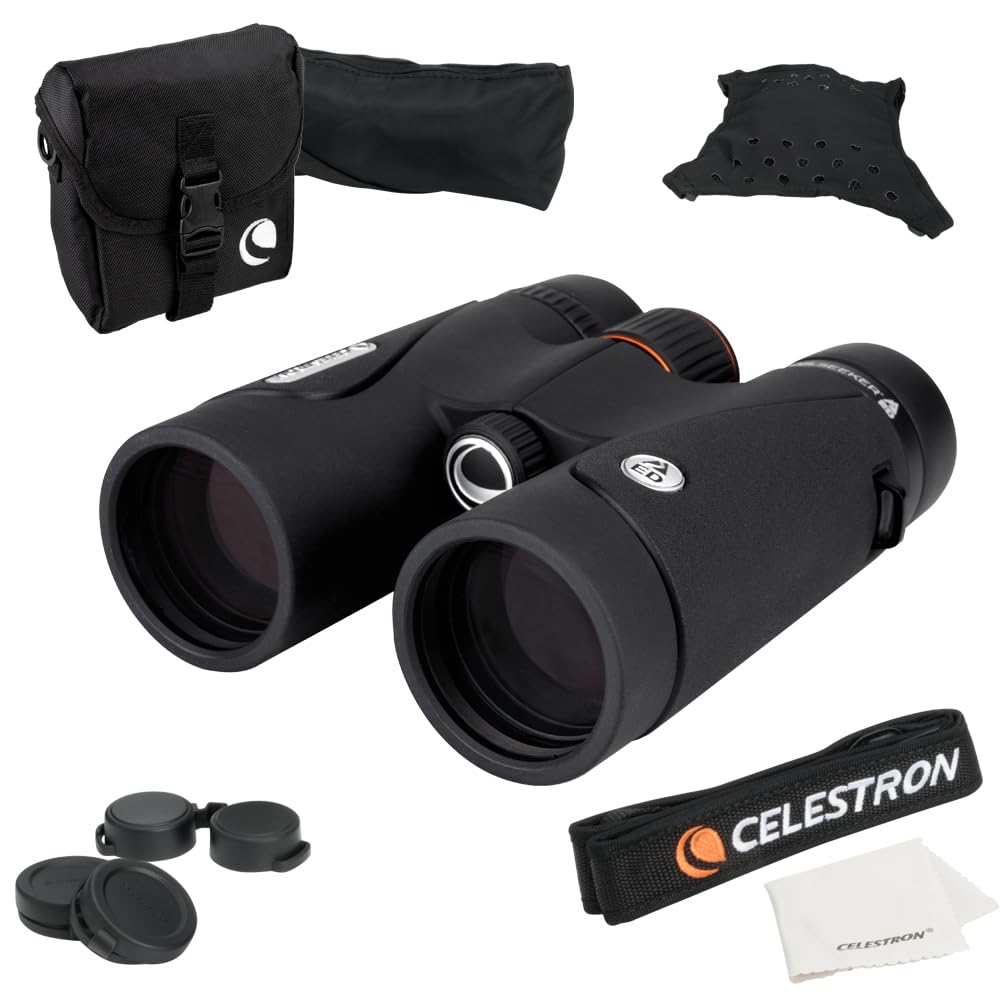
The Celestron TrailSeeker ED 8×42 is engineered for birders who demand razor-sharp resolution and true-to-life colors. The ED objective lenses virtually eliminate chromatic aberration, so you won’t see purple or green fringing along the edges of dark branches against a bright sky—a common flaw in cheaper optics.
Phase-coated BaK-4 roof prisms maximize light transmission and contrast, delivering bright, highly detailed views even in overcast conditions. The close-focus distance of just over 6 feet is exceptional, allowing detailed observation of birds feeding at very short range. The wide field of view (about 426 feet at 1000 yards) makes tracking flight paths easier.
The rubber-armored, nitrogen-purged body is fully waterproof and fogproof, and the included carry harness distributes the 30-ounce weight comfortably. The twist-up eyecups work well with or without glasses. For the price, this pair offers optical performance that rivals models costing significantly more.
Why it’s great
- Excellent ED glass performance, minimal color fringing
- Very wide field of view for easy tracking
- Close focus under 7 feet for near-range study
Good to know
- Heavier than some premium 8×32 designs
- Focus wheel tension feels a bit light to some users
4. Canon 12×36 Image Stabilization III

The Canon 12×36 Image Stabilization III is a specialist tool for birders who struggle with hand shake at high magnification. The Vari-Angle prism system actively steadies the image, turning a bounce-prone 12x view into something that feels tripod-mounted. This is a game-changer for long-distance identification of raptors or shorebirds where every detail matters.
Doublet field-flattener lenses keep the image sharp from edge to edge, a rare feature in image-stabilized binoculars. The 36mm objective lenses and Porro II prism design deliver good brightness, though the exit pupil of 3mm means you’ll want good light for optimal performance. The unit is lightweight for a stabilized model, making it manageable for all-day carry.
The main trade-off is the need to hold the stabilization button continuously, which adds a small amount of strain during long viewing sessions. Battery life is solid, and the overall optical quality is excellent. For birders who need to see fine plumage details at distance without a tripod, this is a unique and effective solution.
Why it’s great
- Image stabilization virtually eliminates hand shake at 12x
- Edge-to-edge sharpness with field-flattener lenses
- Light and compact for a stabilized binocular
Good to know
- Stabilization button must be held continuously
- 3mm exit pupil limits low-light performance
5. ZEISS Conquest HD (8×32)

The ZEISS Conquest HD 8×32 sets the benchmark for optical refinement in a compact form. With a 90% light transmission rating, the view is brilliantly bright and high-contrast even in challenging light—sunrise marshes or deep woodland shade. The proprietary T* coating is individually tuned to each lens surface, ensuring maximum clarity and color fidelity across the entire visual field.
LotuTec coating on the external lenses beads water and repels dirt, keeping the view clear in rain or dusty conditions. The ergonomics are outstanding: a large, smooth focus wheel operates easily with gloves, and the slanted eyecups provide exceptional comfort. The 8×32 configuration keeps the weight down to about 22 ounces, making this an ideal companion for long hikes.
This binocular is built to last a lifetime, with Zeiss engineering and a rugged, waterproof, nitrogen-purged chassis. The cost is substantial, but the optical quality and build precision justify it for dedicated birders who want the very best portable viewing experience available.
Why it’s great
- Outstanding 90% light transmission for bright, clear views
- LotuTec coating sheds water and oil effectively
- Lightweight and exceptionally comfortable for long sessions
Good to know
- Significant investment compared to mid-range models
- Objective lens covers may need aftermarket adjustment
6. Bushnell Prime 10×42

The Bushnell Prime 10×42 offers a 341-foot field of view at 1000 yards, making it a strong choice for scanning large open areas like wetlands or fields. The EXO Barrier molecular lens coating repels water, oil, and dust effectively, keeping the optics clean in muddy or damp birding conditions. BaK-4 prisms and fully multi-coated lenses deliver sharp, bright images that outperform many budget-tier models.
The waterproof and fogproof construction, with O-ring sealing, means you can use these confidently in rain or high humidity. The 18mm of eye relief is comfortable for extended viewing, though the unit is a bit heavier than some competitors. The diopter adjustment is easy to use and stays set once dialed in.
For birders who prefer the extra reach of 10x magnification and need a durable, weather-resistant tool for open habitats, the Bushnell Prime delivers reliable performance at a very accessible price point. The included cleaning cloth is a nice touch, though the strap attachment could be simpler.
Why it’s great
- EXO Barrier coating effectively repels water and grime
- Wide field of view for 10x binoculars
- Rugged, fully waterproof construction
Good to know
- Heavier than some 8×42 options
- Strap attachment can be confusing
7. Vortex Copperhead HD 10×42

The Vortex Copperhead HD 10×42 is built on a proven platform: a 10x magnification paired with an HD optical system that delivers edge-to-edge sharpness and good color fidelity. Fully multi-coated lenses ensure strong light transmission, and the 17mm of eye relief is comfortable for most users. The 334-foot field of view at 1000 yards is practical for both forest and open-sky birding.
Durability is a standout feature here. The rubber armor provides a secure grip even in wet conditions, and the shockproof, waterproof, and fogproof construction can handle a full season of rough field use. It’s tripod-adaptable, which adds versatility for extended observation. The included GlassPak harness makes carrying easy.
The primary driver here is the VIP warranty—unlimited, unconditional, and transferable. For birders who want a reliable 10×42 that can take abuse without financial worry, the Copperhead HD offers distinct value. The optical clarity is slightly less refined than the Diamondback HD at the edges, but for the price difference, it’s a fair compromise.
Why it’s great
- HD optical system with good edge sharpness
- Excellent shockproof and weather-resistant build
- Unconditional VIP warranty
Good to know
- Edge clarity not as sharp as Diamondback HD
- Slightly heavy for extended carry
8. Bushnell H2O Xtreme 10×42

The Bushnell H2O Xtreme 10×42 lives up to its name with an IPX7 waterproof rating—meaning it can withstand immersion in up to 1 meter of water for 30 minutes. This makes it an ideal choice for birding in heavy rain, near shorelines, or on boats where splashes are inevitable. The O-ring sealed, nitrogen-purged design also prevents internal fogging across temperature shifts.
BaK-4 prisms and fully multi-coated optics provide clear, bright images that significantly outperform older budget binoculars. The 6.8-degree angle of view gives a reasonable field of view for scanning. The rubber armor has a textured grip that stays secure when wet, and the compact roof-prism design is easy to pack.
While the optical performance is good for the price, it does not match the brightness or contrast of models with dielectric coatings. It also lacks a tripod adapter socket, so you can’t mount it for stable long viewing. For birders who routinely face wet conditions and need a reliable, affordable tool, the H2O Xtreme is a smart, no-frills choice.
Why it’s great
- IPX7 waterproof rating for immersion protection
- Bright BaK-4 prism views for the price
- Rugged, non-slip rubber grip in wet conditions
Good to know
- No tripod adapter socket
- Optical brightness trails dielectric-coated models
9. Nikon TRAVELITE EX 8×25

The Nikon TRAVELITE EX 8×25 is a pocket-friendly binocular designed for birders who need to travel light—it weighs just 11.7 ounces and slips easily into a jacket pocket or daypack. Despite its compact size, it delivers sharp, bright views thanks to Nikon’s multilayer-coated optics and aspherical eyepiece lenses that minimize image distortion across the field.
Waterproof to 2 meters for 5 minutes and nitrogen-purged for fog-free performance, it handles unexpected rain without issue. The 8×25 configuration has a small 3.13mm exit pupil, so it’s best used in good light conditions—think open meadows or sunny trails rather than dense forest at dusk. The wide field of view helps you locate birds quickly.
The turn-and-slide eyecups and click-type diopter adjustment make it comfortable for both eyeglass wearers and non-wearers. The die-cast aluminum body with rubber armoring provides solid durability for the weight. For birders who prioritize portability above all else, this is a capable and reliable secondary binocular that punches above its size class.
Why it’s great
- Ultra-light at 11.7 oz, ideal for backpacking
- Sharp, distortion-free image with aspherical lenses
- Waterproof and fogproof in a compact package
Good to know
- Small exit pupil limits low-light performance
- Not as bright as 42mm objective lens models
FAQ
What does ED glass do for birding binoculars?
Why do many birders prefer 8×42 over 10×42?
How important is waterproofing for birding binoculars?
Final Thoughts: The Verdict
For most users, the best binoculars for birding winner is the Vortex Diamondback HD 8×42 because it balances dielectric-coated brightness, a smooth focus system, and an unconditional lifetime warranty at a price that makes sense for regular field use. If you want ED glass for maximum sharpness and low-light clarity, grab the Nikon Monarch M5 8×42. And for ultra-portable birding where weight matters most, nothing beats the Nikon TRAVELITE EX 8×25.

Mo Maruf
I created WellFizz to bridge the gap between vague wellness advice and actionable solutions. My mission is simple: to decode the research and give you practical tools you can actually use.
Beyond the data, I am a passionate traveler. I believe that stepping away from the screen to explore new environments is essential for mental clarity and physical vitality.