Our readers keep the lights on and my smoothie glass nicely filled. As an Amazon Associate, I earn from qualifying purchases.
The difference between a binder that truly traps heavy metals and one that just passes through your gut comes down to particle size, pore structure, and surface charge. Many supplements claim to chelate or bind toxins, but only a few specific materials — activated charcoal, zeolite clinoptilolite, and bentonite clay — have the physical architecture to actually capture positively charged heavy metal ions and escort them out of your body. The wrong choice means you’re swallowing expensive powder that does little more than add bulk to your stool, especially if the particle size is too large or the source material is impure.
I’m Mohammad Maruf — the founder and writer behind WellFizz. I’ve spent years analyzing the raw material quality, third-party testing protocols, and micronization data behind detox supplements to separate the formulations that work from those that rely on marketing fluff.
Whether you need daily maintenance after known exposure or a temporary purge between toxin-heavy environments, finding the right binder for heavy metals means matching the mineral type, the micron size, and the purity of the source to your specific body chemistry and lifestyle.
How To Choose The Best Binder For Heavy Metals
Choosing a binder isn’t like picking a random multivitamin. You need to match the binder’s mineral chemistry to the specific metals you’re trying to eliminate, the route of exposure (food, water, air, or occupational), and your own digestive sensitivity. Start with three non-negotiable filters: the material type, the particle size distribution, and the third-party purity verification.
Material Type: Charcoal, Zeolite, or Clay
Activated charcoal binds through adsorption — it has a massive surface area with pores that trap gas molecules and some organic toxins, but its charge selectivity for heavy metal ions is weaker than zeolite or bentonite. Zeolite clinoptilolite has a honeycomb cage structure that acts like a molecular sieve, specifically exchanging its harmless sodium, potassium, or calcium ions for larger, positively charged heavy metal ions such as lead, cadmium, mercury, and arsenic. Bentonite clay carries a strong negative surface charge that attracts and holds cationic heavy metals through a process called ion exchange, often used in tandem with other binders for broad coverage.
Particle Size and Micronization
Particle size determines where in your body the binder works. Large particles above 40 microns stay mostly in the stomach and upper intestine, trapping toxins in the GI tract without systemic reach. Micronized particles below 7 microns can theoretically move deeper into the small intestine, where greater surface area per gram improves binding capacity. However, particles that are too small — below 1 micron — carry a theoretical risk of systemic absorption, though food-grade zeolite is generally considered safe at sizes around 0–25 microns for GI use.
Purity and Third-Party Testing
Because a binder’s entire job is to pull toxins toward itself, a low-quality binder that already contains heavy metals from its own mining source is counterproductive. Look for brands that disclose third-party testing for heavy metals, microbial contaminants, and purity certification. Food-grade labeling matters enormously here — industrial-grade zeolite or bentonite is not meant for human consumption and may contain crystalline silica or other hazardous minerals.
Quick Comparison
On smaller screens, swipe sideways to see the full table.
| Model | Category | Best For | Key Spec | Amazon |
|---|---|---|---|---|
| Zeolite Pure Capsules | Zeolite Capsule | Deep cellular cleanse | 900mg per cap, 0–40 µm | Amazon |
| HolyLand Zeolite Cleanse Powder | Zeolite Powder | Gentle full-body detox | 0–25 µm, 200g | Amazon |
| Jovianoy Zeolite Detox Capsules | Zeolite Blend Caps | Multi-ingredient detox | 1–2 µm, with Milk Thistle | Amazon |
| Whole Nature Activated Charcoal | Charcoal Capsule | GI gas/bloat relief | 180 caps, Coconut sourced | Amazon |
| Yerba Prima Bentonite Clay Plus | Bentonite Capsule | Deep colon cleanse | 100 caps, Great Plains clay | Amazon |
In‑Depth Reviews
1. Zeolite Pure Capsules

This is the capsule version of a zeolite powder brand that has been on the market for over two decades, and it shows in the formulation maturity. Each capsule delivers 900mg of clinoptilolite zeolite, which is nearly double the per-capsule dose of most competitors. The particle size range spans 0 to 40 microns, with the majority of particles under 7 microns — a distribution that allows the larger particles to work in the colon while the smaller, micronized fraction penetrates deeper into the small intestine for cellular-level binding.
The source material comes from a food-grade certified mine, and the powder undergoes micronization, purification, and third-party testing in the USA. Users report improved digestion and sustained energy without the harsh laxative side effects often tied to lower-grade detox products. The bottle provides a 6-week to 3-month supply depending on serving size, which makes the per-dose cost competitive despite the premium ingredient positioning.
One caveat: because the capsule dosage is high, beginners may want to start with a single capsule per day to gauge digestive adjustment. A small number of reviewers noted no perceptible effect, which is common with binders when the user’s toxin load is already low — the product works best in contexts where exposure is ongoing or recent.
Why it’s great
- Highest zeolite content per capsule on the market at 900mg
- Bimodal particle size (0–40 µm) covers GI tract and cellular levels
- Third-party tested and food-grade certified from a 20-year brand
Good to know
- Some users may not notice effects if baseline toxin load is low
- Bottle lasts 6 weeks to 3 months — plan for refill timing
2. HolyLand Zeolite Cleanse Powder

This powder format from Healthy by Nature uses clinoptilolite sourced from the Middle East, milled to a tight 0–25 micron range. The absence of capsules means you control the exact serving size, and the neutral taste dissolves easily in water or juice without the chalky texture common to lower-grade zeolite powders. The brand pre-loads the zeolite with ionic trace minerals — calcium, potassium, and magnesium — which both boosts nutrient intake and enhances the ion-exchange capacity for heavy metals.
The 200-gram container offers a very long supply relative to capsule options, and the smaller particle distribution (0–25 µm versus 0–40 µm) leans toward more systemic binding rather than purely colon-focused work. Multiple customer reports highlight increased mental clarity, smoother skin, and higher energy within the first week of consistent use, alongside remarks that the product is gentle enough to avoid digestive distress. The company provides instructional videos on usage, which is a thoughtful touch for first-time powder users who worry about dosing.
The main trade-off is convenience — you need to mix the powder, wait a moment, and drink it separately from meals and other supplements by at least an hour. Users with busy mornings may prefer capsules, but for those willing to mix, the 200g format delivers the best value per gram of active zeolite in this lineup.
Why it’s great
- Very tight 0–25 µm particle size for deep systemic binding
- Pre-loaded with calcium, potassium, and magnesium for enhanced ion exchange
- Excellent value per gram — long-lasting container
Good to know
- Powder format requires mixing and timing around meals
- May cause mild constipation if extra fiber is not consumed
3. Jovianoy Zeolite Detox Capsules

Jovianoy differentiates itself by combining zeolite clinoptilolite with organic activated charcoal, bentonite clay, milk thistle extract, and chlorella in a single capsule — creating a multi-pathway detox blend. The zeolite itself is micronized to an extremely fine 1–2 micron range, maximizing the surface area available for molecular trapping. The inclusion of fulvic acid is a strategic addition because it increases the bioavailability of the zeolite and other nutrients, potentially improving the overall binding efficiency.
The milk thistle and chlorella components provide liver support and additional heavy metal binding from the algae’s cell wall structure, respectively. This makes the formula more comprehensive than a straight zeolite capsule, especially for users who want coverage across both GI binding and liver-phase detox. User reports note reduced inflammation, relief from iron-supplement constipation, and improved energy levels over several months of use.
However, the multi-ingredient approach means you lose the ability to isolate which ingredient is working — if you react poorly, you won’t know whether it’s the charcoal, the clay, or the zeolite. Additionally, the 1–2 micron particle size, while highly absorbent, has a slightly higher theoretical risk of systemic absorption compared to the 0–40 micron range, though all ingredients are listed as food-grade and cGMP-compliant.
Why it’s great
- Four-in-one formula: zeolite, charcoal, clay, and milk thistle
- Fulvic acid addition boosts zeolite absorption
- Good for users wanting broad coverage without buying separate bottles
Good to know
- Multi-ingredient blend makes it hard to isolate cause of any reaction
- Very fine 1–2 µm particles may be too aggressive for sensitive users
4. Whole Nature Activated Charcoal Capsules

Activated charcoal is the most well-known binder, and Whole Nature’s version uses coconut-shell-derived charcoal in a 180-capsule bottle that provides a long supply at a very accessible cost. The charcoal is food-grade, non-GMO, gluten-free, and vegan, and the capsule form eliminates the messy black powder that other charcoal products tend to leave on counters and teeth. Users consistently report relief from bloating, gas, and general gut discomfort, with many keeping the bottle on hand as a daily digestive maintenance tool rather than a targeted heavy metal detox.
The key limitation here is selectivity: activated charcoal binds broadly to gases, organic compounds, and some toxins, but its affinity for heavy metal ions is weaker than zeolite or bentonite clay. If your primary goal is specifically removing lead, cadmium, mercury, or arsenic, charcoal alone is not the optimal choice — it works well as a general purifier but lacks the ion-exchange specificity of clinoptilolite. For users dealing with mold exposure or general GI upset, however, the 180-capsule count and the low cost per dose make this an excellent general-purpose binder to have in rotation.
Long-term daily use of activated charcoal can also theoretically interfere with nutrient absorption because it binds indiscriminately, so it’s best reserved for periodic 2-week cleanses or as-needed use after suspected exposure events rather than indefinite daily dosing.
Why it’s great
- Generous 180-capsule supply at an entry-level cost
- Coconut-sourced charcoal is food-grade and GMO-free
- Effective for bloating, gas, and general GI bound toxins
Good to know
- Not as selective for heavy metals as zeolite or bentonite clay
- Long-term daily use may reduce nutrient absorption
5. Yerba Prima Bentonite Clay Plus Herbal Detox
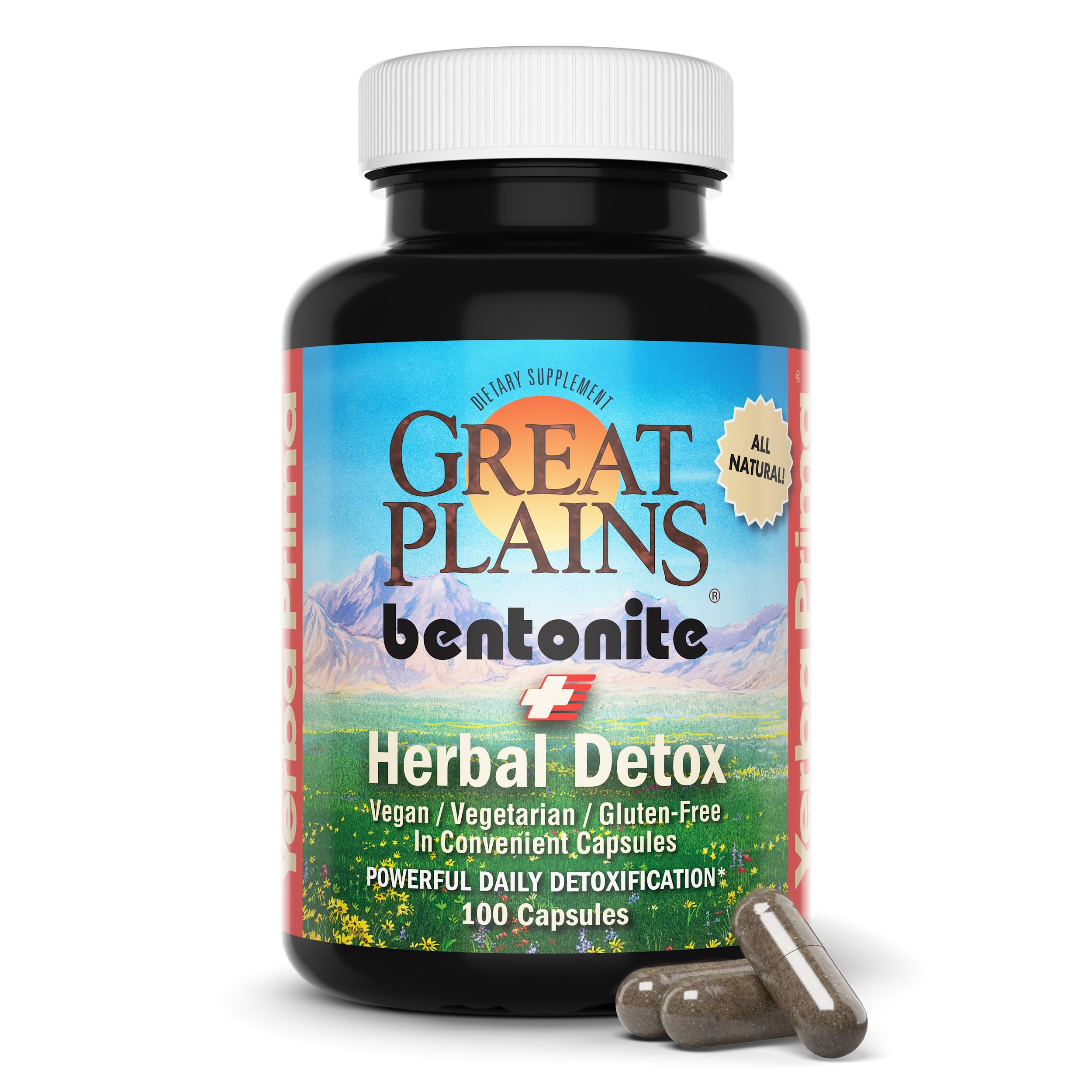
Bentonite clay carries a strong negative ionic charge that draws positively charged heavy metal ions, such as lead and cadmium, to its surface and holds them until elimination. Yerba Prima sources its clay from the Great Plains of the United States — a well-regarded region for high-purity calcium bentonite — and enhances the capsule with broccoli, chlorella, and dandelion root for additional liver-supportive and toxin-binding action. The capsule form solves the taste issue that makes liquid bentonite clay notoriously difficult to swallow for many users.
Customer feedback reveals a dedicated following among people detoxing from mold exposure or environmental chemical overload, with several reports noting that the capsules resolved ongoing digestive issues within 24 hours by binding toxins that the immune system was struggling to clear. The product is vegetarian, vegan, and free from magnesium stearate, and the brand has sold over 5 million bottles, giving it a long track record in the natural health space.
Bentonite clay can cause constipation if not accompanied by enough water or dietary fiber, and some users note that the capsule form feels less effective than the liquid version — likely because the clay needs adequate hydration to swell and increase its binding surface area inside the GI tract. Drinking a full glass of water with each serving is non-negotiable for this product to work as intended.
Why it’s great
- High-purity calcium bentonite from the Great Plains with strong ionic binding
- Enhanced with chlorella and dandelion root for liver-phase support
- Well-established brand with over 5 million bottles sold
Good to know
- Must be taken with ample water to prevent constipation and activate binding
- Capsule form may be less potent than the liquid version for some users
FAQ
Can I take zeolite and activated charcoal together for heavy metal detox?
How long does it take for a bentonite clay binder to start working on heavy metals?
Why does a binder for heavy metals need third-party purity testing?
Final Thoughts: The Verdict
For most users, the binder for heavy metals winner is the Zeolite Pure Capsules because the 900mg per-capsule dose and the 0–40 micron particle distribution provide both colon-level and cellular-level binding without the inconvenience of mixing powder. If you want a gentle, systemic option with mineral pre-loading, grab the HolyLand Zeolite Cleanse Powder. And for a budget-friendly multi-ingredient approach that combines charcoal, clay, and zeolite in one capsule, the Jovianoy Zeolite Detox Capsules offer exceptional value for users who don’t want to manage three separate bottles.

Mo Maruf
I created WellFizz to bridge the gap between vague wellness advice and actionable solutions. My mission is simple: to decode the research and give you practical tools you can actually use.
Beyond the data, I am a passionate traveler. I believe that stepping away from the screen to explore new environments is essential for mental clarity and physical vitality.