Our readers keep the lights on and my smoothie glass nicely filled. As an Amazon Associate, I earn from qualifying purchases.
Every gram counts on a bikepacking route, but a sleepless night on the trail compromises your next day’s ride. A sleeping pad that packs small yet provides genuine insulation and comfort is no longer a luxury — it’s the difference between finishing strong and a miserable hike-a-bike. The market is flooded with inflated claims, so finding a pad that balances packed volume, R-value, and actual durability demands careful scrutiny of materials and design.
I’m Mohammad Maruf — the founder and writer behind WellFizz. I’ve spent hundreds of hours cross-referencing ASTM thermal ratings, fabric denier specs, and real-world user feedback to separate marketing from real trail performance in this space.
This guide is built around the only metrics that matter to bikepackers: packed size, warmth-to-weight ratio, and field-proven durability. If you want to find the true best bikepacking sleeping pad for your specific riding style, you are in the right place.
How To Choose The Best Bikepacking Sleeping Pad
Bikepacking pads are judged by a different standard than backpacking ones. You care less about vertical loft and more about packed volume (fits a frame bag or roll-top) and surface noise (no crinkling that amplifies through a bivvy). Every selection here prioritizes those two factors alongside genuine warm-season or all-season insulation.
R-Value and Seasonal Use
The R-value measures the pad’s resistance to conductive ground heat loss. For summer alpine bikepacking, an R-value between 2.0 and 4.0 suffices in a tent. For spring or fall overnights with lows near freezing, aim for 4.5 or higher. A pad with an ASTM-tested rating of 6.0 or above can handle sub-freezing ground, but those high values often trade off weight and packed volume — a critical consideration when your entire sleep system must fit a handlebar roll. Be wary of unverified R-value claims; look for ASTM F3340-22 testing language in the spec sheet.
Fabric Denier and Puncture Resistance
Bikepacking pads ride inside frame bags and handlebar rolls that rub against grit, twigs, and frame-tube edges. A 30D or 40D nylon face fabric offers a meaningful increase in puncture resistance over a 20D minimalist skin. The tradeoff is roughly 1 to 2 ounces of extra weight. Look for TPU lamination, which bonds better than PVC and remains quieter in temperature swings. Ultralight 20D fabrics are acceptable for short tours if you also carry a small patch kit — they pack significantly smaller, but they demand more careful site selection.
Packed Volume and Inflation Method
A sleeping pad rolled to the size of a 1-liter water bottle is the bikepacking gold standard. Larger pads (70×25 inches with 3.5 inches of thickness) often pack down to 8×4 inches, still manageable but dominant in a roll-top bag. Inflation method matters: a pump sack adds bulk but eliminates moisture from your breath, preserving internal insulation performance. A pad with an integrated high-volume valve that works with a dedicated pump sack is ideal. Manual inflation increases moisture buildup inside the pad over time, which can degrade reflective foil layers and reduce R-value.
Width and Sleep Position
Side sleepers need a pad at least 24 inches wide to prevent shoulder and hip contact with the ground. A 20-inch-wide pad works for back sleepers but creates cold spots if you roll sideways. Also look for tapered outer siderails or offset I-beam construction that keeps you centered without the “pool float” bounce. Pads with a 4-inch thickness or more prevent bottoming out but pack larger; a 3- to 3.5-inch thickness is the sweet spot for bikepacking comfort versus volume.
Quick Comparison
On smaller screens, swipe sideways to see the full table.
| Model | Category | Best For | Key Spec | Amazon |
|---|---|---|---|---|
| Therm-a-Rest NeoAir Xlite NXT | Premium Ultralight | Gram-counting bikepackers | 13 oz / 370 g weight | Amazon |
| Exped Ultra 6.5R | Premium All-Season | Four-season bikepacking | 6.9 R-value ASTM | Amazon |
| NEMO Tensor All-Season | Premium Insulated | Quiet nights, side sleepers | 5.4 R-value, 13.9 oz | Amazon |
| Big Agnes Rapide SL | Mid-Range Comfort | Three-season comfort seekers | 3.5 in thick, 4.8 R-value | Amazon |
| Sea to Summit Ultralight | Mid-Range Summer | Warm-weather ultralight | 0.89 lb, packs to 3×6.5 in | Amazon |
| Hikenture Camping Pad | Budget Insulated | Entry-level cold-weather rides | 6.2 R-value, 1.53 lb | Amazon |
| TREKOLOGY UL R7 | Budget All-Season | Value-focused cold comfort | 7.2 R-value, 2 lb | Amazon |
In‑Depth Reviews
1. Therm-a-Rest NeoAir Xlite NXT

The NeoAir Xlite NXT redefines the ultralight sleeping pad category with a foam-free NeoAir design that rolls up to the size of a conventional 1-liter bottle while weighing just 13 ounces. Its 3-inch thick profile and baffled internal structure deliver stability that rivals thicker pads, keeping side sleepers from bottoming out on hard-packed tent floors. The WingLock valve provides rapid inflation and lightning-fast deflation, a real time-saver when breaking camp before dawn.
Reflective ThermaCapture technology traps radiant heat while the Triangular Core Matrix construction minimizes convective heat loss to achieve a 4.5 R-value — genuinely warm enough for three-season bikepacking trips. The NXT generation has nearly eliminated the crinkle noise that plagued earlier NeoAir versions, making it bivvy-friendly. The 20-inch width fits standard bikepacking frame bag dimensions perfectly.
Durability is a tradeoff at this weight; the 20D nylon PU face fabric demands care around rough ground and sharp debris. The included pump sack, stuff sack, and patch kit provide field-level self-sufficiency, and the PFAS-free DWR coating on the stuff sack aligns with modern environmental priorities. This is the pad that sets the benchmark for weight-conscious riders.
Why it’s great
- Exceptionally lightweight at 13 oz for a full-length pad
- Very quiet compared to prior generations — great for bivvies
- WingLock valve makes inflation and deflation fast
Good to know
- 20D face fabric is fragile — require groundsheet on rocky sites
- R-value of 4.5 is borderline for deep winter bikepacking
2. Exped Ultra 6.5R
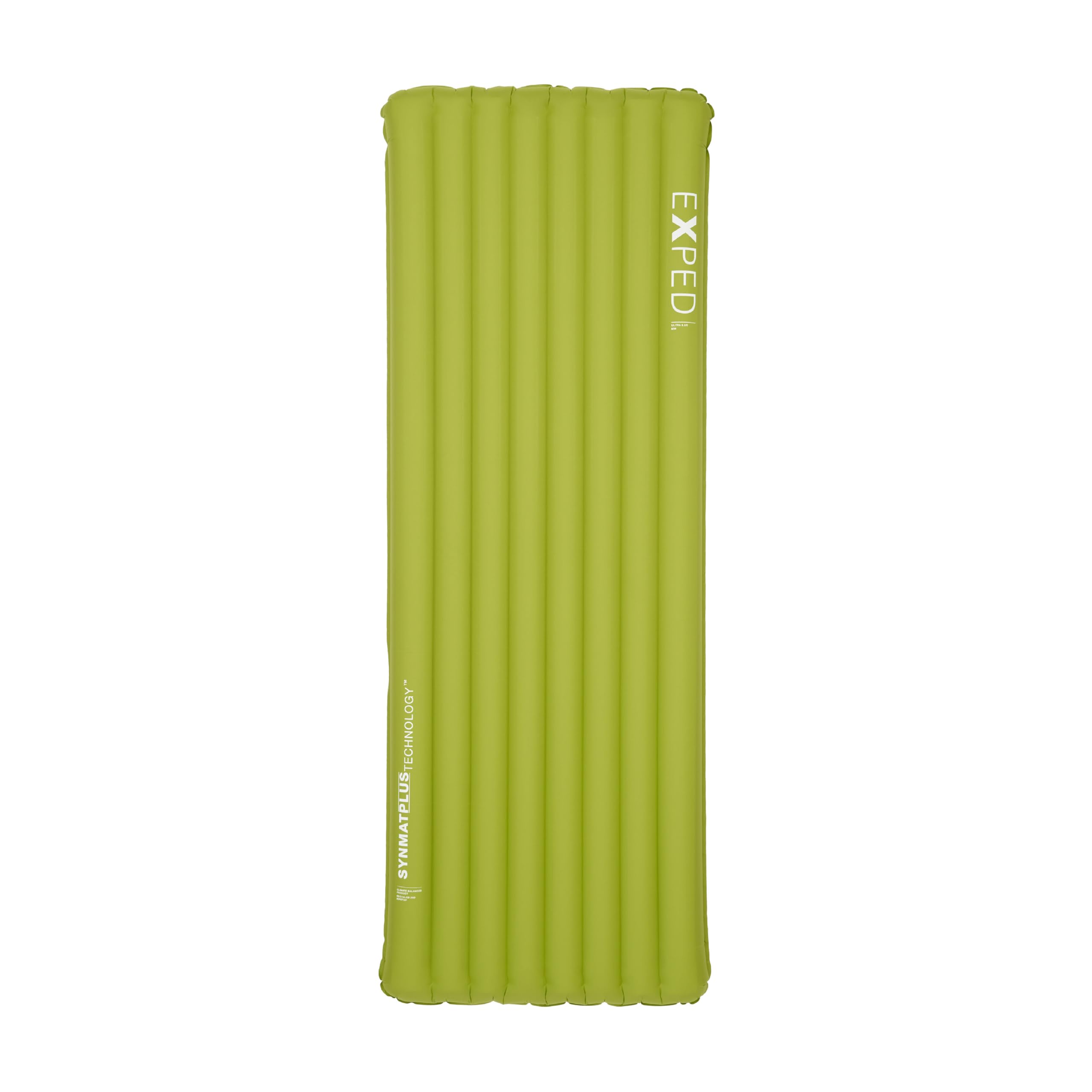
The Exped Ultra 6.5R delivers an ASTM-rated 6.9 R-value from a synthetic microfiber and reflective foil hybrid insulation system called SynMat Plus. This all-season pad sits at 3.5 inches thick with Comfort Cradle tapered siderails that keep the sleeper centered, preventing that mid-night roll-off on sloped terrain. The 25.6-inch width offers generous space for side sleepers who need shoulder clearance.
Weight is the primary compromise here — at roughly 5 pounds for the regular size, this is heavier than dedicated ultralight summer pads. However, the warmth-to-weight ratio still beats any closed-cell foam alternative for deep cold trips. The recycled 20D ripstop polyester face fabric is soft, quiet, and responsibly sourced, using less water during production than virgin textiles. The Schnozzel Pumpbag UL inflates the pad in under 2 minutes without introducing moisture into the insulation.
Field reviewers consistently report that the pad stays fully inflated overnight and that the side rails genuinely prevent hip-ground contact during side sleeping. The included repair kit handles minor punctures on the trail. For bikepackers who ride year-round and face sub-freezing overnight lows, this pad justifies its premium price point through genuine thermal performance and robust build.
Why it’s great
- True 4-season R-value tested to ASTM standards
- Wide profile (25.6″) with siderail design prevents roll-off
- Schnozzel pump sack inflates moisture-free and fast
Good to know
- Heavier than other premium options at ~5 lbs
- Packed volume is larger than summer-focused pads
3. NEMO Tensor All-Season Ultralight Insulated Sleeping Pad
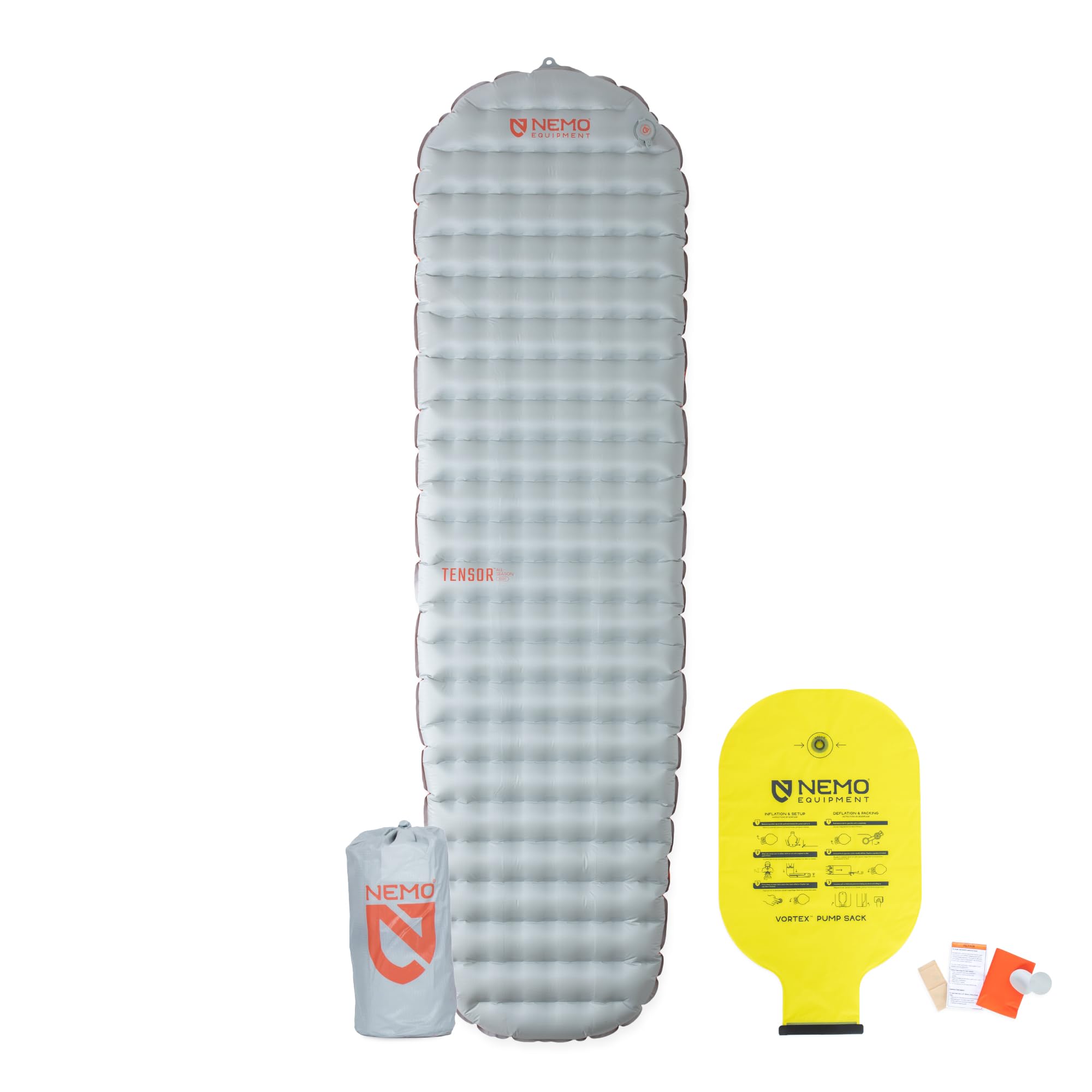
NEMO’s Tensor All-Season sets itself apart with two layers of floating Thermal Mirror metallized film that deliver a 5.4 R-value while remaining impressively quiet. The Spaceframe baffle system uses low-stretch, die-cut trusses to eliminate the springy bounce typical of inflated pads, creating a stable platform that feels closer to a foam mattress than an air chamber. At 3.5 inches thick and 13.9 ounces for the regular mummy size, it hits a rare sweet spot between warmth and weight.
The bluesign-approved premium nylon fabrics shave grams while offering superior puncture and tear resistance compared to standard 20D face fabrics. Side sleepers appreciate the stable edge that prevents hip-ground contact, and the included Vortex pump sack inflates the pad in a matter of breaths. The 20-inch width fits standard frame bags but may feel narrow for broad-shouldered users.
Customer reviews emphasize the near-total silence of the pad — a critical advantage for bikepackers who sleep in open shelters or shared tents where crinkle noise is amplified. The lifetime warranty against workmanship and manufacturing defects adds confidence, though the aluminized film layers require careful packing to avoid crease fatigue over many seasons.
Why it’s great
- Exceptionally quiet for an insulated pad
- Spaceframe baffles eliminate bounce and provide stability
- Bluesign-certified fabric for environmental responsibility
Good to know
- 20-inch width can feel narrow for side sleepers
- Aluminized film may develop creases over extended use
4. Big Agnes Rapide SL Insulated Sleeping Pad

The Big Agnes Rapide SL series delivers a 4.8 R-value through two layers of heat-reflective film and a quilted top that creates a cushioned, pillowy surface. The proprietary offset I-beam construction reduces weight while maintaining consistent stability, and the 3.5-inch thickness with 4.25-inch larger outer chambers cradles the sleeper without the air mattress bounce that disrupts light sleepers. The Petite size (20×66 inches) is a standout bikepacking option — it saves pack volume without sacrificing core insulation.
The superlight double ripstop nylon fabric with aviation-grade TPU lamination provides genuine durability for frame-bag storage. The high-volume valve allows micro-adjustment to fine-tune firmness, and the included Pumphouse inflation sack inflates the pad in seconds. Reviewers consistently note that the pad is quiet, comfortable for side sleepers, and packs smaller than the Klymit alternatives.
At roughly 16 ounces for the petite size, the weight penalty versus ultralight rivals is small, and the added thickness makes a real difference on uneven ground. The lifetime warranty reinforces confidence, and the proprietary offset I-beam design reduces the “pool float” sensation that ruins sleep for many side sleepers. This is the pad to buy if you want three-season warmth without the premium ultralight price tag.
Why it’s great
- Thick 3.5-inch profile with outer rails prevents bounce
- Quilted top creates a cushioned, stable sleeping surface
- Pumphouse sack inflates in seconds without moisture
Good to know
- Packs slightly larger than dedicated ultralight pads
- Not as warm as high-R-value winter pads below freezing
5. Sea to Summit Ultralight Backpacking Air Mattress

The Sea to Summit Ultralight is a warm-season specialist with an R-value of 1.1 — not for cold ground, but perfectly matched for summer alpine bivvies where pack volume is the absolute priority. The Air Sprung Cell construction mimics a spring mattress, maintaining more body contact area and even pressure dispersion for a restful night without the temperature penalty of high-insulation pads. At 2 inches thick, it is deliberately minimal: designed for ultralight pursuits like bike touring and fast-and-light overnights where every cubic inch of bag space is reserved for food and shelter.
The multi-function valve enables fast inflation in a few breaths using the integrated Airstream Pumpsack, then one-way deflation for quick pack-up. The non-slip 30D/40D nylon face fabric is durable compared to 20D alternatives and remains quiet during sleep. When packed, it shrinks to just 3 by 6.5 inches — smaller than any insulated pad on this list. The included PillowLock patches allow securing a Sea to Summit pillow to the mat.
Customer feedback highlights the extreme packability and the pump sack’s efficiency, though multiple reviews note that the low R-value makes it unsuitable for overnight trips where the temperature drops below 45°F. For bikepackers who only ride in summer and need the smallest possible sleep system, this pad is the clear choice.
Why it’s great
- Insanely small packed size — 3×6.5 inches
- Air Sprung Cell design provides even weight distribution
- Pump sack inflates without breath moisture
Good to know
- 1.1 R-value offers almost no ground insulation
- 2-inch thickness can bottom out for heavier side sleepers
6. Hikenture Camping Sleeping Pad (6.2 R-Value)
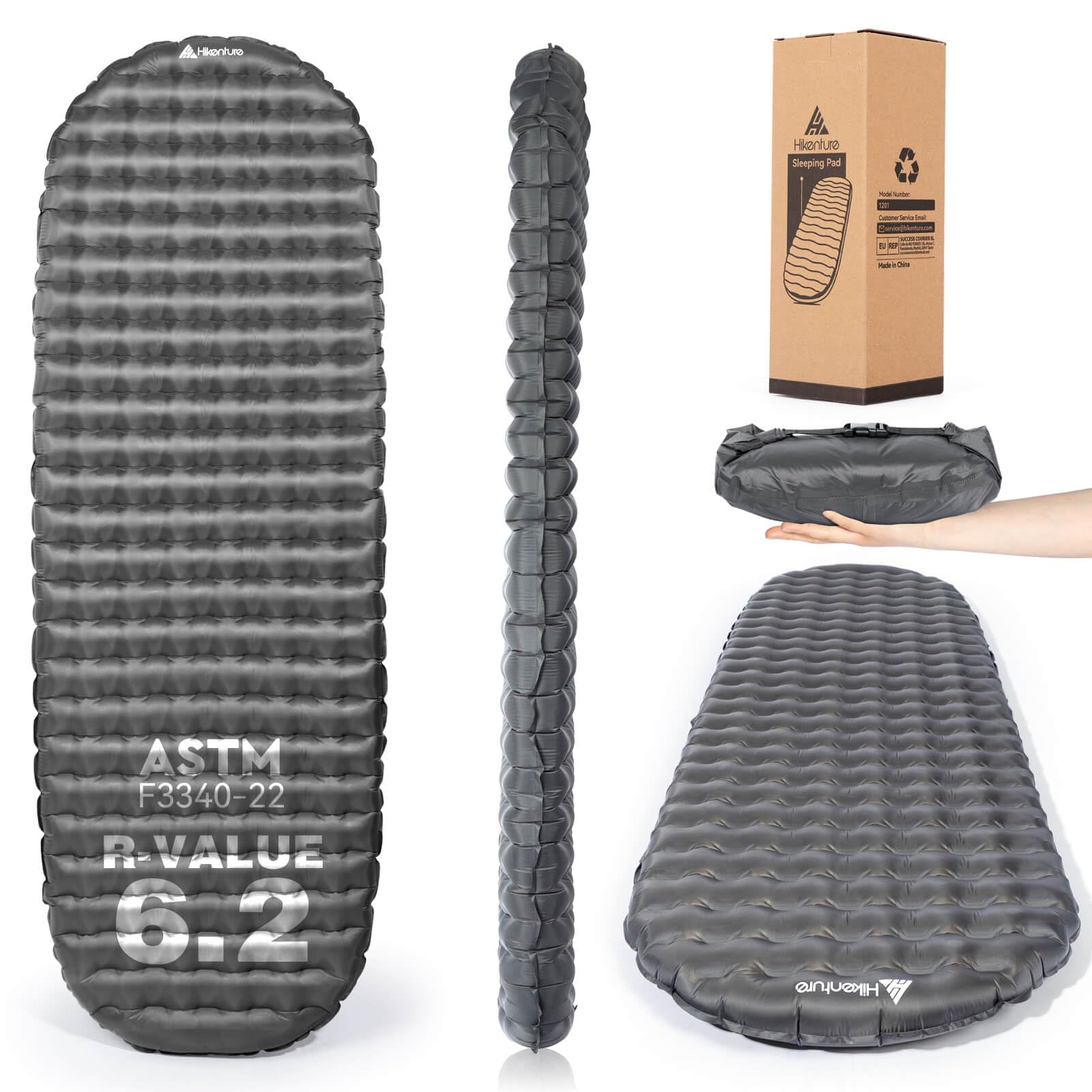
The Hikenture pad brings an ASTM-tested 6.2 R-value at a price point that undercuts insulated competitors by a wide margin, making it a genuine entry-level option for cold-weather bikepackers on a tight budget. The aluminum film inner layer reflects body heat back toward the sleeper, while the 3.2-inch thickness provides adequate cushioning for most sleeping positions. The 78×25 inch oversized dimensions offer generous space for restless sleepers who roll side to side.
The 20D nylon and TPU face fabric is lightweight at roughly 1.53 pounds, but reviewers note a slight crinkle noise from the reflective inner liner — a minor tradeoff at this price point. The 2-in-1 storage bag doubles as a 40-liter pump sack, inflating the pad in three pumps. The eco-friendly TPU liner and cardboard packaging align with conservation-minded riders. The included two repair patches offer basic field self-sufficiency.
Customer reviews highlight durability that survived kids jumping and dog-claw slices, with the pad continuing to hold air for multiple nights. The valve placement at the foot end can be awkward to reach one-handed, and there is no rapid-deflate port. For the price, this is the most affordable way to get genuine cold-weather insulation into a bikepacking sleep system.
Why it’s great
- High 6.2 R-value at an entry-level price point
- Large 78×25 inch size for full-body comfort
- Dual-use storage bag as a pump sack
Good to know
- Slight crinkle noise from reflective inner liner
- No rapid deflate valve; slower pack-up
7. TREKOLOGY Sleeping Pad UL R7
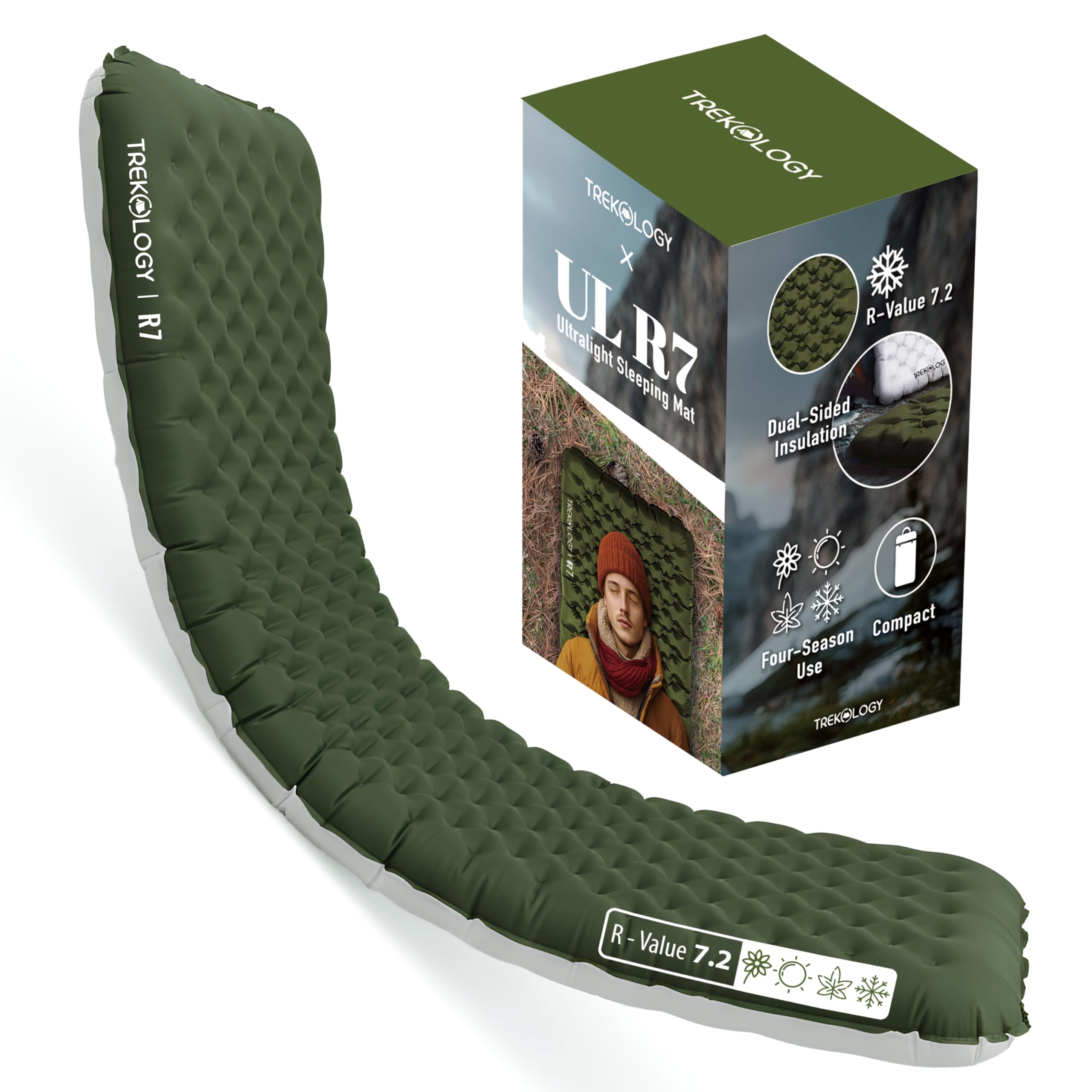
The TREKOLOGY UL R7 delivers a claimed 7.2 R-value from a 4-inch-thick pad with 40D ripstop nylon and TPU coating, making it one of the most durable budget options available. The 70.8×24 inch dimensions accommodate most adult sleepers, and the 4-inch thickness prevents bottoming out even for heavier side sleepers. At 2 pounds, it is not ultralight by premium standards, but the weight is justified by the thick insulation and robust face fabric that survives rugged bikepacking routes.
The patented anti-leak valve provides quick inflation and deflation with reliable air retention. Reviewers report using the pad in 22°F conditions with a 0°F sleeping bag and waking up warm and comfortable. The SGS certification adds a layer of credibility to the thermal performance claims, though some users express doubt about the accuracy of the R7.2 rating. The included carry bag is functional but does not double as a pump sack.
Surface noise is minimal — several reviewers note the pad is not noisy. The slip-resistant coating on the face fabric is mediocre; a small shelf liner or groundsheet is recommended for steep campsites. The value proposition is clear: you get genuine cold-weather warmth and durable materials at a fraction of the premium competitors’ cost, making this a smart choice for entry-level bikepackers or riders on a tight budget.
Why it’s great
- High claimed R-value (7.2) for genuine cold-weather use
- Durable 40D ripstop nylon resists punctures
- Very quiet surface — no crinkle noise
Good to know
- Heavier than premium pads at 2 lbs
- R-value not ASTM-verified — may be overstated
FAQ
What R-value do I need for bikepacking in the mountains?
How do I pack a sleeping pad into a bikepacking frame bag?
Can I use a regular backpacking sleeping pad for bikepacking?
How do I repair a puncture on the trail?
Final Thoughts: The Verdict
For most bikepackers, the best bikepacking sleeping pad winner is the Therm-a-Rest NeoAir Xlite NXT because it delivers an unmatched combination of 13-ounce weight, 4.5 R-value thermal performance, and a pack size that slips into a frame bag without question. If you prioritize genuine winter-grade warmth on your longest tours, grab the Exped Ultra 6.5R. And for bikepackers on a budget who still need serious cold-weather comfort, nothing beats the value of the TREKOLOGY UL R7.

Mo Maruf
I created WellFizz to bridge the gap between vague wellness advice and actionable solutions. My mission is simple: to decode the research and give you practical tools you can actually use.
Beyond the data, I am a passionate traveler. I believe that stepping away from the screen to explore new environments is essential for mental clarity and physical vitality.