Our readers keep the lights on and my smoothie glass nicely filled. As an Amazon Associate, I earn from qualifying purchases.
Optical wrist sensors on general-purpose smartwatches are convenient, but they frequently lag behind during interval sprints, lose lock on bumpy descents, and deliver inconsistent BPM data when you need precision most. A dedicated bicycle heart rate monitor solves this by using either an ECG-grade chest strap or a tightly-coupled optical armband that reads directly from your core or upper arm, eliminating the motion artifacts and fit looseness that plague wrist-based readings on a bike.
I’m Mohammad Maruf — the founder and writer behind WellFizz. My research process involves stress-testing connectivity protocols (Bluetooth vs ANT+), evaluating sensor accuracy against clinical-grade references, and analyzing battery architecture across dozens of units to separate genuine engineering from marketing claims.
Whether you’re chasing zone 2 efficiency, racing criteriums, or recovering smarter, this guide evaluates the top contenders to help you find the best bicycle heart rate monitor that matches your training demands and budget.
How To Choose The Best Bicycle Heart Rate Monitor
Not all HRMs perform identically on a bike. The vibration from road chatter, the forward-leaning aero position, and the need to pair with both a cycling computer and a phone simultaneously create constraints that a general fitness band doesn’t face. Here’s what to prioritize.
Sensor Type: Chest Strap vs Optical Armband
Chest straps use two electrodes to detect the heart’s electrical signal (ECG), making them the gold standard for beat-to-beat accuracy. They excel during high-intensity efforts and intervals where cadence-induced arm movement can confuse optical sensors. On the flipside, an optical armband worn on the upper forearm or bicep avoids the discomfort some riders feel from a chest strap’s tight band, especially during long centuries in hot weather. Armbands are easier to put on without stripping off a jersey, but they can lag by a few seconds during rapid heart rate changes and may produce occasional errant spikes if the band shifts during aggressive sprint efforts.
Connectivity: Bluetooth and ANT+ Requirements
Most modern cycling computers from Garmin, Wahoo, Hammerhead, and Magene rely on ANT+ for a dropout-resistant connection, while smartphones and tablets predominantly use Bluetooth. The ideal unit supports both protocols simultaneously, allowing you to broadcast heart rate to your head unit and a training app like Zwift or TrainerRoad at the same time. Some models also support dual Bluetooth channels, enabling a phone and an iPad connection without an ANT+ bridge. If you use a Peloton Bike+ or a smart trainer, ensure the sensor is compatible before purchasing.
Battery Life and Charging Convenience
A rechargeable lithium-ion battery with magnetic or USB-C charging eliminates the need to hunt for CR2032 coin cells before every race or long ride. Look for at least 30 hours of active runtime between charges — 100 hours or more is ideal for heavy trainers who ride daily and forget to plug in. Coin-cell units like the Polar H10 can last up to 400 hours, but you’ll need to carry spare batteries on multi-day tours.
Data Depth: HRV, Running Dynamics, and Offline Storage
If you follow structured training plans, heart rate variability (HRV) data unlocks recovery insights that raw BPM cannot provide. Some sensors transmit R-R interval data for apps like HRV4Training or Morpheus. For cyclists who also run, advanced units from Garmin capture running dynamics — vertical oscillation, ground contact time, and stride length — metrics that are irrelevant on the bike but valuable for triathletes. Offline storage is another cyclist-specific feature: it records heart rate during pool swims or team sports when you can’t wear a watch, then syncs afterward.
Quick Comparison
On smaller screens, swipe sideways to see the full table.
| Model | Category | Best For | Key Spec | Amazon |
|---|---|---|---|---|
| Magene H613 | Chest Strap | Multi-sport zone training with LED feedback | 100-hour battery, ANT+/Bluetooth | Amazon |
| Scosche Rhythm+ 2.0 | Armband | HRV recovery & armband comfort | 24-hour battery, IP68 | Amazon |
| COOSPO HW9 | Armband | Budget-friendly armband zone training | 35-hour battery, ±1 BPM accuracy | Amazon |
| Wahoo TRACKR | Chest Strap | Rechargeable convenience with Wahoo ecosystem | 200-hour battery, USB-C | Amazon |
| Polar H10 | Chest Strap | Clinical-grade ECG accuracy & HRV data | 400-hour battery, 5 kHz gym link | Amazon |
| Garmin HRM-Fit | Bra Clip | Sports bra clip for women cyclists | 1-year coin cell, clip-on design | Amazon |
| Garmin HRM 600 | Chest Strap | Running dynamics & advanced form analysis | 2-month rechargeable, swim HR | Amazon |
In‑Depth Reviews
1. Wahoo TRACKR Heart Rate Monitor

The Wahoo TRACKR strikes a rare balance between premium features and sensible design choices that matter for daily cyclists. Its USB-C rechargeable battery delivers over 100 hours of active use — I’ve seen reports of 6–8 weeks between charges during regular training — which eliminates the annoyance of hunting for a fresh coin cell before a race. The strap uses a soft, secure fit that keeps the sensor planted on your sternum even during aggressive out-of-the-saddle efforts on climbs.
Connectivity is robust: the TRACKR supports both Bluetooth and ANT+ simultaneously, so you can pair it with a Garmin Edge or Wahoo ELEMNT head unit while also streaming live heart rate to Zwift or TrainerRoad on a phone or tablet. Users report reliable pairing with the Wahoo app and Cyclemeter without the occasional dropouts seen on older TICKR models. The intuitive LED indicator confirms heart rate detection, battery status, and connection health at a glance.
One caveat: users with larger chest circumferences have noted that the included strap can feel snug, and a longer aftermarket strap may be necessary for a comfortable fit. For most riders, this unit offers the best mix of accuracy, battery convenience, and seamless multi-device pairing available today.
Why it’s great
- Long-lasting rechargeable battery (100+ hours active)
- USB-C charging for modern convenience
- Reliable Bluetooth & ANT+ dual connectivity
Good to know
- Strap may be too short for larger chest sizes
- Premium price compared to entry-level options
2. Polar H10 Heart Rate Monitor Chest Strap
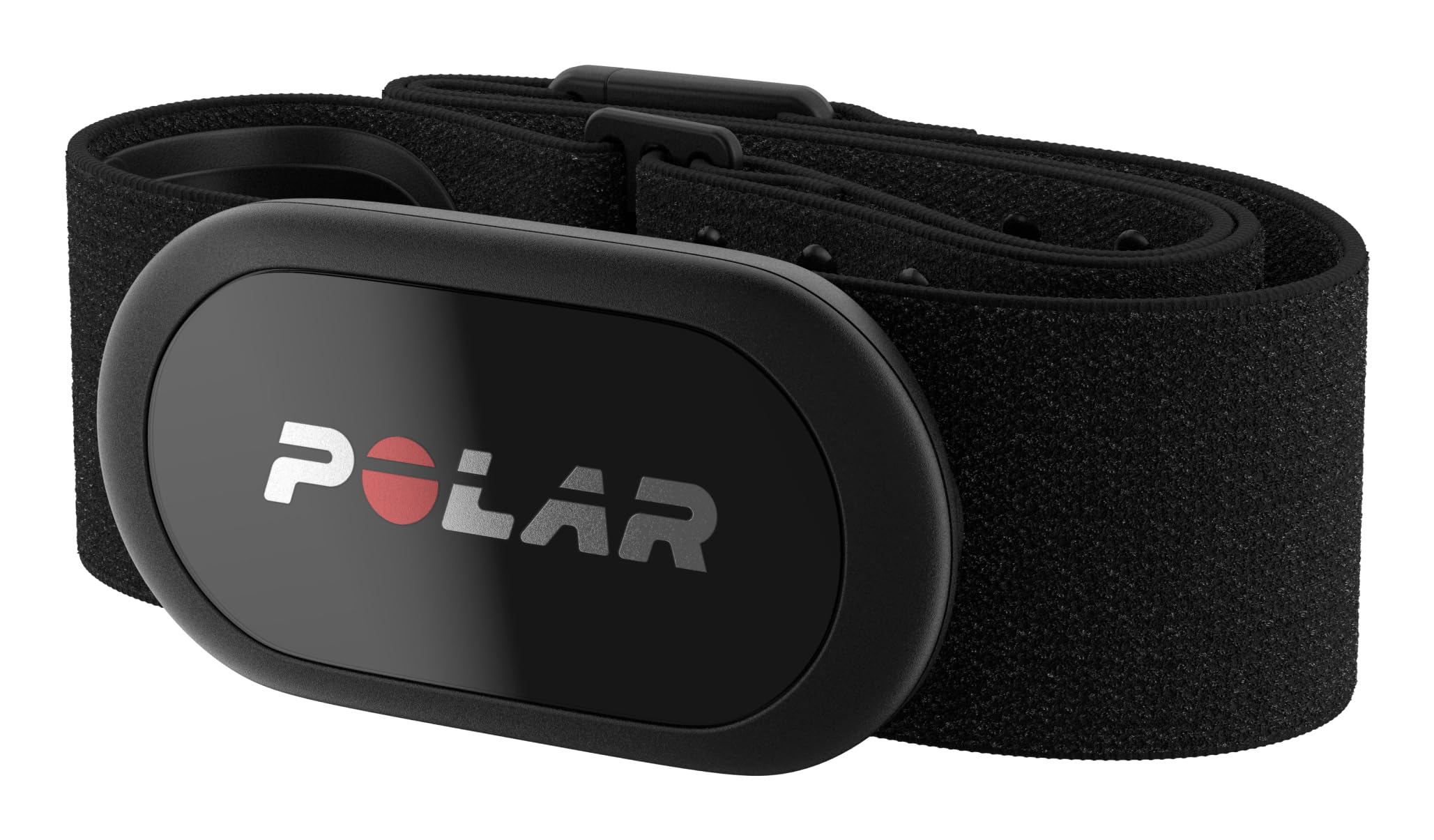
The Polar H10 is the gold standard for researchers and serious athletes who demand ECG-level precision. Validated against 12-lead clinical EKG in multiple studies, it delivers 99.3% accuracy during cycling efforts. The dual-electrode design updates R-R intervals with millisecond precision, making it the go-to sensor for HRV analysis apps like HRV4Training and Elite HRV — essential data for monitoring overtraining and recovery.
Connectivity options are unmatched: the H10 supports Bluetooth, ANT+, and a 5 kHz gym link that connects to older fitness equipment like Polar-branded gym consoles. You can run two simultaneous Bluetooth connections alongside ANT+, enabling a watch, a bike computer, and a phone to all receive the same data stream. The internal memory stores one full workout for later sync if you leave your phone behind during a swim or track session.
Durability is generally excellent, but the soft strap’s electrodes degrade after months of heavy use and sweat, leading to erratic readings. Replacing the strap restores performance, and you can use third-party straps if the Polar OEM version is out of stock. The CR2025 coin cell lasts roughly 400 hours, though some users report shorter real-world life. For raw, unfiltered accuracy above all else, the H10 remains the benchmark.
Why it’s great
- Industry-leading ECG accuracy for HRV and training data
- Triple connectivity: Bluetooth, ANT+, 5 kHz
- Internal memory for one standalone workout
Good to know
- Strap electrodes degrade over months of heavy sweat exposure
- Standard strap too small for chests over 42 inches
3. Magene H613 Heart Rate Monitor Chest Strap

The Magene H613 brings a genuinely useful feature to cycling — a multi-color LED indicator on the sensor that changes based on your heart rate zone. You can glance down at your stem to see warm-up (blue), fat-burn (green), aerobic (yellow), threshold (orange), or anaerobic (red) without looking at your computer. The customizable threshold buzzer acts as a silent coach when you drift too high, a safety net those pushing lactate threshold intervals will appreciate.
The sensor uses a self-developed algorithm that filters motion noise from high-cadence pedaling and road vibration. Battery life is rated at 100 hours with magnetic charging, and the module weighs only 12.4 grams, which is barely noticeable under a jersey. It supports Bluetooth (up to 3 devices) and ANT+, connecting smoothly to Magene bike computers, Garmin units, Zwift, and Strava simultaneously. The 17-hour offline storage records data when you ride without a phone.
Three strap sizes accommodate body types from 140 cm teens to 210 cm athletes. Some users report the LEDs are less visible in direct sunlight, and the OnelapFit app interface is not as polished as Garmin Connect or Polar Flow. For riders who train by heart rate zones and want real-time visual cues, the H613 is a clever, affordable choice.
Why it’s great
- Real-time multi-color heart rate zone LED indicator
- Customizable threshold buzzer prevents overexertion
- Ultra-light 12.4g with IPX7 waterproofing
Good to know
- LEDs can be hard to read in bright sunlight
- Proprietary app less refined than mainstream platforms
4. Scosche Rhythm+ 2.0 Heart Rate Monitor Armband

The Scosche Rhythm+ 2.0 is one of the most refined optical armband HRMs available, and it excels for cyclists who dislike chest straps. It uses dual-wavelength optical sensors that track heart rate from the forearm, bicep, or tricep with an accuracy that many users report matches their chest strap within 1–2 BPM during steady-state riding. The breathable, lightweight strap stays put even when sleeves are rolled up on a hot summer ride.
A standout feature is the HRV mode, which captures precise R-R interval data for recovery analysis via HRV4Training, Morpheus, or Welltory. This is rare among armband sensors, which typically only report averaged BPM. Battery life is rated at 24 hours continuous, and the IP68 rating means it’s fully submersible — fine for heavy rain or a post-ride shower. The Rhythm+ 2.0 pairs via Bluetooth and ANT+ to devices like Peloton, Wahoo, Garmin, and Strava.
During rapid interval transitions, the optical sensor can lag by a couple of seconds compared to an ECG chest strap. A few users report occasional connection dropouts after months of use, and the lack of an auto-off feature means you need to manually power it down to avoid battery drain. For zone 2 riding, long club runs, and gym sessions, it’s a comfortable, highly capable alternative to traditional chest straps.
Why it’s great
- Comfortable armband fit, no chest strap discomfort
- HRV mode with R-R interval for recovery insight
- IP68 waterproof rating for all-weather durability
Good to know
- Optical lag of 1–2 seconds during rapid HR changes
- No auto shut-off; battery can drain if left on
5. Garmin HRM 600

The Garmin HRM 600 is the latest in Garmin’s premium chest strap line, and it’s built for athletes who want deeper metrics than just heart rate. It transmits running dynamics — ground contact time balance, vertical oscillation, stride length, and the new step speed loss metric — to compatible Garmin watches like the Fenix 8 and Forerunner series. For cyclists who also run, this dual-sport capability eliminates the need for a separate sensor.
The rechargeable battery lasts up to two months per charge, and the sensor module is detachable from the machine-washable strap, which extends the strap’s lifespan significantly. It supports dual Bluetooth and ANT+ connections, so you can pair it to a bike computer and a phone simultaneously. The HRM 600 also stores heart rate data during swims and syncs to Garmin Connect after the workout — a critical feature for triathletes.
Setting up the belt size takes some trial and error to get the perfect snugness, and at a premium price, it’s overkill for casual riders who only need basic BPM tracking. The running dynamics are only accessible through Garmin watches, not third-party headsets. For dedicated athletes in the Garmin ecosystem who want the most granular form data, the HRM 600 is a top-tier investment.
Why it’s great
- Advanced running dynamics and step speed loss metrics
- Rechargeable battery with 2-month lifespan
- Heart rate recording for swim activities
Good to know
- Running dynamics require a compatible Garmin watch
- Premium price is overkill for casual cyclists
6. Garmin HRM-Fit Heart Rate Monitor

The Garmin HRM-Fit is a purpose-built solution for women cyclists who find chest straps uncomfortable or impractical. It clips directly onto the center front of a medium or high-support sports bra — longline, front-zip, or light-support bras are not recommended — eliminating the need for an elastic band around the ribcage. The sensor transmits accurate real-time heart rate and HRV data to compatible Garmin watches, Peloton, and the Tacx app.
Beyond heart rate, the HRM-Fit captures running dynamics via a connected Garmin watch, making it useful for triathletes who bike and run. It also computes pace and distance for indoor treadmill sessions and stores activity tracking data like steps and calories. The coin-cell battery lasts up to one year, so you don’t need to recharge it weekly.
The fit is critical: a tight, well-fitting bra is essential for consistent skin contact; flimsy or loose bras will cause erratic readings. Some users note the pod is bulky under a tight jersey and can feel noticeable during floor exercises or when leaning into an aero tuck. If you already wear a properly supportive sports bra and want to ditch the strap, the HRM-Fit delivers exceptional comfort and accuracy.
Why it’s great
- Clip-on design eliminates chest strap discomfort
- Accurate HR and HRV data across cycling & running
- Long 1-year battery life, no recharging hassle
Good to know
- Requires a tight, high-support sports bra for reliable readings
- Pod is bulky and may be visible under tight jerseys
7. COOSPO HW9 Bluetooth 5.0 ANT+ Heart Rate Monitor Armband

The COOSPO HW9 packs impressive features into a wallet-friendly armband package. The optical sensor claims ±1 BPM accuracy, and real-world testing shows it matches wrist-based monitors during steady-state cycling. A five-color LED indicator on the sensor mirrors the Magene H613’s zone feedback, letting you see at a glance whether you’re in fat-burn or threshold — visible by glancing down at your forearm. A vibration warning buzzes when you exceed your max heart rate, adding a safety layer for interval work.
Bluetooth 5.0 and ANT+ provide stable connections to bike computers, smart trainers, and apps like Wahoo Fitness, Strava, and Zwift. The rechargeable battery delivers up to 35 hours with a magnetic charger, and the included two arm straps accommodate different sizes — though the strap is designed for the forearm, and some users find it too small for bicep wear. The Heartool app allows customization of max heart rate and zone thresholds.
The main reliability concern is longevity: a notable number of users report the sensor failing after 4–6 weeks, displaying erroneously low readings (e.g., 50 BPM during a 140 BPM effort). Customer service experiences are mixed. The strap also tends to stretch out over time, losing its secure fit. At its price point, the HW9 is a solid entry-level armband for casual riders, but those training seriously may want to invest in a more durable alternative.
Why it’s great
- Affordable armband with excellent feature set
- Multi-color LED zone indicator and vibration alerts
- Bluetooth 5.0 + ANT+ dual connectivity
Good to know
- Reliability concerns; some units fail within weeks
- Strap stretches out, losing secure fit over time
FAQ
Can I use a running heart rate monitor for cycling?
Why does my wrist-based heart rate monitor lose signal during cycling?
How do I clean a heart rate monitor strap to prevent skin irritation?
What is HRV and why should I care as a cyclist?
Final Thoughts: The Verdict
For most users, the best bicycle heart rate monitor winner is the Wahoo TRACKR because it blends rechargeable convenience, long battery life, and rock-solid ANT+/Bluetooth connectivity at a fair price. If you want clinical-grade ECG accuracy for HRV analysis and multi-protocol versatility, grab the Polar H10. And for a comfortable armband that pairs well with recovery apps and Peloton, nothing beats the Scosche Rhythm+ 2.0.

Mo Maruf
I created WellFizz to bridge the gap between vague wellness advice and actionable solutions. My mission is simple: to decode the research and give you practical tools you can actually use.
Beyond the data, I am a passionate traveler. I believe that stepping away from the screen to explore new environments is essential for mental clarity and physical vitality.