Our readers keep the lights on and my smoothie glass nicely filled. As an Amazon Associate, I earn from qualifying purchases.
Florida’s intense sun, sandy soil, and humidity create a brutal proving ground for any turf. Most generic grass blends simply melt, burn out, or fail to establish a deep root system before the summer heat spikes. The right seed needs specific traits: extreme heat tolerance, aggressive self-spreading to fill bare patches, and a deep root system that can handle Florida’s unpredictable wet-dry cycles.
I’m Mohammad Maruf — the founder and writer behind WellFizz. I’ve spent years analyzing seed genetics, germination rates under heat stress, and real-world feedback from southern growers to separate the blends that thrive from those that simply package good marketing.
My goal is straightforward: help you find the best bermuda grass seed for florida with clear, category-specific comparisons that cut through the confusion.
How To Choose The Best Bermuda Grass Seed For Florida
Florida’s subtropical climate demands a grass seed that thrives in heat, tolerates drought, and spreads aggressively to fill bare spots. Not all seeds are built for this environment—cool-season varieties will struggle while warm-season Bermudagrass excels.
Warm-Season vs Cool-Season Blends
Cool-season grasses (tall fescue, Kentucky bluegrass, rye) peak in spring and fall and struggle when Florida’s summer soil temperatures climb past 85°F. Warm-season Bermudagrass goes dormant (turns brown) in winter but thrives through the brutal summer months, making it the natural choice for Florida lawns.
Germination Technology & Seed Coating
Look for seeds treated with protective coatings like Penkoted technology, which shields the seed from soil-borne diseases and improves germination odds in Florida’s sandy, often nutrient-poor soil. Uncoated seeds can rot or fail before they sprout, especially when temperatures fluctuate.
Self-Spreading & Wear Tolerance
Bermudagrass spreads through stolons and rhizomes, naturally filling bare spots over time. This trait is critical for Florida lawns that face heavy foot traffic, pets, or play. Blends that emphasize aggressive self-spreading require less annual overseeding and recover faster from damage.
Seed Purity & Weed Content
Cheap seed mixes often contain weed seeds or filler material that germinate alongside your grass—or worse, dominate it. Premium brands test for purity and label the percentage of weed seed. For a Florida lawn, a high-purity blend with minimal inert matter ensures you get grass, not crabgrass.
Quick Comparison
On smaller screens, swipe sideways to see the full table.
| Model | Category | Best For | Key Spec | Amazon |
|---|---|---|---|---|
| Pennington Bermudagrass | Warm-Season | Florida heat & high wear | Penkoted coating for disease resistance | Amazon |
| Scotts Sunny Mix | Cool-Season Blend | Direct sun, northern FL | Root-Building Nutrition included | Amazon |
| Jonathan Green Black Beauty | Cool-Season Fescue | Heat tolerance up to 100°F | Waxy leaf coating for moisture retention | Amazon |
| O.M. Scott Tall Fescue | Cool-Season Fescue | Natural weed crowding | 3-in-1 seed + fertilizer + clay | Amazon |
| Scotts Sun & Shade Mix | Cool-Season Blend | Mixed light conditions | 5.6 lb bag covers 2,240 sq ft | Amazon |
In‑Depth Reviews
1. Pennington Bermudagrass Grass Seed

Pennington Bermudagrass is the clear top pick for Florida homeowners who want a true warm-season turf. Its exclusive Penkoted technology protects the seed from soil-borne fungi—a major advantage in Florida’s humid, sandy soil where rot is common. The blend also includes cold-tolerant varieties, so it survives the occasional north Florida frost better than standard Bermuda.
This seed is aggressively self-spreading, meaning it fills bare patches naturally through stolons and rhizomes. Reviewers confirm it works well in Florida: one user turned a weed bed into a lush lawn, while another noted great germination after multiple seeding passes. The fine texture also means fewer grass clippings, reducing mowing frequency.
Plan for a longer germination window—some users reported 10–14 days even with twice-daily watering. The seed is tiny (almost powder-like), so broadcast carefully to avoid clumping. For best results, seed in late spring when soil temps hit 70–80°F and mow low at 1–1.5 inches once established.
Why it’s great
- Penkoted coating improves germination in sandy Florida soil
- Aggressive self-spreading fills bare patches quickly
- Cold-tolerant variety extends seasonal use
Good to know
- Tiny seed requires careful broadcast to avoid clumping
- Germination can take 10–14 days even with proper watering
2. Scotts Turf Builder Grass Seed Sunny Mix
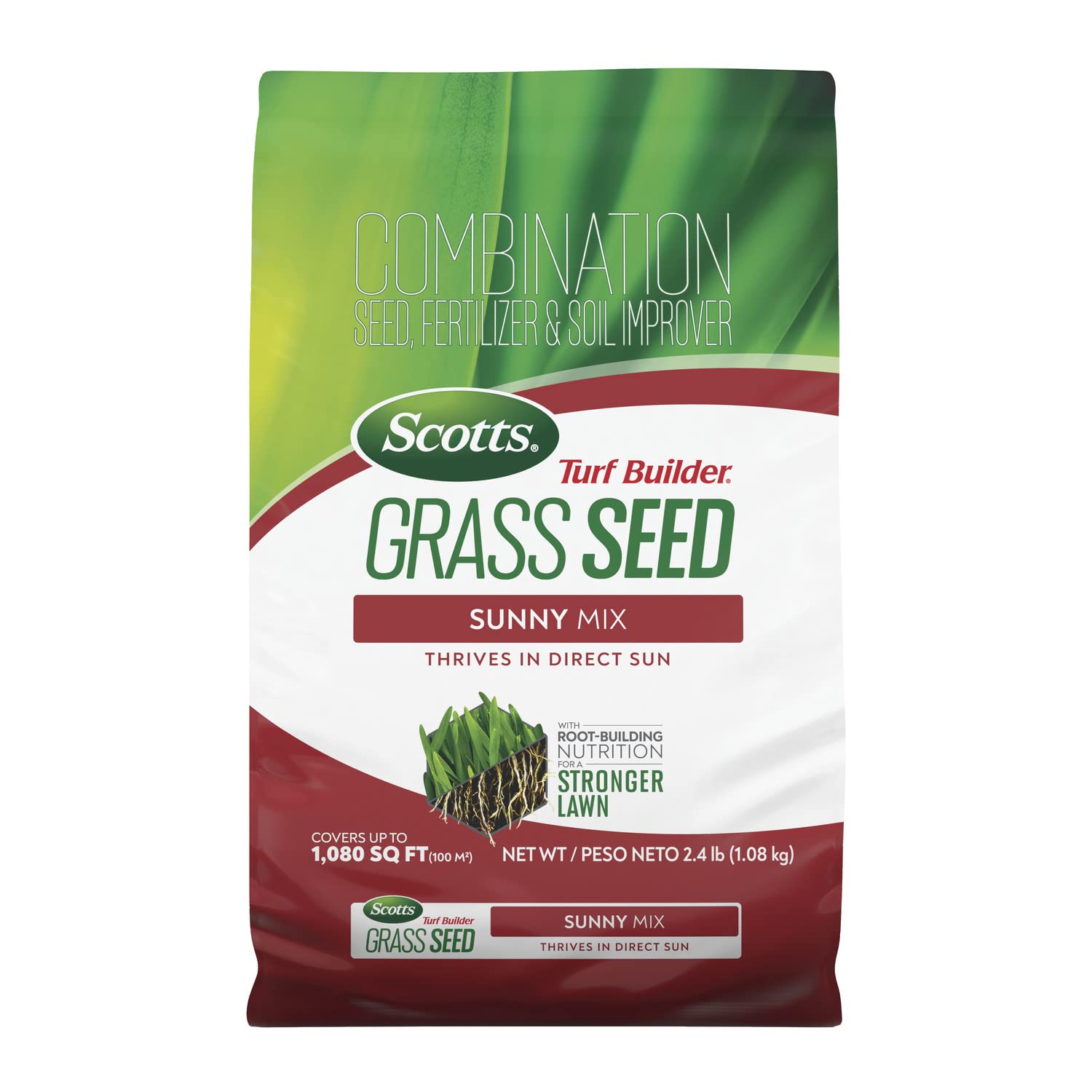
Scotts Sunny Mix is optimized for full sun and light shade, featuring their Root-Building Nutrition formula that blends seed, fertilizer, and soil improver in one bag. This is a cool-season blend—meaning it includes tall fescue and other northern varieties—so it performs best in spring or fall rather than the peak Florida summer.
Customer reports show it grows fast when conditions are right: one user praised its drought resistance during a dry spell, while another saw beautiful coverage on poor soil after three months. The built-in fertilizer gives seedlings an early boost, reducing the need for separate starter feed.
However, as a cool-season mix, it won’t thrive through Florida’s July–August heat. Use this for a temporary green-up in milder months or consider it for north Florida where summers are slightly less intense. The 2.4 lb bag covers only 360 sq ft for new lawns, so larger yards may need multiple bags.
Why it’s great
- Built-in fertilizer and soil improver simplify application
- Fast germination reported in cooler spring/fall conditions
- Drought-resistant varieties help during dry spells
Good to know
- Cool-season blend struggles in peak Florida summer heat
- Small bag size requires multiple purchases for larger lawns
3. Jonathan Green Black Beauty Heat & Drought

Jonathan Green’s Black Beauty blend uses tall fescue and Texas bluegrass, both bred for heat tolerance up to 100°F. The waxy leaf coating—similar to an apple’s skin—slows moisture evaporation, helping the grass survive Florida’s dry spells without constant irrigation. Deep rooting (up to 4 feet) also taps into groundwater.
Real user experiences are mixed: several reviewers saw lush growth in 7–14 days with proper prep (aeration, topsoil, daily watering), but one reported zero germination after a month. The inconsistency likely stems from Florida’s soil variability—this blend works best when planted in mid-August to mid-October or mid-March to mid-May, avoiding the extreme summer peak.
This is a cool-season fescue, so it will go dormant (brown) in Florida’s hottest weeks unless heavily watered. It’s a solid option for those who prefer a fescue’s finer texture over Bermuda’s aggressive spread, but it requires more maintenance during summer dormancy.
Why it’s great
- Waxy leaf coating reduces water loss in dry conditions
- Deep root system accesses groundwater beyond topsoil
- Heat tolerance up to 100°F extends growing season
Good to know
- Mixed germination results reported in Florida soils
- Goes dormant during extreme summer heat without heavy watering
4. O.M. Scott and Sons Tall Fescue Blend
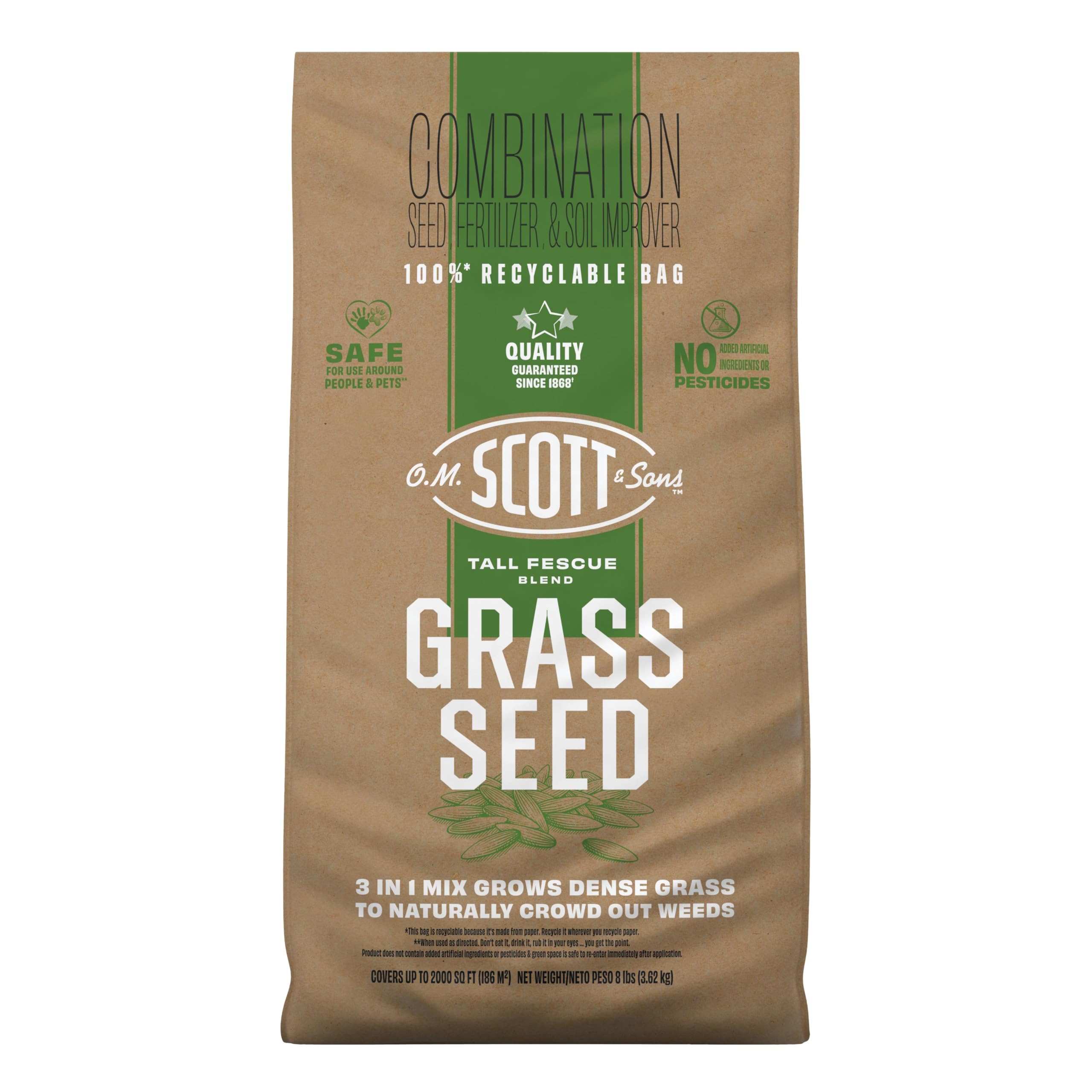
This 3-in-1 product combines Tall Fescue seed, natural grass food, and soil-improving clay in one bag. The clay helps sandy Florida soil retain moisture and nutrients near the root zone. The blend is designed for Northern and transition regions, meaning it works best in north Florida during spring or fall when temperatures stay between 65°F and 85°F.
Reviewers praise its ability to naturally crowd out weeds—one user called it “best seeds out there” after three years of failures with other brands. Another reported germination in about 10 days with topsoil and consistent watering. However, some note that nearly half the bag weight is fertilizer/clay filler, making it pricier per pound of actual seed.
For a large lawn, the 8 lb bag covers 2,000 sq ft for overseeding, which is generous. The weed-crowding effect is real but requires dense initial seeding and proper watering. This is a strong choice for north Florida homeowners who want a lush fescue lawn without broadcast herbicides.
Why it’s great
- Clay additive improves moisture retention in sandy soil
- Naturally crowds out weeds without chemical sprays
- Large 8 lb bag covers up to 2,000 sq ft for overseeding
Good to know
- Nearly half the bag weight is filler (fertilizer/clay)
- Cool-season blend, not ideal for peak Florida summer
5. Scotts Turf Builder Grass Seed Sun and Shade Mix

Scotts Sun and Shade Mix is designed for yards with both sunny and moderately shaded areas, making it a versatile option for Florida lots with mature trees. Its Root-Building Nutrition formula helps seedlings establish deep roots even when light conditions vary. One user reported sprouting on day 10 with twice-daily watering and fresh topsoil.
However, this is a cool-season blend, so its performance in Florida’s full summer is limited. Some long-time users noted increased weed content in recent batches, and growth can be thinner than expected during extreme weather (thunderstorms, wind). Customer service is responsive—one reviewer received a free replacement after wind blew seeds away.
The 5.6 lb bag covers 745 sq ft for new lawns or 2,240 sq ft for overseeding, offering good coverage. Use this as a spring overseeding option or for north Florida where summers are shorter. For central and south Florida, stick with true warm-season Bermudagrass.
Why it’s great
- Performs in both full sun and moderate shade
- Root-Building Nutrition boosts early establishment
- Large coverage area for overseeding (2,240 sq ft)
Good to know
- Cool-season blend struggles in peak Florida summer
- Some users report increased weed content in recent batches
FAQ
Can I plant cool-season fescue seed in Florida during July?
How deep should I water Florida Bermuda grass seed after planting?
Why did my Bermuda grass seed not germinate in Florida soil?
Final Thoughts: The Verdict
For most users, the best bermuda grass seed for florida winner is the Pennington Bermudagrass because its Penkoted coating and warm-season genetics are specifically designed to handle Florida’s heat, humidity, and sandy soil. If you want a faster green-up in spring or fall, grab the Scotts Turf Builder Sunny Mix. And for a fine-bladed fescue that tolerates Florida’s intense sun with deep roots, the Jonathan Green Black Beauty is a solid alternative—but be prepared for summer dormancy without heavy irrigation.

Mo Maruf
I created WellFizz to bridge the gap between vague wellness advice and actionable solutions. My mission is simple: to decode the research and give you practical tools you can actually use.
Beyond the data, I am a passionate traveler. I believe that stepping away from the screen to explore new environments is essential for mental clarity and physical vitality.