Our readers keep the lights on and my smoothie glass nicely filled. As an Amazon Associate, I earn from qualifying purchases.
Choosing living things for your space shouldn’t feel like a high-stakes gamble. The right starter greenery thrives on neglect, survives low light, and won’t wilt if you forget a watering. These are not finicky specimens requiring misting schedules — they are the resilient, forgiving species that build your confidence.
I’m Mohammad Maruf — the founder and writer behind WellFizz. I research the physical quality, survival rates, and true maintenance demands of indoor houseplants, separating practical grow-from-home options from fragile, over-glorified decorations.
This guide delivers only the toughest, air-purifying greenery that adapts to your lifestyle, not the other way around. Whether you have a dark corner or a bright shelf, this is the definitive list of the best beginner plants for a thriving home.
How To Choose The Best Beginner Plants
Not every green leaf promises easy care. The true marker of a beginner-friendly houseplant is its tolerance for irregular watering and inconsistent light. Species like snake plants and ZZ plants store water in thick rhizomes, forgiving weeks of drought, while spider plants adapt to everything from bright windowsills to fluorescent office corners. Avoid plants with high humidity requirements, delicate leaves, or precise pruning schedules — they fail first under casual attention.
Light Adaptability
The single most decisive spec is the plant’s light tolerance range. A plant labeled “low light” (like a ZZ or Peace Lily) will survive in a north-facing window or a dim hallway corner. Species that demand “bright indirect” light (such as many spider varieties) still perform well in most standard rooms, but they stretch and lose variegation if kept in a dark bathroom. Beginners should chase plants that accept a wide light spectrum.
Watering Forgiveness
The biggest killer of starter plants is root rot caused by overwatering. A snake plant can go three weeks without a drink and still look crisp; a Peace Lily will dramatically droop when thirsty but bounce back within hours after a soak. Specs to look for include “drought tolerant” in the product description and thick, fleshy leaves or rhizomes. Avoid any plant marked “keep constantly moist” — those demand a level of attention new owners rarely sustain.
Quick Comparison
On smaller screens, swipe sideways to see the full table.
| Model | Category | Best For | Key Spec | Amazon |
|---|---|---|---|---|
| Bonnie Curly Spider Plant | Single Plant | Compact shelf decor | Curly leaf variety, 4-inch pot | Amazon |
| Spider Plant Variety Pack | 4-Variety Pack | Building a collection | 4 distinct spider types, bare root | Amazon |
| ZZ Plant | Single Plant | Ultra-low light corners | Rhizome-drought storage, 4-inch pot | Amazon |
| Snake Plant Zeylanica | Single Plant | Neglect-proof resilience | 13-inch height, low light tolerant | Amazon |
| Peace Lily | Single Plant | Flowering indoor plant | White blooms, low light, 4-inch pot | Amazon |
In‑Depth Reviews
1. Bonnie Curly Spider Plant (Hirt’s Gardens)

The Chlorophytum comosum ‘Bonnie’ is the single most forgiving plant for someone who has never kept a houseplant alive. Its tightly curled leaves add sculptural interest on a bookshelf, and the 4-inch pot fits anywhere — dorm desks, apartment kitchen counters, or office cubicles. This variety prefers bright indirect light but tolerates standard artificial light better than straight-leaf spider types. The soil arrives evenly moist, not wet, which eliminates the immediate overwatering risk that kills less robust species.
Real buyers consistently report zero leaf damage upon arrival, thanks to clever paper-bag packaging that protects the curly fronds during transit. Multiple five-star reviews note that the plant still looked pristine weeks after unboxing with no special care routines. The white-and-yellow variegation stays vibrant when placed within three feet of a window, though it loses some striping in very dim corners. The plant is already actively growing in its nursery pot — users describe seeing new shoots within the first week.
Hirt’s Gardens ships a well-rooted specimen that rarely needs immediate repotting, which removes a common stress point for beginners. The moderate watering requirement (keep evenly moist, never soggy) is easy to manage with a simple weekly check. Its air-purification ability is a genuine bonus, not just marketing fluff — spider plants are among the species NASA identified for filtering indoor toxins. You can propagate the “babies” that emerge later, giving you free plants to share with friends.
Why it’s great
- Unique curly leaves look distinct among common houseplants
- Thrives in bright indirect or artificial light with minimal fuss
- Healthy, pre-established root system reduces transplant shock
Good to know
- Slightly lighter color than product photos — this is typical for the Bonnie variety
- One of the pricier options for a single 4-inch spider plant
2. Spider Plant Variety Pack (AUGUST BREEZE FARM)
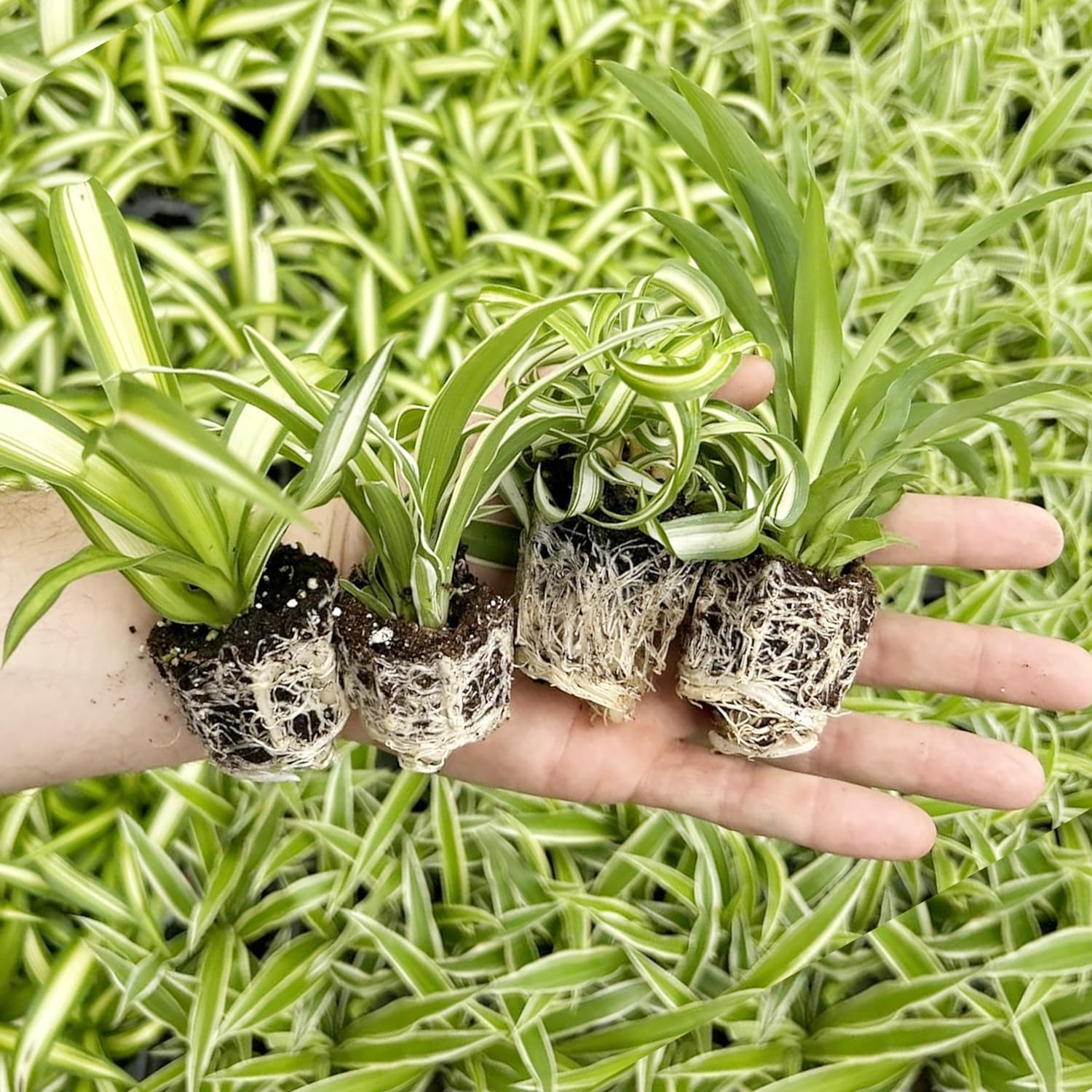
If you want four distinct houseplants for the cost of a single café lunch, this variety pack delivers Ocean, Hawaiian, Green, and Bonnie Curly spider plants as bare-root starters. Each variety displays a different foliage pattern — Hawaiian has broad creamy margins, Ocean develops wider leaves, Green is a solid deep tone, and Bonnie curls tightly. This mix lets you experiment with light placement to see which variety thrives best in your specific environment, essentially giving you a live research trial.
The root systems are described by multiple verified buyers as “incredible” and “fully developed” — these are not tiny sprigs. Several reviewers noted that the root balls were large enough to require immediate repotting, which is actually ideal for a beginner who wants to learn transplanting on forgiving plants. The 4-inch starter size fits standard nursery pots, and the drought-tolerant nature (specifically noted for the Bonnie and Green varieties) provides a wide margin for watering mistakes.
One minor critique is that the plants arrive unlabeled within the pack, so you will need to identify the varieties yourself through leaf comparison after unboxing. The packaging method (bare root in sphagnum) keeps them alive for several days in transit without soil compaction issues. These are GMO-free and cultivated without chemical pesticides, making them safe for homes with curious pets who might nibble. The variety pack is an excellent gift option that lets the recipient discover the joy of watching distinct spider plant forms grow side by side.
Why it’s great
- Four distinct varieties let you compare growth habits and variegation
- Mature root systems allow for immediate learning of repotting technique
- Drought-tolerant genetics provide wide watering forgiveness
Good to know
- Plants are not individually labeled — identification requires leaf matching
- Bare-root arrival means you need pots and soil on hand
3. ZZ Plant (Tropical Ambiance)

Zamioculcas zamiifolia, commonly called the ZZ plant, is the most bulletproof species in this entire lineup. Its thick, waxy, dark green leaves store water in swollen underground rhizomes, meaning you can water it every two to three weeks and it will still push out new stems. This 4-inch pot from Tropical Ambiance ships as a fully rooted, natural specimen that tolerates the dimmest corner of a bedroom, north-facing hallway, or office cubicle with no artificial supplement.
Verified buyers report remarkable growth — one review described the plant tripling in size over three months with nothing more than biweekly watering and a north-facing window. The stems emerge from the soil looking like smooth green tubes before unfurling into paddle-shaped leaflets, giving each new shoot a satisfying visual progression.
The plant arrived in cold-protected packaging during winter shipping, with no leaf damage or root disturbance. Its moderate moisture needs let you skip the anxiety of a rigid schedule — if you forget for two weeks, the plant simply uses its stored reserves. The ZZ is a natural air purifier, though its real value is the confidence it builds in new plant owners. It is also pet-safe for homes with cats or dogs, provided they don’t dig up the rhizomes for a meal.
Why it’s great
- Survives three weeks between waterings thanks to underground rhizomes
- Thrives in extremely low light where most other plants would stretch
- Rapid growth response provides satisfying visual feedback for beginners
Good to know
- Generic brand packaging — no decorative pot included
- Toxic if ingested by pets; requires elevated placement
4. Snake Plant Zeylanica (Altman Plants)

The Sansevieria Zeylanica from Altman Plants is the definition of a “virtually indestructible” houseplant. It features vertical, sword-shaped leaves with deep green horizontal banding that reaches roughly 13 inches in the 4.25-inch grower pot. This snake plant tolerates low, medium, and bright light equally well — it is the only plant that genuinely survives in a windowless bathroom if you rotate it to a bright spot once a month. Its succulent leaves store all the water it needs for weeks.
Buyers universally praise the strong root system and secure packaging, even during freezing winter shipping days. Multiple five-star reviews confirm that the plant arrived without a single broken leaf tip, which is impressive for a species with tall, rigid foliage. One buyer noted that the plant grew several inches within two weeks of arrival after being transplanted into a larger container. The variegation pattern is more subtle than the popular Laurentii snake plant, but this makes it more adaptable to lower light without browning.
The potting soil is a well-draining mix that prevents water from pooling at the roots — beginners should still use a pot with drainage holes to avoid rot. The drought tolerance is so extreme that you can safely ignore watering for three to four weeks during winter. Unlike some online plant sellers, Altman Plants ships in a biodegradable pot, reducing plastic waste. The snake plant is one of the most effective natural air filters, removing benzene, formaldehyde, and toluene from indoor spaces.
Why it’s great
- Thrives in any light condition from bright sun to low shade
- Can go a full month without watering without visible stress
- Tall upright habit makes a visual statement in small rooms
Good to know
- Some shipments arrive shorter than the advertised 13 inches
- Leaves can show darker tips if overwatered before arrival
5. Peace Lily (Thorsen’s Greenhouse)
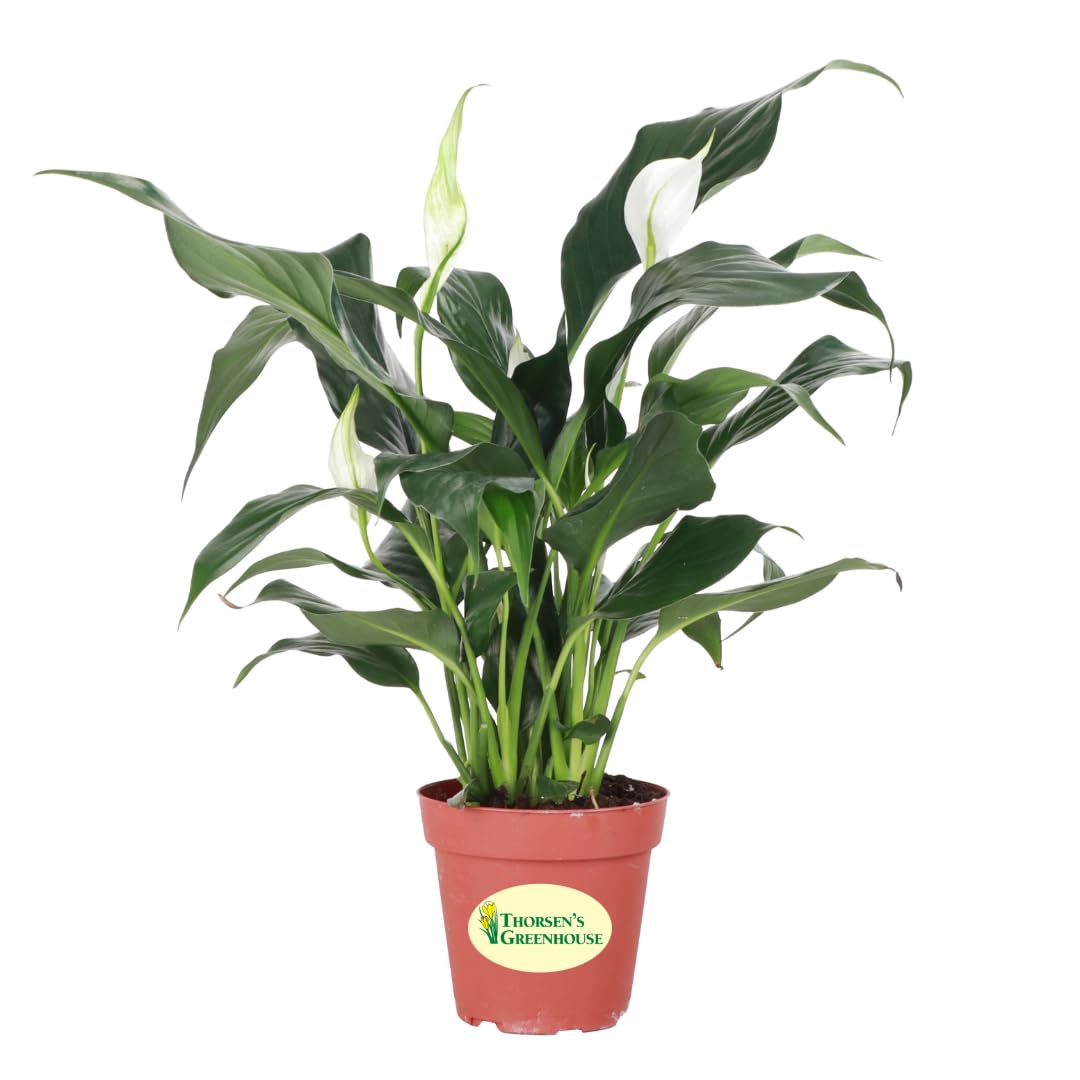
The Peace Lily (Spathiphyllum) breaks the mold of “green only” beginner plants by producing elegant white spathe blooms that release a light sweet scent. Thorsen’s Greenhouse ships a 4-inch grower pot specimen with lush, dark green leaves and multiple growing points that will produce flowers in spring and summer under the right conditions. This is the only plant on this list that visibly communicates when it needs water — the leaves droop dramatically when thirsty and rehydrate within hours, teaching you the exact rhythmic cue of proper watering.
Verified buyers consistently report healthy arrivals with strong leaf structure and no major blemishes, despite the Peace Lily’s naturally sensitive leaf edges which can develop black tips from shipping stress. The plant thrives in partial shade and low light, making it ideal for a humid bathroom corner, an office shelf with fluorescent lighting, or a bedroom with a north-facing window. The extended bloom time is a genuine spec — Peace Lilies can produce flowers repeatedly throughout the year when kept in stable temperatures above 60°F.
Thorsen’s Greenhouse includes clear care instructions and suggests waiting a full week before repotting to let the plant acclimate. The pot has drainage holes to prevent root rot, though you will need to buy a decorative cache pot separately. NASA included Peace Lilies in its Clean Air Study, confirming their ability to filter acetone, ammonia, and other VOCs. The main consideration is that the plant is mildly toxic if ingested by pets or children, but its drooping trick makes it easier to avoid overwatering than almost any other flowering houseplant.
Why it’s great
- Produces white flowers that add color and light fragrance to a room
- Dramatic drooping when thirsty gives beginners a clear watering signal
- Performs exceptionally in low-light and high-humidity spaces
Good to know
- Leaf tips may develop slight blackening from shipping stress
- Toxic to cats and dogs if ingested, requiring elevated placement
FAQ
How often should I water a beginner snake plant?
Can a ZZ plant survive in a room with no windows?
How do I know when to repot a Peace Lily?
Final Thoughts: The Verdict
For most users, the best beginner plants winner is the Bonnie Curly Spider Plant because it combines distinctive curly leaves, forgiving watering needs, moderate light tolerance, and air-purifying benefits in a compact 4-inch pot that fits any home. If you want to build a collection of four distinct varieties right away, grab the Spider Plant Variety Pack. And for the absolute lowest maintenance with next-to-zero light, nothing beats the ZZ Plant, which can survive on a biweekly watering schedule in your darkest corner.

Mo Maruf
I created WellFizz to bridge the gap between vague wellness advice and actionable solutions. My mission is simple: to decode the research and give you practical tools you can actually use.
Beyond the data, I am a passionate traveler. I believe that stepping away from the screen to explore new environments is essential for mental clarity and physical vitality.