Our readers keep the lights on and my smoothie glass nicely filled. As an Amazon Associate, I earn from qualifying purchases.
A beginner chef knife needs to do more than just look impressive on a magnetic strip. The wrong blade turns dicing an onion into a crushing, frustrating battle, and flimsy steel loses its edge after a handful of meals. Finding a knife that arrives sharp, stays sharp through weeks of home prep, and feels balanced in an inexperienced grip is the single most important tool purchase a new cook makes.
I’m Mohammad Maruf — the founder and writer behind WellFizz. I’ve spent years analyzing blade geometry, steel compositions, and handle ergonomics across hundreds of kitchen knives to understand which specs actually matter for a new cook learning proper technique.
This guide breaks down the essential features, real-world performance, and trade-offs of each option to help you confidently pick the best beginner chef knife that matches your skill level and budget.
How To Choose The Best Beginner Chef Knife
A great chef knife for a newcomer isn’t about brand prestige or flashy Damascus patterns — it is about four interconnected factors that determine whether the knife becomes a daily workhorse or a drawer ornament. Understanding these specs before you click “buy” will save you frustration and money.
Blade Steel & Hardness (HRC)
The steel type and its Rockwell Hardness rating dictate how long the blade stays sharp and how easily it can be resharpened. A rating between 55 and 61 HRC is the sweet spot for a beginner: soft enough to hone at home with a simple rod but hard enough to hold an edge through a week of meal prep. Steels below 54 HRC dull fast and require frequent sharpening, while anything above 62 HRC becomes brittle and chips easily if you hit a bone or a cutting board edge.
Edge Angle & Geometry
The angle at which the blade is sharpened determines cutting resistance. A wider angle (20 degrees per side) is more durable but wedges through dense vegetables. A narrower angle (12 to 15 degrees) glides through tomatoes and raw meat with far less effort but requires careful hand washing and storage. For a beginner, a 15-degree edge strikes the ideal balance between performance and forgiving maintenance.
Handle, Balance & Grip
A beginner chef knife should feel like a natural extension of your hand. Look for a full tang (the steel runs the entire length of the handle) that provides proper weight distribution and prevents snapping under pressure. The handle material — Pakkawood, POM resin, or textured thermoplastic — must offer a secure grip even when your hands are wet or oily. An ergonomic contour that encourages a pinch grip at the blade’s base reduces wrist fatigue and improves control.
Forged vs. Stamped Construction
Forged knives are shaped from a single heated piece of steel, resulting in a denser, heavier blade with a thicker spine. Stamped knives are cut from a rolled sheet of steel, making them lighter and thinner. Beginners often benefit from a stamped knife because it is lighter, easier to maneuver, and significantly more affordable. The trade-off is that premium forged blades usually offer better edge retention and heft that helps with push-cutting dense squash.
Quick Comparison
On smaller screens, swipe sideways to see the full table.
| Model | Category | Best For | Key Spec | Amazon |
|---|---|---|---|---|
| Victorinox Fibrox Pro Chef’s Knife | Stamped | Long prep sessions, wet hands | 7.9″ blade, 56 HRC, 6 oz | Amazon |
| Wüsthof Gourmet 4-Piece Set | Stamped Set | Building a full starter kit | 8″ Chef, Paring, Utility, Steel | Amazon |
| HexClad Chef’s Knife | Forged Damascus | Premium sharpness, long edge life | 67-layer Damascus, 12° edge | Amazon |
| Miyabi Koh 8-inch Chef’s Knife | Stamped | Japanese precision, 61 HRC | FC61 steel, 9.5-12° edge | Amazon |
| KEEMAKE Chef Knife | Forged | Mid-range value, versatile prep | 1.4116 steel, 8-12° edge | Amazon |
| Sunnecko 8 Inch Chef Knife | Forged | Entry-level budget, gift option | 8″ blade, 12-15° edge | Amazon |
| Kimura 8 Inch Chef Knife | Stamped | Lightweight handling, smaller hands | Moly steel, 15° edge, 6.2 oz | Amazon |
In‑Depth Reviews
1. Victorinox Fibrox Pro Chef’s Knife, 8 Inch
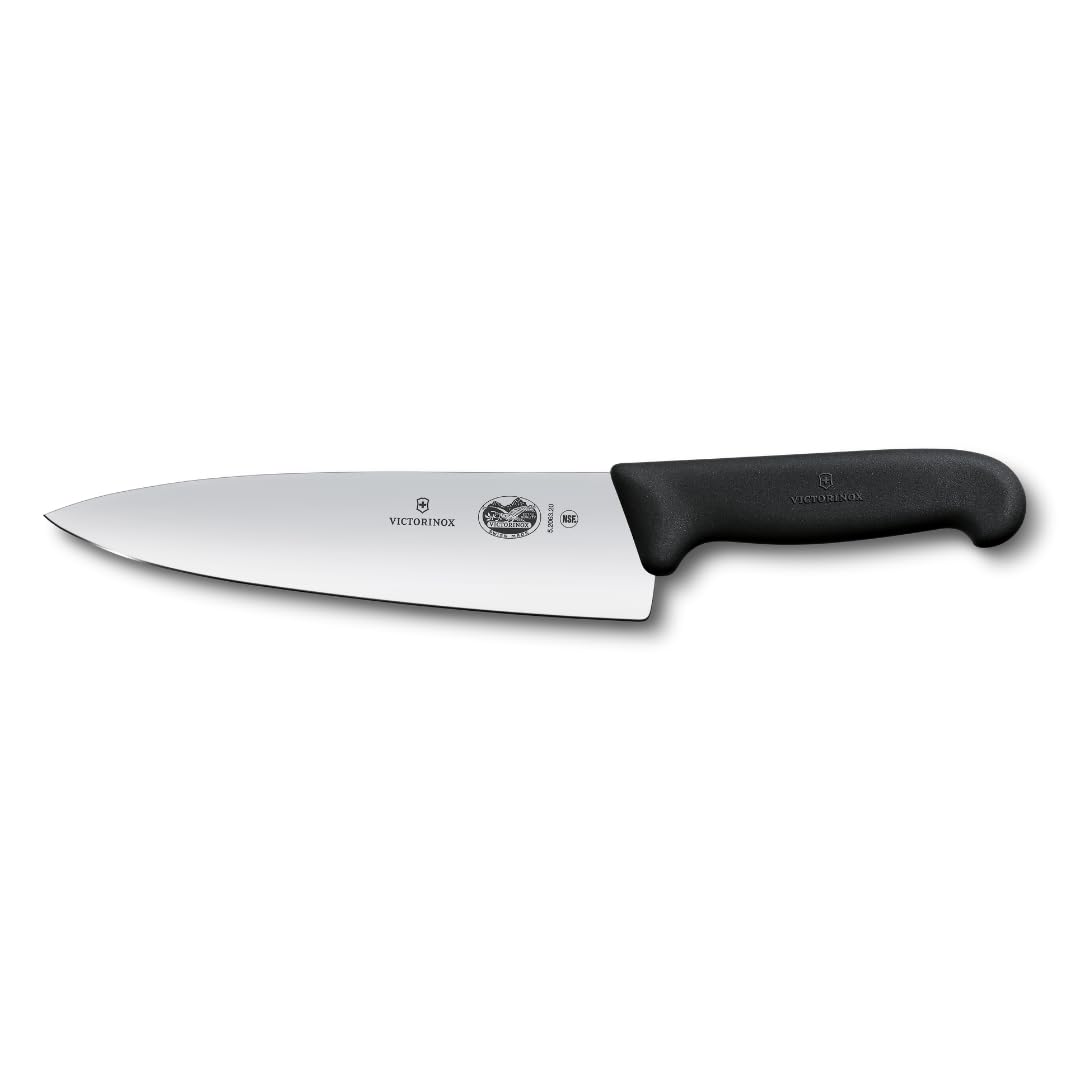
The stamped high-carbon stainless steel blade arrives scalpel-sharp with a consistent 15-degree edge that glides through tomatoes without crushing them. Weighing only 5.7 ounces, it feels noticeably lighter than forged competitors, which translates into less wrist fatigue during long prep sessions.
The Fibrox handle is where this knife truly separates itself from the pack. Molded from thermoplastic elastomer, it provides a secure, non-slip grip even when your hands are wet or slick with oil. The textured surface and pronounced bolster encourage a safe pinch grip, and the blade depth is generous enough that your knuckles never scrape against the cutting board. It is also dishwasher-safe, though hand washing is recommended to preserve the edge.
At 56 HRC, the steel is soft enough to be sharpened easily with a basic pull-through sharpener or a honing rod, and it holds its working edge for about a week of daily use before needing a light touch-up. The blade is stamped rather than forged, which keeps the price accessible, but the trade-off is that it will eventually need replacement after a year or two of heavy use rather than lasting a lifetime. For a beginner who wants professional-grade performance without the steep learning curve, this is the definitive choice.
Why it’s great
- Exceptionally sharp out of the box with a proven 15-degree edge
- Non-slip Fibrox handle offers superior control when wet
- Lightweight design (5.7 oz) reduces hand fatigue
Good to know
- Not a lifetime knife; expect replacement after heavy daily use
- Stamped construction won’t impress on a magnetic bar like forged knives
2. Wüsthof Gourmet 4-Piece Chef’s Knife Set

Wüsthof is a seventh-generation German cutler based in Solingen, and the Gourmet series brings their legendary build quality to a more accessible price point. This 4-piece set includes an 8-inch chef knife, a 4.5-inch utility knife, a 2.75-inch paring knife, and a honing steel — everything a new cook needs to handle 95% of kitchen tasks without buying additional tools. Each blade is laser-cut from high-carbon stainless steel and precision-honed for a razor edge.
The synthetic polypropylene handles are designed for longevity: they resist fading, discoloration, and impact, and they offer a comfortable, slightly textured grip. The chef knife has a full tang and a weighted feel that helps with push-cutting dense vegetables like sweet potatoes and butternut squash. The included honing steel is a critical addition because it allows you to realign the blade edge between sharpenings, extending the time between full sharpening sessions significantly.
At 57 HRC, the steel strikes a good balance between edge retention and ease of sharpening. The set is not dishwasher-safe, and the blades require hand washing and drying to prevent spotting. While the stamped construction means the chef knife is lighter than Wüsthof’s forged Classic line, it is still robust enough for years of home use. For a beginner who wants a coordinated starter kit from a heritage brand, this set provides exceptional value and room to grow.
Why it’s great
- Complete 4-piece set includes a honing steel for edge maintenance
- German Solingen steel holds a reliable working edge
- Impact-resistant handles resist fading and warping
Good to know
- Hand wash only; dishwasher use will damage handles and blades
- Polypropylene handle feels less premium than Pakkawood
3. HexClad Chef’s Knife, 8-Inch

HexClad is best known for its hybrid cookware, but their 8-inch chef knife deserves serious consideration from a beginner who wants premium sharpness without stepping up to Japanese artisan prices. The blade is forged from 67 layers of Japanese Damascus stainless steel and sharpened to a narrow 12-degree edge per side using the Honbazuke heat-treatment method. This combination results in a blade that slices through ripe tomatoes, raw chicken, and even hard squash with almost no resistance.
The Pakkawood handle is ergonomically shaped with a gentle curve that fits naturally into a pinch grip. At 9.92 ounces, this knife feels substantial but not unwieldy, and the full-tang construction provides excellent balance — the weight sits right at the bolster, giving you precise control for detailed cuts like chiffonade basil or brunoise carrots. The Damascus pattern is genuine, not laser-etched, which means it won’t wear off with washing.
One notable caveat for a beginner: the knife does not include a blade cover or sheath, which is disappointing at this price point. The 12-degree edge is also more delicate than wider angles, so you must avoid cutting on glass, stone, or ceramic surfaces, and you should never put it in a dishwasher. Frequent honing with a ceramic rod is required to keep the edge aligned. Still, for a new cook who wants professional-level cutting performance from day one, the HexClad delivers an experience that few other beginner-friendly knives can match.
Why it’s great
- Genuine 67-layer Damascus steel with an exceptional 12-degree edge
- Excellent weight balance for precise control
- Pakkawood handle offers a comfortable, secure grip
Good to know
- No blade guard or sheath included with the knife
- Narrow 12-degree edge requires careful maintenance and hand washing
4. Miyabi Koh 8-inch Chef’s Knife
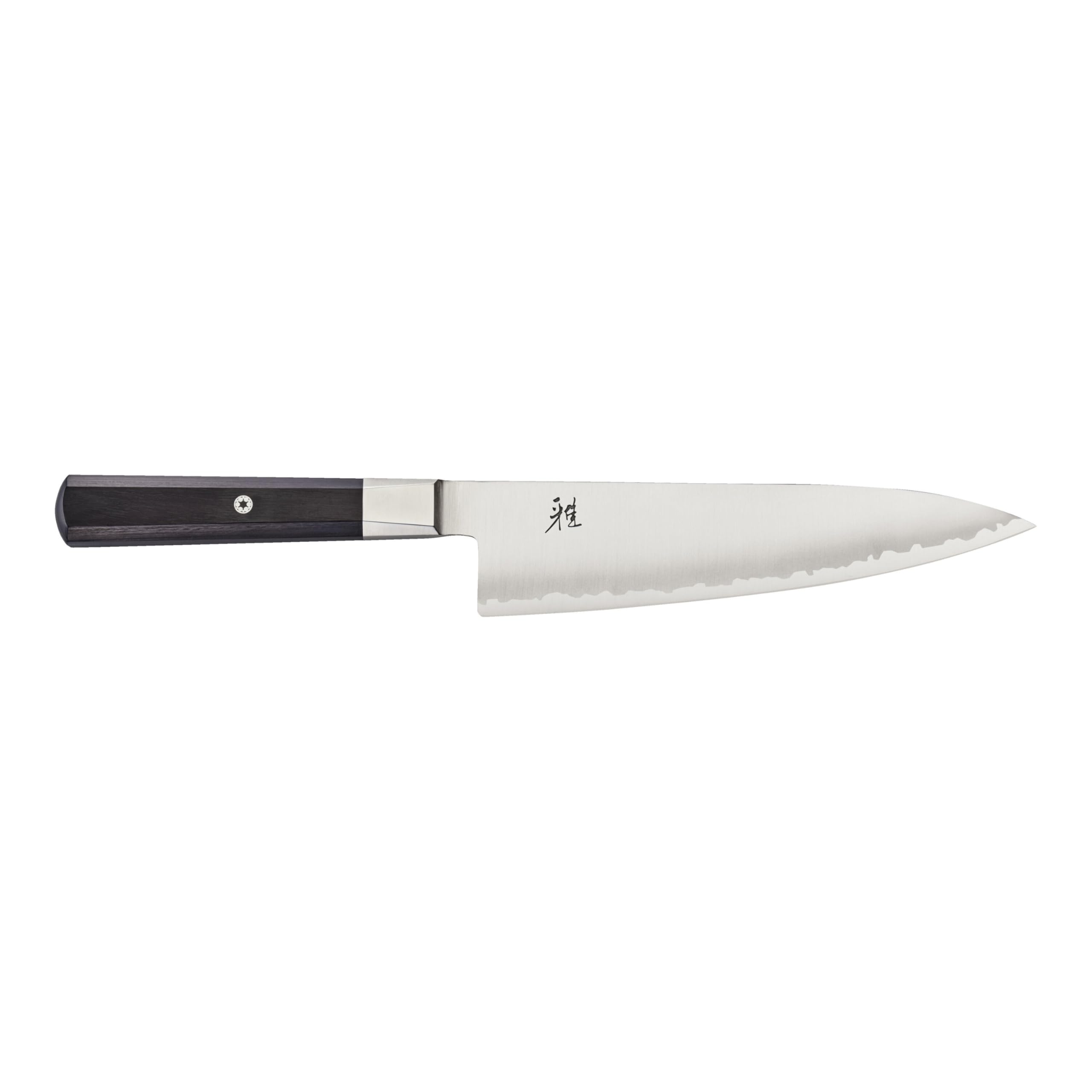
The Miyabi Koh is the entry point into Miyabi’s acclaimed Japanese knife lineup, and it sets a new bar for what a beginner can expect in terms of raw sharpness. The blade is crafted from FC61 fine-carbide stainless steel — a proprietary alloy that reaches 61 Rockwell hardness — and is ice-hardened using the FRIODUR process to improve edge retention and corrosion resistance. The edge is ground to a 9.5 to 12-degree angle per side, making it one of the sharpest knives on this list straight from the box.
The handle is Pakkawood with a D-shaped profile that naturally guides your hand into a pinch grip. This thin Japanese profile is substantially lighter than a typical German chef knife, which allows for extremely precise rock-chopping and mincing with minimal effort. The blade features a sandblasted katana edge and a mirror-polished finish with an embossed Miyabi logo — details that reflect the knife’s origin in Seki, Japan, a city renowned for sword craftsmanship.
At 61 HRC, the steel holds its edge longer than any other knife in this guide, but it also requires more care. You must use a ceramic or diamond sharpening system designed for high-hardness steel, and you should never use a pull-through sharpener that can chip the blade. The knife is also not dishwasher-safe, and some users have reported minor fit-and-finish inconsistencies at this price point. For a beginner who is willing to learn proper knife care and wants a precision instrument that will last for years, the Miyabi Koh is a worthy investment.
Why it’s great
- FC61 steel at 61 HRC offers outstanding edge retention
- Thin Japanese profile reduces cutting resistance significantly
- Ice-hardened FRIODUR blade resists corrosion and chipping
Good to know
- Requires specialized sharpening tools for high-hardness steel
- Some reports of minor quality control issues at this price
5. KEEMAKE Chef Knife, 8 Inch
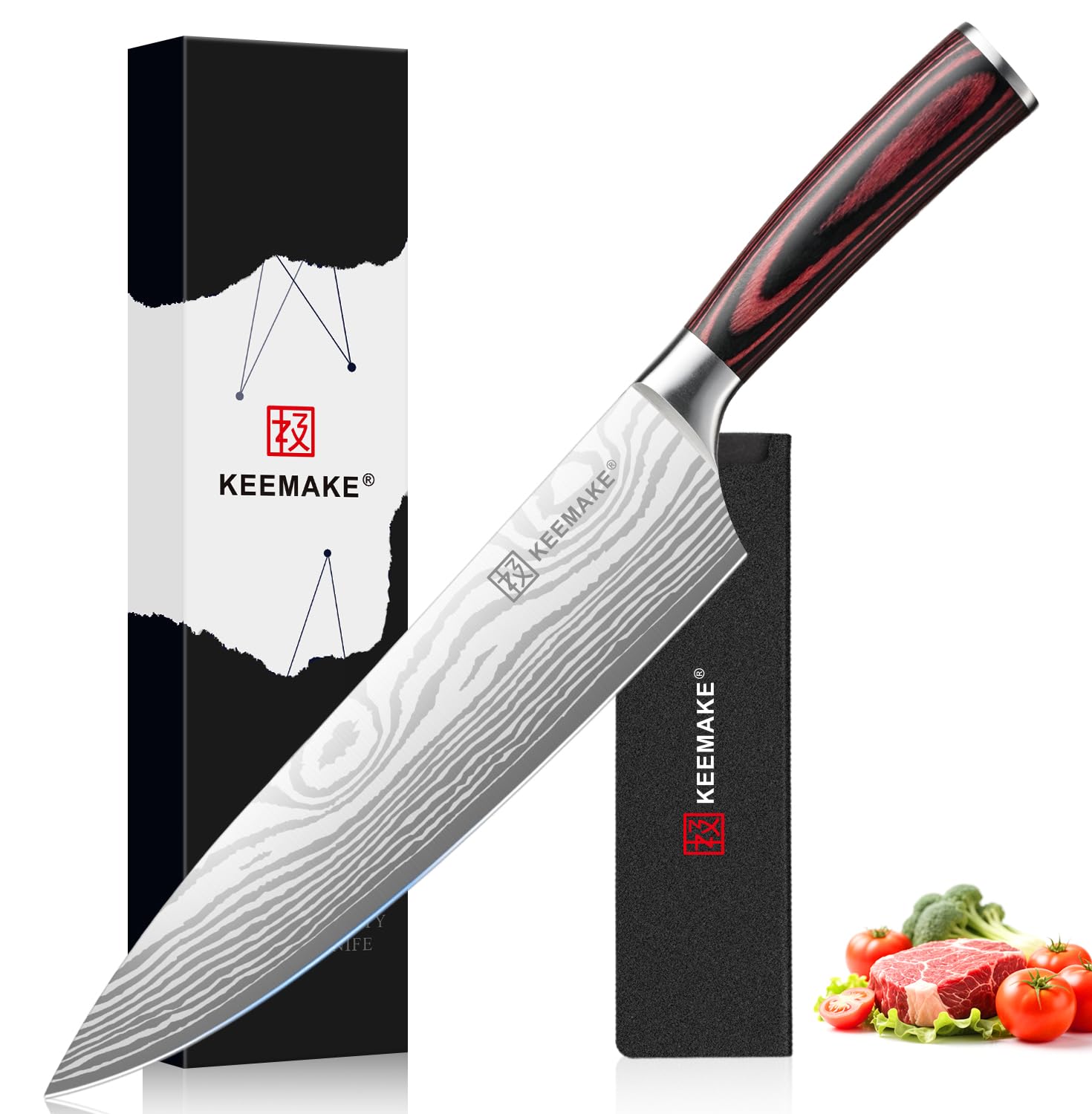
KEEMAKE has carved out a strong reputation for delivering forged construction and German steel at a price that typically buys a stamped blade from lesser brands. This 8-inch chef knife is forged from 1.4116 high-carbon stainless steel hardened to 58±2 HRC, and it is hand-sharpened to an 8 to 12-degree edge per side — an aggressive angle that rivals knives costing three times as much. The result is a blade that glides through peppers, onions, and raw meat with barely any downward force required.
The Pakkawood handle features a curved ergonomic contour with a sloped bolster that encourages a secure pinch grip without digging into your fingers. At 8.48 ounces, the knife feels balanced and substantial, and the full-tang construction provides confidence when cutting through dense ingredients like pineapple or butternut squash. The included PVC sheath is a practical addition for safe drawer storage, and the knife arrives in an elegant gift box that makes it suitable for presents.
Several customer reviews note that the laser-etched Damascus pattern on the blade is cosmetic rather than functional, which is a minor letdown for buyers seeking true layered steel. The edge is also very sharp out of the box, but early reports suggest it may require touch-ups sooner than premium Japanese alternatives. For a beginner on a modest budget who wants a forged blade with an aggressive edge angle and an attractive handle, the KEEMAKE represents outstanding value that punches well above its tier.
Why it’s great
- Forged German steel with a very sharp 8-12 degree edge
- Ergonomic Pakkawood handle with sloped bolster
- Includes PVC sheath and elegant gift packaging
Good to know
- Damascus pattern is laser-etched, not genuine layered steel
- Edge may require more frequent touch-ups than premium options
6. Sunnecko 8 Inch Chef Knife

The Sunnecko 8-inch chef knife has become one of the most popular entry-level choices on Amazon, and the volume of glowing reviews is not unwarranted. The blade is forged from high-carbon stainless steel and hand-sharpened to a 12-15 degree angle per side, delivering out-of-box sharpness that surprised even experienced cooks in the review data. Customers frequently describe it as “sharper than expected” and “capable of cutting paper and hair” right after unboxing.
The Pakkawood handle has a classic Japanese wa-style shape with a steel bolster that provides decent balance for the price. The blade features a laser-etched pattern that mimics traditional Japanese Damascus, which adds visual appeal for gift-giving or display on a magnetic strip. A PVC sheath is included to protect the edge during storage, and the packaging is substantial enough for a Father’s Day or housewarming present.
The steel hardness is not explicitly rated, but real-world feedback suggests it sits around 55-57 HRC, meaning the edge will need more frequent touch-ups than the KEEMAKE or any premium knife. The bolster appears to be welded rather than fully forged, which could become a weak point under extreme stress, though most home cooks will never push it that hard. For a beginner who wants a sharp, good-looking forged knife at a near-disposable price, the Sunnecko is a compelling starting point that leaves room to upgrade later.
Why it’s great
- Extremely sharp out of the box with a 12-15 degree edge
- Attractive Pakkawood handle and laser-etched blade pattern
- Very accessible price point for a forged knife
Good to know
- Steel hardness is lower; edge requires more frequent sharpening
- Bolster may be welded rather than fully forged
7. Kimura 8 Inch Chef Knife

The Kimura 8-inch chef knife is manufactured in Seki, Japan — the same city known for producing legendary Japanese cutlery brands — and it brings genuine Japanese craftsmanship to a beginner-friendly price. The blade is stamped from high-carbon chrome molybdenum stainless steel and hardened to 57 HRC, then hand-sharpened to a 15-degree edge by skilled Kimura craftsmen. This results in a lightweight knife that weighs only 6.2 ounces, making it an excellent choice for cooks with smaller hands or anyone who finds heavier German knives fatiguing.
The handle is made from POM resin, a durable non-slip material that provides a secure grip even when wet. Unlike some budget Japanese knives that use plastic handles, the POM material resists cracking and does not absorb water or odors. The full-tang blade is triple-riveted and bolstered to the handle, providing structural strength despite the lightweight design. The knife also comes with a lifetime warranty, which adds peace of mind for a first-time buyer.
Some customer reviews note that the handle finish is not perfectly smooth and that the knife may be a rebranded OEM product rather than a unique Kimura design. The edge retention is decent for the hardness level, but it cannot match the staying power of the Miyabi’s 61 HRC steel. The blade is also a bit short for handling large leafy greens like romaine lettuce heads. For a beginner who prioritizes a lightweight, nimble knife made in Japan and backed by a lifetime warranty, the Kimura is a solid and trustworthy option.
Why it’s great
- Genuinely made in Seki, Japan with traditional craftsmanship
- Lightweight design (6.2 oz) ideal for smaller hands
- Includes a lifetime warranty for added buyer protection
Good to know
- Blade length is a bit short for large leafy greens
- Some quality control inconsistencies with handle finish
FAQ
What is the best edge angle for a beginner chef knife?
Should a beginner buy a full knife set or a single chef knife?
How often should I sharpen a beginner chef knife?
Is a dishwasher-safe chef knife actually safe in the dishwasher?
Final Thoughts: The Verdict
For most users, the beginner chef knife winner is the Victorinox Fibrox Pro 8-Inch because it combines professional-level sharpness, a supremely safe non-slip handle, and a price that leaves room in your budget for a cutting board and a honing rod. If you want a coordinated starter set from a 200-year-old German brand, grab the Wüsthof Gourmet 4-Piece. And for the beginner who wants a precision Japanese blade with outstanding edge retention, nothing beats the Miyabi Koh 8-Inch.

Mo Maruf
I created WellFizz to bridge the gap between vague wellness advice and actionable solutions. My mission is simple: to decode the research and give you practical tools you can actually use.
Beyond the data, I am a passionate traveler. I believe that stepping away from the screen to explore new environments is essential for mental clarity and physical vitality.