Our readers keep the lights on and my smoothie glass nicely filled. As an Amazon Associate, I earn from qualifying purchases.
Starting your video journey with a camcorder that fights you at every turn—blurry footage, washed-out colors, and a manual thicker than a textbook—is the fastest way to kill your creative spark. The wrong beginner camcorder turns a fun hobby into a frustrating technical battle, leaving you with shaky clips you never want to share.
I’m Mohammad Maruf — the founder and writer behind WellFizz. My deep-dive research on consumer video gear focuses on hardware specifications like sensor size, stabilization architecture, and optical zoom range to separate marketing fluff from real-world performance.
After analyzing nine entry-level models across a wide price spectrum, I’ve identified the one that delivers the smoothest learning curve without sacrificing quality. This guide breaks down everything you need to confidently choose the best beginner camcorder for your specific needs.
How To Choose The Best Beginner Camcorder
Buying your first camcorder means navigating a minefield of contradictory specs. Beginners often chase high megapixel counts or 8K resolution, only to discover their footage looks worse than a smartphone clip. Focus on these three areas instead.
Sensor Size — The Real Foundation of Image Quality
A larger sensor captures more light, which directly translates to better low-light performance and shallower depth of field (that blurred-background look). A 1-inch CMOS sensor is the sweet spot for beginners: it dramatically outperforms tiny 1/2.3-inch or 1/2.5-inch sensors found in budget camcorders without the bulk or cost of a full-frame setup.
Stabilization — Optical vs. Electronic vs. Gimbal
Shaky footage is the number one beginner complaint. Optical Stabilization (OIS) uses moving lens elements and is best for traditional camcorders. Electronic Stabilization (EIS) crops the image and reduces quality. A built-in 3-axis gimbal is the gold standard for handheld shooting, mechanically smoothing out your footsteps and hand tremors without any quality loss.
Optical Zoom — The Spec That Actually Matters
Digital zoom is a software crop that turns 4K into pixelated mush. Optical zoom uses actual glass to magnify the subject. For a beginner camcorder, look for at least 20x optical zoom if you plan to shoot distant subjects like wildlife or stage performances. For close-up vlogging, a fixed wide-angle lens (like 19mm equivalent) is often preferable for sharp, consistent framing.
Quick Comparison
On smaller screens, swipe sideways to see the full table.
| Model | Category | Best For | Key Spec | Amazon |
|---|---|---|---|---|
| Xtra Muse Vlogging Camera | Pocket Gimbal | Handheld vlogging and travel | 1-inch CMOS sensor | Amazon |
| DJI Osmo Action 4 | Action Camera | Rugged outdoor and POV | 1/1.3-inch sensor, 18m waterproof | Amazon |
| Sony FDR-AX43 Handycam | Traditional Camcorder | Long zoom and family events | 20x optical zoom, Balanced OIS | Amazon |
| ORDRO M5 | Gimbal Camcorder | Budget gimbal vlogging | 3-axis gimbal, 5K max | Amazon |
| Canon PowerShot V10 | Compact Vlog Camera | Ultra-portable pocket vlogging | 1-inch CMOS, built-in stand | Amazon |
| Insta360 GO 3S | Mini Action Cam | Hands-free POV clips | 1.4 oz, 4K FlowState stabilization | Amazon |
| FJFJOPK 5K Camcorder | Live Stream Camcorder | Budget live streaming | 8x optical zoom, 5K video | Amazon |
| FlyFrost 8K Camera | Entry-Level All-in-One | First-time camera buyers | 18x digital zoom, 32GB card | Amazon |
| Canon VIXIA HF R800 (Renewed) | Traditional Camcorder | Simple point-and-shoot recording | 32x optical zoom, OIS | Amazon |
In‑Depth Reviews
1. Xtra Muse Vlogging Camera
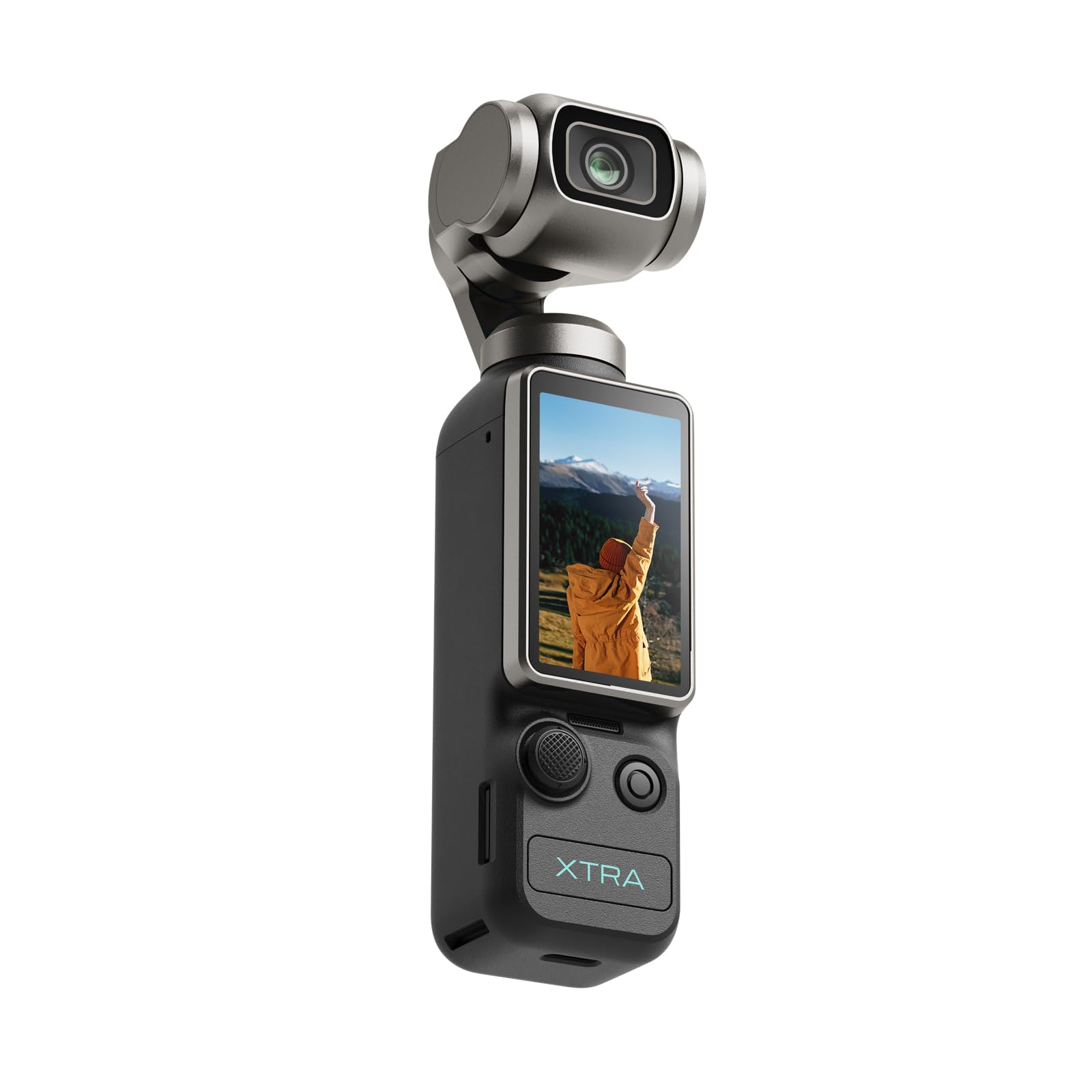
The Xtra Muse solves the two biggest beginner problems in one package: a 1-inch CMOS sensor for genuine low-light clarity and a built-in 3-axis gimbal for butter-smooth handheld footage. At 4K/120fps, slow-motion clips retain detail that most camcorders in this range lose entirely.
Face and object tracking keeps you sharp while moving, and the 2-inch touchscreen flips for self-framing. The 10-bit X-Log color profile is a bonus for anyone wanting to dip a toe into color grading later—a rare feature at this level.
Battery life clocks just over 2.5 hours in real-world use, and the included handle with a 1/4-inch thread makes tripod mounting seamless. For a beginner who wants professional-looking results without a steep learning curve, this is the benchmark.
Why it’s great
- Large 1-inch sensor delivers excellent low-light and shallow depth of field
- Integrated 3-axis gimbal eliminates need for external stabilizer
- Reliable face tracking keeps subject centered during active shooting
Good to know
- Uses digital zoom only—optical zoom is absent
- Requires a high-speed microSD card (UHS-3) for 4K/120fps recording
2. DJI Osmo Action 4

If your beginner journey involves bike trails, snorkeling, or shaky car mounts, the Osmo Action 4 is the most forgiving option. Its 1/1.3-inch sensor with 2.4μm pixels is specifically tuned for low-light action scenes that would turn other budget camcorders into a grainy mess.
RockSteady 3.0 stabilization is gimbal-class without the gimbal, and the 155-degree ultra-wide field of view captures immersive POV footage. The magnetic quick-release mount lets you switch from helmet to selfie stick in seconds—a massive convenience for new users who hate fiddling with screws.
Battery life reaches 150 minutes in moderate temps and the camera functions down to -4°F, making it reliable for cold-weather recording. It lacks a traditional zoom lens, but the action-camera form factor trades that for unmatched durability and versatility.
Why it’s great
- Superior low-light performance compared to GoPro alternatives
- Magnetic mounting system is the fastest in the action camera category
- 4K at 120fps with RockSteady stabilization keeps footage smooth
Good to know
- No optical zoom—cropping reduces quality quickly
- Built-in microphone picks up wind noise without external mic
3. Sony FDR-AX43 UHD 4K Handycam

The Sony FDR-AX43 is the traditional camcorder experience refined for the 4K era. Its 20x optical ZEISS Vario-Sonnar T zoom lens is the star—bringing distant subjects into crisp clarity without the pixelation that plagues digital zoom alternatives.
The Balanced Optical SteadyShot stabilization works like a built-in gimbal inside the lens barrel, smoothing out handheld wobble at full telephoto reach. Fast Intelligent AF tracks moving subjects reliably, whether it’s a child running across a soccer field or a speaker pacing a stage.
This is a larger, more traditional form factor than pocket cameras, so it’s best suited for tripod work or two-handed shooting. Beginners wanting true optical zoom for events, sports, or wildlife will find the AX43’s reach transforms what they can capture.
Why it’s great
- 20x optical zoom maintains full 4K resolution throughout the range
- Balanced OIS enables handheld telephoto shots without a tripod
- Fast Intelligent AF with subject tracking for moving targets
Good to know
- No internal memory—requires a separate SD card
- Larger body less convenient for pocket carry or one-handed vlogging
4. ORDRO M5 5K Gimbal Vlogging Camera

The ORDRO M5 brings 3-axis gimbal stabilization to a price point that usually only offers basic electronic image stabilization. This physically steadies the camera head, meaning your walking shots stay smooth without the cropping and jello effect common in budget EIS systems.
Its 3.5-inch rotating touchscreen is larger than most rivals, making framing and menu navigation easier for beginners. The 5K video resolution is a spec-sheet winner, though real-world sharpness depends heavily on lighting and the 120-degree wide-angle lens.
Audio quality from the built-in mic is usable but unremarkable—an external wireless microphone is a smart add-on. Battery life sits around 3 hours, and the included carrying bag makes transport convenient.
Why it’s great
- Physical 3-axis gimbal at a budget-friendly price point
- Large 3.5-inch rotating touchscreen aids menu navigation
- IR night vision mode works in pitch-black environments
Good to know
- Gimbal can lose calibration after heavy impact or extended use
- Audio quality is lacking; external mic is recommended
5. Canon PowerShot V10

The PowerShot V10 is the ultimate grab-and-go camcorder for beginners who prioritize pocketability. Its 1-inch back-illuminated CMOS sensor punches well above its size class for low-light noise performance, and the fixed 19mm wide-angle lens ensures consistently sharp, distortion-free vlogs.
The innovative built-in stand flips forward or backward for hands-free tabletop recording—a detail that makes solo shooting infinitely easier. A retractable front-facing screen flips up for self-recording, and the stereo microphones with background noise reduction capture clear audio without a separate mic.
It lacks any zoom capability, so it’s strictly a wide-angle device. Battery life is modest at roughly 60-90 minutes depending on resolution, but USB-C charging means a portable power bank can keep you running all day.
Why it’s great
- 1-inch sensor delivers excellent image quality in a truly pocketable body
- Built-in stand and flip screen are purpose-built for vlogging
- Stereo microphone array effectively reduces background noise
Good to know
- No zoom of any kind—optical or digital
- Battery life is short compared to larger camcorders
6. Insta360 GO 3S (64GB)

The Insta360 GO 3S weighs a mere 1.4 ounces and clips onto your shirt, hat, or pet collar for true hands-free recording. Its FlowState stabilization algorithm produces results that rival a physical gimbal, making your first-person POV shots look surprisingly polished without any rigging.
The Action Pod housing provides a 2.2-inch flip screen for live preview and a 140-minute total battery life. The magnetic mounting system lets you stick the tiny camera on metal surfaces for creative angles that would be impossible with a larger camcorder. It’s waterproof to 10 meters without a case.
The tiny sensor struggles significantly in low light—indoor evening shots will look noisy. It also has a tendency to overheat after sustained recording sessions of 20+ minutes, so it’s best suited for short clips rather than long-form recording.
Why it’s great
- Extremely small and lightweight design enables unconventional mounting
- FlowState stabilization delivers smooth footage without a gimbal
- Magnetic accessories allow creative hands-free angles instantly
Good to know
- Poor low-light performance due to the tiny sensor
- Overheating can shut the camera down after 15-20 minutes recording
7. FJFJOPK 5K Video Camera Camcorder
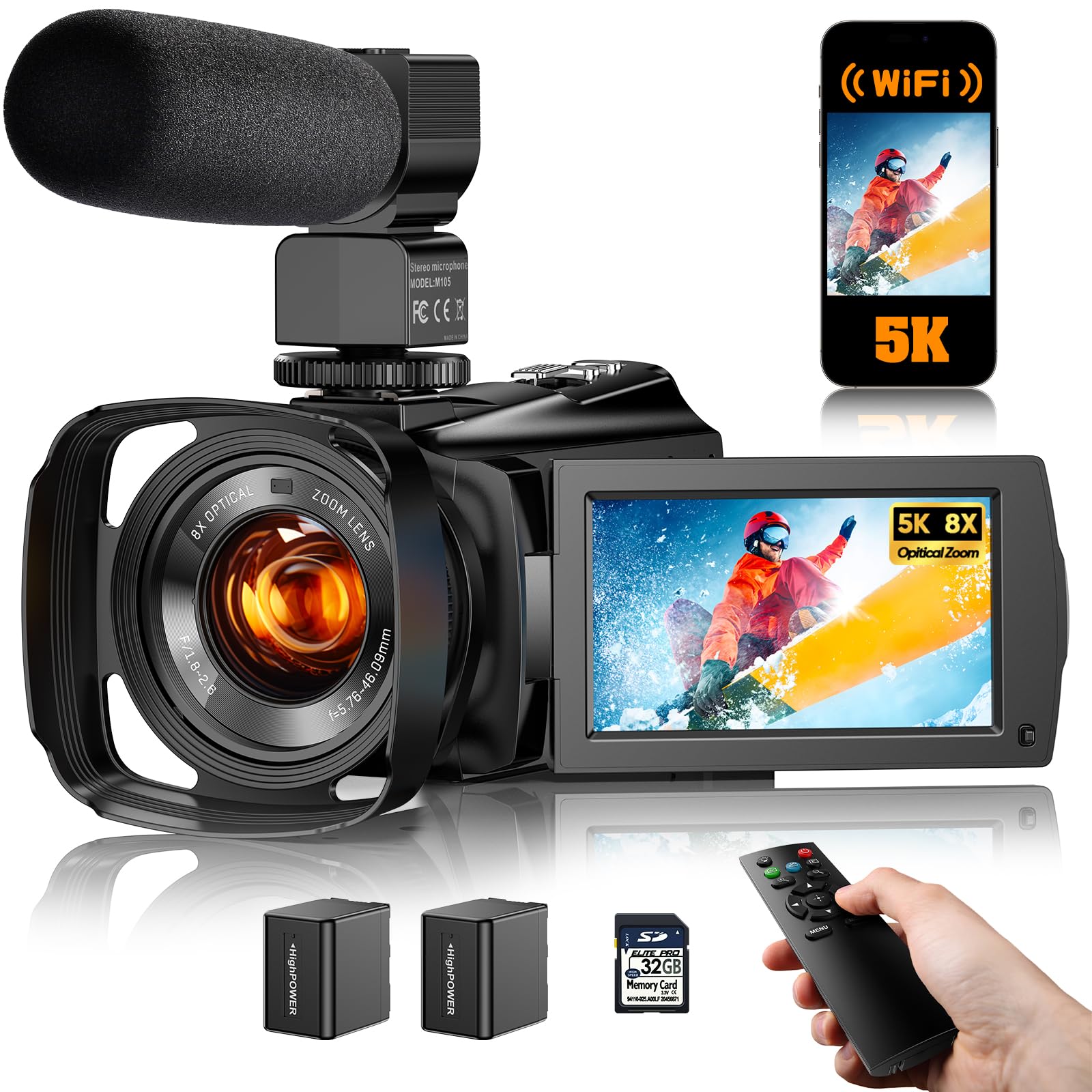
This camcorder offers genuine 8x optical zoom—rare at its price tier—letting beginners capture distant subjects without the digital zoom quality collapse. The full-color night vision mode uses infrared to produce recognizable color footage in total darkness, a useful feature for wildlife or security-adjacent recording.
The 3.6-inch IPS touchscreen rotates 270 degrees for self-recording, and the included external microphone, remote control, and 32GB SD card mean you can start filming immediately without extra purchases. The companion app “Viipulse” enables Wi-Fi file transfer for quick social media uploads.
Build quality and software reliability are inconsistent—some users report USB transfer failures and unresponsive touchscreen controls. Audio quality from the included mic is only average, and optical zoom performance degrades at the telephoto end.
Why it’s great
- 8x optical zoom maintains clarity at medium distances
- Full-color night vision is functional in zero ambient light
- Comprehensive accessory bundle reduces initial setup costs
Good to know
- Software and connectivity issues reported with file transfer
- Touchscreen and remote responsiveness can be inconsistent
8. FlyFrost 8K Video Camera Camcorder

The FlyFrost targets absolute beginners with an aggressive spec sheet: 8K video (at a questionable 15fps), 88MP stills, and a bundle that includes a handheld stabilizer, lens hood, external microphone, and 32GB card. For someone who wants everything in one box, it checks that box thoroughly.
At standard zoom levels, the 8K sensor captures reasonably clear footage, and the touchscreen interface is straightforward to navigate. The included 2.4G wireless remote control works up to 60 feet, useful for tripod-based self-recording.
The 8K/15fps frame rate is effectively a marketing gimmick—any motion looks stuttering and unrealistic. The USB connectivity has been reported to crash File Explorer on Windows, and the Wi-Fi companion app “iSmart DV2” receives poor reviews for reliability. It’s an acceptable starter camera only if you temper your expectations.
Why it’s great
- Comprehensive accessory bundle includes stabilizer and mic
- Compact and lightweight body with intuitive touchscreen controls
- IR night vision and Wi-Fi transfer included at entry-level price
Good to know
- 8K recording is limited to 15fps—unusable for normal motion
- USB and Wi-Fi connectivity issues are widely reported
9. Canon VIXIA HF R800 (Renewed)
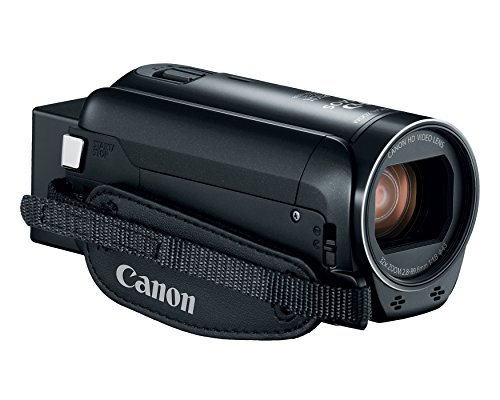
The renewed Canon VIXIA HF R800 is a straightforward, no-nonsense camcorder for beginners who want a classic “point and shoot” experience. Its 32x optical zoom brings distant subjects into frame with clarity that digital zoom cannot match, and the SuperRange OIS keeps handheld shots reasonably steady at full zoom.
The DIGIC DV 4 processor handles 1080p Full HD video cleanly, though it does not record 4K.
Being a renewed model, battery life and cosmetic condition vary by unit. It also relies on a proprietary battery and charging system rather than USB-C, which is less convenient for modern travelers. For someone wanting a pure, simple, 1080p camcorder for family events, it still works reliably.
Why it’s great
- 32x optical zoom is genuinely useful for sports and stage performances
- Classic ergonomic design is comfortable for extended handheld use
- Renewed pricing makes it a budget-friendly entry point
Good to know
- Limited to 1080p recording—no 4K capability
- Uses proprietary battery that does not charge via USB-C
FAQ
Should a beginner choose 4K or 1080p for their first camcorder?
Is 8K worth it for someone new to video recording?
How important is an external microphone jack for a beginner?
What does the digital zoom number mean on a camcorder spec sheet?
Final Thoughts: The Verdict
For most users, the best beginner camcorder winner is the Xtra Muse Vlogging Camera because its 1-inch sensor and integrated 3-axis gimbal solve the two biggest quality gaps beginners face—poor low-light video and shaky handheld footage. If you need rugged durability and waterproofing for outdoor adventures, grab the DJI Osmo Action 4. And for long-distance recording of sports or nature with genuine optical zoom, nothing beats the reach of the Sony FDR-AX43 Handycam.

Mo Maruf
I created WellFizz to bridge the gap between vague wellness advice and actionable solutions. My mission is simple: to decode the research and give you practical tools you can actually use.
Beyond the data, I am a passionate traveler. I believe that stepping away from the screen to explore new environments is essential for mental clarity and physical vitality.