Our readers keep the lights on and my smoothie glass nicely filled. As an Amazon Associate, I earn from qualifying purchases.
Most bedrooms get a few hours of soft, filtered light at best, yet many houseplants sold as “low-light” still end up leggy, pale, or rotting from overwatering that owners mistake for light starvation. The real trick is selecting plants genetically programmed to photosynthesize efficiently in deep shade — species that demand less from your window orientation and more from your restraint with the watering can.
I’m Mohammad Maruf — the founder and writer behind WellFizz. I analyze the internal market data, customer feedback patterns, and botanical specifications behind hundreds of indoor plants each year to separate the genuinely shade-tolerant performers from the temporary survivors.
Plant physiology, soil moisture requirements, and leaf morphology all determine whether a plant will flourish or fade on a dim nightstand. This guide breaks down the factors that matter and reviews the varieties that consistently deliver, helping you find the best bedroom plants for low light that will actually thrive in your space.
How To Choose The Best Bedroom Plants For Low Light
Low-light bedrooms present a specific challenge: photosynthesis slows, soil stays damp longer, and weak variegated leaves recede. Choosing the right plant starts with understanding three factors that matter more than pot size or price.
Leaf Morphology and Light Adaptability
Deep green, solid-color leaves with large surface areas capture more photons per square inch than variegated or needle-like foliage. Philodendrons and Maranta species produce broad, chlorophyll-rich leaves that evolved under rainforest canopies, getting by on as little as 50-100 foot-candles. Plants with white or yellow variegation (like certain Pothos cultivars) need brighter spots or they’ll revert to green and possibly decline over time.
Watering Profile in Shaded Environments
Low light reduces transpiration rate dramatically. A plant in a dim bedroom can take twice as long to dry out as the same plant on a sunny windowsill. If you water every week without checking the soil halfway down, roots suffocate. The safest approach is to pick species like Pothos, Philodendron, or Maranta that visibly droop when thirsty — giving you a unmistakable signal before root rot sets in.
Air Purification and Leaf Size
Several plants commonly sold for bedrooms can filter VOCs such as formaldehyde, benzene, and xylene. The efficiency of this process scales with leaf surface area and metabolic rate. Larger, fast-growing leaves process more air volume per day. A robust Philodendron or Maranta with 12-16 inches of height provides meaningful air exchange in a standard bedroom without requiring sunlight that would rival a grow light setup.
Quick Comparison
On smaller screens, swipe sideways to see the full table.
| Model | Category | Best For | Key Spec | Amazon |
|---|---|---|---|---|
| Philodendron Brasil | Foliage Plant | Solid green low-light tolerance | 4-inch nursery pot | Amazon |
| Lemon Lime Maranta | Prayer Plant | Pet-friendly leaf movement | 12-16 inch height | Amazon |
| N’joy Pothos | Trailing Vine | Variegated leaves on shelves | 4-inch nursery pot | Amazon |
| Calathea Freddie | Tropical Foliage | Air purification & elegance | 1-2 feet tall | Amazon |
| Deluxe Succulent 12-pack | Succulent Collection | Bright windowsill clusters | 2-inch pots (x12) | Amazon |
In‑Depth Reviews
1. Philodendron hederaceum Brasil

The Philodendron Brasil is one of the most forgiving low-light performers you can place on a dresser. Its heart-shaped leaves feature neon lime variegation against deep green, but unlike many variegated plants, the Brasil maintains its color in moderate shade without reverting to all-green. Customers consistently report healthy, full arrivals with weeks of stable growth even in north-facing rooms.
Hopewind Plants Shop ships these bare-root in a 4-inch pot, and the packaging receives high marks for protecting foliage during transit. The plant tolerates watering every 1-2 weeks when the top half of the soil dries, and its trailing habit makes it ideal for a shelf where vines can cascade over the edge. Multiple buyers noted the plant arrived with strong, established roots and no signs of disease.
For a bedroom that receives bright, indirect light for only a few hours, the Brasil is the safest bet among variegated philodendrons. Its organic material specification and organic growing media reduce the risk of pest introduction, and the low-maintenance label is genuine — this is a plant that forgives a missed watering or a slightly darker corner better than most.
Why it’s great
- Exceptionally shade tolerant for a variegated species; keeps its color without strong light.
- Arrives well-rooted and healthy based on dozens of verified customer reports.
Good to know
- May not look as full as stock photos if it’s a younger starter plant.
- Requires bright indirect light if you want to maximize the neon variegation.
2. Lemon Lime Maranta Prayer Plant

The Lemon Lime Maranta brings a rare interactive element to a low-light bedroom: its leaves fold upward at night like hands in prayer, a visible daily rhythm that owners find calming. Beyond the movement, the leaf coloring features bright lime green brushed with darker veins, providing visual texture that keeps a dark corner from feeling flat.
This Maranta is recognized by the ASPCA as non-toxic, making it one of the safest options for households with cats or dogs that sample foliage. The grower specifies watering every 1-2 weeks when the top half of soil feels dry, and the plant responds quickly to proper hydration by reopening its leaves. Customer reports highlight that the 12-16 inch starting height gives buyers an immediately satisfying presence rather than a tiny starter plug.
Air-purifying claims are supported by the plant’s broad leaf surface area, which can filter common household VOCs when multiple leaves are present. The organic material features and the biodegradable packaging from Hopewind add an eco-friendly layer. For a bedroom where you want a living presence that interacts with you subtly every evening, the Maranta is hard to beat in this category.
Why it’s great
- Nightly leaf movement creates a living rhythm that owners love.
- ASPCA-recognized non-toxic profile suits homes with curious pets.
Good to know
- Requires moderate humidity to prevent leaf edges from browning.
- Some reviews note minor cosmetic leaf damage from shipping.
3. N’joy Pothos
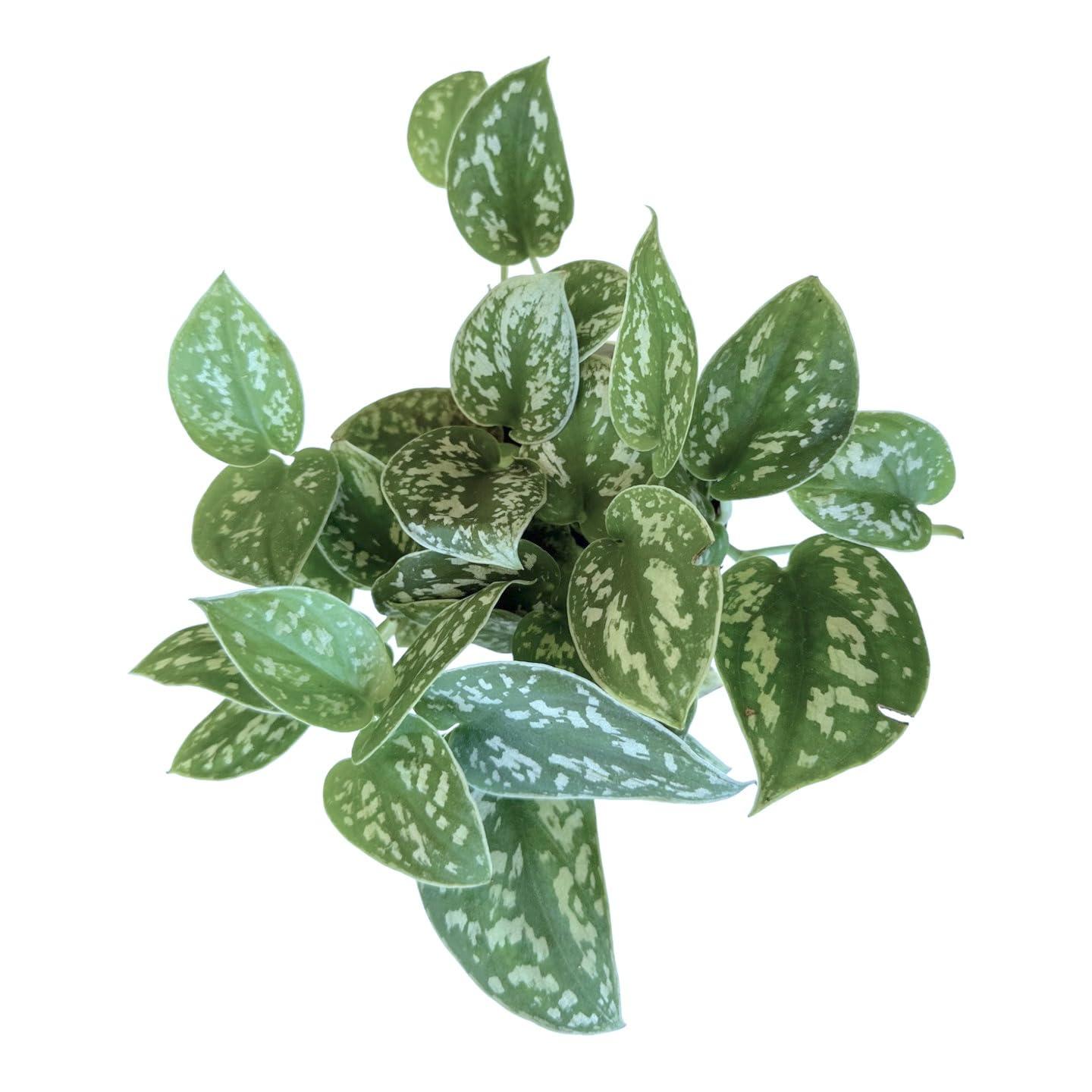
N’joy Pothos stands out for its delicate white-and-green marbled leaves that brighten a low-light bookshelf without demanding the bright window that most variegated plants require. The Epipremnum aureum ‘n’joy’ cultivar is bred for compact growth and tighter internodal spacing, meaning it stays bushy rather than getting leggy even in moderate shade.
Hopewind ships this in a 4-inch pot with a sandy soil mix that drains well, a crucial factor when low light slows evaporation. Customer reviews consistently emphasize the plant’s vigor upon arrival, with strong roots and vibrant color. The moderate watering profile (allow top 2 inches to dry) is manageable for most owners, and the trailing habit works perfectly on a nightstand or wall-mounted planter.
One notable detail from the reviews: a buyer reported minor root rot after repotting, likely caused by the seller watering right before shipping. This is a common issue with live plant deliveries, and letting the plant acclimate for a few days before watering usually resolves it. For the price point, the N’joy delivers excellent aesthetic value with very forgiving light requirements.
Why it’s great
- White variegation holds well in moderate indirect light without reverting.
- Compact growth habit stays bushy rather than stretching toward the window.
Good to know
- Some plants arrive overwatered; let soil dry out fully before first watering.
- Not ideal for very dark corners with no natural light at all.
4. Calathea Concinna Freddie
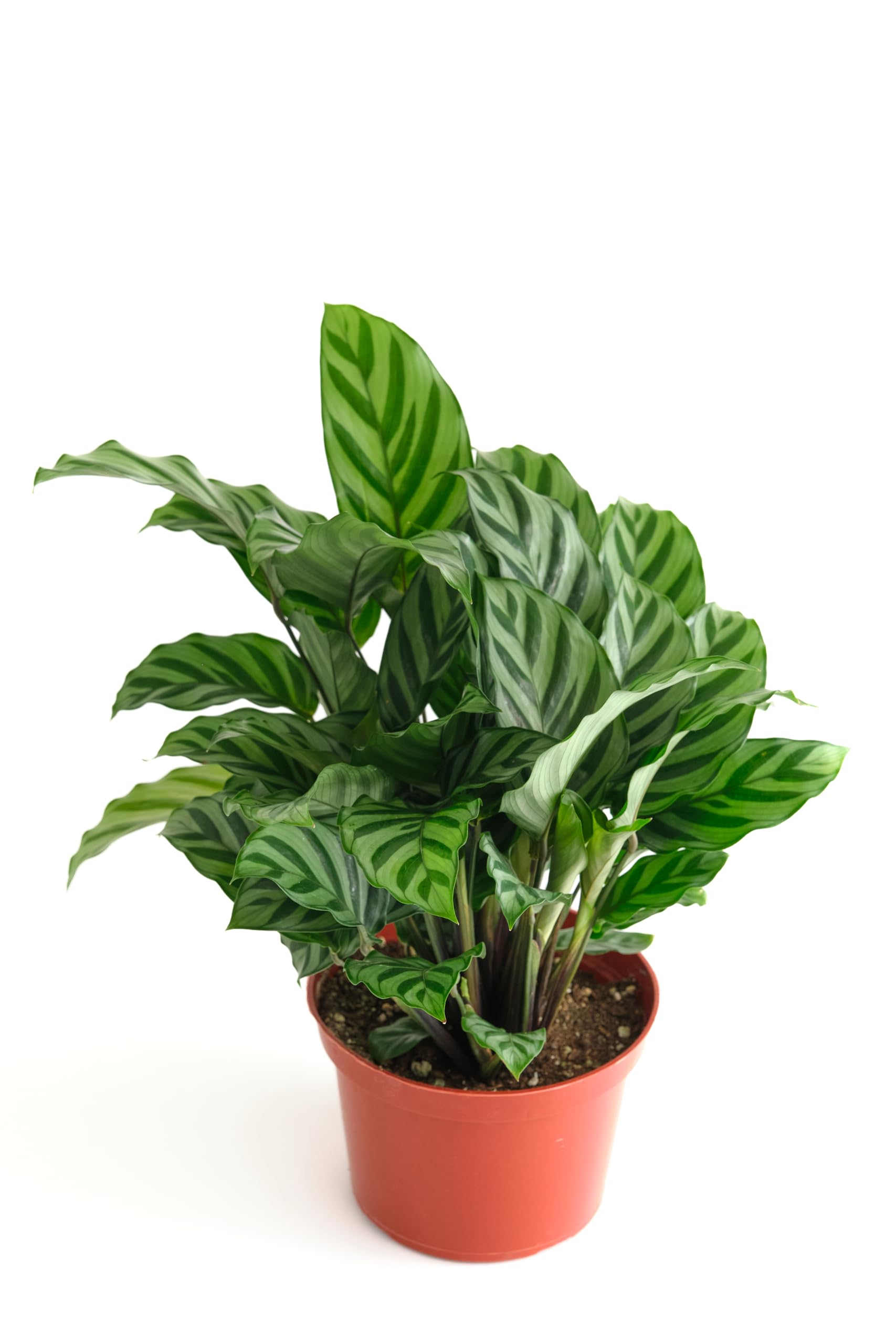
The Calathea Concinna, also known as the Freddie Plant, is a premium choice for the bedroom because of its architectural foliage and superior air-purifying potential. Each leaf features a distinct pattern of dark green strokes against lighter green, creating a visual depth that looks curated rather than casual. Shop Succulents ships this in a 6-inch pot at 1-2 feet tall, giving you an immediately substantial presence.
Calatheas have a reputation for being fussy, but the Concinna is one of the more adaptable varieties in the genus. It thrives in indirect light — the same north-facing windowsill that supports Pothos will keep Freddie happy — and it responds visibly to watering by reopening its leaves within hours. Customers praise the healthy root systems and the surprising fullness of the plants upon arrival, often noting more stems and new growth than the listing photos suggested.
The 6-inch pot size is a meaningful upgrade over the standard 4-inch, meaning you won’t need to repot for several months. The sandy soil mix promotes drainage, and the partial sun requirement is forgiving enough for a bedroom with sheer curtains. For someone willing to mist occasionally and avoid direct sun, the Calathea Freddie delivers a dramatic tropical look that few other low-light plants can match.
Why it’s great
- Dramatic patterned foliage elevates any low-light bedroom aesthetic.
- Large pot size and tall starting height offer immediate visual impact.
Good to know
- Needs moderate humidity; leaf edges may brown in dry air.
- Shipping can be rough — some plants arrive with broken or damaged leaves.
5. Altman Plants Deluxe Succulents (12 Pack)

The Altman Plants Deluxe Succulents 12-pack is a different proposition: a collection of 12 distinct succulents in 2-inch pots, each from varieties like Kalanchoe, Crassula, and Graptosedum. While succulents are not traditional low-light plants, this pack is ideal for a bedroom with a bright windowsill where you want a diverse, sculptural display without buying individual pots one at a time.
Each plant arrives from Altman’s farm in a biodegradable pot with minimal soil. Customer reviews emphasize the healthy condition of the plants despite cold-weather shipping, with sturdy packaging that prevents damage. The assortment includes both common and rare varieties, and experienced growers note that some plants arrive with small “babies” that can be propagated, extending the value further.
The catch for a low-light bedroom is that succulents need direct or very bright indirect light to maintain their compact form and color. Placing these on a nightstand away from the window will result in etiolation (stretching) within weeks. However, on a sunny sill, this collection provides rotating visual interest that changes with the light. If your bedroom has at least one bright window, this is the most cost-effective way to fill it with varied succulent shapes.
Why it’s great
- Twelve unique succulents offer instant variety and collection appeal.
- Biodegradable pots and drought-tolerant nature simplify care.
Good to know
- Not suited for dim bedrooms — needs a bright windowsill to thrive.
- Assortment is not guaranteed; you may not get specific varieties shown.
FAQ
Can any of these plants survive in a room with no natural light?
How often should I water a low-light Maranta vs. a Pothos?
Why do the leaves of my Calathea Freddie turn brown on the edges?
Final Thoughts: The Verdict
For most people, the best bedroom plants for low light winner is the Philodendron hederaceum Brasil because it combines genuine shade tolerance with striking neon variegation that won’t revert, all in a forgiving care package. If you want a pet-safe plant with a daily interactive rhythm, grab the Lemon Lime Maranta Prayer Plant. And for a dramatic tropical statement that filters the air and commands attention, nothing beats the Calathea Concinna Freddie.

Mo Maruf
I created WellFizz to bridge the gap between vague wellness advice and actionable solutions. My mission is simple: to decode the research and give you practical tools you can actually use.
Beyond the data, I am a passionate traveler. I believe that stepping away from the screen to explore new environments is essential for mental clarity and physical vitality.