Our readers keep the lights on and my smoothie glass nicely filled. As an Amazon Associate, I earn from qualifying purchases.
You can sleep in a room full of synthetic bedding, off-gassing furniture, and sealed windows and still wake up feeling heavy. What you actually need is living biology inside your bedroom — plants that pull VOCs from the air and release oxygen while you rest. A single snake plant won’t save you; you need the right species for the space.
I’m Mohammad Maruf — the founder and writer behind WellFizz. I have spent years analyzing the air-purification research, NASA studies on phytoremediation, and the real-world maintenance profiles of dozens of indoor plants to find the ones that actually improve bedroom air quality without demanding a greenhouse.
Whether you are a first-time plant parent or a seasoned collector, the best strategy for long-term results is combining plants that target different toxins at different light levels. That is why I have narrowed down the top contenders to help you pick your best bedroom plants for air quality.
How To Choose The Best Bedroom Plants For Air Quality
A bedroom is a unique environment for a houseplant — low light, stable temperatures, and little air movement. You can’t just grab any lush tropical and expect it to thrive. The plant must tolerate dim corners, occasional dry air from HVAC systems, and still perform its air-cleaning job. Here are the deciding factors.
1. Light tolerance and leaf anatomy
Most bedrooms lack a south-facing window. You need a plant that survives in indirect or low light and still maintains enough leaf surface area to capture airborne toxins. Plants with broad, waxy leaves (like Peace Lily or Philodendron) generally photosynthesize more efficiently in lower light than thin-leaved succulents. Avoid cacti here — they need direct sun and produce negligible air-cleaning mass.
2. Transpiration rate and humidity benefit
A plant’s ability to clean air is tied to how much water it moves through its leaves — that is transpiration. High-transpiring species pull air toward their root zone, increasing contact between airborne toxins and the soil microbiome. A Maranta or Calathea, with its constant leaf movement and high moisture release, can raise the humidity in a dry bedroom by several percentage points, helping your respiratory passages stay moist while you sleep.
3. Toxin targeting and plant diversity
Different plants target different VOC groups. Peace Lily is excellent against benzene and formaldehyde. Philodendron works on xylene and toluene. Calathea strains also remove common office and household VOCs. The best bedroom setup is not one super-plant — it is a small colony of 3 to 5 complementary species spaced around the room.
Quick Comparison
On smaller screens, swipe sideways to see the full table.
| Model | Category | Best For | Key Spec | Amazon |
|---|---|---|---|---|
| American Plant Exchange Peace Lily 4-Pack | Bulk Premium | Multi-room coverage | 4 plants in 4-inch pots with deco covers | Amazon |
| Costa Farms Peace Lily | Single Classic | Beginner + flower display | Height up to 48 inches at maturity | Amazon |
| Shop Succulents Calathea Concinna | Patterned Tropical | Low-light elegance | 6-inch nursery pot, sandy soil | Amazon |
| Hopewind Lemon Lime Maranta Prayer Plant | Pet Friendly | Pet-safe homes | 12–16 inch height in 4-inch pot | Amazon |
| Plants for Pets Philodendron Variety Pack | Value 4-Pack | Fast growth + variety | 4 live Philodendron in 4.25-inch pots | Amazon |
In-Depth Reviews
1. American Plant Exchange Peace Lily 4-Pack
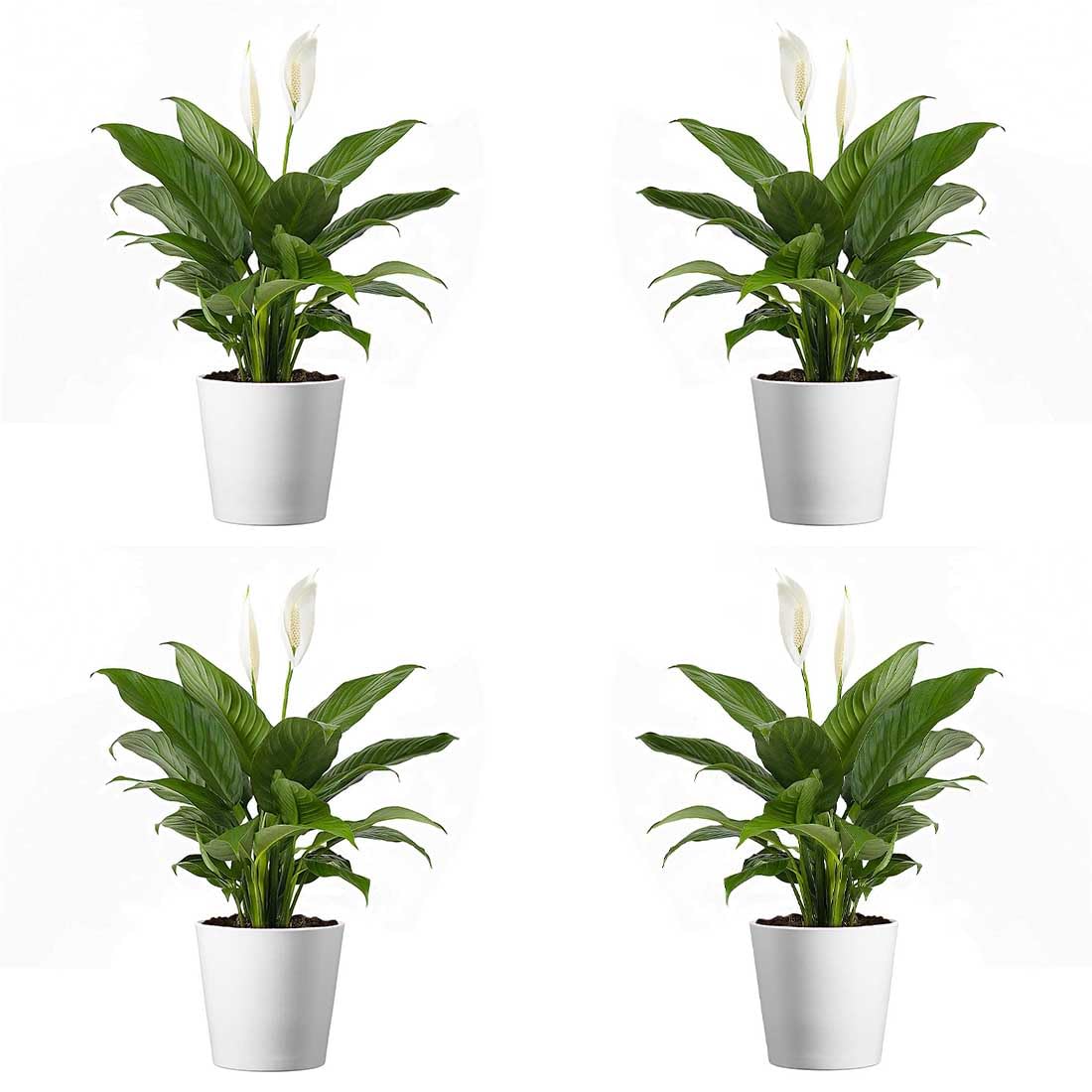
This is the most efficient way to saturate a bedroom with air-purifying power in one purchase. You get four separate Peace Lilies, each in a 4-inch grow pot with a matching deco cover (grey, white, or beige) so you can place one on the nightstand, one on the dresser, and two on a shelf without needing extra planters. Peace Lilies are among the top performers in NASA’s Clean Air Study for removing benzene and formaldehyde, and having four plants instead of one triples the transpiration surface area in the same room.
Each plant is a Spathiphyllum that can live in partial shade and bounce back from dry spells fast — reviews consistently mention that wilted specimens recover within hours after a deep watering. The plants arrive in organic soil and are USDA-hardy outdoors in zones 10–12, but indoors they stay compact, rarely exceeding 12–15 inches when kept in these small pots. The deco covers give a finished, hotel-room aesthetic immediately out of the box.
Some units arrived with frost damage during winter shipping, so if you live in a cold climate, order when temperatures are mild or request insulation. Also, all four pot covers in a multi-pack come in the same color, so you cannot mix grey and beige within one order — plan your room’s scheme accordingly. For sheer air-cleaning volume per dollar, this pack is unmatched.
Why it’s great
- Four plants create full-room VOC coverage
- Deco covers eliminate need for separate pots
- Tolerates low light and bounces back from under-watering
- Known high removal rate for benzene and formaldehyde
Good to know
- Some arrived wilted due to shipping orientation
- Frost damage possible in winter shipping
- All covers in one pack ship the same color
2. Costa Farms Peace Lily
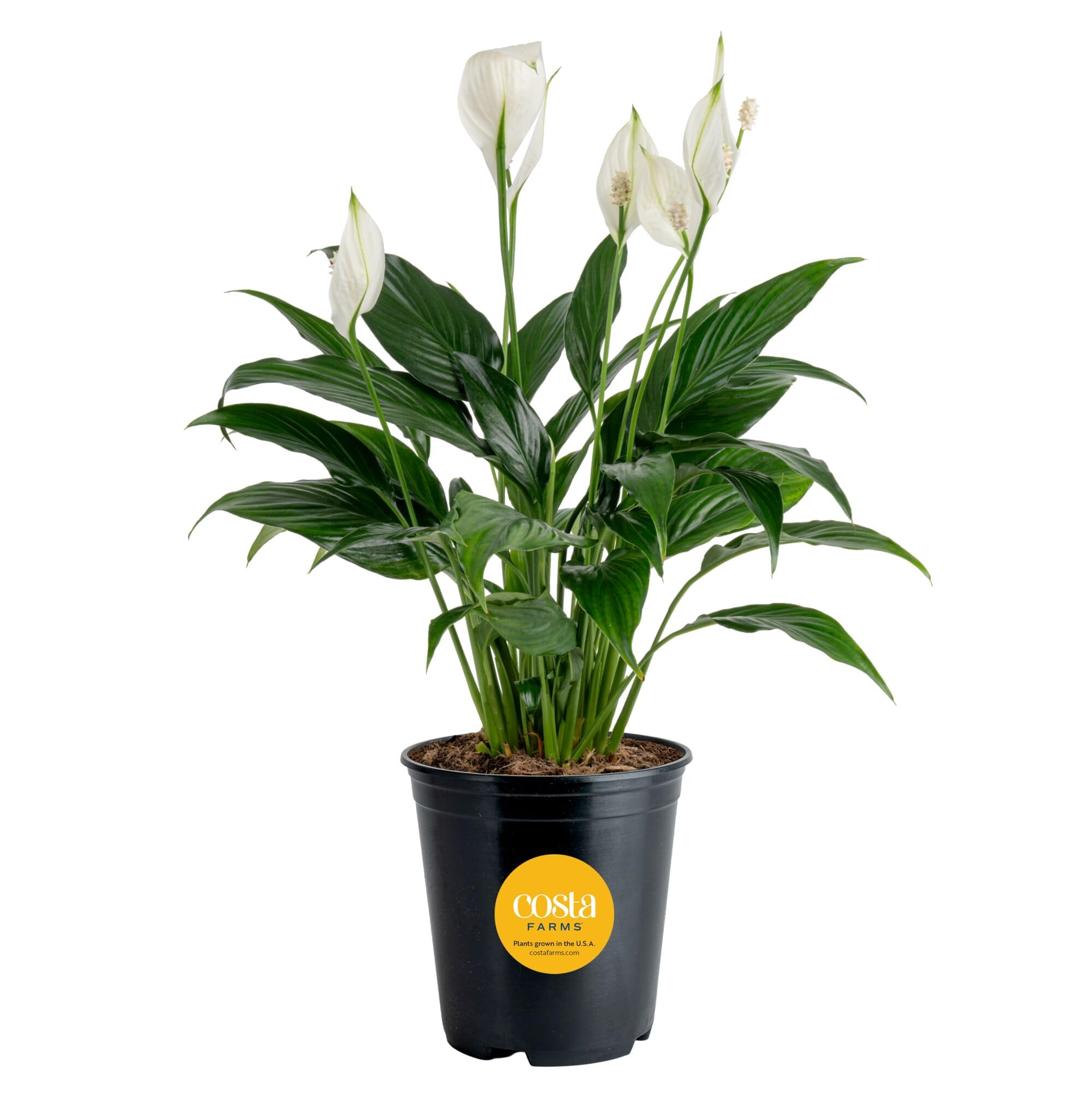
Costa Farms is the most trusted name in mass-market houseplants, and this Peace Lily proves why. It arrives about 15 inches tall from the bottom of the nursery pot to the top leaf, and it is grown in conditions that lead to regular flowering indoors — most customers report white blooms appearing within four weeks. For a bedroom plant, flowers are not just decorative; the increased metabolic activity in the bloom phase slightly boosts the plant’s transpiration rate, which means more air movement through the root zone.
The care regimen is deliberately simple: one cup of water per week in bright, indirect light. That low maintenance removes the failure risk that kills most bedroom plants. The soil mix is well-aerated, preventing root rot even if you occasionally overwater. Costa Farms also ships straight from the farm, which means the plant has been hardened in greenhouse conditions and transitions better to a home environment than retail-store specimens that have sat on shelves for weeks.
A handful of reviewers noted that UPS mishandling caused temporary wilting, but the plant recovered after proper watering. If you want a single statement plant rather than a collection, this is the easiest path to cleaner bedroom air with zero guesswork. The only downside is the lack of a decorative pot — you will need to buy a cachepot if you want it to match your decor immediately.
Why it’s great
- Proven bloomer indoors with year-round potential
- 15-inch starting height gives instant visual impact
- Simple weekly watering schedule
- Strong root system from greenhouse hardening
Good to know
- Nursery pot only — no decorative cover included
- Shipping stress can cause temporary leaf droop
- Not pet-safe if ingested in large quantity
3. Shop Succulents Calathea Concinna Freddie
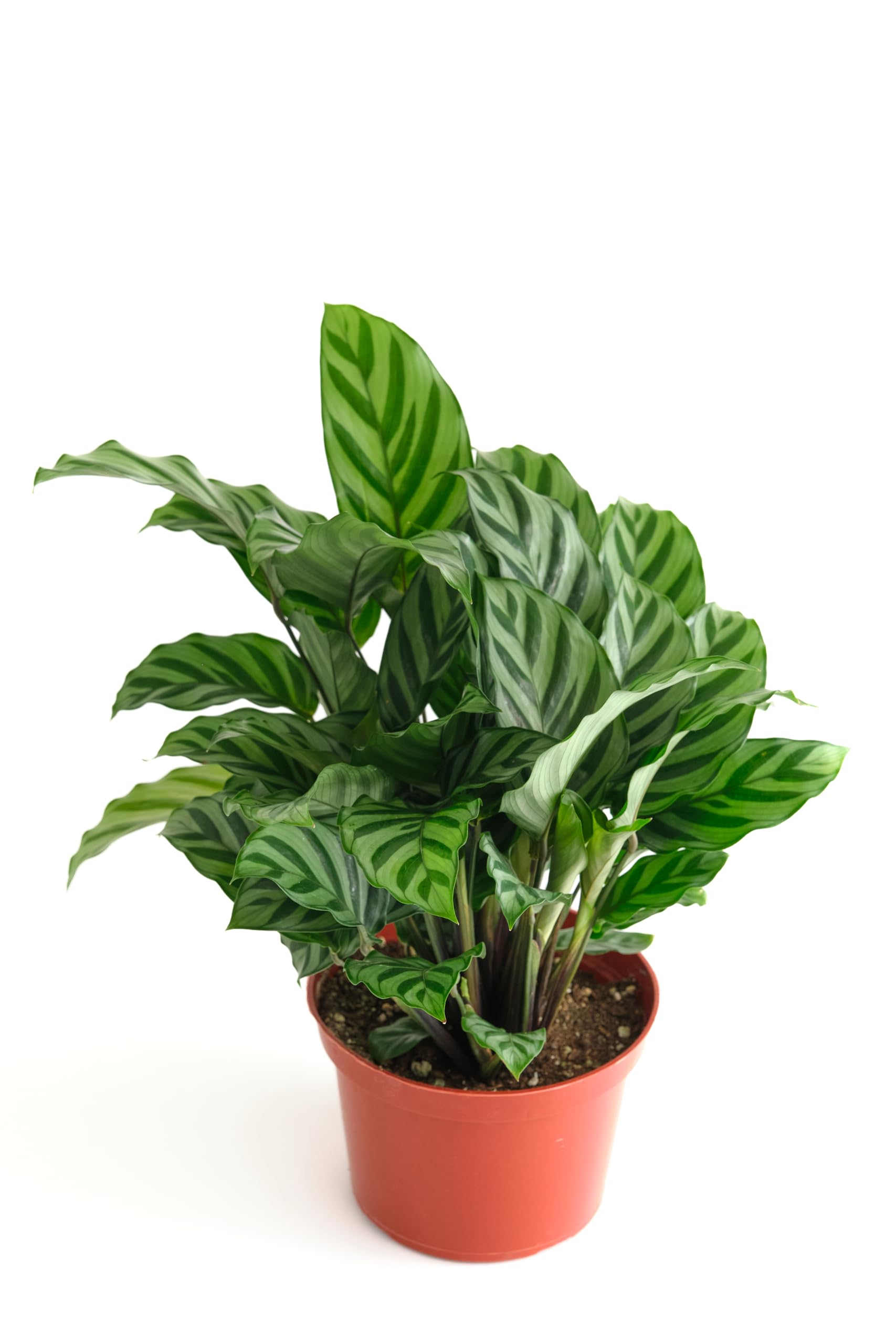
The Calathea Concinna, nicknamed Freddie, brings a completely different aesthetic to the bedroom — its broad leaves are striped with alternating light and dark green bands that look almost painted. This is not a plant that hides in the corner; it becomes a focal point even in a dimly lit room. But the beauty is not superficial: Calatheas are known for high transpiration rates that increase humidity by 5–10 percent in dry rooms, which translates directly to better air quality as the leaves capture airborne particulates.
This specific Freddie arrived in a 6-inch nursery pot, which is larger than the standard 4-inch, giving the root system room to expand without immediate repotting. It prefers moderate watering and sandy soil that drains fast — a critical detail for bedrooms where owners might forget to aerate the soil. The plant thrives in partial sun, meaning any north or east-facing window works perfectly.
The only catch is that Calathea is not pet-safe — ingestion can cause oral irritation in cats and dogs. If you have a nibbler, skip this one or mount it on a high shelf. The packaging from Shop Succulents is hit-or-miss: the leaves are generally healthy on arrival, but the pots sometimes arrive without drainage trays, so have a saucer ready. For the air-purifying return and the visual payoff, this Freddie punches well above its weight.
Why it’s great
- Striking striped foliage that adds architectural interest
- High transpiration rate boosts bedroom humidity
- 6-inch pot reduces need for immediate repotting
- Thrives in partial sun / low indirect light
Good to know
- Toxic to pets if ingested
- No drainage tray included with pot
- Spider mites can be an issue in dry air
4. Hopewind Lemon Lime Maranta Prayer Plant

The Lemon Lime Maranta is a prayer plant, meaning its leaves fold upward at night as if in prayer — a visible rhythm that reminds you the plant is alive and working while you sleep. This movement is tied to nyctinasty, the plant’s circadian response that also affects its gas exchange patterns. During the night, when most plants respire like humans, the Maranta continues low-level purification through its stomata, making it a rare bedroom ally for overnight air quality.
Hopewind packs each plant in a 4-inch nursery pot with a white grow pot that is giftable on its own. The plant arrives between 12–16 inches tall, lush and full from the California facility. It is ASPCA-recognized as non-toxic, so you can place it on a nightstand even if your cat investigates new foliage. Care requirements are straightforward — bright indirect light, water when the top half of the soil is dry — but it benefits from occasional misting to maintain the humidity it naturally releases.
Reviewers consistently praise the packaging for surviving USPS mishandling, with one plant lasting six days sideways in a mailbox and thriving after unboxing. The only trade-off is slower growth compared to a Philodendron or Pothos; this is a plant that rewards patience. If you want a living companion that visibly responds to day and night while keeping the air clean and your pets safe, the Maranta is the pick.
Why it’s great
- Nighttime leaf movement indicates active respiration cycle
- ASPCA non-toxic and safe for cats and dogs
- Packed with robust protection against shipping damage
- Vibrant lemon-lime variegation in low light
Good to know
- Slower growth than many other tropical houseplants
- Requires occasional misting in dry bedroom air
- Leaf edges can brown if water has too much chlorine
5. Plants for Pets Philodendron Variety Pack

This variety pack gives you four different Philodendron cultivars (typically Orange Prince, Green Princess, Mican, and Silver Sword) in 4.25-inch grower pots. Philodendrons are among the highest-efficiency VOC removers in the Araceae family — they handle xylene, toluene, and formaldehyde with leaf structures that maximize surface area without getting leggy. Because each plant in the pack is a different species, you effectively get four distinct air-purifying strategies in one order.
The plants arrive as live root-bound specimens that need repotting within a few weeks, but that is by design — the root density means they are mature enough to start transpirational air cleaning immediately. Care is as simple as indirect sunlight and moderate watering. Customers report that even plants that arrived slightly beat-up from shipping bounced back within a month and grew huge under basic LED lights.
The main drawback is inconsistency in the actual cultivars shipped. Some orders received Pothos and Peperomia instead of the advertised Philodendrons, though the seller corrected the mistake for most complaints. Also, some plants developed fungal spots after two weeks, which may have been a pre-existing issue in the grower’s soil. Still, for the price per plant, this is the fastest path to a diverse bedroom colony that actively scrubs multiple toxin types.
Why it’s great
- Four different Philodendron cultivars for diverse VOC targeting
- Fast-growing with large leaf surface area
- Mature root systems start cleaning air immediately
- Portion of profits supports shelter animal adoption
Good to know
- Some orders received non-Philodendron varieties
- Root-bound upon arrival, needs repotting soon
- Potential for soil-borne fungus in some batches
FAQ
How many plants do I need in my bedroom for measurable air quality improvement?
Will these plants survive in a bedroom with no direct sunlight?
Final Thoughts: The Verdict
For most users, the best bedroom plants for air quality winner is the American Plant Exchange Peace Lily 4-Pack because four plants in a single purchase give you immediate room-scale purification with coordinated deco pots. If you want a single flowering statement piece, grab the Costa Farms Peace Lily. And for a pet-safe home where the plant dances with the day-night cycle, nothing beats the Hopewind Lemon Lime Maranta Prayer Plant.

Mo Maruf
I created WellFizz to bridge the gap between vague wellness advice and actionable solutions. My mission is simple: to decode the research and give you practical tools you can actually use.
Beyond the data, I am a passionate traveler. I believe that stepping away from the screen to explore new environments is essential for mental clarity and physical vitality.