Our readers keep the lights on and my smoothie glass nicely filled. As an Amazon Associate, I earn from qualifying purchases.
Waking up stiff, cold, and sore from a night on hard ground is the fastest way to kill a camping trip. A quality bedroll transforms a tent floor into a legitimate sleep surface, insulating your body from the cold earth while padding pressure points so you actually recover overnight. The right choice balances thickness, insulation value, packed size, and durability for your specific setup—whether you’re car camping, using a cot, or squeezing into a rooftop tent.
I’m Mohammad Maruf — the founder and writer behind WellFizz. I have spent over a decade analyzing outdoor gear specifications, comparing foam densities, R-values, and fabric deniers to separate real performance from marketing fluff in the camping sleep market.
This guide breaks down the seven strongest contenders for the best bedroll for camping, each evaluated on thickness, insulation, portability, and real-world comfort so you can pick the one that fits your sleep style and trip type without wasting money on noise.
How To Choose The Best Bedroll For Camping
Camping bedrolls vary widely in construction, thickness, and insulation. Understanding a few core specs will help you match the mat to your camping style without overpaying or sacrificing sleep quality.
Thickness & Foam Type
Thickness directly determines how much ground texture you feel. Roll-up memory foam mats in the 2.5 to 3-inch range provide plush comfort on cots or tent floors but stay bulky when packed. Self-inflating pads use a foam core that expands when the valve opens, offering 3 to 4 inches of loft with a smaller packed volume. For side sleepers, at least 3 inches of material prevents hips and shoulders from bottoming out against the ground.
R-Value & Insulation
R-value measures the pad’s resistance to ground heat loss. An R-value of 4 or higher handles three-season use comfortably, while 7 or above keeps you warm below freezing. High R-values often come from internal foil layers or dense foam, which can add weight and stiffness. Match the R-value to your lowest expected overnight temperature, not the average daytime high.
Packed Size & Portability
Pure memory foam mats roll into cylinders roughly 24 to 28 inches long and 10 to 12 inches in diameter, making them ideal for car camping and truck beds but impractical for backpacking. Self-inflating pads compress much smaller—often down to the size of a water bottle—and weigh half as much, letting you carry them into backcountry sites without sacrificing comfort.
Quick Comparison
On smaller screens, swipe sideways to see the full table.
| Model | Category | Best For | Key Spec | Amazon |
|---|---|---|---|---|
| Therm-a-Rest LuxuryMap XL | Premium | Maximum year-round comfort | R-Value 6, 3″ thickness | Amazon |
| Sea to Summit Camp Plus | Premium | Durable car/tent camping | 4.3 R-Value, 2.6″ thick | Amazon |
| OGERY Self Inflating w/ Pump | Mid-Range | Quick setup with electric pump | R-Value 9.5, 3.15″ thick | Amazon |
| Elegear Self Inflating Pad | Mid-Range | Deep cold insulation | R-Value 9.5, 3.1″ thick | Amazon |
| TREKOLOGY UL R7 | Mid-Range | Lightweight warmth for all seasons | 7.2 R-Value, 4″ thick | Amazon |
| CYMULA 3″ Memory Foam Pad | Value | Soft comfort on a budget | 3″ memory foam, waterproof base | Amazon |
| MLILY Memory Foam Mattress 2.5″ | Budget | Entry-level car camping comfort | 2.5″ memory foam, 3-year warranty | Amazon |
In-Depth Reviews
1. Therm-a-Rest LuxuryMap Self-Inflating Foam Camping Sleeping Pad, X-Large

Therm-a-Rest’s LuxuryMap uses pressure mapping technology to vary foam density across the pad—firmer support under the hips and shoulders, plusher cushion under the torso and legs. The TwinLock valve system uses two dedicated ports: one for fast inflation, one for one-way deflation that squeezes every bit of air out for a smaller roll. At 30 inches wide and 77 inches long, the XL version offers generous space for restless sleepers and larger body frames without feeling cramped.
The 6 R-value delivers reliable four-season insulation, meaning you stay warm in sub-freezing conditions without needing to stack a second pad underneath. Premium foam holds its shape over years of use, and the included stuff sack uses a PFAS-free DWR coating to repel moisture without environmental trade-offs. Regular and large sizes are available for those who prefer a narrower, more packable profile.
Some users note the actual foam sleeping area measures slightly narrower than the fabric edge indicates, and the pad lacks integrated straps to keep it tightly rolled when stored. Expect the foam to take 2-4 hours after first inflation to reach full loft. Made in the USA, which adds to its durability reputation and resale value among serious campers.
Why it’s great
- Pressure-mapped foam contours to body shape for targeted support
- TwinLock valves allow rapid inflation and efficient one-way deflation
- Wide 30-inch surface accommodates side sleepers and large frames
Good to know
- Actual foam width is about 3 inches narrower than the fabric edge
- No built-in straps to secure the rolled pad; may expand in the stuff sack
2. Sea to Summit Camp Plus Self-Inflating Foam Sleeping Mat
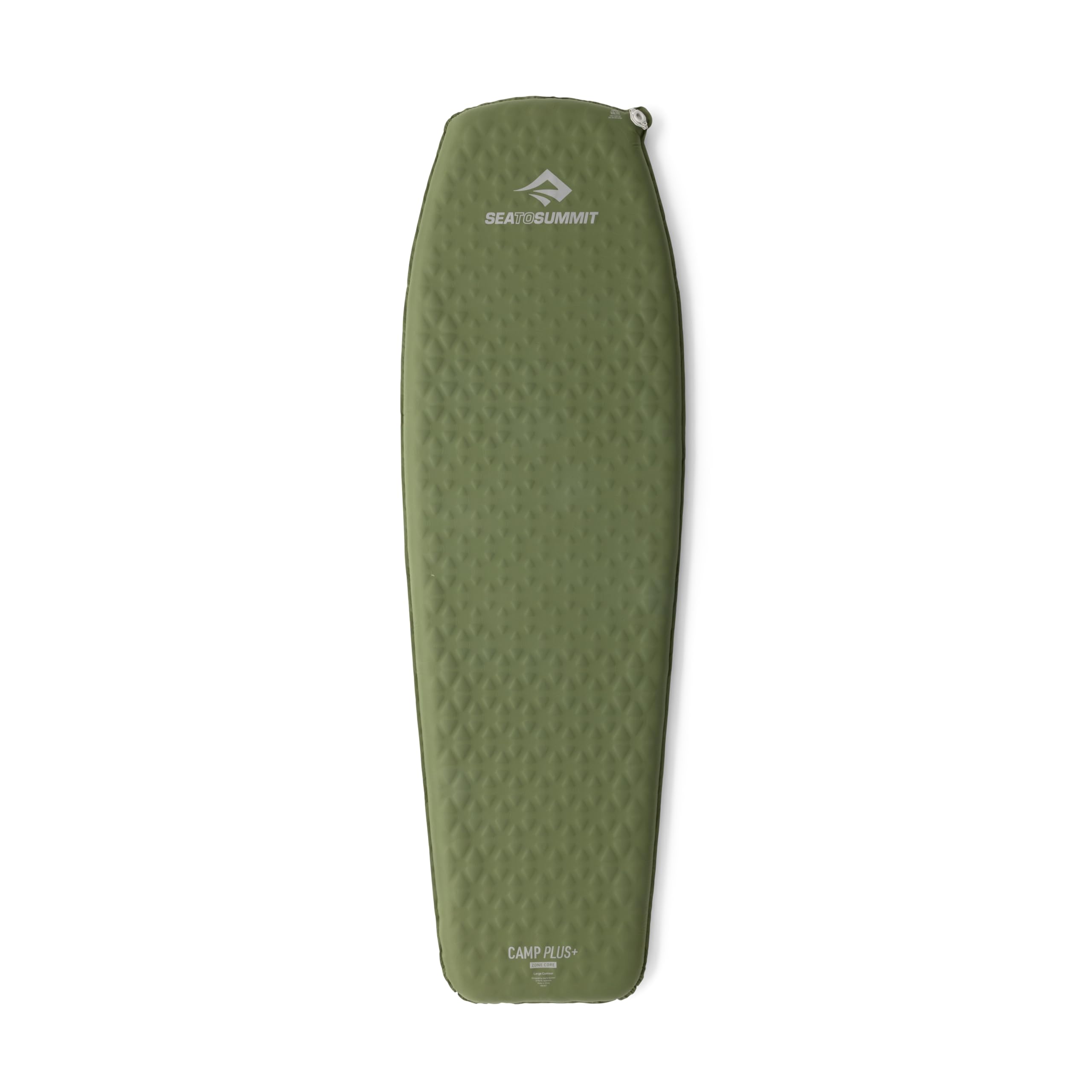
Sea to Summit’s Camp Plus uses a foam-air hybrid construction that combines a foam core with air chambers, resulting in a 2.6-inch thick pad that packs down to just 11 by 6.3 inches—impressively small for its insulation level. The 4.3 R-value covers most three-season conditions and bleeds into early winter for campers who don’t push extreme lows. The tapered regular shape measures 72 by 22 inches, adding 12 percent more sleep surface than a standard mummy pad while trimming weight from the foot box.
The 75D polyester face fabric handles rough ground, direct sun, and rock contact without pilling or puncturing, as confirmed by field tests in desert and alpine terrain. Updated xPEL valve allows one-way deflation for tighter rolls and space-saving storage. PillowLock patches come included, letting you attach a Sea to Summit pillow directly to the pad surface so it doesn’t slide off during the night.
Self-inflation is slower than dedicated models; expect to add 10 to 15 breaths to reach desired firmness. After vacuum packing, the foam may take several days to fully expand to its original loft. At 2.4 pounds, it’s heavy for backpacking but ideal for car camping and cot use where packed size matters more than ultralight weight.
Why it’s great
- Packs significantly smaller than most foam mats of similar thickness
- 75D polyester fabric resists tears and abrasion from rough surfaces
- Integrated PillowLock patches keep your pillow in place all night
Good to know
- Self-inflation is slow; requires 10-15 breaths for optimal firmness
- Foam needs several days to fully expand after initial unpacking
3. OGERY Self Inflating Sleeping Pad with Electric Pump
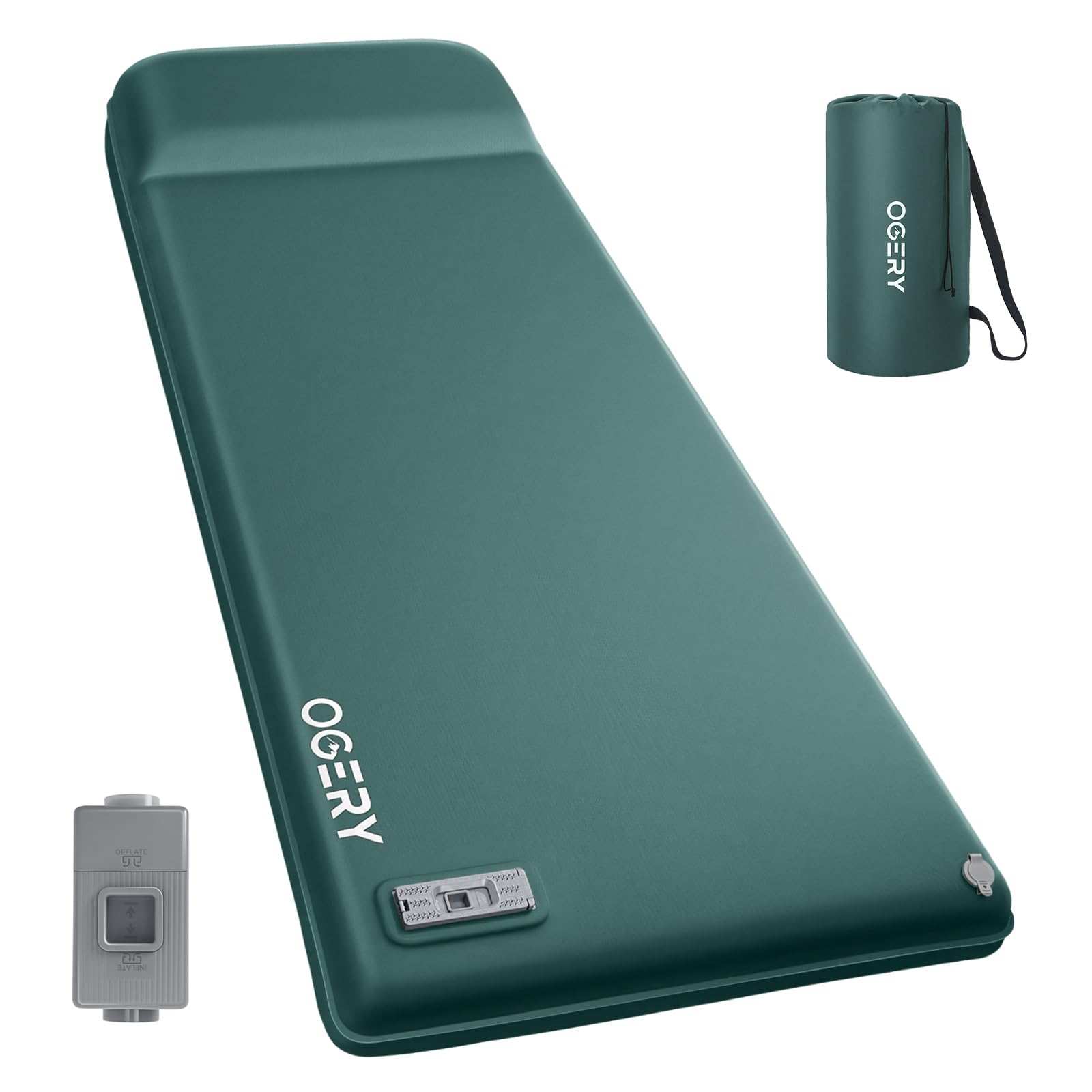
OGERY combines a 3.15-inch memory foam core with a detachable electric pump, inflating the pad in roughly 40 seconds and deflating it in about 90 seconds via USB-C power. The 7.4V 1200mAh battery supports up to seven inflation cycles per charge, making it practical for multi-night trips when paired with a car charger or power bank. The 50D stretch knit top surface feels quiet and soft, avoiding the crinkly plastic sensation common on basic air pads.
With an R-value rating of 9.5, this pad delivers serious cold-weather insulation, blocking ground chill even when temperatures drop well below freezing. The built-in pillow provides basic head elevation, though side sleepers may still prefer their own pillow for proper neck alignment. Measuring 76.77 by 26.38 inches and packing down to 27.56 by 10.63 inches, it fits standard tent footprints and cots without overhang.
At 5.95 pounds, this is clearly a car camping and RV accessory, not a backpacking tool. The pump is louder than a manual inflation method, so expect some noise during late-night setup. First inflation takes longer while the vacuum-packed foam fully expands. The 1-year warranty covers manufacturing defects, but the pump motor is the most likely long-term failure point.
Why it’s great
- Integrated electric pump inflates in under a minute without manual effort
- R-Value 9.5 provides excellent insulation for freezing temperatures
- 50D knit top is quiet and comfortable against sleeping bag fabric
Good to know
- Heavy at 5.95 pounds; not suitable for backpacking
- Electric pump is audible; may disturb tent mates during late-night setup
4. Elegear Self Inflating Sleeping Pad, 3.18″ Memory Foam

Elegear’s self-inflating pad uses 26D high-density memory foam with a 3.18-inch thickness and a 27-inch width, giving you generous real estate for side sleeping without feeling the ground through the pad. The two-valve design allows inflation in roughly 20 seconds without mouth contact, keeping the process hygienic and fast. A 9.5 R-value ensures warmth through all four seasons, even when the temperature dips into the teens.
The 50D stretch knit fabric cover wicks moisture, breathes well, and resists tearing, while the waterproof TPU bottom layer blocks ground moisture from soaking into the foam core. The entire pad supports up to 800 pounds, making it one of the highest weight capacities in its category—ideal for larger individuals or two small children sharing the surface. The included pillow adds head support without requiring a separate purchase.
At 8.1 pounds, this mat is bulky and best reserved for car camping, truck tents, or RV use. The memory foam creates a plush surface that some hot sleepers may find too warm in summer. First inflation takes noticeably longer than subsequent uses because the foam must fully expand after vacuum packing. The integrated pillow is relatively flat, so users accustomed to lofted pillows may want to bring their own.
Why it’s great
- 26D density foam provides strong support without bottoming out
- Two-valve design enables fast, hygienic self-inflation without mouth contact
- 800-pound weight capacity suits larger campers and shared use
Good to know
- Heavy 8.1-pound weight limits use to car camping and RV trips
- Built-in pillow is relatively flat; may not satisfy side sleepers
5. TREKOLOGY Sleeping Pad UL R7, 4″ Thick
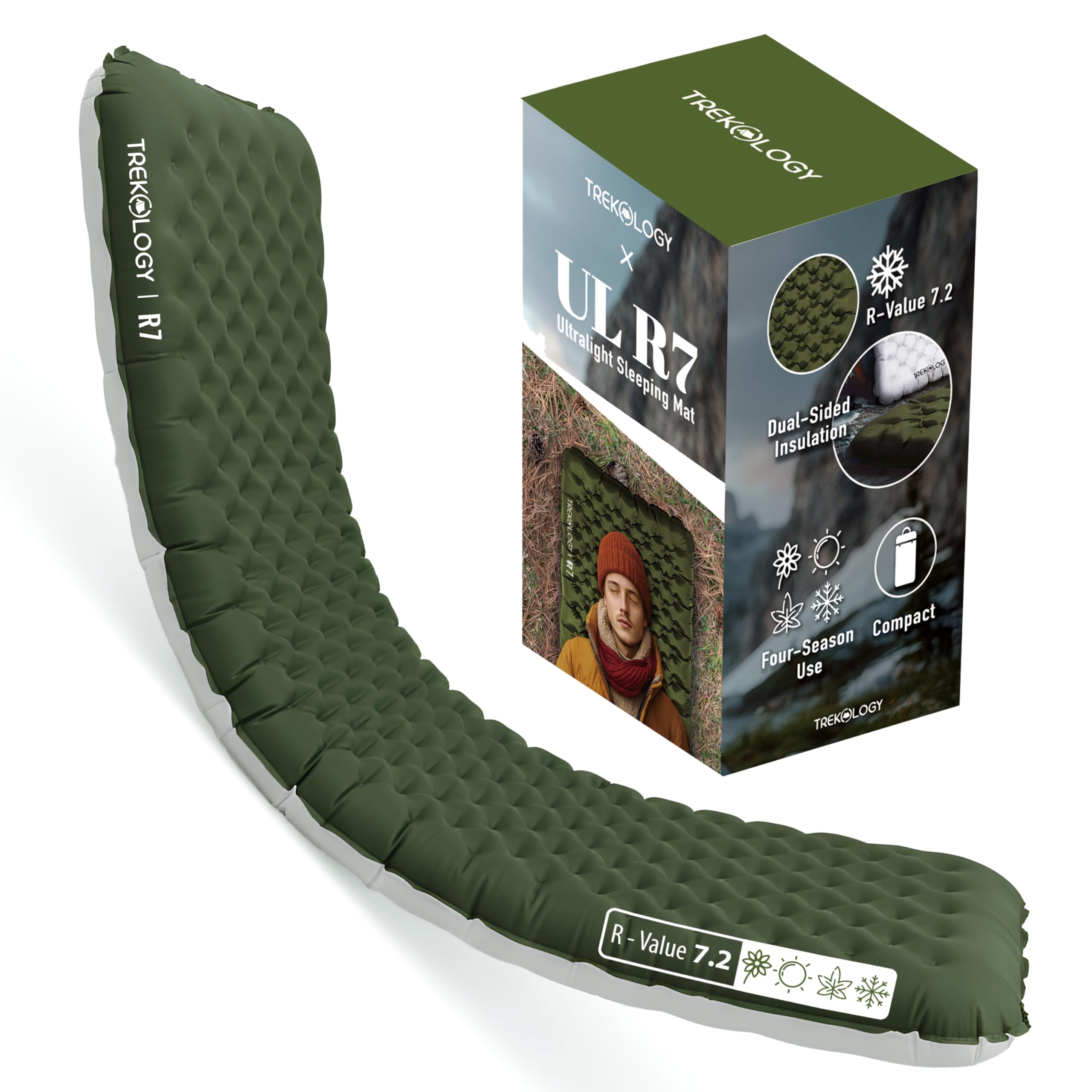
TREKOLOGY’s UL R7 inflatable pad packs a 7.2 R-value into a 2-pound package, offering cold-weather insulation that rivals much heavier mats. The 4-inch thickness prevents bottoming out even for side sleepers, while the 70.8 by 24-inch surface provides standard adult coverage without excess bulk. The 40D ripstop nylon shell with TPU coating resists punctures from sharp rocks and rooty ground, and the anti-leak valve holds pressure for consecutive nights without re-inflating.
When deflated, the pad compresses to roughly the size of a water bottle, making it genuinely backpackable for multi-day trips where weight and volume matter. SGS certification backs the R-value claim, and field reports confirm it stays warm in single-digit temperatures when paired with an appropriate sleeping bag. The surface is quiet—no crinkling when shifting positions—which matters for light sleepers sharing a tent.
The pad is slippery on smooth tent floors; a thin shelf liner or groundsheet helps prevent sliding during the night. Inflating requires either lung power or a separate pump sack (sold separately), and the foil insulation layer inside can slow deflation slightly because it blocks the valve opening unless held aside manually. At 330 pounds capacity, it handles most adult body types without compromising loft.
Why it’s great
- Weighs just 2 pounds with a 7.2 R-value for serious cold-weather insulation
- Packs down to water-bottle size for easy backpacking storage
- 40D ripstop nylon and TPU coating resist punctures and leaks
Good to know
- Slippery surface can shift on tent floors without a groundsheet
- Pump sack not included; requires separate purchase or manual inflation
6. CYMULA 3 Inch Memory Foam Camping Pad
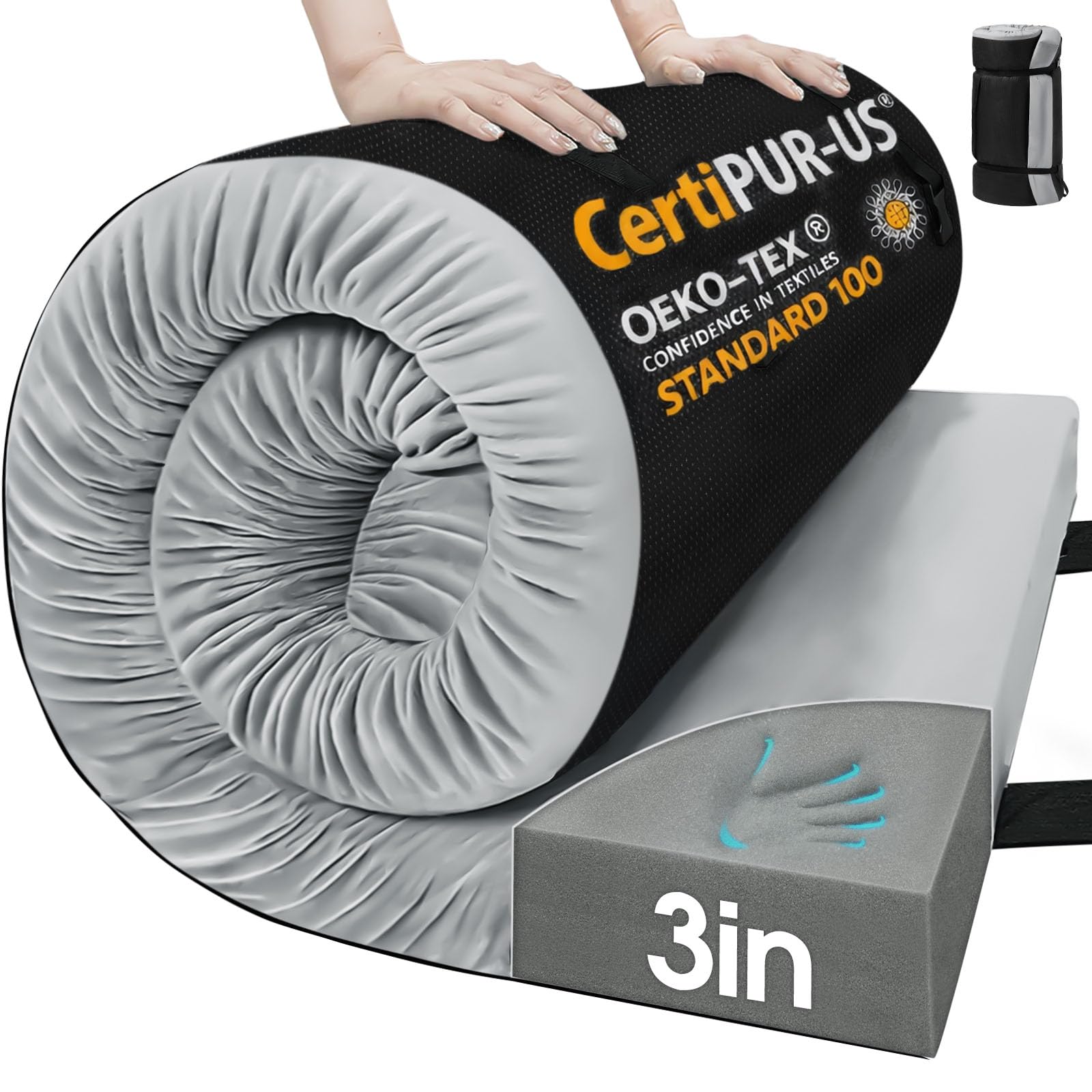
CYMULA’s rolled memory foam pad delivers 3 inches of plush cushioning at an entry-level price point that undercuts most self-inflating competitors. The carbon-fiber-infused memory foam sits on top of a high-density base layer, creating a dual-density feel that contours to body curves while preventing the mat from flattening completely under weight. The 72 by 24-inch footprint fits standard cots and tent floors without overhang, and the waterproof non-slip bottom uses rubberized dots to grip slick surfaces.
The standout feature here is the removable, machine-washable cover—a practical bonus for campers who deal with mud, sand, or spilled coffee. The breathable fabric feels soft against skin and doesn’t trap excessive heat during summer nights. Integrated straps keep the pad tightly rolled for storage, and the included carry bag makes transport straightforward. For cold-weather setups, pairing this pad with a foam underlayer or a high-R-value closed-cell mat significantly boosts ground insulation.
At 6.4 pounds and a rolled diameter of roughly 12 inches, this pad is strictly a car camping and guest-room accessory—backpackers will find it too heavy and bulky. Some units arrive with a strong initial chemical odor that requires a few hours of airing out. The strap quality is functional but not built for heavy daily use; several users replaced them with aftermarket straps for better durability.
Why it’s great
- Removable, machine-washable cover keeps the pad clean after muddy trips
- Dual-density foam provides contouring comfort without bottoming out
- Waterproof non-slip bottom with rubberized dots stays put on cots and floors
Good to know
- Heavy and bulky; designed for car camping, not backpacking
- Some units arrive with a strong chemical odor that requires airing out
7. MLILY Memory Foam Camping Mattress 2.5 Inch
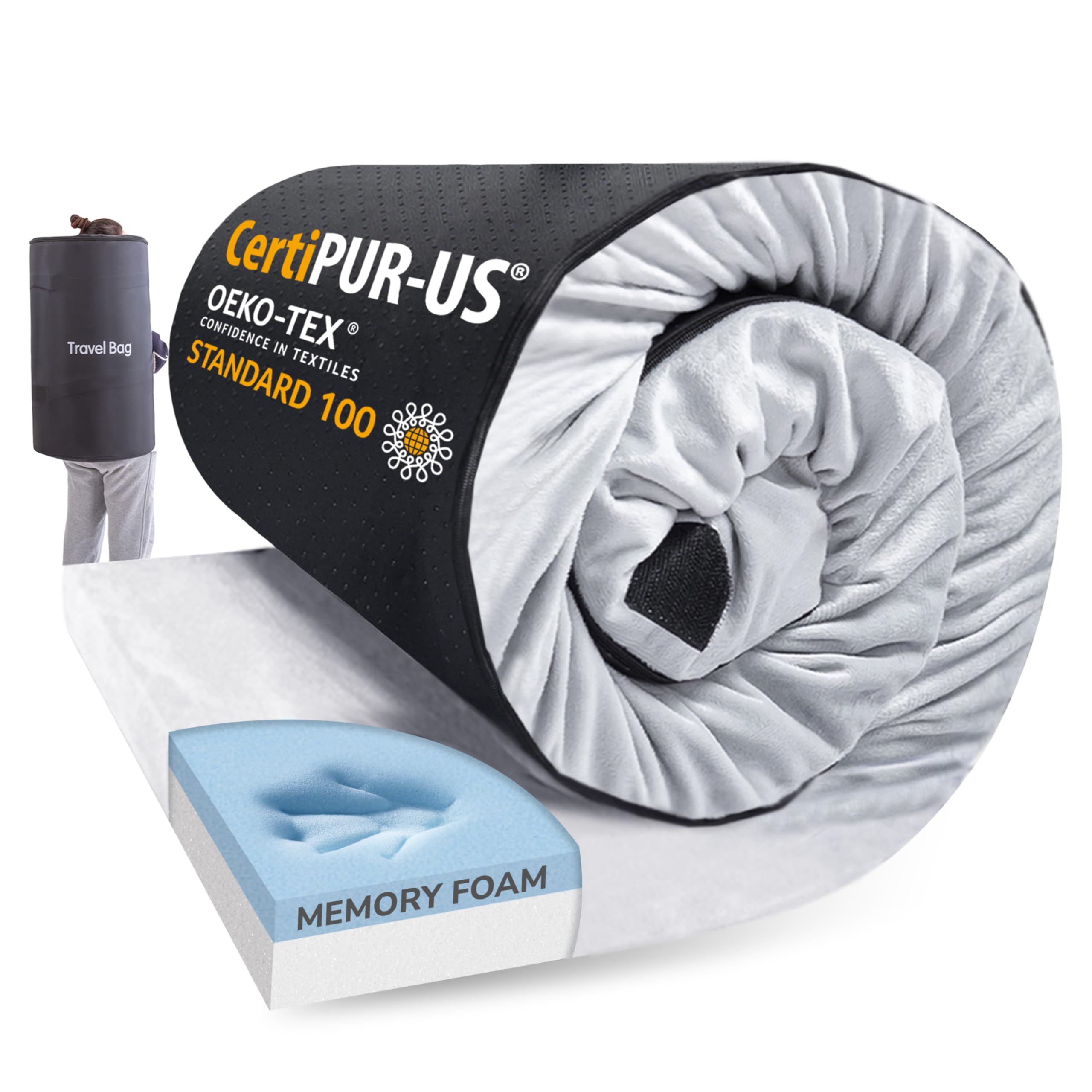
MLILY’s 2.5-inch camping mattress uses AeroFusion memory foam on top of a Flex Support Foam base, creating a dual-layer structure that balances softness with structural integrity. The 72 by 24-inch surface works well for a single adult or a small child, and the waterproof non-slip bottom prevents the mat from shifting on grassy slopes or smooth tent floors. CertiPUR-US certification confirms the foam is free from heavy metals, formaldehyde, and phthalates, making it a safer choice for families with young kids.
The included travel bag simplifies rolling and transport, though the mat’s rolled size is noticeably bulkier than self-inflating alternatives. Users report good results using it on top of a couch or indoor floor as a guest bed, not just for camping. The polyester top cover feels smooth and doesn’t stick to bare skin on warm nights, and the 3-year warranty provides above-average coverage for a product at this tier.
At 2.5 inches, the pad is thin enough that side sleepers may feel pressure on their hips and shoulders when placed directly on hard ground, though it works well on cots where the cot fabric absorbs some of the remaining texture. The foam can take up to 48 hours to fully expand after unboxing due to vacuum compression. MLILY is an established bedding manufacturer, and the construction quality reflects their experience with residential mattresses—stitching is clean, and the foam doesn’t develop permanent indentations under normal use.
Why it’s great
- CertiPUR-US certified foam ensures safe, non-toxic materials for family use
- Dual-layer AeroFusion foam balances soft comfort with supportive base
- 3-year warranty provides long-term coverage at an entry-level price
Good to know
- 2.5-inch thickness is too thin for side sleepers on hard ground without a cot
- Foam takes up to 48 hours to fully expand after vacuum packing
FAQ
How thick should a camping bedroll be for side sleepers?
What is the difference between self-inflating and roll-up memory foam pads?
Can I use a camping bedroll directly on the ground without a tent floor?
Final Thoughts: The Verdict
For most campers, the best bedroll for camping winner is the Therm-a-Rest LuxuryMap XL because its pressure-mapped foam provides targeted support across a wide surface, the TwinLock valves make setup fast, and the 6 R-value handles four-season use without excessive bulk. If you want a self-inflating pad with electric convenience, grab the OGERY Self Inflating Pad with Electric Pump. And for lightweight backpacking, nothing beats the TREKOLOGY UL R7 which packs water-bottle small while delivering serious cold-weather insulation.

Mo Maruf
I created WellFizz to bridge the gap between vague wellness advice and actionable solutions. My mission is simple: to decode the research and give you practical tools you can actually use.
Beyond the data, I am a passionate traveler. I believe that stepping away from the screen to explore new environments is essential for mental clarity and physical vitality.