Our readers keep the lights on and my smoothie glass nicely filled. As an Amazon Associate, I earn from qualifying purchases.
A bed wetting alarm is a small, sensor-driven device that clips to a child’s underwear and sounds the moment moisture is detected, training the brain to recognize a full bladder during deep sleep. It is a clinically backed, non-invasive solution for primary nocturnal enuresis, and it works by conditioning the reflex arc between bladder fullness and waking—a process that typically takes between two and twelve weeks of consistent use.
I’m Mohammad Maruf — the founder and writer behind WellFizz. I’ve spent years analyzing pediatric sleep aids and continence training devices, focusing on sensor accuracy, alarm volume, and long-term reliability across dozens of models.
This guide covers seven top contenders for the best bed wetting alarm, breaking down what actually works for deep sleepers, which features reduce false alarms, and how to match a unit to your child’s specific sleep habits.
How To Choose The Best Bed Wetting Alarm
Not all bed wetting alarms are built the same. Some are loud enough to wake a heavy sleeper but trigger false alarms from sweat. Others are wireless but suffer from sync issues between two units. Here are the specs that separate effective tools from frustrating gadgets.
Sensor Sensitivity and False Alarm Rate
The sensor must detect the first drops of urine, not humidity from sweat or a damp washcloth. Units with a high threshold for false positives—like the DryEasy Pro with its toggle clamp and improved sensor—save parents from unnecessary middle-of-the-night resets. Wrapping the sensor in a paper towel, as some Wet-Stop users report, can block humidity without affecting urine detection.
Alarm Volume and Tone Variety
A single loud beep loses its effectiveness after a few nights. Look for alarms with multiple selectable melodies—the Ovevve offers seven—so the child doesn’t habituate to one sound. Volume control is equally critical; some units hit 80 decibels, which can frighten sensitive children. A vibration-only mode or a combination mode gives you flexibility without the trauma of a startling blast.
Wired vs. Wireless Design
Wired alarms like the Wet-Stop 3 use a physical cord running from the pajama top to the underwear sensor, which prevents signal loss but creates a strangling risk for younger children. Wireless alarms eliminate the cord but introduce two separate pieces to track. The DryEasy Pro solves this by using a magnetic charging dock that doubles as storage for the transmitter, reducing the chance of losing it under the bed.
Power Source and Charging Method
AAA batteries are cheap and replaceable, but they run out mid-night if you forget to swap them. USB rechargeable units, like the TENQIU and FENCY models, remove that risk and save money over time. Consider whether the transmitter and receiver use the same charging cable—USB-C is increasingly common, while magnetic charging is proprietary and harder to replace.
Quick Comparison
On smaller screens, swipe sideways to see the full table.
| Model | Category | Best For | Key Spec | Amazon |
|---|---|---|---|---|
| DryEasy Pro | Wireless | ADHD/Autism families | 6 selectable sounds + volume control | Amazon |
| Wet-Stop3 Kit | Wired + Pad | Mess minimization | 80 dB alarm + waterproof bed pad | Amazon |
| Ovevve | Wireless | Travel / sleepovers | 7 melodies + USB-C charging | Amazon |
| Wet-Stop 3 | Wired | Proven classic reliability | 6 alarm tones + strong vibration | Amazon |
| FENCY Wireless | Wireless | Long-range monitoring | 10–20 m receiver range | Amazon |
| TENQIU Wireless | Wireless | Budget-friendly wireless | High sensitivity sensor, USB rechargeable | Amazon |
| TENQIU Orange | Wired | Entry-level / multiple ages | USB rechargeable, 3 modes | Amazon |
In‑Depth Reviews
1. DryEasy Pro Wireless Bedwetting Alarm
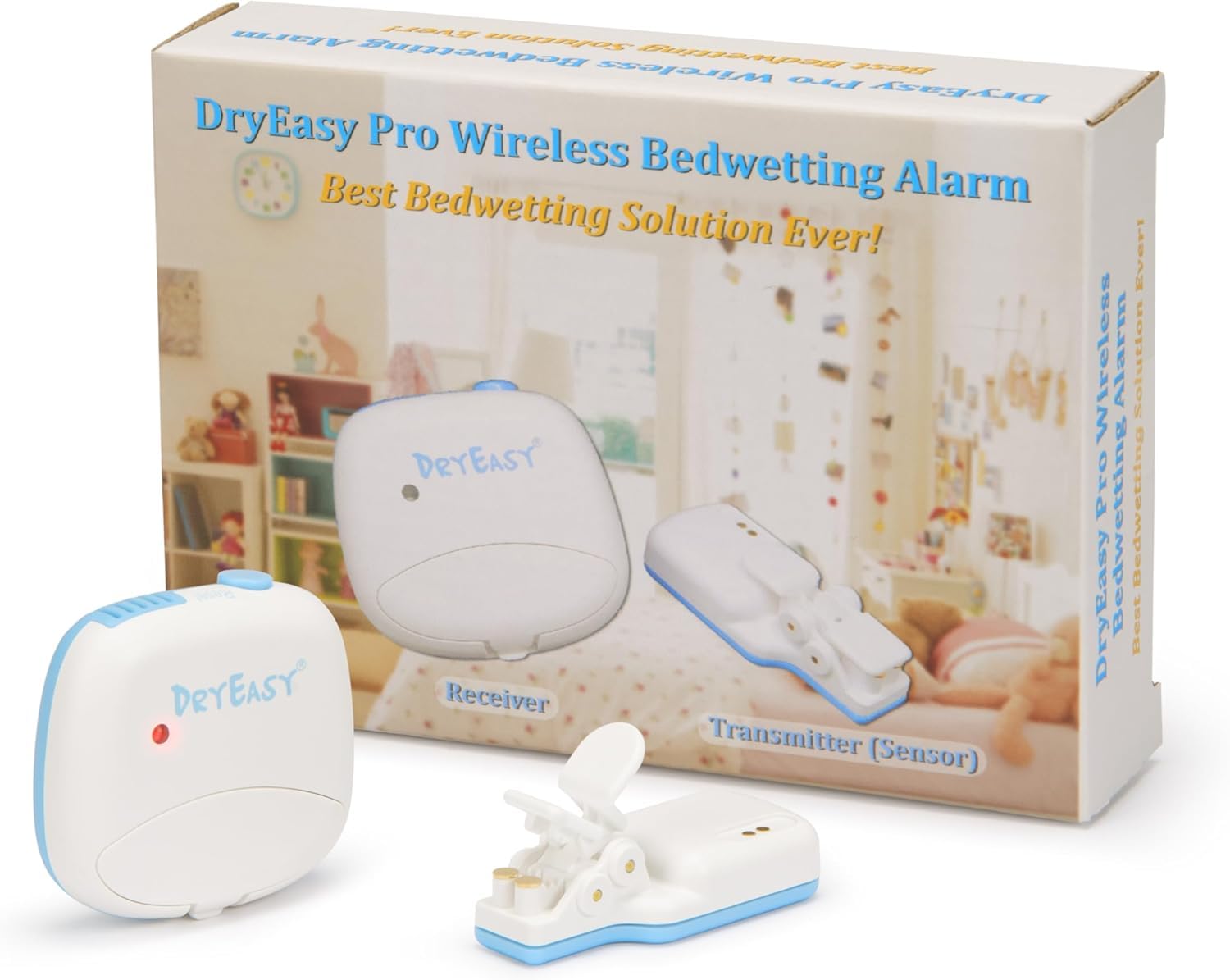
The DryEasy Pro eliminates the tripping hazard of a cord with a true wireless design—the receiver sits on the bedside table while the transmitter clips to the underwear using a reinforced toggle clamp. Users report the sensor catches the first drops of urine immediately, triggering the alarm before the bed is wet. The included six selectable sounds and six-level digital volume control prevent habituation, a major advantage for deep sleepers or children with sensory sensitivities.
Battery life here is a standout—some reviewers report over a month of use per charge on both the transmitter and receiver. The magnetic charging dock keeps the transmitter stored and topped off when not in use, solving the “where did the small piece go” puzzle that plagues wireless systems. It works with both standard underwear and pull-ups, though the sensor performs best with direct cloth contact.
For children with ADHD or autism, the wireless freedom and customizable sound options reduce the stress of being attached to a wire. Customer feedback shows consistent dry nights within two to three weeks for many families, and the manufacturer’s responsive customer service adds peace of mind if something goes wrong.
Why it’s great
- True wireless receiver with no cord to the pajamas
- Six sound options plus vibration mode prevent habituation
- Extended battery life exceeding one month per charge
Good to know
- Two-piece design increases risk of misplacing the transmitter
- Some users report the sensor needs direct cloth contact to trigger reliably
2. Wet-Stop3 Kit with Waterproof Bed Pad

The Wet-Stop3 Kit bundles the classic wired alarm with a washable, waterproof bed pad, solving two problems at once: training the child to wake and protecting the mattress from accidents. The pad is a cotton-poly blend that feels like a normal sheet but traps liquid underneath, making middle-of-the-night sheet changes far less disruptive. Users praise its durability through repeated machine washing without delamination.
Six alarm tones plus a strong vibration alert give enough variety to keep the child’s brain from tuning out the sound. The two-step shut-off—press and hold the button while drying the sensor—prevents accidental resets and forces the child to engage with the process, which is critical for habit formation. The included star chart and reward stickers turn a clinical process into a motivating game.
The wired design means the cord runs from the pajama top to the sensor, which some parents flag as a strangling risk for very young children. Several reviewers solved this by clipping the cord to the inside of the pajama shirt. For heavy sleepers, the 80-decibel alarm is loud enough to wake parents in the next room, which can be either an asset or a drawback depending on household size.
Why it’s great
- Kit includes a high-quality waterproof bed pad that simplifies cleanup
- Very loud 80 dB alarm wakes even deep sleepers
- Two-step shut-off prevents accidental deactivation during training
Good to know
- Wired cord poses a minor safety risk for toddlers and active sleepers
- No volume control—single loudness setting may scare sensitive children
3. Ovevve Wireless Bedwetting Alarm
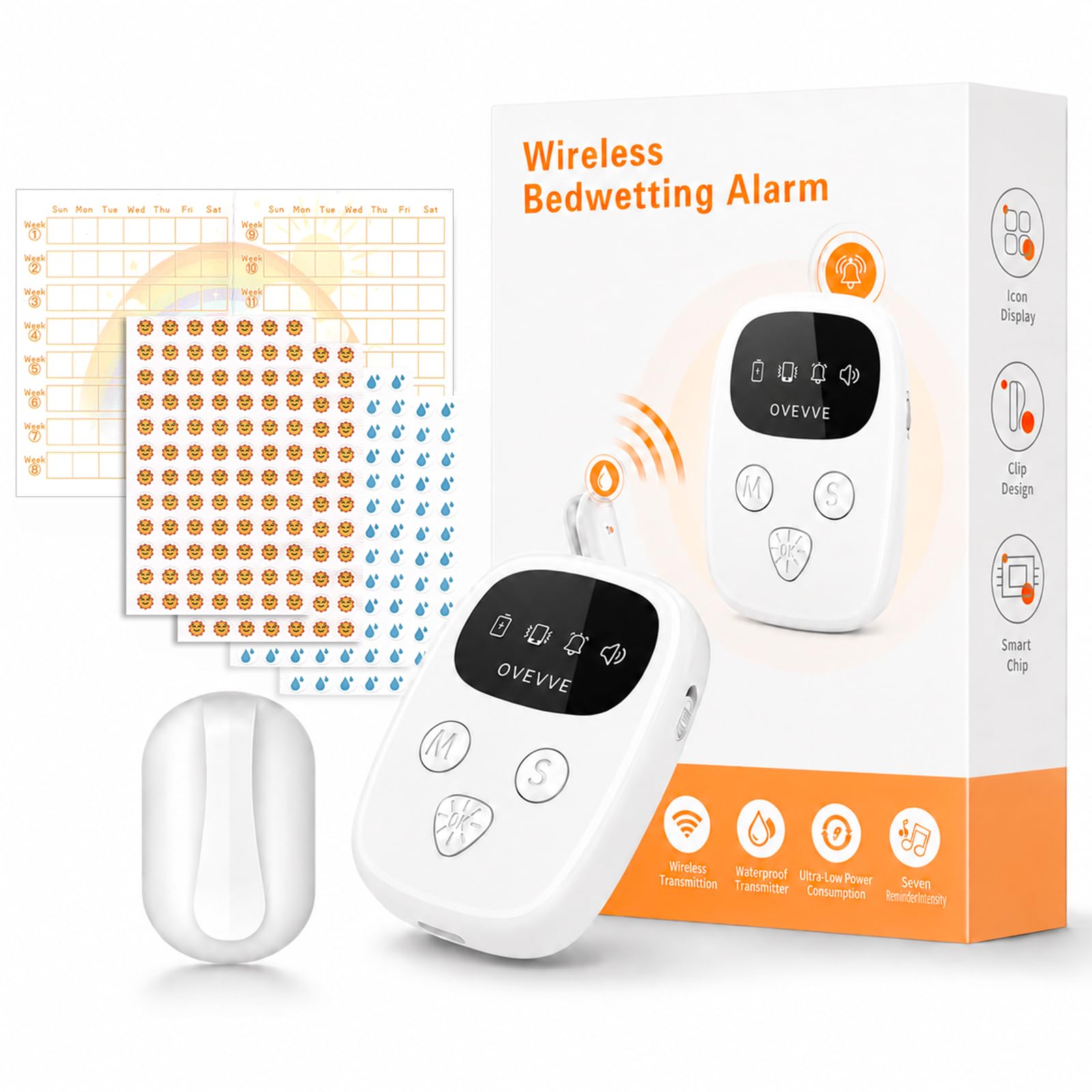
The Ovevve stands out for its seven distinct melodies, which is the highest variety among the alarms reviewed here. More tones mean lower risk of the child habituating to a single beep, and the receiver uses a simple toggle switch for power, so it’s easy for young children to operate without confusion. The transmitter is fully waterproof and compact, making it a strong choice for sleepovers or summer camp where discretion matters.
Charging is handled via USB-C for the receiver and magnetic charging for the transmitter, and the transmitter docks magnetically to the back of the receiver when not in use—a thoughtful storage solution. The progress card and sticker set match the motivational approach of the Wet-Stop series, which parents consistently say accelerates results. Customers with children aged 8 to 12 report the alarm wakes the child without causing panic.
The main drawback is inconsistent sensor performance in humid environments—some reviewers report false alarms on clean, dry sensors. The manufacturer recommends testing the sensor on a damp paper towel before first use to calibrate expectations. At the premium end of the price spectrum, the Ovevve is a good fit for families who prioritize portability and tone variety over raw loudness.
Why it’s great
- Seven unique melodies and three alarm modes prevent sound habituation
- Waterproof, compact transmitter ideal for travel and camp settings
- Receiver sits on nightstand—no arm strap needed
Good to know
- Some units experience false alarms in high-humidity conditions
- Magnetic charging cable is proprietary and harder to replace if lost
4. Wet-Stop 3 Blue Bedwetting Enuresis Alarm

It uses a wired sensor that clips to the underwear and connects to a small alarm unit worn on the wrist or pajama top. The six alarm tones plus strong vibration give enough variability to stay effective across the full training period, and the 80-decibel output wakes even the deepest sleepers in the house.
Power comes from two standard AAA batteries, which is a double-edged sword—you can replace them immediately if they die, but you’ll need to keep spares on hand. The patented sensor is easy to clean under running water, and users consistently report it remains sensitive for months. A significant number of reviewers achieved full dryness within two to four weeks, with many reporting the child began self-waking to use the bathroom after the first week of consistent use.
The single-button shut-off is a point of frustration—some children learn to press it reflexively and go back to sleep. The two-step shut-off of the Wet-Stop3 Kit is superior in this regard. The alarm’s loudness is non-adjustable, so it may cause anxiety in younger or more sensitive children. For families who prefer a proven, no-frills approach and don’t mind the cord, this remains a top contender.
Why it’s great
- Proven track record with decades of clinical use and positive outcomes
- Patented sensor is easy to clean and remains sensitive over long use
- Six alarm tones plus vibration provide good variety at a moderate price
Good to know
- Single-button shut-off is too easy for children to disable during training
- Alarm volume is fixed and can be startling for sensitive children
5. FENCY Wireless Bedwetting Alarm

The FENCY Wireless alarm offers the longest receiver range in this roundup—between 10 and 20 meters—which means the parent can place the receiver on a nightstand across the hall or in an adjacent room and still hear it clearly. This is a practical advantage for households where the child’s room is far from the parents’ bedroom, or where a loud alarm in the child’s room alone might not be enough to wake the parents for support.
Three reminding modes (sound only, vibration only, and sound plus vibration) give flexibility for children who respond better to physical cues than audio. The transmitter clips along the edge of the underwear using a simple clamp, and the whole system runs on rechargeable lithium polymer batteries—no disposable AAA replacements needed. The setup is straightforward: charge both units, clip the transmitter, and place the receiver nearby.
A key limitation reported by multiple buyers is that all FENCY receivers in the same house sync to all transmitters. If you have two children using them simultaneously, one child’s accident triggers both alarms, which defeats the purpose of individual training. The unit also has a small number of users reporting complete failure after a few weeks, so buy from a retailer with a flexible return policy.
Why it’s great
- Industry-leading 10–20 meter wireless range for parent monitoring from another room
- Wireless design eliminates cord hazards and is easy to set up
- Three alarm modes with USB rechargeable batteries
Good to know
- All units sync on the same signal, making multi-child use impractical
- A small percentage of units stop working after a few weeks of use
6. TENQIU Wireless Bedwetting Alarm
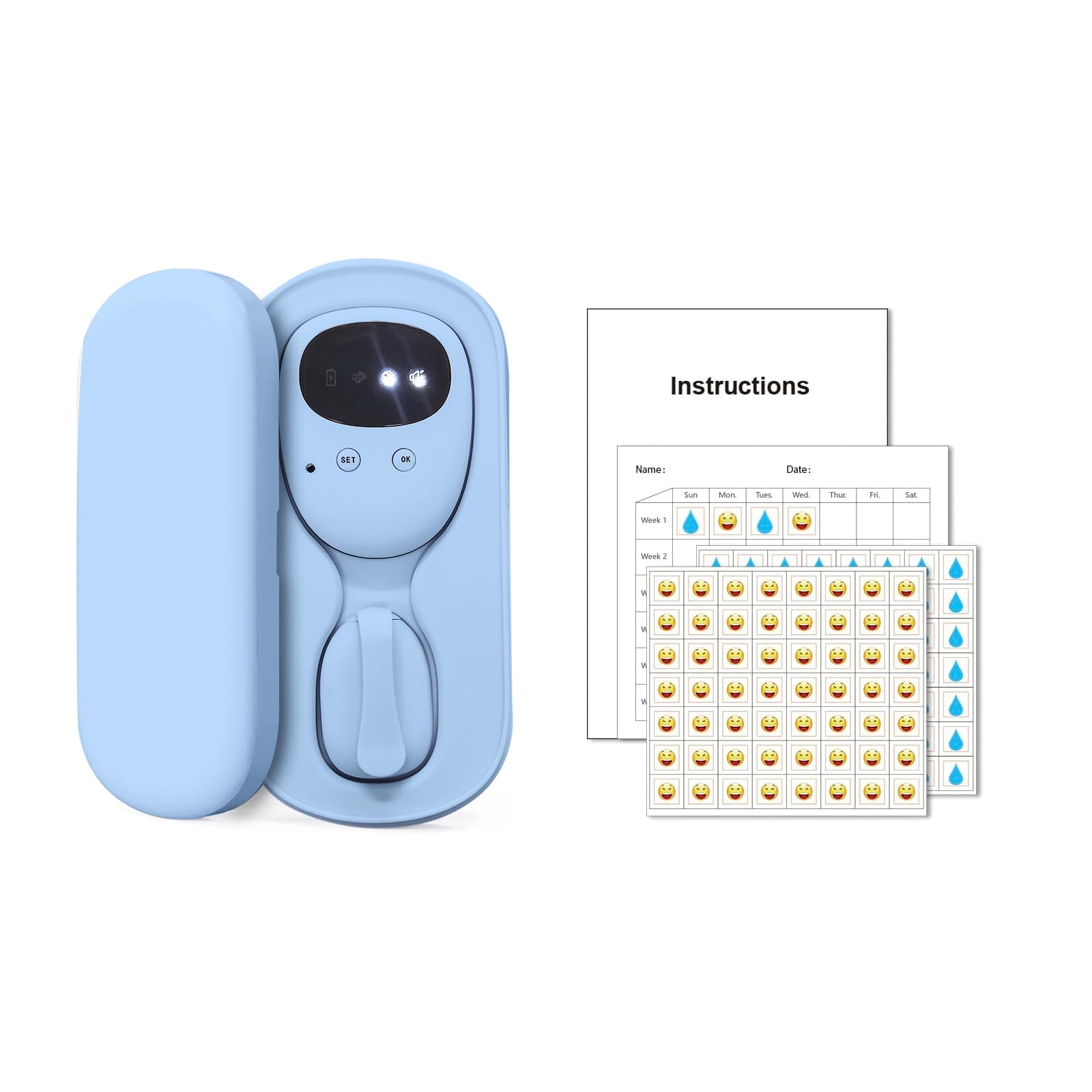
The TENQIU Wireless alarm is a budget-conscious entry into wireless bedwetting training. It uses a highly sensitive moisture detector that triggers early, giving the child a better chance to wake up before the bed is fully wet. The USB rechargeable battery eliminates the ongoing cost of disposable cells, and the three operating modes (sound, vibration, and sound plus vibration) provide enough customization for most families.
Customers report that the alarm is very loud, which is a positive for deep sleepers but can be frightening for younger children. Several users achieved consistent dry nights within three weeks, particularly with children aged 7 and up. The sensor is sensitive enough to detect humidity from sweat, so wrapping it in a paper towel as a buffer is a common workaround that reduces false alarms without compromising urine detection.
The wireless signal is shared between units, so using two alarms in the same household causes cross-triggering. The receiver has no attachment clip for the child’s arm or bed, meaning it must sit on a flat surface, which can be a problem if the child moves around during sleep. Some customers report the unit stopped working just outside the return window, so durability is a moderate concern.
Why it’s great
- Very sensitive sensor triggers early, giving child time to wake
- USB rechargeable with solid battery life for overnight use
- Affordable entry point into wireless alarm systems
Good to know
- Signal sharing makes multi-unit households ineffective
- Receiver lacks an attachment clip and must sit on a flat surface
7. TENQIU Bed Wetting Alarm Orange

The TENQIU Orange alarm is a wired, USB-rechargeable unit that covers the basics without unnecessary complexity. It offers sound, vibration, and sound-plus-vibration modes, and the high-sensitivity sensor triggers an immediate alert the moment moisture is detected. The orange color is a minor detail, but it makes the alarm easy to spot on a nightstand or in a travel bag, which helps avoid the “where’s the alarm?” scramble at 2 AM.
The progress card and sticker set that come with the alarm are standard but effective—many parents report that the sticker chart motivated their child to stay engaged. The alarm is small and lightweight, with an arm strap and pajama clip that keep it secure through the night. User reviews consistently mention that the device is easy for children to put on and take off independently, which builds confidence during the training process.
Some users with heavy sleepers report that the vibration mode alone isn’t strong enough to wake the child, requiring the sound-plus-vibration mode for effectiveness. The sensor is highly sensitive, leading to occasional false alarms from sweat or humidity in warm climates. At the budget-friendly end of the spectrum, this unit is a solid choice for families who want a simple, rechargeable wired alarm without bells and whistles.
Why it’s great
- USB rechargeable removes the hassle of replacing batteries
- Small, lightweight design with comfortable arm strap and clip
- Progress chart and stickers help maintain training motivation
Good to know
- Vibration mode may be too weak for deep sleepers
- High sensor sensitivity can trigger false alarms from sweat
FAQ
How long does it typically take for a bed wetting alarm to work?
Can a bed wetting alarm be used with pull-ups or training pants?
What is the difference between a wireless and a wired bed wetting alarm?
Final Thoughts: The Verdict
For most users, the best bed wetting alarm winner is the DryEasy Pro Wireless Bedwetting Alarm because it combines a true wireless design with six selectable sounds, volume control, and exceptional battery life—making it suitable for both neurotypical children and those with ADHD or autism. If you want a mess-minimizing kit with a waterproof bed pad, grab the Wet-Stop3 Kit. And for travel-friendly portability with the widest variety of melodies, nothing beats the Ovevve Wireless Alarm.

Mo Maruf
I created WellFizz to bridge the gap between vague wellness advice and actionable solutions. My mission is simple: to decode the research and give you practical tools you can actually use.
Beyond the data, I am a passionate traveler. I believe that stepping away from the screen to explore new environments is essential for mental clarity and physical vitality.