Our readers keep the lights on and my smoothie glass nicely filled. As an Amazon Associate, I earn from qualifying purchases.
Nighttime acid reflux doesn’t just disrupt sleep—it erodes your quality of living. Elevating the head of your bed by six to eight inches uses gravity to keep stomach acid where it belongs, and the right set of risers makes that adjustment stable, safe, and permanent.
I’m Mohammad Maruf — the founder and writer behind WellFizz. I’ve spent years analyzing hardware specifications for wellness products, and I focus on measurable performance data like weight capacity, material density, and dimensional stability to separate effective solutions from flimsy alternatives.
After reviewing customer feedback and construction specs across dozens of models, these are the best bed risers for gerd that deliver real, measurable relief without compromising safety or durability.
How To Choose The Best Bed Risers For GERD
Elevating the head of the bed is the most effective non-pharmaceutical intervention for nighttime reflux. But not every riser is built to handle the specific demands of a tilted bed frame. Here are the critical factors to evaluate.
Height and Stackability for Therapeutic Angle
Medical guidelines recommend 6 to 8 inches of elevation at the head of the bed for GERD management. Fixed-height risers require you to commit to a single angle. Stackable risers, however, let you adjust the head to a higher elevation while keeping the foot of the bed at ground level—creating the precise gradient needed to prevent acid migration without feeling like you’re sleeping on a slope.
Weight Capacity and Construction Integrity
When only two risers support the head of a heavy bed, the per-unit load doubles. A riser rated for 1,000 pounds total across four legs effectively carries only 500 pounds at the head. Look for models with individual leg ratings of at least 1,000 pounds, and confirm the internal skeleton uses solid, ribbed plastic rather than hollow shells that can crack under uneven pressure.
Non-Slip Features for Tilting Frames
A tilted bed exerts lateral force on risers that a level bed never does. Anti-slip rubber pads on the top surface prevent the bed frame leg from sliding off, while TPU or rubber bases on the bottom stop the riser itself from skidding across the floor. Without both features, an elevated headboard can shift over time, reducing the therapeutic angle and creating a safety hazard.
Quick Comparison
On smaller screens, swipe sideways to see the full table.
| Model | Category | Best For | Key Spec | Amazon |
|---|---|---|---|---|
| ANNKUT Stackable Risers | Adjustable Stack | GERD Custom Angle | 6,000 lbs total / 4 risers | Amazon |
| ANNKUT 6-Pack | Fixed Height | All-Leg Elevation | 1-inch skeleton / 2,200 lbs per leg | Amazon |
| Napnapday 7-Inch | Stackable | Maximum Height | 1,500 lbs / 4 segments | Amazon |
| Mezchi 6-Pack | Oversized Base | Stability on Carpet | 2,200 lbs per leg / 6×6.3″ base | Amazon |
| Sunifier L-Shape | L-Shape Base | Easy Side Insertion | 5,000 lbs total / TPU base | Amazon |
In‑Depth Reviews
1. ANNKUT Stackable Bed Risers (Adjustable Heights)
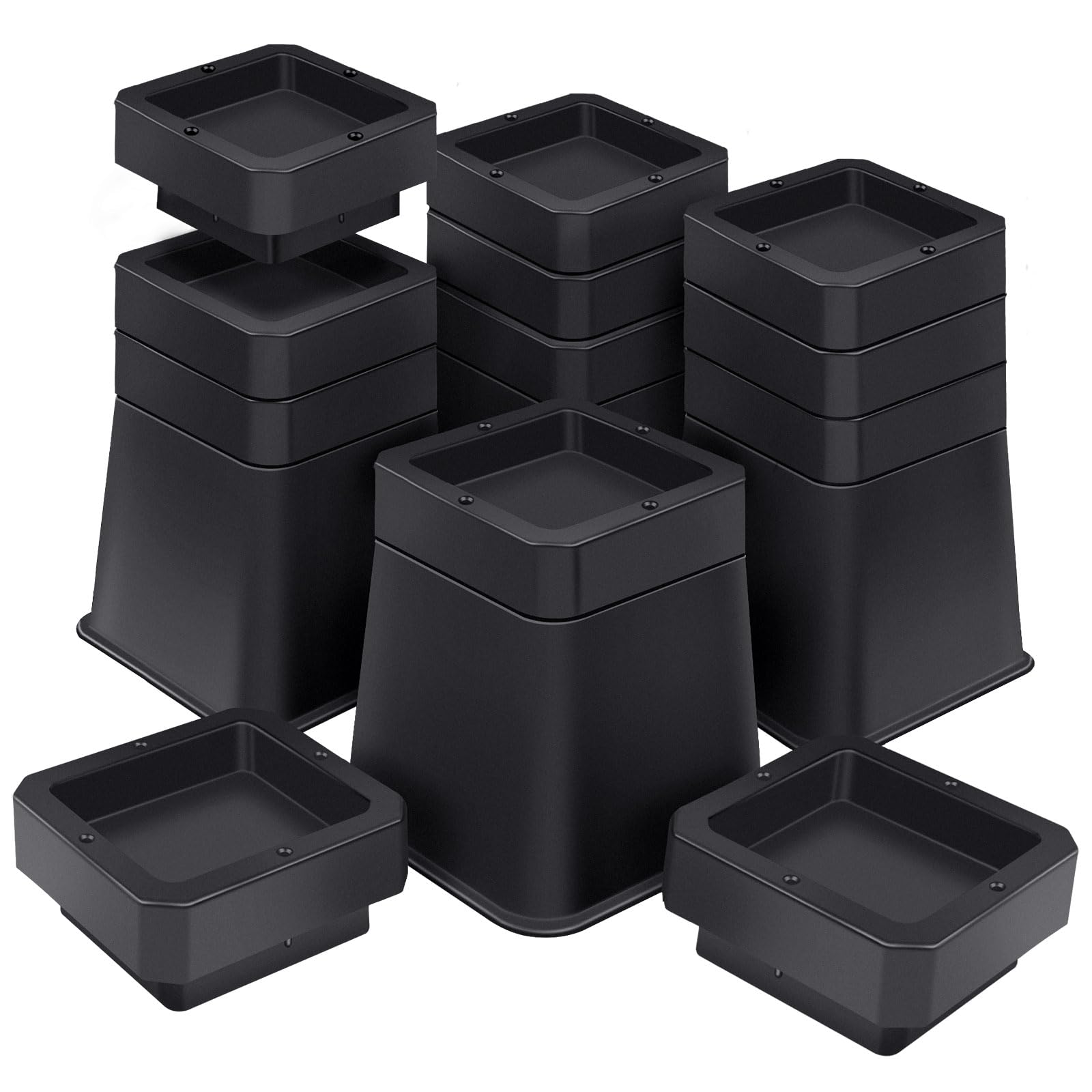
The ANNKUT stackable system is the single most versatile solution for GERD elevation because it provides four height options—3, 4, 5, and 6 inches—within one kit. This means you can raise the head of the bed a full 6 inches while leaving the foot at ground level, creating the precise 6-degree gradient recommended for reflux prevention. The total weight capacity of 6,000 pounds across four risers ensures even a heavy king-size bed remains completely stable when only the head is elevated.
Each riser is crafted from heavy-duty PP plastic with a 2.8-inch wide groove and 0.7-inch depth, accommodating most standard bed frame legs without wobble. The stackable design uses separate interlocking segments, so you can mix and match heights across different legs—a feature no fixed-height model offers. Customer reports confirm users resolved nighttime acid reflux within two weeks after raising the head to 6 inches.
The set includes sixteen pieces total (four medium and twelve small segments), giving you enough components to elevate multiple pieces of furniture or fine-tune the angle across the entire bed frame. The only consideration is that the individual segments can shift if the bed is frequently moved for cleaning, though this is a minor trade-off for the unprecedented adjustability.
Why it’s great
- Stackable design allows custom head-only elevation up to 6 inches
- Massive 6,000 lb total capacity handles uneven load from tilting
- Includes 16 pieces for multi-furniture use or precise angle tuning
Good to know
- Segments can shift if bed is moved regularly for cleaning
- Requires two-person setup to stack and level correctly
2. ANNKUT 6-Inch Heavy Duty Bed Risers (6-Pack)
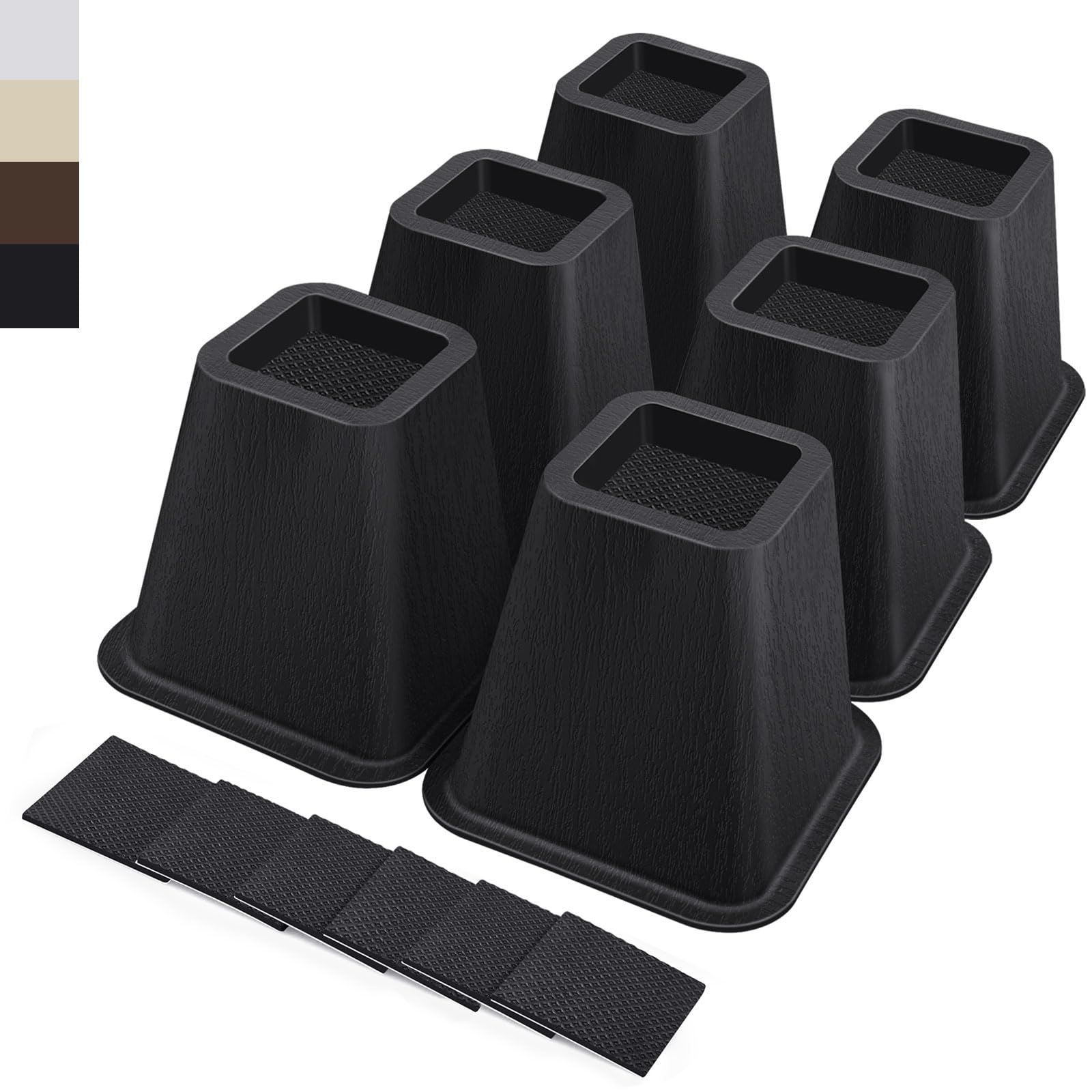
The ANNKUT 6-Pack is engineered with a 1-inch thick internal skeleton that eliminates the central breakage problem common in hollow risers. This single design feature makes it the most structurally robust fixed-height option for GERD users who don’t need adjustability but demand absolute reliability. Each riser supports up to 2,200 pounds individually, meaning the two risers at the head of a king bed share the load with enormous safety margin.
The trapezoid groove measures 2.7 inches wide with a 0.8-inch depth, providing a snug fit for standard bed frame legs. Built-in rubber pads on the top surface prevent the leg from sliding even when the bed is tilted at a therapeutic angle. The actual lift height is 5.1 inches, which is slightly below the 6-inch medical recommendation, but combining two packs can achieve the full therapeutic elevation.
This 6-pack includes two extra risers beyond the standard four, which is ideal for beds with central support legs or for users who want to elevate additional furniture simultaneously. The non-slip rubber base pads protect hardwood and laminate floors from scratches while preventing the riser itself from shifting. Users consistently note the stability even on carpeted surfaces, a common weak point for lighter risers.
Why it’s great
- 1-inch solid skeleton prevents structural failure under load
- Built-in rubber pads lock bed legs in place at tilt angles
- 6-pack covers central supports or multiple furniture pieces
Good to know
- Actual lift is 5.1 inches, not a full 6 inches
- Requires two packs for optimal 6-inch head elevation
3. Napnapday 7-Inch Adjustable Bed Risers
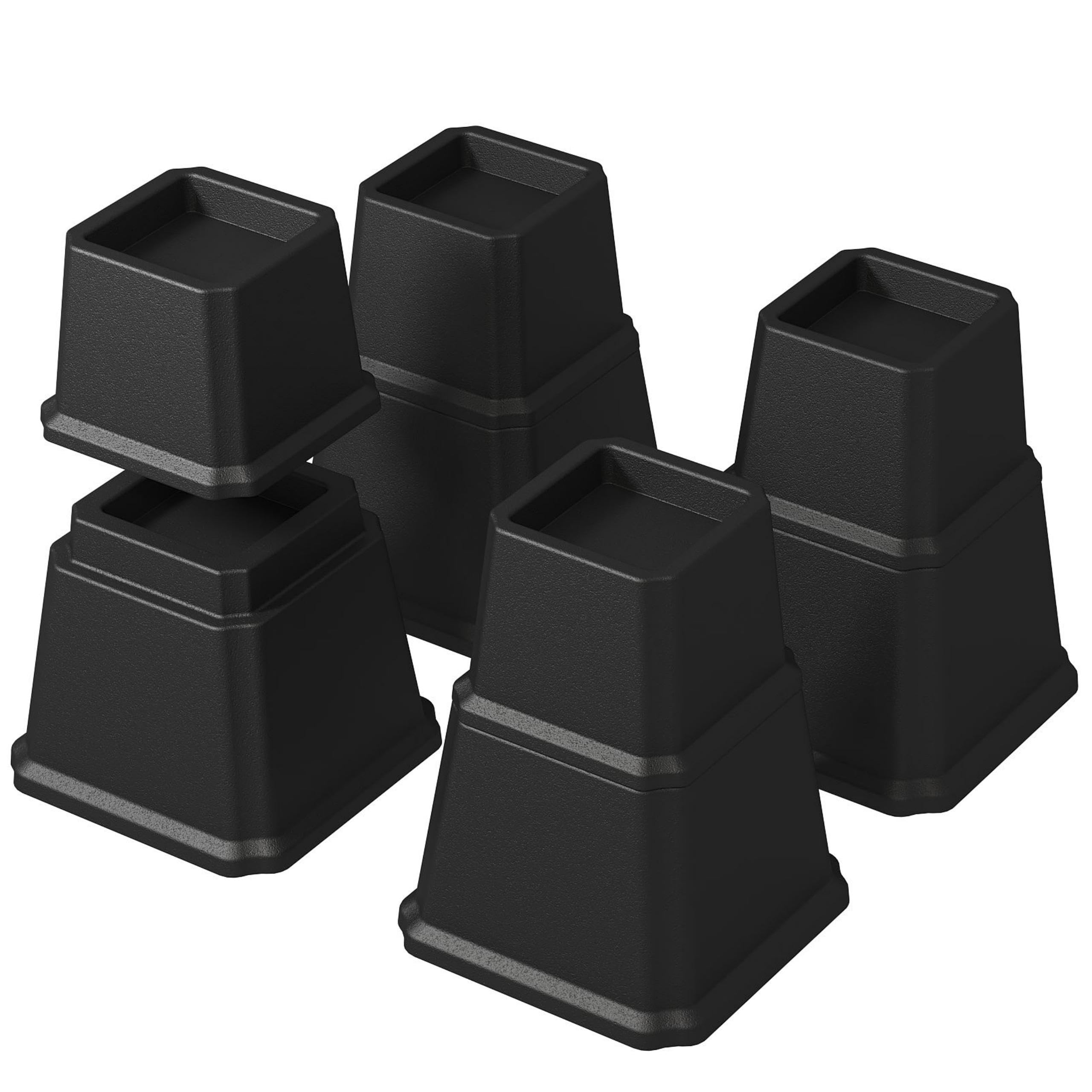
The Napnapday 7-inch risers are the only option in this lineup that reaches the full 7-inch elevation, which provides the maximum therapeutic gradient for severe GERD. The stackable design uses four 4-inch segments and four 4-inch segments (the product description notes they are actually 3-inch and 4-inch pieces) that combine to produce heights of 3, 4, or 7 inches. This flexibility lets you experiment with different angles to find the perfect reflux-preventing slope.
Each riser base measures 6.3 inches square, offering a wide footprint that distributes weight evenly across carpet or hardwood. The 1,500-pound total capacity is lower than the ANNKUT models, but it’s still sufficient for most queen and king beds when the load is concentrated at the head. The neutral black color blends into most bedroom decor without drawing attention to the elevation system.
The primary limitation is the leg groove width of 2.75 inches, which may not accommodate thicker bed frame legs or box spring support rails. Users report that the risers work best with standard tubular metal bed frames rather than bulky wooden platforms. The stackable segments can also separate if the bed is jostled, so placing them on a non-slip rug or using the included anti-slip stickers is recommended for permanent installation.
Why it’s great
- Achieves 7-inch head elevation for severe GERD cases
- Wide 6.3-inch base provides excellent floor stability
- Three height options allow angle experimentation
Good to know
- 2.75-inch groove limits compatibility with thick legs
- Segments can separate if bed is moved frequently
4. Mezchi 6-Pack Large Bed Furniture Risers

The Mezchi 6-Pack delivers a compelling value proposition with a 2,200-pound per-leg capacity and an oversized 6×6.3-inch base, making it the most footprint-stable option for carpeted bedrooms. The large base prevents the riser from sinking into plush carpet, a common failure point for narrower risers that can compromise the therapeutic angle over time. The 6-inch fixed height meets the minimum GERD recommendation without any stacking complexity.
The trapezoid groove measures 2.7 inches wide with a 0.8-inch depth and a 1-inch raised edge, creating a secure pocket for bed frame legs. The included anti-slip stickers add an extra layer of grip, though some users report that box spring legs can still pop out if the bed is slid sideways for cleaning. The smooth ABS plastic surface is easy to wipe clean and won’t absorb spills or dust.
The 6-pack configuration includes two spare risers, which is useful for beds with five or six legs or for pairing with a second set to achieve a taller elevation. The primary trade-off is the lack of any rubber or TPU base material—the bottom is smooth plastic, which can slide on hardwood or tile floors. Placing the risers on a non-slip rug or adding adhesive furniture pads resolves this issue for smooth flooring.
Why it’s great
- Oversized 6×6.3-inch base prevents carpet sinkage
- 2,200 lbs per leg capacity handles uneven head-load
- 6-pack includes spares for multi-leg support
Good to know
- Smooth plastic bottom can slide on hard floors
- Box spring legs may pop out with lateral movement
5. Sunifier L-Shape Bed Risers 6 Inch

The Sunifier L-Shape design solves a specific problem: sliding risers under furniture legs without lifting the bed impossibly high. The semi-enclosed raised edge lets you angle the riser in from the side, making one-person setup feasible even with heavy bed frames. This is particularly valuable for GERD users who live alone and need to elevate the head of the bed without calling for assistance.
The 4.1×4.1-inch top surface provides a generous contact area that accommodates legs up to that width, making it one of the most compatible options for wide furniture legs. The triangular cone barbed surface prevents the leg from sliding, while the TPU rubber base absorbs vibration and protects floors from scratches. The total weight capacity of 5,000 pounds across four risers provides a comfortable safety margin for most bed configurations.
The semi-enclosed design, while convenient for installation, means the riser doesn’t fully encircle the furniture leg. This can allow the leg to slide off if the bed is bumped or if the riser is placed on an uneven surface. Users also note the wide base footprint extends beyond the bed frame, which can be a tripping hazard in tight bedrooms. For GERD users with ample floor space, the ease of installation outweighs these considerations.
Why it’s great
- L-shape design enables one-person installation under heavy beds
- TPU rubber base prevents floor scratches and absorbs vibration
- Large top surface fits furniture legs up to 4.1 inches
Good to know
- Semi-enclosed design can allow leg to slide off with impact
- Wide base footprint may be a tripping hazard in small rooms
FAQ
How many inches should I elevate the head of my bed for GERD relief?
Can I elevate only the head of the bed with standard risers?
Will bed risers damage my mattress or box spring?
Final Thoughts: The Verdict
For most users, the best bed risers for gerd winner is the ANNKUT Stackable Bed Risers because the adjustable height system lets you create the exact 6-inch head elevation needed for reflux relief while keeping the foot of the bed at ground level. If you prefer a fixed-height solution with maximum structural integrity, grab the ANNKUT 6-Pack. And for achieving the maximum 7-inch elevation for severe cases, nothing beats the Napnapday 7-Inch Risers.

Mo Maruf
I created WellFizz to bridge the gap between vague wellness advice and actionable solutions. My mission is simple: to decode the research and give you practical tools you can actually use.
Beyond the data, I am a passionate traveler. I believe that stepping away from the screen to explore new environments is essential for mental clarity and physical vitality.