Our readers keep the lights on and my smoothie glass nicely filled. As an Amazon Associate, I earn from qualifying purchases.
A sudden creak from the bedroom, the shuffle of feet on the floor — for a caregiver, that sound means the race against a fall has begun. Standard baby monitors miss the specific early motion, and a loud in-room noise can disorient the person you are trying to protect. The right tool for this job is a purpose-built unit designed to alert you the instant weight leaves the bed, giving you precious seconds to respond and prevent an injury.
I’m Mohammad Maruf — the founder and writer behind WellFizz. My research spans dozens of medical device categories, analyzing the specific engineering choices—from sensor pad sensitivity thresholds to wireless transmission protocols—that separate a reliable caregiver tool from one that causes alarm fatigue.
After evaluating pressure-pad systems, wireless motion sensors, and pager-based networks, the key distinction is whether the alert reaches you away from the bedside. Finding the most dependable bed alarm for elderly means choosing between a wired pressure pad and a wireless motion sensor that does not startle your loved one.
How To Choose The Best Bed Alarm For Elderly
Buying the wrong system means either being trapped next to the bed or dealing with false alerts that make you numb to the alarm. Focus on three aspects: the sensor type, the alert delivery, and the usability for the senior.
Pressure Pad vs. Motion Sensor
A pressure pad sits under the fitted sheet and detects when weight is removed. This gives you an alert *as* the person rises, which is the earliest possible warning. Motion sensors use infrared beams and can be placed near the bed edge or doorway. They are non-contact and cannot be felt by the user, but they can be triggered by pets or moving curtains. For an in-bed alert, a pressure pad is generally more direct. For a general movement alert, a motion sensor is simpler to install.
Wireless Range and Alert Options
If you sleep in a separate room or need to move around the house, a system with a wireless pager is essential. The range is the key spec here — look for at least 300 feet of open-air transmission to ensure the signal reaches through walls. The pager should have adjustable volume or a vibration mode so you can keep it on your person without disturbing others.
Comfort and Dignity
The sensor pad must be thin and flexible enough to go unnoticed under the bedding. Latex-free vinyl and a sealed, wipeable surface are important for incontinence management. A system that only alerts the caregiver, and not the person in bed, preserves their dignity and prevents agitation. Avoid units that produce a loud, startling chime in the patient’s room.
Quick Comparison
On smaller screens, swipe sideways to see the full table.
| Model | Category | Best For | Key Spec | Amazon |
|---|---|---|---|---|
| Smart Caregiver Wireless Pad System | Wireless Pad | Complete cordless peace of mind | Weight sensor pad, 300 ft range | Amazon |
| Smart Caregiver Bed Exit with Wireless Pager | Wireless Pager | Early alert with vibration option | 10×30 pad, 300 ft range, vibrate | Amazon |
| Lunderg Wireless Bed Alarm System | Pager System | No in-room noise, FSA eligible | 10×30 pad, 400 ft range | Amazon |
| Patient Aid Bed Alarm with Pad | Wired Pad | Simple, direct wired connection | 10×30 pad, 80-90 dB alarm | Amazon |
| Secure Safety Solutions Bed Exit Alarm | Wired Pad | Thin under-sheet comfort | 12×30 pad, 80 dB alarm | Amazon |
| CallToU Bed Alarm with Motion Sensors | Motion Sensor | No sensor pad, non-contact use | Motion sensor, 500 ft range | Amazon |
| Nesthao Upgrade Professional Bed Alarm | Motion Sensor | Long range and high volume | Motion sensor, 918 ft range | Amazon |
In‑Depth Reviews
1. Smart Caregiver Wireless Bed Pad Alarm System
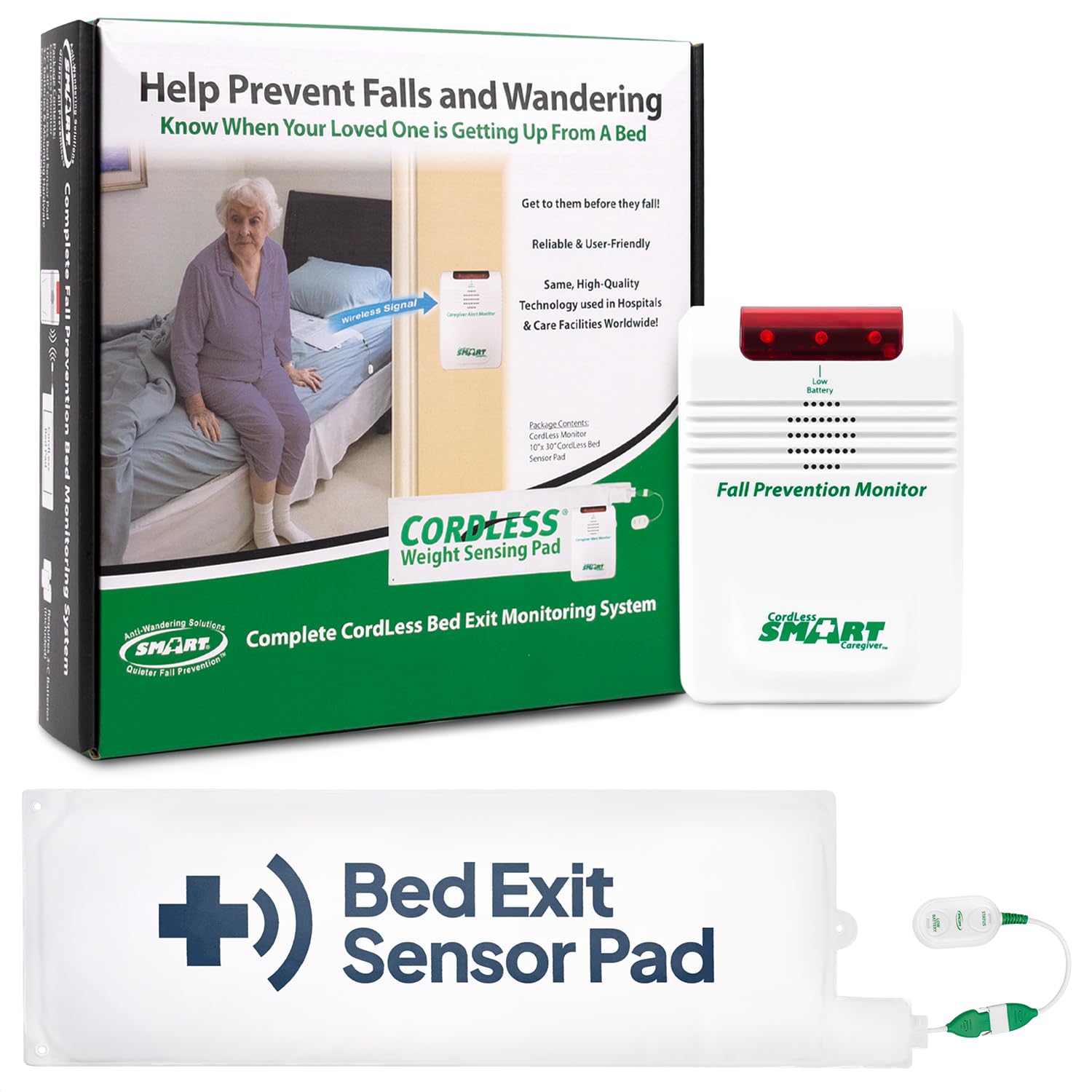
This kit from Smart Caregiver uses a 10″ x 30″ weight-sensing pad that connects wirelessly to a handheld monitor. The pad is made with a soft, latex-free vinyl and a thin foam interior, making it easy to slide under the fitted sheet without bothering the user. The wireless monitor can be carried room-to-room or mounted on a wall, and its range of 300 feet means it works from most areas of a standard home.
A slight engineered delay of 2-3 seconds is built into the sensor to filter out false alerts from minor shifts in sleeping position, but it still sounds the alarm the moment the person sits up. The monitor has three adjustable volume levels and can be paired with up to five other Smart Caregiver sensors (door, chair, floor mat) for a full coverage system. The unit is powered by 3 C batteries, which are included, so there is no reliance on wall outlets.
Customer feedback consistently notes that the pad performs best when placed under the shoulders, catching the earliest rise motion. One reviewer with a 92-year-old family member reported perfect detection with no false alarms over months of nightly use. The main durability question is the vinyl seam, which some users mention can crack over time, but the 1-year warranty provides a safety net.
Why it’s great
- Wireless pad means no tripping hazard and no bedside box.
- Adjustable volume and 300 ft range offer real flexibility around the house.
- Pair with additional sensors for a comprehensive monitoring network.
Good to know
- Vinyl pad seams may show wear after many months of use.
- Requires 3 C batteries, which are included but need replacement over time.
2. Lunderg Wireless Bed Alarm System

Lunderg designed this system specifically around the principle of not alarming the person in bed. Federal CMS guidance phased out in-room bed alarms in 2017 due to their potential to agitate and frighten seniors. This unit sends every alert wirelessly to a pager you carry, so your loved one never hears a beep or chime. The 10″ x 30″ sensor pad has a soft foam interior and an incontinence-resistant surface that wipes clean easily.
The pager is lightweight and clips onto a belt or pocket, with adjustable volume settings ranging from a whisper-quiet tone to a vibration-only mode. Its range is rated at 400 feet in open air, which is more than enough to cover a typical home. Setup is straightforward — place the pad under the fitted sheet at shoulder level, insert the included 2 AA batteries into the pager, and you are ready. Anti-slip stickers are included to keep the pad from shifting, which is the most common cause of false alarms.
Reviews highlight the reliability of the alert and the excellent customer support from the US-based team. One caregiver noted that this system had *zero* false alarms compared to a previous product. Another user appreciated the ability to use FSA or HSA pre-tax dollars for the purchase. The only minor issue reported is that the pager can occasionally lose its pairing with the pad, which is easily fixed by re-syncing the units.
Why it’s great
- Pager-only alert preserves the user’s dignity and prevents agitation.
- Anti-slip stickers significantly reduce false alarms from pad movement.
- Wipeable, incontinence-resistant pad surface is easy to clean.
Good to know
- Occasional pairing loss can be mistaken for dead batteries.
- No plug-in receiver option; system relies entirely on the pager.
3. Smart Caregiver Bed Exit Alarm with Wireless Pager
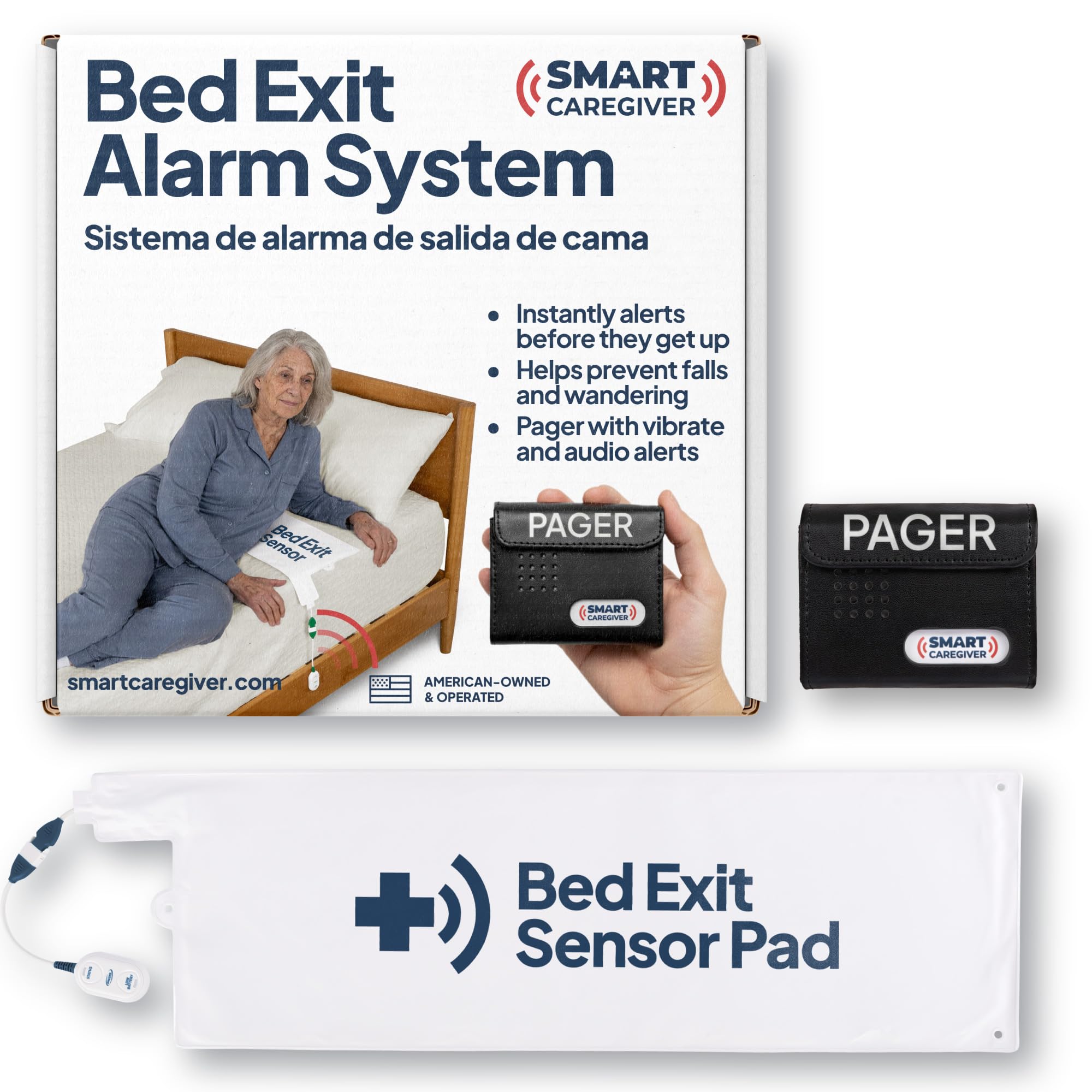
This mid-range kit from Smart Caregiver focuses on early fall prevention with a wireless pager that offers both sound and vibration alerts. The 10″ x 30″ pad features an extra-large contact sensor engineered to reduce false alarms, a common complaint among caregivers who lose trust in unreliable systems. The pad is designed to be placed under the shoulders, giving you an immediate alert when the user starts to sit up — not just when they are already standing.
The pager is the standout feature here. It fits easily into a pocket or clips onto a waistband, and the vibration mode is ideal for times when you need a silent alert, such as when you are in a meeting or sleeping next to a partner. The pager can be paired with up to six different Smart Caregiver sensors, including chair pads, door exit sensors, and floor mats, allowing you to build a complete fall prevention network around the home. The transmission range is 300 feet.
Customer reviews are overwhelmingly positive, with many calling it a “lifesaver” for families managing dementia-related wandering. One reviewer shared that the alarm gave them the confidence to leave their loved one alone briefly to clean another room. The belt clip is noted as being very tight and somewhat difficult to attach, but this is a minor ergonomic issue. The system is backed by a 1-year manufacturer warranty and US-based customer support.
Why it’s great
- Vibration mode on the pager is perfect for silent, discreet alerts.
- Expandable network supports up to 6 sensors for whole-home coverage.
- Large contact sensor inside the pad reduces false alarms significantly.
Good to know
- Belt clip is stiff and may be difficult to fasten for some users.
- Pad can shift over time; using tape to secure it helps.
4. Patient Aid Bed Alarm with 10″ x 30″ Motion Sensor Pad

The Patient Aid PA-505B is a classic wired bed alarm system that prioritizes simplicity and reliability. The 10″ x 30″ pad is made from advanced vinyl that is tear-and-water-resistant, making it suitable for incontinence care. It connects to a control unit via a cord, which means there is no risk of signal interference or pairing issues. The system is powered by a 9V battery, which is included, and also accepts an AC adapter for continuous operation.
The alarm unit offers multiple sound options — you can choose between a loud “alarm” chime at 80 dB or a louder “music” option at 90 dB. There is also a three-second test button to verify the sound level. The unit mounts easily to a bed rail with the included U-bracket, or to a wall, or using the Velcro strips on a flat surface. The one-button reset feature is convenient for caregivers who need to silence and re-arm the system quickly during nighttime checks.
Reviews are mixed on durability. Many users love the loud, clear alarm that can be heard two rooms away, and they appreciate the music option which is less jarring for the user. However, multiple reports mention that the battery drains in under a week if the unit is left on continuously, and a small number of units have failed within the first year. The pad is also reported to be crinkly, so placing it under a mattress pad is recommended for comfort.
Why it’s great
- Loud, clear alarm with both chime and music options.
- Wired connection eliminates wireless interference or pairing issues.
- Multiple mounting options (bed rail, wall, flat surface).
Good to know
- Battery drains quickly if unit is left on; user must unplug when not in use.
- Some reports of units failing within the first few months.
5. Secure Safety Solutions Bed Exit Alarm for Elderly Dementia Patients
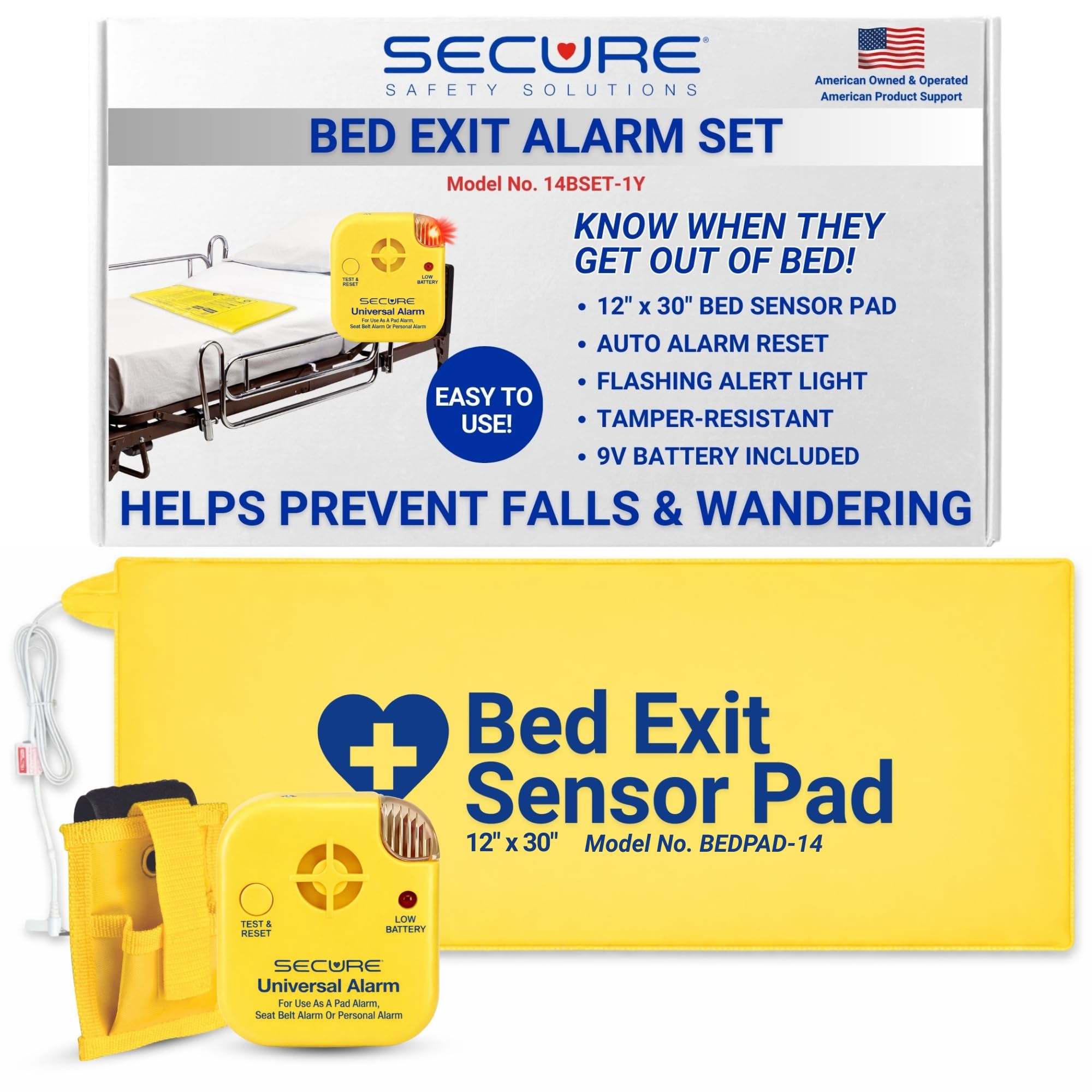
Personal Safety Corporation (PSC) has been manufacturing fall prevention products for over 35 years, and this kit — model 14BSET-1Y — is their standard wired pressure-pad alarm used in hospitals, nursing homes, and assisted living facilities. The sensor pad measures 12″ x 30″, making it slightly wider than many competitors, which provides a larger detection zone for the user’s weight. The pad is ultra-thin, latex-free, and sealed to be liquid-resistant, which is critical for environments with incontinence risk.
The alarm unit itself is a simple bedside monitor that delivers a loud 80 dB alert with a flashing indicator light. It uses a durable metal connection pin and a tamper-resistant reset mechanism designed to withstand heavy use in professional settings. The system also includes an alarm holder with a mounting strap, so you can attach it to a bed frame or wheelchair. The alarm resets automatically when weight returns to the pad, allowing for continuous monitoring without manual re-arming.
Users consistently praise the reliability of this alarm. One reviewer noted it was a “real lifesaver” that prevented ER visits after a prior bad fall. Another caregiver found the alarm loud enough to hear from the living room while their mother was in bed. The main drawback is that the controller is minimalist — the alarm tone is a single high-pitched beep that can be challenging for older caregivers to hear, and there is no silent deactivation option or volume control.
Why it’s great
- Trusted by professional care facilities for over three decades.
- Larger 12×30 pad provides a wider weight-sensing area.
- Automatic reset when weight returns simplifies continuous monitoring.
Good to know
- Single high-pitched alarm tone may be hard for older caregivers to hear.
- No volume control or silent deactivation option.
6. CallToU Bed Alarm for Elderly Care with Motion Sensors
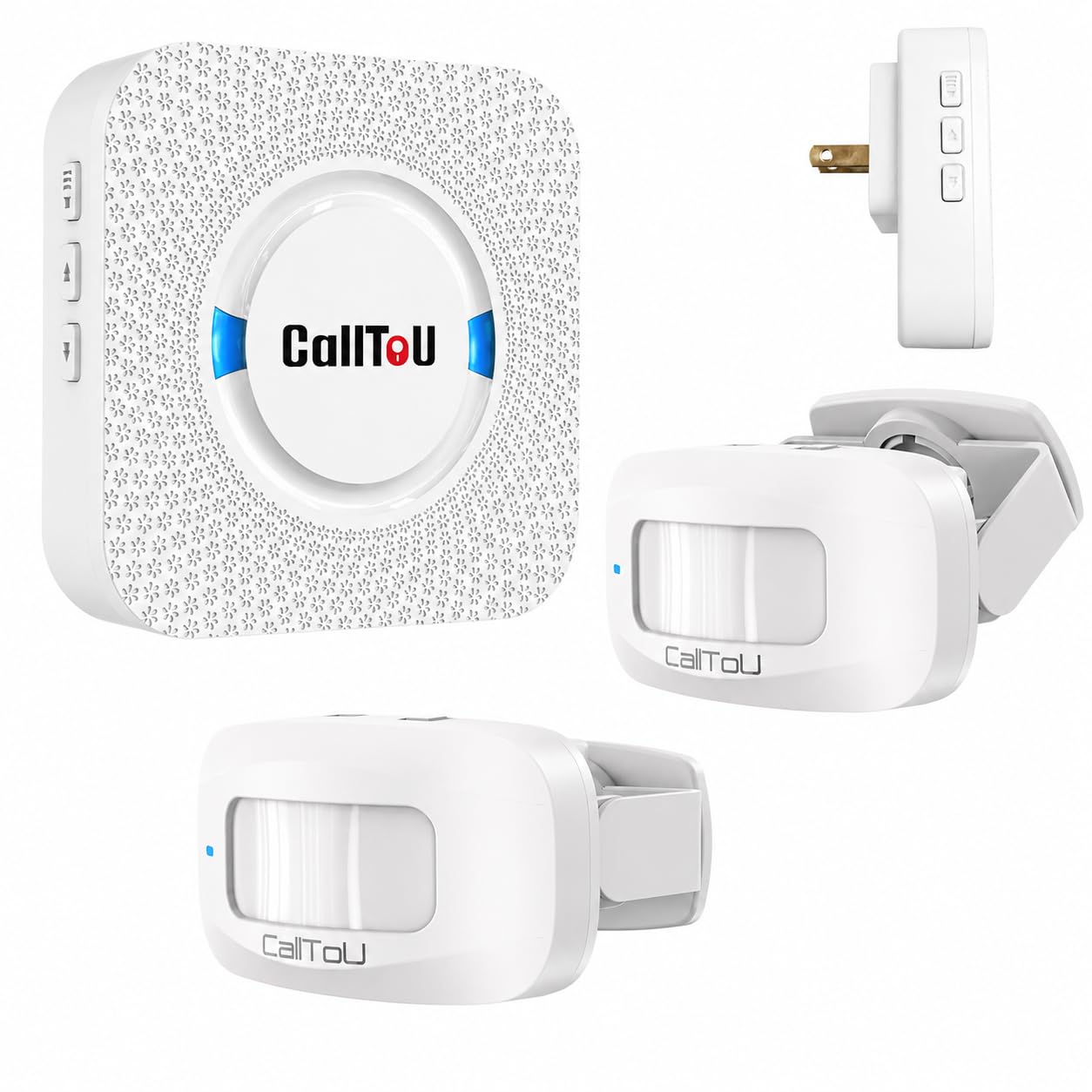
This system from CallToU takes a different approach by using two PIR motion sensors instead of a pressure pad. The sensors are placed near the bed, doorway, or hallway and detect movement within their field of view. When motion is detected, a signal is sent to a plug-in receiver that sounds a chime and flashes a light. This is a non-contact solution, meaning there is nothing under the sheets to feel or shift around, which some users prefer.
Setup is quick and does not require any app, WiFi, or monthly fees. The sensors are battery-powered (6 AAA batteries included) and have a maximum range of 500 feet, which is excellent for larger homes. The receiver plugs into a wall outlet and stays powered, so you never have to worry about a dead battery on the alerting end. The set is ideal for monitoring a single zone, such as a bedside area or a main hallway.
Customer reviews highlight the ease of use and the reliability of the motion detection. One reviewer shared that angling the sensor to “ding” when their mom’s foot touches the floor was a “wonderful” setup. However, the audible alert is quite loud even on the lowest setting, which may be too jarring for some environments. The sensors also require regular battery changes, so using rechargeable AAA batteries is strongly recommended by users.
Why it’s great
- No pressure pad under the sheets means less discomfort for the user.
- Impressive 500-foot wireless range covers large homes easily.
- Simple plug-in receiver, no WiFi or app needed.
Good to know
- Lowest volume setting is still quite loud for some users.
- Can be triggered by pets or moving curtains, requiring careful placement.
7. Nesthao Upgrade Professional Bed Sensor Alarm

The Nesthao system offers a feature-rich motion sensor solution with an exceptionally long range. The sensor can be placed on the floor under the bed to detect when feet touch the ground, or positioned in a doorway to monitor room exits. It transmits to a receiver up to 918 feet away in an open area, which is among the longest ranges in this comparison. The sensor operates on 3 AAA batteries (included) and also supports Micro USB power, giving you flexibility in how you keep it running.
The receiver has five adjustable volume levels and four alert modes, including sound + flashing light, light-only, a steady LED, and a 113dB alarm mode. You can cycle through these by pressing the “M” button on the side of the receiver. This level of customization is rare in this price tier and allows caregivers to tailor the alert to their environment — loud enough to wake from deep sleep, or quiet enough for a nearby office.
Reviews are very positive, with users calling it the “best on the market for caregivers” due to its high sensitivity and reliability. One caregiver noted that it was “life-saving” for a parent with Parkinson’s and dementia, as it alerted them without startling the user. The main gripe is that the base unit’s on/off indicator is not immediately obvious, and the sensor can sometimes be triggered by moving objects like doors if not aimed correctly.
Why it’s great
- Exceptional open-air range of 918 feet covers very large properties.
- Four alert modes and five volume levels offer extensive customization.
- Accepts both battery and Micro USB power for flexible use.
Good to know
- On/off indicator on the base is not clearly visible from a distance.
- May require careful aiming to avoid false triggers from doors or curtains.
FAQ
Should I place the pressure pad under the shoulders or the hips?
Can I use a motion sensor if the person sleeps with a fan blowing toward them?
How long do the batteries typically last in a wireless bed alarm?
Final Thoughts: The Verdict
For most users, the bed alarm for elderly winner is the Smart Caregiver Wireless Bed Pad Alarm System because its reliable pressure pad combined with a wireless monitor gives you the earliest possible fall warning without tethering you to the bedside. If you want a system that keeps total silence in the user’s room and sends alerts only to your pocket, grab the Lunderg Wireless Bed Alarm System. And for a budget-friendly, non-contact option that is incredibly easy to set up, nothing beats the CallToU Bed Alarm with Motion Sensors.

Mo Maruf
I created WellFizz to bridge the gap between vague wellness advice and actionable solutions. My mission is simple: to decode the research and give you practical tools you can actually use.
Beyond the data, I am a passionate traveler. I believe that stepping away from the screen to explore new environments is essential for mental clarity and physical vitality.