Our readers keep the lights on and my smoothie glass nicely filled. As an Amazon Associate, I earn from qualifying purchases.
A beach tent that flies away the second the breeze picks up turns a relaxing day into a constant rescue mission. The difference between a shelter that stays anchored and one that tumbles down the shore comes down to a few measurable design choices in frame stiffness, sandbag volume, and fabric porosity. This guide focuses exclusively on the engineering that keeps a tent planted when the coastal wind picks up.
I’m Mohammad Maruf — the founder and writer behind WellFizz. With over a decade spent analyzing outdoor gear specifications and cross-referencing customer experiences across thousands of units, I know exactly which wind-fighting features actually work and which are just marketing claims.
After evaluating dozens of models based on pole-gauge thickness, corner-anchoring systems, and real-world reports of stability in gusts, these seven picks represent the strongest options available today for anyone searching for a truly reliable beach tent for wind.
How To Choose The Best Beach Tent For Wind
Wind-resistance in a beach tent isn’t a single spec you can look up — it’s a combination of pole strength, anchor weight, fabric behavior, and geometry. Understanding these four factors will keep you from buying a tent that only works in dead calm.
Anchor system: Sandbags versus stakes
On sand, traditional tent stakes pull loose quickly because the grains don’t provide enough friction. The most reliable wind-resistant beach tents use large-volume sandbags — usually four to eight corners that you fill on-site. More bags mean more distributed weight, which resists lift. Some models include dedicated sand scoops to make filling faster.
Frame material and pole diameter
Fiberglass poles are cheap and flexible, but they can bow dramatically in strong gusts and sometimes snap under repeated stress. Aluminum poles — especially 19mm or 23mm diameter — offer better stiffness-to-weight ratios and hold their shape without deforming. Thicker aluminum also reduces the flutter that weakens fabric seams over time.
Canopy shape and fabric tension
Flat-topped canopies act like sails — they catch wind and create upward lift. Tents with aerodynamic or sloped tops allow gusts to slide over rather than push against. Tight fabric tension (often achieved with spandex or Lycra blends) also reduces the surface area that can flutter and rip. Look for tents that eliminate loose side flaps that can grab wind.
Real-world wind handling
Manufacturers rarely publish actual wind-speed ratings. The best signal comes from customer reviews that mention specific conditions — “held up in 15 mph gusts” or “needed extra weight above 20 mph.” Models that perform well across dozens of such reports tend to have genuinely robust designs, not just optimistic marketing.
Quick Comparison
On smaller screens, swipe sideways to see the full table.
| Model | Category | Best For | Key Spec | Amazon |
|---|---|---|---|---|
| ADesign Beach Tent | Mid-Range | Families needing proven wind performance | 8 sandbags, 10×10 ft coverage | Amazon |
| Rhino Valley Beach Tent | Mid-Range | Budget-conscious groups needing ample shade | 8 sandbags, 4 aluminum poles | Amazon |
| WEKAPO Beach Tent | Mid-Range | Taller users wanting stand-up height | 6’7″ peak height, 23mm aluminum poles | Amazon |
| Old Bahama Bay Pop Up Tent | Budget | Quick pop-up for 3-4 people in mild wind | 4 ground guylines, pop-up frame | Amazon |
| Solbello Shade | Premium | Single-person or couple seeking quick setup | Screw auger anchor, 4.5 lbs | Amazon |
| Shibumi Shade 2.0 | Premium | Beachgoers wanting continuous breeze shade | 150 sq ft, wind-powered design | Amazon |
| CoolCabana Beach Shade | Premium | Families wanting premium wind resistance | 35 lbs sand pockets, 64 sq ft | Amazon |
In‑Depth Reviews
1. ADesign Windproof Beach Tent Sun Shelter
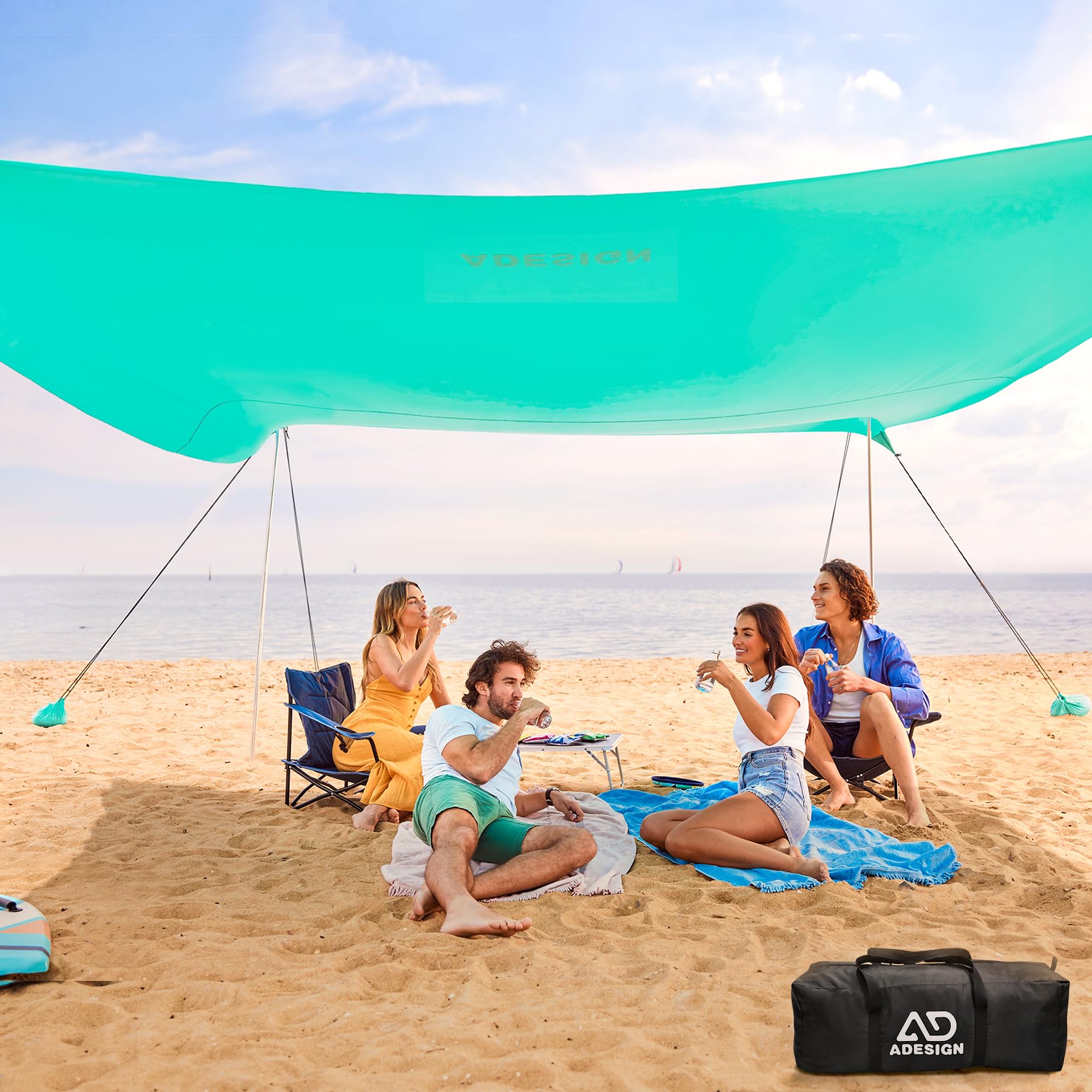
The ADesign uses eight sandbags distributed around a 10×10 ft canopy made from Lycra fabric with triple-stitched seams. That combination creates a high-tension surface that doesn’t flap loosely in the wind, and the sandbags provide enough distributed weight — roughly 40+ pounds when filled — to resist lift even in moderate coastal gusts. Multiple customer reports confirm stability in 10-15 mph winds, with some noting it held without issue in 12 mph gusts when properly oriented with two poles facing the breeze.
Setup takes about five minutes with two people — the recommended approach involves filling the sandbags first, stretching the canopy into an X shape, then inserting the poles. The included sand scoop is large enough to fill bags quickly, though a few users noted the scoop’s plastic construction feels less durable than the rest of the kit. The 6.5 ft peak height means most adults can stand inside without stooping, though the edge height drops lower.
The canopy provides UPF 50+ protection and is water-repellent for light drizzle, though it is not rated for heavy rain. The carry bag compresses the entire unit into a small package, making it easy to transport. A QR code on the manual links to a video walkthrough for first-time assemblers.
Why it’s great
- Eight sandbags deliver excellent weight distribution for wind stability
- Lycra fabric with triple stitching resists tearing under tension
- Video tutorial makes first setup straightforward
Good to know
- Plastic sand scoop may crack with heavy use over time
- Not rainproof for heavy downpours
2. Rhino Valley Beach Tent, 10 x 10 FT

The Rhino Valley tent matches the ADesign on sandbag count — eight bags — but adds four aluminum poles and four windproof ropes for extra anchoring points. This redundancy means the tent stays planted even if one sandbag isn’t completely filled or a rope shifts. The 10×10 ft floor area with a 6.5 ft peak provides enough room for a family of six with chairs and a cooler, and the Lycra fabric with triple stitching helps the canopy stay drum-tight rather than sagging and catching gusts.
Setup time hovers around five to ten minutes, and the included sand shovel makes filling the bags reasonably fast, though some users noted the plastic scoops feel thin. The tent packs into a compact carry bag weighing under nine pounds, making it one of the lighter options for its size class. Multiple reviews confirm it holds steady in strong coastal wind, and the sky blue color stands out on crowded beaches.
The UPF 50+ fabric blocks harmful UV rays effectively, and washing is straightforward — the manufacturer recommends hand or machine washing. However, the tent does not come with a manufacturer warranty, so durability over several seasons will depend on care during setup and takedown.
Why it’s great
- Eight sandbags plus four guy ropes provide extensive anchoring
- Lycra fabric with triple stitching resists wind-driven tearing
- Compact carry bag is lightweight and portable
Good to know
- No manufacturer warranty included
- Plastic shovel may not survive heavy use
3. WEKAPO Beach Tent Sun Shelter

The WEKAPO stands out for its 6’7″ peak height, achieved with thicker 23mm-diameter aluminum poles that resist bending better than standard 19mm poles. The canopy uses an aerodynamic top designed to eliminate side flaps that catch wind, paired with large sandbags for ballast. Setup instructions are printed directly on the pole bag, reducing guesswork, and the spandex fabric stretches tight for reduced flutter.
Multiple users report one-person setup in under ten minutes even in moderate wind, and the tent remains stable once filled sandbags are buried. The 64-square-foot floor area comfortably fits four to five people, and the compact packed size fits inside a checked suitcase. The included sand shovel is larger than most competitors, making bag-filling faster.
The UPF 50+ fabric provides reliable sun coverage, and the aluminum frame holds up well across multiple seasons. However, one customer reported failure in very strong wind despite fully filled sandbags, and the bungee connectors that hold the poles can be lost if not secured properly during breakdown. The tent requires about six feet of clearance beyond the living area for proper tensioning, so it’s not ideal for crowded beaches.
Why it’s great
- 23mm aluminum poles provide superior stiffness and wind resistance
- Aerodynamic canopy design minimizes wind-catching flaps
- Tall 6’7″ peak allows most adults to stand upright
Good to know
- Requires ample space for proper setup, not ideal for tight spots
- Bungee connectors can be lost during breakdown
4. CoolCabana Beach Shade Tent

The CoolCabana uses a single-pole design with sand pockets in all four corners that can hold up to 35 pounds of sand when fully filled. That weight distribution, combined with a polyester canopy that stretches taut over an aluminum frame, creates one of the most stable setups in this class. Setup takes under two minutes — the instructions are sewn into the bag — and a single person can erect it without assistance.
The large size (8×8 ft, 64 square feet) provides shade for four to six people with room for chairs, a cooler, and a small playpen. The canopy is rated UPF 50+ and has been third-party tested for UV protection. Multiple customers describe it as the best wind-resistant tent they’ve used, with reports of it staying planted in conditions that sent umbrellas flying. The navy stripe pattern is distinctive without being loud.
The main downside is the premium price point, which puts it beyond casual beachgoers. The polyester fabric also requires a small shovel or cup to fill the corner pockets efficiently, especially on hard-packed sand where scooping by hand is difficult. The packed size of 3’5″ for the large version is still compact enough for most car trunks.
Why it’s great
- Corner sand pockets hold 35 pounds for exceptional wind hold
- One-person setup in under two minutes
- Third-party tested UPF 50+ sun protection
Good to know
- Premium cost may exceed casual users’ budgets
- Filling corner pockets on hard sand requires a tool
5. Solbello Shade
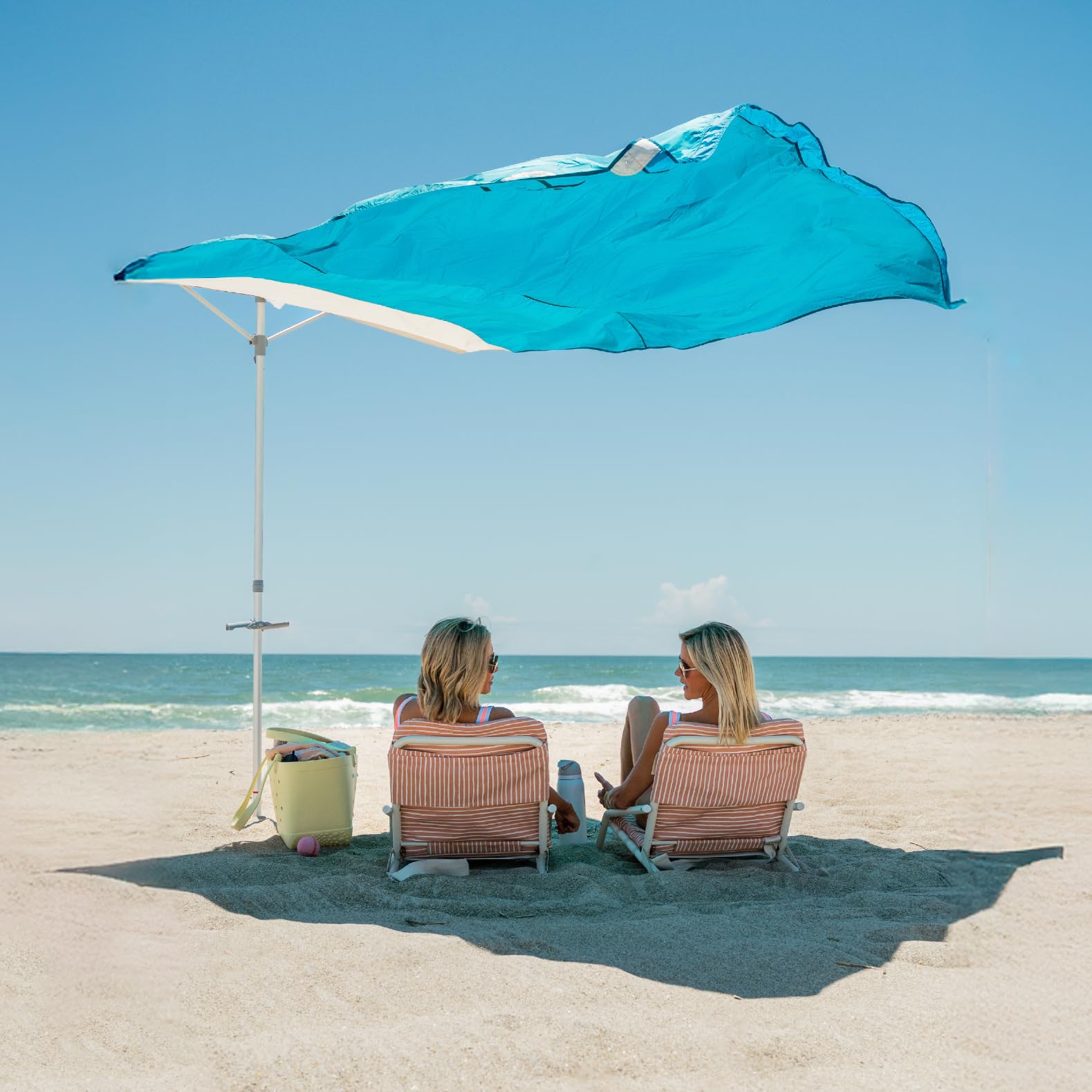
The Solbello Shade takes a completely different approach from traditional tents — it uses a screw-in auger base that drills into the sand, similar to a beach umbrella anchor, with a sail-like canopy that opens like wings. This design means it doesn’t rely on sandbags or stakes at all. The lightweight build (4.5 pounds) and three-minute setup time make it ideal for solo beachgoers or couples who want to relocate with the tide.
Multiple users report it holding steady in wind ranging from 15 to 30 mph, with the auger providing a deep mechanical grip that sandbags can’t match. The canopy provides shade for one to two people and swivels naturally to follow the sun. A 65-year-old reviewer noted she could set it up alone in under three minutes, and the shoulder strap makes it easy to carry.
The tradeoff is shade area — at roughly the size of a standard beach umbrella, it doesn’t match the coverage of canopy tents. One user reported a plastic knob breaking on first use but fixed it with a cotter pin. The auger needs to be screwed past a red line marking for full stability, and the unit works best when the front stakes are deployed in very strong wind.
Why it’s great
- Screw auger provides deep mechanical hold in sand
- Extremely lightweight and portable at 4.5 pounds
- One-person setup in under three minutes
Good to know
- Shade area limited to 1-2 people
- Plastic components may need reinforcement over time
6. Shibumi Shade 2.0
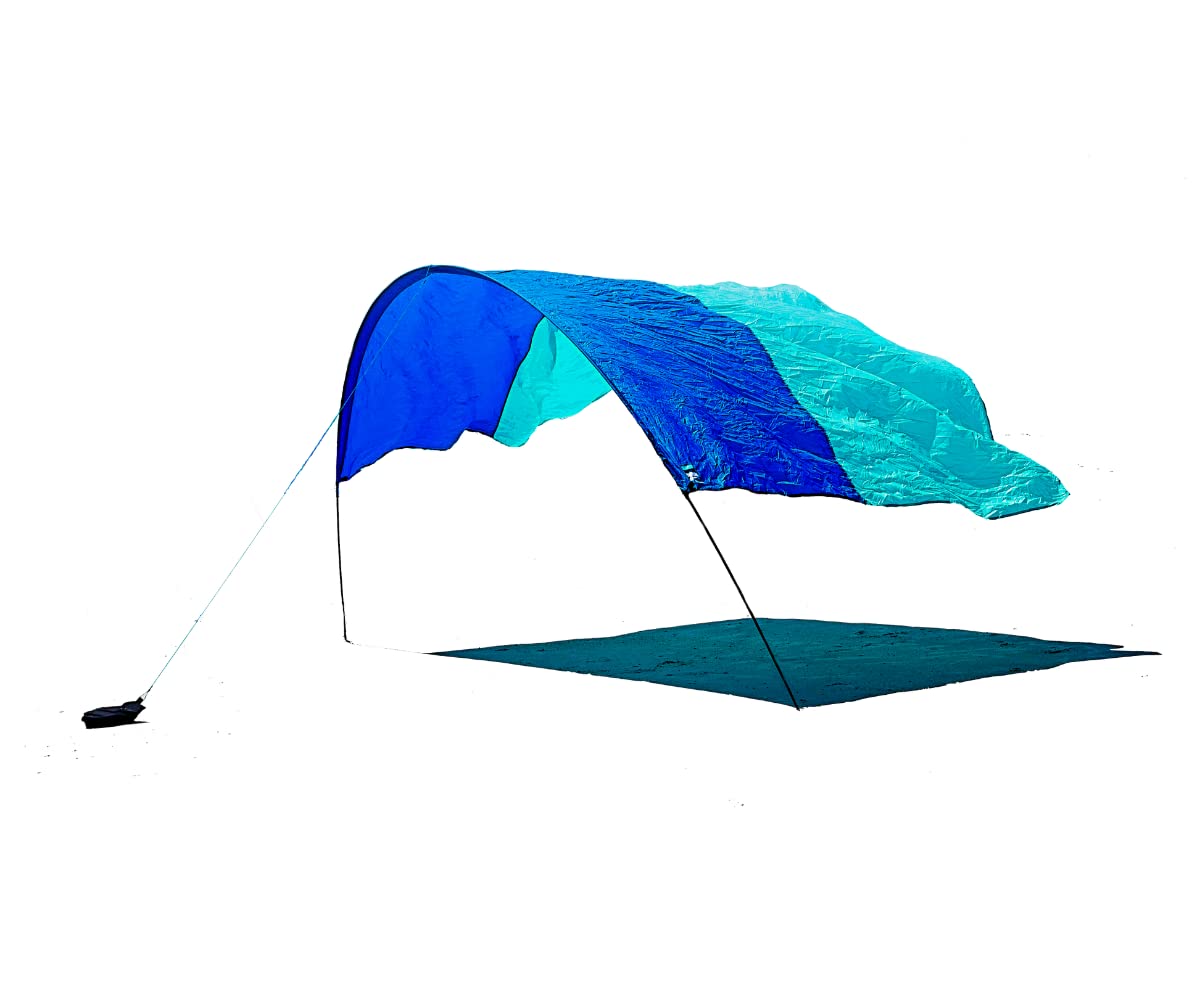
The Shibumi Shade 2.0 is not a tent — it’s a wind-powered canopy that uses the breeze to stay aloft. Two aluminum poles form a frame, and the fabric flies like a wing, held up by the wind itself. This means it won’t blow away in high wind because it uses the wind as its structural support. In dead calm, it collapses, so it requires at least a light breeze to function.
The 150-square-foot coverage is massive — enough for up to eight people — yet the entire unit weighs only 4.25 pounds and packs into a small carry bag. Setup takes about three minutes with one person: you stake the two poles, fill the single sandbag, and the fabric fills with air. Users on windy Atlantic beaches report it working flawlessly for years without damage.
The limitation is obvious: no wind, no shade. It works best on beaches with consistent sea breezes, and it needs open space for the fabric to fly without tangling. The premium price puts it well above standard tents, but for regular beachgoers who face wind daily, the design is genuinely unique and effective.
Why it’s great
- Uses wind as structural support, cannot blow away in gusty conditions
- Extremely lightweight at 4.25 pounds with massive 150 sq ft coverage
- One-person setup in three minutes with minimal hardware
Good to know
- Requires steady breeze to function; collapses in calm air
- Premium price and needs open space to deploy properly
7. Old Bahama Bay Pop Up Beach Tent

The Old Bahama Bay tent uses a pop-up frame that deploys in seconds without any pole assembly — you simply unfold it, and the pre-attached fiberglass frame snaps into shape. This makes it by far the fastest setup in the lineup, which is valuable when you’re wrestling with kids and gear. The 81 by 54.5 by 62-inch interior fits three to four people, and the extended floor provides extra space for changing or napping.
For wind resistance, it relies on four included stakes, four guylines, and two sandbags — a lighter anchoring system compared to the eight-bag designs above. Multiple users confirm it holds up well in moderate wind, but one reviewer specifically noted the included sandbags were insufficient for very windy conditions, requiring extra weights. The fiberglass poles are more flexible than aluminum, which helps them bend without snapping but also allows more fabric flutter in sustained gusts.
The tent provides UPF 50+ protection with a silver-coated fabric that blocks 98% of UV rays, and the three mesh windows provide 360-degree ventilation. The packed weight of 8.2 pounds and the included carry bag make it easy to transport. This is a solid choice for families who prioritize quick setup and occasional use in mild coastal conditions.
Why it’s great
- Instant pop-up design with zero assembly time
- UPF 50+ silver-coated fabric blocks 98% of UV rays
- Lightweight at 8.2 pounds with included carry bag
Good to know
- Sandbags and stakes may be insufficient for strong coastal gusts
- Fiberglass poles allow more flutter than aluminum alternatives
FAQ
How many sandbags do I need for a windy beach?
Can I use tent stakes instead of sandbags on the beach?
What is the best pole material for a wind-resistant beach tent?
Will a pop-up tent work in strong coastal winds?
Final Thoughts: The Verdict
For most users, the beach tent for wind winner is the ADesign Windproof Beach Tent because its eight-sandbag anchoring system, Lycra fabric tension, and proven real-world performance in 10-15 mph winds provide the best balance of stability, coverage, and value. If you want a more premium single-pole setup with faster setup and even stronger wind hold, grab the CoolCabana Beach Shade. And for the unique wind-powered design that actually uses the breeze to stay aloft, nothing beats the Shibumi Shade 2.0.

Mo Maruf
I created WellFizz to bridge the gap between vague wellness advice and actionable solutions. My mission is simple: to decode the research and give you practical tools you can actually use.
Beyond the data, I am a passionate traveler. I believe that stepping away from the screen to explore new environments is essential for mental clarity and physical vitality.