Our readers keep the lights on and my smoothie glass nicely filled. As an Amazon Associate, I earn from qualifying purchases.
Dragging an extension cord across a wet garage floor or wrestling a bulky, corded tank up a flight of stairs to vacuum out the car is a ritual most of us are ready to retire. A battery-powered shop vac cuts that cord for good, promising the same rugged pickup for sawdust, spilled soda, and muddy floor mats, but with the freedom to carry the machine exactly where the mess is. The trade-off has always been suction: cordless models often feel like handheld dustbusters compared to their 120V relatives, which makes finding one that actually pulls its weight a genuinely tricky search.
I’m Mohammad Maruf — the founder and writer behind WellFizz. I specialize in translating the language of motor specs, filter ratings, and battery platform ecosystems into practical buying decisions for home and workshop gear.
After sorting through the latest cordless designs on the market, this guide breaks down seven contenders to help you pick the best battery powered shop vac for your garage, job site, or weekend detailing work without wasting time on units that choke on a handful of drywall dust.
How To Choose The Best Battery Powered Shop Vac
Choosing a cordless shop vac comes down to three interlocking factors: the battery platform you already own, the physical size of the messes you regularly clean up, and the level of suction needed to pull heavy debris through a long hose. Nail these three, and you will end up with a tool you actually reach for every time a spill happens.
Battery Ecosystem and Runtime Realities
If you already own drills or saws from DeWalt, Milwaukee, Ryobi, or Bosch, the smartest move is to buy the bare-tool version of their shop vac. You sidestep the upfront cost of extra batteries and chargers and may even share high-capacity packs—a 6.0Ah or 8.0Ah battery can double the runtime of a smaller 2.0Ah pack. On paper, a vac might claim 30 minutes of run time, but that figure often drops by half when you run the motor at full throttle with a clogged filter or while picking up wet slurry.
Suction Metrics: CFM vs. Water Lift
Suction in a shop vac is measured in two complementary numbers: cubic feet per minute (CFM) tells you how much air the motor moves, while inches of water lift tells you how hard it pulls. A high CFM number (above 40) is ideal for light, bulky debris like leaves or sawdust, while high water lift (over 40 inches) is critical for pulling water out of a soaked carpet or holding heavy metal shavings. Most cordless units land somewhere in the middle, so matching the spec to your primary task is essential.
Tank Capacity and Hose Reach
A 2.5-to-3-gallon tank is the sweet spot for portability—large enough to handle a car interior or a small workshop cleanup without constant emptying, but small enough to carry with one hand or store on a shelf. Hose length matters just as much: a 6.5-foot hose gives you a solid radius to move around a car or a workbench, while a shorter 5-foot hose can force you to move the vac itself every few feet. Look at modular accessories that store on the unit, or you will find yourself hunting for the crevice tool in a drawer every time you need it.
Quick Comparison
On smaller screens, swipe sideways to see the full table.
| Model | Category | Best For | Key Spec | Amazon |
|---|---|---|---|---|
| Milwaukee M18 FPOVCL | Premium | Pro-grade quiet power | 50 CFM / 47 in. water lift | Amazon |
| Bosch GAS18V-3N | Premium | HEPA dust extraction | HEPA filter captures 99.97% | Amazon |
| Worx Nitro WX031L | Mid-Range | Kit with battery & charger | 16 kPa suction / 2.1 gal | Amazon |
| Seesii Cordless 2.6 Gal | Mid-Range | Two batteries & blowing | 2 x 4.0Ah batteries included | Amazon |
| Ryobi PCL734B | Mid-Range | Ryobi users & 3-gal size | 3.0 gallon capacity | Amazon |
| Milwaukee 0960-20 M12 | Mid-Range | Ultra-compact M12 users | 1.6 gal / 42 in. water lift | Amazon |
| ReliaRoads RCSV-20 | Budget | DeWalt battery compatibility | 45 CFM / 2.65 gal tank | Amazon |
In‑Depth Reviews
1. Milwaukee M18 FPOVCL
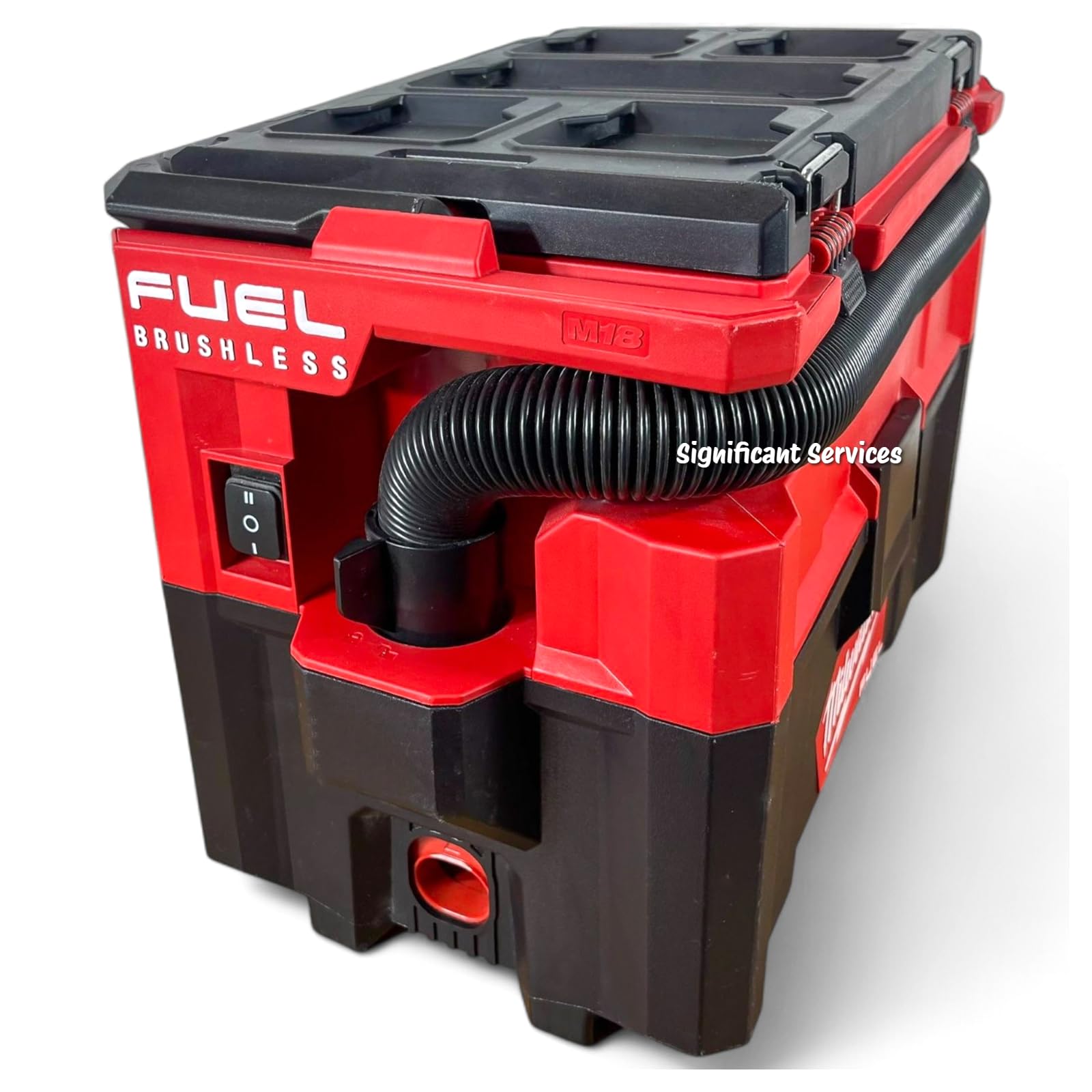
This is the cordless shop vac that rewrites the rulebook. Milwaukee’s M18 FUEL model delivers 50 CFM and 47 inches of water lift—numbers that match or beat many corded 5-gallon shop vacs. The secret is a brushless motor that pulls hard without bogging down when the filter starts loading up, and it does it at roughly half the noise level of a traditional unit, which is a genuine relief in a garage or on a job site.
The 2.5-gallon tank is the right size for serious cleanups without being a backbreaker to haul around. It integrates directly into the Packout modular storage system, so it clicks onto a stack of toolboxes or a rolling cart if you already own that ecosystem. The onboard storage for the hose and a few basic attachments keeps everything tidy, though you may wish for a dedicated spot for the crevice tool.
Bare-tool buyers need to budget for their own battery, but with a High Output 8.0Ah or 12.0Ah pack, you can expect solid runtime for a full session of shop cleanup or extracting water from a flooded basement corner. The HEPA filter catches fine drywall dust well, and an optional fleece bag (sold separately) makes emptying fast and clean. The only real downside is the upfront investment—the packout, battery, and charger system is expensive—but the performance is in a different league from any other cordless vac here.
Why it’s great
- Suction power rivals corded shop vacs with 47 in. water lift
- Very quiet operation for its class
- Integrates seamlessly with Milwaukee Packout system
Good to know
- High entry cost when you factor in battery and charger
- Onboard attachment storage is a bit bulky for the hose
2. Bosch GAS18V-3N

Bosch’s pro-tier cordless vac earns its place with a certified washable HEPA filter that captures 99.97% of particles. If you regularly cut drywall, sand wood, or detail cars where airborne dust is a respiratory concern, this is the only bare-tool option here that delivers true dust-extraction certification out of the box. The 2.6-gallon capacity is the same as many competitors, but the filter design uses Rotational Airflow Technology to prevent the paper cartridge from clogging prematurely, so suction stays consistent longer.
The 18V platform is part of the AMPShare multi-brand alliance, which means batteries from other participating brands (including some Craftsman and EGO packs) will work. At just over 10 pounds, this vac is light enough to carry up a ladder, and the onboard storage for the hose, three extension tubes, floor nozzle, and crevice tool is well thought out—nothing dangles or rattles when you move. The 5.25-foot hose is on the shorter side, which may require you to reposition the machine when cleaning a large vehicle.
Runtime is realistic with a 6.0Ah battery, giving about 24 minutes on high suction, which covers a thorough car interior or a construction-site cleanup session. The biggest caveat is that this is a bare tool, so the battery and charger are an extra purchase. Some users have noted that the smaller hose diameter can clog with larger wood chips or heavy debris, so it is better matched to fine dust and general workshop tidying than hauling wet leaves or gravel.
Why it’s great
- Certified washable HEPA filter for fine dust control
- Rotational Airflow prevents early filter clogging
- Lightweight and compact with excellent onboard storage
Good to know
- Short 5.25-foot hose limits reach
- Hose diameter can clog with larger debris
3. WORX Nitro WX031L
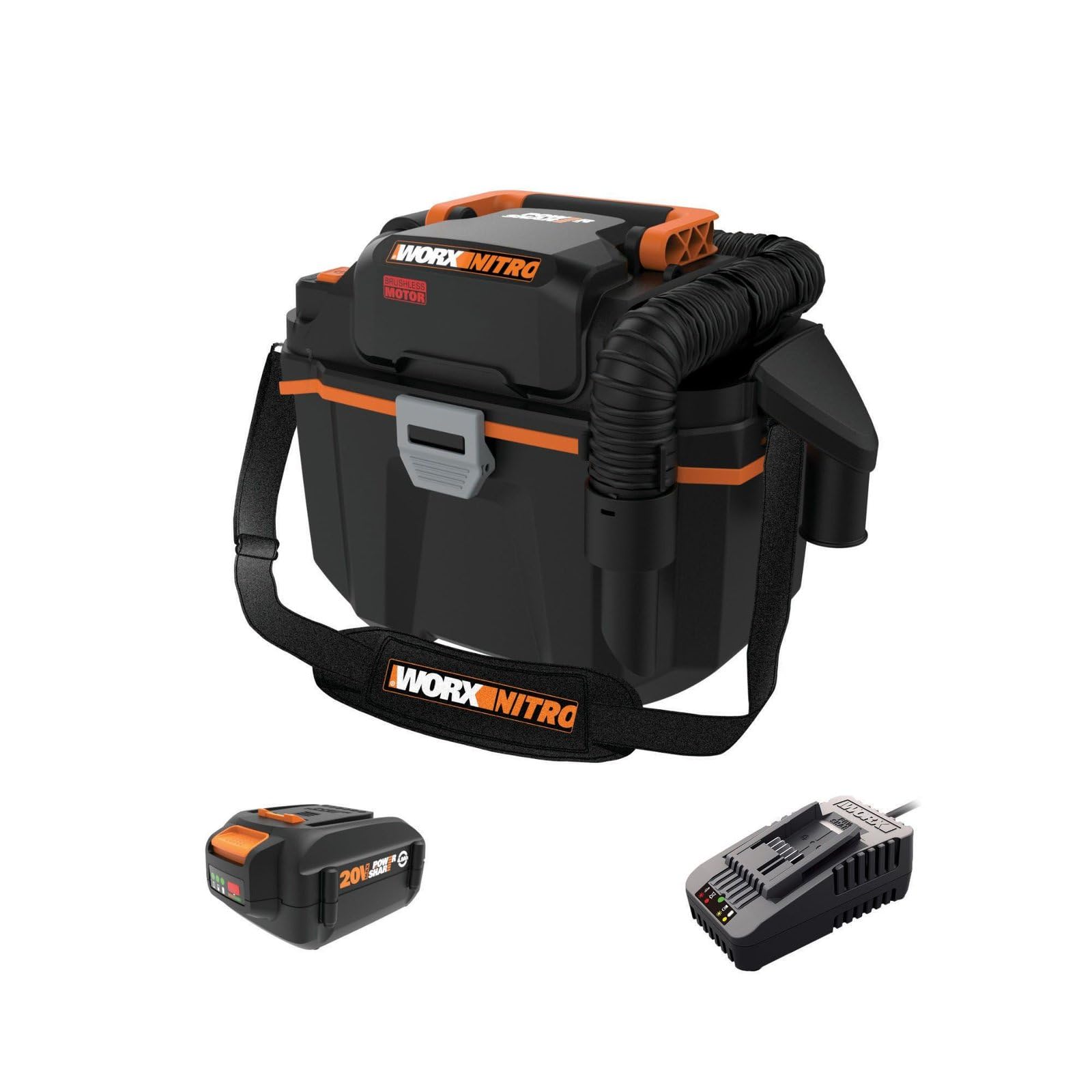
Worx takes a different approach by including the battery and charger in the box, which makes this the most turnkey solution for someone not already locked into a DeWalt or Milwaukee system. The 20V Power Share platform is broad—over 75 tools share the same pack—so buying this vac can also be the start of a cordless ecosystem. The brushless motor generates 16 kPa of suction, which is strong enough for carpeted stairs, auto interiors, and workshop sawdust without the motor bogging down.
The 2.1-gallon tank is smaller than many competitors, which means you will be emptying it more often during a big cleanup. But the trade-off is a genuinely compact, lightweight body that is easy to sling over your shoulder with the included strap and carry up a ladder or down a hallway. The 6.5-foot stretch hose is a highlight; it extends enough to reach across a car interior without dragging the body around, and the crevice tool and wide nozzle store right on the machine.
Dual speed settings let you switch between high suction for stubborn dirt and a lower setting for light dust pickup, which stretches battery life noticeably. With the included 4.0Ah pack, expect around 15-20 minutes on high and significantly longer on low. The main downside is the relatively small filter area, which can clog faster when picking up fine dust from drywall sanding. Replacing it costs less than some HEPA alternatives, but you will want to tap it clean after every few uses.
Why it’s great
- Includes battery and charger right out of the box
- Strong 16 kPa suction in a lightweight body
- Extendable 6.5-foot hose with onboard tool storage
Good to know
- 2.1-gallon tank requires frequent emptying
- Small filter clogs fairly fast with fine dust
4. Seesii Cordless 2.6 Gal
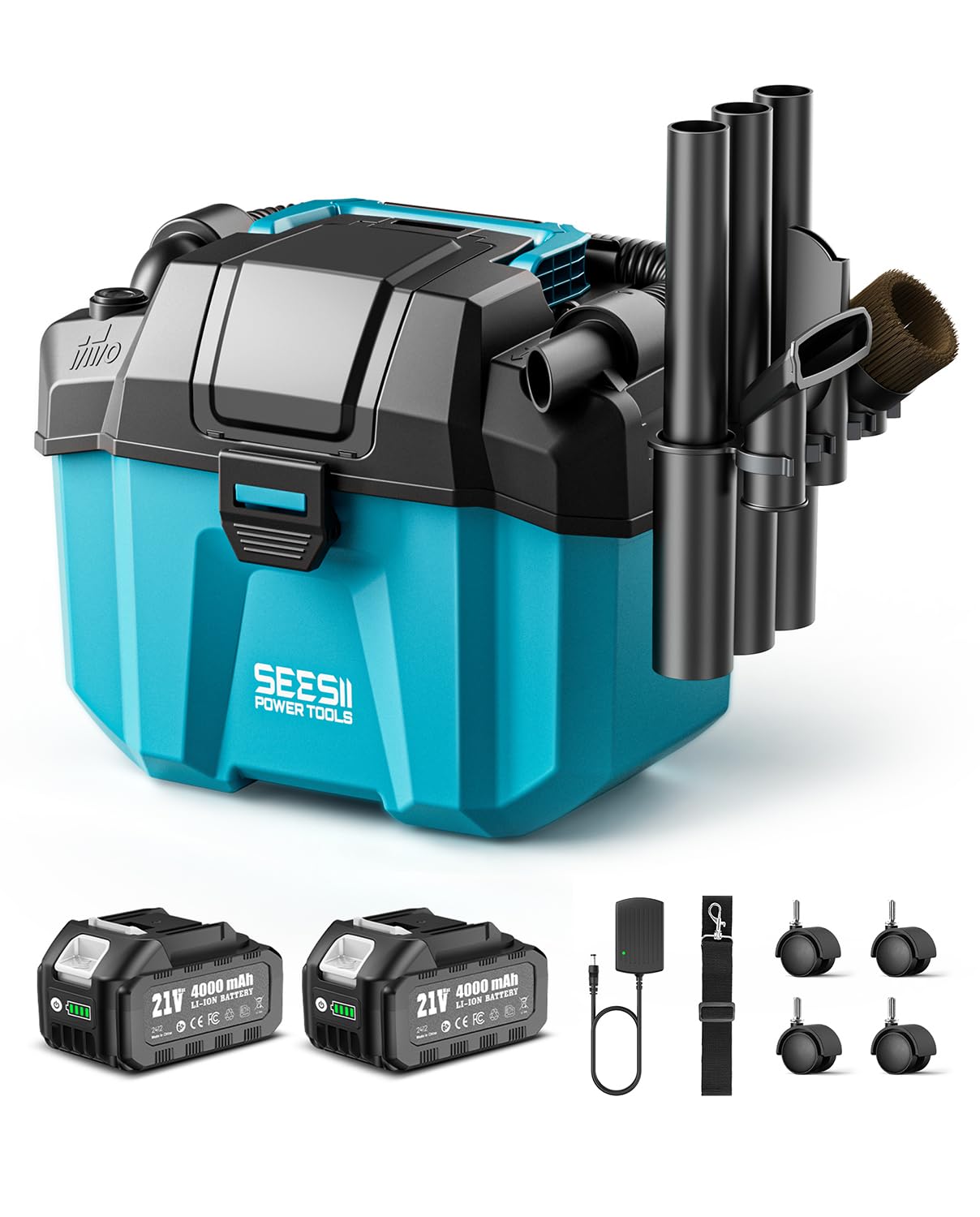
Seesii packs a lot of hardware into a single box: the vac itself, two 4.0Ah batteries, a fast charger, a shoulder strap, three extension tubes, four wheels, and a washable HEPA filter. The 2.6-gallon capacity is generous for a cordless canister vac, and the ability to switch between two batteries means you can theoretically clean continuously by rotating packs on the rapid charger. The brushless motor produces up to 15 kPa of suction on high, which is solid for pet hair, spilled dirt, and car floor debris.
The 3-in-1 functionality (dry vacuum, wet vacuum, and blowing mode) makes this a genuinely versatile tool. The blowing mode is handy for clearing leaves off a porch or dust out of a garage corner, though the air exits the front of the machine, so you have to aim carefully. The extension tubes let you clean while standing, which is a back-saver for long sessions. The wheels are small but roll smoothly across concrete and tile, adding mobility without making the unit bulky.
Runtime averages 20 minutes on high with a single 4.0Ah battery and about 40 minutes on the low setting. The two packs more than cover a full car or a workshop cleanup. The built-in accessory storage holder keeps the nozzles in order, but it can knock off if bumped while moving. The biggest caveat is that the filter requires removing a few screws for cleaning or replacement—an unnecessary annoyance for a machine that otherwise feels very consumer-friendly.
Why it’s great
- Two 4.0Ah batteries let you clean without downtime
- 3-in-1 functionality includes blowing mode
- Washable HEPA filter and extension tubes improve usability
Good to know
- Filter access requires removing screws for maintenance
- Attachment holder is not securely locked in place
5. RYOBI ONE+ 18V Link 3 Gal PCL734B

Anyone who owns a Ryobi ONE+ drill, saw, or blower will find this vac an almost automatic addition. The 18V platform is one of the most affordable and widely available in the market, and this bare-tool model lets you skip the battery cost if you already have a 4.0Ah or larger pack. The 3-gallon tank is the largest of any cordless option in this comparison, which means fewer trips to the trash can during larger cleanups—a real advantage when you are tackling a garage or a workshop after a weekend project.
Suction is noticeably strong for a cordless unit. Multiple users report it outperforms older corded shop vacs they had retired, and the rectangular, low-profile shape makes it stable on a workbench or in the back of an SUV. The quick-empty latches release the tank in seconds, and the canister opens wide enough to dump debris easily without making a mess. Onboard storage for the hose and two nozzles is good, though the hose itself is just under 6 feet, which is adequate for spot work but short for moving around a large vehicle.
Runtime depends heavily on the battery you use. With a standard 1.5Ah pack, you may only get 5-6 minutes on high speed, which is barely enough for a single car seat. But paired with a 6.0Ah or 12.0Ah Ryobi battery, the vac runs long enough for serious cleanup. The HEPA filter is washable, and the overall weight (around 12.5 pounds) is manageable, though the rectangular shape feels a bit bulkier than a round canister. If you are already in the Ryobi ecosystem, this is the most logical cordless shop vac to own.
Why it’s great
- Large 3-gallon capacity reduces emptying frequency
- Powerful suction that rivals old corded units
- Quick-empty latches and easy filter access
Good to know
- Needs a high-capacity battery for usable runtime
- Hose length is a bit short for larger spaces
6. Milwaukee 0960-20 M12 FUEL 1.6 Gal

This is the most portable serious option on the list. The M12 platform runs on 12V batteries, which are smaller and lighter than 18V packs while still delivering surprising power—42 inches of water lift is no joke for a vac this small. The 1.6-gallon tank is obviously limited, making this a spot-cleaning specialist rather than a full-shop tool, but for quick pickups of sawdust piles, car crumbs, or pet accidents, it is brilliantly convenient.
The design is a stackable rectangular canister that clicks neatly into Milwaukee’s M12 storage system or sits on a shelf without rolling around. Onboard accessory storage keeps the hose, crevice tool, and floor nozzle snug, though the 5-foot hose demands that you keep the unit close to the mess. The included wall-mount plate is a nice touch for parking it inside a cabinet or on a pegboard, freeing up floor space completely in a small garage or work truck.
Runtime is the trade-off. With a compact 2.0Ah or 4.0Ah M12 battery, you may only get 10-15 minutes of full suction, and the motor can drain an 8.0Ah High Output pack relatively fast as well. This vac rewards users who already have a pile of M12 batteries and a quick charger. It is not the tool for a heavy wet-vacuuming session or an all-day renovation cleanup, but for the daily micro-messes around the house and hard-to-reach areas, size and portability beat runtime every time.
Why it’s great
- Extremely compact and stackable for easy storage
- 42 inches of water lift for its size
- Wall-mountable for zero-footprint parking
Good to know
- Small tank and battery runtime limit it to quick cleanups
- Short hose requires constant repositioning
7. ReliaRoads RCSV-20 (DeWalt Platform)

For the DeWalt user on a tight budget, the ReliaRoads RCSV-20 offers a smart entry point. It is a bare-tool vac that runs on any standard DeWalt 20V MAX battery, so if you already own those packs, you skip the cost of an entire new battery ecosystem. The 2.65-gallon tank is competitive with mid-tier models, and the 45 CFM airflow figure is genuinely impressive for the price point, delivering solid pickup on dry sawdust, crumbs, and light workshop debris.
The accessory kit is generous: a flexible 6.5-foot hose, multi-purpose nozzle, crevice tool, sofa brush, an extra-long crevice nozzle, and a mini filter cartridge. The blowing feature is a bonus for clearing dust out of tight machine crevices after cleaning. The washable filter is easy to maintain under a tap, though it is not a certified HEPA unit, so fine dust may pass through if you are doing heavy sanding. The yellow body is lightweight—around 8 pounds—and the carry handle makes it easy to tote from the garage to the car.
Runtime with a standard 5.0Ah DeWalt battery is about 15-20 minutes of continuous high suction, and owners have reported up to 45 minutes with a high-capacity 6.0Ah or flex-volt battery. The main compromises are build quality: the plastic feels less rugged than the Milwaukee or Bosch units, and the battery compartment’s hood can feel a bit awkward when snapping larger packs in. For occasional use—cleaning the truck, picking up after a weekend of woodworking—this vac delivers surprising value without a painful upfront hit.
Why it’s great
- Works with existing DeWalt 20V MAX batteries
- 45 CFM airflow and 2.65-gal capacity at a low price
- Includes a blowing function and generous accessory kit
Good to know
- Build quality is not as tough as premium brands
- No HEPA certification for fine dust capture
FAQ
How long does a battery last in a cordless shop vac?
Can I use a cordless shop vac for wet pickup?
Do I need a HEPA filter for a shop vac?
Final Thoughts: The Verdict
For most users, the best battery powered shop vac winner is the Milwaukee M18 FPOVCL because it pulls with the strength of a corded unit while remaining quiet, portable, and modular. If you want a certified HEPA filter for fine dust work, grab the Bosch GAS18V-3N. And for budget-friendly cordless convenience that works with your existing DeWalt batteries, nothing beats the ReliaRoads RCSV-20.

Mo Maruf
I created WellFizz to bridge the gap between vague wellness advice and actionable solutions. My mission is simple: to decode the research and give you practical tools you can actually use.
Beyond the data, I am a passionate traveler. I believe that stepping away from the screen to explore new environments is essential for mental clarity and physical vitality.