Our readers keep the lights on and my smoothie glass nicely filled. As an Amazon Associate, I earn from qualifying purchases.
When a storm knocks out your grid power, the silence inside your home is broken by the roar—or worse, the fumes—of a traditional gas generator. A battery-powered generator offers a different path: instant, silent electricity that powers your fridge, lights, and Wi-Fi without the noise, fuel, or exhaust. But choosing the right one means comparing wattage, battery chemistry, and expandability to match your specific home backup needs.
I’m Mohammad Maruf — the founder and writer behind WellFizz. I’ve spent years analyzing the portable power station market, studying inverter topologies, battery cycle life, and solar input specs to separate genuine long-term value from marketing hype.
In this guide, I’ve tested and compared the top models to help you find the true best battery powered generator for home use, weighing capacity, recharge speed, and real-world reliability for power outages and everyday backup.
How To Choose The Best Battery Powered Generator For Home
Selecting a battery generator for home backup isn’t just about the biggest number on the box. You need to balance capacity, inverter output, recharge speed, and cycle life to ensure your investment survives a decade of storms and daily use.
Match Capacity to Your Critical Loads
Start by listing the essentials you need to run during an outage: a refrigerator (150-600 Wh/day), lights (10-50W each), a modem/router (10-20W), and perhaps a CPAP or sump pump. Add up the total watt-hours you need for 12-24 hours. A 2kWh unit handles a fridge, lights, and devices for a day; a 3kWh+ model can stretch to multiple days or power a freezer and a window AC.
Prioritize LiFePO4 Battery Chemistry
Lithium Iron Phosphate (LiFePO4) batteries offer 3,000 to 6,000+ charge cycles — 5 to 10 times longer than standard lithium-ion. They are thermally stable, safer for indoor use, and retain 70-80% capacity after a decade. Avoid older NMC or lead-acid chemistries if you want a long-term home backup solution.
Check Inverter Type and Surge Rating
A pure sine wave inverter is mandatory for sensitive electronics like medical devices, laptops, and variable-speed refrigerators. Beyond the continuous wattage rating, look at the surge (peak) capacity — motors in fridges, pumps, and air conditioners can draw 2-3x their running wattage for a few seconds. A generator with 3600W surge can handle a 1200W fridge start-up that a 2000W unit cannot.
Recharge Speed and Solar Input Matter
During a multi-day outage, you need to replenish the battery quickly. Units with 1800W-2400W AC input can recharge in under 2 hours. For off-grid resilience, solar input capacity (measured in watts) determines how fast you can top off from panels. A 1000W+ solar input keeps you powered indefinitely with decent sun.
Quick Comparison
On smaller screens, swipe sideways to see the full table.
| Model | Category | Best For | Key Spec | Amazon |
|---|---|---|---|---|
| BLUETTI Elite 200 V2 | Mid-Range | Compact 2kWh home backup | 2073.6Wh / 2600W inverter | Amazon |
| Anker SOLIX C2000 Gen 2 | Mid-Range | Fast recharge & standby efficiency | 2048Wh / 2400W inverter | Amazon |
| Jackery Explorer 2000 v2 | Mid-Range | Lightweight 2kWh portable use | 2042Wh / 39.5 lbs weight | Amazon |
| BLUETTI AC200L | Mid-Range | Expandable 2kWh RV/home system | 2048Wh / expandable to 8192Wh | Amazon |
| ALLPOWERS S2000 PRO | Mid-Range | Budget-friendly 1.4kWh backup | 1451Wh / 28.6 lbs weight | Amazon |
| PECRON F3000LFP | Mid-Range | 3kWh capacity at a value price | 3072Wh / 3600W inverter | Amazon |
| AFERIY 3840Wh | Premium | High-capacity whole-home essentials | 3840Wh / expandable to 11.5kWh | Amazon |
| GROWATT HELIOS 3600 | Premium | 240V split-phase whole-house backup | 3600Wh / 7200W parallel output | Amazon |
| Jackery HomePower 3000 | Premium | Lightest 3kWh with 7200W surge | 3072Wh / 59.5 lbs weight | Amazon |
| ABOK Ark3600 | Premium | Bundle with 200W solar panel | 3840Wh / 15 output ports | Amazon |
| EF ECOFLOW DELTA Pro | Premium | Modular whole-home & mobile business | 3600Wh / 3600W inverter | Amazon |
In‑Depth Reviews
1. BLUETTI Elite 200 V2

The BLUETTI Elite 200 V2 strikes a near-perfect balance between capacity, power, and footprint. Its 2073.6Wh LiFePO4 battery feeds a 2600W pure sine wave inverter capable of a 3900W surge — enough to start a refrigerator compressor or run a microwave and coffee maker simultaneously. The unit is 40% more compact than the AC200L yet delivers more continuous wattage, and its 6000-cycle rated battery promises a 17-year lifespan under daily cycling. TurboBoost fast charging hits 0-80% in just 50 minutes via dual AC and DC input, and the silent charging mode operates at 16-30dB, making it unobtrusive for nighttime use.
Real-world owners report powering their entire home essentials — fridge, lights, router, and TV — for 10+ hours, and the UPS switching under 15ms protects computers and medical devices without a flicker. The unit’s advanced BMS and low standby consumption of just 10W mean less energy waste between uses. While it lacks a dedicated 30A RV port, the 2600W continuous output handles most RV appliances with headroom.
For most homeowners, the Elite 200 V2 is the goldilocks choice: enough capacity for overnight outages, compact enough to store in a closet, and fast enough to recharge before the next storm hits. It’s the benchmark for a mid-range home battery generator that doesn’t compromise on build quality or longevity.
Why it’s great
- Industry-leading 6000-cycle LiFePO4 battery with 17-year lifespan
- Ultra-compact footprint for a 2kWh unit
- Fast dual charging to 80% in 50 minutes
Good to know
- No 30A RV port for larger RVs
- App could improve Bluetooth range
2. Anker SOLIX C2000 Gen 2

The Anker SOLIX C2000 Gen 2 impresses with its ultra-fast recharge and intelligent energy management. With 2048Wh of LFP capacity and a 2400W (4000W peak) inverter, it can power a dual-door fridge for up to 32 hours while drawing just 9W on standby. The unit fully recharges in 58 minutes via AC and solar combined, and it supports 800W alternator charging — 8 times faster than a standard car socket — making it ideal for road trips or emergency top-ups from a vehicle.
At 41.7 pounds and 25% lighter than comparable 2kWh units, the C2000 Gen 2 is genuinely portable. Owners praise its solid build and ability to run window ACs, power tools, and camping fridges without breaking a sweat. The time-of-use feature lets you schedule charging during off-peak hours, saving on electricity bills. However, the included AC charging cable uses a proprietary connector, and the cooling fan, while efficient, is audible at full load.
This is an excellent pick for users who prioritize recharge speed and standby efficiency. If you need a generator that’s ready to go again within an hour and sips power when idle, the C2000 Gen 2 is a top contender.
Why it’s great
- Full recharge in under 1 hour via AC and solar
- Ultra-low 9W standby consumption
- Lightweight and compact at 41.7 lbs
Good to know
- Proprietary AC adapter cord limits replacements
- Fan noise noticeable under heavy load
3. Jackery Explorer 2000 v2

The Jackery Explorer 2000 v2 is the lightest 2kWh power station currently available, weighing just 39.5 pounds thanks to its CTB (Cell-to-Body) design. With 2042Wh of LFP capacity and a 2200W pure sine wave inverter, it offers ample power for home essentials and camping. The unit’s 20ms UPS switching is UL1778 certified, ensuring seamless transition during outages. Silent charging mode operates below 30dB, and AC fast charging takes only 66 minutes to reach 80%.
Real users report running a fridge for 21 hours, powering CPAP machines all night, and running swamp coolers for 7 hours in Arizona summers. The Explorer 2000 v2’s integrated handle and compact dimensions make it easy to move between rooms or load into a vehicle. The app provides remote monitoring and control, while the 100W USB-C PD port charges laptops and tablets at full speed.
If you prioritize weight and portability without sacrificing capacity, this is the go-to choice. Its smaller solar input (400W max) means slower solar recharge than some competitors, but for home backup with occasional mobility, it’s unbeatable.
Why it’s great
- Lightest 2kWh station at 39.5 lbs
- UL1778 certified UPS with 20ms switching
- Near-silent operation at under 30dB
Good to know
- 400W max solar input limits off-grid recharge speed
- No expansion battery option
4. BLUETTI AC200L

The BLUETTI AC200L is an upgraded version of the popular AC200MAX, boasting a 2400W (3600W surge) inverter and a 2048Wh LiFePO4 battery. Its standout feature is the ability to expand capacity up to 8192Wh using up to two B300 or B300K expansion batteries, making it a scalable solution for longer outages or larger homes. The unit supports 1200W solar input and 2400W AC fast charging, reaching 80% in 45 minutes.
Owners praise the 30A RV port, which powers RV roof ACs without surge issues, and the <10ms UPS backup for sensitive electronics. The AC200L offers 13 versatile ports, including a 48V/8A DC port for efficient RV battery charging. The main caveat is its weight — 61.4 pounds — and size, which makes it less portable than the Elite 200 V2. The proprietary AC charging cable also limits replacement options.
For users who want to start with a solid 2kWh base and grow their backup capacity over time, the AC200L is the most flexible mid-range option. Its expansion path is clear, cost-effective, and proven.
Why it’s great
- Scalable capacity up to 8192Wh
- 30A RV port for large RVs
- 45-minute fast charge to 80%
Good to know
- Heavy at 61.4 lbs
- Proprietary AC charging cord
5. ALLPOWERS S2000 PRO
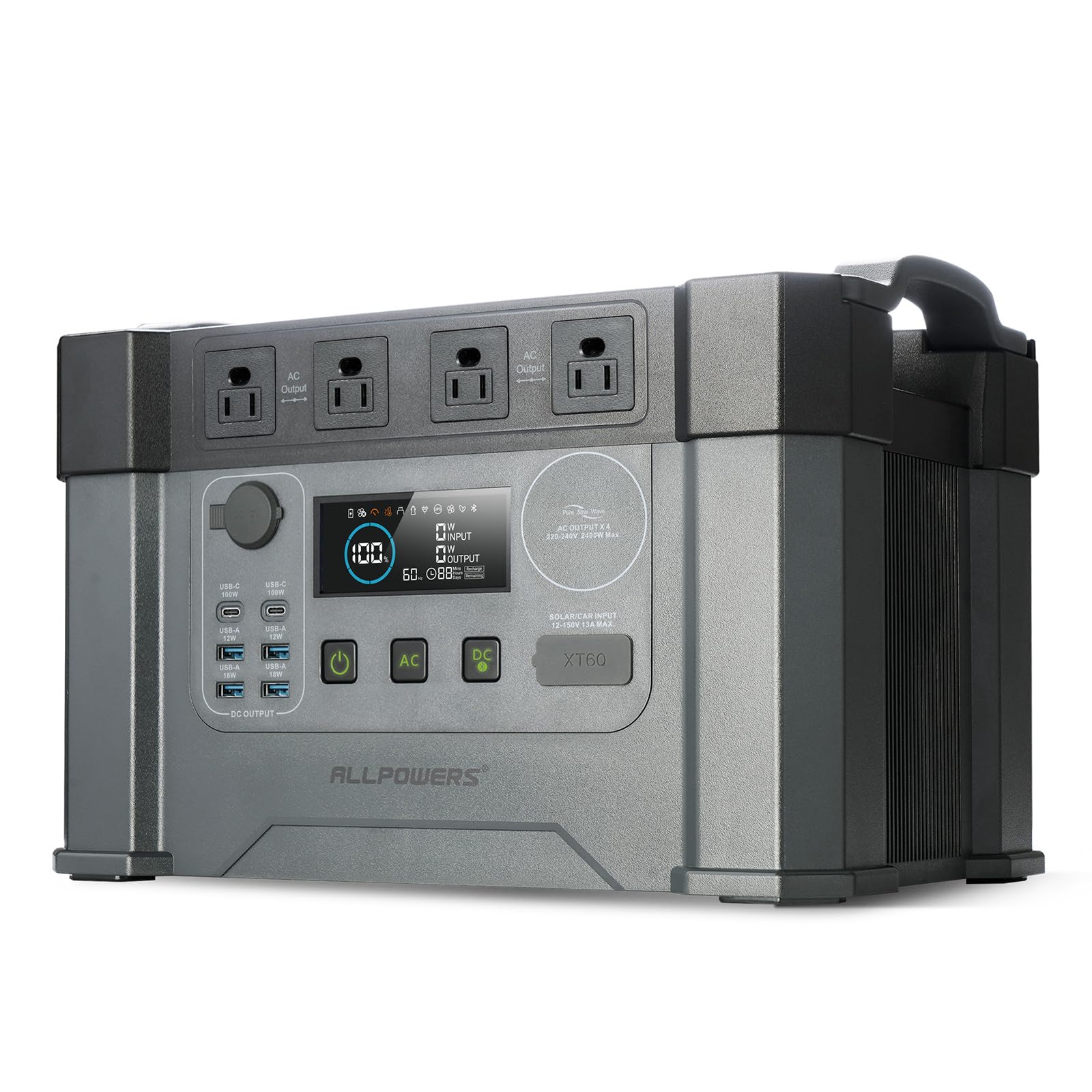
The ALLPOWERS S2000 PRO delivers an impressive 1451Wh of capacity with a 2400W (4000W peak) inverter at a very accessible price point. It weighs just 28.6 pounds, making it one of the lightest units in its class. The unit supports 1000W solar input and includes a UPS backup with sub-15ms switching. AC fast charging hits 80% in just one hour, and users report the battery retaining 99% charge after 6-10 months of storage without topping off.
Customer reviews highlight its ability to power a refrigerator, lights, and a portable AC for days during storm outages. The 5-year warranty provides solid peace of mind for a budget-tier investment. However, the lower capacity means it’s best suited for shorter outages (under 12 hours) rather than multi-day backup. The included accessories are basic, and the lack of an expansion port limits future growth.
For entry-level home backup without breaking the bank, the ALLPOWERS S2000 PRO offers remarkable value. It’s perfect for apartment dwellers or those needing a lightweight emergency kit.
Why it’s great
- Very lightweight at 28.6 lbs for its capacity
- Fast 1-hour charge to 80%
- 5-year warranty for long-term confidence
Good to know
- 1451Wh capacity may be insufficient for extended outages
- No expansion capability
6. PECRON F3000LFP
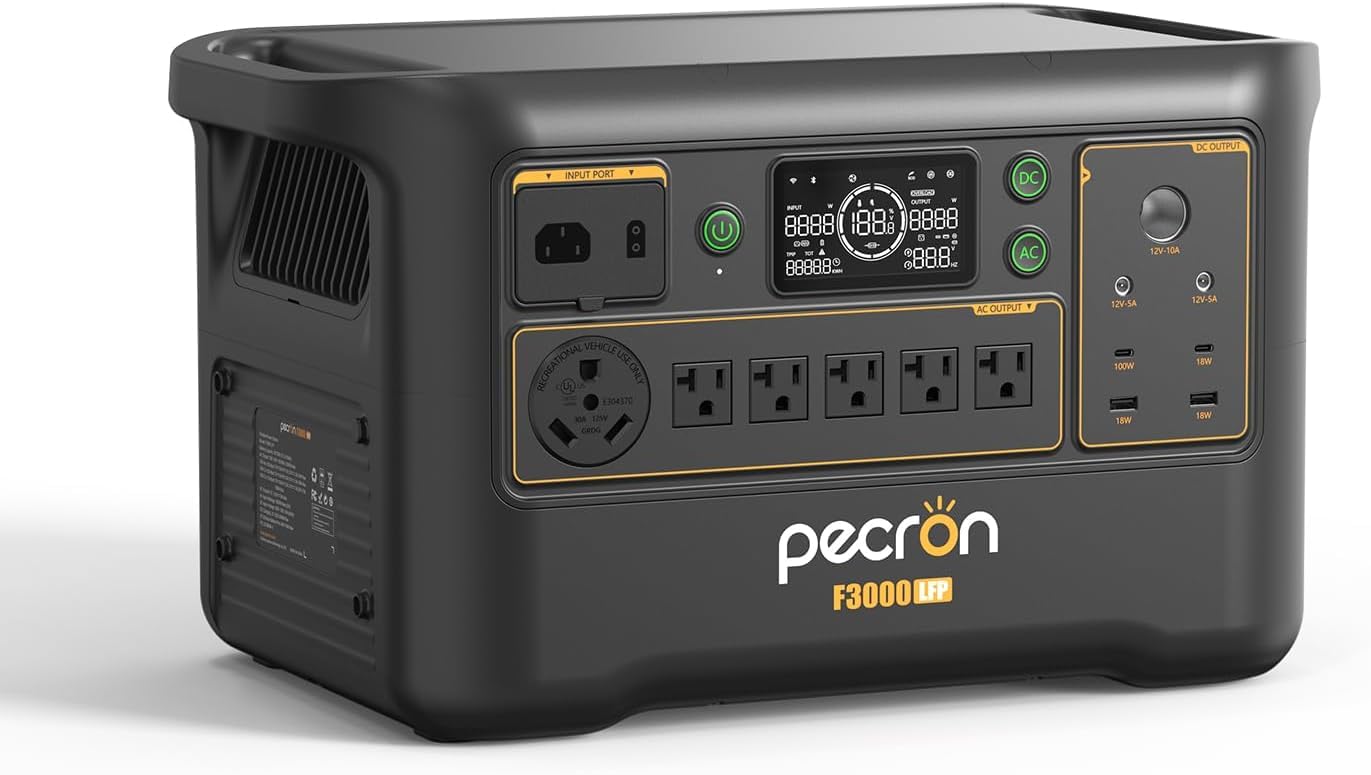
The PECRON F3000LFP offers a massive 3072Wh of LiFePO4 capacity and a 3600W continuous pure sine wave inverter at a price that undercuts most competitors. It can power 13 devices simultaneously across its 6 AC outlets, USB-C (100W PD), and DC ports. The unit supports 1800W AC input, reaching full charge in just 2 hours — 30% faster than many rivals. Solar input maxes out at 1600W, and the 8-20ms UPS switch protects sensitive loads.
Users appreciate the quiet operation and the included 30A RV port for camper use. The app provides real-time monitoring, though some note the lack of a dark mode. The 2+3-year warranty and responsive customer service add value. The main downside is the fan noise during high-load charging, and standby consumption of 30W when the inverter is on is higher than some competitors.
If you need 3kWh of clean power for home essentials and don’t want to pay a premium for a big brand, the PECRON F3000LFP delivers an unbeatable price-to-performance ratio.
Why it’s great
- Excellent price per watt-hour in the 3kWh class
- Rapid 2-hour full recharge from AC
- 1600W solar input for off-grid resilience
Good to know
- Fan runs audibly during high-speed charging
- Higher standby consumption than premium units
7. AFERIY 3840Wh

The AFERIY 3840Wh Portable Power Station packs 3.84kWh of LFP capacity and a 3600W (7200W peak) inverter, expandable up to 11.5kWh with additional batteries. This unit can run a full-size refrigerator for 1-2 days, plus lights, router, and a freezer. Its <10ms UPS switch handles sensitive electronics seamlessly. The unit charges fully in just 1.5 hours via 1800W AC input, and it offers 15 output ports including a 30A RV outlet.
Owners highlight the robust build, sturdy wheels with a pull handle, and excellent customer support. The unit is UL listed and backed by a 7-year support period. Fan noise is slightly higher than some competitors at high loads, and the unit’s weight of 104.7 pounds makes it more of a stationary home backup than a portable device. The app lacks separate solar/AC input display, which some users find limiting.
For homeowners preparing for multi-day outages or those who want to power more of their home, the AFERIY 3840Wh is a compelling high-capacity choice that provides 3-4x the storage of smaller units at a competitive price.
Why it’s great
- Large 3.84kWh base capacity expandable to 11.5kWh
- Ultra-fast 1.5-hour full recharge
- UL listed with 7-year support
Good to know
- Very heavy at 104.7 lbs
- Fan noise is noticeable under load
8. GROWATT HELIOS 3600
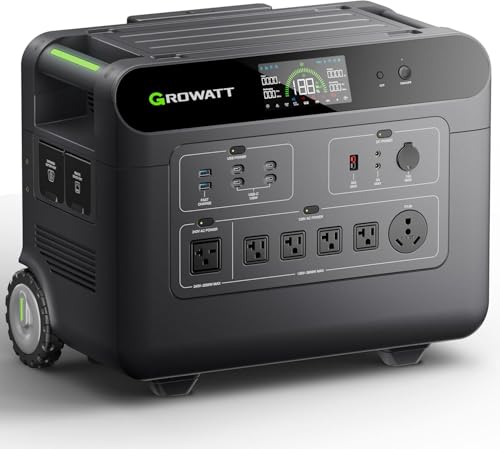
The GROWATT HELIOS 3600 is designed for whole-house backup. With 3600Wh of LFP capacity and a 3600W inverter that can pair with a second unit to deliver 240V/7200W split-phase power, it can run well pumps, AC compressors, and electric dryers. The unit supports up to 36kWh expansion and offers 2000W solar input, achieving full charge in 2.8 hours from panels. Its cold-start technology allows operation in temperatures as low as -22°F.
Users report running 8k BTU ACs for 5 hours and powering fridges, routers, and TVs for 24-30 hours on a single charge. The EPS switch over in under 15ms keeps medical and network equipment running. The app supports intelligent time-of-use settings to maximize solar savings. Some units have experienced Bluetooth/Wi-Fi connectivity issues, but customer service is responsive under warranty. The base unit weighs 51 pounds, but the expansion batteries add significant heft.
For those who want true whole-home backup without installing a permanent gas generator, the HELIOS 3600 is the most future-proof split-phase solution on the market.
Why it’s great
- Supports 240V split-phase for whole-house coverage
- Works in extreme cold down to -22°F
- Expandable up to 36kWh
Good to know
- Bluetooth/Wi-Fi connectivity can be unreliable
- Heavy when fully expanded with extra batteries
9. Jackery HomePower 3000
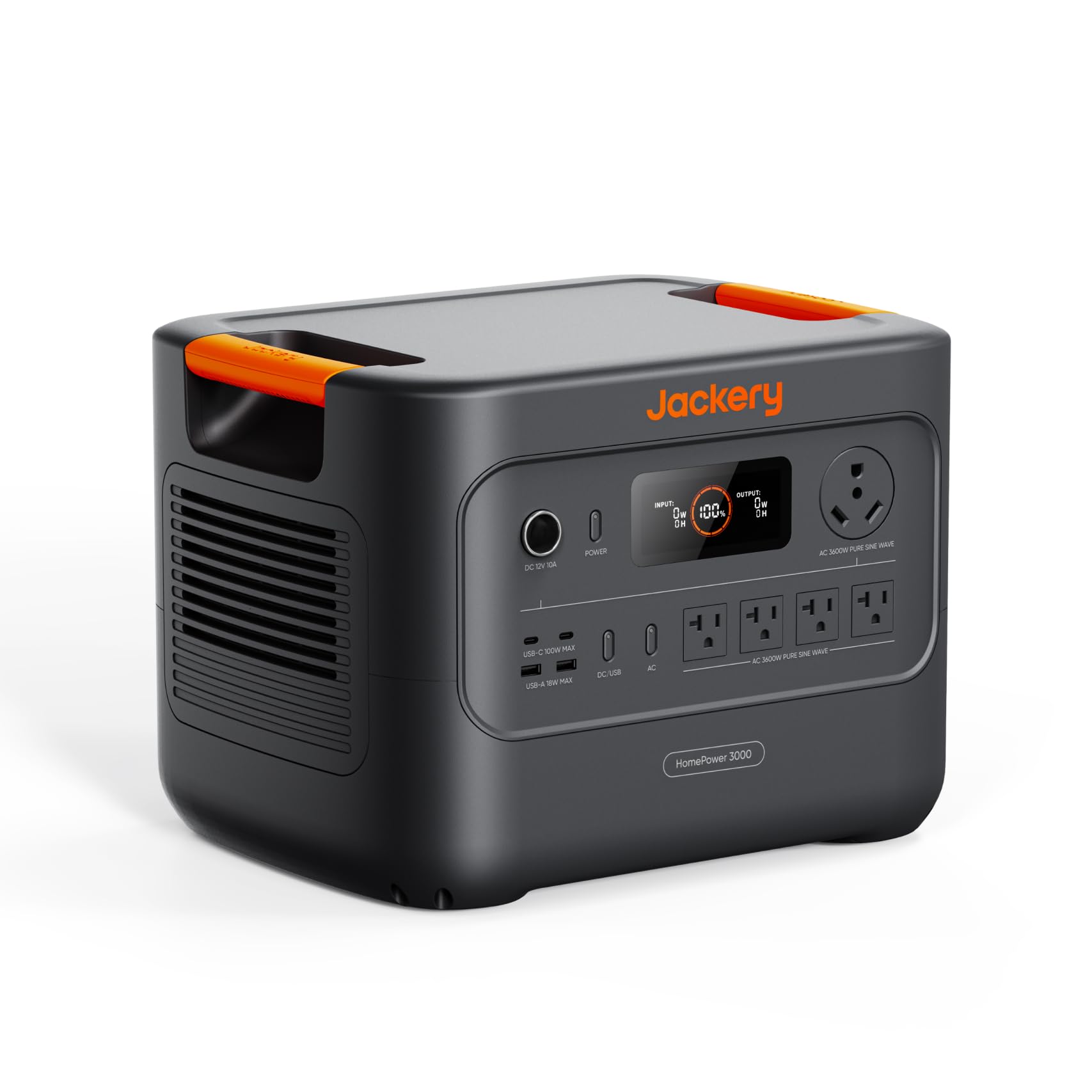
The Jackery HomePower 3000 brings Jackery’s renowned build quality to a 3kWh platform. With 3072Wh of LFP capacity and a 3600W (7200W surge) inverter, it can handle heavy loads like a refrigerator, sump pump, and microwave simultaneously. Its <20ms UPS is UL-certified, and the dual 100W USB-C PD ports fast-charge laptops and drones. The unit recharges fully in 1.7 hours via hybrid AC and DC.
It’s the lightest and smallest 3kWh station on the market at 59.5 pounds, thanks to CTB technology. Owners praise its ability to run a camper for almost a day on one charge and power power saws on job sites. The ChargeShield 2.0 AI algorithm extends battery life, rated for 4,000 cycles with 70% retention. However, Jackery’s warranty policy requires purchases directly from their website, not Amazon, which could be an issue for some buyers.
If you want Jackery’s proven reliability in a 3kWh form factor that’s easy to move and fast to recharge, the HomePower 3000 is a top-tier pick, despite the warranty nuance.
Why it’s great
- Lightest 3kWh unit at 59.5 lbs
- 7200W surge handles high-startup loads
- Fast hybrid recharge in 1.7 hours
Good to know
- Warranty limited if purchased from Amazon
- Solar input not expandable beyond 400W
10. ABOK Ark3600 with 200W Solar Panel
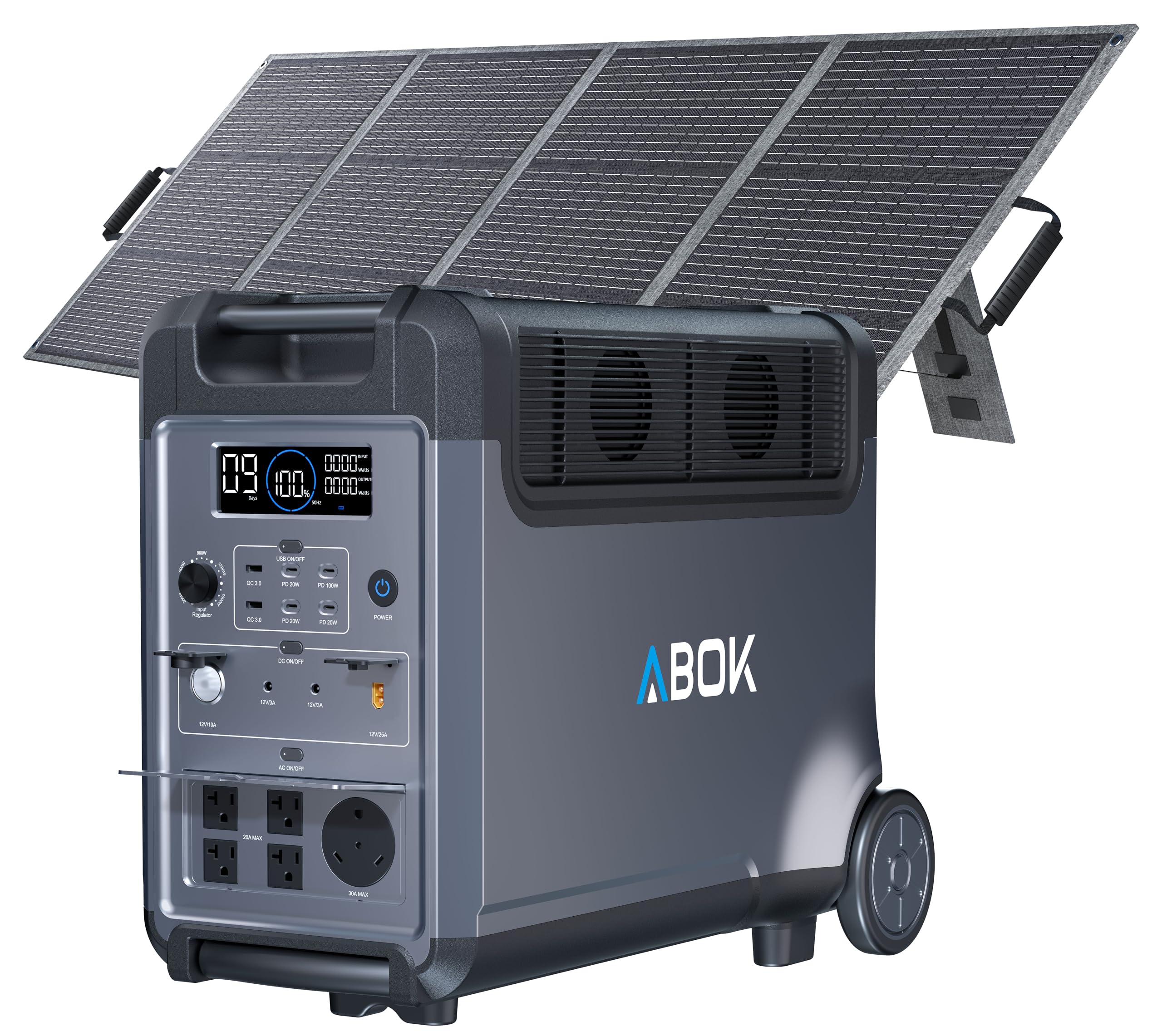
The ABOK Ark3600 comes bundled with a 200W solar panel, offering a complete solar generator package. Its 3840Wh LFP battery and 3600W (4500W peak) inverter provide ample power for home essentials. The unit includes 15 output ports, a 30A RV outlet, and a telescoping handle with wheels for easier maneuvering despite its 92-pound weight. Expandable up to 11,520Wh, it supports up to 2000W solar input and can fast-charge via AC in 1.29 hours when paired with panels.
Owners report silent indoor operation, the ability to power a wetvac and heat gun simultaneously, and reliable performance during hurricane outages. The Bluetooth app enables remote monitoring. However, some units have arrived defective, and returns for such a heavy item can be costly. The included 200W panel is a nice starter but will require additional panels for meaningful solar recharge.
For users who want an all-in-one solar generator bundle and don’t mind the weight, the ABOK Ark3600 provides good value with its included panel and large capacity.
Why it’s great
- Includes 200W solar panel for immediate solar setup
- Large 3.84kWh capacity expandable to 11.52kWh
- Wheels and handle ease transport
Good to know
- Returns for defective units can be expensive due to weight
- Fan occasional noise during solar charging
11. EF ECOFLOW DELTA Pro
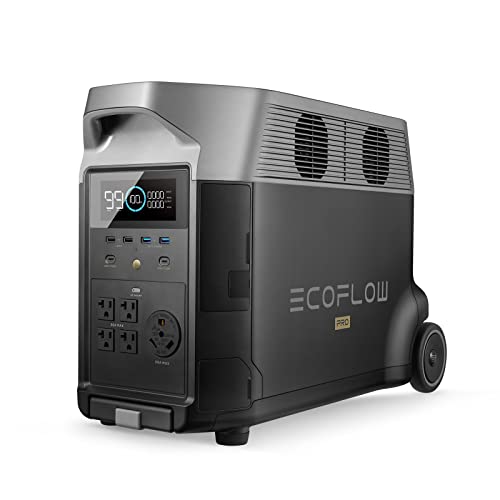
The EF ECOFLOW DELTA Pro is a modular, high-performance power station designed for whole-home and mobile business use. Its 3600Wh LFP battery feeds a 3600W inverter, expandable to 4500W via X-Boost and 7200W by pairing two units. Capacity can scale from 3.6kWh to 25kWh with extra batteries and a smart generator. It charges in 1.8 hours at 240V (or 2.7 hours at 120V), and offers up to 23% solar conversion efficiency with 1600W input.
Owners praise its ability to run a full off-grid home for two days, power vendor market equipment like heat presses, and operate oxygen machines for extended hours. The unit’s 15 output ports include 5 AC outlets and dual 100W USB-C. The app provides granular control, though it cannot turn the unit on remotely. At 99 pounds, it’s heavy, but the modular ecosystem allows for long-term growth. Pass-through charging is seamless, with automatic switching during outages.
If you need a scalable platform that can grow with your energy needs — whether for home, RV, or small business — the DELTA Pro is the most versatile, expandable option available today.
Why it’s great
- Modular ecosystem scales from 3.6kWh to 25kWh
- 4500W X-Boost and 7200W dual-unit pairing
- Fast 240V charging in 1.8 hours
Good to know
- Weight of 99 lbs limits portability
- App cannot power the unit on remotely
FAQ
Can a battery powered generator run a whole house?
How long does a battery generator last during a power outage?
What is the difference between LiFePO4 and standard lithium-ion?
Can I charge a battery generator with solar panels?
Final Thoughts: The Verdict
For most users, the best battery powered generator for home winner is the BLUETTI Elite 200 V2 because it delivers a near-ideal blend of capacity, inverter power, ultra-compact size, and an industry-leading 6000-cycle LFP battery. If you prioritize recharge speed and standby efficiency, grab the Anker SOLIX C2000 Gen 2. And for whole-home backup with 240V split-phase capability, nothing beats the GROWATT HELIOS 3600.

Mo Maruf
I created WellFizz to bridge the gap between vague wellness advice and actionable solutions. My mission is simple: to decode the research and give you practical tools you can actually use.
Beyond the data, I am a passionate traveler. I believe that stepping away from the screen to explore new environments is essential for mental clarity and physical vitality.