Our readers keep the lights on and my smoothie glass nicely filled. As an Amazon Associate, I earn from qualifying purchases.
Cutting the cord to your wall outlet doesn’t mean you have to sweat through summer. Whether you’re kitting out a van, upgrading your tent camping setup, or looking for emergency backup cooling, battery-powered air conditioners represent a distinct engineering challenge: delivering serious BTUs without tripping a breaker or draining a power station in an hour. The market has moved fast, and the line between a glorified swamp cooler and a true compressor-driven AC is sharper than ever.
I’m Mohammad Maruf — the founder and writer behind WellFizz. I’ve spent years analyzing portable power and cooling hardware, comparing inverter efficiency curves, battery discharge rates, and BTU-to-watt ratios so you don’t have to guess which unit will actually work when you’re off-grid.
After weeks of cross-referencing real-world specs and user feedback, this guide breaks down the essential features behind the best battery powered air conditioner options available today, from compact tent units to full-size RV rooftop systems.
How To Choose The Best Battery Powered Air Conditioner
Selecting a battery-powered AC requires a different mindset than buying a standard window unit. You’re not just picking cooling capacity — you’re balancing BTU output against power consumption, voltage compatibility, and form factor. Here are the three critical factors that separate a reliable off-grid cooling solution from a frustrating paperweight.
Voltage and Power Source Compatibility
The most common mistake is assuming any portable AC can run on battery. Standard 120V window units draw 1,000 watts or more, draining a typical portable power station in under an hour. True battery-powered units target 12V, 24V, or 48V DC systems — the same voltages found in RV house batteries, vans, and solar setups. Look for a unit that matches your existing battery bank voltage to avoid needing an inefficient inverter conversion. Units with variable-frequency inverter compressors are particularly valuable here, as they can throttle power consumption from 300W to 900W depending on cooling demand.
Real BTU vs. Power Consumption Ratio
BTU alone doesn’t tell the story when you’re on battery. You need to calculate the BTU per watt-hour. A 10,000 BTU unit that draws 1,200W gives you 8.3 BTU per watt-hour, while an inverter unit producing 5,100 BTU at 350W gives you 14.6 BTU per watt-hour — nearly double the efficiency. For off-grid scenarios, total runtime matters more than raw BTUs. A unit that can run 8 hours on a 1,000Wh battery is more useful than a power-hungry beast that cools faster but dies in 90 minutes.
Form Factor and Installation Requirements
Form factor determines where you can use the AC. Rooftop units (fitted into 14×14 RV vent openings) are ideal for RVs and vans but require cutting holes and sealing. Portable units with dual hoses are easier to set up in tents or small rooms but require venting hot air. Evaporative coolers are the simplest — no venting — but only work in dry climates. For true battery-powered operation, rooftop DC units and high-end portable compressor units with integrated batteries are the most practical choices.
Quick Comparison
On smaller screens, swipe sideways to see the full table.
| Model | Category | Best For | Key Spec | Amazon |
|---|---|---|---|---|
| EcoFlow Wave 3 | Portable AC | Camping & Vanlife | 6100 BTU, 1024Wh LFP battery | Amazon |
| OutEquipPro 12V RV AC | Rooftop AC | RV Off-Grid Cooling | 10000 BTU, 55A draw on high | Amazon |
| Countrymod 12V RV AC | Rooftop AC | Quiet RV Cooling | 10000 BTU, 300W ECO mode | Amazon |
| Cybertake S2 Pro | Portable AC | Tent & Small Cabin | 5100 BTU, 3-way power (48V DC) | Amazon |
| Outohome 5200BTU Camping AC | Portable AC | Tent & Truck Cab Cooling | 5200 BTU, 400W power cons. | Amazon |
| Gasbye Dual Hose AC | Portable AC | Room Cooling with Battery | 14000 BTU, DC inverter compressor | Amazon |
| Whynter ARC-1230WN | Portable AC | Smart Home Cooling | 14000 BTU, dual-hose inverter | Amazon |
| Keystone Window AC | Window AC | Large Room + Battery Setup | 23200 BTU, 4800W total power | Amazon |
| TEMEIKE 4-in-1 Cooler | Evaporative Cooler | Dry Climate Spot Cooling | 2-gallon tank, 65W power | Amazon |
In‑Depth Reviews
1. EF ECOFLOW WAVE 3 Portable Air Conditioner with Add-on Battery

The EcoFlow Wave 3 is the gold standard for portable battery-powered AC, combining a 6,100 BTU compressor with a 1,024Wh LiFePO4 battery pack that delivers up to 8 hours of cordless operation. The unit drops ambient temperature by 15°F in 15 minutes under extreme heat, and its heat pump mode adds 6,800 BTU of heating — a true 4-season tool. Charging the battery from zero to full takes just 75 minutes via 1,000W AC input, and the unit also supports 12V DC from a vehicle or solar panels.
At 32 pounds with the battery attached, the Wave 3 is heavier than a basic fan but surprisingly portable for its cooling output. The integrated app gives you real-time power monitoring, mode switching, and timer control, plus a PetCare feature that auto-activates cooling if cabin temperature spikes. The sleep mode runs at a whisper-quiet 44dB, making it viable for tent or van sleeping without disturbing light sleepers.
The catch is the price point: this is a premium system. Some users report that the advertised 8-hour runtime is optimistic under high cooling load — expect closer to 4 hours on Turbo mode in a hot uninsulated space. The R290 refrigerant is eco-friendly but requires careful handling. For those who want true cordless freedom with intelligent power management, however, this unit is the undisputed leader.
Why it’s great
- Fast 75-minute full recharge via AC
- True 6,100 BTU cooling and 6,800 BTU heating
- Silent 44dB sleep mode
- LiFePO4 battery with 8-hour runtime in Eco mode
Good to know
- Premium price tier — significant investment
- Actual runtime varies heavily with temperature and insulation
- Heavy at 32 pounds with battery
2. Outequip RV Air Conditioner 12V 10000 BTU
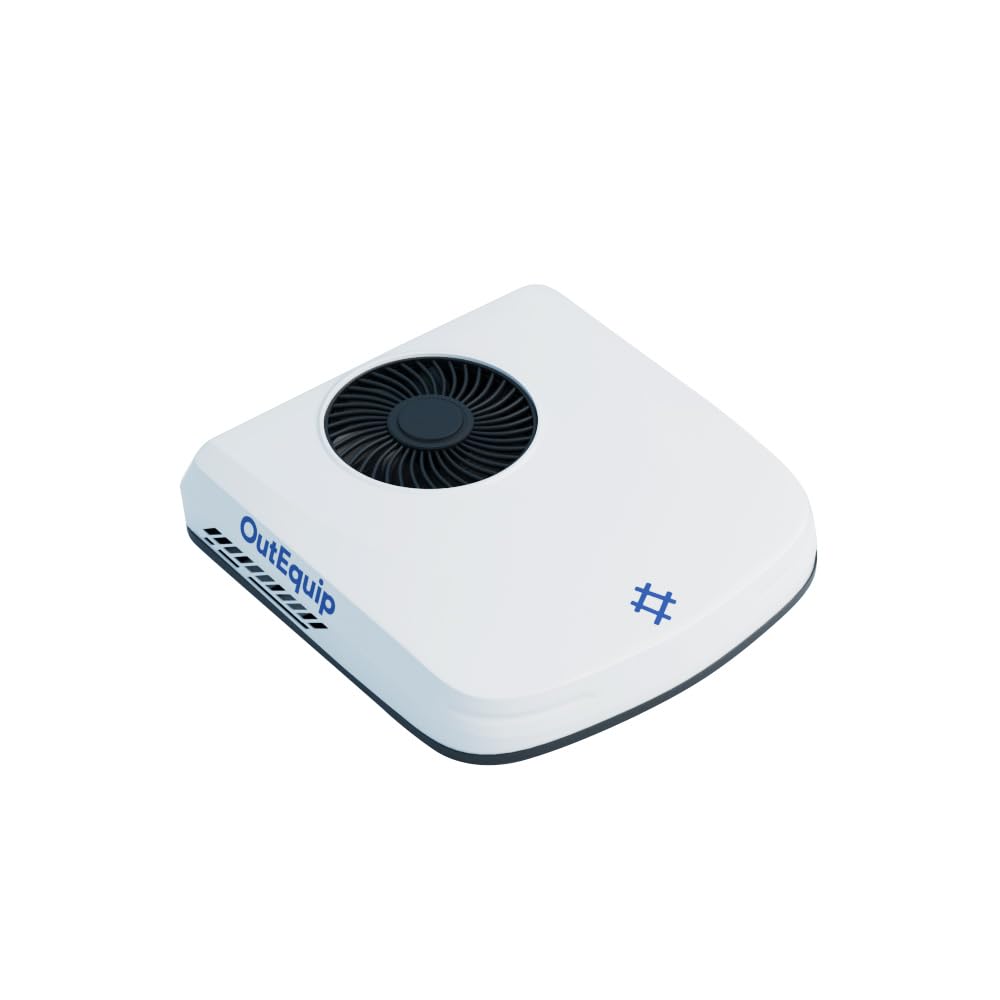
The OutEquipPro 12V RV AC brings true 10,000 BTU cooling capacity to a rooftop form factor that fits standard 14×14-inch vent openings, making it a direct replacement for noisy factory AC units. Its brushless DC copper motor runs at 54dB on high speed — noticeably quieter than traditional rooftop units. The unit draws 55 amps at full cooling but drops to around 20 amps in ECO mode, allowing 8-10 hours of runtime from a 480Ah to 600Ah 12V battery bank.
Installation is straightforward for anyone comfortable with RV roof work. The UV-stabilized ABS housing with EPDM foam gasket provides solid weather sealing, and the zinc-coated condenser resists corrosion. The remote control includes eco, sleep, and turbo modes, plus a temperature monitoring feature. Users report that the unit can cool a 100 sq ft van or small RV from 89°F to 79°F in about 25 minutes.
The main trade-off is that this is a rooftop unit — it requires cutting a hole in your roof if you don’t have a pre-existing vent opening, and it’s not suitable for tent or room use without major modification. Some users note that the initial wiring requires a sufficiently thick cable gauge to handle the 55A starting draw. For dedicated RV or van setups, however, this is a strong, efficient choice.
Why it’s great
- True 10,000 BTU compressor cooling
- Low 55A peak draw; 20A in ECO mode
- Quiet 54dB operation on high
- Standard 14×14 vent fitment
Good to know
- Requires roof cut-out installation
- Needs heavy-gauge wiring for starting amps
- Not portable — permanently mounted
3. Countrymod 12V DC RV Air Conditioner 10000 BTU
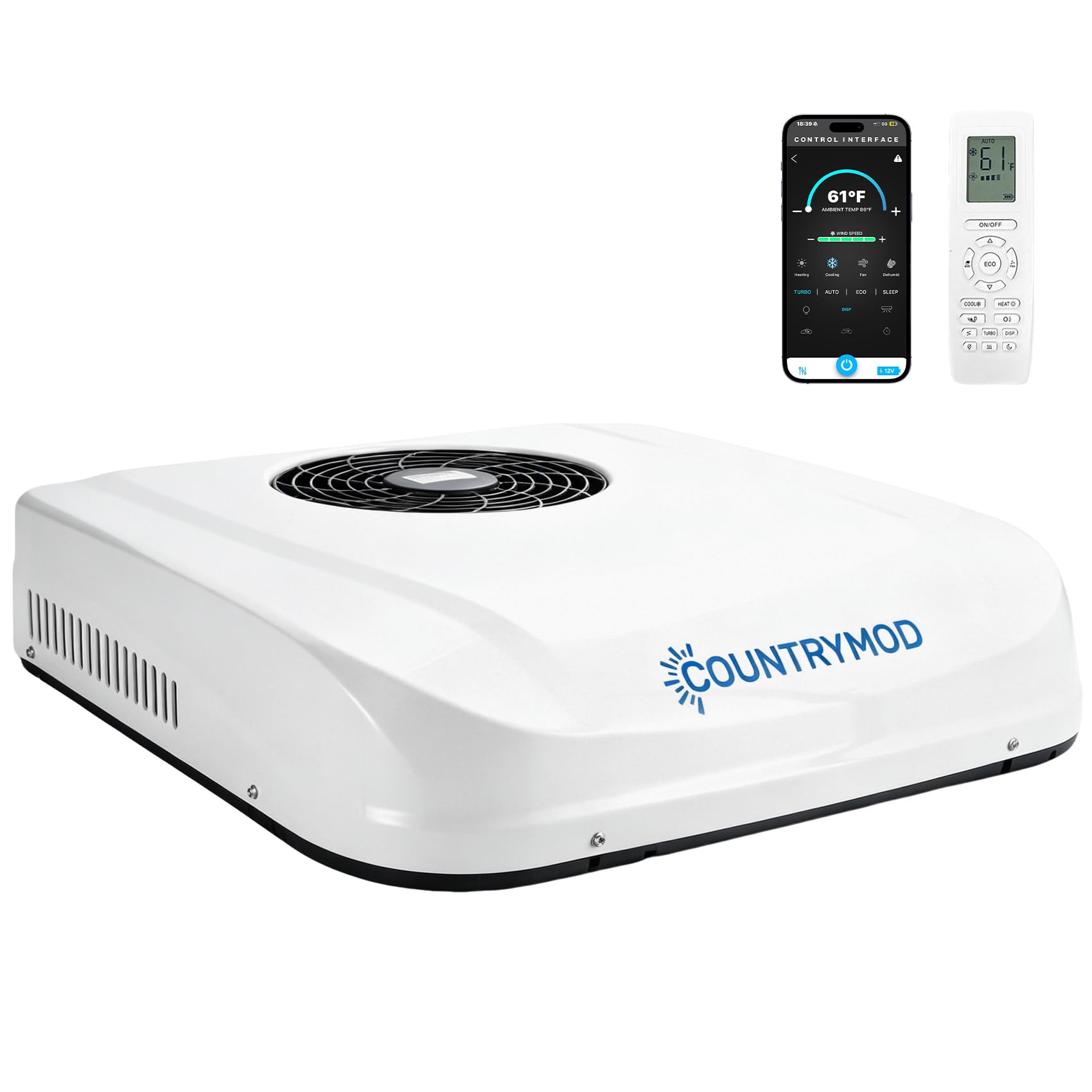
The Countrymod 12V RV AC differentiates itself with a variable-frequency inverter compressor that adjusts power consumption between 300W and 900W, meaning it can sip power on mild days while still delivering 10,000 BTU of cooling on demand. In ECO mode, it consumes just 0.3 kWh per hour — five times more efficient than a traditional 1.5 kWh/hour rooftop unit. Users report running a 480Ah battery bank all night without draining more than 50% capacity.
Noise levels are a standout feature here: the unit operates at 44dB on sleep mode, which is genuinely quiet enough for undisturbed rest. The horizontal compressor design reduces vibration and lowers the center of gravity, improving stability on rough roads. The package includes a remote control and Bluetooth app for mode switching. Installation fits standard 14×14 roof vents and the unit is ductless, simplifying setup for most RVs.
Some users have noted that the included instructions are sparse, and thicker roofs (over 2 inches) require sourcing longer metric all-thread rods. The corner bracket was reported to break at 4.5 lb torque by one user, so care is needed during tightening. For those willing to handle minor installation quirks, the Countrymod delivers exceptional efficiency and quiet operation for van and RV livability.
Why it’s great
- 300W ECO mode is extremely battery-friendly
- 44dB sleep mode is genuinely quiet
- Inverter compressor for variable-speed efficiency
- Low vibration horizontal compressor design
Good to know
- Installation instructions are sparse
- Thick roofs may need longer bolts
- Bracket quality could be better
4. Cybertake S2 Pro Portable Camping Air Conditioner
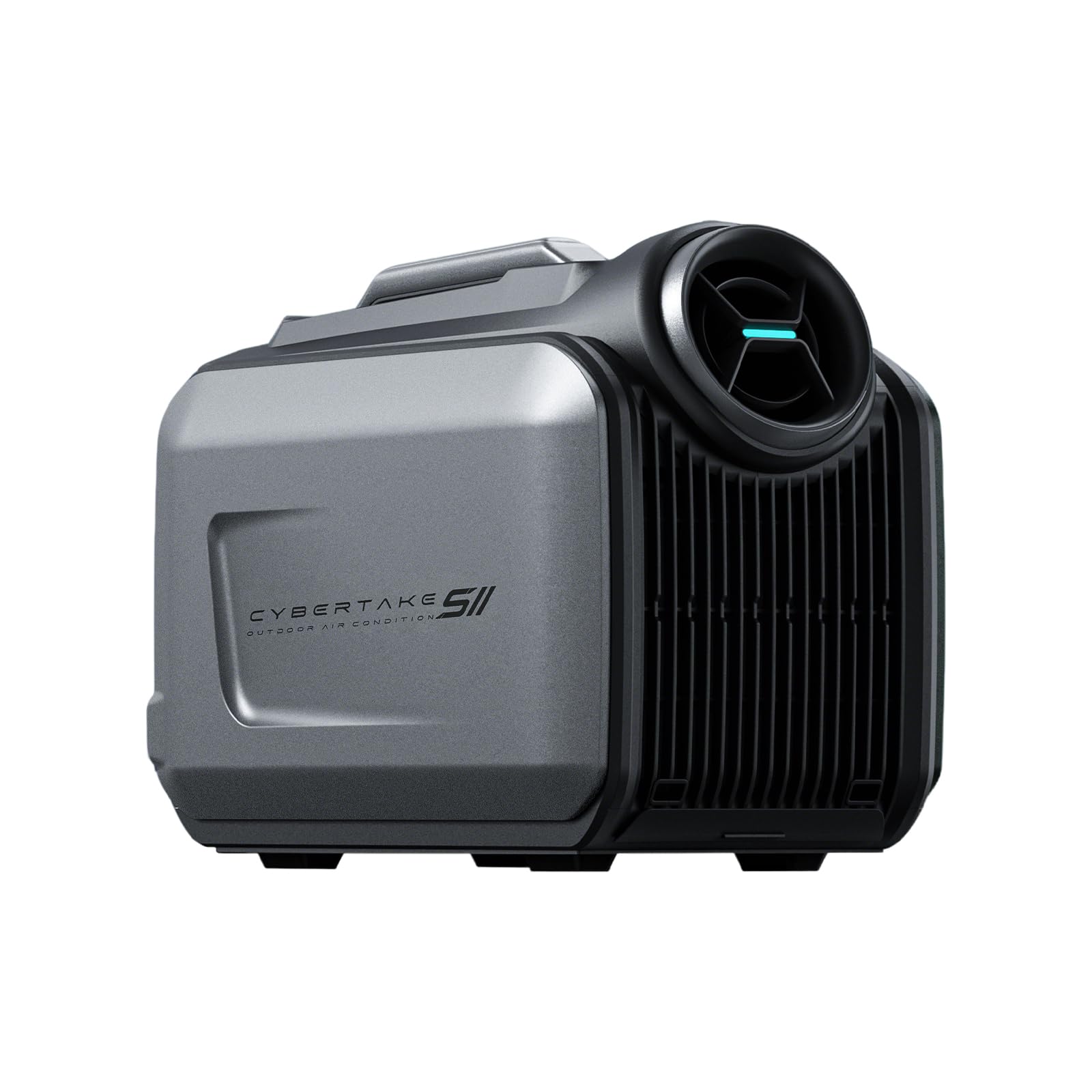
The Cybertake S2 Pro is designed for maximum power flexibility, accepting 48V DC (common in high-end power stations), 12-24V DC (vehicle systems), and 100-240V AC (wall outlets). This 3-way power capability makes it uniquely suited for hybrid campers who switch between grid power and battery banks. It delivers 5,100 BTU cooling and 6,100 BTU heating, covering spaces up to 130 sq ft. In Eco+ mode, the unit draws as little as 1 kWh per 8 hours — impressive efficiency for a compressor-based AC.
Setup is genuinely tool-free: the unit comes with all hoses and adapters, and it can go from box to running in about 30 seconds. The IPX4 water-resistant shell makes it suitable for outdoor use in light rain, and the silicone buttons are responsive even in wet conditions. At 40dB, it’s quieter than a dishwasher, making it barely noticeable during sleep. The app control lets you adjust temperature, fan speed, and timer without leaving your sleeping bag.
The compact 21-pound weight includes the compressor, making it genuinely portable for tent camping. However, the cooling output is limited to 5,100 BTU — adequate for a small tent or RV bed area but not enough for large spaces. Some users experienced issues with unclear instructions and one reported a refund difficulty. For those who prioritize power flexibility and efficiency over raw cooling brute force, this is a capable, well-designed unit.
Why it’s great
- 3-way power: 48V DC, 12-24V, and AC
- 1 kWh per 8 hours in Eco+ mode
- IPX4 water resistant for outdoor use
- Quick 30-second setup
Good to know
- 5,100 BTU is only for small spaces
- Instructions could be clearer
- Customer service issues reported for returns
5. Outohome 5200BTU Portable Camping Air Conditioner
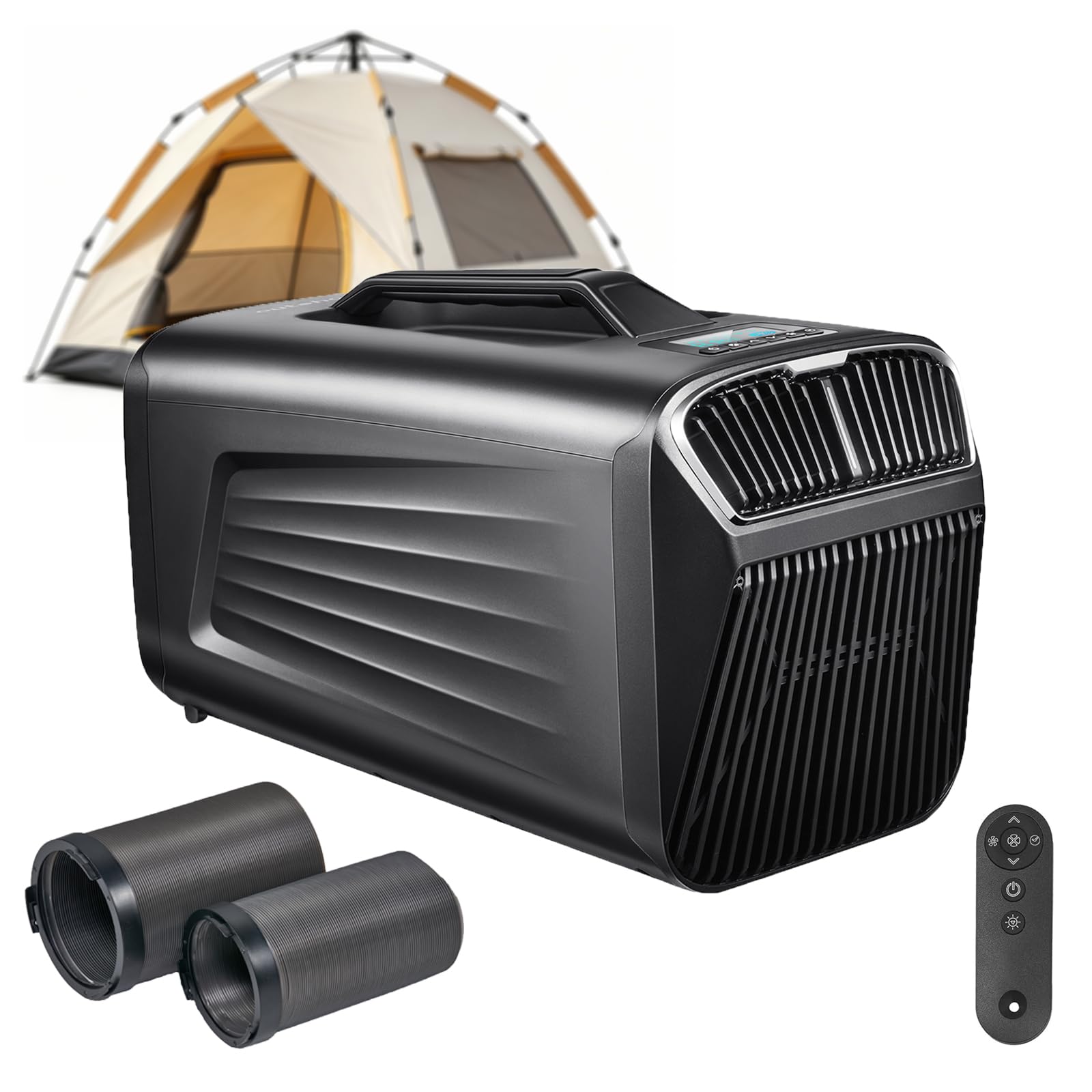
The Outohome 5200BTU unit brings true compressor-based cooling to the portable camping market at a mid-range price. It uses a GMCC high-end rotary scroll compressor to drop temperatures by 18°F within 5 minutes while consuming only 400W per hour on cool mode. The temperature control range spans 60°F to 88°F, and the unit includes cool, dry, sleep, and fan modes with a 24-hour timer. At 31 pounds and measuring 22.4 x 11.2 x 13.8 inches, it’s compact enough to fit in a truck cab or tent corner.
The unit’s key advantage is its drainage-free cooling design — below 70% humidity, no manual drainage is needed. For humid conditions, an included drain pipe handles dehumidification. The sleep mode operates at 46-50dB, which users describe as fan-only noise with no compressor rumble. It’s designed for multiple scenarios: tent camping, truck cab cooling (eliminating engine idling), RV use, and even small rooms where wall-mounting is impossible.
Some users reported that the unit is sensitive to voltage — it works best with an inverter generator or stable battery source. A few noted that the unit didn’t live up to expectations in their specific setup. The 5200 BTU rating means it’s best for spaces under 150 sq ft, not for large rooms. For those needing a compact, genuine compressor AC that runs on reasonable power, this is a solid mid-range option.
Why it’s great
- True 5200 BTU rotary scroll compressor
- 400W power consumption — battery-friendly
- Drainage-free below 70% humidity
- Multiple modes including dry and sleep
Good to know
- Limited to spaces under 150 sq ft
- Voltage sensitive — needs stable power
- Mixed reliability reports from some users
6. Gasbye Dual Hose Portable Air Conditioner 14,000 BTU
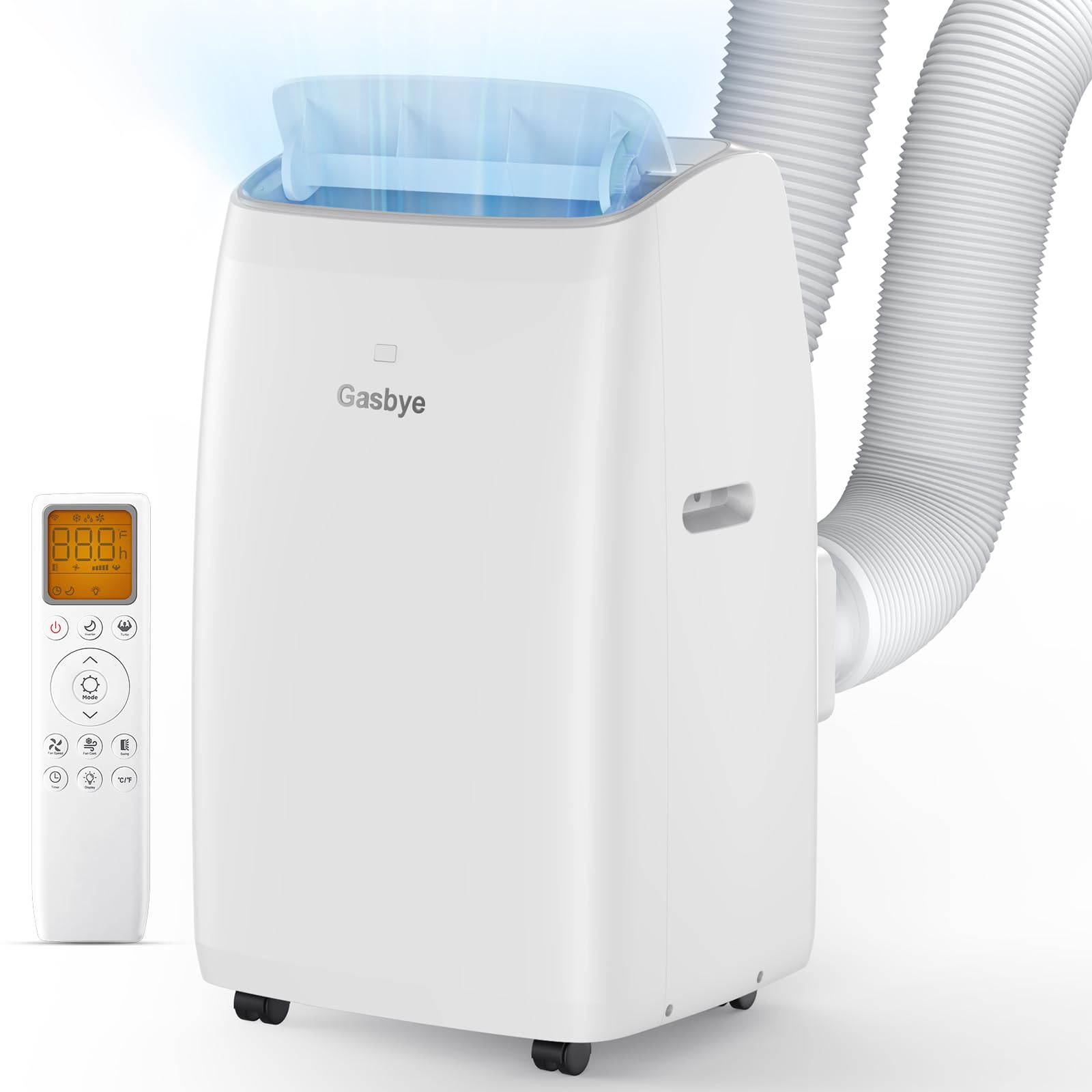
The Gasbye Dual Hose AC is a true heavy hitter for those running a battery-backed home setup. Its full DC inverter compressor achieves a 13.6 CEER rating — the highest in its class — and the dual-hose design eliminates the negative pressure problem that plagues single-hose units. The 14,000 BTU ASHRAE rating (10,500 BTU SACC) cools rooms up to 500 sq ft, and the inverter mode throttles compressor output from 800-1,300W in Turbo to 500-800W in inverter mode, saving significant power on milder days.
The noise profile is a major selling point. The inverter mode reduces compressor frequency by 50% within 2 minutes, dropping noise to about 45dB — noticeably quieter than traditional portable ACs. The backlit remote and display-off feature make it night-friendly. Gasbye backs the unit with a 3-year warranty and responsive customer service that typically responds within 12 hours, with replacement units being brand new rather than refurbished.
The unit is not small — measuring 15.5″ D x 17.7″ W x 29.3″ H and weighing 65 pounds — so it’s not for tent camping. The window kit installation is functional but some users found it flimsy for double-pane windows, requiring extra sealant. The dual 59-inch hoses may not reach high windows without raising the unit. For a dedicated battery + solar setup at home or in a tiny house, this is an efficient powerhouse.
Why it’s great
- 13.6 CEER — class-leading efficiency
- Dual-hose design for stable room pressure
- 45dB inverter mode is exceptionally quiet
- 3-year warranty with new replacement units
Good to know
- Large and heavy at 65 pounds
- Window kit may struggle with double-pane windows
- Hoses limited to 59 inches length
7. Whynter ARC-1230WN 14,000 BTU Portable AC

The Whynter ARC-1230WN earned Forbes Vetted’s “Best Portable Air Conditioner Overall” for good reason — it combines a 14,000 BTU (12,000 BTU SACC) dual-hose inverter compressor with smart Wi-Fi control via the NetHome Plus app, compatible with Alexa and Google Home. The inverter technology delivers 20% more cooling and 40% more efficiency than non-inverter units, and the patented auto-drain function exhausts up to 87 pints of condensate per day automatically.
The unit offers three operational modes: cool, dehumidify, and fan with three speeds, plus full thermostatic control from 60°F to 86°F. The innovative “hose-in-hose” design prevents heat leakage from the exhaust. The included window kit extends up to 82 inches, and the washable air filter simplifies maintenance. Users consistently praise the quiet operation on low setting and the powerful cooling output — one user maintained 67°F in a large Texas room with central AC assistance.
The unit weighs approximately 80 pounds — definitely a two-person installation job. The window panel often requires careful cutting to fit standard window sizes, which can be frustrating. The “i-sense” remote feature requires line-of-sight, which limits placement flexibility. For those wanting a smart, inverter-driven portable AC that can be integrated into a home battery system, this Whynter is a proven performer.
Why it’s great
- Smart Wi-Fi with Alexa/Google Home
- Inverter technology for 40% efficiency gain
- Auto-drain handles up to 87 pints daily
- Quiet operation on low setting
Good to know
- Very heavy at ~80 pounds
- Window kit may need cutting for fit
- Remote requires line-of-sight for i-sense
8. Keystone 23,200 BTU Window Air Conditioner
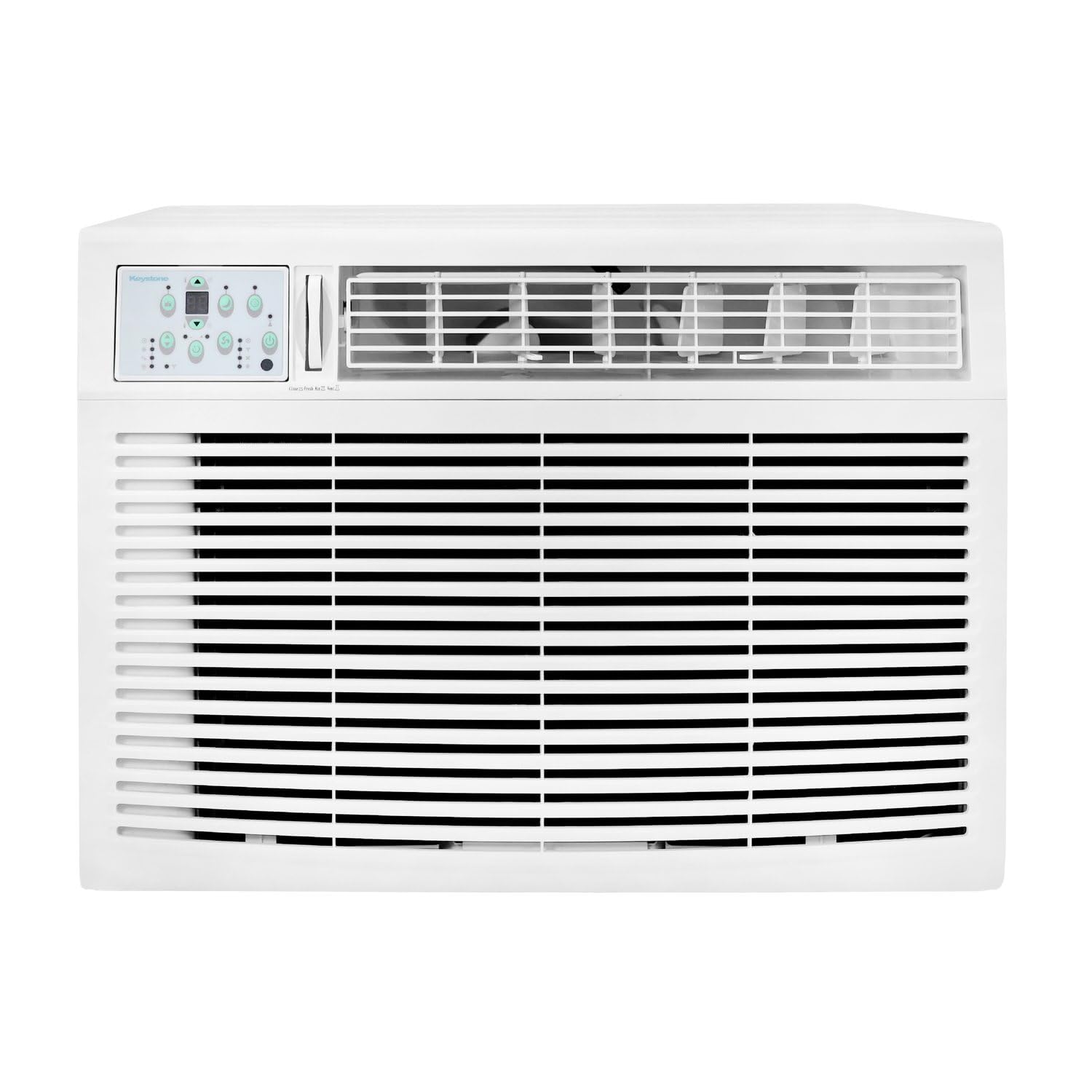
The Keystone 23,200 BTU unit is a beast designed for large spaces up to 1,500 sq ft. It also includes 16,000 BTU supplemental heating and a dehumidifier, making it a 4-season window unit. The 230V power requirement means it needs a dedicated circuit, but it’s one of the most powerful window ACs on the consumer market. The smart remote takes the temperature of the room you’re in and sends signals every 3 minutes for precise cooling control.
This unit’s raw 23,200 BTU output makes it suitable for cooling entire floors or large open-concept areas. The Energy Saver and Sleep modes help reduce power consumption when full capacity isn’t needed. Users in Arizona heat report it’s durable enough to handle extreme desert conditions, with one user keeping their 2,200 sq ft house cool enough to sleep when their central HVAC failed.
However, this is not a battery-friendly unit — it draws 4,800W at peak, requiring either a massive battery bank and inverter or a generator. It’s also loud compared to inverter units, and several users reported error codes (E3) after short periods of use. The supplemental heating mode is not a primary heat source and only works between 23°F and 76°F. For those with a robust battery system looking to cool a large home off-grid, this is an option — but power budget carefully.
Why it’s great
- 23,200 BTU cools up to 1,500 sq ft
- Includes supplemental heating and dehumidifier
- Smart remote with room-temperature sensing
- Durable construction for extreme climates
Good to know
- 4,800W peak draw — not battery-friendly
- Loud operation compared to inverter models
- Reported error code issues from some users
9. TEMEIKE 4-in-1 Evaporative Air Cooler

The TEMEIKE 4-in-1 Evaporative Air Cooler is an entry-level option for those on a tight budget or with minimal power available. Operating at just 65W, it uses evaporative cooling technology — passing air through water-soaked cooling pads to reduce temperature. The 2-gallon tank provides up to 20 hours of continuous cooling on a single fill, and four included ice packs can enhance the cooling effect. The unit offers 4 modes (Cooling/Sleep/Normal/Nature) and 3 fan speeds with 120° oscillation covering up to 300 sq ft.
The key differentiator is the power draw: at 65W, this unit can run all day on a small portable power station or even a decent solar panel directly, making it the most battery-friendly option in this guide. Setup is literally plug-and-play — no hoses, no windows needed. The 50dB noise level in sleep mode is reasonable, and the UL-listed bladeless design is safe for homes with pets and kids. The remote works from up to 17 feet away.
The critical limitation is that evaporative cooling only works in dry climates. Multiple users in humid regions reported “it does nothing to cool the air” and returned the unit. The advertised “41-49°F” temperature drop is achieved only in lab conditions with very low humidity and ice packs. In real-world dry climates (Southwest US, California), owners report it adds comfortable humidity and provides spot cooling when aimed directly at the user. This is not a replacement for a compressor AC, but for battery-conscious users in dry areas, it’s a viable, ultra-low-power alternative.
Why it’s great
- Ultra-low 65W power draw — ideal for small batteries
- 20-hour runtime on one 2-gallon fill
- No installation needed; plug and play
- UL listed with bladeless safe design
Good to know
- Ineffective in humid climates
- Cooling is spot/personal, not room-wide
- Lab temperature claims are unrealistic in real use
FAQ
What size battery do I need to run a 12V RV air conditioner all night?
Can I run a standard 115V window AC on a portable power station?
Why do evaporative coolers struggle in humid climates?
Final Thoughts: The Verdict
For most users, the best battery powered air conditioner winner is the EcoFlow Wave 3 because it delivers true 6,100 BTU compressor cooling with an integrated 1,024Wh battery, fast 75-minute recharge, and versatile heat pump mode. If you want maximum efficiency and quiet operation in an RV, grab the Countrymod 12V RV AC for its 300W ECO mode and 44dB sleep noise. And for a versatile portable unit that works with 48V, 12-24V, or standard wall power, nothing beats the Cybertake S2 Pro for tent camping and small cabin use.

Mo Maruf
I created WellFizz to bridge the gap between vague wellness advice and actionable solutions. My mission is simple: to decode the research and give you practical tools you can actually use.
Beyond the data, I am a passionate traveler. I believe that stepping away from the screen to explore new environments is essential for mental clarity and physical vitality.